
If someone told you they were 'doing bird' or you spotted it in a caption, a text, or a conversation about prison, the most likely meaning is simple: they are serving a prison sentence. That is the dominant, well-documented meaning of the phrase. 'Doing bird' is British slang for 'doing time' in jail, and it has been used that way for well over a century. Everything else you might have wondered about, whether it is sexual slang, a meme, or a bird-related idiom, is much less likely. But context matters, and this guide will walk you through all the realistic interpretations so you can nail down the right one fast.
What Does Doing Bird Mean? Meanings, Context, and Fixes

Marcus Reeves
23 Mar 2026
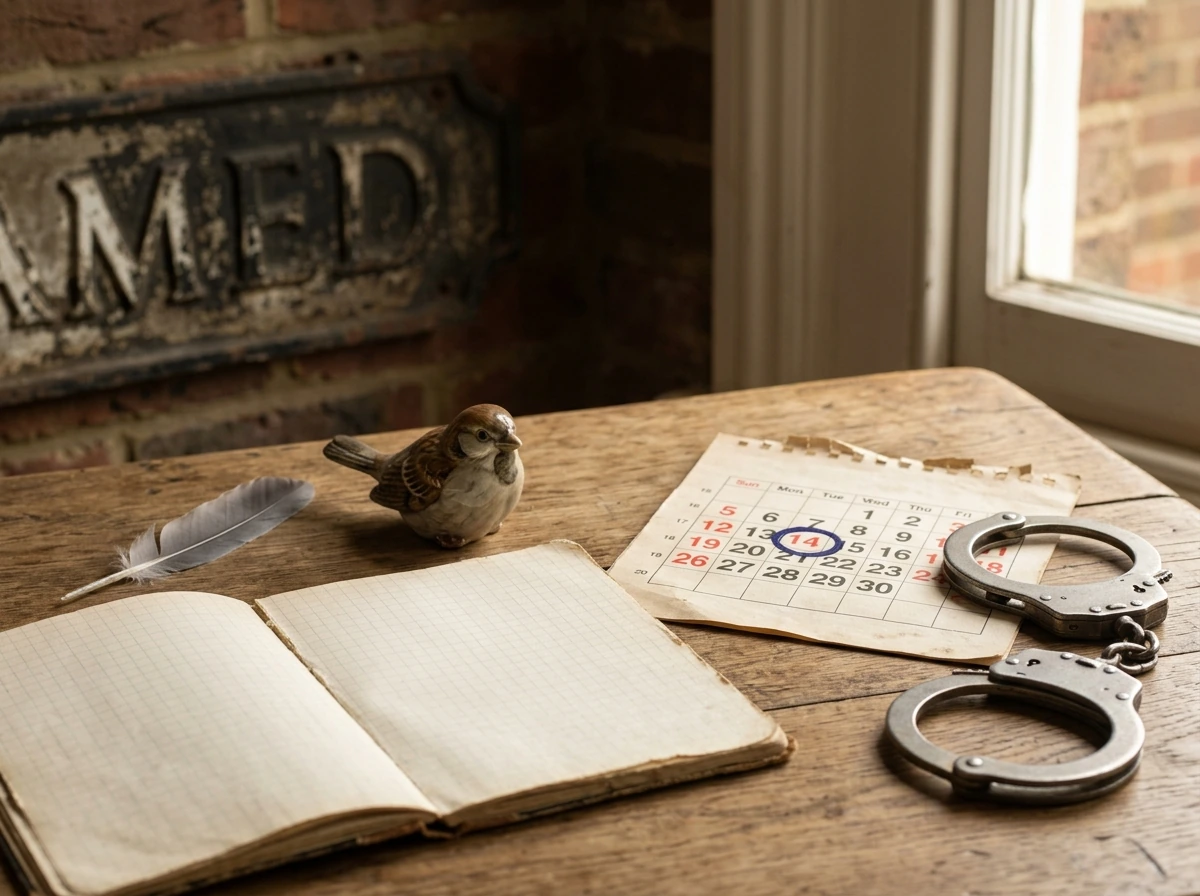
How to interpret 'doing bird': the most common slang meanings
The phrase 'doing bird' comes directly from Cockney rhyming slang. 'Birdlime' rhymes with 'time,' and when you shorten it (as Cockney slang almost always does), you get 'bird. ' So 'doing bird' means 'doing time,' which means serving a prison sentence. Etymonline notes that “bird-lime” was used as Cockney rhyming slang for “time” as early as 1857 and that “bird” is the shortened form [bird-lime was used as Cockney rhyming slang for “time” as early as 1857](https://www.
etymonline. com/word/bird-lime). Academic research, prison advocacy groups, and dictionaries of slang all land on the same definition. Green's Dictionary of Slang records it clearly: 'He has done plenty of bird' means he has spent a lot of time in prison.
The Guardian used it the same way in a 1999 feature on prison life: 'Doing bird: Serving sentence. '
The connection to 'jailbird' is also worth noting. That older term, which most people already know, reinforces why 'bird' got attached to the idea of imprisonment in the first place. Both expressions treat the person in prison as a caged bird, and 'doing bird' is simply the active, verb-forward version of that same metaphor.
You will hear this phrase most often in British English, particularly in England, Scotland, and Ireland. A Reddit post from a real discussion about prison release reads: 'Are you looking at doing bird dude? A Reddit thread about crossword clues also uses the prison meaning, describing someone asking, “Are you looking at doing bird dude?” and tying it to “birdlime” as the rhyming slang for time. ' That is a native, casual use of the phrase in exactly the context you would expect. If someone in your life said it, and they or someone they know has any connection to the criminal justice system, this is almost certainly what they meant.
Quick reference: the main meanings ranked by likelihood
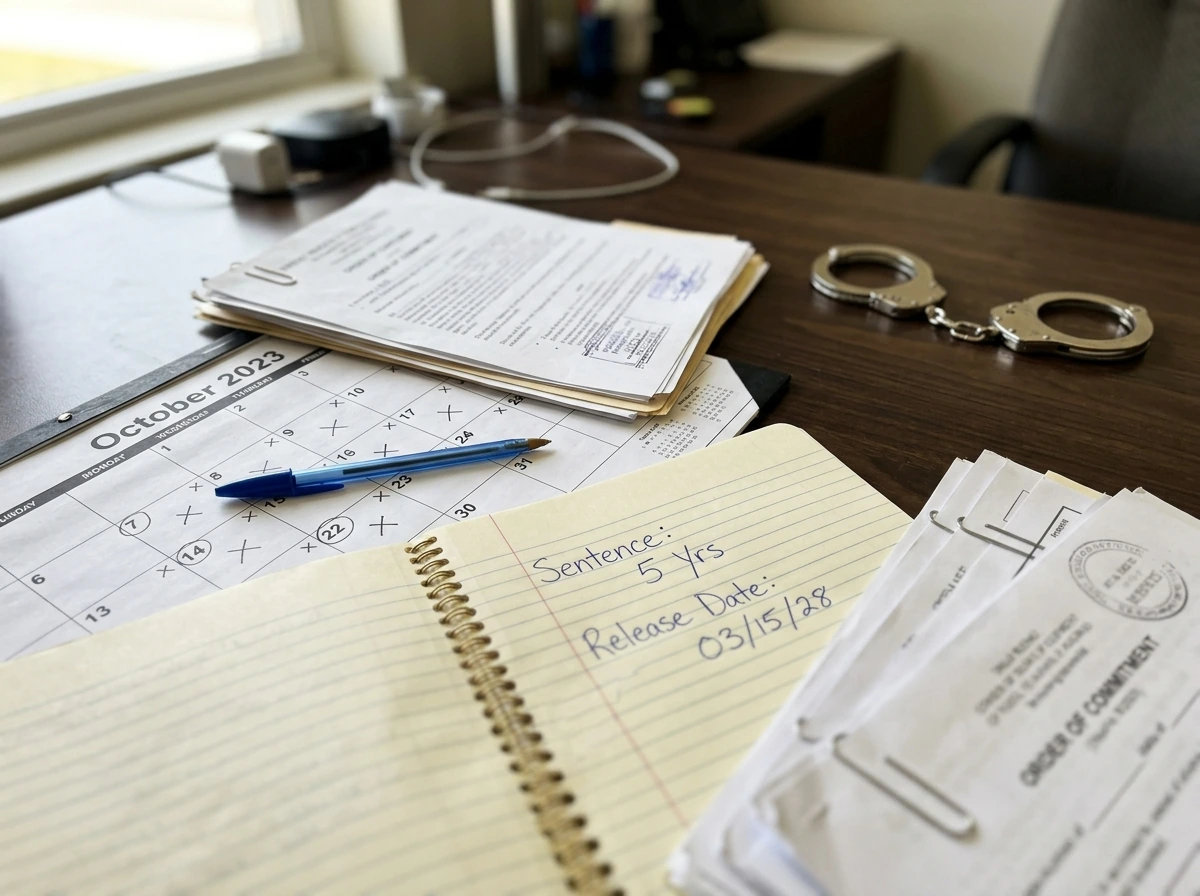
| Meaning | Context clue | Region / register | Likelihood |
|---|---|---|---|
| Serving a prison sentence | Mentions of jail, court, sentence, release | British English, widely understood | Very high |
| Doing the bird dance / a bird impression | Playful tone, party or social setting, emoji use | Any region, casual | Low to moderate |
| Sexual slang | Flirtatious conversation, innuendo-heavy thread | Very informal, rare for this exact phrase | Low |
| A meme or TikTok caption | Video content, trending audio, absurdist humor | Online / Gen Z | Low without viral context |
'Doing the bird' in context: texting, social media, and jokes
When you see 'doing the bird' (with 'the') rather than 'doing bird' (without it), the meaning often shifts. 'Doing the bird' in a text or social media post usually refers to mimicking a bird in a funny or exaggerated way, like a silly dance move, a meme format, or a joke caption under a photo of someone flapping their arms. The article form ('the bird') signals a specific action rather than an abstract state of being imprisoned.
On TikTok and Instagram, you may also see 'doing the bird' attached to trending sounds or dances where someone imitates bird-like movements. Without a viral hook attached, though, this is usually just playful. If the post has zero prison context and is clearly lighthearted, go with the silly interpretation and move on.
In texting specifically, tone markers matter enormously. If the message is surrounded by laughing emojis or posted under a goofy photo, it is almost certainly a joke. If it is part of a serious conversation about a friend going to court, 'doing bird' without the article snaps back to the prison meaning immediately. Slang in text is heavily context-dependent, and these two phrasings ('doing bird' vs. 'doing the bird') genuinely do different jobs.
Bird-themed idioms and where 'doing bird' can get confused
Because this site covers bird idioms broadly, it is worth clarifying which common bird phrases are not the same as 'doing bird,' even though they sound like they might be related.
- 'A bird in the hand is worth two in the bush' is a proverb about risk and certainty. It has nothing to do with prison or physical bird impressions.
- 'Flip the bird' means raising your middle finger as a rude gesture. It is unrelated to 'doing bird' entirely, though both use the word 'bird' as slang.
- 'The early bird gets the worm' is motivational language about punctuality or effort. No prison or performance meaning applies here.
- 'Jailbird' shares the same root as 'doing bird' (the caged-bird metaphor) but is a noun describing a person, not a verb phrase describing what they are doing.
- 'Free as a bird' is an idiom about freedom, often used ironically when someone is released from prison, which is technically the opposite of doing bird.
The confusion usually happens when someone hears 'doing bird' out of context and tries to map it onto one of these more familiar phrases. It does not fit neatly onto any of them. The Cockney rhyming slang origin is specific and separate from the symbolic or proverbial use of birds in English idioms. If you want to explore those broader idioms, we cover phrases like 'what does bird mean' and what does it mean to call someone a bird in separate articles on this site.
Cultural and literary symbolism: what 'bird' implies when used creatively
Beyond slang, birds carry deep symbolic weight in literature and culture, and that symbolism can bleed into creative uses of phrases like 'doing bird' in ways that are intentionally layered. A poet writing about incarceration might use 'doing bird' precisely because it echoes both the slang meaning and the image of a caged bird, a symbol of lost freedom that appears across traditions worldwide.
Ravens, for example, are traditionally associated with darkness, prophecy, and entrapment. Doves carry peace and release. Owls suggest hidden wisdom or seeing what others miss. When a writer or songwriter uses 'doing bird' in a lyric or caption, they may be layering the prison slang on top of these older symbolic associations deliberately, inviting you to think about confinement, identity, and freedom all at once.
If you encountered 'doing bird' in a poem, a song lyric, or a literary passage, do not rule out this kind of intentional double meaning. The slang sense is almost always the foundation, but the symbolic resonance of birds as caged creatures is exactly why this rhyming slang stuck and spread in the first place. It is not an accident that the word 'jailbird' exists. The metaphor had cultural roots long before Cockney slang formalized it.
Decoding intent: how to tell if it is sexual, playful, or just wording
People sometimes wonder whether 'doing bird' could be sexual slang. Honestly, it is not commonly used that way. The phrase does not appear in mainstream sexual slang references, and there is no strong documented tradition of it carrying that meaning. If you saw it in a flirtatious or adult context, it was most likely wordplay, innuendo invented in the moment, or a misread of the phrase rather than a recognized sexual idiom.
To decode the intent behind any use of 'doing bird,' run through these quick checks:
- Where did you encounter it? Prison context, legal conversation, or British slang-heavy speech almost guarantees the 'serving a sentence' meaning.
- Is there an article? 'Doing the bird' points toward a physical action or joke. 'Doing bird' (no article) points to the prison slang.
- What is the tone? Serious and factual means prison. Silly, emoji-filled, or absurdist means a joke or meme.
- Who said it? A British speaker, especially one with any connection to the criminal justice world, almost certainly means prison. A teenager posting a funny video almost certainly does not.
- Are there any other slang terms nearby? If you see words like 'sentence,' 'release,' 'stretch,' 'nick,' or 'bang up,' you are firmly in prison slang territory.
If the context is genuinely ambiguous and you cannot tell, just ask. There is nothing wrong with saying 'Wait, do you mean you are in jail or are you messing around?' People who use slang casually are usually happy to clarify, and asking shows you are paying attention rather than guessing.
What to do next: questions to ask, sample answers, and how to respond
Once you have narrowed down the meaning, here is how to move forward practically depending on the situation.
If you think it means prison time
You can confirm by asking something low-key like: 'Are they inside right now?' or 'How long is the sentence?' These questions are direct without making a big deal of the phrasing. If you want to check your own understanding, try rephrasing: 'So they are doing time, is that right?' If someone nods or confirms, you have it right.
If you think it is a joke or meme
Just engage with the humor. Reply to the post or message the same way you would to any lighthearted joke. If you are unsure whether it is funny or serious, hold off on reacting with a laughing emoji until you know more. A neutral 'lol what does that mean?' works perfectly and is not awkward.
If you read it in a creative or literary piece
Read for both layers. Ask yourself: is this character literally incarcerated, or is the author using confinement as a metaphor? Either is valid. Jot down surrounding imagery, especially anything involving cages, wings, flight, or freedom, because those signals will tell you whether the bird symbolism is doing extra work in the text.
Your quick-decision checklist
- British speaker or British slang context? Probably prison slang.
- No article ('doing bird')? Lean toward prison meaning.
- With article ('doing the bird') and playful tone? Lean toward joke or physical impression.
- Sexual context with no other slang clues? Likely wordplay, not an established idiom.
- Literary or creative writing with bird imagery? Consider the symbolic layer on top of the slang.
- Still unsure? Ask directly. It is always fine to say 'I want to make sure I understand what you mean.'
The bottom line is that 'doing bird' almost always means serving a prison sentence, full stop. Everything else is a much smaller possibility that depends on very specific context. Now that you have the core definition of a bird, including what what does bird mean in text, the etymology, and the checklist, you have everything you need to interpret it correctly and respond with confidence. In case you need it, the definition of a bird describes what makes birds birds core definition of a bird. , the etymology, and the checklist, you have everything you need to interpret it correctly and respond with confidence.
FAQ
Does “doing bird” mean they are in prison right now, or that they served time in the past?
In most British usage, “doing bird” means the person is currently incarcerated, not just that they had a sentence in the past. If the speaker is talking about history, you will often see extra wording like “has done,” “served,” or a time frame (for example, “last year”). If you only see the phrase by itself, treat it as present-tense until clarified.
How is “doing bird” different from “jailbird”?
People sometimes confuse “doing bird” with “jailbird,” but “jailbird” is usually a noun for a prisoner or ex-prisoner, while “doing bird” is the active phrase for the act of serving time. So if you see “doing,” that pushes strongly toward the prison-sentence meaning, not the nickname meaning.
What should I assume if I see “doing bird” in a caption with no obvious prison references?
If you see “doing bird” in a caption or comment without any prison-related context, assume it is playful only if the surrounding text clearly signals humor (wording like “lol,” “dance,” “meme,” or obvious exaggeration). If you see references to court, release dates, probation, officers, sentencing, or visiting, switch immediately to the jail meaning even if the post seems casual.
Could “doing bird” be sexual slang?
There is no widely recognized, mainstream sexual meaning for the phrase. If it appears in an adult/flirty chat, it is more likely to be invented wordplay, a misunderstanding, or a different slang term altogether. A safe approach is to ask a neutral clarifier question rather than reacting with certainty.
Why does “doing the bird” often mean something different than “doing bird”?
The article form matters. “Doing bird” typically functions like “doing time.” “Doing the bird” is more likely to mean mimicking bird-like movement or a specific silly action, especially in social media posts tied to a trend or sound. When in doubt, compare whether the post reads like a state (“in prison”) or an action (“flapping/dancing”).
How should I respond if I’m worried “doing bird” refers to a real situation involving someone I know?
If someone uses it around you and you are worried they might be in trouble, it is better to verify with a direct, non-judgmental question like “Are you talking about jail, or is it a joke?” than to ask for details you do not need. If they confirm it is serious, keep your response supportive and avoid encouraging any illegal activity or contact.
If I see “doing bird” in literature or a song, is it still most likely about prison?
If the phrase appears in a poem or lyric, treat prison slang as the default meaning, but also watch for visual cues of confinement (cages, bars, flightless imagery, wings clipped, waiting for freedom). Those details often indicate intentional layering, where the bird symbolism supports the incarceration theme rather than replacing it.
What’s the best way to confirm the meaning without it becoming awkward?
If your reading is ambiguous, ask for clarification once, then stop overthinking. A simple rephrase like “So that means you’re serving time, right?” is usually enough. Repeated checking or heavy speculation can make the other person feel interrogated, especially with slang used casually.
Next Article
Thirst Reckoned Bird North Meaning Explained and Decoded
Decode the riddle phrase thirst reckoned bird north meaning: idioms, symbolism, and direction clues to find likely inten