A bird is a warm-blooded, feathered vertebrate that lays hard-shelled eggs and typically has wings. That's the plain-English answer. Scientifically, birds belong to Class Aves, but you don't need to memorize that to understand what makes something a bird or to use the word correctly in speech and writing. Whether you're trying to identify a literal animal, decode a phrase like "a bird in hand," or figure out what someone means when they call a person a "bird," this guide covers all of it.
Definition of a Bird: Characteristics, Idioms, Symbolism

Marcus Reeves
23 Mar 2026

The Basic Definition of a Bird
Merriam-Webster defines a bird as "any of a class of warm-blooded vertebrates" with "the body more or less completely covered with feathers" and "forelimbs modified as wings." Britannica puts the total count at around 10,100 living species. Britannica also puts the total count at around 10,100 living species. That's an enormous range, from hummingbirds to ostriches to penguins, yet every one of them qualifies as a bird under the same basic definition.
In everyday language, most people picture something with feathers that flies and sings. That picture is accurate often enough, but it misses some real birds and catches some animals that aren't birds at all. Bats fly but aren't birds. Penguins have feathers but can't fly, yet they are absolutely birds. The formal definition is more reliable than the mental image.
What Actually Makes Something a Bird
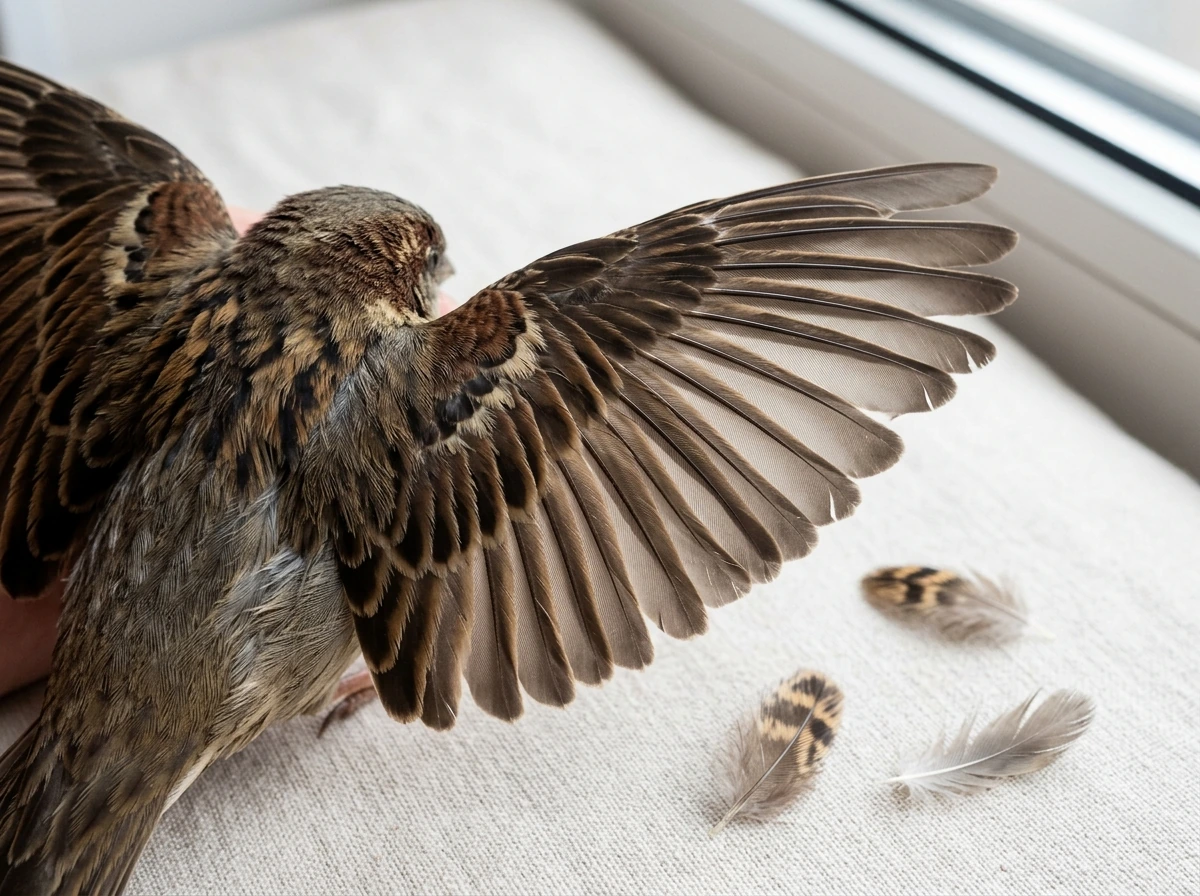
There are a handful of defining traits that show up consistently across every bird species. These aren't just academic checkboxes. They're the practical criteria that let you confidently say whether something is a bird or not.
- Feathers: Every bird has them. No other living animal does. Feathers are the single most reliable marker of a bird.
- Warm-blooded (endothermic): Birds regulate their own body temperature internally, the same way mammals do.
- A beak or bill: Birds have no teeth. Instead they have a beak, and the shape varies enormously depending on diet and habitat.
- Wings (modified forelimbs): Even flightless birds like penguins and ostriches have wings. Flight is common but not required.
- Hard-shelled eggs: All birds reproduce by laying eggs with a hard, calcified shell, unlike reptiles whose eggs are typically leathery.
- A backbone: Birds are vertebrates, meaning they have a spine.
The penguin example is worth dwelling on for a second. Penguins are flightless and spend most of their lives in water, yet they check every box above: feathers, warm-blooded, beak, wings (flippers), hard-shelled eggs, vertebrate. That's why they're birds and not fish or mammals. If you're ever unsure about an animal, run through those six traits instead of asking "can it fly?"
Everyday Language vs. Scientific Labels
In casual speech, "bird" covers the whole category and works fine in almost any context. The scientific class name is Aves, which you'll run into in biology, birdwatching guides, and research. Knowing that "Aves" simply means birds saves a lot of confusion when you're reading anything formal about the animal kingdom.
There's also a word worth knowing for writing: "fowl." Cambridge defines fowl as "a bird that is kept for its eggs and meat, especially a chicken," and Collins puts it similarly as "a bird, especially one that can be eaten as food, such as a duck or a chicken." Merriam-Webster even allows "a bird of any kind" as a broad definition, but in practice, writers use "fowl" when the food or farm context is the point. If you're writing about roast chicken for dinner, "fowl" fits. If you're writing about a sparrow outside your window, stick with "bird."
| Term | Best used when... | Example |
|---|---|---|
| Bird | Referring to any feathered vertebrate, general contexts, slang, idioms | "A bird landed on the fence." |
| Fowl | Food, farming, or game contexts where the domestic/edible angle matters | "The recipe calls for roasted fowl." |
| Aves | Scientific, biological, or taxonomic writing | "Penguins belong to Class Aves." |
Common Bird Phrases and What They Actually Mean
English is packed with bird idioms, and none of them require a literal bird to understand. Here are the ones you'll encounter most often, with plain-language explanations.
A bird in the hand is worth two in the bush
It's better to keep something you already have than to risk losing it by chasing something better. If someone offers you a guaranteed deal and you're tempted to walk away hoping for a bigger one, this phrase is the pushback. It's a caution against greed or overconfidence.
The early bird gets the worm
People who start earlier or act faster get the best results. You'll hear this used to justify early mornings, showing up first to a sale, or submitting applications ahead of a deadline. It's motivational shorthand for "don't wait."
Birds of a feather (flock together)

People with similar personalities, interests, or backgrounds tend to spend time together. Cambridge lists this as a set idiom. You can use the full version or just the first half, "birds of a feather," and most listeners will fill in the rest.
Bird's-eye view
A perspective from high above, looking down. Cambridge has this as its own dictionary entry. It works literally (a drone photograph) or figuratively (a broad overview of a situation without getting into the details).
Flip someone the bird
This one has nothing to do with actual birds. Merriam-Webster defines it as pointing the middle finger upward while keeping the other fingers folded down, used as an offensive gesture. Merriam-Webster defines “give (someone) the bird” (U.S.) as making an offensive gesture by pointing the middle finger upward with the other fingers folded down, often described as “flipping someone the bird.” offensive gesture by pointing the middle finger upward with other fingers folded down. Cambridge also documents it as a fixed idiom under "flip/give someone the bird." If someone mentions this phrase in a story or conversation, they mean the rude gesture, not anything feathered.
Bird as slang for a person
Collins English Dictionary records "bird" as slang for "a person, especially a mildly eccentric one." Dictionary.com similarly notes it can mean "a person, especially one having some peculiarity." You'll hear it in British English more than American, often with a light or affectionate tone. "He's an odd bird" just means the person is a bit unusual, not threatening or insulting. If you're curious about more specific uses, like what it means to call a particular person a bird, that deserves its own look (there's a full breakdown of what it means to call someone a bird elsewhere on this site). what does it mean to call someone a bird
What Birds Symbolize Across Cultures

Birds carry a lot of symbolic weight in literature, religion, and everyday culture. The same species can mean very different things depending on context, so when you encounter a bird in a story, poem, or cultural reference, it helps to know the most common associations.
The dove: peace and new beginnings
The dove is probably the most universally recognized peace symbol in Western culture. Wikipedia's coverage of peace symbols traces it directly to the Christian tradition and the Noah's Ark story, where a dove returns to Noah carrying an olive leaf, signaling that the flood was over and the land was safe again. That connection between doves and peace, hope, and new beginnings has been reinforced across centuries of art, diplomacy, and popular culture. When a character releases a dove in a film or a politician uses a dove image in a speech, the shorthand is almost always peace.
The owl: wisdom and the night
The National Gallery in London links owls to wisdom and notes the nocturnal connection: owls are associated with night and sleep because of when they're active. The wisdom association goes back at least to ancient Greece, where the owl was linked to Athena, goddess of wisdom. In literature you'll often see owls placed in scenes of learning, mystery, or careful observation. In some folklore traditions, though, owls are omens of death or bad news, so the symbolism isn't exclusively positive. Context matters when you're reading or writing with owl imagery. what does bird mean in text
The raven: darkness, intelligence, and the unknown
Ravens lean toward darker territory in most cultural traditions. They appear frequently as symbols of death, prophecy, or the uncanny, most famously in Edgar Allan Poe's poem where the raven becomes a vehicle for grief and obsession. In Norse mythology, Odin kept two ravens named Huginn and Muninn (thought and memory) as scouts of the world. Ravens are genuinely intelligent birds, and that intelligence often feeds into their symbolic role as knowing, watchful, and a little unsettling. When a writer puts a raven in a scene, they're almost always building atmosphere, not making a casual nature reference.
Other common bird symbols at a glance
| Bird | Common symbolic association | Where you'll see it |
|---|---|---|
| Dove | Peace, hope, new beginnings | Religion, diplomacy, weddings, literature |
| Owl | Wisdom, mystery, the night | Academic imagery, folklore, Gothic literature |
| Raven | Death, prophecy, intelligence | Gothic/horror literature, Norse mythology, heraldry |
| Eagle | Freedom, power, national pride | National emblems, military symbolism, political imagery |
| Robin | Spring, renewal, good news | Seasonal imagery, greeting cards, British folklore |
| Crow | Cunning, ill omen, the trickster | Folklore, fables, superstition |
How to Use the Word "Bird" Correctly in Your Writing
The word "bird" is straightforward when it means the animal, but it earns its complexity in figurative and slang use. Here's practical guidance on getting it right.
Literal vs. figurative: read the context first
Before using or interpreting "bird," ask whether the sentence is describing the animal or using the word as a figure of speech. "The bird landed on the branch" is literal. "She has a bird's-eye view of the whole operation" is figurative. "He flipped the bird at the other driver" is idiomatic and has nothing to do with animals. Getting these right just takes a moment of context-checking.
When to use "bird" vs. "fowl" in writing
Use "bird" as your default. It's correct in virtually every context. Reach for "fowl" only when you're specifically discussing birds raised or hunted for food, cooking, or farming, and when you want the writing to reflect that framing. "Wild fowl" and "waterfowl" are established compound terms in hunting and culinary writing. Outside those zones, "bird" is the right call.
Using bird symbolism deliberately in creative writing
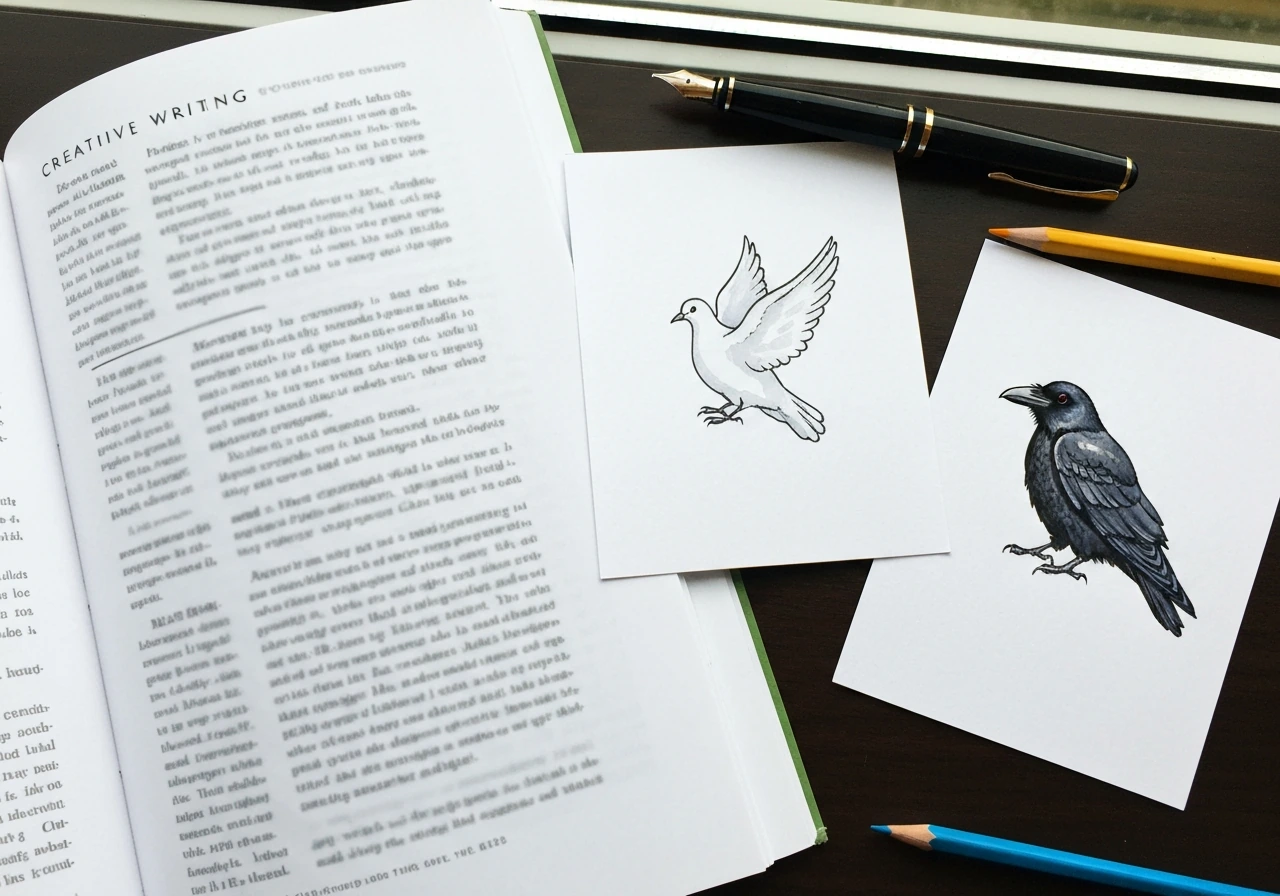
If you're writing fiction or poetry and want to use a bird symbolically, pick the species intentionally. A dove in a war story signals hope or peace. A raven at a funeral signals dread or mystery. An owl in a schoolroom scene nods to wisdom. These associations are so well established that readers pick them up immediately, which means you can do a lot of work with a single well-chosen bird. Just make sure the symbol fits the tone. A raven in a light-hearted children's story might just confuse things.
A few quick example sentences
- Literal animal: "A red-winged blackbird perched on the fence post every morning that summer."
- Figurative (idiom): "She got a bird's-eye view of the city from the rooftop terrace."
- Slang (person): "He's a funny old bird, but you'd trust him with anything."
- Symbolic (creative writing): "A single raven circled the battlefield as the smoke cleared."
- Food/farming context: "The market sold every kind of fowl, from chickens to guinea hens."
Once you have the definition locked in and understand the traits that make something a bird, the idioms and symbolism start to make a lot more sense. Most bird phrases work by borrowing one quality of the literal animal (early risers, flocking behavior, a high perspective) and extending it into human situations. And if you want to dig deeper into specific slang uses, like what "bird" means in a text message or what it means when someone is "doing bird," those have their own detailed breakdowns on this site.
FAQ
Are all feathered animals automatically birds under the definition of a bird?
No. The definition requires more than feathers, for example warm-blooded vertebrates, and forelimbs modified as wings, plus hard-shelled eggs in the normal biological sense. Emu and penguin are birds even if they cannot fly, while bats are not birds despite flight and fur or skin.
How do I tell whether an animal is a bird if it can’t fly?
Use the trait checklist in your head rather than “can it fly.” Confirm feathers, warm-blooded body, vertebrate status, hard-shelled eggs, and wings as modified forelimbs (even if they function differently, like flippers in penguins). Flight is common but not required.
Do dinosaurs count as birds when people talk about “bird-like” animals?
Modern birds are a subset of dinosaur evolution, so “bird-like dinosaur” usually refers to shared features such as feathers or body shape, but the term does not automatically mean it meets the full living-bird criteria like producing hard-shelled eggs in the same way. If the article is using “birds” in everyday speech, it likely means living species.
Is “bird” ever used to mean “one specific animal,” or is it always the category?
It can mean either, depending on context. “A bird landed on the branch” refers to one individual. “The bird” usually signals a particular known bird (often previously mentioned), similar to “the” used with other specific nouns.
What’s the difference between “bird” and “fowl” in writing beyond food and farming?
“Fowl” has a stronger connotation of domesticated or edible birds (chicken, duck, turkey), so it can sound odd if you use it for wild songbirds or backyard pets. If your sentence is about cooking, hunting, or livestock, “fowl” fits naturally, otherwise “bird” is safer.
Can I use “bird” for fish that swim near the water surface or seagulls’ behavior?
Yes for the animals themselves, but be careful with labels. “Bird” describes the animal species, not the behavior type. If you are describing the act, use precise verbs (for example “hover,” “dive,” “forage”) rather than implying the animal is defined by the behavior.
Is “fowl” a formal synonym of “bird,” or does it carry different tone?
It carries different tone. “Bird” is neutral for literal animals. “Fowl” tends to sound more technical or culinary, so in casual writing about wildlife, it can read as unnatural even though it still refers to birds.
When someone says “bird” in slang, how can I avoid misreading the intent?
Check whether the sentence is about an actual animal or about a person’s behavior. If the surrounding words include oddness, personality, or social tone (“odd bird,” “you’re a bird”), it is likely slang for a person. If it includes rude action (like the gesture idiom), it is not literal.
What does “the bird” mean in a message if the context is not about wildlife?
In text or conversations, “the bird” is often shorthand for an idiomatic or slang meaning, commonly tied to the gesture phrase or other figurative uses, not a literal animal. Look for nearby clues like anger, teasing, or relationship talk to infer which meaning is intended.
Is “birds-eye view” literally about birds?
Not literally. It describes a high or panoramic perspective, and it is used as a fixed idiom. In formal writing, it is best treated as a set phrase rather than a description of an actual bird’s viewpoint.
Does “birds of a feather” require both people to be exactly the same?
No. The idiom suggests similarity in interests, background, or personality, not identity in every detail. You can use it when two people seem to naturally bond because they share a recognizable trait.
If a story includes an owl, does the symbolism always mean wisdom?
No. Wisdom is a common association, but owls can also be linked to night, secrecy, mystery, or even ominous meanings in some traditions. The surrounding scene (teaching vs. dread, schoolroom vs. eerie woods) determines which reading is most likely.
Next Article
What Does It Mean to Call Someone a Bird
Meanings of calling someone a bird, from playful tease or flirt to insult, plus how to tell by tone and context.
