
When someone writes 'Eurasian bird,' they almost always mean a bird species that lives across Europe and Asia, not a metaphor or a slang term. The word 'Eurasian' is standard ornithological shorthand for a bird's geographic range. If you spotted the phrase in a field guide, a nature article, or a Wikipedia entry, it is almost certainly describing a real species like the Eurasian whimbrel, Eurasian spoonbill, or Eurasian curlew. That said, some of the most famous birds from that region (cranes, owls, swans) carry deep symbolic weight, and a writer could be leaning into that symbolism without naming the species outright. Here is how to tell exactly which meaning is in play.
Eurasian Bird Meaning: Literal, Symbolic, and How to Tell

Marcus Reeves
4 May 2026

What 'Eurasian bird' usually means in everyday language
In everyday English, 'Eurasian' is a geographic adjective. Cambridge and Oxford both define it simply as 'relating to or found in Europe and Asia considered together.' When that adjective attaches to 'bird,' the default reading is descriptive: this is a bird whose natural range spans the Eurasian landmass, or at least part of it. Ornithologists use 'Eurasian' as a prefix in formal common names all the time: Eurasian wigeon, Eurasian crane, Eurasian tree sparrow. It is not poetic. It is a label.
There is no fixed idiom in English called 'the Eurasian bird' the way there are fixed expressions like 'a bird in the hand' or 'flip the bird.' Urban Dictionary's entries for 'Eurasian' are almost entirely about people and ethnicity, not birds or expressions. On Urban Dictionary, “Eurasian” is mainly used in slang around identity rather than the bird meaning. So if you are hunting for a secret slang meaning, there probably is not one. The phrase means what it sounds like: a bird from (or associated with) Eurasia.
Regional context: what 'Eurasia' actually covers

Eurasia is the combined landmass of Europe and Asia, which makes it an enormous region. In bird science, it maps closely onto what ornithologists call the Palearctic, which stretches from Iceland and Portugal in the west to Japan and far-eastern Russia in the east, and south to the Mediterranean, Middle East, and Himalayas. When you read 'Eurasian' in a bird's name, it usually signals that the bird's native range covers a big chunk of this area, even if it winters somewhere else entirely, like Africa or South Asia.
This matters because 'Eurasian' is not the same as 'European' or 'Asian' on its own. A Eurasian spoonbill, for instance, breeds across a band running from the Netherlands and Spain through Central Asia, and winters in Africa. BirdLife International uses 'Eurasian' specifically to signal that flyway, linking northern Eurasian breeding grounds with African wintering sites. If you see 'Eurasian' in a migration or flyway context, it is telling you something about the whole system, not just one country.
The symbolic side: what Eurasian birds tend to represent
Even though 'Eurasian bird' is not a fixed symbol, several birds native to the Eurasian region carry enormous cultural weight, and a writer using the phrase poetically is almost certainly drawing on one of these themes. Here are the dominant symbolic threads.
Wisdom and learning

The owl is probably the most symbolically loaded Eurasian bird in Western culture. Its association with Athena in ancient Athens made it a stand-in for wisdom and scholarship, an association that has lasted right into modern university logos and bookshop imagery. When a writer evokes an 'Eurasian bird' in a context about knowledge or insight, an owl is the likely candidate.
Longevity, happiness, and good fortune
The crane is the clearest example here. Across East Asian cultures, the crane symbolizes long life, happiness, and in some traditions immortality. In Greek mythology it was a bird of omen. The common crane (also called the Eurasian crane) is the bird that connects these traditions, because it literally migrates across that entire cultural landscape. If 'Eurasian bird' appears in a context about longevity or blessings, the crane is a strong guess.
Endings, beauty, and transformation
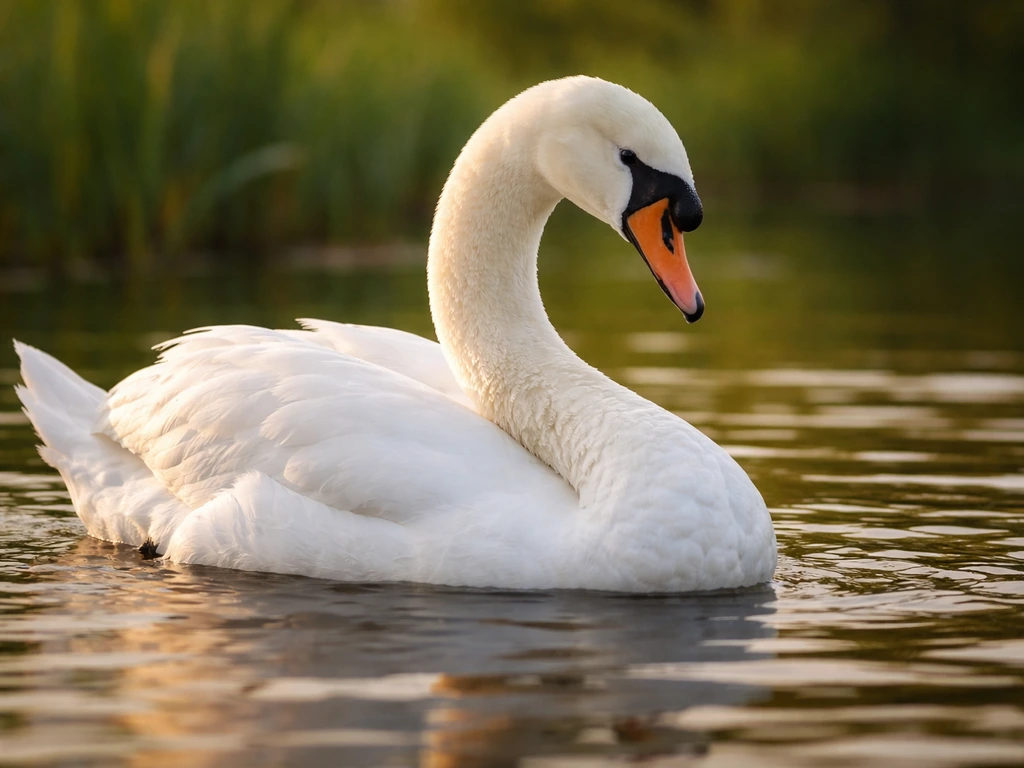
The mute swan, a native Eurasian species, sits behind the 'swan song' motif: a final beautiful act before death or departure. Swans have sacred status in classical Greek mythology and appear in Nordic and Celtic traditions as transformative or divine creatures. A poetic reference to a Eurasian bird in a context about finality or transcendence likely points here.
Royalty and spiritual authority
The hoopoe, another Eurasian species, is a striking example of a bird whose physical appearance (that dramatic crown-like crest) got folded directly into symbolism. The crest is described as a symbol of royal status in some cultural readings, and the hoopoe appears in the Quran and in Persian poetry. If 'Eurasian bird' shows up in literature rooted in Middle Eastern or Central Asian culture, the hoopoe is worth considering.
Where you'll see this phrase: idioms, slang, literature, and nature writing
The context where you found the phrase 'Eurasian bird' tells you a lot about the intended meaning. Here is a quick breakdown of where it tends to show up and what it usually signals in each setting.
| Context | Likely meaning | Key giveaway |
|---|---|---|
| Field guide or birding site | Specific species with that name | Includes range maps, ID features, taxonomy |
| Nature or travel writing | Geographic description of a bird seen in Europe/Asia | Habitat, behavior, seasonal migration details |
| Literary fiction or poetry | Symbolic or metaphorical use | Emotional framing, no species-specific facts |
| Academic or ecological paper | Biogeographic grouping (Palearctic region) | Flyway data, population statistics |
| Slang or casual conversation | Very rare; likely a misquote or joke | No consistent definition; check context carefully |
Nature writing is the one gray zone. A good nature essayist might name a Eurasian curlew and immediately slip into what the bird's call means to them emotionally, blending literal species ID with personal symbolism. That is not a mistake; it is the genre. In those cases, both readings apply at once, and you can take both.
If you came across 'Eurasian bird' in a phrase about thirst, reckoning, or compass directions, it is worth knowing that some related searches (like 'ravenous bird from the east' or 'bird from the north') have their own specific symbolic or scriptural meanings in certain traditions. These phrases often act as shorthand for specific symbolic ideas, so checking the tradition they come from can help you interpret it correctly ravenous bird from the east. In some religious and cultural readings, a ravenous bird meaning is used to signal danger, judgment, or urgency. For more on how thirst, reckoning, and directional language can turn into specific symbolic readings, see the section that covers phrases like bird from the north thirst, reckoning, or compass directions. Those are distinct territory from the standard geographic use of 'Eurasian bird.'
How to interpret it correctly in a sentence
Run through this checklist quickly when you hit the phrase and are not sure what the writer means.
- Is 'Eurasian' capitalized and directly before a noun like 'crane,' 'curlew,' or 'sparrow'? If yes, it is almost certainly a species name. Look it up by that full name.
- Does the sentence include habitat details, migration routes, or breeding range? Literal species description. No metaphor involved.
- Is the writing emotional, metaphorical, or abstract, with no specific species named? Then 'Eurasian bird' is being used symbolically. Look at surrounding themes (wisdom, longevity, endings) to narrow down which bird is implied.
- Does the sentence reference a specific culture or mythology (Greek, Persian, Chinese, Japanese)? Cross-reference with the symbolic birds dominant in that tradition.
- Is the phrase in a casual conversation or online post with no clear nature or literary context? It may simply mean 'a bird from Europe or Asia,' used loosely. Ask for clarification or check if there is an image attached.
- Is there an image, a checklist, or a source link nearby? Even a blurry photo can confirm species identity through field marks like bill shape, leg color, or wing pattern.
If you meant a specific species: the most likely matches
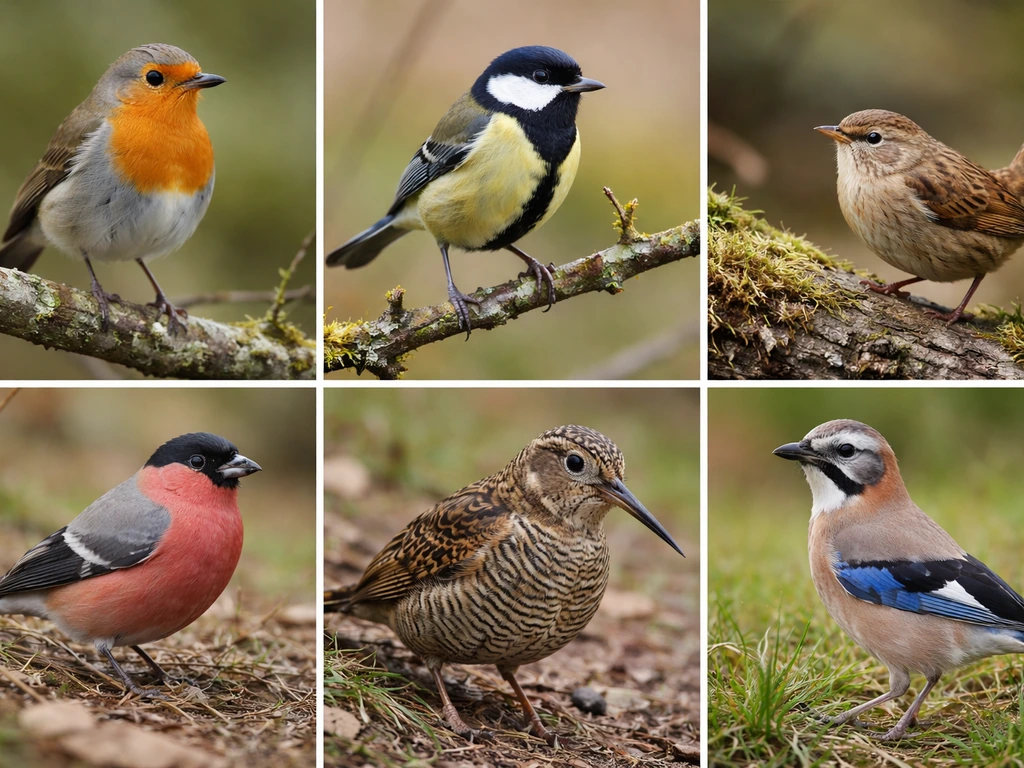
If you are pretty sure the text is talking about a real bird but you just do not know which one, these are the Eurasian species most commonly referenced by name or by symbolic trait. Use the identifying clues in the right column to verify.
| Species | Key traits to look for | Common symbolic association |
|---|---|---|
| Eurasian crane | Tall, gray, red crown patch; open wetland or farmland habitat | Longevity, good fortune, wisdom (esp. East Asia) |
| Eurasian owl (e.g., tawny or eagle owl) | Large, round-faced, nocturnal; forest or cliff habitat | Wisdom, mystery, the afterlife (Western tradition) |
| Mute swan | All-white, orange-red bill; lakes and rivers across Europe | Purity, endings, transformation, divine love |
| Eurasian hoopoe | Distinctive fan crest, orange-brown body, striped wings | Royalty, spiritual guidance, Persian and Islamic literature |
| Eurasian whimbrel | Curved downcurved bill, streaked brown; coastal mudflats | Migration, journeying (less symbolic, more literal use) |
| Eurasian spoonbill | Flat spoon-shaped bill, white plumage; wetland habitat | Rarity, conservation context; less symbolic in literature |
| Eurasian curlew | Very long downcurved bill, mournful call; moorland and coast | Loss, longing, wildness in British and Irish poetry |
To verify which species is intended, look for three things in the original text: the bill shape or size if described, the habitat mentioned, and any behavioral detail like a call or a feeding action. Those three details will narrow almost any Eurasian bird to one or two candidates. From there, a quick search on Cornell Lab's All About Birds or eBird will give you a range map and photos to confirm. Even a rough description of plumage color can do the job, because 'Eurasian' narrows the candidate pool significantly compared to searching 'brown bird' from scratch.
The bottom line: 'Eurasian bird' almost always points to geography first. If you are reading it in a literary or cultural context and no species is named, think about the dominant themes in the passage, match them to the symbolic traditions above, and you will have your answer within a few minutes.
FAQ
Is “Eurasian bird meaning” ever used to mean a specific spiritual symbol instead of an actual species?
It can happen in poetry or religious-themed writing, but the phrase itself is not an established spiritual idiom. If the author does not name a species (like crane, swan, owl), look for theme markers (wisdom, longevity, omens, transformation). Without those markers, the odds favor a geographic description.
How can I tell whether the phrase is describing breeding range versus migration or wintering range?
If the passage mentions “flyway,” “migration,” “breeds across,” or “winters in,” the intent is usually system-level geography, not where the bird is seen year-round. When “Eurasian” appears with timing cues (spring return, wintering), treat it as a range relationship, not a single location.
What if the text says “Eurasian bird” but gives no extra details, could it still be symbolic?
Yes, but you need context. If the surrounding language is about a virtue, omen, fate, or a life-stage transition, symbolism is likely. If the surrounding language is about habitat, sounds, feeding, or location, it is usually literal.
Could “Eurasian bird” be confused with “European bird” or “Asian bird” in interpretation?
Yes. “Eurasian” commonly implies a wide, connecting range across the Europe-Asia landmass, often overlapping what bird science calls Palearctic. If the author contrasts regions, the boundary matters, for example European alone may not signal the same migration linkage to Africa that “Eurasian” often does.
Are there common reader mistakes when trying to interpret “Eurasian bird” from only the phrase itself?
The biggest mistake is assuming it is a fixed idiom or slang term. The phrase is typically descriptive, and symbolic readings come from the passage’s theme, not from “Eurasian” itself. Another mistake is ignoring behavioral or habitat clues that would identify the intended species.
If I want the exact species, what is the fastest way to narrow it down from the text?
Scan for three identifiers mentioned or implied: bill shape or size, habitat (wetlands, forests, open country, coast), and any behavior (call described, feeding method, flocking, nesting behavior). Using those three together usually reduces the list to one or two likely Eurasian species.
What should I do if I see “Eurasian crane” or “Eurasian spoonbill” instead of just “Eurasian bird”?
Treat it as a specific common name. Those prefixes are usually literal range labels in ornithology, even if the species has cultural symbolism. If the author then switches into themes like longevity or omens, that is likely an added symbolic layer on top of the identified species.
Does “Eurasian” ever refer to ethnicity or people when used near birds?
Rarely. In bird contexts, “Eurasian” is used as a geographic descriptor. If the nearby text is about identity, ethnicity, or cultural groups, then the term may be used in its human meaning, and the “bird” interpretation is probably wrong.
What if the passage compares a “bird from the east” or “ravenous bird” instead of using “Eurasian bird”?
Those are different symbolic tracks. Directional and appetite-based phrases can carry tradition-specific meanings (danger, judgment, urgency) that are not the same as the neutral geographic label “Eurasian.” Use the phrase type as a decision aid: geographic label versus culturally-coded metaphor.
Next Article
Cheeky Bird Meaning: How It’s Used in Real English
Cheeky bird meaning in real English: playful teasing or flirtation, and when it becomes a rude put-down.