When someone says 'a bird,' they could mean the literal animal, a slang term for a person or gesture, a well-worn idiom, or a cultural symbol, and the only way to know which one is to look at the context around it. Most of the time in casual conversation, 'a bird' just means the animal. But the moment it shows up in a phrase, a quote, or a figurative sentence, the meaning shifts fast. Here's how to decode it quickly.
What Do You Mean a Bird? Meaning and Context Guide

Marcus Reeves
27 May 2026
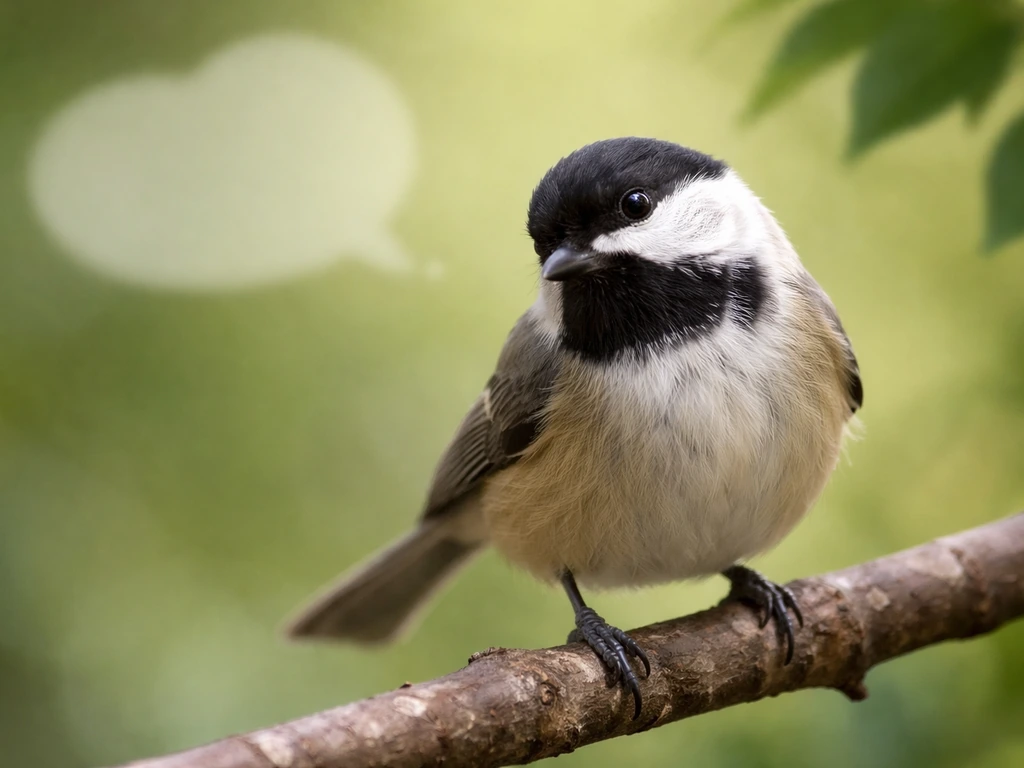
How 'a bird' is used in everyday speech
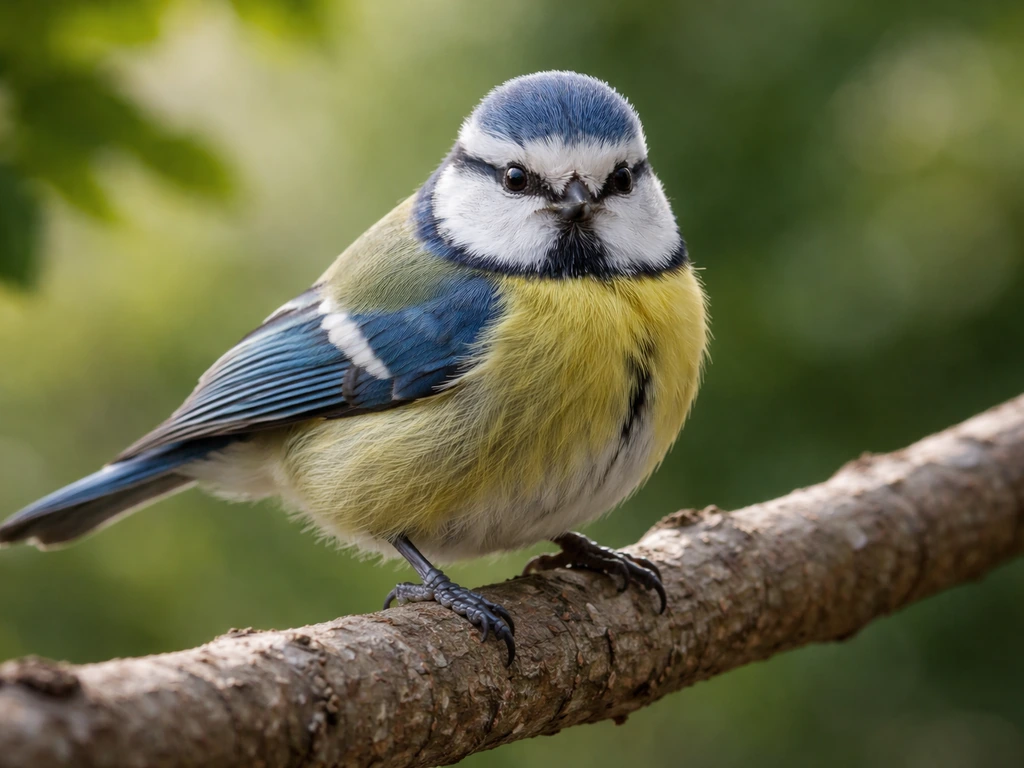
In plain, literal speech, 'a bird' is simply a creature with feathers and wings, the standard definition. Someone saying 'there's a bird on the fence' or 'I heard a bird this morning' is almost certainly talking about the animal itself. Cambridge defines “bird” as “a creature with feathers and wings, usually able to fly,” and it also includes common set phrases like “a bird in the hand (is worth two in the bush)” and “flip/give someone the bird.” blank" rel="noopener noreferrer">“a creature with feathers and wings, usually able to fly”. Cambridge puts it cleanly: a bird is 'a creature with feathers and wings, usually able to fly.' That's the baseline. Most everyday uses of 'a bird' start and end there.
But everyday speech also borrows 'bird' for a ton of other purposes. People use it to describe a person (especially in British English, where 'bird' is informal for a woman), to reference a well-known proverb, or to signal an insult through gesture. The word floats easily between the literal and the figurative, which is exactly why it trips people up. If you're asking 'what do you mean, a bird?', you're probably in one of those non-literal moments.
Common meanings of 'a bird' in slang and idioms
Slang stretches the word 'bird' in several directions depending on where you are and who's talking. In British slang, calling someone 'a bird' typically means a woman or girl, used casually and sometimes affectionately (though it can also come across as dismissive, depending on tone). In American slang, 'bird' can mean a strange or eccentric person, 'he's a real bird' basically means 'he's a weird one.' In drug culture, 'a bird' is slang for a kilogram of cocaine, a usage that shows up in rap lyrics and crime dramas regularly.
'Flip the bird' or 'give someone the bird' is one of the most widely recognized slang uses. Cambridge defines this as showing someone in an offensive way that you're annoyed with them, specifically, turning the back of your hand toward someone and raising the middle finger. If someone says 'she gave him the bird,' they're not talking about wildlife. Context here is basically self-explanatory once you know the phrase.
Beyond gestures, 'a little bird told me' is another slang-adjacent idiom that means you heard something from an anonymous or secret source. It's used to share gossip or information without revealing where it came from. None of these uses involve an actual bird, they're all idiomatic, and they're all very common.
Literary and cultural symbolism of birds (and how 'a bird' is different)
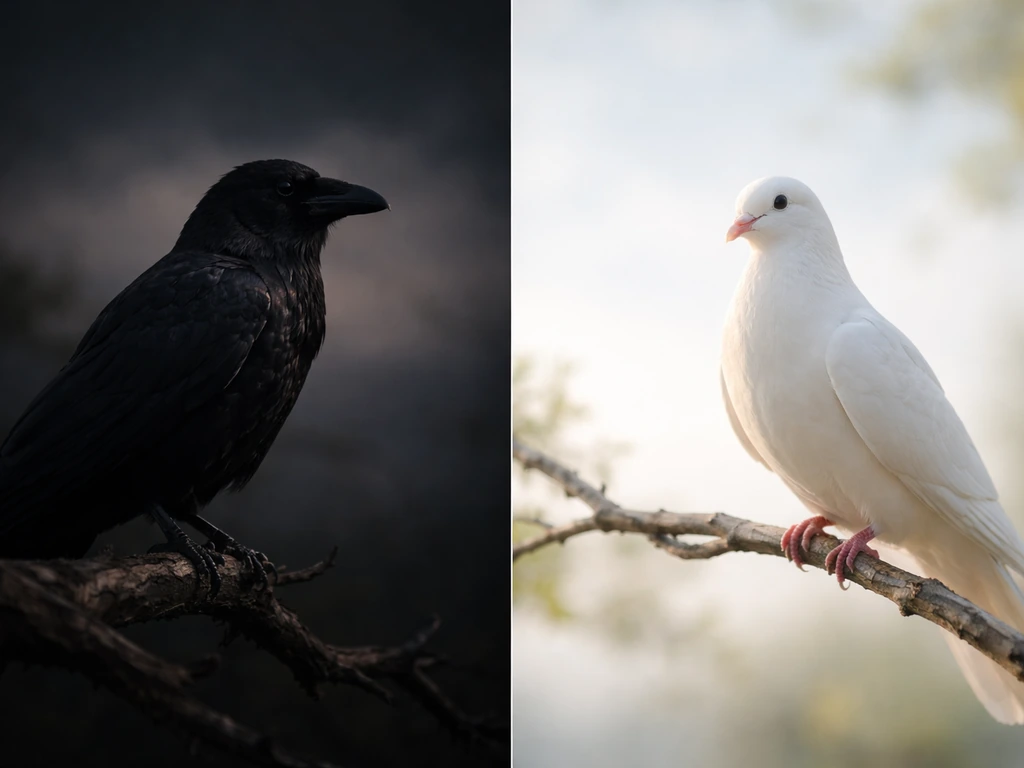
In literature and cultural tradition, individual bird species carry very specific weight. A raven signals death, omen, or mystery, think Edgar Allan Poe. A dove represents peace, purity, or the Holy Spirit. An owl stands for wisdom, or in some cultures, foreboding. These symbolic meanings are tied to specific species, not to the generic phrase 'a bird.'
When a writer or speaker says 'a bird' without naming the species, they're usually not invoking that deep cultural symbolism. Generic 'a bird' in a literary context tends to stand for freedom, the natural world, the soul, or fleeting beauty, broad and open-ended rather than precise. Maya Angelou's 'I Know Why the Caged Bird Sings' uses the bird as a symbol of constrained freedom, but it works because the bird is kept deliberately unnamed and universal. That's very different from, say, a raven appearing on a windowsill in a Gothic poem.
So if you encounter 'a bird' in a literary or cultural piece and you're trying to decode it: unnamed, generic birds tend to signal broad themes like freedom or the human spirit. Named birds carry the specific symbolic baggage of their species. That distinction matters a lot when you're analyzing a text or figuring out what a speaker is reaching for. The denotative and connotative meanings of 'bird' as a word explore this split in more depth, the literal definition versus everything the word carries emotionally and culturally.
Specific bird-species phrases vs. generic 'a bird' usage
There's a real difference between someone saying 'a bird landed on my car' and 'an owl watched me from the tree.' The first tells you almost nothing beyond the basic event. The second pulls in centuries of symbolism the moment you hear 'owl.' The same applies to phrases: 'a bird in the hand' uses a generic bird as a stand-in for any valuable thing you already possess. But 'the dove of peace' is unmistakably about a dove, species-specific, loaded with meaning.
| Usage type | Example | What it signals |
|---|---|---|
| Generic 'a bird' | A bird in the hand is worth two in the bush | Universal value of what you already have |
| Generic 'a bird' | A little bird told me | Anonymous information source |
| Generic 'a bird' | The early bird catches the worm | Reward for acting early |
| Species-specific | The raven tapped at the window | Omen, death, mystery (literary) |
| Species-specific | A dove landed on the branch | Peace, purity, divine presence |
| Species-specific | Wise as an owl | Wisdom, knowledge |
When someone is using a named species, they're usually doing it intentionally, pulling in that bird's cultural reputation. When they say 'a bird' without a species name, the meaning is almost always either literal (the animal) or idiomatic (a set phrase). Knowing this split helps you decode what you're actually dealing with in about two seconds.
Figurative meanings in common sayings
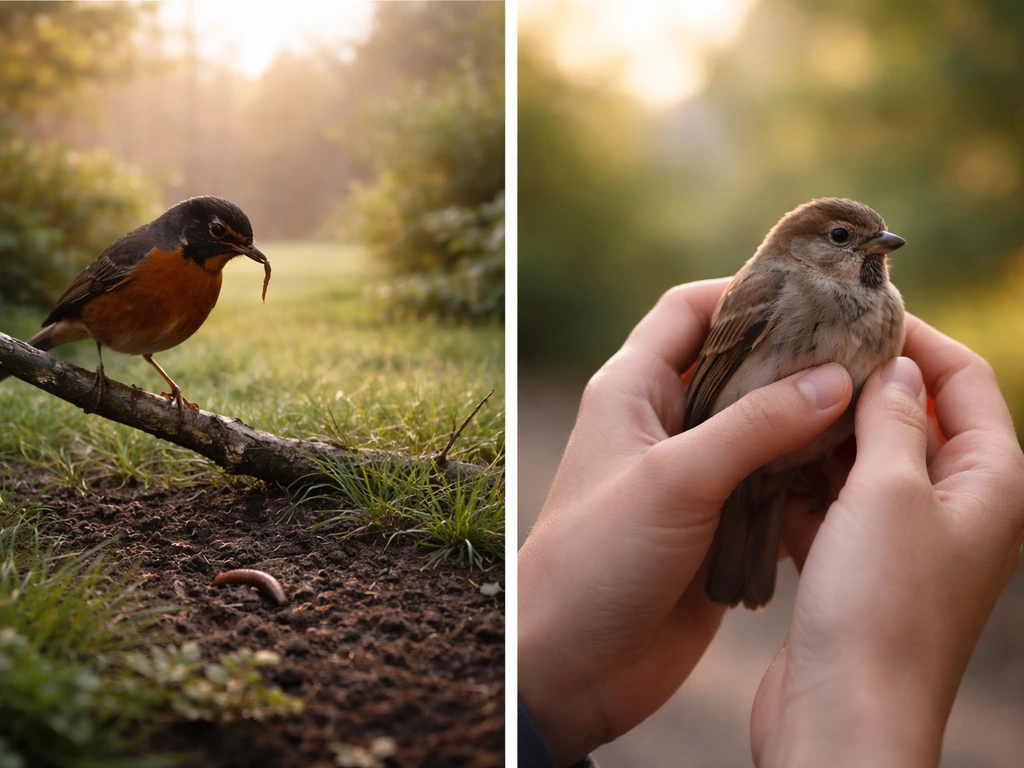
'The early bird gets the worm' is probably the most recognizable 'bird' idiom in the English language. Merriam-Webster defines 'early bird' as both someone who rises early and someone who acts before their competitors, and traces it directly to the proverb 'the early bird catches the worm.' When someone calls you an 'early bird,' they mean you got somewhere first or you habitually do things ahead of others. Cambridge also notes this applies to deals and opportunities, as in 'early bird pricing' for tickets or events. The bird here is pure metaphor, it's about timing and reward.
'A bird in the hand is worth two in the bush' means that what you already have is more valuable than something bigger you might get, but might not. It's a caution against greed or risk. The birds are stand-ins for any resource or opportunity. Nobody using this phrase is thinking about actual birds.
'Kill two birds with one stone' means accomplishing two things with a single action. Again, entirely figurative, it's about efficiency. 'Birds of a feather flock together' means people with similar traits or interests naturally group up. 'A free bird' or 'free as a bird' invokes the idea of freedom, usually to describe someone with no obligations or constraints. All of these use 'bird' as a shorthand for something else entirely.
How to figure out what the speaker means right now
If you're in the middle of a conversation and genuinely can't tell what 'a bird' means, run through this quick checklist:
- Is it part of a known phrase or proverb? If yes, it's idiomatic — look up the phrase itself.
- Is a specific species named? If yes, expect symbolic or literary meaning attached to that species.
- What's the tone? Casual and descriptive usually means literal. Emphatic, ironic, or metaphorical usually means figurative.
- Who is speaking? Region and generation matter. A British speaker using 'bird' to describe a woman is a different situation from an American using it in a rap lyric.
- What are the surrounding words? Words like 'early,' 'hand,' 'flock,' 'free,' or 'flip' almost always signal an idiom or slang phrase.
- Does the sentence make literal sense? 'She gave him the bird' doesn't refer to an animal. 'A bird sang outside' almost certainly does.
- Is this written or spoken in a literary or cultural context? Poetry, song lyrics, and literary prose are much more likely to use 'a bird' symbolically than everyday conversation.
If you've run through that and you're still unsure, it's completely fine to ask. 'Do you mean literally, or are you saying I need to act fast?' works perfectly in most situations. People don't mind being asked to clarify, it shows you're paying attention.
Translating 'a bird' into plain English: real examples
Here are some real-world 'a bird' sentences and what they actually mean, translated into plain English so you can see how the context shifts the meaning every time.
| Original phrase | Plain English translation | Category |
|---|---|---|
| 'I saw a bird on the way in.' | 'I saw an actual bird — probably nothing significant.' | Literal |
| 'You're such an early bird!' | 'You arrived/acted before everyone else — nice work.' | Idiom (positive) |
| 'A bird in the hand, right?' | 'Hold on to what you've got rather than risk it for something better.' | Proverb/idiom |
| 'She totally gave him the bird.' | 'She flipped him off — showed him her middle finger.' | Slang (gesture) |
| 'A little bird told me you got the job.' | 'Someone told me in secret that you got the job.' | Idiom (gossip) |
| 'He's a strange bird.' | 'He's a weird or eccentric person.' | Slang (personality) |
| 'The caged bird represents her whole situation.' | 'The bird is a symbol of someone whose freedom is being restricted.' | Literary/symbolic |
| 'We killed two birds with one stone.' | 'We solved two problems with one action — very efficient.' | Idiom (efficiency) |
Notice how each sentence gives you enough surrounding information to decode the meaning. The literal ones are descriptive and grounded. The idioms come attached to familiar phrases. The slang ones depend on tone and social context. And the literary one signals immediately that interpretation, not description, is what's needed.
If you want to go deeper, the denotative meaning of 'bird' covers the strict dictionary definition, while the connotative meaning explores all the emotional and cultural layers the word picks up. And if you're wondering how the name 'Bird' functions as a personal name, for people like jazz musician Charlie 'Bird' Parker, that's its own interesting thread worth pulling. To understand the name Bird itself, it helps to look at where it comes from and how it’s used as a personal name what does the name bird mean. All of these meanings connect back to the same core word, just worn differently depending on who's using it and why.
FAQ
If someone says “a bird” in a message or text, how can I tell whether they mean wildlife or slang?
Look for grounding details. If there are concrete sensory cues (location, time, what it did, how it looked) it is usually literal. If the sentence is about a person, a weird situation, or a gesture, it is likely slang or idiom, and tone matters because “bird” slang can flip from playful to insulting depending on phrasing.
What does “bird” mean if it’s capitalized, like “Bird” in a quote or title?
Capitalization often signals a proper noun, either a named species used as a title, a character name, or a nickname. In that case, treat it as a reference to a specific person or named work rather than the generic word “a bird,” unless the surrounding text explicitly discusses animals.
Is “a bird” always offensive when it involves the middle finger gesture?
The gesture is generally understood as rude, but impact varies by setting and culture. In casual speech it can be direct annoyance, but if it appears in conflict-heavy contexts (arguing, workplace messages) assume it is hostile. If you are unsure, ask neutrally what the speaker meant rather than reacting.
What does “a little bird told me” mean, and does it matter if the speaker is joking?
It typically means the speaker heard information from an unnamed source. Even if they are being playful, the key function is still to signal secrecy or indirect sourcing, not literal birds. If the claim feels important or suspicious, treat it as secondhand until verified.
How do proverbs like “the early bird gets the worm” work if I’m translating or interpreting for someone else?
Most of these are about the lesson, not the literal image. When translating, keep the meaning about timing, effort, and payoff (early action gets rewards). A direct word-for-word translation may confuse the reader if the proverb does not exist in their language or culture.
Is “bird” in “a bird in the hand” always about money or value?
Not necessarily. The phrase means “what you already have” is safer and more worthwhile than a possible future gain. It can apply to time, opportunities, relationships, or resources, not only finances. If the speaker names a specific area (job, deal, assets), map the lesson to that domain.
What should I do if the conversation mixes meanings, like literal birds plus slang?
Assume the speaker is using two different frames. For example, they might talk about an actual bird for one sentence, then use “bird” figuratively in the next. Re-check the sentence boundaries and the nouns nearby (person versus animal). If you still cannot separate them, ask for clarification using a calm, non-judgmental prompt.
Does British “bird” slang mean the same thing as American “bird” slang?
No. In British English, “bird” commonly refers to a woman or girl (and can be affectionate or dismissive based on tone). In American slang, it more often means an eccentric or strange person. If you are listening to a non-local speaker, pay attention to accents and the surrounding attitude to avoid misreading intent.
How can I quickly decode “bird” in literature when the species is not mentioned?
When “bird” is generic, it usually supports broad themes like freedom, the soul, fleeting beauty, or human spirit. When a species is named (raven, dove, owl), interpretation often relies on species-specific cultural symbolism. Use that rule of thumb first, then check whether the surrounding imagery matches the implied theme.
Next Article
Connotative Meaning of Bird: Definitions, Idioms, Slang, and Symbolism
Learn bird connotation: idioms, slang, and symbolism beyond its denotative meaning, with tips to interpret tone correctl