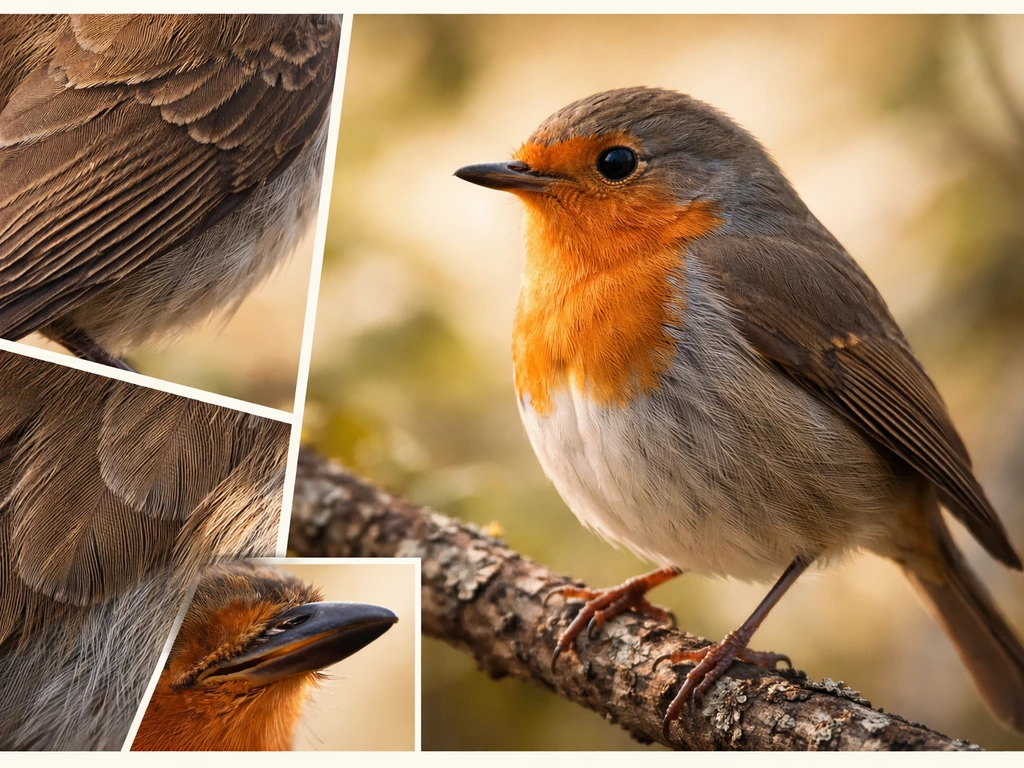
The denotative meaning of 'bird' is straightforward: a bird is a warm-blooded, egg-laying vertebrate covered in feathers, with forelimbs modified into wings. That's the literal, dictionary-level definition, what you'd find under the biological class Aves. Whether the bird can fly or not (penguins, ostriches) doesn't change what it is. Feathers, wings, two legs, egg-laying: that's the core package. Everything else, the slang, the proverbs, the insults, the British prison slang, is layered on top of that literal foundation.
Denotative Meaning of Bird: Literal Sense, Idioms, Examples

Marcus Reeves
4 Jun 2026
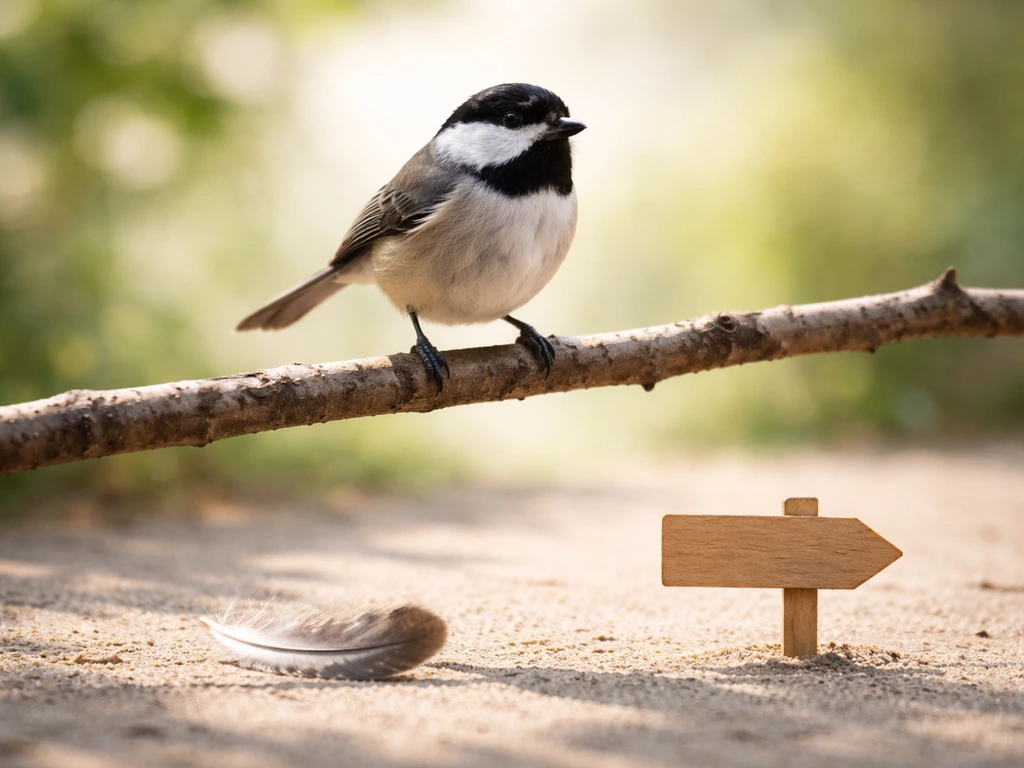
The literal definition of 'bird'
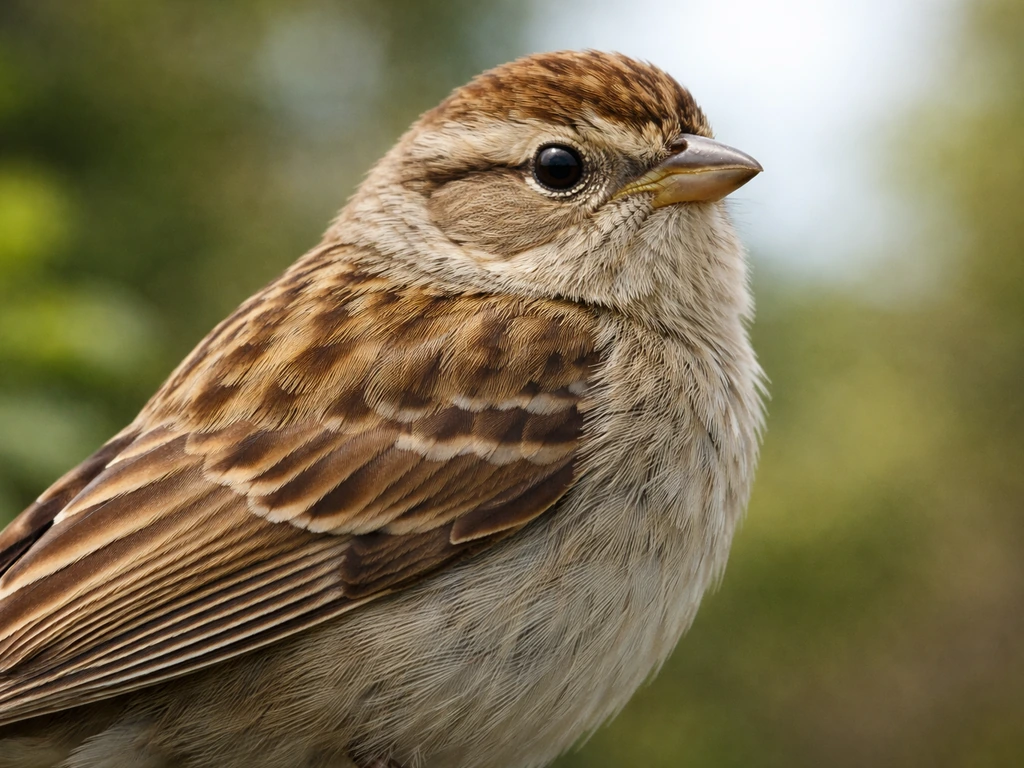
Merriam-Webster puts it precisely: a bird is 'any of a class (Aves) of warm-blooded vertebrates' with a body covered in feathers and forelimbs modified as wings. Cambridge simplifies it a little: 'a creature with feathers and wings, usually able to fly.' Oxford adds that birds have two wings and two legs. All three are describing the same animal class, just from different angles. The 'usually able to fly' caveat from Cambridge is worth noting, it correctly signals that flight isn't the defining feature. Feathers are. No other living animal class has feathers, which makes that the single most reliable denotative marker when you're trying to identify whether something is literally being described as a bird.
The egg-laying trait also belongs to the denotative package. Merriam-Webster includes it explicitly. So when 'bird' appears in a scientific or educational context, expect all of these traits to be implied at once: warm-blooded, feathered, winged, two-legged, egg-laying vertebrate. That's the full literal picture.
Bird vs. animal, fowl, and species names
People use 'animal,' 'fowl,' 'bird,' and specific species names somewhat interchangeably in casual talk, but they don't actually mean the same thing. Here's how to tell them apart.
| Term | What it covers | Typical register |
|---|---|---|
| Animal | Any living thing in the kingdom Animalia — dogs, insects, fish, birds, humans. Extremely broad. | Everyday, scientific, general |
| Bird | Members of class Aves specifically — feathered, winged vertebrates. A subset of animals. | Everyday, scientific, literary, slang |
| Fowl | Domesticated birds raised for food (chickens, ducks, turkeys). A narrow subset of birds. | Agricultural, culinary, old-fashioned |
| Species name (e.g., robin, raven, sparrow) | One specific type of bird with its own classification. The most precise level. | Scientific, naturalist, literary |
Collins actually captures the everyday tension well: in common speech, 'animal' is sometimes used to mean 'a living creature such as a dog or rabbit, rather than a bird, fish, insect, or human being', which treats bird as its own separate category, not just a type of animal. That's not scientifically accurate (birds are animals), but it reflects how people actually talk. If someone says 'I like animals and birds,' they're drawing a folk distinction, not a biological one. 'Fowl' sits in a much narrower lane, it's almost always about food or agriculture. Calling a wild finch a 'fowl' would sound strange. And using a species name like 'raven' or 'songbird' is the most specific you can get, 'songbird' even has a technical ornithological meaning (order Passeriformes), not just a poetic one.
Denotative 'bird' in everyday sentences
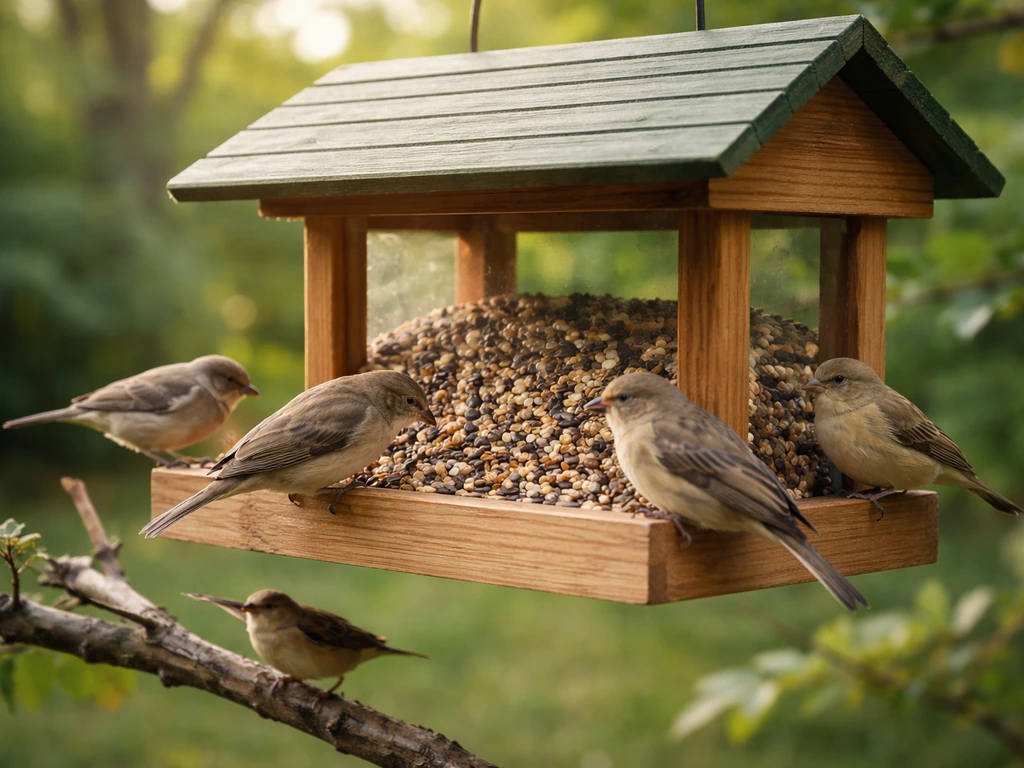
The easiest way to confirm whether 'bird' is being used literally is to check whether it could be swapped for a species name or 'animal' without breaking the meaning. Here are clear examples of denotative usage:
- "Several birds came to the feeder this morning." (Literal — actual animals at an actual feeder.)
- "Birdwatching is a hobby that requires patience and a good pair of binoculars." (Literal — observing real birds in the wild.)
- "The injured bird was taken to a wildlife rehabilitation center." (Literal — a physical animal needing care.)
- "What kind of bird makes that sound?" (Literal — asking about a real species.)
- "Birds migrate south in autumn to find warmer climates." (Literal — the biological behavior of the animal class.)
In all of these, 'bird' means an actual member of class Aves. You could substitute 'robin' or 'sparrow' or 'animal' and the sentence still makes sense (even if it becomes more or less specific). That substitution test is a quick way to check: if a specific species name fits in place of 'bird,' the usage is almost certainly denotative.
Common idioms and phrases where 'bird' isn't a bird at all
This is where things get interesting. English has a long history of using 'bird' in expressions where the word has nothing to do with an actual feathered animal. Knowing the literal meaning actually helps you spot the figurative twist faster.
| Expression | Literal reading | What it actually means |
|---|---|---|
| Flip/give someone the bird | Hand a person an actual bird | Make an obscene hand gesture (the middle finger) |
| A bird in the hand is worth two in the bush | Physically holding one bird beats chasing two | It's better to keep what you have than risk losing it for something more |
| The early bird catches the worm | A bird that wakes early finds food | Getting somewhere first gives you an advantage |
| Do bird (UK slang) | Perform some bird-related activity | Serve time in prison |
| Bird-dog (verb) | Use a trained hunting dog to locate birds | To closely watch or monitor someone or something |
| Lovebirds | A species of small parrots | Two people in a romantic relationship (informal) |
| Birdbrain | A brain the size of a bird's brain | A stupid or foolish person (derogatory slang) |
The substitution test breaks down completely with idioms. You can't replace 'bird' with 'robin' in 'flip the bird' and get anything meaningful. That's your signal: if swapping in a species name produces nonsense, the expression is figurative. The meaning lives in the phrase as a whole, not in the word 'bird' on its own.
The prison slang 'do bird' is worth a special note. Cambridge Dictionary defines “do bird” as UK old-fashioned slang meaning “to spend time in prison.” the prison slang 'do bird'. It comes from British rhyming slang: 'bird-lime' rhymes with 'time,' so 'bird-lime' became 'bird,' which became shorthand for doing time (serving a prison sentence). By the time it reached everyday UK slang, the bird connection was completely invisible. Cambridge labels it old-fashioned now, but it still shows up in British crime writing and older informal speech.
When 'bird' appears in literature and culture without meaning the animal
In literary and cultural contexts, 'bird' is often used as a symbol rather than a descriptor. The key distinction here is between denotative use (the word pointing directly at the animal) and connotative or symbolic use (the word evoking an idea through the animal's associations). A raven in Edgar Allan Poe's poem is a literal raven on the surface, but its function in the poem is symbolic, it represents grief, obsession, and the impossible return of the lost. The word 'bird' or 'raven' carries denotative weight (yes, it's an actual bird in the story) while the cultural meaning layers on top.
In other cases, 'bird' in a title or phrase signals something entirely non-literal. Harper Lee's 'To Kill a Mockingbird' uses the bird as a moral symbol, not a wildlife observation. Song lyrics often use 'bird' to evoke freedom, escape, or fragility without the speaker intending any actual ornithology. When you're reading and 'bird' shows up in a metaphor or symbol, the denotative meaning is the starting point, it's what the author expects you to know, and the figurative meaning is built on top of it. The connotative meaning of bird (what birds emotionally or culturally suggest) is a separate but related topic worth exploring on its own.
When 'bird' means a person
Dictionaries are pretty consistent on this: 'bird' has a secondary slang sense referring to a person, particularly a young woman, in British English. Merriam-Webster lists 'chiefly British: girl' as a secondary meaning. Cambridge and Oxford both flag it as UK slang, with Oxford specifically labeling it 'old-fashioned, slang, offensive' when used to refer to a young woman. So if you're reading older British fiction, watching British TV from the 1960s or 70s, or running into British slang, 'she's a nice bird' means 'she's a nice young woman', not a compliment about wildlife.
In American English, this person-meaning of 'bird' is far less common and tends to show up in older writing or deliberately British-influenced contexts. The more you see 'bird' used for a person in contemporary writing, the more likely it's either quoting British slang, being used ironically, or appearing in a compound like 'birdbrain' (a stupid person) where the insult is the point. Register and geography matter a lot here: 'bird' as a casual term for a person is distinctly British, old-fashioned, and increasingly considered offensive in its gendered application.
How to decide if 'bird' in a sentence is literal or figurative

You don't need to memorize every idiom. A few quick checks will get you there almost every time.
- Try the species-name swap test. Can you replace 'bird' with 'sparrow' or 'eagle' and keep the meaning? If yes, it's probably literal. If it produces nonsense, it's figurative.
- Check if 'bird' is part of a fixed phrase. 'Early bird,' 'flip the bird,' 'a bird in the hand' — these are set expressions with meanings that dictionaries define as idioms. The phrase as a whole carries the meaning, not the word alone.
- Look at context: is there any actual animal present in the scene? A sentence about a garden, a forest, a wildlife refuge, or a feeder is likely literal. A sentence about attitudes, gestures, relationships, or advice is more likely figurative.
- Note the register and region. 'Bird' used for a person is almost always old-fashioned British slang. 'Bird' meaning prison time is British rhyming slang. If neither of those fits the context, default to the literal animal meaning.
- When in doubt, go literal first. The denotative meaning is the base. Figurative meanings only work because the literal one exists — they build on it. Start with the actual animal and see if that reading makes sense in context before assuming figurative intent.
One more thing worth knowing: the word 'bird' has a whole family of related meanings that overlap with questions like what the best definition of bird is, what people mean when they casually say 'a bird,' and even what the name 'Bird' means as a proper noun or nickname. The name Bird as a proper noun or nickname has its own meaning and history, which can be different from the animal sense name 'Bird'. If you are asking what someone means by “bird” in everyday talk, the person slang and the idioms are where confusion usually starts what the best definition of bird is. To get a crisp answer, see the best definition of bird, which focuses on the core denotative traits shared by members of class Aves. The denotative meaning covered here, class Aves, feathers, wings, egg-laying, is always the starting point. Every figurative, symbolic, and slang use of the word grows from that literal root.
FAQ
Is “bird” always literal when it appears in a non-scientific sentence (like “birds are animals”)?
Not always. If an expression contrasts birds with “other animals,” “bird” is being used literally for class Aves. But if the sentence treats “bird” as a stand-in for “something animal-like” or “food fowl,” it is not strictly denotative. A quick check is whether feathers and egg-laying traits would have been relevant to the speaker’s point, or whether the wording is really about category, food, or stereotype.
If something is flightless, does that change the denotative meaning of “bird”?
No, because “bird” is a taxonomic label (Aves), while “flying” is only a common feature. Denotative use still applies to flightless birds such as ostriches and penguins, as long as the referent is a real member of class Aves. So if the context says “it can’t fly,” that does not automatically push the word out of its literal denotation.
What common look-alikes (like bats or winged insects) do people mistakenly include under “bird”?
Some animals are easily confused with birds in everyday talk. Bats are mammals, so they are not birds denotatively, even though they “fly.” Similarly, insects with wings and reptiles that glide are not birds. If the word “bird” can’t be replaced by a species name like “sparrow,” it is likely not denotative, or it may be figurative.
How can I tell whether “Bird” in a text is the animal denotation or a proper name/nickname?
Proper nouns and nicknames often create ambiguity. If someone says “Bird” as a name (for a person, band, or character), it is not the animal denotation at all. To stay denotative, look for clues like capitalization and surrounding grammar, for example “Bird was born” strongly indicates a name, not class Aves.
In food or hunting contexts, is “bird” still denotative, or can it mean something narrower like poultry?
Yes, there are borderline cases where “bird” is used loosely. In cooking or shopping, “bird” can mean poultry as food (a narrower practical category than all Aves). Denotative meaning for “bird” is still class Aves, but the speaker may be using “bird” as shorthand for edible poultry, so the substitution test with a specific wild species may fail.
How do I recognize idiomatic “bird” uses without memorizing the idioms?
Phrases that act like fixed expressions usually behave non-denotatively. If “bird” is part of a set phrase whose meaning cannot be derived by swapping in a species name, treat it as idiomatic. For example, if the sentence meaning depends on the whole chunk, “bird” is not functioning as a literal classifier.
Can “bird” be both literal and symbolic in the same sentence, and how do I handle that?
“Bird” can shift between literal and symbolic use within the same text. A narrator might describe a literal raven, then use it to represent grief. When this happens, the denotative core still matters because it sets up the image the symbolism draws on. Practically, ask what the author would have had you picture first (the bird itself), then ask what idea the passage assigns to that bird afterward.
If “bird” seems to refer to a person, what is the safest way to interpret it?
When “bird” labels a person, it is usually British, old-fashioned, and can be offensive depending on gender framing. If you are unsure, treat it as slang rather than denotation, and rely on context such as whether it is paired with other insults, dates, or character dialogue tone. If the sentence sounds like a commentary on a young woman, it is likely that slang sense rather than an animal reference.
What is a reliable step-by-step method to decide whether “bird” is being used denotatively?
Two useful decision tests are (1) substitution with a specific species name and (2) grammar cues. If you can replace “bird” with “robin” or “sparrow” and the sentence remains grammatical and coherent, the usage is likely denotative. If substitution breaks meaning, or if the phrase has figurative structure (like idioms, metaphors, or symbolic titles), then “bird” is not being used literally.
Does the denotative meaning of “bird” change when it appears in compounds like “songbird”?
Yes. “Songbird” and other compounds can carry technical meaning or specific category meaning that goes beyond the generic “bird.” In those cases, denotative interpretation still applies, but the denotation is restricted to a particular kind of bird (for example, taxonomic or definitional grouping) rather than all members of Aves. So check whether the compound implies a specific subgroup definition.
Next Article
What Is the Best Definition of Bird? Science and Everyday Use
Best definition of bird: scientific traits of Aves plus meanings in idioms like early bird and flip the bird.