When someone says 'death bird,' they almost always mean a bird that symbolizes death, acts as an omen of death, or represents death in a cultural, spiritual, or artistic context. The most common referent is the owl, which has carried that reputation across dozens of cultures for centuries, but ravens, crows, vultures, and blackbirds all get pulled into the same conversation depending on where you encountered the phrase.
Death Bird Meaning: Omen, Dreams, and Symbolism Guide

Marcus Reeves
30 May 2026
What people usually mean by 'death bird'
The phrase 'death bird' is not a single defined idiom with one locked-in meaning. It works more like a shorthand that people reach for when they want to name a bird tied to death symbolism. In practice, it shows up in a few distinct ways: as a literal superstition label (a bird whose appearance or call is believed to signal that someone is going to die), as a poetic or metaphorical descriptor in writing and art, and as a casual online or conversational term for any bird that feels dark, ominous, or associated with death imagery.
Wiktionary actually has a formal entry for 'deathbird' as a single compound word, defining it as a superstition-based term for an owl whose call presages death, with roots in North American Indigenous belief systems. That definition captures the oldest and most literal use of the term. But in modern usage, people apply it much more loosely, and that is usually what creates confusion when you encounter it.
Bird species linked to death symbolism
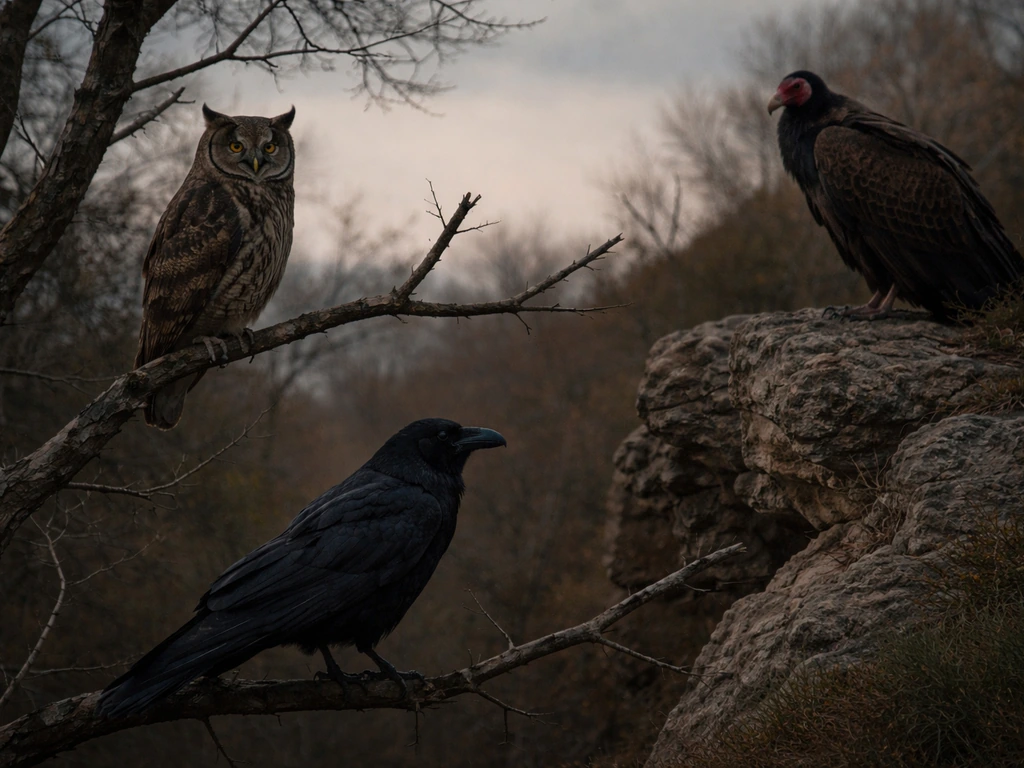
If someone calls a specific bird a 'death bird,' there is a short list of species they are almost certainly referring to. Each one earned that reputation through a combination of behavior, appearance, and long cultural association.
Owls
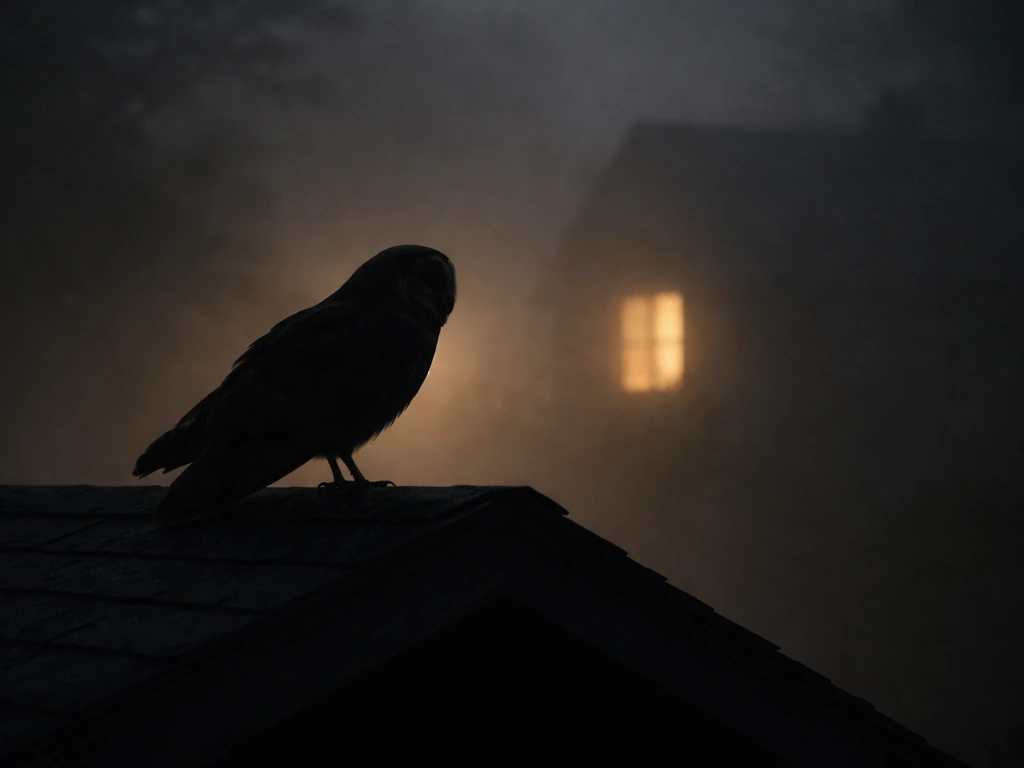
Owls are the most direct match for the classic 'death bird' label. Their nocturnal habits, silent flight, eerie calls, and tendency to appear near homes at night made them the go-to omen of death across ancient Rome, Mesoamerica, parts of Africa, and many Indigenous North American traditions. Owls’ nocturnal habits and silent, unsettling presence have been interpreted across many cultures as omens of death and darkness blank" rel="noopener noreferrer">their nocturnal habits, silent flight, and eerie calls. The barn owl (Tyto alba) is a particularly strong example: in Bahamian English, it is literally called the 'death bird,' and blank" rel="noopener noreferrer">the folk belief holds that if a barn owl calls near your house or chimney, it signals a death in the neighborhood or inside the home. Tengmalm's owl is another species explicitly listed under the 'deathbird' entry. The pattern across cultures is consistent: owls are silent, they hunt in darkness, and their calls are unsettling to human ears, which made them easy to read as messengers from whatever comes after life.
Ravens and crows
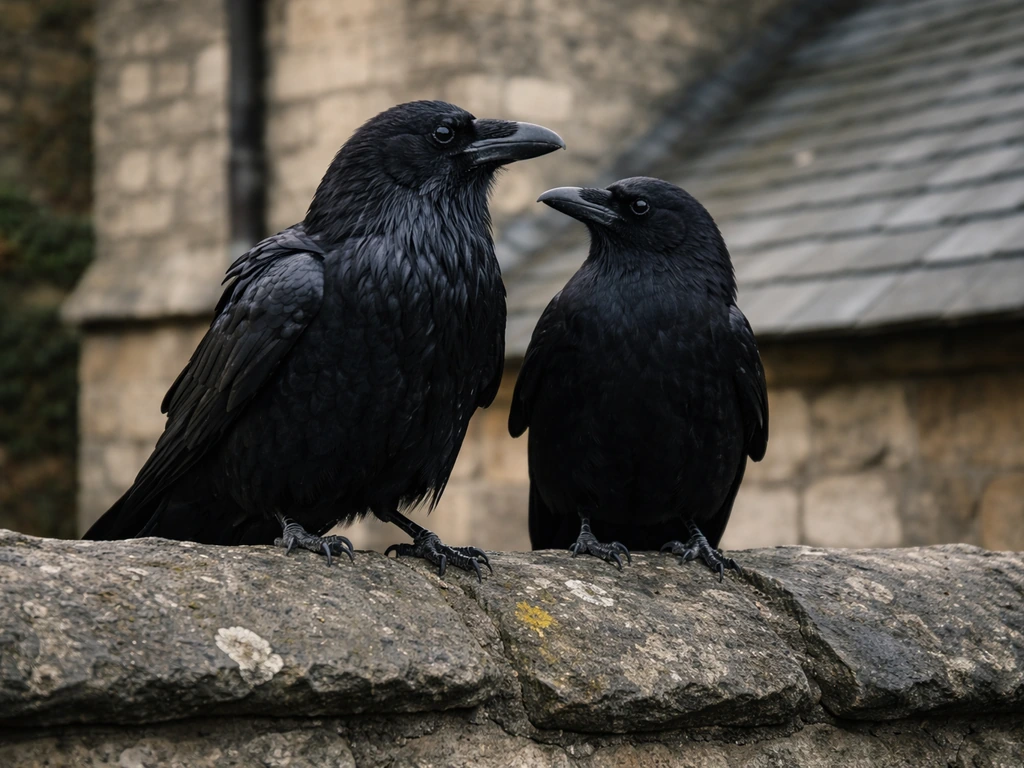
Ravens and crows are probably the most visually iconic death birds in Western popular culture right now. Their all-black coloring, intelligence, and historical presence on battlefields (where they fed on the dead) tied them permanently to death imagery in Norse, Celtic, and European folklore. Poe's raven cemented the association in literature. In memes, tattoos, and horror aesthetics, a raven or crow is often the first image people reach for when they want to signal death, grief, or the supernatural. When someone says 'death bird' in an art or tattoo context, they are probably thinking of a crow or raven more than anything else.
Vultures
Vultures are the most literally death-associated birds because they actually eat the dead. Their circling behavior became a visual metaphor for impending death in literature and everyday speech. When used as a 'death bird' reference, vultures tend to appear in more literal or darkly humorous contexts rather than mystical or omen-based ones.
Blackbirds and other dark species
Blackbirds, magpies, and even swifts get pulled into death symbolism in specific regional or literary traditions. In some British folklore, a single magpie is an omen of bad luck or death (hence the counting rhyme 'one for sorrow'). In certain literary and musical contexts, 'blackbird' itself carries heavy metaphorical weight around loss and mortality. These are less likely to be the primary meaning of 'death bird' but come up often enough in context-specific situations that they are worth knowing.
| Bird | Primary reason for death association | Most common context |
|---|---|---|
| Owl (especially barn owl) | Nocturnal, silent, eerie calls near homes | Folklore, superstition, direct 'deathbird' label |
| Raven / Crow | Black coloring, battlefield scavengers, Poe | Literature, art, tattoos, horror aesthetics |
| Vulture | Feeds on the dead, circling behavior | Literal death metaphor, dark humor |
| Magpie | Counting superstitions, bad luck omen | British/Irish folklore, regional tradition |
| Blackbird | Dark coloring, literary symbolism | Poetry, music, loss-themed writing |
Context-based meanings: dreams, sightings, art, and stories
The same phrase means something different depending on where you ran into it. Here is how to read it by context.
In dreams
If you dreamed about a 'death bird' or a bird that felt like a death omen, the interpretation in most dream symbolism traditions focuses on transition, ending, or change rather than literal death. A dark bird in a dream is more often read as a sign that something in your life is ending and making room for something new. The emotional tone of the dream matters a lot: was the bird threatening or peaceful? That distinction usually shapes the interpretation more than the species does.
In real-life sightings
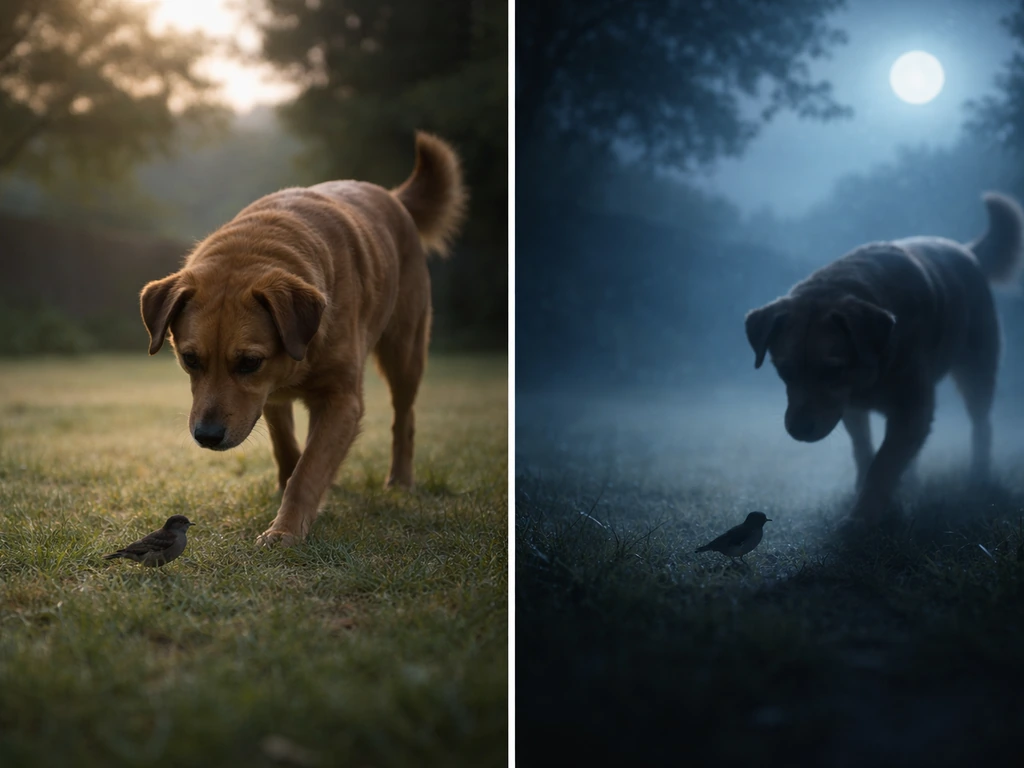
If you saw a specific bird near your home and want to know if it counts as a 'death bird' omen, you are working inside a folkloric tradition. If a dog killed a bird and you are wondering about the dog killed bird meaning, people often treat it as a sign, omen, or coincidence depending on the story they attach to it. Whether you take that seriously is personal, but it helps to know the specific belief. A barn owl calling near your chimney fits the Bahamian and broader Caribbean folk tradition directly. A crow or raven landing on your windowsill fits European and Indigenous North American traditions. None of these are universally agreed-upon omens, and many cultures read the same birds as protective or spiritually significant in positive ways. Context, including your own cultural background, shapes what a sighting means to you.
In art and tattoos
In visual art and tattoo design, 'death bird' almost always means a dark, stylized bird used to represent mortality, grief, or the macabre aesthetic. Ravens and crows dominate here. Owls appear in this context too, often styled with skulls or in gothic imagery. If you are a writer or artist choosing a 'death bird' symbol, the raven gives you the richest literary and cultural reservoir to draw from, while the owl gives you the deepest, most cross-cultural omen tradition to reference.
In stories, games, and pop culture
In fiction, the phrase often functions as a proper noun or title rather than a general descriptor. A character, creature, or faction might be called 'the Death Bird' as a name. In that case, you need to look at the specific source to understand what it means in that world. Games, fantasy novels, and horror media use the term freely and idiosyncratically. The symbolism may borrow from real folklore or invent something entirely new for that story's setting.
Common mix-ups with related bird phrases
A few related expressions get conflated with 'death bird,' and it is worth separating them clearly.
- Dying bird: This refers to a bird that is in the process of dying, and the symbolism around encountering one is distinct from a 'death bird' omen. A dying bird is often interpreted as a message about letting go or paying attention to something ending in your life. It is about witnessing death, not being warned of it. This is a meaningfully different concept worth exploring separately.
- Dog killed bird or cat kills bird: These situations carry their own set of symbolic readings in folk tradition, focused on the act of predation and what it might represent about instinct, disruption, or warning. They are not the same as a death bird omen even though they involve a bird and death in proximity.
- Bird of prey: A hawk or eagle is sometimes called a death bird loosely, but birds of prey carry their own symbolism around power, vision, and freedom rather than death omens specifically. The overlap is in hunting, not in the omen tradition.
- Saving a bird: The symbolic meaning of rescuing or saving a bird that appears injured or dying is its own topic with positive connotations around luck and protection, essentially the inverse of a death bird encounter.
- 'Flip the bird': Completely unrelated slang meaning a rude hand gesture. Worth mentioning only because newcomers to English sometimes encounter it and wonder about a bird connection.
How to identify the exact reference you encountered
When you are trying to pin down exactly what 'death bird' means in a specific situation, ask yourself these questions in order.
- Where did you see or hear the phrase? A book, a tattoo design, a dream, a real-life bird sighting, an online post, or a game all point toward different interpretations.
- Was a specific bird species named or shown? If yes, cross-reference that species with the folklore traditions above. An owl points to the omen tradition. A raven points to literary and aesthetic traditions.
- What cultural context is at play? A Bahamian or Caribbean context points strongly to the barn owl and the 'digdee owl' superstition. A Western literary context points to ravens. An Indigenous North American context may point to owls or other regionally specific birds.
- Is it used as a proper noun (a name or title) or a descriptive phrase? If it is a name for a character or creature in a specific story or game, search that title plus 'death bird' to find the source's own explanation.
- What is the emotional register of the source? Something dark and horror-adjacent is probably using death bird for atmosphere. Something written in a folkloric or spiritual tone is probably working within a genuine belief tradition.
If you have a physical or digital source in hand, like a book passage, a tattoo reference image, or a game description, the fastest move is to search the exact phrase alongside the title or author. Death bird gets used as a concept, a nickname, and a title in very different ways, and the source itself will almost always clarify which one you are dealing with. “Cat kills bird meaning” is another superstition-style question, and it often comes from the same kind of symbolism people attach to animals in everyday life.
Quick takeaways and next steps
The most likely meaning of 'death bird' in almost any context is a bird understood to symbolize or foretell death, with owls being the most direct and historically documented example, and ravens or crows being the most culturally prominent in modern Western use. If you meant the dying bird meaning specifically, it helps to look at whether you are talking about symbolism in literature and art or a superstition about omens death bird. Here is what to do with that depending on your situation. To avoid confusion, some people also use the expression “saving a bird” as slang for helping something while keeping the meaning of “death bird” separate.
- If you had a real-life sighting and are wondering about its significance: Identify the species first. If it was a barn owl calling near your home, you are in the middle of a very specific folk tradition with a long history. If it was a crow or raven, you are in a different but equally rich symbolic tradition. Neither one is a definitive prophecy, but both carry genuine cultural weight if that matters to you.
- If you are a writer or artist choosing death bird symbolism: The raven gives you the most literary depth and recognizability. The owl gives you the most cross-cultural omen credibility and a direct connection to the oldest documented 'deathbird' definitions.
- If you encountered the phrase in a book, game, or other creative work: Search the title plus 'death bird' to find whether it is a named character, creature, or concept with its own defined meaning in that world.
- If you dreamed about a death bird: Focus on the emotional tone of the dream and what felt significant about the bird's behavior rather than trying to match it to a specific species or omen tradition. Dream symbolism is personal first, cultural second.
- If you want to dig deeper into related bird symbolism: The meanings around dying birds, birds killed by animals, and saving injured birds each carry their own distinct symbolic traditions worth exploring separately.
FAQ
How can I tell if “death bird” is meant literally (an omen) or metaphorically (symbolism)?
Look for certainty language and location details. Literal omen use usually includes a specific setting (near the house, at night, a call heard at a certain time) and a prediction (someone will die soon). Metaphorical use usually focuses on mood or theme (grief, horror aesthetics, endings, mortality) without tying it to a specific person’s timeframe.
If I heard the term “death bird” from someone online, does that automatically mean they mean a specific species like an owl?
Not necessarily. In casual internet talk, “death bird” can be a generic label for any dark or ominous bird image. To pin it down, ask which bird they actually meant (owl, crow, raven, vulture) or whether they are referencing a specific quote, tattoo, game, or folklore story.
What does it mean if the “death bird” you saw was alive and behaving normally, not aggressive or clearly distressed?
In many traditions, the omen idea is less about the bird’s health and more about its timing and your interpretation. If the bird behaved normally (perching, foraging, flying through), it’s more consistent with symbolic “morality and endings” vibes than with a specific imminent-death prediction.
Does the direction or time of day matter when interpreting a “death bird” sighting?
Often, yes in superstition-minded interpretations. Nighttime appearances and sounds are typically treated as more ominous than daytime sightings. If you want to be precise, note time, weather, and whether it was vocalizing (calls) versus silent presence, then compare to the folklore you’re using as your reference.
If a dream includes a death bird, does it always predict literal death?
Most dream traditions read it as a sign of transition, not a prophecy. A common approach is to interpret it as closure (ending a phase, letting go of a relationship, changing habits). The dream’s emotional tone is a key decision point, threatened or fearful feeling usually signals resistance to change, while calm or detached feeling often signals acceptance.
How should I interpret “death bird” if it shows up in a story as a title or proper noun?
Treat it like branding for that fictional world. In that case, the meaning comes from the author’s specific rules (who or what “the Death Bird” is, what it does, and what themes it represents). Cross-referencing the scene where the title first appears is usually more useful than assuming the real-world folklore meaning.
What are common mix-ups between “death bird,” “dying bird,” and other bird-omen phrases?
People often conflate them because they sound similar. “Death bird” usually points to death symbolism generally, “dying bird” tends to emphasize the immediate life-and-death moment of that bird, and other phrases may reference bad luck, warning, or protection depending on culture. If you’re unsure, identify the exact wording you saw or heard and whether it described a symbol, a prediction, or an event.
Does culture matter for interpreting “death bird” omens, and how do I incorporate my own background?
Yes, significantly. The same species can be read differently across communities, with some interpretations warning and others treating the bird as protective or spiritually significant. If you want a grounded interpretation, use the folklore that matches your upbringing, or the specific tradition the phrase is claimed to come from.
If I want to avoid superstition, what’s a practical way to use the symbolism without taking it as a prediction?
Use it as a journaling prompt. Write down what you were dealing with around the time of the sighting or dream (stress, loss, major decisions), then ask what “ending” or “change” might be relevant. This keeps the meaning psychological and thematic rather than a literal forecast.
What should I do if I saw a bird get killed, and someone called it a “death bird” omen?
Separate observation from belief. First, identify what happened (predation by a cat/dog, collision, illness) because the cause may be entirely natural. Then decide whether you want to apply the folklore, since many people treat these as coincidences and others attach meaning. If the animal is still alive, focus on immediate practical steps like contacting local wildlife help.
Next Article
Dog Killed Bird Meaning: Literal vs Symbolic Guide
Decode dog killed bird meaning: decide if it is a real incident needing safety steps or a symbolic literary phrase.