If you're searching 'dog killed bird meaning,' you're most likely dealing with one of two very different situations: either your actual dog just killed an actual bird and you need to know what to do right now, or you encountered the phrase somewhere (a dream, a story, a social post) and you're trying to figure out what it symbolizes. Both are completely valid reasons to search. The practical steps and the symbolic interpretations are totally different, so the first thing to do is figure out which one applies to you.
Dog Killed Bird Meaning: Literal vs Symbolic Guide

Marcus Reeves
17 May 2026
When It's Literally What Happened: Your Dog Killed a Bird
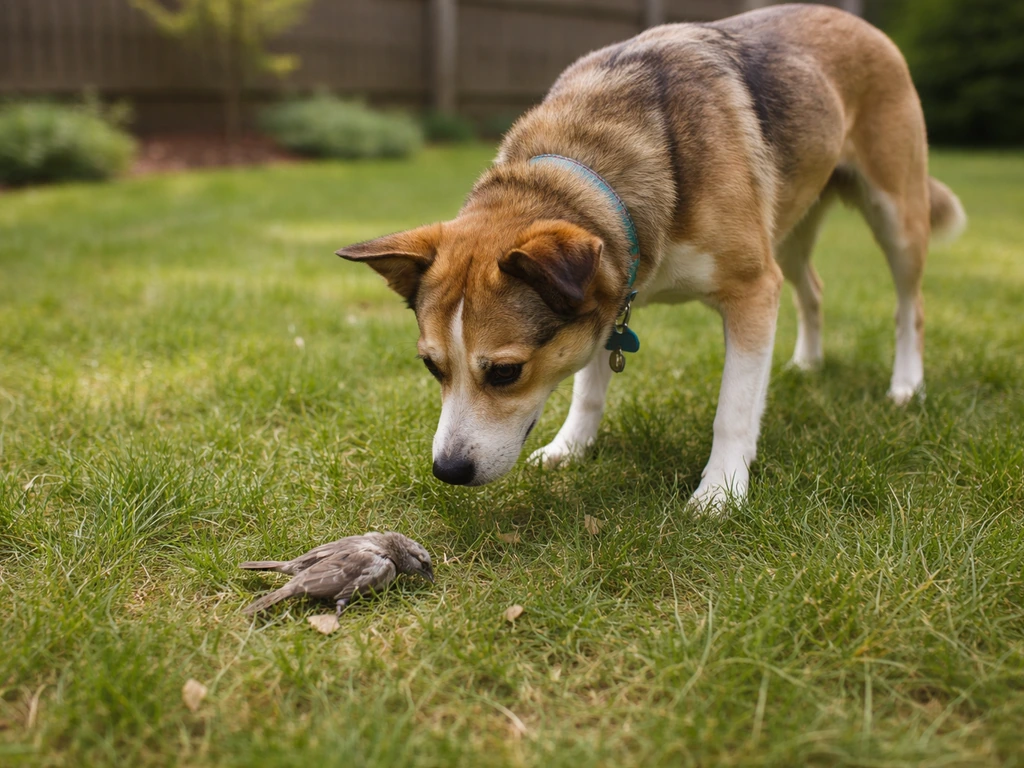
The vast majority of people searching this phrase are describing a real event. A dog caught a wild bird in the yard, or killed one that landed nearby, and now the owner is standing there wondering what to do. That's a genuinely stressful moment, and the instinct to search for guidance is the right call.
The first thing to check is whether your dog actually ate any part of the bird, or just killed it. Killing and eating are two different risk levels. If the bird was a wild bird (songbird, sparrow, pigeon, etc.), the main concerns are disease exposure and toxin ingestion. Dead wild birds can carry pathogens like West Nile Virus, avian influenza (H5N1), and Salmonella. If the bird had consumed poison or pesticides before your dog got to it, that poison can transfer. Hill's Pet notes this as a real risk worth monitoring your dog for symptoms over the next 24 to 48 hours.
For the bird itself, if it's still alive and injured, contact a licensed wildlife rehabilitator or a local vet. The Audubon Society advises placing an injured bird somewhere quiet and dark while you make that call. Cornell Lab's All About Birds resource also recommends the National Wildlife Health Center if you're in an area with an active disease outbreak concern. If the bird is dead, you need to handle it carefully.
How to safely remove and dispose of the dead bird
- Do not pick it up with bare hands. Use disposable waterproof gloves, or turn a plastic bag inside out over your hand like a glove.
- Place the bird in a sealed plastic bag, then into a second bag. Double-bagging prevents leakage.
- Avoid shaking or squeezing the carcass in ways that could aerosolize fluids. If there's splashing risk, the CDC recommends eye protection and a mask.
- Dispose of the bagged bird in your regular outdoor trash.
- Wash your hands thoroughly with soap and water for at least 20 seconds after, even if you wore gloves.
- Clean any surfaces or tools that contacted the bird with a household disinfectant.
If you had direct skin contact with the bird (especially if you have any cuts or open wounds), or if you were scratched or bitten by it, the Tufts Wildlife Clinic advises consulting a public health professional. Rabies in birds is extremely rare, but if there's any question about rabies-vector species being involved, your local health department can walk you through whether testing is warranted. The CDC is clear that rabies transmission requires direct contact of saliva or fluids with broken skin or mucous membranes, so casual handling with intact skin is a much lower concern.
Watch your dog for these signs after the incident

- Vomiting or diarrhea within 24 to 48 hours (possible Salmonella or intestinal upset)
- Lethargy or loss of appetite
- Tremors or muscle weakness (possible toxin ingestion if the bird had eaten poison)
- Difficulty breathing or swollen face (rare, but worth watching)
If any of those show up, call your vet. Most dogs that kill or mouth a bird don't get seriously ill, but monitoring is the responsible move.
The Figurative Side: What 'Dog Killed Bird' Can Symbolize
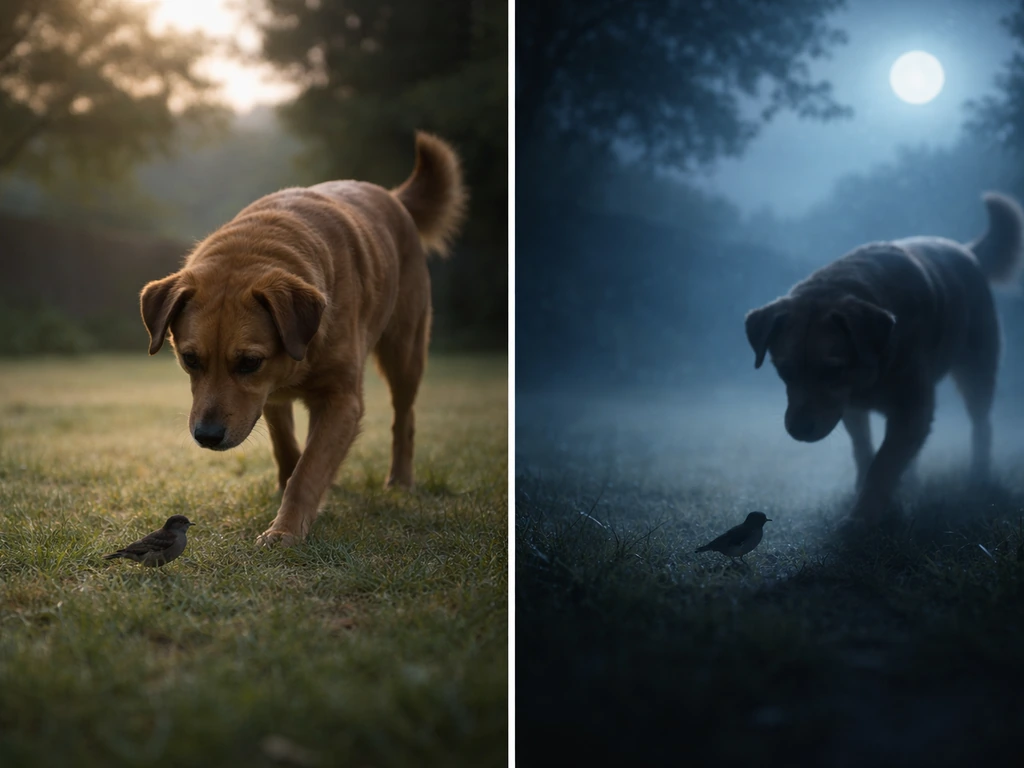
If you're here because you saw the phrase in a dream, a piece of writing, a social post, or a comment thread, the meaning shifts entirely into symbolic territory. Birds across most cultural traditions represent freedom, the spirit, communication, or a lightness of being. Dogs, in contrast, often represent loyalty and protection but also instinct, aggression, and raw earthly power. When a dog kills a bird in a story or dream, the collision of those two forces tends to carry a specific kind of meaning. If you’re specifically asking “cat kills bird meaning,” it typically follows the same symbolic idea of a power struggle as the dog and bird scenario discussed here.
Dogs vs. Birds: What the Predator-Prey Dynamic Actually Means
In dream symbolism and literary analysis, predator-prey imagery is almost always about a power struggle. The dog represents something grounded, driven by instinct, that can dominate or destroy something more elevated or free. Dream interpretation sources frequently connect 'dog killing a bird' to themes of conflict, loss of freedom, the end of something hopeful, or feeling dominated by something more forceful in your waking life. Some dream-interpretation sites similarly link “killing a bird” dreams to loss, transitions, or the ending of aspects of life based on the dream details and feelings themes of conflict, loss of freedom, the end of something hopeful, or feeling dominated by something more forceful.
That said, dream symbolism is highly personal and culturally dependent. There's no single universal rulebook. The Cleveland Clinic has noted that confirmation bias plays a real role in how people receive dream interpretations. If an interpretation resonates, it feels true. That doesn't mean it's predictive or objectively correct. Take symbolic readings as a lens for reflection, not as a verdict.
The species of bird involved shifts the symbolic weight considerably. A dove being killed by a dog reads very differently from a crow or a raven being killed. Here's a quick breakdown of how bird species change the interpretation:
| Bird Species | Common Symbolic Meaning | What 'Dog Kills It' Could Suggest |
|---|---|---|
| Dove | Peace, innocence, hope (especially in Christian tradition) | Destruction of peace or a hopeful relationship; loss of purity or gentle emotion |
| Raven | Loss, grief, omen (Poe's 'The Raven'; various folklore) | Conflict consuming even dark or protective forces; layered loss-on-loss imagery |
| Owl | Wisdom (Western tradition) or death/bad omen (many Native American traditions) | The dominant, instinctual force overriding wisdom or foresight |
| Sparrow | Community, humility, everyman spirit | Ordinary life or innocence crushed by aggression or instinct |
| Eagle/Hawk | Power, ambition, freedom | A striking reversal: something normally dominant being taken down; unexpected defeat |
Bird symbolism is deeply culture-specific. An owl in a story from a Western literary tradition and an owl in a piece drawing on Indigenous folklore can point in almost opposite directions. Raven symbolism, for instance, is largely shaped in popular Western culture by Edgar Allan Poe's poem, but ravens carry entirely different meanings in Pacific Northwest Indigenous traditions. Always read bird symbolism in context, not in isolation.
Slang, Internet Phrasing, and What People Might Actually Be Saying
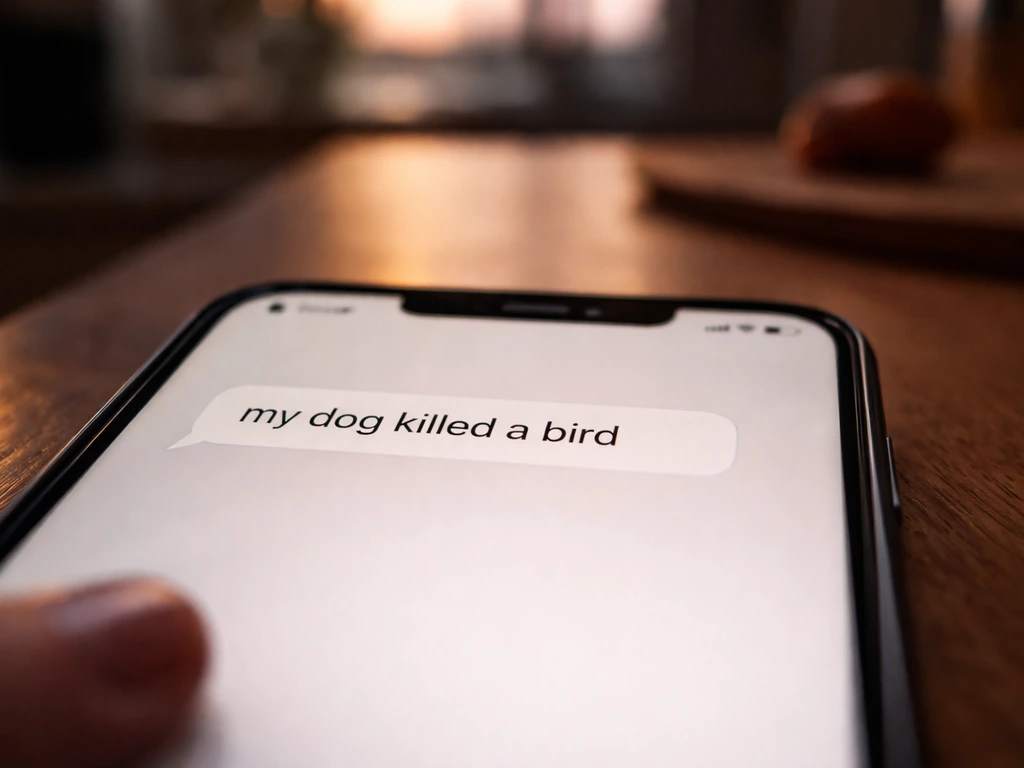
Online, 'my dog killed a bird' is almost always a literal statement, not a metaphor. People post it on Reddit, pet forums, and social media because they're worried about their dog's health or upset about the bird. The comments on those posts focus on 'will my dog get sick?' and 'what should I do?' rather than any symbolic reading.
But in comment threads, creative writing, or slang-heavy spaces, animal-predation language does get used metaphorically. Phrases like 'the dog ate the bird' or 'dog killed it' can be shorthand for domination or defeat in a conflict, similar to how 'ate him alive' or 'destroyed' work in casual speech. Someone saying 'that argument was a dog killing a bird' means one side had no chance. It's a power-mismatch metaphor, and it works because of the exact symbolic contrast covered above: earthbound aggression versus light, free-spirited opposition.
If you saw the phrase in a specific piece of literature or media, it's worth looking at what the dog and bird represent in that particular story. A phrase like this in a poem or film scene is almost always intentional and tied to the specific characters or themes at play, not to any one universal meaning.
Key Questions to Figure Out Which Meaning Applies
Before going further down either the practical or the symbolic path, ask yourself these questions. Your answers will point you in the right direction quickly.
- Did this happen in real life, in front of you? If yes, you're in practical territory.
- Did you see this phrase in a dream? That points to symbolic or psychological interpretation.
- Is it from a book, movie, poem, or song? Look at the work's themes directly.
- Is it from a social media post or forum? Check if the poster describes a real event with specific details (location, dog breed, whether the bird was eaten).
- Is it being used as a joke or casual metaphor in a comment thread? Then it's power-mismatch slang.
- Are you worried about disease or safety? That's the literal path, and health guidance applies.
- Are you trying to understand a feeling or a recurring image? That's the reflective or symbolic path.
The clearest indicator is always specificity. Real-event descriptions include actual details: 'my Labrador caught a sparrow,' 'it happened in the backyard this morning,' 'she actually ate part of it.' Symbolic or metaphorical uses are vaguer and appear in context where literal events don't make sense.
What to Do Next Based on Which Meaning Is Yours
If the incident was real, your next steps are straightforward and time-sensitive. Handle the bird carcass safely using the steps above. Monitor your dog for symptoms. Call a wildlife rehabilitator if the bird is still alive. Contact your local health department or vet if your dog ate the bird or if you had direct skin contact with it. Prevention going forward involves better yard supervision, a leash on walks near birds, or recall training so your dog responds when you call them off.
If the meaning is symbolic (dream, story, post), sit with the context before settling on an interpretation. What was the emotional tone of the scene? What does the dog represent in your life or the story, and what does the bird represent? The killing of one by the other points to conflict, loss, or domination of one quality by another. That framing is more useful than hunting for a fixed dictionary definition. Related ideas around dying birds, death bird symbolism, and saving a bird each carry their own distinct shading, and the specific action here (active killing by a dog) emphasizes agency, instinct, and force rather than passive decline or rescue. If you meant the idea of saving a bird in a dream or story, the saving a bird meaning can point to different themes than an active killing. Death bird meaning can vary depending on whether you mean the literal event, the dream or story context, or a specific cultural symbol. If you're specifically wondering about dying bird meaning, those related ideas can shift toward symbolism about endings and what needs care or closure.
If the phrase appeared in slang or a metaphorical comment, it's almost certainly describing a lopsided conflict where one party had no real chance. Take it as a vivid way of saying 'completely outmatched' and move on. No deeper mythology required.
FAQ
My dog caught a bird but it was still moving. What should I do right now?
If the bird was alive when your dog reached it, treat it as an injured-wildlife situation, even if the dog later backed away. Keep it quiet and minimize handling, then call a vet or wildlife rehabilitator for instructions on whether to bring the bird in or leave it where it is until help arrives.
What if my dog didn’t eat the bird, but there were feathers or fluids around?
Dogs can pick up contamination from feathers and bodily fluids even if they did not fully eat the bird. Wipe your dog’s mouth and paws with pet-safe wipes or a damp cloth, wash your hands, and keep kids away from any dropped feathers or fluids.
I’m not sure my dog actually swallowed any bird. Should I still monitor for illness?
If you cannot tell whether your dog swallowed anything, the safer approach is to monitor closely as if it did. Watch for vomiting, diarrhea, drooling, lethargy, trembling, and trouble breathing, and contact your vet if symptoms appear within the first 24 to 48 hours.
How should I clean up the area after the incident?
Yes. Avoid sweeping or vacuuming immediately because aerosolizing dust from feathers can spread contaminants. Bag the carcass and feathers, wear gloves if you handle them, and wash surfaces with an appropriate household disinfectant after the trash is secured.
What if my dog got bitten by the bird or there was saliva contact with a cut?
If your dog was bitten or there was saliva contact with broken skin, treat it like an exposure. Rabies in birds is rare, but you should still contact your veterinarian and, if appropriate, your local health department for a risk-based decision on whether any evaluation is needed.
Does being current on my dog’s rabies vaccine change what I should do after this?
If your dog is up to date on rabies vaccination, that helps for rabies risk management, but it does not remove the need to address bird-related pathogens and possible toxins. Your vet can advise based on what the bird was exposed to and whether your dog ate any part of it.
What are practical prevention steps if my dog has a strong prey drive?
Use a leash plus a long-line only in safe areas where you can keep control. Also consider muzzle training for short outdoor sessions, not as punishment, to reduce mouth contact with wildlife while you work on recall.
My dog keeps going after birds. When should I involve my vet or a trainer?
If your bird encounter is recurring, you can ask your vet about a behavior plan and whether a supervised enrichment or training protocol is appropriate. Sudden behavior changes or intense escalation in hunting attempts can also be a signal to reassess physical comfort, age-related changes, or pain.
If this is about a dream or story, how do I know whether it’s about conflict, guilt, or something else?
For symbolic interpretations, the most useful “anchor” is your current emotional state and the role you feel you have in real conflicts. The phrase often reflects a power mismatch, but it can also point to loss of control, guilt, or a fear that instinct-driven parts of you are dominating your choices.
Does the bird species matter for symbolic meaning, and how?
Bird species details can shift the tone. A small, song-type bird often reads as “freedom or communication threatened,” while a crow or raven can bring heavier themes like warning, grief, or transformation depending on the cultural context of the story you encountered.
Next Article
Dying Bird Meaning: Literal vs Symbolic Interpretations
Interpret dying bird meaning in context: literal dying bird or symbolic grief, endings, failure, change, or warnings.