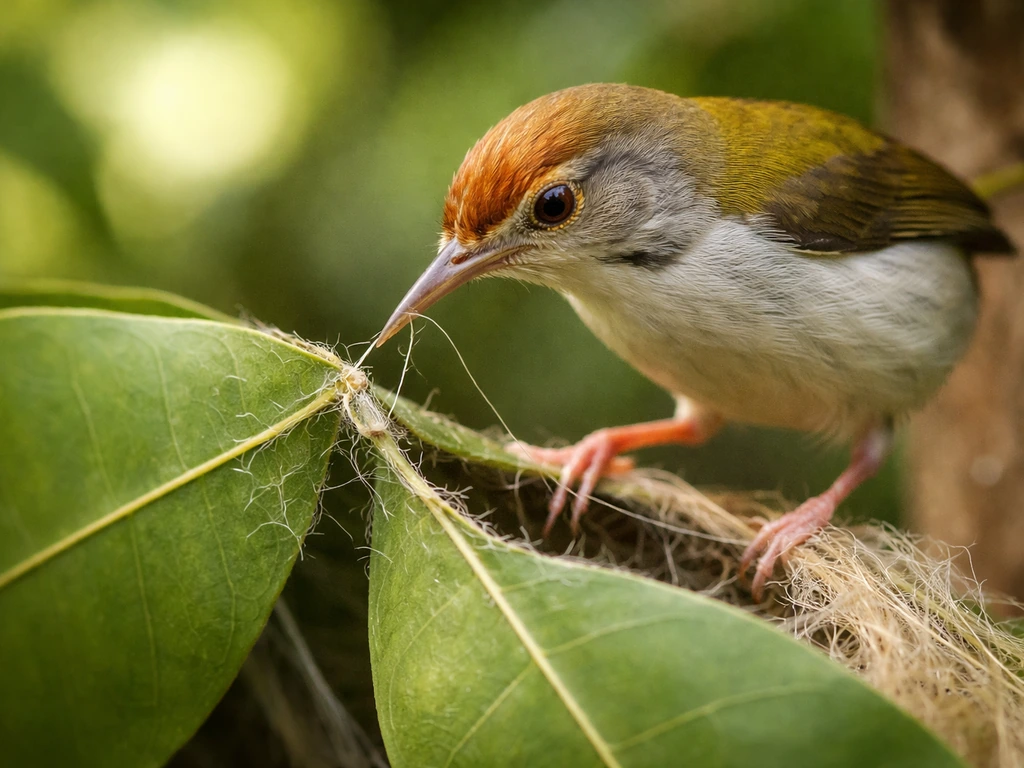
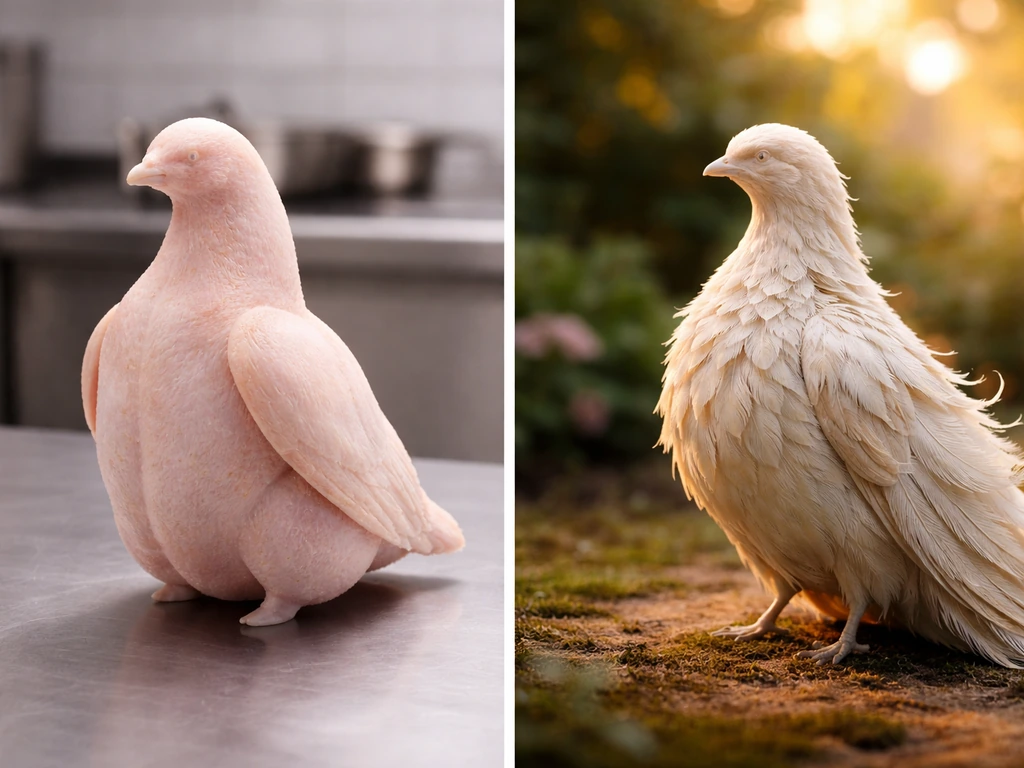
When someone says 'dressed bird,' the most likely meaning depends heavily on context, but in everyday English there are two dominant interpretations: the food-industry sense (a bird that has been slaughtered, defeathered, and cleaned so it's ready to cook) and the figurative sense (a person or thing that has been dolled up, staged, or presented for show in a way that feels a little performative or unnatural). The food sense is the more literal and historically grounded one. The figurative sense is the one you're more likely to encounter in casual conversation, creative writing, or when someone is making a pointed comment about appearances.
Dressed Bird Meaning: Idioms, Slang, and Symbolism

Marcus Reeves
1 Jun 2026
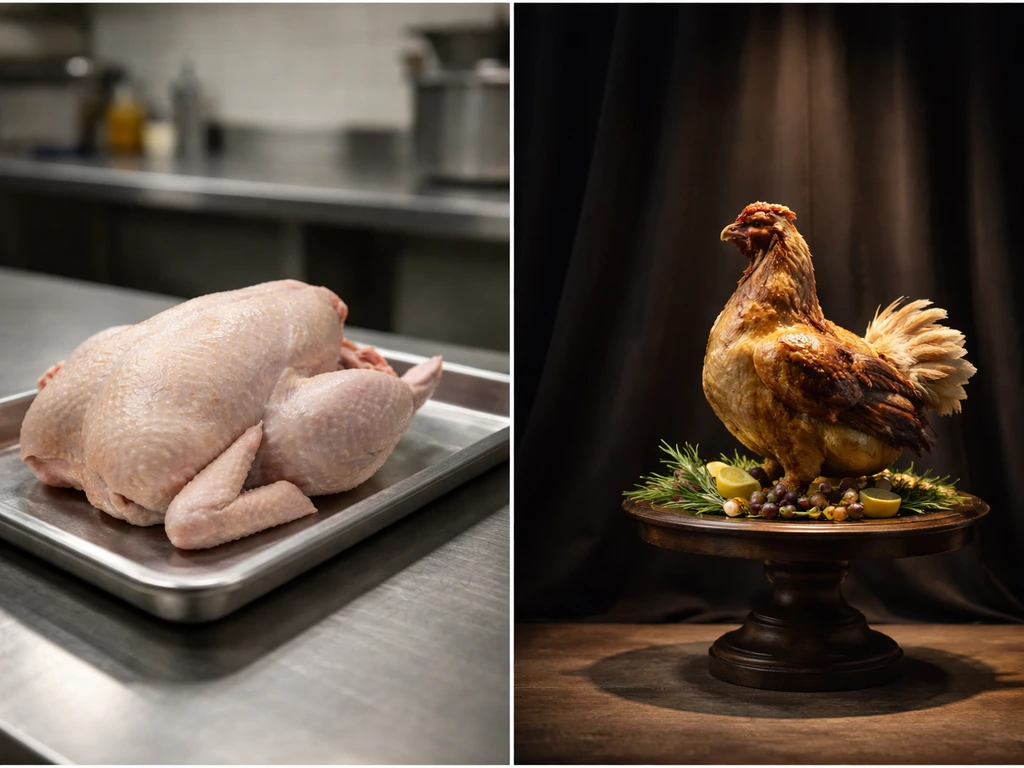
Quick meaning check: literal vs figurative
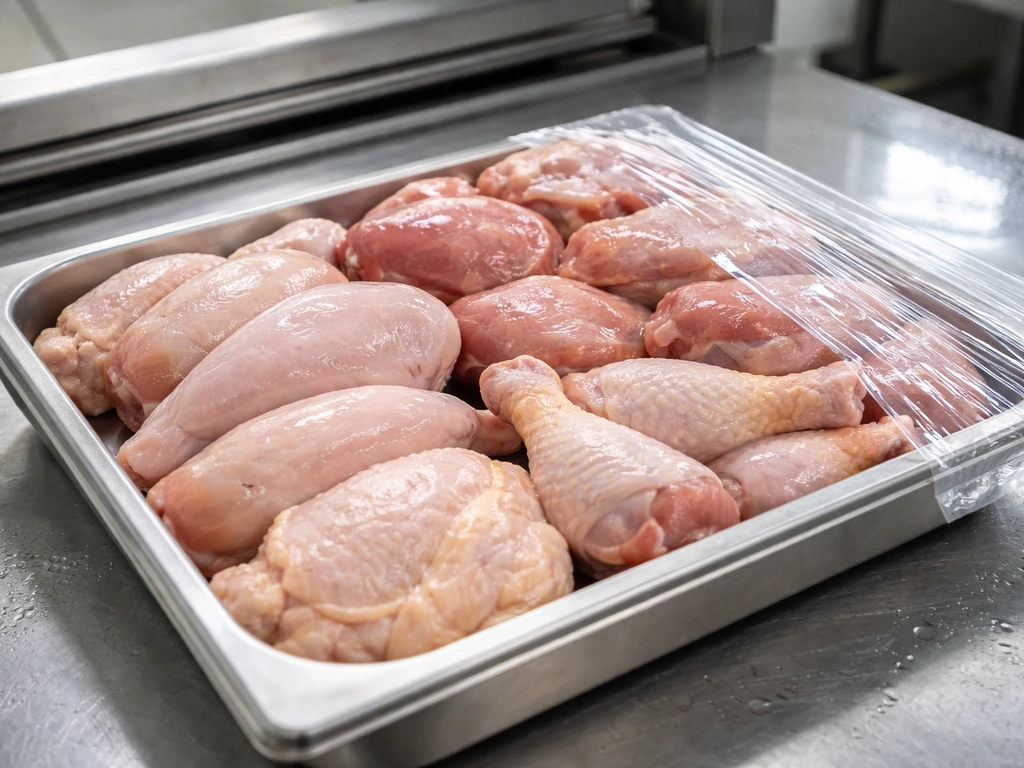
The word 'dressed' has been pulling double duty in English for centuries. In the context of food and poultry, 'dressed' means processed and prepared for market or the kitchen. A dressed bird has been slaughtered, defeathered, eviscerated, and trimmed so nothing messy remains. The USDA and food-safety regulators in the U.S. use 'dressed poultry' as a formal category describing birds sold in that ready-to-cook state. It shows up in state agricultural codes too, where 'dressed poultry' is defined as poultry sold 'in the condition in which it is sold' after processing. So if you see 'dressed bird' in a recipe, a food label, a farming guide, or any regulatory document, that is the meaning at play.
The figurative meaning works differently. Here, 'dressed' carries the same connotation it does when we say someone is 'dressed up' for a party or 'all dressed' for a performance. A 'dressed bird' in this sense is something (or someone) that has been arranged, styled, or presented for effect. It implies staging, ceremony, and sometimes artifice. The bird isn't just there naturally; it has been prepared to be seen. That distinction between natural presence and deliberate presentation is where most of the emotional weight in the phrase sits.
Most common interpretations of 'dressed' in this phrase
There are three main ways the word 'dressed' is being used when it modifies 'bird,' and it helps to keep them clearly separated in your mind.
- Processed/ready-to-cook (food context): The bird has been cleaned and prepared for consumption. This is the original, practical meaning grounded in poultry production, butchery, and food regulation.
- Clothed or costumed (visual/performative context): The bird is literally wearing something, or a person/character is being compared to a bird that has been dressed up. This meaning leans theatrical and is often used with irony or affection.
- Staged or ornamental (symbolic/cultural context): The bird has been arranged or presented for display, ceremony, or effect. This is the most figurative reading and carries the strongest emotional undertone of artificiality, show, or performance.
In everyday modern usage, the food-industry meaning is probably the most technically precise. But in casual conversation and creative writing, the performative or ornamental meaning is often the one doing the real work. When someone calls a person a 'dressed bird,' they're almost never talking about poultry preparation.
Context clues to decode the intended sense
The surrounding words and setting will almost always tell you which meaning is intended. Here are the clearest signals to look for.
- Food, cooking, or farming context: If the phrase appears near words like 'oven-ready,' 'eviscerated,' 'weight,' 'slaughter,' 'poultry inspection,' or 'market,' it is the food-industry definition. Regulatory and recipe texts use it this way exclusively.
- Fashion, appearance, or social context: If the phrase is near words like 'show,' 'parade,' 'fancy,' 'put-on,' 'strut,' or involves a person being compared to a bird, the performative meaning is almost certainly intended.
- Literary or creative writing context: Here the phrase is most likely symbolic. Pay attention to tone. Is the author being admiring, ironic, or critical? A 'dressed bird' in fiction usually signals something about artifice, vulnerability, or the gap between how something looks and what it actually is.
- Slang or casual speech: When used colloquially to describe a person (especially in British-inflected slang where 'bird' already means a woman or person), 'dressed bird' points to someone who has made a lot of effort with their appearance, sometimes with the implication that the effort is excessive or calculated.
One reliable test: ask whether 'dressed' could be swapped for 'processed' without changing the meaning. If yes, you're in food territory. In USDA food-industry usage, “dressed poultry” is a formal category for ready-to-cook birds sold after processing dressed poultry is a formal category for ready-to-cook birds sold after processing. If swapping it for 'dolled up' or 'staged' makes more sense, you're in the figurative zone.
Symbolism and tone: what 'dressed bird' actually implies
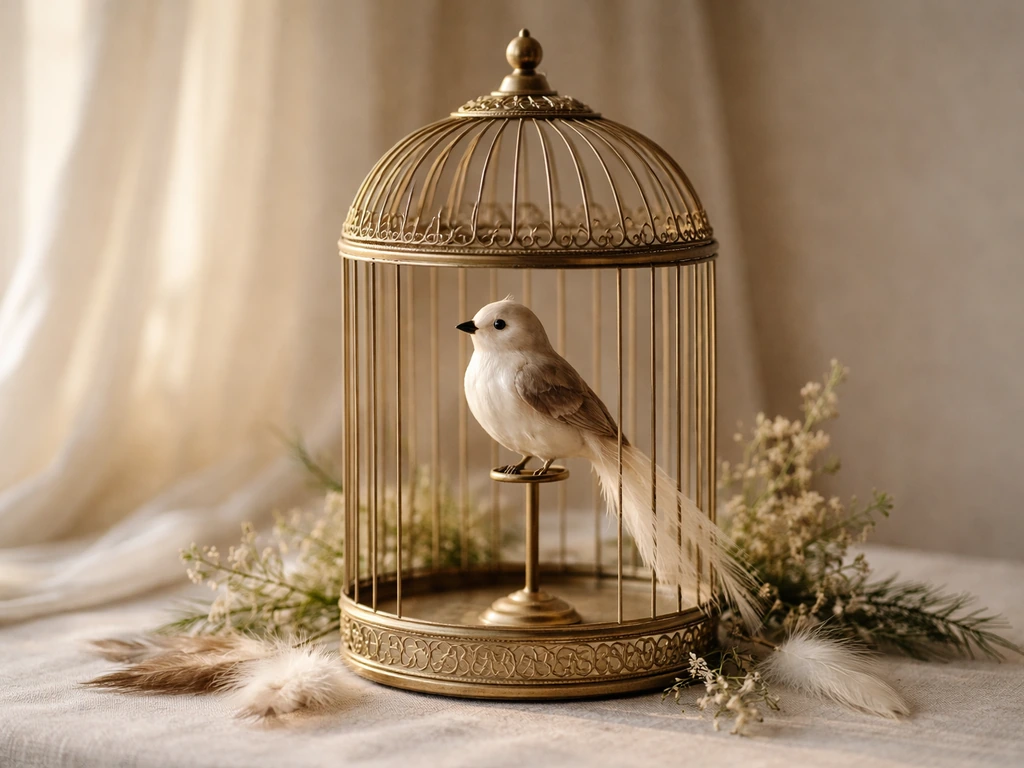
When the phrase is used figuratively, it carries a fairly specific emotional tone. If you mean the figurative idea behind the phrase, the tailor bird meaning points to staged appearance rather than anything wild or natural. A dressed bird is not wild. It is not free. It has been prepared, arranged, or costumed for someone else's benefit, which means it occupies an interesting symbolic space between beauty and artifice, presentation and control.
Ceremonially, a dressed bird suggests readiness: something has been made presentable for an occasion. Think of the dressed fowl at the center of a holiday table, its whole form arranged to look impressive. There's a kind of grandeur to it, but also a finality. The bird isn't doing anything on its own terms anymore. That tension between splendor and loss of agency is what makes the phrase useful in metaphorical language.
When the phrase is applied to a person, it often implies they are performing a version of themselves rather than being themselves. Calling someone a 'dressed bird' can be affectionate (they've made a real effort, they look great) or faintly cutting (all the plumage is carefully arranged, but it's for show). The tone shifts depending on delivery. In writing, the surrounding adjectives or verbs will tell you whether the author is impressed or gently skeptical. This is similar to the way 'classy bird' can be a compliment or a raised eyebrow depending on who's saying it and how. If you meant “classy bird meaning,” it usually points to someone seen as stylish or polished, similar to the figurative “dressed” idea in this article.
Example sentences and mini-scenarios
Seeing the phrase in action across different contexts is the fastest way to lock down the meanings. Here are examples across each interpretation.
| Context | Example Sentence | Meaning in Play |
|---|---|---|
| Food/poultry | 'The farm sells dressed birds at 3 dollars per pound at the weekend market.' | Processed, cleaned, ready to cook |
| Regulatory/food safety | 'All dressed poultry must be kept below 40°F during transport.' | Industry-standard prepared carcass |
| Performative/fashion | 'She walked in like a dressed bird, every feather in place and all eyes on her.' | Deliberate, staged presentation |
| Literary/symbolic | 'He kept her like a dressed bird in a glass cabinet: beautiful, perfect, and never allowed to move.' | Controlled, ornamental, stripped of agency |
| Casual British slang | 'That dressed bird at the bar has been there two hours and hasn't touched her drink.' | Heavily styled person, possibly performing rather than being genuine |
Notice how the food examples are purely descriptive and transactional, while the figurative ones carry judgment, admiration, or unease. The emotional weight is the biggest signal. If the sentence has no emotional charge, it's probably food terminology. If there's any hint of feeling, it's almost certainly figurative.
Similar phrases people confuse with it (and how they differ)
A few phrases overlap with 'dressed bird' closely enough to cause confusion, and it's worth separating them clearly.
- 'Bird in fine feathers': This idiom describes someone dressed elaborately or elegantly. It's closer to a compliment than 'dressed bird,' and it focuses on the natural ornamentation (feathers) rather than something applied or arranged from outside.
- 'Stuffed bird': This sits right next to 'dressed bird' in the food world but means something different. A stuffed bird has been filled with a dressing or stuffing before cooking. Figuratively, a 'stuffed bird' suggests someone who is puffed up, pompous, or full of hot air, which is a distinctly different connotation from the performative staging implied by 'dressed bird.'
- 'Dressed up like a dog's dinner': A British idiom meaning overdressed or trying too hard. It overlaps with the performative sense of 'dressed bird' but is more explicitly comic and critical.
- 'Dressed to kill': Another phrase about deliberate, high-effort presentation. Where 'dressed bird' can carry vulnerability or passivity, 'dressed to kill' implies power and intention. The bird is prey; 'dressed to kill' implies the predator.
- 'Bird of paradise': Used to describe someone flamboyant and eye-catching in dress or manner. This is more admiring and less ambiguous than 'dressed bird,' with no undertone of artificiality.
It's also worth noting that 'bird' alone in British slang already carries meaning (a woman, a person, sometimes a girlfriend), so 'dressed bird' in that slang tradition lands differently than it does in American English. It is also worth noting that 'bird' alone in British slang already carries meaning (a woman, a person, sometimes a girlfriend), so 'dressed bird' in that slang tradition lands differently than it does in American English little bird meaning slang. In slang contexts, though, "bird" can carry meaning about a person, so "dressed bird" may be read through that lens too bird meaning slang. In British slang, 'bird' can also mean a woman, so the phrase may carry a different feel depending on context bird can also mean a woman. If you're exploring how 'bird' functions as slang on its own, that context shapes how any modifier including 'dressed' will read. Similarly, phrases like 'little bird' and 'female bird' in slang usage have their own registers that sit apart from this particular phrase. In some slang contexts, “female bird” can be used to refer to a woman or girlfriend depending on the speaker and region.
How to respond or use it correctly in writing
If you're writing and want to use 'dressed bird' deliberately, the most important thing is to commit clearly to one meaning so your reader doesn't have to work to figure out which you intend. In food writing, the phrase is standard and completely transparent. Just use it as you would any technical term. In creative or figurative writing, give the reader one additional cue (a tone word, a context detail, an action) that confirms the performative or symbolic meaning.
If you encountered the phrase and you're trying to decode someone else's intent, go back to the surrounding sentences. Look for the emotional register first. Then look for domain clues: food vocabulary versus appearance vocabulary versus literary/emotional vocabulary. If you're still unsure after checking both, the figurative reading is the safer bet in any non-food context, because that is how most non-specialist readers will interpret it.
In conversation, if someone uses the phrase about a person and you want to respond naturally, treat it as a comment on presentation and effort. You can push back gently ('dressed for what, though?') or affirm it ('yeah, they really made an effort tonight') without needing to nail down the exact flavor of meaning. The phrase is flexible enough that a response acknowledging appearance and effort will almost always land correctly.
When you're writing fiction or poetry and want to use a bird as a symbol of staged beauty or controlled appearance, 'dressed bird' is genuinely evocative. It works especially well when you want to highlight the difference between how something looks and what it actually is. The image of a bird that has been prepared, arranged, and displayed carries natural tension that a writer can lean into without overexplaining.
FAQ
How can I tell quickly whether “dressed bird” is about food or about appearance?
If you see “dressed bird” next to cooking steps, weights, storage instructions, or kitchen prep terms (trim, gut, rinse, ready-to-cook), it is almost certainly the food meaning. In contrast, if it appears near clothing, styling, performance, or judgment about someone’s presentation, treat it as figurative and not poultry.
Is “dressed bird” ever used as a casual phrase in everyday food talk, or is it mostly labeling/recipes?
In food contexts, “dressed” usually implies the bird has been processed into a market-ready form (cleaned and trimmed), and the phrase is more common in recipe writing or labeling than as everyday talk. If you are unsure, look for a noun phrase that reads like a product category, not a personal description.
When “dressed bird” is figurative, does it usually sound complimentary or critical?
In many figurative uses, “dressed bird” is closer to criticism or irony than straightforward praise, especially if the speaker sounds unimpressed or the sentence contrasts effort with sincerity (for show, too perfect, acting). Affectionate readings happen, but they often include supportive verbs (looked great, really tried).
What wording can make “dressed bird” sound friendlier when talking about someone’s outfit?
Tone control matters. In text-only messages, the phrase can read harsher than intended, so people often soften it with context like “you dressed up” (neutral) or “dressed to impress” (positive). If you are the speaker, adding a qualifier reduces the chance the listener hears it as an insult.
What’s the best “if I’m still unsure” test for interpreting “dressed bird”?
A safe decoding rule is that food meanings are domain-specific and transactional, while figurative meanings add emotion, evaluation, or symbolism. If the sentence includes feelings (admiring, mocking, uneasy) or storytelling framing (like a metaphor), assume the figurative meaning even if the word “bird” could confuse you.
How do I use “dressed bird” in fiction without confusing readers about whether it’s literal?
If you are writing the figurative meaning, avoid leaving the reader alone with just nouns. Add one concrete cue that signals presentation, for example “arranged on display,” “costumed,” “for the audience,” or “posed.” Without a cue, readers may default to the more literal food interpretation.
Could “dressed bird” be read through British or regional slang where “bird” means a person?
In slang discussions, remember that “bird” can function as a term for a person in some English varieties. If the surrounding sentence targets a woman’s dating status, attractiveness, or identity, the modifier “dressed” may relate to appearance or to the person itself, not poultry.
If someone calls someone else a “dressed bird,” how should I reply in conversation?
If you want to respond to someone who calls a person a “dressed bird,” you can treat it as a comment on presentation and effort. Questions like “dressed for what?” gently shift it from insult to context, while “they made a real effort” keeps it positive without arguing about exact shades of meaning.
Are there clearer alternatives to “dressed bird” if I want the same idea but fewer misunderstandings?
Yes. People sometimes use “dressed to impress” as a positive version, while “all dressed up” can be neutral or even teasing. If your goal is to communicate the same idea as “dressed bird,” choosing these alternatives can be clearer to readers who might otherwise stumble on the expression.
Next Article
Tailor Bird Meaning: Definition, Symbolism, and Uses
Tailor bird meaning explained: species definition, symbolism like craft and patience, idioms, and how to interpret conte