
When someone says 'tailor bird,' they're almost always referring to a small, real bird species famous for literally sewing leaves together to build its nest. It's not slang, not a metaphor by default, and not a made-up nickname. The name comes directly from what the bird does: it stitches. In figurative writing, though, that same stitching behavior gets borrowed as a symbol for patience, craftsmanship, and careful construction. So whether you're reading a nature essay, a poem, or a philosophical passage, the meaning traces back to that one defining habit.
Tailor Bird Meaning: Definition, Symbolism, and Uses

Marcus Reeves
23 May 2026
What 'tailor bird' actually means in English
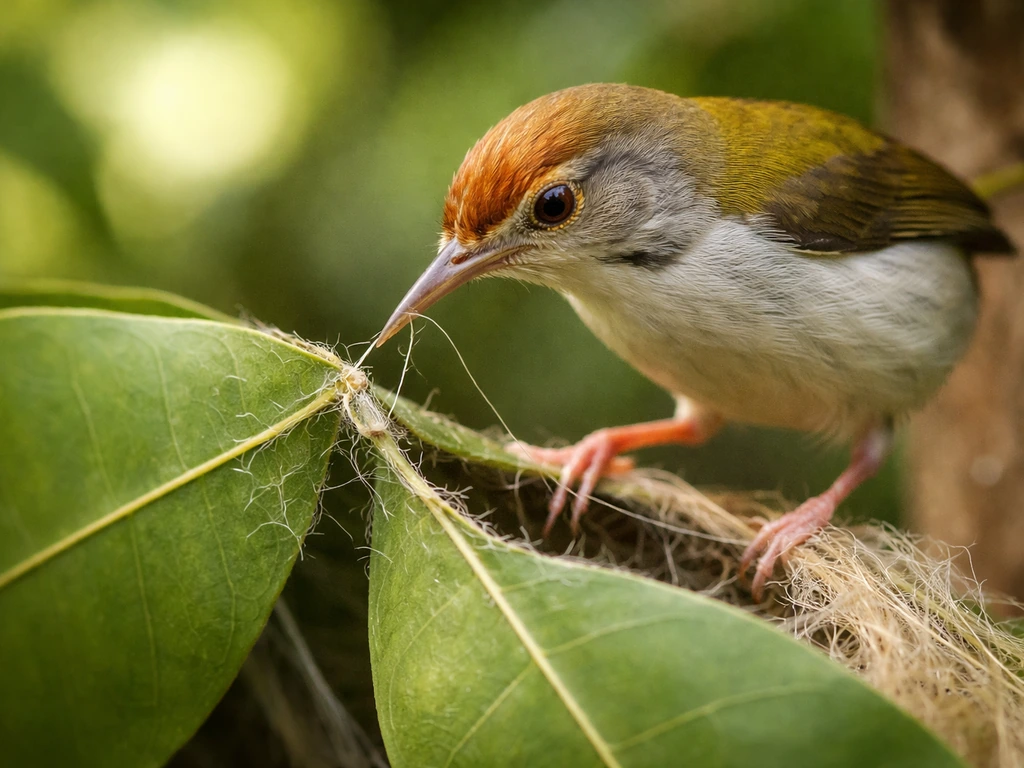
The tailorbird is a real genus of small birds called Orthotomus, belonging to the Old World warbler family Sylviidae. An earlier Encyclopedia-style historical reference (scanned from the Library of Congress) describes “The Tailor-Bird” as “a genus of birds of the family Sylviadce,” reflecting the former taxonomic framing of the “tailor-bird” label blank" rel="noopener noreferrer">“a genus of birds of the family Sylviadce”. Merriam-Webster defines it as 'any of a genus of chiefly Asian warblers that stitch leaves together to support and hide their nests.' The name has been in English since at least 1769, so this isn't a modern coinage. It's a well-established common name for a species group, not a metaphor that evolved into a bird name. When you see it in a field guide, a nature documentary, or a biology textbook, it means exactly that: a small, primarily Asian songbird whose defining characteristic is its nest-building method.
The most commonly referenced species is the common tailorbird, also called the long-tailed tailorbird (Orthotomus sutorius), which ranges from India to southern China and Java. It's about 13 cm, or roughly 5 inches long. Small, greenish, and easy to overlook unless you know what to look for in its behavior. There are nine recognized species in the genus, all sharing the same core trait.
Why it's called a 'tailor' bird
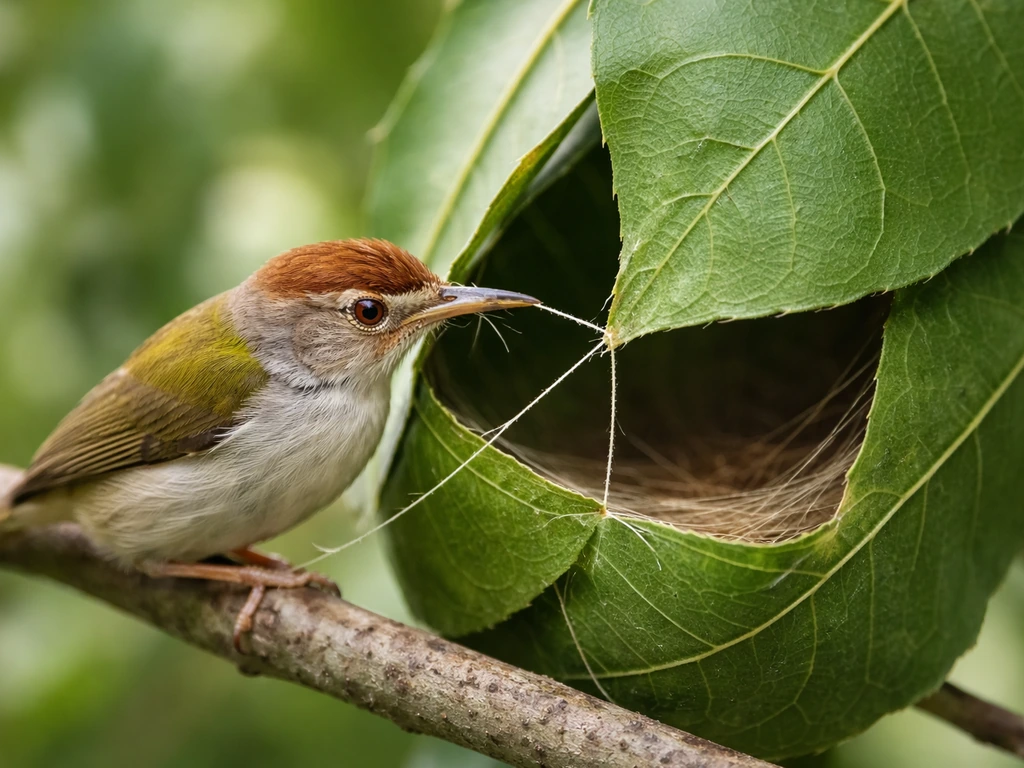
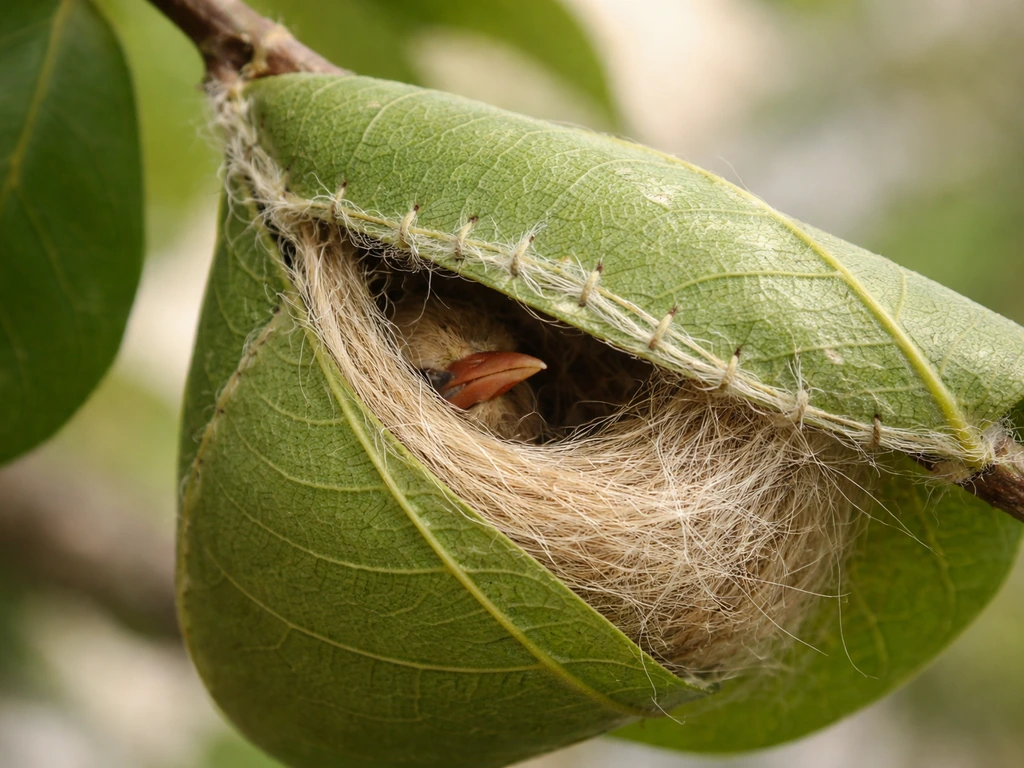
The name is genuinely earned. The tailorbird doesn't just collect leaves or weave grass into a nest the way most birds do. It actually sews. The bird uses its long, slender bill to punch a series of holes along the edges of one or two large leaves, then threads plant fibres, insect silk, cobwebs, or even stolen household thread through those holes to form loops. Those loops are knotted on the outer side to hold the leaf edges together. The result is a tight leaf cup that faces the same direction the leaves naturally grow, keeping the nest camouflaged from predators. The female often lines the inside with feathers or fur for insulation.
That process is exactly what a tailor does: puncture material, pull thread through, create a seam, finish with a knot. The Natural History Museum in London describes it explicitly as 'stitching,' and it's hard to argue with that framing. This isn't loose metaphor. A tailorbird genuinely produces a stitched structure. That's why the name stuck for over 250 years.
What the tailor bird symbolizes
Because the bird's defining behavior is so precise and purposeful, it tends to gather a specific cluster of symbolic meanings wherever it appears in literature, folklore, and cultural writing. These aren't random associations. They all trace logically back to that nest-building behavior.
- Craftsmanship and skill: The tailorbird doesn't build a rough nest. It creates a stitched, engineered structure. Writers invoke it to represent careful, intentional work done well.
- Patience and diligence: Punching holes and threading fibre through leaves, one stitch at a time, is slow work. The bird becomes a natural emblem of quiet persistence.
- Cleverness and adaptability: Using whatever material is available (cobwebs, stolen thread, plant fibre) to achieve a sophisticated result reads as resourceful intelligence in literary contexts.
- Home-building and protection: The nest is specifically designed to hide and shelter. The tailorbird carries associations with creating a safe, nurturing environment, especially for the young.
- Humility and subtlety: The bird is small and its nest is camouflaged. In philosophical writing, this gets read as 'doing great work without seeking attention.'
One of the most cited uses of the tailor bird as a symbol comes from a quote attributed to Zhuangzi: 'The tailor bird builds her nest in deep woods, yet uses no more than one branch.' The idea being expressed is about knowing your limits, taking only what you need, and finding sufficiency in simplicity. The tailorbird here isn't praised for grandeur but for precision and restraint. That Daoist framing has given the bird a philosophical life far beyond ornithology.
In South Asian folklore and children's literature, the tailorbird takes on a slightly different character. A well-known Bengali children's book called 'Tuntunir Boi' (The Tailor Bird's Book) features a sprightly, clever tailor bird as its central character. There, the bird is associated with wit, quickness, and a kind of cheerful cunning. This is the version of the tailor bird as a trickster-figure rather than a patient craftsman, though both readings share the same foundation in the bird's intelligent, skill-based behavior.
How 'tailor bird' shows up in writing
The way the term is used in writing falls into a few clear categories, and knowing them helps you read it correctly when you encounter it.
Literal / naturalistic writing
In nature writing, birding guides, and scientific texts, 'tailorbird' is purely descriptive. It names the species. The focus is on the behavior, the range, the nesting mechanics. No symbolic reading is intended. If you're reading something where the tailorbird appears alongside other bird species names, treat it as a literal reference.
Philosophical and aphoristic writing

This is where the Zhuangzi-style usage lives. The tailor bird is introduced as a real-world example to illustrate a principle, usually about simplicity, sufficiency, or purposeful action. The tone is calm and descriptive, and the bird's behavior is used to make an abstract point concrete. The sentence structure often follows a pattern: 'The tailor bird does X, therefore we should consider Y.'
Literary and fictional writing
In fiction and poetry, 'tailor bird' can be used as a nickname or character archetype. The Bengali folk tradition in particular treats it as a character name with a distinct personality. If a writer calls a human character a 'tailor bird,' they're usually suggesting the person is clever, industrious, resourceful, or quietly skilled at building something (a relationship, a plan, a reputation). The tone is usually affectionate or admiring, not dismissive.
Metaphorical or rhetorical use
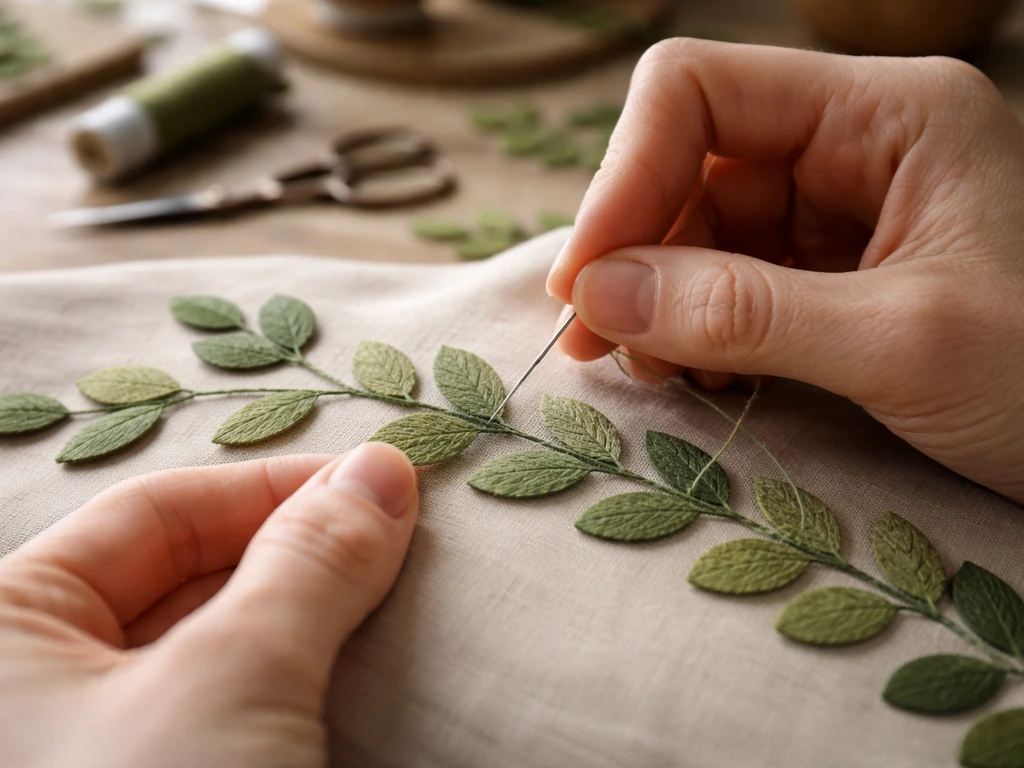
Someone might describe a person, team, or creative process as 'working like a tailor bird' or 'building something with tailor bird patience.' Here the reference is to the stitching behavior as a metaphor for careful, incremental construction. Writers, architects, community organizers, and coders have all been described this way in essays and profiles. It's not a common idiom in the way 'early bird' or 'flip the bird' are, but it's a recognizable figurative move when you see it.
How to read the meaning from context
If you've run into 'tailor bird' in something you're reading and you're not sure which meaning applies, here's a quick checklist to run through:
- Is it surrounded by other bird species names or biological detail? If yes, it's a literal species reference. Treat it as ornithology.
- Is it used to illustrate a moral, philosophy, or life principle? That's the Zhuangzi-style usage. The bird represents a quality or behavior worth emulating.
- Is it the name of a character (especially in South Asian literature or folklore)? It's carrying the folk-tale archetype of the clever, resourceful small creature.
- Is it applied to a person, project, or creative process as a comparison? It's being used metaphorically to emphasize skill, patience, or careful construction.
- Is it paired with 'tailor' language like sewing, stitching, threading, or weaving? The author is intentionally amplifying the craft metaphor. Look at what else is being described as 'stitched together.'
Common mix-ups with 'tailor' language
Because the word 'tailor' carries its own meanings in English, it's worth flagging where confusion tends to happen.
| Term | What it actually means | How to tell the difference |
|---|---|---|
| Tailor bird | A real bird species (Orthotomus) that stitches leaves | Look for nest-building context or a bird being described |
| Tailor (noun) | A person who makes or alters clothing | No bird involved; context is clothing, fitting, or fashion |
| Tailored (adjective) | Customized or adapted to fit a specific need | Usually modifies a plan, speech, service, or product, not a creature |
| Bird (British slang) | A term for a woman in British English | Entirely different register; see related slang usage on this site |
| Little bird | An idiom meaning a secret source of information | Appears in phrases like 'a little bird told me,' never nest-building contexts |
The most common real-world mix-up is people seeing 'tailor bird' and assuming it's metaphorical from the start, when it's usually literal first. Flip that assumption: check the literal meaning, then look for evidence of figurative intent. If a writer wanted you to read it as pure metaphor, they'd usually signal that with surrounding language about craft, patience, or human behavior. A sentence that just mentions a tailor bird perching in a tree or building a nest is almost certainly talking about the actual bird.
It's also worth noting that 'bird' on its own carries very different baggage depending on where and how it's used. British slang uses 'bird' in ways completely unrelated to the tailorbird's meaning, and terms like 'little bird' carry their own separate idiomatic weight. In slang, “little bird” can also have its own meanings, so context is key when you see the phrase little bird meaning slang. If you're wondering about British slang uses 'bird'. In slang, people sometimes use the phrase "female bird" to mean a certain kind of woman, but the exact sense depends heavily on context and region female bird meaning slang. British slang uses the word "bird" differently, so it's worth checking the exact phrase and context before assuming it matches the tailorbird meaning British slang uses 'bird' in ways completely unrelated to the tailorbird's meaning. The 'tailor' prefix is what anchors this phrase to the specific species and its symbolism. Without it, you're in a different conversation entirely.
The short version, if you need it fast
A tailor bird is a small Asian songbird that literally sews leaves together using thread-like fibres to build its nest. That stitching behavior is why it's called a tailor bird, and it's been called that in English since 1769. In writing, the term carries symbols of craftsmanship, patience, resourcefulness, and deliberate home-building. If you are wondering about the dressed bird meaning in particular, it helps to identify whether the text is using it as a literal description or a metaphorical symbol. If you encounter it in philosophical writing, it's probably illustrating a point about simplicity or purposeful action. In South Asian folklore, it's a clever folk-tale character. In everyday figurative language, it describes careful, skill-based work done quietly and well. Start with the literal meaning, and let the context tell you how far from it the writer has moved.
FAQ
Is “tailor bird” ever used as slang, or is it always literal and bird-related?
In most contexts it is either literal (referring to Orthotomus) or figurative by borrowing the nest-stitching idea. It is not commonly used as unrelated slang the way “bird” can be. If you see it paired with other bird species, locations, habitat, or nesting details, treat it as a real-species reference.
What clues tell me a writer intends the Zhuangzi-style philosophical meaning rather than the bird itself?
Look for how the sentence connects the bird’s behavior to a lesson or principle (for example, simplicity, sufficiency, restraint, or purposeful action). The key cue is cause-and-effect framing that turns the bird into an example, not a scene. If the passage stays focused on actions, anatomy, or where the nest is built, it is probably descriptive instead.
Could “tailor bird” be confused with “tailorbird” as one word in older texts or different spellings?
Yes, you may see spelling variations (one word vs two). Meaning usually stays the same because the anchor is the known genus name and the distinctive stitching nest. If the text describes leaf-sewing, it is referring to the tailorbird even if the typography changes.
How do I interpret “tailor bird” when it refers to a human character or a team doing “tailor bird work”?
When the phrase targets a person or group, it usually points to careful, incremental craftsmanship and problem solving, the “puncture, thread, knot” approach. It typically praises being resourceful and methodical, not being flashy. If the surrounding language emphasizes speed, showmanship, or brute force, the metaphor is less likely.
Does “tailor bird patience” imply slow work, or can it also mean careful precision done quickly?
It does not strictly mean “slow,” it means “deliberate.” The tailorbird’s method is precise, with loops and knots that need the right placement and tension. So the metaphor usually values accuracy and correctness of steps over pace.
If I’m translating or writing, should I translate “tailor bird” literally or keep it as a bird name?
If your audience will recognize it as a species group, keep it as “tailorbird/tailor bird” and add a brief explanation if needed. For philosophical or literary use, you can translate it as “stitching bird” only if you also preserve the reference to leaf-sewing, otherwise readers might think it is a generic sewing metaphor.
What’s the safest way to read it when the context is ambiguous?
Use a two-step check: first, ask whether there are birdlike cues (leaves, nests, stitching, bill, camouflaged cup, range). If not, then check for lesson cues (limits, sufficiency, calm instruction) or character cues (clever, resourceful, quietly skilled). When both cues are absent, treat it as a likely figurative nod to craftsmanship rather than a guaranteed specific philosophy.
Are the symbolism meanings universal, or can they shift by region and genre?
They shift. The philosophical “use only what you need” framing is one recognizable tradition, while South Asian folklore can emphasize wit and cleverness as a character trait. In scientific or nature writing, symbolism usually drops away entirely and it is just the species name.
If someone says “the tailor bird builds in deep woods,” does that always mean the same thing as the Zhuangzi attribution?
Not always. The line is often used to evoke the Daoist idea of sufficiency and restraint, but authors may reuse the image for a different lesson about practicality, privacy, or camouflage. Confirm by checking the rest of the paragraph: if it continues with a general moral or principle, it is likely the philosophical usage.
Next Article
Female Bird Meaning Slang: How to Interpret It in Texts
Decode female bird slang in texts: flirty or insulting meaning of girl bird and bird for women, plus context clues.
