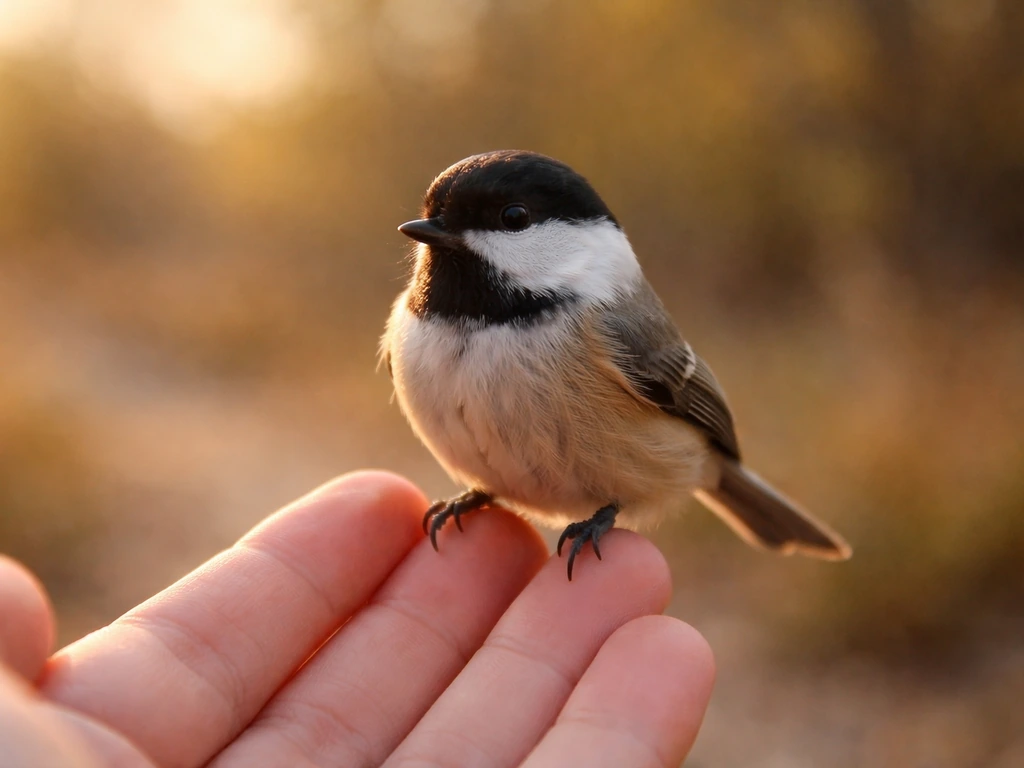
When someone uses 'female bird' in slang, they almost always mean a girl or woman, and the tone depends entirely on who's saying it, where, and how. In UK and Irish English, 'bird' on its own already means a woman (often with a flirty or romantic undertone), so adding 'female' is either redundant for emphasis, a way of being playful, or a signal that the speaker is being unusually literal or ironic. The phrase can be sweet, casual, slightly old-fashioned, or a little rude depending on context.
Female Bird Meaning Slang: How to Interpret It in Texts

Marcus Reeves
15 May 2026

Literal meaning vs slang usage
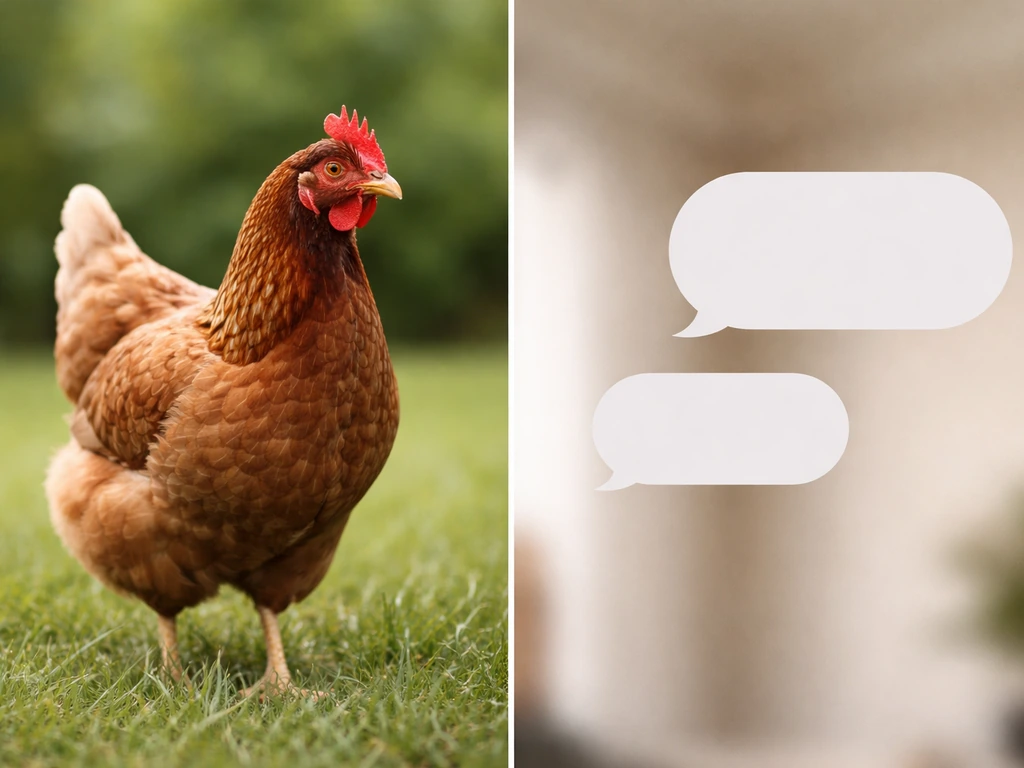
Literally, a female bird is just what biology calls a hen, a doe, a jenny, or simply the female of any given bird species. A female duck is a hen, a female peacock is a peahen, a female falcon is a falcon (females are actually the larger and more prized birds in falconry). None of that is slang. It is just taxonomy.
The slang layer is completely separate. In UK and Irish colloquial English, 'bird' has meant 'a girl or woman' for decades, with the Wiktionary definition specifically noting the sense of 'someone considered sexually attractive.' So when you see 'bird' used to describe a person rather than an animal, you are in slang territory. The word 'female' placed in front of it either reinforces that meaning (as in 'a female bird = a woman') or creates deliberate wordplay by blending the literal and slang layers together.
The key thing to grasp is that the literal meaning is never far away in these conversations. That overlap is part of what makes bird-based slang funny, loaded, or occasionally offensive. Speakers play with both layers at once.
Common 'bird' slang for women and girls (and how 'female' changes the tone)
In everyday UK and Irish speech, calling someone 'a bird' is roughly equivalent to calling them 'a girl' or 'a woman.' It is informal, slightly old-school, and usually not meant to be harsh. You hear it most in casual conversation: 'He's seeing some bird from work' or 'She's a lovely bird.' That last one sits right on the border between affectionate and objectifying, which is exactly why context matters so much.
Adding 'female' in front shifts the register a bit. 'Female bird' is not a phrase native UK slang speakers typically use on its own. When it does appear, it tends to be one of three things: (1) someone who learned the slang second-hand and is being overly literal, (2) deliberate irony or internet humor that plays on the double meaning, or (3) someone who actually means the animal and is not using slang at all. That ambiguity is exactly why this phrase trips people up. If you want a quick answer, the simplest way to read it is as a form of “bird” meaning a woman, but with extra literal emphasis bird meaning a woman.
Related expressions help clarify the spectrum. blank" rel="noopener noreferrer">'Yer bird' is a well-known UK phrase meaning 'your girlfriend' or 'your girl,' functioning almost exactly like 'your woman' in Irish English. 'Little bird' carries a softer, sometimes affectionate or even secretive tone (as in 'a little bird told me'). 'Classy bird' implies admiration with a hint of old-fashioned charm. If you are wondering about the classy bird meaning, it is usually admiration with a slightly old-fashioned, charming vibe. Each of these phrases adjusts the emotional tone, and 'female bird' can borrow any of those tones depending on how it is deployed.
Context clues: how to tell if it's flirty, playful, or insulting
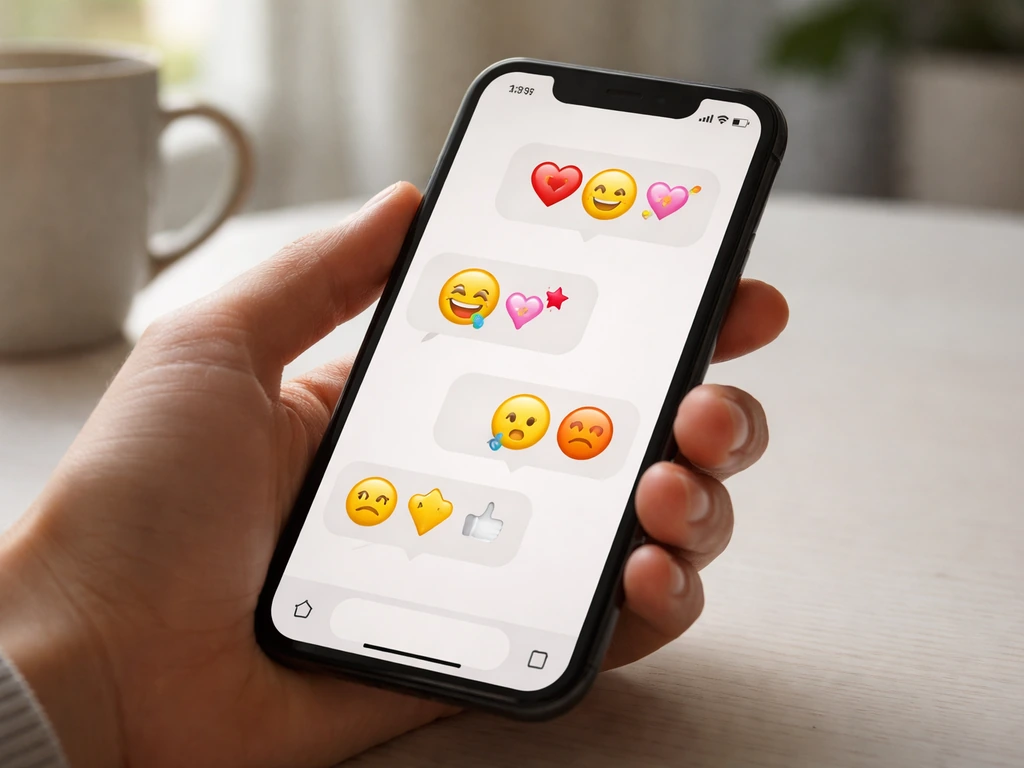
The single best tool you have is the surrounding text. Bird slang rarely sits alone in a sentence without other signals telling you the emotional temperature. Here is what to look for:
- Affectionate or romantic framing: phrases like 'his bird,' 'my bird,' or 'lovely bird' lean toward flirty or warm. The possessive is a big clue that it means girlfriend or partner.
- Ironic or internet-humor framing: if the phrase appears in a meme, a tweet with an absurdist image, or a caption that is clearly playing with language, the 'female bird' construction is almost certainly a joke about the literal/slang overlap.
- Dismissive or diminutive framing: if someone says 'just some bird' or 'that bird won't stop talking,' the tone is more dismissive and could edge into mild disrespect, depending on the speaker's attitude.
- Aggressive or derogatory framing: if the surrounding language is hostile, 'bird' or 'female bird' is being used to belittle. This is less common with 'bird' than with harder slang words, but it happens.
- Neutral or descriptive framing: sometimes people genuinely just mean 'a woman' with no strong positive or negative charge at all. 'There was a bird waiting at the bus stop' is just a descriptor in some dialects.
Generational and regional gaps matter too. Older British speakers may use 'bird' for a woman the same way Americans might say 'gal,' without any intention of being rude. Younger speakers often use it more ironically or have absorbed it through memes and online culture, where the tone is frequently self-aware and playful.
Phrase and example breakdowns from real conversations, texts, and memes
Seeing the phrase in action is the fastest way to calibrate your understanding. Here are some realistic examples with plain-English translations:
| Phrase or Example | What It Actually Means | Tone |
|---|---|---|
| 'Yer bird rang me last night' | Your girlfriend called me | Neutral to slightly cheeky |
| 'He's well into that bird from the gym' | He really likes that woman from the gym | Casual, slightly flirty by implication |
| 'This jit cracks birds' (meme format) | This guy impresses / wins over women (from AAVE/meme culture) | Ironic, internet-humor |
| 'Some female bird keeps liking his posts' | Some woman keeps liking his posts (often said with jealousy or suspicion) | Slightly dismissive or jealous |
| 'She's a proper classy bird' | She is a genuinely impressive, elegant woman | Admiring, old-school charm |
| 'A little bird told me...' | Someone told me a secret (not literally a woman here) | Figurative, has nothing to do with gender slang |
The meme format 'this jit cracks birds' is worth noting specifically because it shows how the slang crosses cultures. In AAVE and online meme spaces, 'bird' (or 'bih,' a shortening of 'bitch') can refer to a female partner or a woman in general, and the meme uses it ironically to describe someone who is impressive with women. The tone there is almost entirely playful and self-aware, not hostile.
Notice that 'female bird' as a combined phrase rarely appears in native slang. What you more often see is 'bird' alone doing all the work. When someone writes 'female bird' out in full, it is usually either a non-native slang speaker, a deliberate double-meaning joke, or someone searching for information about the term (like you are right now). If you are trying to pin down the dressed bird meaning, focus on who is speaking and the surrounding context clues female bird.
Species and symbolism overlap: when 'female bird' references specific bird imagery
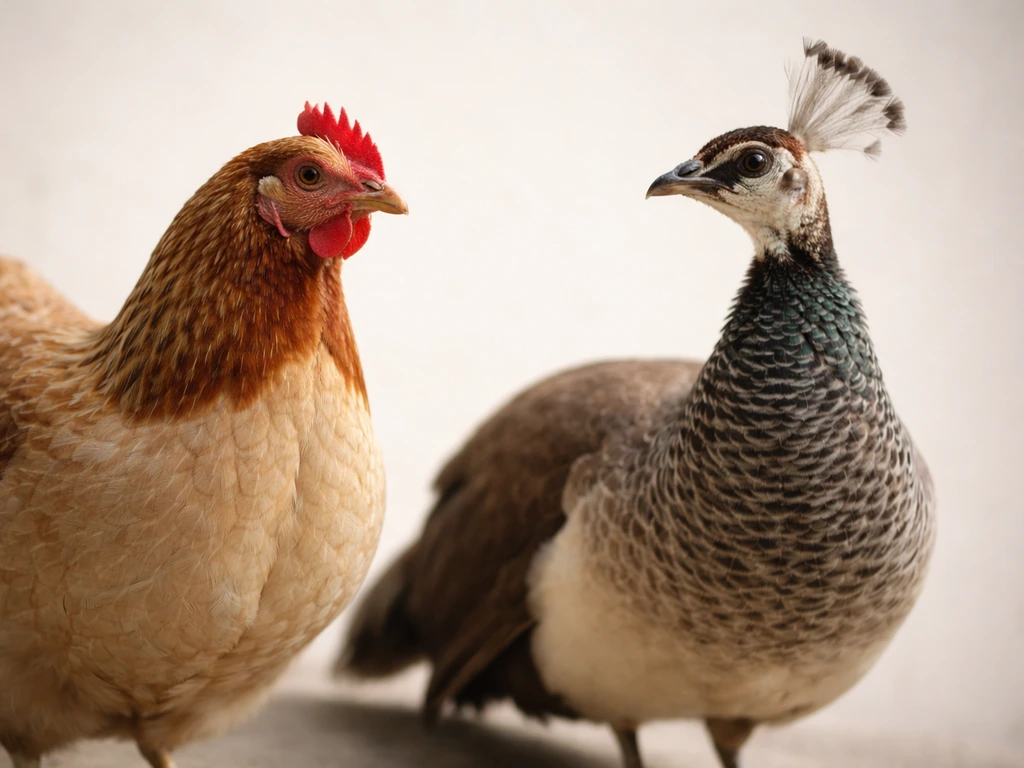
Bird slang sometimes borrows from specific species symbolism, and that is where the literal and figurative layers get genuinely interesting. Certain female bird images carry cultural weight that bleeds into how the slang reads.
- The hen: universally associated with domesticity, motherhood, and care. 'Hen' is used in Scottish and some Northern English dialects as a term of endearment for a woman, similar to 'love' or 'darling.' It is warm and not remotely insulting.
- The dove: associated with peace, gentleness, and romance. Calling someone a dove or using dove imagery to describe a woman carries a soft, romantic, or spiritual tone. It is the opposite of derogatory.
- The peacock (peahen): female peacocks are actually called peahens and are notably less showy than males. This gets picked up in commentary about gender and display, sometimes ironically.
- The robin and the wren: in British folklore, the robin and the wren are often gendered (the wren was historically called 'Jenny Wren,' a female name), making them natural symbols for femininity in traditional sayings and songs.
- The magpie: sometimes associated with gossip, chattiness, or cunning, and occasionally used to describe a talkative woman in a mildly unkind way. This is where species symbolism can carry a slight edge.
- The swan: associated with elegance, grace, and beauty. A 'swan' comparison to a woman is almost always flattering.
When someone uses 'female bird' with a specific species in mind, either naming it directly or implying it through context, those symbolic associations are part of the message. A person described as a 'swan' is being complimented. A person compared to a 'magpie' might be getting a backhanded observation about their personality. Understanding which bird is in play (even implicitly) helps you decode the full meaning. If you are wondering what tailor bird meaning points to in slang, the same rule applies: context decides whether it is literal or flirty wordplay female bird.
How to respond or interpret safely (misunderstandings to avoid)
The biggest source of confusion with 'female bird' slang is misreading the register. Someone from outside UK or Irish English culture may hear 'bird' used for a woman and find it strange or even rude without realizing it is just a regional colloquialism with a long history. Conversely, someone unfamiliar with the slang may read 'bird' literally and miss the point entirely.
Here are practical steps to avoid misreading it:
- Check the nationality or dialect of the speaker first. 'Bird' meaning a woman is primarily a UK and Irish thing. If the speaker is American, Australian, or from another English-speaking region, they may genuinely mean the animal.
- Look at what surrounds the word. Possessives ('his bird,' 'my bird') almost always mean girlfriend. Descriptive sentences ('some bird in the queue') just mean a woman. Meme or ironic contexts are usually self-evident.
- If you are unsure and it matters, ask directly. Something like 'Are you talking about a person or an actual bird?' is completely reasonable and not embarrassing.
- Do not assume hostility by default. 'Bird' in UK slang is not inherently insulting the way some other slang terms are. It sits closer to 'girl' or 'woman' on the register scale, and the speaker's intent is usually the deciding factor.
- Compare with similar expressions you might already know. If you have encountered 'little bird,' 'yer bird,' or 'classy bird' in other conversations, those reference points help you calibrate the tone of a new instance you are unsure about.
- If you are a writer or student using the term, be specific about which layer you mean. If you mean the animal, say 'female bird (the animal).' If you mean the slang, use 'bird' in its UK slang sense to avoid the awkward doubling.
One misunderstanding worth flagging specifically: 'female bird' is not a standard fixed slang phrase the way 'yer bird' or 'little bird' is. It is more of a collision between a slang word and a biological modifier. That means you will not find it defined cleanly in one slang dictionary with one clean meaning. It requires you to read the full context rather than just looking up a definition, which is exactly what this guide is here to help you do.
FAQ
If I see “female bird” in a text, is it usually a compliment, or can it be rude?
In most UK and Irish chats, the safe default is that “bird” means a woman, so “female bird” usually does the same job but with added literal emphasis or wordplay. If the message also sounds affectionate, it is likely complimentary, but if the speaker uses it as a ranking, complaint, or mockery, it can slide into objectifying.
Why does “female bird” sound awkward compared with just “bird”?
Yes, especially for people who learned “bird” as flirty slang. If “female bird” is written when others would just say “bird” (or “girl/woman”), it often signals the writer is being overly literal, trying to sound funny, or quoting someone, not using a widely established slang phrase.
Does “female bird” mean the same thing in meme slang as it does in UK or Irish slang?
It can mean different things across communities, because “bird” sometimes overlaps with other slang traditions online. When you see it alongside terms like “bih” (a shortened form used in some meme spaces), gendered insults, or relationship talk, treat it as slang tied to that culture, and rely on the sentence’s attitude rather than the words alone.
How can I tell which tone the speaker intends (flirty, affectionate, or insulting)?
Use context signals rather than tone alone. Look for affection markers (lovely, pretty, my, sweetheart), relationship framing (girlfriend, dating), and capitalization or emojis. Without those, especially if the speaker is criticizing behavior, it may be neutral slang turned into judgment.
Is it safe to use “female bird” in conversation with someone new?
If you are the one sending the phrase, avoid it unless you know the recipient will recognize it as playful. “Female bird” does not land like common UK set phrases such as “yer bird,” so it can come off as unnatural, try-hard, or unintentionally objectifying.
When would “female bird” be meant literally, not as slang?
Sometimes it is literal, particularly if the text mentions animals, nature, birdwatching, or species. If the message includes a species name or breeding behavior, it is likely biological taxonomy, not flirt slang.
What’s the quickest way to decode it if I don’t know UK slang?
If you are a non-UK/Irish speaker and you are unsure, do a quick self-check: replace “bird” with “girl/woman” in your mind, then see whether the sentence still makes sense naturally. If the replacement works only awkwardly, the writer may be using irony, quoting, or referencing another meme community.
Why do people outside the UK interpret it more negatively than locals do?
Expect mismatch. UK and Irish speakers often treat “bird” as casual and mildly old-fashioned, while others may read it as an insult because it resembles animal-related or gendered objectification. If you are correcting someone, explain that it is a regional colloquialism and ask them to judge the intent from surrounding words.
Next Article
Little Bird Meaning in Slang: Affection, Flirt, Teasing
Meaning of little bird slang: affectionate pet name, flirt, or teasing, plus context clues and how to respond safely.