In British slang, 'bird' most commonly means a woman or girl. That's the short answer. You'll hear it used to describe a girlfriend ('she's my bird'), refer to a woman someone finds attractive ('fancy that bird over there'), or simply label a female person in casual conversation. It's been a fixture of everyday UK speech for decades, and depending on who's saying it, where they're from, and how they say it, it can land as affectionate, neutral, or genuinely offensive.
What Does Bird Mean in British Slang? Real Uses

Marcus Reeves
22 Apr 2026
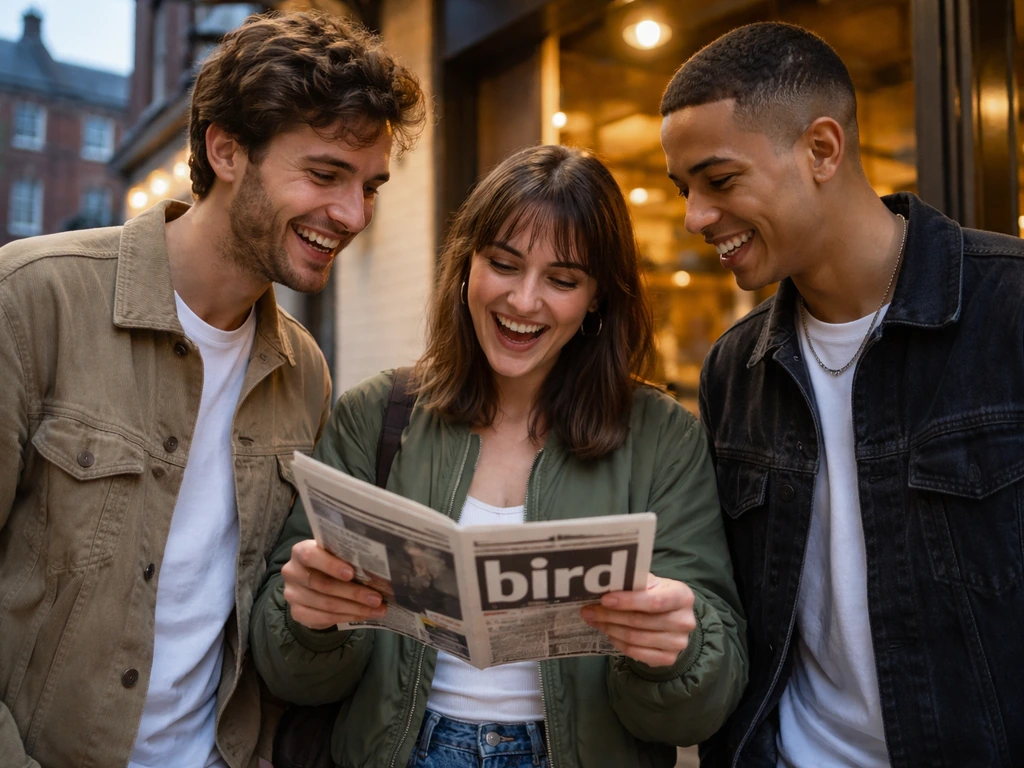
What 'bird' actually means in British slang
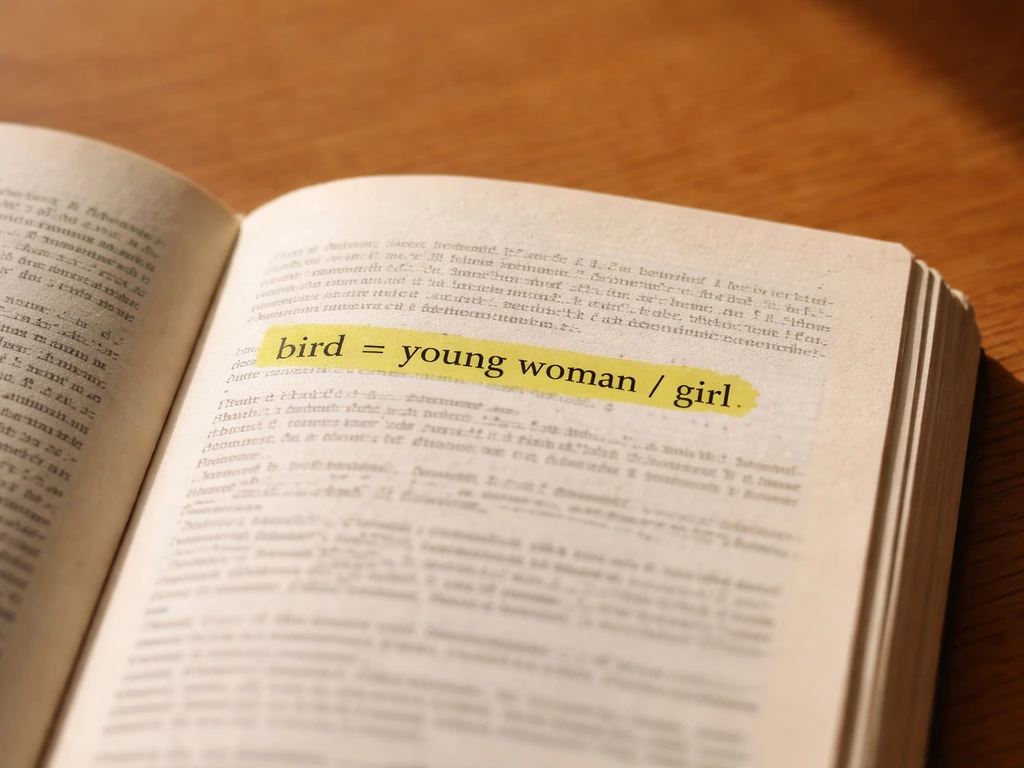
The core slang meaning is simple: 'bird' is a noun for a young woman or girl. It's distinctly British English and isn't widely used the same way in American or Australian slang. You'll find it in UK dictionaries defined as 'a young woman or girl,' and in everyday use it almost always refers to a female person rather than anything else. The most common constructions you'll encounter are possessive ones: 'my bird,' 'his bird,' 'your bird.' These almost always signal girlfriend or a woman of romantic interest. 'Yer bird' (particularly popular in meme culture and northern UK speech) means 'your girlfriend' full stop.
There's also a historical layer worth knowing. Older slang dictionaries, including Green's Dictionary of Slang, list additional senses for 'bird' that were used in earlier centuries to mean a promiscuous woman or even a prostitute. Those senses are archaic now and you're very unlikely to encounter them in modern everyday use. Knowing they existed helps explain why the word carries some baggage, but don't assume that's what someone means in a present-day conversation. Context is everything.
There are also a couple of compound variants worth knowing. 'Dolly bird' (listed in Cambridge Dictionary as British slang) referred historically to an attractive young woman, often with an implication of style over substance. 'Old bird' appears in Dictionary.com and is used in UK speech to describe an older woman, sometimes affectionately ('a tough old bird'), sometimes dismissively. Neither compound is particularly current, but you'll still run across them in older British TV, books, or conversation with older speakers.
Using 'bird' for a woman: tone, politeness, and when it gets complicated
This is where things get nuanced, so pay attention. 'Bird' is not automatically an insult, but it's not automatically neutral either. Its reception depends heavily on three things: who's saying it, to or about whom, and in what setting.
In casual, peer-to-peer speech, especially among younger or working-class speakers in regions like Yorkshire, Liverpool, and Scotland, 'bird' used to mean girlfriend or 'a girl I like' is fairly unremarkable. Someone saying 'I'm taking my bird out tonight' is simply telling you about their girlfriend. The tone there is affectionate and possessive in a familiar rather than demeaning way, similar to how 'my missus' or 'my lass' functions.
Where it gets trickier is when 'bird' is used to label a woman who isn't the speaker's partner. 'That bird in the office' or 'some bird at the pub' reduces a person to a category defined by gender and, implicitly, attractiveness or romantic availability. Many women find this reductive, and contemporary UK discourse, including commentary in publications like Grazia, has framed this usage as taking away women's individual agency. A UK employment tribunal has also treated repeated use of 'birds' toward female colleagues as a form of gender-based harassment, which means in a workplace context the word carries real legal and professional risk.
In short: the word sits somewhere between dated slang and low-level sexism depending on who you ask. Younger urban speakers in the UK are increasingly likely to see it as outdated or slightly infantilising. Older speakers or those in certain regional communities may use it without any intent to demean. Neither reading is wrong, which is exactly why you need to factor in context every time you encounter it.
Example sentences and what they're actually saying
Seeing 'bird' in a real sentence is the fastest way to lock in the meaning. Here are common examples with what they actually communicate:
- 'She's his bird' — She is his girlfriend. Casual, possessive, romantic context. Not insulting in this frame.
- 'Fancy that bird in the office?' — Do you find that woman in the office attractive? Slightly laddish, can read as objectifying depending on the listener.
- 'My bird's coming over later' — My girlfriend is coming over later. Standard casual UK speech.
- 'Yer bird texted you' — Your girlfriend sent you a message. Common in northern England and Scotland; popularised further by meme culture.
- 'She's a tough old bird' — She's a resilient older woman. Can be respectful or condescending depending on delivery.
- 'Some bird at the bar kept staring at me' — Some woman at the bar was staring at me. Gender-labelling, somewhat reductive, not intended as a direct insult but may read that way.
Notice that in almost every case, 'bird' is functioning as a noun for a female person. The emotional valence, affectionate or dismissive, comes from the rest of the sentence and the relationship between the speakers, not from the word itself. If you're reading a British novel, watching UK TV, or decoding a text message from a British contact, ask: is the speaker referring to someone they know personally? Is it a partner context or a stranger context? That split does most of the interpretive work for you.
'Bird' in slang vs. 'bird' meaning an actual bird
British English uses 'bird' for actual birds (the feathered kind) just as much as any other dialect, which is why context really matters. If you meant 'dressed bird meaning' in slang, the context you read it in can change what it refers to bird' meaning an actual bird. 'Bird' as an animal is universal. 'Bird' as slang is contextual. In practice, the disambiguation is usually easy because the sentence structure tells you immediately: 'I saw a bird in the garden this morning' is clearly about an animal, while 'I saw a bird I know from work' is clearly about a woman.
Where people get tripped up is in headlines, quotes, or overheard fragments stripped of context. Someone saying 'the bird was gorgeous' could mean an actual bird or a woman depending entirely on what came before it. The UK also has a rich tradition of birdwatching, sometimes called 'twitching,' and British bird-related idioms like 'a bird in hand' or 'the early bird catches the worm' refer to the animal rather than the slang. Keep the full sentence and setting in view before you interpret.
It's also worth noting that the slang sense of 'bird' is overwhelmingly used to refer to women. You won't hear British speakers routinely call men 'birds,' though compound expressions like 'old bird' can occasionally apply to men in certain dialects. If you see or hear 'bird' used as a label for a male person, that's unusual enough to warrant a second look at the source.
What Urban Dictionary says, and where to be careful
Urban Dictionary entries for 'bird' in British slang generally align with what you'd find in more formal references: a young woman, a girlfriend, a girl someone fancies. Cambridge Dictionary’s definition of “chick” shows the same slang sense of a “young woman” that can be useful for comparing girl and woman registers a young woman, a girlfriend, a girl someone fancies. That core meaning is consistent across sources and reflects genuine everyday usage. So if you found your way to this article after reading an Urban Dictionary entry, the basic definition it gave you is probably accurate.
Where Urban Dictionary requires caution is in its secondary and community-submitted entries. The platform allows anyone to submit definitions, which means you may find submissions that exaggerate the sexual or derogatory connotations of 'bird,' reflect very specific regional or subcultural use, or simply reflect one person's experience rather than mainstream usage. The historical senses (referring to promiscuity or sex work) sometimes get amplified in slang lists as if they were current, when in everyday 2026 British English they're not the meaning you'd default to.
A good rule of thumb: if Urban Dictionary gives you a definition that seems highly charged or offensive, cross-check it against a standard UK dictionary or a usage example from a mainstream British source. The Free Dictionary, Cambridge Dictionary, and Wiktionary all carry the 'young woman or girl' sense without the sensationalism. Use Urban Dictionary as a starting point for slang curiosity, not as a final authority on tone or acceptability.
How to avoid misreading 'bird' or accidentally sounding rude

Whether you're trying to interpret someone else's use of 'bird' or deciding whether to use it yourself, a few practical checks will save you from misreadings and awkward moments.
- Check the relationship context first. 'My bird' and 'his bird' almost always mean girlfriend. 'That bird' or 'some bird' is vaguer and more likely to read as objectifying.
- Look at the surrounding words. Words like 'fancy,' 'gorgeous,' or 'girlfriend' alongside 'bird' confirm the slang meaning. Animal-adjacent words like 'garden,' 'nest,' or 'feathers' confirm the literal meaning.
- Consider the speaker's age and region. Older UK speakers and those from regions like Liverpool, Yorkshire, or Scotland are more likely to use 'bird' casually with no intent to demean. Younger urban speakers may find it dated.
- Avoid it in professional or formal contexts. A UK employment tribunal has ruled that calling women 'birds' in the workplace can constitute harassment. It's not worth the risk in any work setting.
- If you're a non-British speaker writing or speaking British English, consider whether you actually need the word. Expressions like 'my girlfriend,' 'a woman I know,' or 'she' do the same job without the ambiguity.
- When in doubt, ask or look at tone. If someone uses 'bird' warmly and in an obviously affectionate or joking context, it's almost certainly not meant as a slur. If it's paired with dismissive language or used to talk over or about a woman, the intent is less generous.
One final thing worth flagging: this is just one corner of a broader set of bird-related slang expressions in British and general English. If you've come across terms like 'little bird,' 'classy bird,' or 'female bird' used as slang, those expressions each carry their own nuances and slightly different registers. In slang, the phrase “female bird” can also refer to a woman, but its exact meaning depends on context and audience.
If you meant "tailor bird meaning" in a specific slang or niche context, it helps to compare it with the broader "bird" slang usage explained here. The term “little bird” meaning slang can also vary by region and speaker, so it helps to check the context it appears in little bird meaning slang. For more context on that term, read up on classy bird meaning slang and how the tone can shift by speaker and setting.
Female bird meaning slang is one of the related forms that can shift tone depending on the speaker and context. They're related to the same slang tradition but not interchangeable with the plain 'bird' meaning covered here. The same applies to expressions like 'T-bird,' which comes from a completely different cultural context altogether. When a slang term combines 'bird' with another word, always treat it as its own entry rather than assuming it maps directly onto the core meaning.
FAQ
Can “bird” mean a man in British slang?
In modern UK everyday speech, it is overwhelmingly a noun for a woman or girl (especially a girlfriend or a woman someone fancies). If you are hearing it used about a man, or with strong sexual or derogatory framing, that is unusual enough that you should double-check the speaker, the setting, and the preceding sentence.
Is it ever offensive to say “bird” in the workplace?
Yes, it can. Even though the base sense is not inherently insulting, in workplaces or formal settings it can read as objectifying or gendered. If someone uses it repeatedly toward colleagues, treat it as a potential harassment risk rather than “just slang.”
What should I assume if I see “my bird” or “your bird” in a text?
If you receive a message containing “my bird” or “your bird,” the most likely meaning is relationship context, but “bird” does not always mean “girlfriend” in every relationship. Look for relationship cues like “coming out,” “my place,” “tonight,” or pronouns, and if those are missing, assume it could simply be “a woman I like” until clarified.
Should I use “bird” when talking to people in the UK?
Avoid using it yourself until you know the person and the tone. Casual peer-to-peer use can be familiar, but the same phrase can land as infantilising or sexist to others, especially in diverse workplaces, service roles, or with people who prefer gender-neutral language.
How do I tell whether “bird” means an actual bird or a person in a sentence fragment?
The sentence “the bird was gorgeous” is ambiguous by itself. If it is preceded by something about gardens, wildlife, or watching, it means the feathered animal. If it is preceded by talk about dating, work, or appearance of a person, it is likely slang for a woman.
Does “bird” mean the same thing across all parts of the UK?
Regional and age variation matters. In some northern or older speaker communities it may be used without intent to demean, but younger and more urban speakers are often more likely to hear it as outdated. If you are unsure, mirror the level of formality and avoid the term.
What if “bird” shows up in a longer phrase like “little bird” or “classy bird”?
If “bird” is part of a longer phrase like “little bird,” “classy bird,” or “female bird,” treat it as a separate slang entry. Those compounds can shift tone and target (romantic, playful, or more derogatory), so you should not assume they map exactly onto the plain “bird” meaning.
Is “birds” different from “bird” when people are talking about women?
Plural usage can be a red flag. If you hear “birds” used as a group label for women in conversation about attraction or availability, it often intensifies objectifying meaning and may be experienced as disrespectful or hostile.
How can the same word mean something different depending on context?
Yes, and it is about tone and audience. A phrase can be affectionate between partners, but a stranger or coworker context can make it feel like the speaker is reducing someone to gender and attractiveness. When in doubt, ask what they mean or switch to safer alternatives like “woman,” “girlfriend,” or “person.”
Next Article
Thirst Reckoned Bird North Meaning Explained and Decoded
Decode the riddle phrase thirst reckoned bird north meaning: idioms, symbolism, and direction clues to find likely inten