When someone calls you 'little bird,' they're almost always being affectionate, playful, or flirtatious. It's a pet name or endearment, not a standardized slang term with one fixed meaning. The exact flavor depends entirely on who's saying it, in what tone, and in what kind of relationship. It can be a parent's nickname for a child, a partner's tender shorthand, a flirty tease between people who are into each other, or even a slightly controlling label from someone in a position of power. Separately, the phrase 'a little bird told me' is a well-known idiom meaning you heard something from an unnamed source and you're deliberately not saying who told you.
Little Bird Meaning in Slang: Affection, Flirt, Teasing

Marcus Reeves
14 May 2026
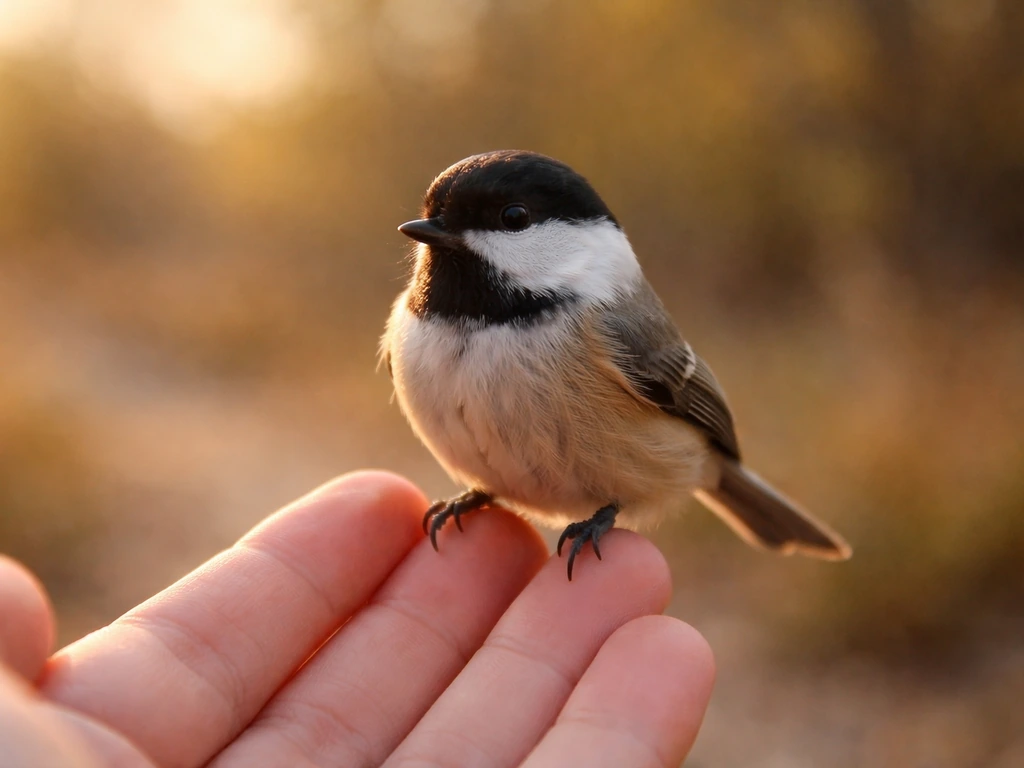
Literal, figurative, or slang: which one are you dealing with?
The phrase 'little bird' splits into two pretty distinct uses. Literally, it just describes a small bird. But that's rarely why someone searches for it. The figurative and slang uses are what actually need unpacking.
The idiom 'a little bird told me' is the figurative heavyweight here. It means you received some piece of information or gossip about someone, but you're not revealing your source. Cambridge Dictionary defines it plainly: you use it when you know who told you something but don't want to say. It's a way of introducing information while protecting your informant, or just being coy. Collins notes it can sound old-fashioned in American English, though it's still widely recognized and used in British English, fiction, and more formal conversation.
The slang use of 'little bird' as a standalone term, without the 'told me' construction, is softer and more personal. It functions as a nickname or endearment. There's no dictionary entry pinning down a single slang definition because it works more like 'sweetheart' or 'darling': the meaning lives in the delivery and the relationship, not the words alone. In Merriam-Webster’s entry for “birdieing,” “little bird” is used as an example gloss meaning “a little bird,” supporting the idea that it functions as a diminutive term of endearment.
What 'little bird' can mean as slang, and who actually says it
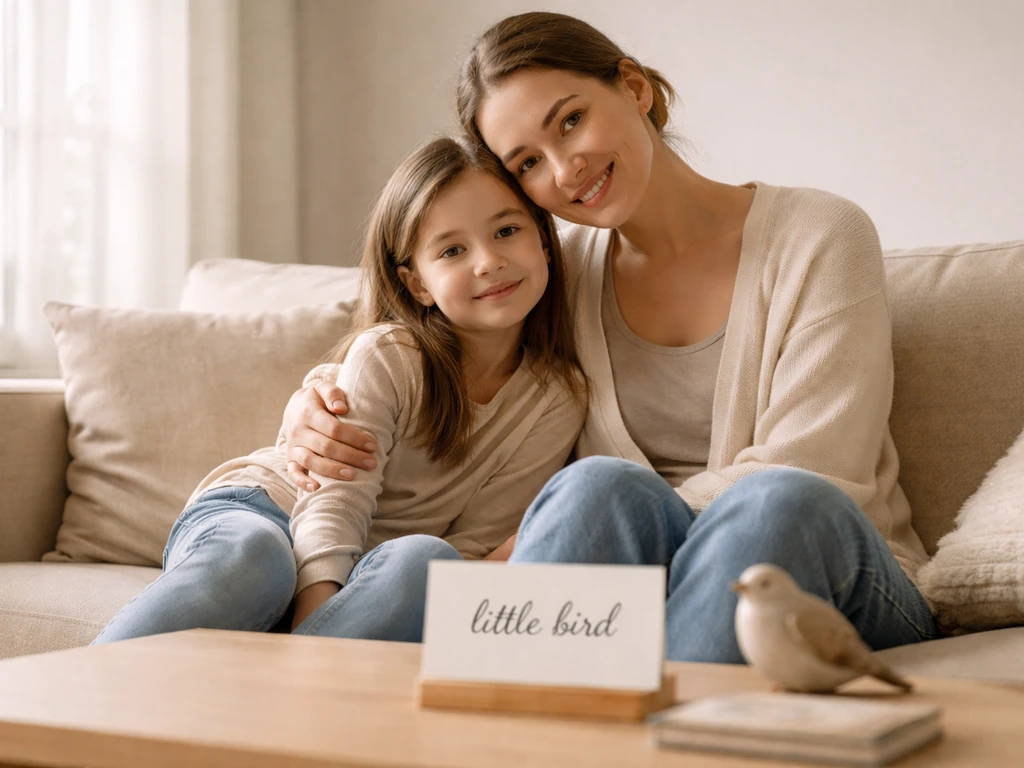
Here are the most common ways 'little bird' gets used as slang or a pet name in real speech and writing:
- Term of endearment for a child: parents, grandparents, and older relatives often use it for small kids, conveying warmth, smallness, and protection. The bird imagery fits naturally because birds are fragile, quick, and free.
- Romantic nickname: partners call each other 'little bird' to express fondness, sometimes with a sense of playfulness or possessiveness, depending on tone.
- Flirtatious teasing: used between people who are attracted to each other but haven't fully defined things yet. It can signal that the speaker finds the other person light, bright, or elusive.
- Condescending or infantilizing: in some contexts, especially from a boss, teacher, or anyone with authority over you, 'little bird' can carry a subtle sense of 'you're small and I'm the one who knows things.' It's worth noticing when this happens.
- Literary or dramatic flourish: writers, actors, and people with a flair for language use 'little bird' self-consciously because it sounds poetic. It often signals they're going for a certain aesthetic rather than expressing something purely personal.
- Gossip shorthand: tied to 'a little bird told me,' the phrase can refer to the anonymous source itself. 'My little bird says you've been busy' works as a way of implying you have eyes and ears without naming them.
Context clues that tell you what it actually means
If you're trying to decode what someone meant when they called you 'little bird' or said 'a little bird told me,' look at these factors first:
| Context factor | What to check | What it suggests |
|---|---|---|
| Relationship | Parent, partner, stranger, boss? | Parent/older relative = nurturing; partner = romantic; stranger = flirty or presumptuous; boss = possibly condescending |
| Tone and setting | Soft voice, text with emoji, or formal statement? | Soft tone = affectionate; playful text = flirty; serious or clipped = could be passive-aggressive |
| Paired language | Does it come with 'told me' or as a standalone nickname? | 'A little bird told me' = gossip/information idiom; standalone = personal nickname or endearment |
| Frequency | One-time or repeated? | Repeated nickname = they've claimed it intentionally; one-time = testing the water or quoting something |
| Region and generation | British, American, older speaker? | 'A little bird told me' sounds more natural in British English and from older speakers; in the US it can feel dated unless used ironically |
| Platform | Text, social media caption, DM, in person? | A DM 'little bird' is usually flirty; a social caption is often playful or aesthetic; in person with a smile = affectionate |
The single most useful clue is usually the surrounding language. If 'little bird' shows up next to directives ('come here, little bird' or 'don't fly away, little bird'), that possessive flavor is intentional and worth paying attention to. If it shows up in a warm, low-stakes moment, it's almost certainly just affection.
Affectionate, romantic, or flirty: reading the emotional register
These three uses get conflated but they're not the same thing, and telling them apart matters.
Affectionate and non-romantic 'little bird' is warm but not charged. A grandmother calls her granddaughter 'my little bird' because the child is small and quick and she loves her. A close friend might use it as a teasing nickname. There's no edge to it and no expectation attached.
Romantic 'little bird' usually comes with intimacy already established. A partner uses it privately, maybe as an in-joke or just because it fits. It can carry tenderness, sometimes with a slight sense of protectiveness. The bird imagery works because birds are associated with freedom, song, and lightness, so calling someone your little bird can be a compliment about their spirit.
Flirty or teasing 'little bird' is different from both. It's used when attraction is present but the relationship isn't fully defined. The speaker is being a little playful, maybe a little presumptuous, and they want you to notice. It often has a question built into it: will you respond to this nickname? If you do, it moves forward. If you don't, they can claim they were just being casual. That ambiguity is part of the point.
How 'little bird' shows up in movies, TV, and fiction
This phrase has a long life in media, and knowing the tropes helps you recognize why someone might quote it or use it self-consciously.
The most famous example in recent pop culture is Game of Thrones, where the character Littlefinger (and others) frequently addresses Sansa Stark as 'little bird.' It's not accidental. The name captures exactly the complex, uncomfortable dynamic described above: she is young, trapped, watched, and somewhat protected by someone with power over her. The phrase is simultaneously tender and controlling, which is precisely what makes it unsettling in that context. Writers use 'little bird' when they want to show a character who sees someone as beautiful but also caged.
More broadly in fiction, 'little bird' appears as a nickname in romance novels, gothic stories, and dramas where one character has more power or knowledge than the other. The bird metaphor does a lot of work: birds can fly away, they sing, they're visible and exposed, and someone with a 'little bird' either treasures it or keeps it in a cage. Readers and viewers are meant to notice which one it is.
In song, 'little bird' appears across genres as a term of endearment or a symbol of someone free-spirited. Annie Lennox's 'Little Bird' uses the image to express longing for ease and lightness. The pattern is consistent: the bird represents something bright, small, and somewhat beyond reach.
When someone quotes a line or uses 'little bird' with an obvious media reference, they're probably borrowing that aesthetic rather than using it naively. That's worth noting.
How to read intent safely, especially from someone you don't know well

Most of the time 'little bird' is harmless, but there are situations where it's worth pausing. Here's how to think it through.
If you're being called 'little bird' by someone you're close to and it feels right, you probably don't need to analyze it further. Trust your read of the relationship.
If it comes from someone you don't know well, a new acquaintance, someone in a position of authority, or a stranger online, check for these signals:
- Is the nickname paired with directives or commands? ('Come here, little bird' or 'don't ask questions, little bird' has a controlling register.)
- Does the person use it to minimize what you're saying? ('Easy, little bird' in response to your concern is dismissive.)
- Is it paired with other language that infantilizes you or positions them as knowing better?
- Does it feel like it was chosen to flatter and disarm rather than to express genuine warmth?
If any of those apply, trust your instinct. You're not overreading it. The bird imagery in those contexts is doing exactly what the Game of Thrones writers intended: making you feel small and watched. You don't have to accept a nickname from someone who hasn't earned it. A simple 'I'd rather you just use my name' is enough.
If you're unsure whether 'a little bird told me' is friendly or threatening, the context almost always clarifies it. Said with a smile in a casual setting, it's just playful gossip language. Said coldly or as a warning, it signals that someone is letting you know you're being watched. In that case, you're right to take it seriously.
Practical steps: what to do next
- If you're curious whether it's romantic: pay attention to whether the nickname is used privately or in front of others. Private nicknames signal more intentional intimacy.
- If you're not sure how to respond: you can simply smile and not adopt the nickname yourself. That leaves the door open without committing to anything.
- If it bothers you: say so directly. 'I'd prefer you just call me [name]' is clear and doesn't require explanation.
- If it came with 'a little bird told me': ask a follow-up question about the information itself, not the source. That's usually more useful than trying to find out who told them.
- If you heard it in a show or song and want to understand the reference: look at who has power in that relationship. That's almost always the key to the writer's intent.
How 'little bird' compares to other bird slang and endearments
If you've landed here because you're building a broader understanding of bird-related slang, it helps to know where 'little bird' fits in the bigger picture. If you also mean T-bird meaning slang, check how that nickname is used differently from “little bird” as an endearment 'little bird' fits.
In British slang, 'bird' on its own is a well-established informal word for a woman, used widely since at least the mid-20th century, with a casual rather than affectionate register. In that same British slang vibe, 'female bird' can be used as a shorthand for what someone means by 'bird' for a woman bird' on its own. In British slang, “bird” can also be used on its own to mean “woman,” and the tone is usually casual rather than romantic bird on its own. Adding 'little' shifts it into endearment territory and makes it feel warmer and more personal. A 'classy bird' is a whole different expression, describing a woman as sophisticated or well-dressed. These related terms share the bird vocabulary but land in very different emotional registers.
Expressions like 'early bird,' 'free bird,' or 'rare bird' all use bird imagery but as descriptors of personality or behavior rather than pet names. 'A bird in the hand' and similar idioms are purely figurative. The thing that makes 'little bird' distinct is that it's one of the few bird phrases that functions as a direct, personal address, aimed at a specific person to make them feel seen, small, or beloved depending on the speaker's intent.
If you're comparing 'little bird' to something like 'T-bird,' which is short for Thunderbird and carries entirely different American cultural connotations rooted in cars and 1950s nostalgia, you're looking at a completely separate branch of bird slang. Same word family, completely different meaning and vibe.
The bottom line across all of these: bird slang is highly context-dependent. The modifier, the relationship, the tone, and the region all change the meaning. 'Little bird' is soft and personal; other bird expressions can be neutral, descriptive, crude, or nostalgic. Knowing which kind you're dealing with is just a matter of reading the room.
FAQ
Can “little bird” be affectionate but not romantic?
Yes. If “little bird” is used as a direct address in a text message, voice note, or caption, it can function like “darling” even when the sender is not being romantic. Check for cues like repeated use only with you, affectionate emojis, or softer wording around it (for example, “come here, little bird” versus “you little bird” in a sharp rebuke).
What does it mean if “a little bird told me” sounds threatening?
If someone says “a little bird told me” in a serious or threatening way, treat it as an attempt to pressure you or control the narrative, not harmless gossip. A practical check is whether the information is paired with instructions or intimidation (for example, “now you have to do X,” or “don’t tell anyone”). Friendly versions usually don’t come with demands.
Does “little bird” only mean something when used with “told me”?
Not necessarily. “Little bird” can still be meaningful without any bird-related phrase nearby because it works as a standalone pet name. Still, if you see it next to boundary-testing language, secrecy requests, or dominance cues, the safest assumption is that the speaker’s intent is more charged than simple endearment.
Is it a red flag if someone calls me “little bird” online?
Online, it can be flirty, but scammers and controlling people also use pet names to build emotional familiarity quickly. Look at the timeline: if they switch from generic messages to “little bird” very fast, then ask for personal info, money, or exclusivity, that is a red flag. Consider setting a boundary early by replying with their name or asking what they mean by the term.
How can I tell if “little bird” is patronizing instead of sweet?
Yes, tone can shift it from sweet to uncomfortable. “Little bird” said softly, slowly, or with warm wording usually lands as affectionate. “Little bird” said curtly, sarcastically, or in response to you disagreeing can be patronizing. If you feel smaller or talked down to, trust that impression and respond accordingly.
What should I do if I don’t like the nickname “little bird”?
A mismatch in comfort levels matters more than the dictionary meaning. If you are uncomfortable, you can correct it plainly, for example, “Please use my name,” or “I don’t like that nickname.” If they respect it, you learned something about their intent. If they argue or keep using it, that’s useful information for future boundaries.
What clues suggest “little bird” is being used with a power dynamic?
Context can change the power dynamic, but certain clues are consistent. Watch for possessive phrasing (for example, “my little bird”), exclusivity pressure, or references to “someone watching” or “I know what you did.” Those patterns point to control. Warm affection is usually about comfort, not surveillance.
If someone quotes “little bird” from a show, does that change the meaning?
If it appears as a quote from a show or song, it might be stylistic or fandom-based rather than a personal statement about you. The key difference is the speaker’s relationship to you, plus whether they use it in a personal exchange or only as a reference. When it’s just a reference, you can respond with casual acknowledgment rather than engaging romantically.
Next Article
Classy Bird Meaning: How to Read Tone and Intent
Understand classy bird meaning in slang: decipher intent, tone, examples, and how to respond or rephrase it.