
In Australia, 'dirty bird' almost always means KFC. That's the dominant, everyday use you'll encounter in casual conversation, online food discussions, and Aussie slang glossaries. If someone says 'I'm craving the dirty bird' or 'we're doing dirty bird tonight,' they're talking about a bucket of fried chicken, not making an insult. That said, 'dirty bird' does carry a couple of other meanings in Australian English, and knowing which one applies in the moment is straightforward once you know what to look for.
Dirty Bird Meaning in Australia: How It’s Used

Marcus Reeves
21 May 2026
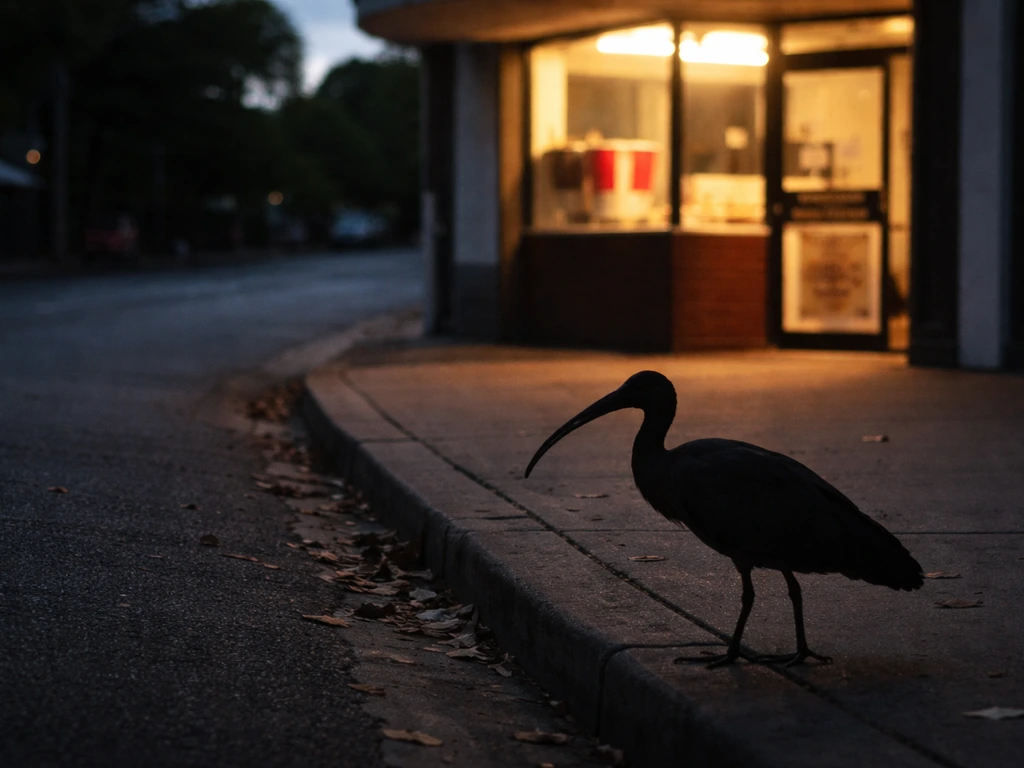
What 'dirty bird' means in Australian English
The core meaning is simple: 'dirty bird' or 'the dirty bird' is a widely used Australian nickname for KFC (Kentucky Fried Chicken). It's affectionate and self-aware at the same time. Australians know KFC is greasy, sometimes inconsistent, and not exactly health food, and the nickname leans into that. It's the same energy as calling a late-night kebab run 'dirty food', it's not a real complaint, it's almost a badge of honour. You'll see it in Reddit comments, food apps, and group chats: 'KFC = dirty bird, Red Rooster = something else entirely.'
The second meaning is more literal. In Australian wildlife and environmental writing, 'dirty bird' gets applied to the Australian white ibis, better known as the 'bin chicken.' The ibis has a reputation for raiding rubbish bins in urban parks, so calling it a 'dirty bird' is descriptive rather than figurative. You'll find this framing in media pieces about urban wildlife and in documentary descriptions. It's not slang exactly, more of a colloquial label that reflects how Australians actually relate to this bird.
There is no strong tradition in Australian English of using 'dirty bird' as a personal insult aimed at a person's character or behaviour, the way Urban Dictionary-style US/UK slang might use it (more on that below). If an Australian calls a person a 'dirty bird,' it's almost certainly a jokey or affectionate tease, not a loaded insult.
Common contexts: insult vs literal meaning vs joke
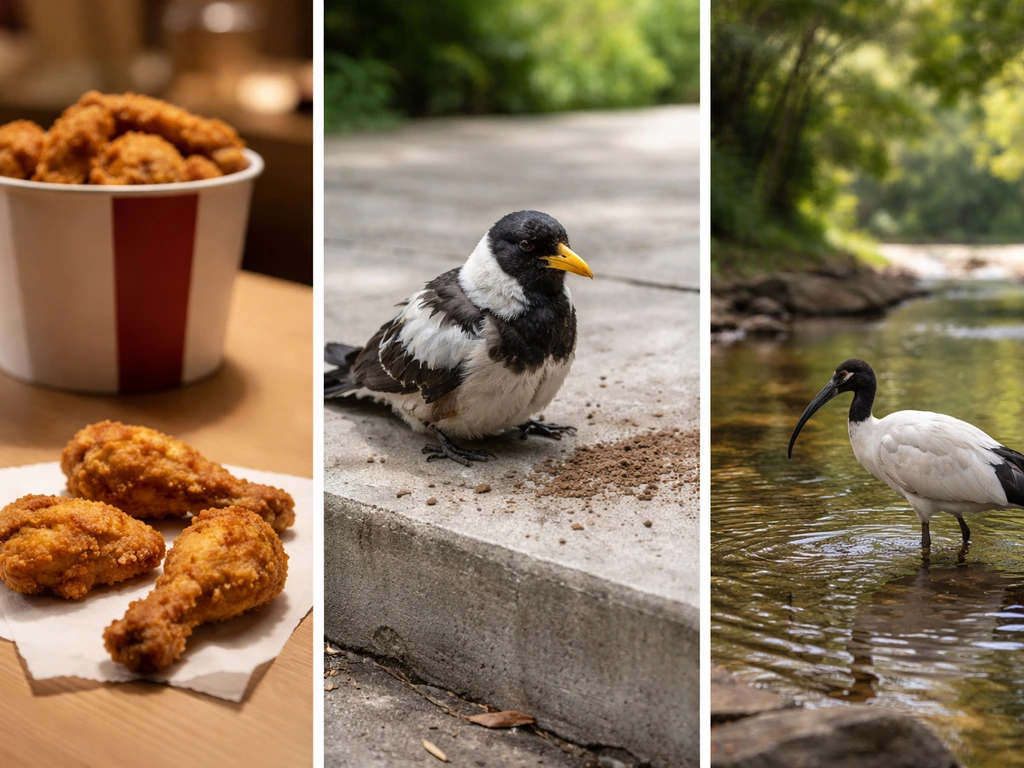
The three main situations where you'll encounter 'dirty bird' in Australia are distinct enough that they rarely get confused in practice, but it helps to know them explicitly.
- Food slang (by far the most common): 'The dirty bird' or 'dirty bird run' refers to KFC. This is cheerful, informal food talk, used between friends or in online food communities. No negative intent whatsoever.
- Literal bird reference: Describing the Australian white ibis as a 'dirty bird' or 'bin chicken' in conversation about wildlife, parks, or urban nature. Descriptive and slightly humorous, not an idiom.
- Joking personal tease: Occasionally used to lightly roast a friend for doing something a bit gross or questionable. This is rare and heavily context-dependent. When it does happen, the tone is always playful, not aggressive.
The insult reading that crops up in US-centric sources (including some Urban Dictionary entries, which frame 'dirty bird' as a derogatory term for a promiscuous person) is not a recognised Australian usage. Urban Dictionary, which crowdsources definitions for terms like “dirty bird,” includes meanings such as a sexualized insult (for example, “promiscuous woman”), which does not line up with Australian KFC usage Urban Dictionary includes a sexualized insult meaning. If you've come here after seeing that definition and wondering if that's what an Australian meant, the answer is almost certainly no.
Disambiguation tips: how to tell what's meant from the wording and tone
The context clues are usually obvious once you know what to look for. If you want a quick sense of the bad bird meaning people sometimes ask about, it depends on whether they're talking KFC, the ibis, or using it as a joke dirty bird. Here's how to quickly identify which meaning someone is using.
| Clue | Likely meaning | What to look for |
|---|---|---|
| Topic is food, takeaway, or dinner plans | KFC nickname | Words like 'run,' 'craving,' 'order,' 'bucket,' 'tonight' |
| Capitalised as 'Dirty Bird' | KFC nickname (treated like a proper noun) | Often used with 'the' in front — 'the Dirty Bird' |
| Talking about wildlife, parks, or bins | Australian white ibis / bin chicken | References to city parks, rubbish, or 'bin chicken' |
| Said to a person, with a grin or laughing emoji | Affectionate tease / joke | Playful tone, close relationship between speakers |
| No food or wildlife context, directed at a person seriously | Worth clarifying (see below) | Flat tone, no obvious humour signal |
Capitalisation is one of the most reliable written cues. 'Dirty Bird' (capitalised) almost always signals the KFC nickname, because Australians treat it like a brand name. Lowercase 'dirty bird' in a sentence about animals points to the literal meaning. And if it's aimed at a person with clear warmth or humour, it's a joke. The loaded US slang meaning essentially doesn't apply here.
How it's used in conversation and online

In group chats and social media, the KFC meaning dominates. If you're searching for the dirty bird society meaning, start with the common Australian usage tied to KFC KFC meaning dominates. You'll see exchanges like: 'Anyone else doing the dirty bird tonight?' with replies like 'Already ordered, wings and coleslaw.' On Reddit's Australia-focused food threads, comments comparing KFC and Red Rooster regularly use 'dirty bird' as the shorthand for KFC, treating it as common knowledge. It functions like a proper noun: no explanation needed, no irony intended.
In wildlife or nature content, particularly Apple TV documentary descriptions and pieces in publications like Griffith Review, you'll find 'dirty bird' paired with 'bin chicken' when discussing the ibis. Apple TV’s Australia description for Dirty Bird uses the “dirty bird” wording alongside “bin chicken” when referring to the ibis in wildlife or nature content, particularly Apple TV documentary descriptions. The framing is usually fond-but-wry, because Australians have a complicated affection for the ibis despite (or because of) its reputation.
If someone calls you a 'dirty bird' directly, a reasonable reply depends on the vibe. If it's clearly playful, just roll with it: 'Guilty as charged' or 'You love it' works fine. If you're genuinely unsure whether it was a dig, a simple 'Ha, what do you mean by that?' defuses any ambiguity without making it a big deal.
Related phrases and close variations people may confuse
A few nearby phrases are worth knowing because they overlap in tone or topic but mean different things.
- 'Bin chicken': A direct, arguably more popular nickname for the Australian white ibis. Often used interchangeably with 'dirty bird' in a wildlife context but is distinctly Australian and almost never applied to KFC.
- 'Dirty food' or 'dirty feed': General Australian slang for indulgent, greasy, or guilty-pleasure food. Broader than 'dirty bird' and not KFC-specific.
- 'Dirt bird': A close spelling variant (one word dropped) that you might see in online searches. In Australian usage it carries similar casual, food-adjacent energy, though it's less standardised than 'dirty bird.'
- 'Naughty bird': A softer variant sometimes used in the same joking, teasing register as 'dirty bird' when directed at a person. Still playful rather than genuinely critical.
- 'Bad bird': More often literal (a misbehaving pet, for example) than idiomatic in Australian English, though it can be used as a mild tease in the same vein.
If you've come across 'dirty bird' in a context that feels different from all of the above, it may be worth checking whether the source is American or British, since Urban Dictionary and US slang aggregators use 'dirty bird' with meanings (particularly a sexualised insult) that simply don't map onto how Australians use the phrase. The sibling slang categories around 'dirty bird meaning urban dictionary' are a good reminder that crowd-sourced definitions reflect multiple English dialects at once, and the Australian meaning can get lost in the mix.
How to respond or clarify if you're unsure

If you're reading a message or comment and genuinely can't tell which meaning is intended, a neutral, low-stakes question is always the right move. In Australian social culture, asking for clarification on slang is not embarrassing, it's practical. Most people are happy to explain what they meant, especially if the phrase could have landed weirdly.
- Check the context first: Is the conversation about food, plans, wildlife, or is it aimed at you personally? That alone resolves 90% of cases.
- If it's a food context, just confirm: 'You mean KFC?' works perfectly and signals you know the slang.
- If it's directed at you as a person and the tone isn't obviously joking, ask neutrally: 'Ha, what do you mean by that?' gives the other person a chance to clarify without escalating.
- If it's in a written comment or post, look for emoji, punctuation, or surrounding words. A laughing emoji or food-related hashtag makes the meaning clear. A flat, unexplained comment aimed at a person is the one case where you might push back gently.
- Avoid assuming the US/Urban Dictionary meaning in an Australian context. The odds are strongly against it.
The bottom line is that 'dirty bird' in Australia is overwhelmingly a food reference or a fondly applied animal nickname. It's not loaded language here the way it might be in some US slang contexts. If you hear it, your first instinct should be to check whether someone's planning a KFC run, not whether you've just been insulted.
FAQ
How can I tell if “dirty bird” means KFC or the ibis?
In Australia, “dirty bird” usually means KFC, unless the text is clearly about wildlife, trash bins, or “bin chicken” (the white ibis). If neither context fits, treat it as playful teasing, not a serious insult.
What written cues help me avoid mixing up the two meanings?
If someone says “the dirty bird” with no animal details, assume the KFC nickname. For the ibis meaning, you will typically see words like “white ibis,” “bin chicken,” “waste,” “parks,” or “urban wildlife.”
Does “dirty bird” in Australia ever mean a sexualised insult?
The US “promiscuous person” style meaning is not recognized Australian usage. If you see that definition online, interpret it as dialect-specific slang, then default back to KFC or the ibis when reading Australian posts.
Is it normal in Australia to call a person a “dirty bird”?
Not usually. Australians may call the ibis “dirty” or “bin chicken,” but it is not typically used to label someone’s character. If it’s aimed at a person, it is generally affectionate or jokey.
What should I say if an Australian tells me they’re “doing the dirty bird”?
In casual conversation, you can respond confidently without overthinking. If it’s about food, a reply like “Yep, KFC tonight” works, and if it’s a tease, “Guilty, you got me” keeps it light.
Does capitalization always indicate which meaning someone intends?
Capital letters matter in practice: “Dirty Bird” is the KFC shorthand more often, while “dirty bird” in animal-focused sentences points to the ibis. Still, if the surrounding words disagree, rely on the topic words over capitalization.
What’s a low-awkward way to ask what someone means?
If you are uncertain, ask a quick clarification that sounds casual, like “Is that KFC or the bin chicken?” This usually lands well in Australian social settings because it treats slang as a misunderstanding, not a challenge.
When “dirty bird” comes up in food talk, does it mean a specific KFC item or the whole meal?
If you’re ordering or chatting about meals, it’s safer to treat “dirty bird” as KFC rather than assuming it means a specific item (like just wings). People usually mean the whole bucket meal.
How do I recognize “dirty bird” in wildlife or documentary text?
On Australian wildlife content, “dirty bird” is more descriptive than figurative, so you may also see it alongside “bin chicken.” If the article is discussing how the ibis behaves around bins, that context is your signal.
Next Article
The Dirty Bird Society Meaning: How to Interpret It
Understand the dirty bird society meaning: slang or meme vs group name, with context checklist and example uses.