When someone says 'bad bird,' they almost always mean one of two things: they're scolding an actual bird for misbehaving, or they're calling a person troublesome, immoral, or 'no good.' Which one applies depends almost entirely on context, and once you know what to look for, it's pretty easy to tell them apart.
Bad Bird Meaning: Literal and Slang Uses Explained

Marcus Reeves
6 May 2026
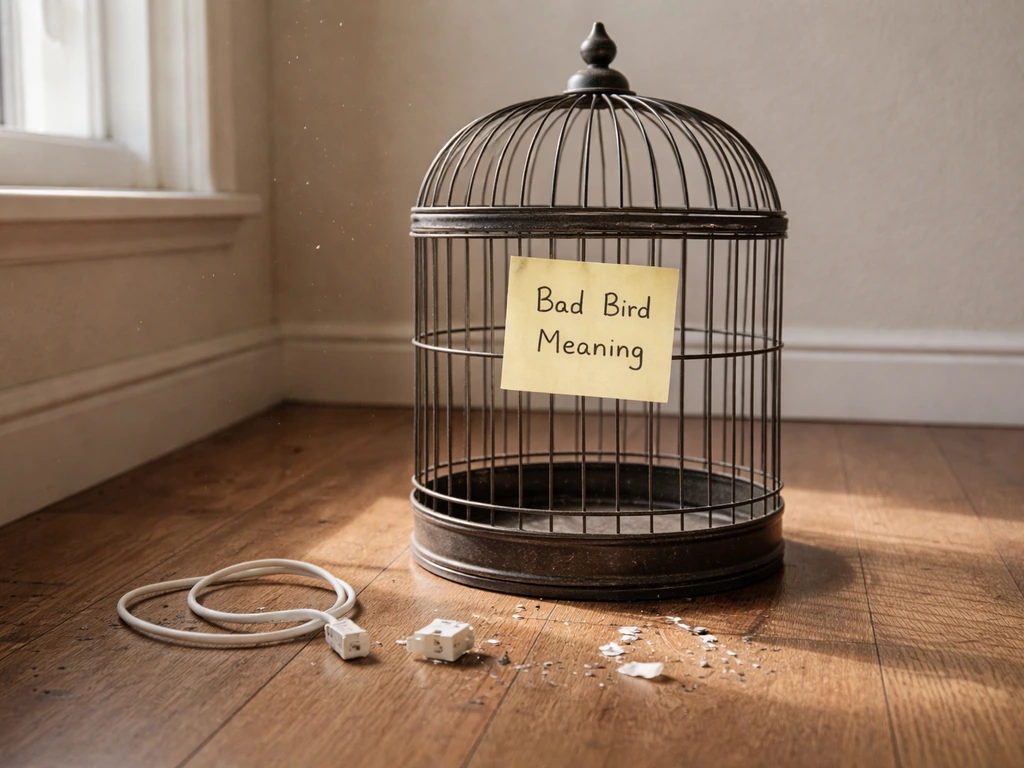
What 'bad bird' actually means
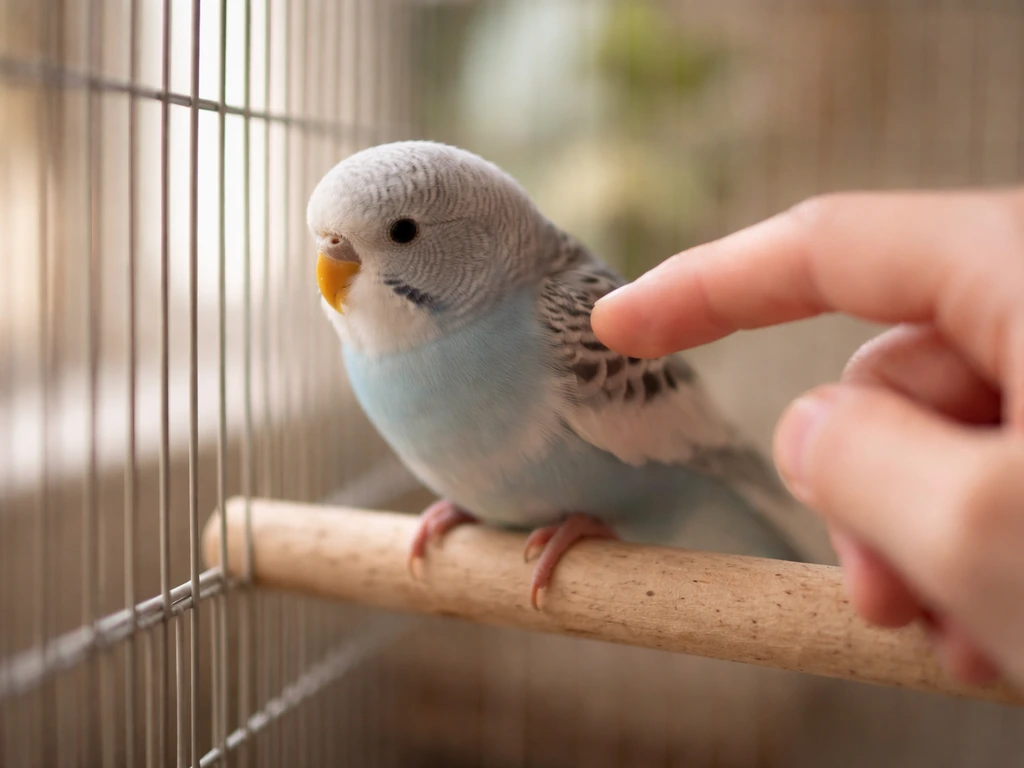
In its most literal sense, 'bad bird' is something you say to a pet bird that's misbehaving. Think of it the same way you'd say 'bad dog' to a puppy that chewed your shoe. It's a short, direct correction aimed at an animal's behavior in the moment. Worth noting: a lot of bird-care communities push back on the phrase entirely, arguing there's no such thing as a bad bird, only undesirable behavior. PetCo’s bird behavior guidance explicitly states: “There is no such thing as a bad bird, or bad bird behavior.” blank" rel="noopener noreferrer">a lot of bird-care communities push back on the phrase entirely. But that nuance doesn't stop pet owners from using it every day.
Figuratively, 'bad bird' shifts to mean a person who is considered morally questionable, troublesome, or just generally 'no good.' It works as a character label, not just a description of a single action. When people say someone is a 'bad bird,' they usually mean that person has a pattern of bad behavior, a shady reputation, or a tendency to cause problems for others. It carries a slightly old-fashioned or colorful flavor, which is part of why it shows up in fables, cartoons, and proverbs more than in hardcore modern slang.
Insult vs. description: the slang and figurative uses
As an insult, 'bad bird' lands somewhere between a mild put-down and a genuine character attack. It suggests the person being called out is untrustworthy, mischievous, or corrupt in some way. The phrase has an almost fable-like quality to it, which is why it rarely feels as sharp or modern as something like 'dirty bird' (a term with its own distinct, often sexually charged slang meanings in certain communities). If you're trying to understand the dirt bird meaning, the slang usage can differ a lot by context and community dirty bird. 'Bad bird' is more of a timeless moral judgment.
As a description rather than a direct insult, 'bad bird' can also be used with a wink. Someone might call a person a 'bad bird' affectionately, meaning they're a bit of a rogue or rule-bender but not genuinely harmful. Tone carries a lot of weight here. A grinning 'you bad bird!' directed at a friend who just pulled a harmless prank reads completely differently than a serious 'he's a bad bird' said quietly to warn someone away from a dangerous person.
Urban Dictionary has recorded entries for 'bad bird' as vernacular slang, which confirms that the phrase circulates in informal spoken and written English, though it hasn't locked into a single, universally agreed-on definition the way some slang terms do. That looseness is actually useful: it means the phrase relies heavily on the speaker's tone and the situation around it.
How to tell which meaning is intended

Context is the whole game here. Ask yourself three quick questions when you encounter 'bad bird' and you'll land on the right meaning almost every time.
- Is a literal animal involved? If someone is talking to or about a parrot, cockatoo, or any other bird they own, the phrase is almost certainly a behavioral correction, not a metaphor.
- Is the phrase directed at a person? If 'bad bird' is being used in reference to a human being, it's figurative. It means that person has a bad character, a troublemaking reputation, or did something morally questionable.
- What's the tone? A playful, teasing tone points to an affectionate roast or light scolding. A flat, serious tone points to a genuine warning about someone's character or intentions.
The surrounding words matter too. If you see phrases like 'watch out for,' 'stay away from,' or 'he turned out to be,' you're looking at a character warning. If you see direct address ('you bad bird!') paired with laughter or joking language, it's either a playful scolding or an affectionate roast. And if the sentence is about a parakeet biting someone, you're firmly in literal territory. A Reddit thread in r/Conures describes a rescue Amazon parrot becoming “triggered” by the words “bad bird,” as if the phrase means something specific words “bad bird”.
Examples in real sentences
Seeing the phrase in actual sentences makes the differences click faster than any explanation. Here are a few scenarios that show the range:
- "No, no! Bad bird!" (Said to a parrot that just chewed through a phone charger. Pure behavioral correction, no metaphor involved.)
- "You're a bad bird, Eon." (This line is delivered in the 1976 animated film Rudolph's Shiny New Year, scolding the villain Eon as a morally bad character. Classic figurative use.)
- "I heard he's a bad bird — lost his last three business partners a lot of money." (A character warning about an untrustworthy person.)
- "Look at you, sneaking the last slice of pizza. You bad bird, you." (Affectionate, joking version — clearly not a serious insult.)
- "Bad bird, bad egg — that whole family has been trouble for generations." (Proverb-style usage implying badness runs deep and propagates.)
If you want to use 'bad bird' yourself, the safest approach is to match your tone to your intent. If you mean it as a light tease, lean into the playful delivery so there's no confusion. If you're genuinely warning someone about a person's character, plain language ('I don't trust him' or 'he's bad news') is often clearer and harder to misread. If you also wonder about more specific insult slang like “naughty bird meaning,” the same context-first approach helps you tell which definition fits.
Related phrases people mix up with 'bad bird'
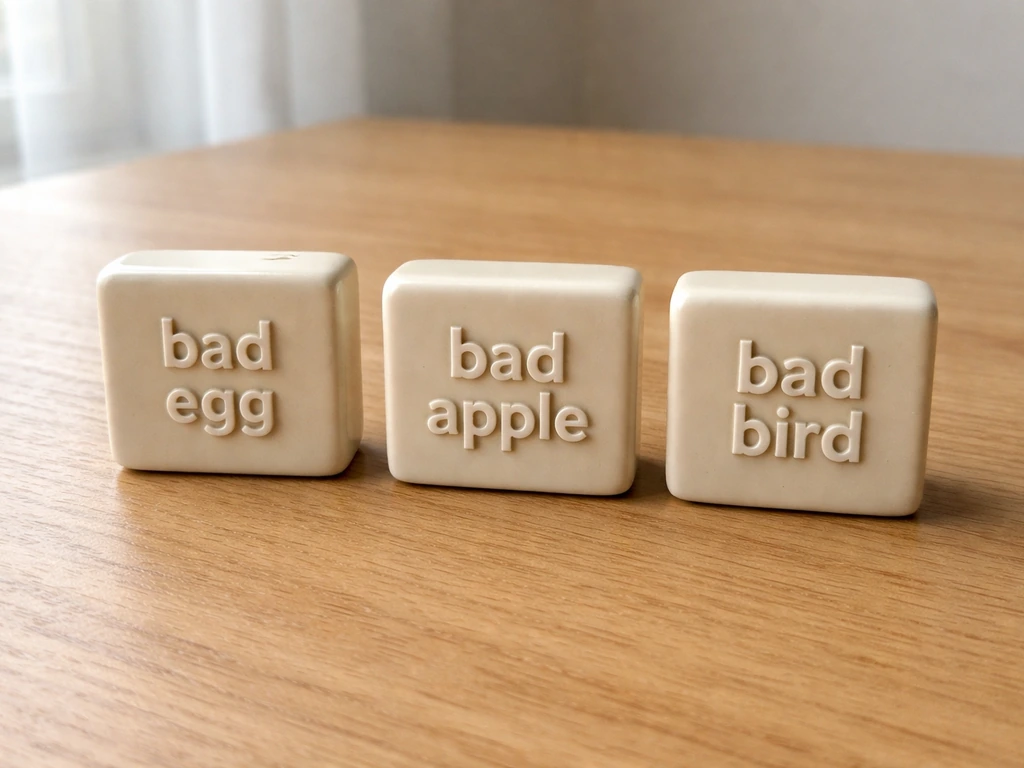
A few nearby expressions get tangled up with 'bad bird,' and they don't all mean the same thing. It's worth keeping them straight.
| Phrase | Primary Meaning | Tone |
|---|---|---|
| Bad bird | A person with bad character, or a behavioral correction for an actual bird | Neutral to playful, can be serious |
| Dirty bird | Depending on region and context: a lewd person, a morally loose individual, or affectionate slang; in Australian slang it carries specific connotations | Often raunchy or provocative |
| Naughty bird | A milder, more playful version of 'bad bird,' often used for children or in cartoons | Light, humorous, rarely harsh |
| Dirt bird | Slang for a low-class, untrustworthy, or disreputable person, often with stronger contempt than 'bad bird' | More cutting, often genuinely insulting |
| Bad egg | A person of bad character; shares the same moral judgment pattern as 'bad bird' | Neutral to negative, somewhat old-fashioned |
The phrase 'bad egg' is the closest cousin to 'bad bird' in both structure and meaning, and the two even appear together in the old proverb pattern 'bad bird, bad egg,' which uses both as shorthand for moral corruption passing from one source to another. Daimon’s proverb listing includes the proverb “blank" rel="noopener noreferrer">Bad bird, bad egg.”. If you've come across 'dirty bird' and are trying to compare it to 'bad bird,' keep in mind that 'dirty bird' tends to carry more explicit or sexually charged connotations in a lot of modern slang usage, while 'bad bird' stays more in the territory of general moral judgment or misbehavior. In Australia, 'dirty bird' meaning depends on local slang usage, often differing from the more general 'bad bird' meaning elsewhere. In contrast, the dirty bird society meaning depends on the community using the phrase and is usually tied to sexually charged slang rather than a general moral label. If you want the closest match to modern usage, you can look up the “dirty bird” meaning in Urban Dictionary to see how people use it in context dirty bird meaning urban dictionary. In slang, the dirty bird meaning can vary by community and context, but it often points to more explicit or sexual connotations.
Where the phrase shows up in culture and literature
Bird language has deep roots in fables, folklore, and storytelling traditions across cultures, so it's no surprise that 'bad bird' has popped up in meaningful places. The most widely remembered modern example is the 1976 animated TV special Rudolph's Shiny New Year, where a character is called 'a bad bird' as a direct moral verdict, not just a comment on behavior. It's exactly how fable-style storytelling uses bird labels: the 'bad bird' is the villain, the character whose nature (not just actions) is being condemned.
The proverb-style usage of 'bad bird, bad egg' follows the same logic found in expressions like 'a rotten apple spoils the barrel.' Bad character is presented as something that produces more bad outcomes, and the bird image carries weight because birds and eggs are naturally paired. Etymologically, this pattern is old and well-documented, linking 'bad bird' to a long tradition of using animal imagery to comment on human morality.
You'll also find 'bad bird' in children's media, where it almost always functions as a gentle, non-threatening scolding for a mischievous character. This softens the phrase and keeps it in wide circulation across generations without it ever becoming truly harsh slang. That's part of why it still sounds familiar today even to people who've never looked it up: it lives in cartoons, fables, and the casual vocabulary of pet owners all at once. People sometimes search the bang bang bird gang meaning because the phrase has circulated online alongside other “bad bird”-style labels.
How to figure out the meaning in your specific situation
If you've landed here because you heard or read 'bad bird' somewhere specific and you're still not sure what it meant, run through this quick checklist. It covers most real-world cases.
- Check who (or what) the phrase is pointing at. A bird? Behavioral correction. A person? Character judgment.
- Check the tone of the surrounding text or conversation. Joking and warm? Affectionate roast. Flat and serious? Genuine warning.
- Look for surrounding warning language ('stay away,' 'don't trust,' 'watch out'). Those signal a real character warning.
- Consider the medium. Children's content and cartoons almost always use it as gentle scolding. Adult conversation or online slang may lean toward the character-insult meaning.
- If you're unsure and the stakes matter (for example, you're trying to understand if someone was warning you about a person), just ask for clarification. 'Bad bird' is casual enough that asking 'do you mean they're actually untrustworthy?' won't come across as strange.
FAQ
How can I tell if “bad bird” is about an actual pet bird or a person without rereading the whole conversation?
Look for a reference to a species or cage-related details (parakeet, cockatiel, feeder, perch). If the sentence includes warning language aimed at people (watch out, stay away, he’s bad news), it is almost certainly a character label, not a literal pet scolding.
Is “bad bird” offensive, or is it usually mild?
It is typically mild to moderately old-fashioned, but the impact depends on delivery. A teasing “you bad bird!” between friends can be affectionate, while a quiet “he’s a bad bird” used as a warning can feel more serious and judgmental.
Can “bad bird” be used as a joke, even if the other person might take it seriously?
Yes, but be careful with tone and relationship. If you do not know how the listener feels about insults, prefer a safer alternative that describes behavior rather than character, like “that was a mischievous move,” to reduce misunderstanding.
What does “bad bird” mean in a sentence like “He turned out to be a bad bird”?
That phrasing usually signals a character assessment over time, meaning the person’s reputation or pattern of actions became clear. It reads more like a warning about who they are, not just a single incident.
If someone says “bad bird, bad egg,” does it always mean the same thing as “bad bird”?
Not exactly. “Bad bird, bad egg” is a pair expression that emphasizes moral corruption spreading or repeating. “Bad bird” alone can be playful or admonishing, but the paired proverb version is more focused on ongoing character issues.
Does “bad bird” ever mean something positive or affectionate?
It can. When used like an affectionate roast with a smile, it can mean “rogue” or “rule-bender” without implying real harm. If the surrounding words mention trust, danger, or wrongdoing, the meaning is less affectionate.
What if the context includes “watch out for” or “stay away from” but no species is mentioned?
Then it is almost certainly figurative, describing someone as untrustworthy or problematic. In that pattern, assume a warning or character critique, not a literal scolding of an animal.
Is there a risk of confusing “bad bird” with “dirty bird” or other similar phrases?
Yes. If the conversation veers into explicit or sexual banter, “dirty bird” is more likely, while “bad bird” tends to stay in general moral judgment or misbehavior. When in doubt, use the surrounding topic to decide, not just the animal imagery.
Can “bad bird” refer to a person’s actions rather than their character?
Sometimes, but the phrase often implies a pattern. If the sentence focuses on a single event (“that’s a bad bird move,” spoken right after something happens), it may be behavior-focused. If it includes “turned out,” “always,” or reputation cues, it is more character-focused.
If I want to say it to someone in writing, what should I watch for to avoid sounding harsh?
Tone cues are harder on text. Consider adding softening signals like “(just kidding)” or choosing a less personal version, such as “mischievous,” “unreliable,” or “troublemaker,” especially when you cannot confirm the relationship or context.
Next Article
Dirt Bird Meaning: What It Refers to and How to Use It
Understand dirt bird meaning: slang nickname for something dirty, teasing or rude, with context and example uses.