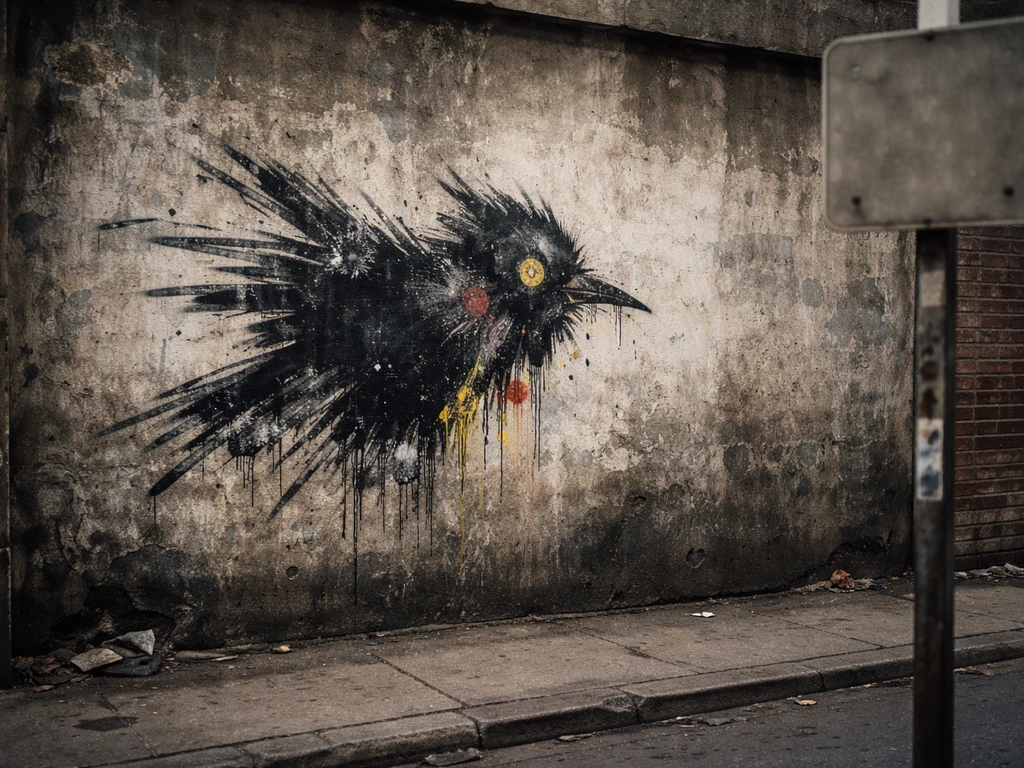
"Dirt bird" is almost always an insult aimed at a person, not a reference to an actual bird. In Irish and Northern Irish slang especially, it means someone with low morals, poor hygiene, or a reputation for sleeping around. In some discussions, people also reference the phrase “dirty bird society” as slang or an online meme, which can add confusion about what the original insult is meant to convey dirty bird society meaning.
Dirt Bird Meaning: What It Refers to and How to Use It

Marcus Reeves
29 Apr 2026

If you are trying to pin down the exact dirty bird meaning, context and spelling are the quickest way to tell which sense someone intends. Think of it as a catch-all for someone you consider a sleaze, a scumbag, or just generally beneath your standards. Wiktionary’s category “[Irish vulgarities](https://en. wiktionary.
org/wiki/Category:Irish_vulgarities)” groups offensive or impolite Irish terms, which helps frame “dirtbird” as vulgar or offensive slang. It can land anywhere from a sharp put-down to a half-joking dig depending on how it's delivered.
What "dirt bird" actually means (the main definitions)
There are a few distinct uses floating around, so it helps to lay them out side by side. The dominant meaning in Ireland, the UK, and online Irish communities is a pejorative for a person who is physically, morally, or sexually "compromised" in some way. Wiktionary lists the Irish slang senses as: a slut or slag, a slob who doesn't wash, or a scumbag and sleaze.
Urban Dictionary adds a few more shades, including someone with "low morals who will stoop to anything" and a derogatory term for an unfeminine or promiscuous woman hanging around clubs in skimpy clothes. A third Urban Dictionary entry uses it completely differently, as slang for feces ("I gotta go hang a dirt bird"), which is a much rarer use and almost entirely context-dependent.
A British Journal of Criminology source defines "dirtbird" more formally as "a colloquial pejorative term for a person who is physically, psychologically, or morally compromised or indecent," which lines up with everyday usage. US Army slang uses "dirty bird" (the close cousin) specifically for soldiers with personal hygiene problems. And Mental Floss traces the "dirty bird" sense for an unappealing or disliked person back to mid-20th century English slang. So while the specific flavors shift by region and era, the core idea is consistent: dirt bird = a person you find gross, low, or morally questionable.
| Meaning | Region / Context | Tone |
|---|---|---|
| Someone with low morals or a sleazy reputation | Ireland, Northern Ireland | Insulting |
| A sexually promiscuous person | Ireland, UK, online | Derogatory / sometimes playful |
| A slob or someone with bad hygiene | Ireland, UK, US Army | Insulting |
| Slang for feces | Urban Dictionary (rare) | Crude / humorous |
| A disliked or unappealing person (general) | Mid-20th century English | Dismissive |
| Green woodpecker (literal bird) | British dialect, Merriam-Webster | Neutral / non-slang |
Is there a real bird called a "dirt bird"?
Technically, yes, but it's not what most people typing this into a search bar are looking for. Merriam-Webster lists "dirtbird" (one word) as a noun for the green woodpecker, with the name coming from old dialect word "dirt" meaning weather, because the woodpecker was believed to chirp before rain. Dictionary. com (citing Collins English Dictionary) also notes [“rainbird” in Britain as a term for the green woodpecker whose cry is supposed to portend rain](https://www.
dictionary. com/browse/rainbird). The English Dialect Dictionary backs this up with references to a "dirt-bird" or "dirt-owl" associated with weather lore and rain superstition. This is a genuine historical use of the term, but it is completely separate from the modern slang.
If you saw "dirt bird" in a nature book or an old dialect text, it almost certainly means the green woodpecker. In any modern conversation, text message, social media post, or TV show, it almost certainly means an insult.
The spelling difference is a useful clue here too. Merriam-Webster spells the bird name as one word: "dirtbird." The slang insult tends to appear as two words, "dirt bird," or sometimes one word used informally. That is not a hard rule, but it can help you orient quickly when you are unsure.
Playful dig or genuine insult? Reading the tone
This is where context does the heavy lifting. In Dublin and Tallaght slang, "you dirtbird" can be tossed at a friend who just told a filthy joke, and it lands more like "you're terrible" than a serious attack on someone's character.
Evoke notes that in Dublin usage, "you dirtbird" most likely refers to someone with a "precarious mind," but the literal implication of being messy or dirty is also in play, and the tone can flip between the two depending on delivery. When it is shouted across a pub at a friend who just said something outrageous, it reads as affectionate teasing.
When it is said slowly and directly about someone to a third party ("don't go near him, he's a dirtbird"), it is a genuine social warning.
The Dublin/Tallaght example from Love/Hate, "You are such a dirtbird," used as a direct address in a heated moment, is clearly derogatory. The Urban Dictionary example of a crowd shouting "Dirt Bird!" at a single person reads more like mob ridicule. Both are negative, but the intensity varies. In short: between close friends it can be playful, but directed at a stranger or in a serious tone, it is a proper insult.
Example sentences and how to read them
Here are examples drawn from real usage, showing how the phrase behaves in different sentences:
- "Don't be going near him, he's a dirtbird." (Cool FM, Northern Ireland) — Warning about someone's sexual/moral reputation. Clearly negative.
- "You are such a dirtbird." (Love/Hate TV subtitles) — Direct address as an insult, second-person. Derogatory in context.
- "You're a fucking dirt bird." (Urban Dictionary) — Emphatic insult, morality-focused, strong language.
- "I gotta go hang a dirt bird." (Urban Dictionary) — Completely different register. This is crude bathroom humor slang for defecating. If the surrounding text is about a person, this reading doesn't apply.
- "You dirtbird!" (said laughing after a friend's crude joke) — Teasing, affectionate in an Irish social context. Tone comes from delivery and relationship.
The key pattern: when "dirt bird" is attached to a person with a pronoun (he's, you're, she's, him), it is an insult about character or hygiene. When it appears in a sentence about an action or activity rather than a person, it might be the feces slang. When it appears in a historical text about nature or weather, it's probably the woodpecker.
How to figure out which meaning is intended
Run through these quick checks when you encounter "dirt bird" and are not sure what it means:
- Is it describing a person? If yes, it is almost certainly the insult. Look for pronouns (he, she, you, him) attached to or near the phrase.
- Is the speaker Irish, Northern Irish, or British? If yes, lean toward the morality/hygiene/promiscuity insult meanings. The Irish-slang sense is the most documented and widely used modern definition.
- Is it in a historical, nature, or weather-related text? If yes, the green woodpecker meaning may apply.
- Is the sentence about a bodily function rather than a person? The feces sense is rare but possible in crude/comedic contexts.
- Is it a brand name, restaurant, or artist name? "Dirt Bird" appears as a Belfast restaurant (known for chicken burgers) and as an Australian artist name on triple j Unearthed. In those cases it is a proper noun, not a slur.
- Is the surrounding text about Australia and birds? "Dirty bird" in Australian contexts sometimes refers to the white ibis (the "bin chicken"), a species covered in a documentary literally called Dirty Bird. This is a regional bird-reference use, distinct from the Irish slang.
How this fits into broader bird slang
"Dirt bird" follows a pattern that shows up all over English bird-related slang: the word "bird" gets attached to a modifier that describes a person's character or behavior, and the result is an idiom with no actual bird in sight. People sometimes also search for the phrase “bang bang bird gang meaning,” but it is a separate meme-style expression rather than the Irish slang “dirt bird. ”.
Merriam-Webster's entry for "flip the bird" is a good parallel: "bird" there means a middle-finger gesture, nothing avian about it. Similarly, "early bird" in "early bird gets the worm" uses bird as a stand-in for a type of person. "Dirt bird" works the same way, using the image of something low, ground-level, and dirty to paint a picture of a person.
This often gets confused with the separate idea of a bad bird meaning, but the insults and contexts can differ.
The sibling terms here are worth knowing. "Dirty bird" (with a Y) overlaps heavily with "dirt bird" but has its own range of uses, including Australian slang for the white ibis, US slang for an unappealing person, and even a Karen Huger-ism from The Real Housewives of Potomac where she uses it to mean chicken. If you are wondering about the dirty bird meaning in Australia, that white ibis reference is the one people usually mean Australian slang for the white ibis. "Bad bird" and "naughty bird" follow similar insulting-person or mischievous-pet patterns. The fuller ecosystem of this type of slang is worth exploring if you keep running into these phrases in Irish, British, or Australian contexts.
Should you use "dirt bird"? Writing and usage guidance
If you are writing dialogue for an Irish or Northern Irish character, "dirtbird" is a believable, culturally grounded insult that will read as authentic. It works as a direct address ("you dirtbird") or a third-person label ("he's a complete dirtbird"). It skews toward working-class Dublin and Belfast speech patterns, so pairing it with other Hiberno-English expressions will make it feel more natural than dropping it into otherwise neutral or American-English dialogue.
If you are writing for a general English-speaking audience and want a similar insult without the regional specificity, "dirty bird" carries much of the same weight and is more broadly understood. Avoid using "dirt bird" in formal or professional writing unless you are directly quoting or analyzing the slang, since it is a pejorative and will read as such regardless of intent. If you are looking up the naughty bird meaning, start by checking whether the phrase is being used to insult a person’s morals, hygiene, or sexual reputation dirt bird.
- Do use it in Irish-dialect dialogue or creative writing set in Dublin or Belfast.
- Do use it when analyzing Hiberno-English slang or writing about Irish culture.
- Do make clear from context whether you mean the person-insult, the woodpecker, or the restaurant brand, because all three exist.
- Don't use it as a casual descriptor for a real person in formal writing or public-facing content unless the insulting intent is clearly intended and appropriate.
- Don't assume a reader outside Ireland or the UK will recognize it immediately. A brief gloss helps.
FAQ
Is “dirt bird” always sexual in meaning?
No. It often implies sexual “slut” territory in Irish and UK usage, but it can also be aimed at hygiene (a slob who does not wash) or general moral character (a scumbag). The surrounding details, like references to clubs, “sleeping around,” or dirty habits, usually tell you which angle the speaker means.
How can I tell whether “dirt bird” is teasing or a serious insult?
Tone and relationship matter most. If it is used between close friends after a crude joke, it may function like “you’re terrible” or affectionate heckling. If it is shouted at a stranger, said slowly in a warning to someone else, or used in a heated argument, it is more likely a genuine derogatory label.
What does it mean if someone says “I gotta go hang a dirt bird”?
That specific phrasing is the uncommon, context-dependent feces slang. In normal conversation, “dirt bird” near an action about a person is usually still the insult, but when the sentence is clearly about needing to go somewhere, it can shift to the bodily-function meaning.
Does the spelling matter, “dirtbird” vs “dirt bird”?
It can help but it is not foolproof. The historical bird name is typically written as “dirtbird” (one word) in references, while the modern insult is usually “dirt bird” (two words) or loosely “dirtbird” online. If you are seeing it in text about a person’s behavior, treat it as slang even if the spelling varies.
Are “dirt bird” and “dirty bird” the same thing?
They overlap, but they are not identical. “Dirty bird” can refer to different regional meanings, including slang tied to the white ibis (Australia) or “chicken” in specific pop-culture usage. If you are trying to interpret meaning accurately, check the exact spelling plus where the speaker is based.
Could “dirt bird” be part of another meme phrase like “bang bang bird gang”?
Yes, and that is a common confusion. “Dirt bird” in Irish slang is usually aimed at a person, while meme-style expressions like “bang bang bird gang” are separate cultural phrases. If the post is quoting a crowd chant or internet meme rather than insulting someone directly, it likely is not the Irish pejorative.
What should I do if I see the phrase in older books or weather-related writing?
Use the source context. In nature or dialect material, “dirt bird” or “dirtbird” may refer to a weather-lore bird associated with rain, like the green woodpecker. In modern TV, messages, and everyday chat, the same wording is almost always a person-based insult.
Is it appropriate to use “dirt bird” in professional or formal writing?
Generally no. Even if you mean it as a neutral description for analysis, it will read as a pejorative. A safer approach is to write “the Irish slang insult ‘dirt bird’” in an explanatory context, rather than using it like a casual descriptor.
What are common mistakes when people try to interpret “dirt bird meaning”?
The big ones are assuming it literally means a bird, missing the difference between “dirt bird” and “dirty bird,” and overreading the phrase without tone cues. Another frequent error is treating it as purely sexual, when it can also target hygiene or general character.
If I want a similar insult without regional flavor, what should I watch for?
If you need something broadly understandable, “dirty bird” sometimes lands as a general insult, but it still may feel informal or harsh. Avoid using it when you need precision, because the regional Irish or UK nuance (hygiene, sexual reputation, “compromised” morality) may not carry the same way outside that context.
Next Article
Dirty Bird Meaning on Urban Dictionary: Slang Uses Explained
Understand dirty bird slang on Urban Dictionary, common meanings, context clues, examples, and how to respond if used.