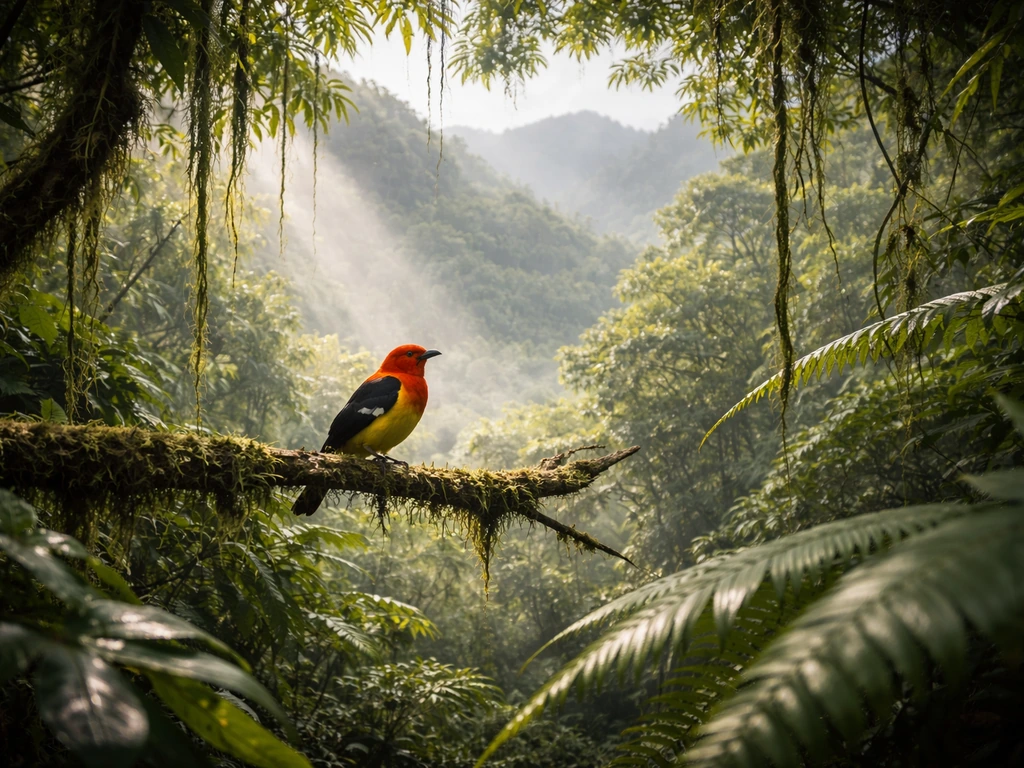
A land bird is simply a bird that lives primarily on land, finds its food on land, and relies on terrestrial habitats rather than water. Think sparrows, hawks, robins, owls, and crows. It's the opposite of a seabird, waterfowl, or wading bird. When you see the phrase 'land bird' in a sentence, it's almost always doing one job: drawing a line between birds tied to dry ground and birds tied to water. People sometimes also use similar phrase structures to ask about a “lame bird” meaning, which is a different idiom than the literal “land bird” definition lame bird meaning.
Land Bird Meaning: Definition, Usage, and Examples

Marcus Reeves
6 Jun 2026
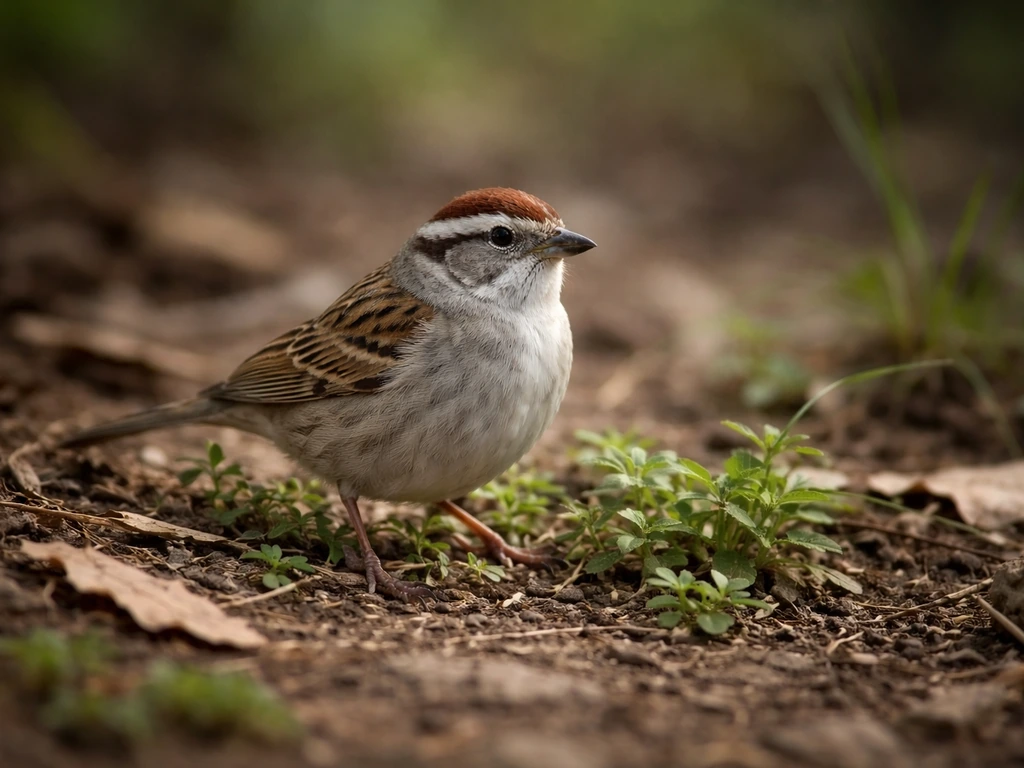
What 'land bird' actually means in plain language
Collins English Dictionary defines a landbird as 'a bird that lives on and gets its food from the land, as opposed to a seabird.' That's the cleanest version of the definition. The U.S. Fish and Wildlife Service narrows it down a bit further, describing landbirds as birds that 'rely principally on terrestrial habitats.' The National Park Service breaks that out even further into practical sub-groups: tree-dwelling birds, perching birds (songbirds), raptors, and ground-feeding birds. All of them spend the majority of their lives in terrestrial environments, which is really the deciding factor.
So land bird is an umbrella term. It covers a wide range of species that have almost nothing in common with each other except that they don't depend on water to survive and feed. A peregrine falcon and a house sparrow are both land birds in this sense, even though their lifestyles look nothing alike.
Land birds vs water birds: how to tell the difference
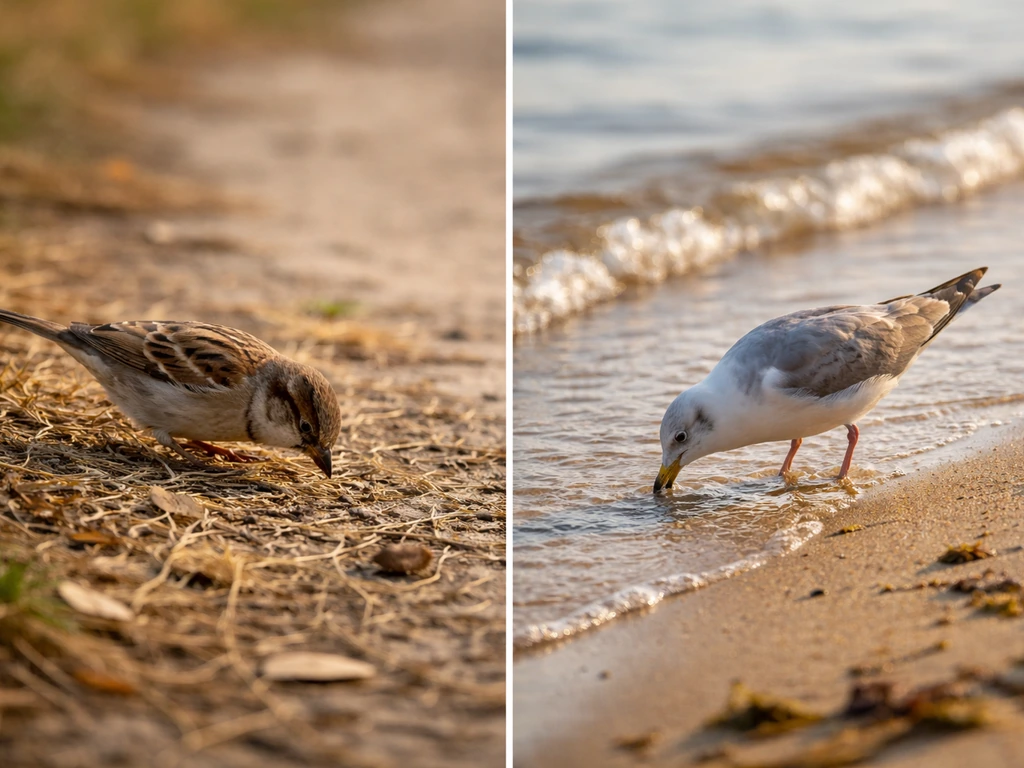
The clearest way to separate land birds from water birds is to ask two questions: Where does the bird spend most of its time? And where does it find food? If the answers are 'on land' and 'from the ground, trees, or sky over dry terrain,' you're looking at a land bird. If the answers involve water, wetlands, coastlines, or the open ocean, you're in water-bird territory.
An old natural-history passage from The Bird Watcher in the Shetlands puts the behavioral difference memorably: a land bird, when startled, 'would leave it for the land,' while a water bird 'would make for the water.' That instinct toward land versus water is still a practical field cue today.
| Category | Habitat | Food Source | Examples |
|---|---|---|---|
| Land birds | Forests, fields, grasslands, urban areas | Insects, seeds, small animals on dry ground or in trees | Robin, hawk, sparrow, owl, crow |
| Seabirds | Open ocean, coastal cliffs | Fish, marine invertebrates | Albatross, puffin, gannet |
| Wading birds | Shallow water, marshes, mudflats | Fish, frogs, invertebrates in water | Heron, egret, spoonbill |
| Waterfowl | Lakes, rivers, wetlands | Aquatic plants, small fish, invertebrates | Duck, goose, swan |
| Shorebirds | Beaches, tidal flats, mudflats | Invertebrates in wet sand and mud | Sandpiper, plover, curlew |
Audubon birding guides regularly list all five of these groups side by side as parallel categories, phrasing them like 'waterfowl, wading birds, shorebirds, and land birds.' Seeing that kind of list is a quick confirmation that whoever wrote it is using land bird in its strict, literal sense.
How 'land bird' shows up in everyday language and writing
In most everyday contexts, 'land bird' is doing descriptive work rather than technical work. You'll see it in wildlife writing, birdwatching notes, field guides, and science articles where the writer wants to quickly distinguish one group from another without a long explanation. Audubon, for example, uses the phrase 'land bird migrants' in a spring migration article set along a shoreline, where the point is to flag that these birds passing through are terrestrial species, not water birds, even though they happen to be near water at the moment.
In older literature and natural history writing, the hyphenated form 'land-bird' is common. An 1842 travel narrative called Pleasant Memories of Pleasant Lands uses 'land-bird' specifically to describe a small bird spotted at sea, near the shoreline, where its presence is notable precisely because it doesn't belong in that marine environment. The term signals incongruity: a terrestrial creature in a water-dominated space.
In modern conservation and policy writing, land birds are treated as a formal management group. The U.S. National Park Service tracks 'breeding landbirds' in specific habitat types like grassland and riparian zones. The term shows up in survey reports, species inventories, and habitat management plans. If you encounter it in that kind of document, it's functioning as a technical category, not casual description.
How to read 'land bird' in context
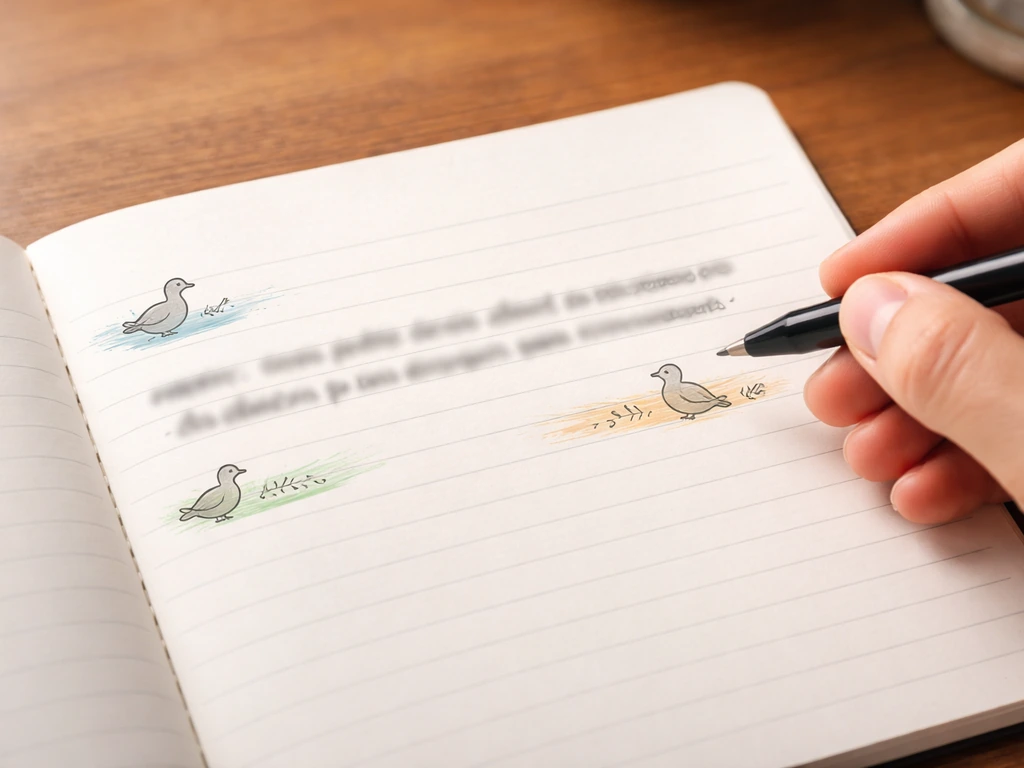
When you see 'land bird' in a sentence and you're not sure exactly how it's being used, look at what's around it. A few things to check:
- Is it contrasted with a water-related bird group? If the sentence mentions waterfowl, seabirds, wading birds, or shorebirds alongside it, the writer is using it as a habitat contrast term.
- Is it near a specific habitat label like 'forest,' 'grassland,' 'field,' or 'riparian'? That confirms it's being used in its ecological, literal sense.
- Is a species named nearby? If a robin or hawk is mentioned in the same breath, the term is probably being used loosely to describe familiar terrestrial birds.
- Is the setting marine or coastal? A land bird spotted at sea, near a ship, or on a beach is being flagged for its unusual placement in a water environment. The contrast is the whole point.
- Is it part of a conservation or survey document? Then it's a formal category covering raptors, songbirds, and ground-feeding birds collectively, as defined by agencies like the Fish and Wildlife Service or National Park Service.
One particularly useful context clue: the word 'principally.' If you see 'relies principally on terrestrial habitats' or anything close to that phrasing, the writer is defining or flagging a land bird in its strict scientific sense.
Related terms and how they differ
Several related terms get mixed up with 'land bird' or used interchangeably when they shouldn't be. Here's how to sort them out.
Terrestrial bird
This is the safest direct substitute. 'Terrestrial bird' means the same thing as land bird in nearly every context: a bird that relies on land-based habitats. Fish and Wildlife Service documentation uses 'terrestrial habitats' as the defining phrase for landbirds, so the two terms map directly onto each other. If you want a slightly more formal or scientific-sounding option, 'terrestrial bird' works.
Upland bird
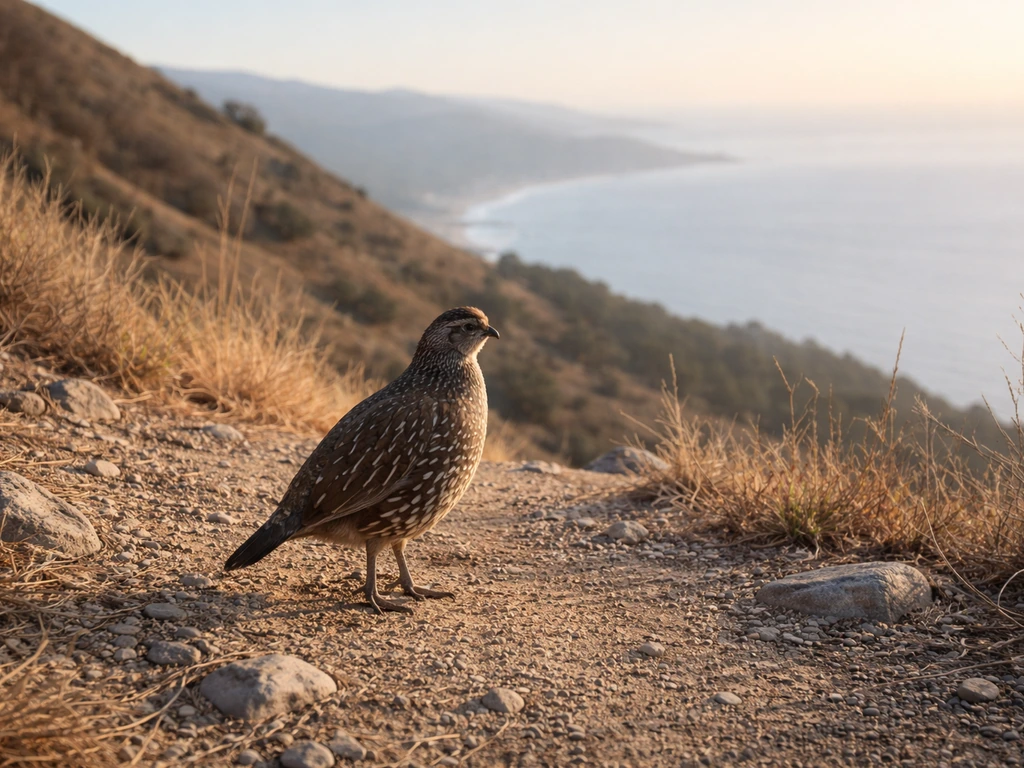
Upland bird overlaps with land bird but isn't the same. 'Upland' specifically refers to dry terrain above the high-water mark of water bodies, and in hunting contexts it means terrestrial game birds like pheasant, quail, and grouse that live in dry groundcover. It explicitly contrasts with waterfowl and shorebirds. So an upland bird is always a land bird, but a land bird isn't always an upland bird. A forest-dwelling songbird is a land bird but wouldn't typically be called an upland bird.
Ground-dwelling bird
Ground-dwelling bird is narrower than land bird. It refers specifically to birds that spend most of their time on the ground rather than in trees or in the air. The National Park Service lists 'ground-feeding birds' as one sub-group within the broader landbird category. So again, ground-dwelling birds are land birds, but land birds aren't all ground-dwelling. An eagle is a land bird. It is not a ground-dwelling bird.
Endemic bird
Endemic is about geographic range, not habitat. An endemic bird is one found nowhere else in the world. Interestingly, the technical definition of an Endemic Bird Area used in conservation science specifically applies only to landbirds (not seabirds), because seabirds range so widely that endemism is defined differently for them. So in that context, 'landbird' is used as a boundary condition, not as the main descriptor.
Yardbird
Yardbird is slang, and it's a different kind of term entirely. It has nothing to do with habitat classification and should not be used as a substitute for land bird in any descriptive or scientific context. If you're curious about that one, it carries its own distinct meanings in American slang and is worth looking at separately.
Examples you can use in your own writing
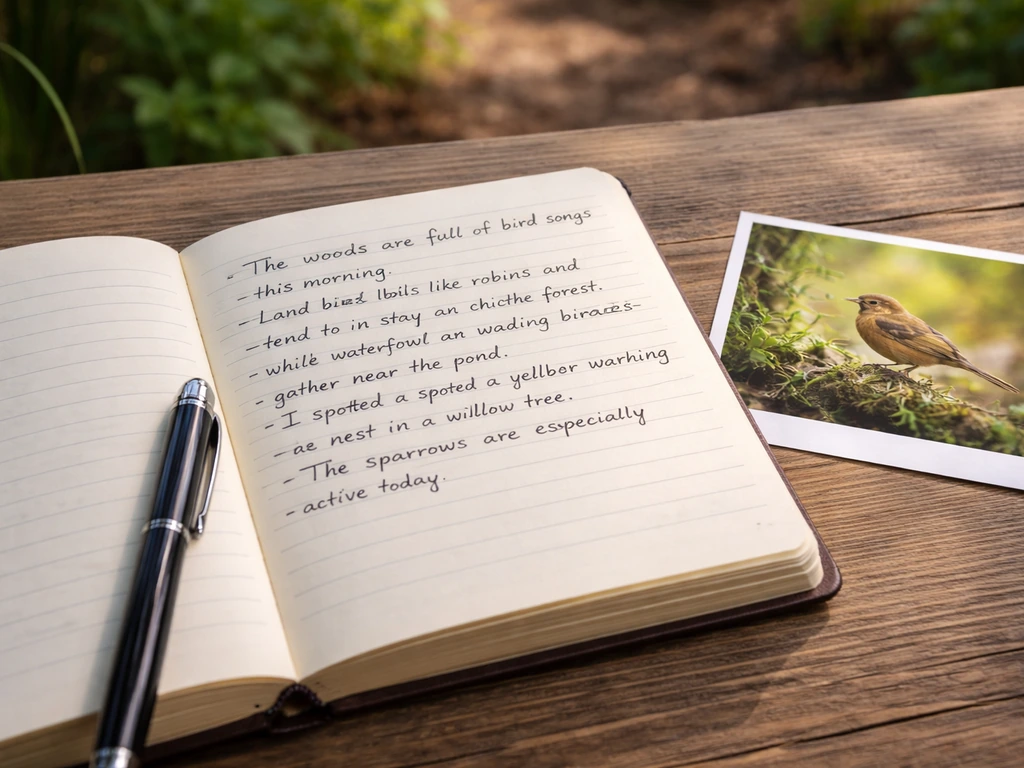
Here are some ready-to-adapt sentences that use 'land bird' correctly in different contexts:
- Literal habitat contrast: 'The cove attracted waterfowl and wading birds throughout the winter, but it was the land birds, the sparrows and warblers feeding in the scrub above the waterline, that held my attention.'
- Scientific or survey writing: 'Breeding land birds in the grassland plots included meadowlarks, horned larks, and vesper sparrows, all species that rely principally on terrestrial habitats.'
- Historical or literary style: 'The sailors took the small land-bird perched on the rigging as a sign that shore was close.'
- Migration context: 'Land bird migrants move through the marina each spring, pausing in the shoreline vegetation before continuing north.'
- Behavioral contrast: 'When the storm came in, the land birds headed for the shelter of the tree line, while the ducks simply rode the waves.'
Each of these keeps the term doing what it does best: drawing a clear, quick line between birds of the land and birds of the water. That contrast is the whole point of the phrase, and keeping it visible in your writing is what makes the term actually useful.
FAQ
Is “land bird” always the same as “terrestrial bird” in scientific writing?
In most cases yes, “terrestrial bird” is a close substitute for “land bird,” because both point to habitats on land rather than water. The safer approach is to keep the exact wording from the source if you are quoting a study or report, since some agencies may reserve “landbird” for a defined grouping used in surveys.
Can a bird that sometimes swims or wades still be called a land bird?
Yes. The label is based on what the bird relies on primarily, where it spends most time, and where it finds most food. A species can occasionally enter water without being water-dependent, for example going to drink or briefly crossing wetlands, yet still qualify as a land bird if its overall feeding and habitat use are terrestrial.
What if a bird feeds partly on land and partly on water, how do I classify it?
Look for the dominant behavior the writer cares about. If the text is using “land bird” as an umbrella category, it usually means the bird’s core feeding and habitat needs are land-based. If the split is truly even, authors may avoid “land bird” and instead use more specific terms like shorebird or wetland-associated bird, so check whether the document is making a strict habitat contrast.
Does “land bird” include birds that nest in trees but hunt on the ground?
Usually yes. Nesting location does not automatically determine the category. If the species spends most of its life in terrestrial habitats and its foraging is mainly on land, it fits the land bird concept, even if it uses multiple terrestrial microhabitats like canopy, shrubs, and forest floor.
Is “land-bird” (hyphenated) always older or only used in the past?
Not always, but hyphenation is more common in older natural history prose and in some stylized writing. In modern usage you will more often see “land bird” unhyphenated, so if you are writing for contemporary publications, match the form used by your target outlet.
How can I tell whether “land bird migrants” means habitat-based classification or just location near water?
In migration writing, “land bird migrants” typically signals that the passing birds are terrestrial species traveling through a shoreline area, not that they are water-dependent birds. If the surrounding text focuses on stopover habitat or terrestrial feeding needs, it reinforces the habitat-based meaning rather than a purely geographic description.
What’s the common mistake people make when they confuse “land bird” with “upland bird”?
The mistake is assuming “upland” and “land” mean the same thing. “Upland” is specifically about dry terrain above the high-water mark, and in hunting contexts it points to game birds of dry groundcover. A forest songbird is a land bird, but it may not fit the usual hunting or “upland” framing.
Is a “ground-dwelling bird” automatically a land bird?
Yes. Ground-dwelling is narrower, it focuses on birds that spend most time on the ground. Since ground-dwelling is still land-based, it falls under the broader land bird umbrella.
Could “endemic landbird” be misread as a habitat statement instead of a range statement?
Yes, that confusion happens. “Endemic” is about geographic range, not habitat type. In conservation contexts, “landbird” may be included to specify the taxonomic boundary condition used for defining endemic bird areas, especially when the definition excludes seabirds.
Is it appropriate to use “yardbird” as a synonym for “land bird”?
No. “Yardbird” is slang and is not a habitat or classification term. It should not be used as a substitute for “land bird” in descriptive, scientific, or policy contexts, because it can introduce meaning unrelated to terrestrial habitat.
Next Article
Endemic Bird Meaning Explained: Native vs Indigenous vs Endangered
Learn endemic bird meaning, how it differs from native indigenous and endangered, plus examples and how to read labels.