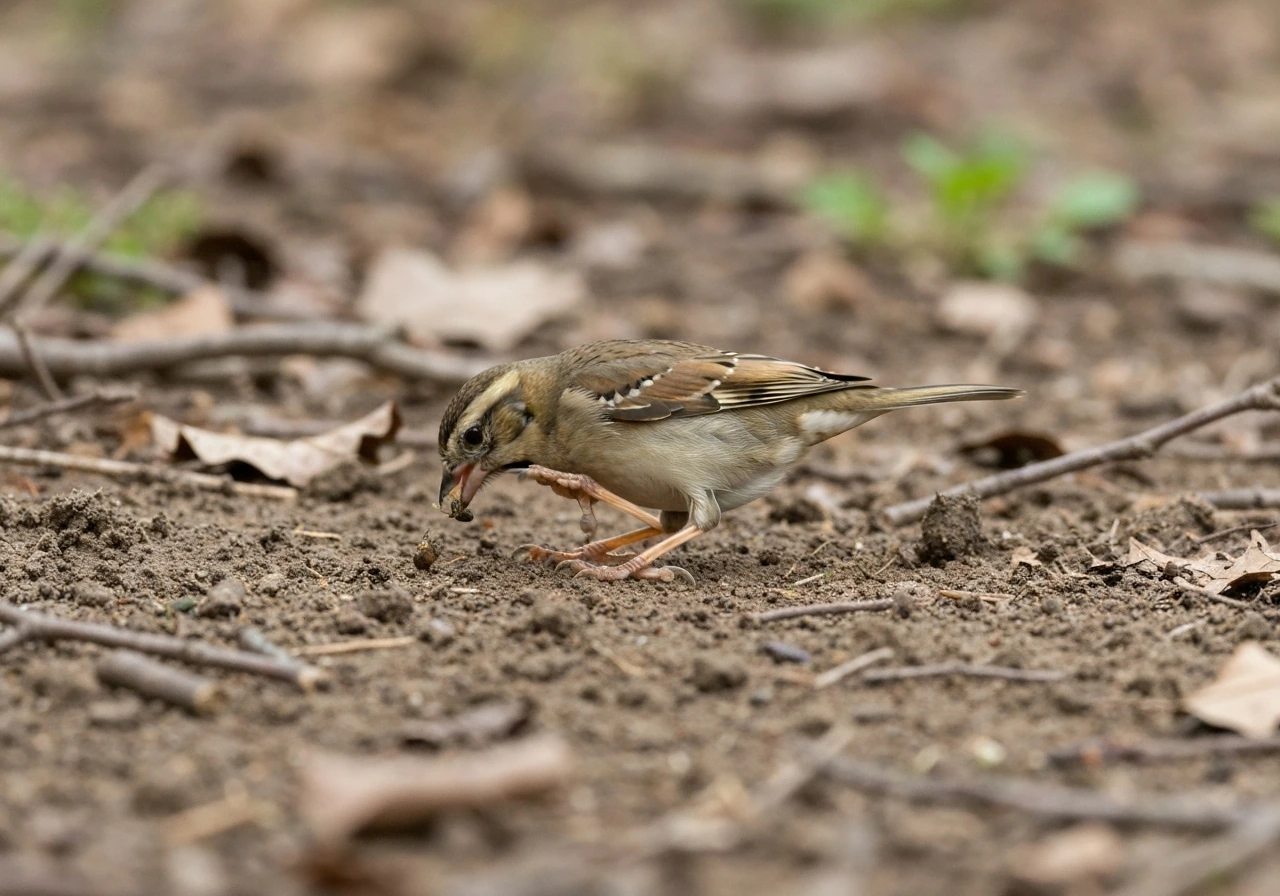
An endemic bird is a bird species that lives only in one specific place and nowhere else on Earth. blank" rel="noopener noreferrer">Britannica’s education/explore content also describes endemic species as restricted to one location and not occurring anywhere else in the world.
Endemic Bird Meaning Explained: Native vs Indigenous vs Endangered

Marcus Reeves
6 Jun 2026
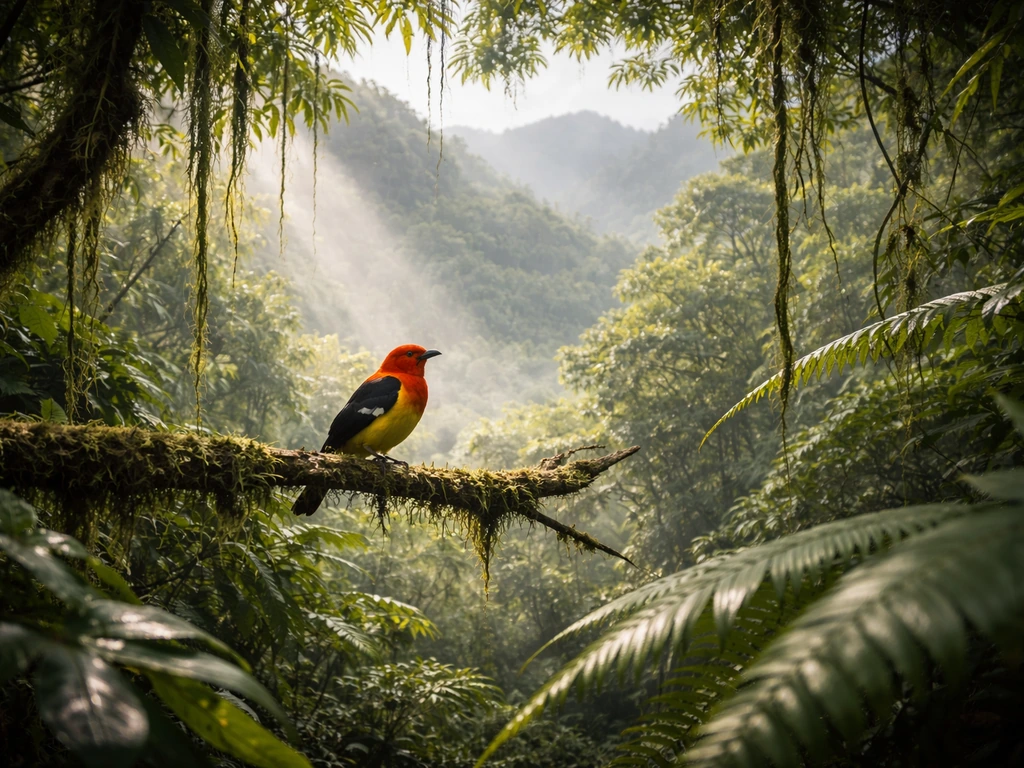
If a species is described as endemic to Madagascar, that means Madagascar is the only place you will ever find it in the wild. It did not migrate there seasonally, it was not introduced by humans, and it does not share its range with populations on other continents.
The word 'endemic' comes from the Greek 'endemos,' meaning 'native to a place,' but in modern biology it carries a very precise meaning: geographically restricted to a defined area, whether that's an island, a mountain range, a country, or even a single forest.
What 'endemic' actually means, and what 'endemic bird' adds to it
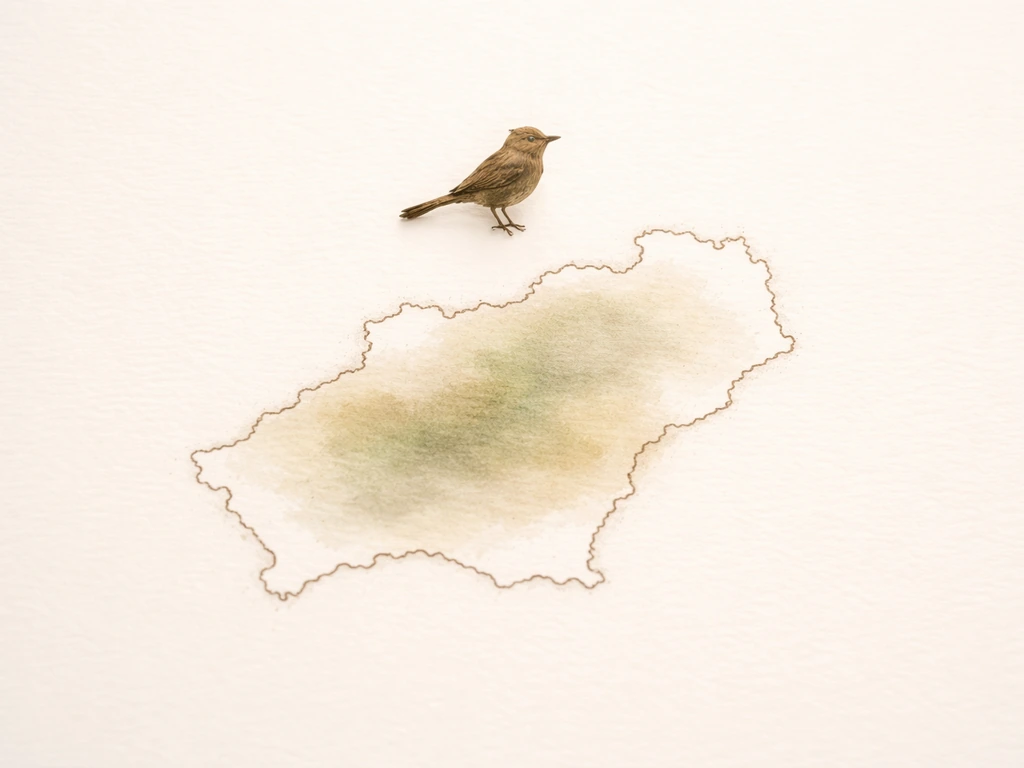
In ecology, 'endemic' refers to any species whose geographic range is confined to a single given area. Britannica puts it cleanly: a taxon whose distribution is confined to a given area is said to be endemic to that area. The phrase 'endemic bird,' then, simply applies that concept to birds. It means a bird species whose entire wild population exists within a defined geographic boundary, and does not occur anywhere else in the world.
The key phrase to look for in any article, documentary caption, or field guide label is 'endemic to.' That little preposition is doing serious work. It tells you the geographic unit that defines the species' entire world. 'Endemic to Hawaii' means the Hawaiian Islands are it. 'Endemic to the island of Borneo' means you will not find that bird in mainland Southeast Asia, no matter how close it looks on a map. When you see that phrasing used correctly, you can trust it as a precise biological claim.
Spotting accurate use of 'endemic' versus sloppy use
Here is where things get muddy, especially online. 'Endemic' gets used loosely all the time, often when someone actually means 'native' or 'common to' a region. The two patterns to watch for are: using 'endemic' to mean simply local or typical, and using it interchangeably with 'endangered.' Neither is correct.
Accurate use always specifies a geographic scope. The Britannica Dictionary illustrates the proper pattern: 'A wide variety of animal and plant species are endemic to this area.' Notice the structure: endemic + to + specific place. If someone writes 'the robin is endemic to Europe,' that is inaccurate because European robins also appear in parts of North Africa and western Asia. A correctly labeled endemic claim is falsifiable: you can check whether the species truly has no wild population outside that named area.
Watch out for these common misuses in travel writing, social media captions, and even some documentary scripts:
- Using 'endemic' to mean 'commonly found here' (that's just 'native' or 'widespread locally')
- Calling a bird endemic when it actually has introduced or feral populations on other continents
- Conflating 'endemic' with 'rare' or 'endangered' (a species can be endemic and thriving, or endemic and critically threatened, those are separate facts)
- Applying 'endemic' to a subspecies without clarifying whether the full species is also restricted
- Writing 'endemic of' instead of 'endemic to,' which is a grammatical flag that the author may be translating loosely from another language
Real examples of endemic birds by region (and how to read the labels)

Concrete examples make the concept click faster than any definition. Here are several well-known endemic birds, each labeled the way you would see them in a reputable source:
| Bird | Endemic To | Quick Note |
|---|---|---|
| Kiwi (several species) | New Zealand | So tied to one place it became a national symbol; found nowhere else in the wild |
| Darwin's finches (multiple species) | Galápagos Islands | Classic textbook example; different species endemic to specific islands within the archipelago |
| Philippine Eagle | Philippines | One of the largest eagles in the world, restricted entirely to Philippine forests |
| Kakapo | New Zealand | Critically endangered and flightless; endemic status and rarity are separate facts |
| Resplendent Quetzal | Cloud forests of Mesoamerica (Guatemala-Panama range) | Range-restricted but not single-country endemic; still qualifies under regional endemism definitions |
| Dodo (extinct) | Mauritius | The most famous example of island endemism colliding with extinction |
| Sri Lanka Blue Magpie | Sri Lanka | Island endemism; the island's isolation created a distinct evolutionary lineage |
When you encounter labels like these in the wild, pay attention to the size of the geographic unit. A species endemic to an entire continent (like Australia) has a much larger range than one endemic to a single island like Mauritius. BirdLife International quantifies this for bird conservation purposes: a restricted-range bird species is defined as one with an extent of occurrence under 50,000 square kilometres. That cutoff helps conservationists identify which endemic birds are also at risk simply because their habitat footprint is so small.
Endemic vs native vs endangered: keeping the three straight
These three terms travel together constantly in wildlife writing, and mixing them up leads to real misunderstanding of conservation status. They describe three completely different things.
| Term | What it actually means | Example of correct use |
|---|---|---|
| Endemic | Restricted to one specific area; found nowhere else on Earth naturally | 'The Kiwi is endemic to New Zealand' |
| Native | Originated in or naturally belongs to an area, but may also be found elsewhere | 'The Red Fox is native to Europe but now lives on multiple continents' |
| Endangered | At risk of extinction due to population decline or habitat loss | 'The Philippine Eagle is endangered due to deforestation' |
A bird can be endemic without being endangered (the Common Waxbill is broadly endemic to sub-Saharan Africa and is doing fine). A bird can be endangered without being endemic (the Whooping Crane is critically endangered but spans North America). And a bird can be both endemic and endangered, which is actually the most dangerous conservation situation, because if the restricted habitat is destroyed, there is no backup population anywhere else. That overlap is why endemic birds receive such focused conservation attention.
The word 'indigenous' also shows up in this space. In a biological context, indigenous is often used interchangeably with native, not with endemic. It describes species that belong to an area through natural processes rather than human introduction. If you see 'indigenous bird,' read it as 'native bird,' not as 'restricted exclusively to this area.'
Why endemic birds matter ecologically
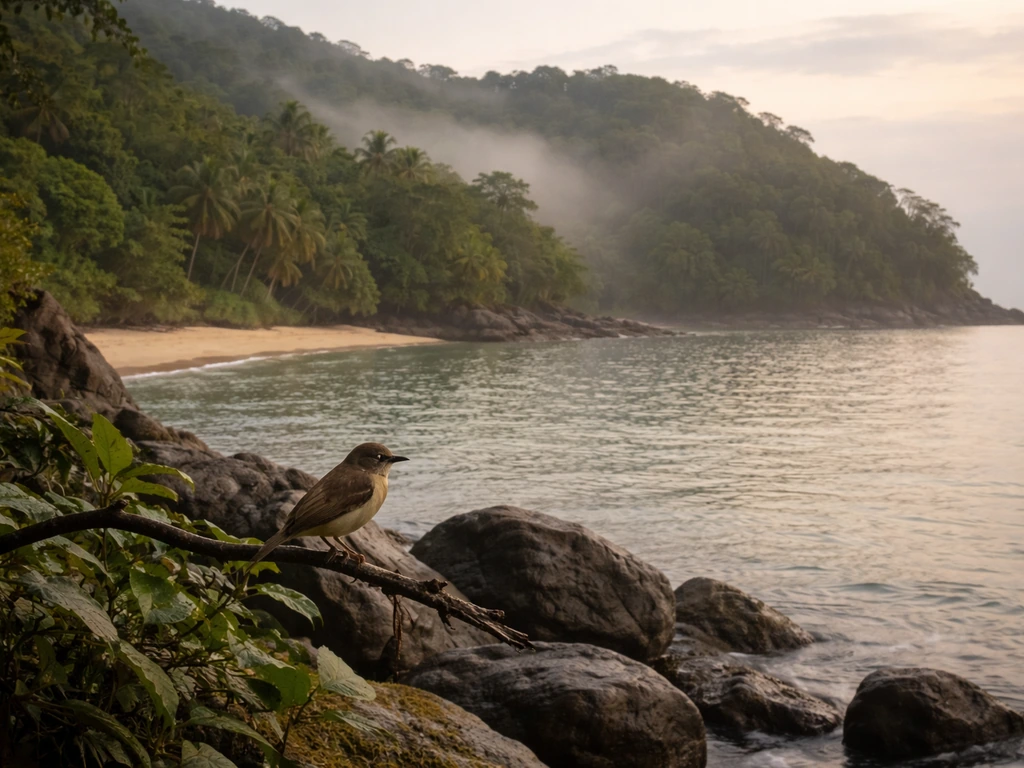
Endemic birds are biological snapshots of geographic isolation. Islands, mountain ranges, and deep rainforests act as natural laboratories where populations evolve separately from their relatives elsewhere, eventually becoming so different they form new species. The Galápagos finches that informed Darwin's thinking are a textbook case: different islands produced different beak shapes in response to different food sources, leading to what are now recognized as distinct endemic species.
The ecological stakes for endemic birds are high for a simple reason: their entire global population is concentrated in one place. Habitat loss, invasive predators, disease, or climate shifts affecting just that one region can push the species to extinction with no geographic buffer. BirdLife International built its Endemic Bird Areas (EBA) framework precisely around this vulnerability, mapping out zones where multiple restricted-range bird species overlap so conservationists can prioritize protection efficiently. An EBA is not just a place with one rare bird; it is a hotspot where several endemic species share habitat, making the area especially irreplaceable.
This is also why endemic bird species are often flagship species for conservation campaigns. Because they exist nowhere else, they become symbols of a specific place's ecological uniqueness. The Kakapo for New Zealand, the Philippine Eagle for the Philippines, and the Sri Lanka Blue Magpie for Sri Lanka all carry cultural weight precisely because their exclusivity to a place makes them feel like a national identity expressed in feathers.
Does 'endemic bird' ever show up as slang, wordplay, or metaphor?
This is where the biological term bumps into the kind of bird language this site covers most. Strictly speaking, 'endemic bird' is not an established idiom or slang phrase. You will not find it in the same category as 'a bird in hand,' 'flip the bird,' or 'lame duck. Sometimes the phrase can also be confused with other bird-related slang, so it helps to know the exact lame bird meaning before you assume intent. ' But the word 'endemic' does get borrowed for figurative use in writing and casual speech, usually to mean 'deeply rooted in' or 'characteristic of a place or culture,' and that borrowing gets applied to birds occasionally.
A travel writer might describe a local bird species as 'endemic to the spirit of this island' as a poetic flourish, meaning it feels inseparable from the place's identity. A conservation advocate might use 'our endemic birds' the way someone else might say 'our heritage species,' leaning on the word for emotional resonance rather than strict biological precision. In those contexts, endemic is doing metaphorical work: it signals irreplaceability, belonging, and rootedness.
The confusion worth flagging is when someone uses 'endemic' in a figurative caption or social post and readers take it as a literal biological claim. If you see 'this endemic songbird of the Appalachians,' ask whether the species genuinely has no populations outside that range, or whether the writer just means 'associated with.' That distinction matters if you are a student, a writer doing research, or anyone who needs to cite the claim accurately.
It is also worth knowing that 'endemic' in everyday English (outside biology) often describes diseases or problems that are persistently present in a place, as in 'poverty is endemic to that region.' That medical and sociological usage is entirely separate from the wildlife meaning, but it does bleed into how some readers instinctively interpret 'endemic bird': as a bird that is a persistent, unavoidable presence somewhere. That gut reading is close to correct, but it misses the crucial restriction: endemic means found only there, not just commonly found there.
How to verify an endemic bird claim quickly

If you are a student, writer, or curious reader who needs to confirm whether a species is genuinely endemic, these practical steps will get you there fast:
- Check BirdLife International's DataZone (datazone.birdlife.org): it lists species range maps and explicitly flags restricted-range and endemic status with the 50,000 km² threshold.
- Look up the species on the Cornell Lab of Ornithology's Birds of the World or eBird range maps: if the range map shows populations across multiple continents, the bird is not endemic to any single small region.
- Search for the exact phrase '[species name] endemic to' in Google Scholar or on Britannica to find peer-reviewed or encyclopedic confirmation.
- Check whether the source uses 'endemic to [specific place]' rather than just 'endemic species' or 'endemic bird' without a geographic anchor. No anchor, no reliable claim.
- Cross-reference with the IUCN Red List entry, which usually states range and whether the species is restricted to one country or region.
The broader context of bird language on this site covers a lot of ground, from yard bird slang to what it means to call something a ground-dwelling bird in figurative versus literal usage. In other words, a ground-dwelling bird meaning is about where the bird lives and forages, which is different from the geographic restriction behind endemic birds. Endemic bird sits firmly on the literal, biological side of that spectrum, but knowing how the term gets stretched into metaphor, misapplied in travel writing, or confused with 'native' and 'endangered' makes you a sharper reader of anything involving bird language, whether it shows up in a wildlife documentary, a school assignment, or a poetic Instagram caption about an island's most distinctive feathered resident. “Land bird” is a common phrase in bird guides, meaning a bird that lives primarily on land rather than in aquatic habitats Endemic bird.
FAQ
If an endemic bird shows up in my region once in a while, does that still count as endemic to its original area?
Yes, but only when the statement is about wild populations. If a bird is endemic to one region but is seen elsewhere because individuals escaped captivity or were temporarily released, that does not make it “endemic” to the other places.
Does endemic bird meaning cover birds that used to live in a place but are gone now?
“Endemic” can apply to breeding range, resident range, or the overall natural distribution, but it must refer to where wild populations occur, not where they once occurred historically. If a source means “historically endemic” or “formerly present,” that is a different claim from current endemism.
Are all endemic birds limited to one habitat, or is it only their geography that is restricted?
Not necessarily. Some endemic birds live in a specific habitat type inside their limited region, but others are generalists within that region. The key point is the geographic boundary, not the habitat breadth.
How should I interpret “endemic to” when the label uses countries or states instead of natural regions?
Be careful with “endemic to a country” claims for wide-ranging birds that cross borders naturally. A species can be endemic to one political boundary only if it truly has no wild populations outside that boundary, which often requires careful range mapping.
What is the difference between an indigenous bird and an endemic bird in practice?
No. A bird can be native, indigenous, or endemic, but the terms point to different things. Native/indigenous usually describe natural presence, while endemic specifically requires exclusivity to a defined area.
If a bird is endemic to Hawaii, does that mean it lives on every Hawaiian island?
Yes, but you need the exact geographic unit. “Endemic to Hawaii” allows the bird to occur in multiple islands within Hawaii, while “endemic to one island” would be narrower. If you do not know the unit, the claim is hard to verify.
Can I treat “restricted-range bird” and “endemic bird” as the same thing?
It can be, and in conservation writing it is often a synonym-like shortcut, but only if the article or dataset clearly uses the same criteria. For accurate research or school work, confirm whether the source defines “restricted-range” and “endemic” using explicit geographic thresholds.
How can I tell whether an “endemic bird” phrase in a caption is literal or just poetic?
Watch for “endemic” used as a metaphor, then check whether the species name is mentioned and the range claim is testable. If the caption does not specify a geographic boundary with “to,” it is often not a literal biological claim.
If scientists later find more populations elsewhere, can a species lose endemic status?
Yes. Endemic status can be revised when new surveys discover additional populations, or when genetic and taxonomic work splits one species into several. That means “endemic” is not always permanently fixed to the original description.
What are the most common mistakes people make when they mix up endemic, native, and endangered?
Sometimes, especially when authors blend everyday language. If a field guide uses “endemic” correctly, it should match a falsifiable range, and “endangered” should be supported by a conservation assessment rather than just the word “rare.”
Next Article
Ground Dwelling Bird Meaning: Symbolism and Examples
Meaning of ground-dwelling bird in slang and symbolism, with examples and common bird candidates to interpret context.