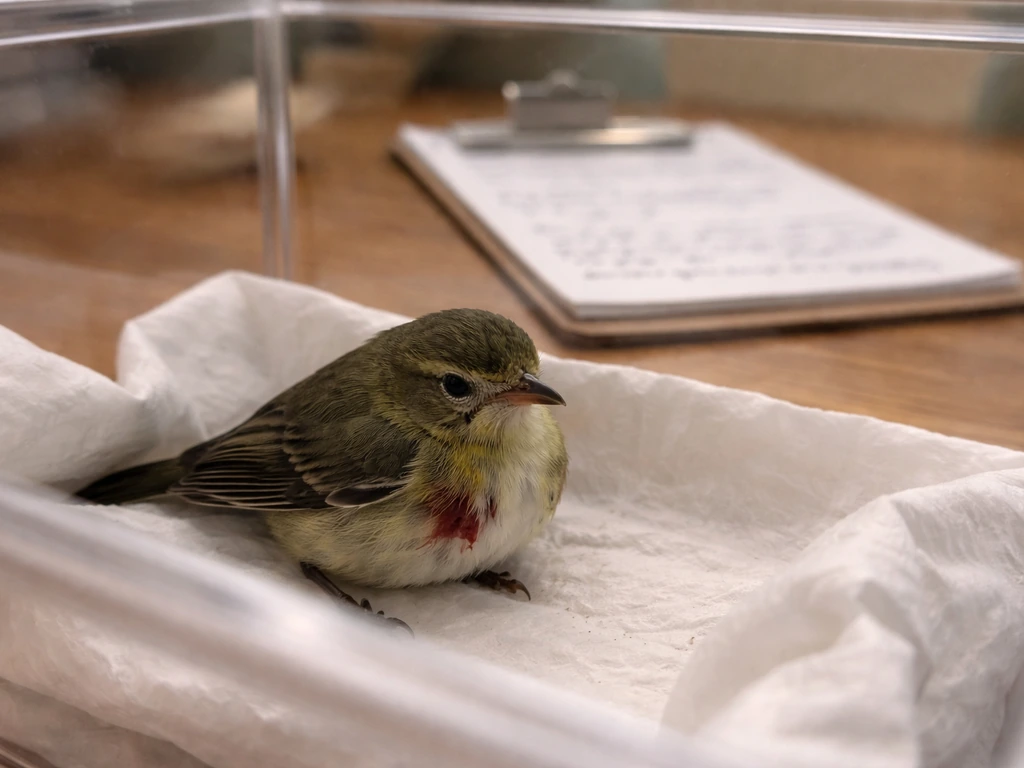
A ground-dwelling bird is simply a bird that spends most of its time on or near the ground, foraging, nesting, or walking rather than perching high in trees or soaring through the air. Think chickens, sparrows, quail, pheasants, turkeys, doves, and grouse. When you see the phrase used figuratively, it typically signals traits like practicality, humility, resourcefulness, and being "down to earth" in the most literal sense possible. Whether it's being used as a plain description or a symbolic shorthand depends almost entirely on the surrounding text, and this guide will help you figure that out fast.
Ground Dwelling Bird Meaning: Symbolism and Examples

Marcus Reeves
28 May 2026
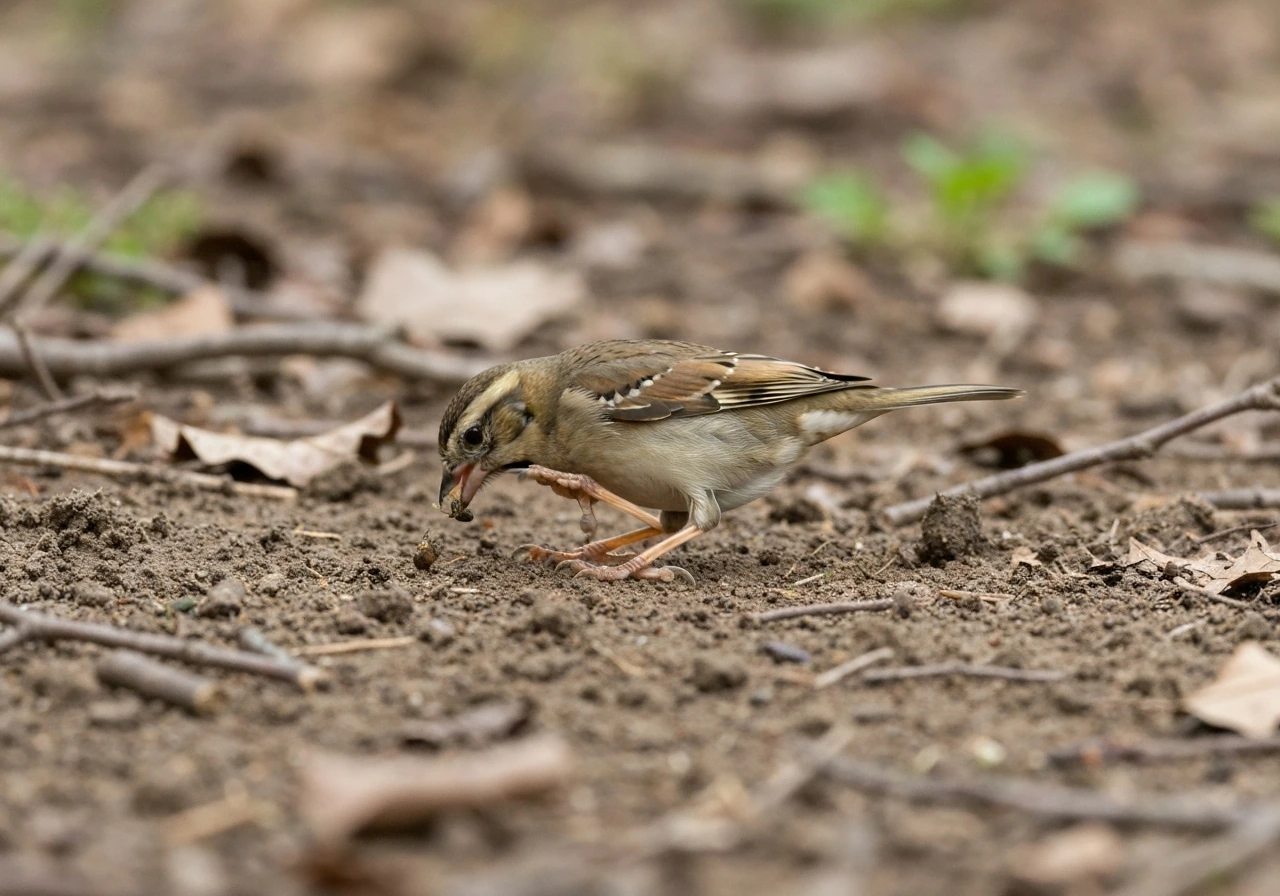
What 'ground-dwelling bird' actually means in plain language
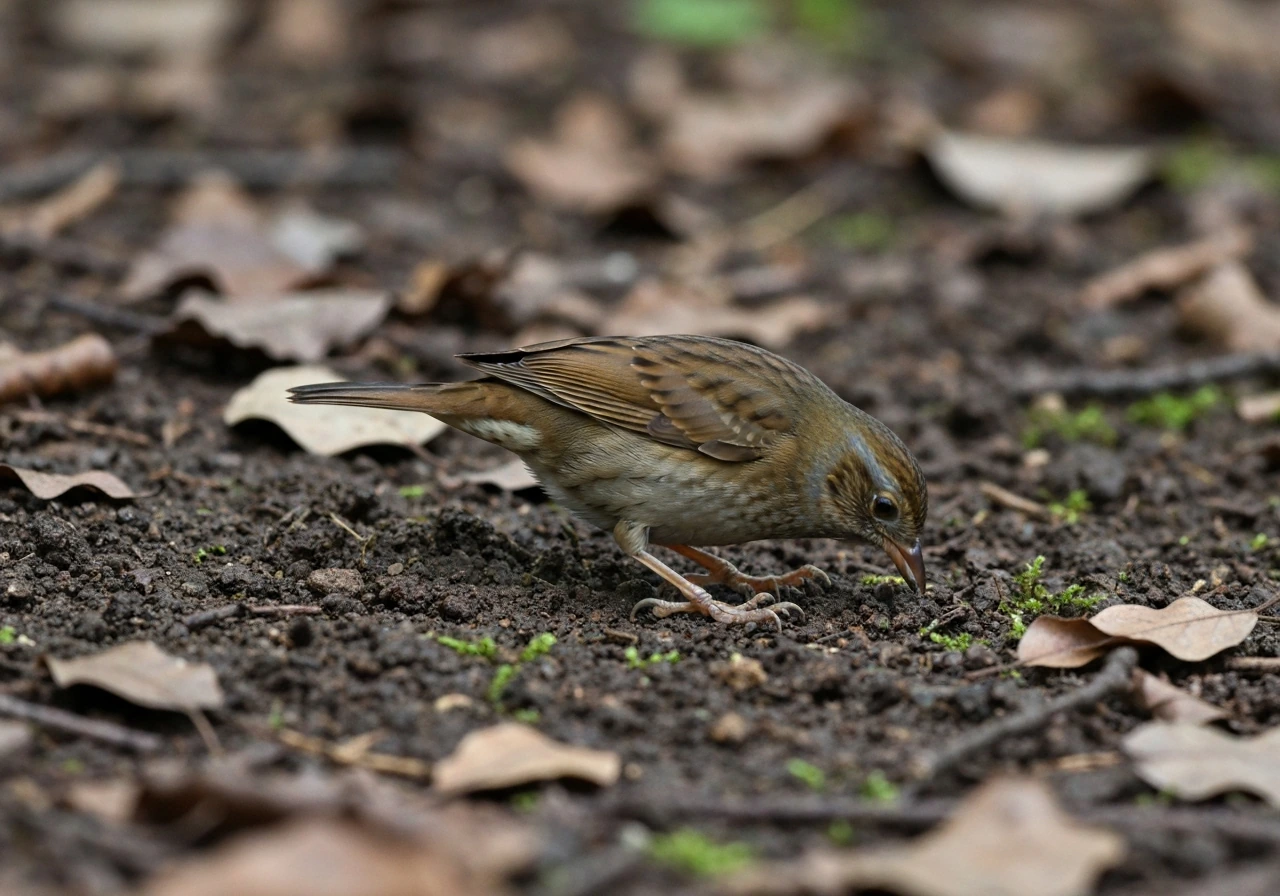
In straightforward bird terms, "ground-dwelling" is a habitat and behavior label. It tells you where the bird lives and how it feeds. Ornithologists use it the same way you'd say "tree-dwelling" or "water-dwelling." The bird forages by scratching at soil or leaf litter, nests at ground level or in low vegetation, and tends to walk or run rather than fly as its primary mode of getting around. Henry David Thoreau used "ground-bird" in his nature writing to describe birds he observed picking and scratching at the earth, which is as clean a definition as you'll find.
The term also shows up in formal species names. "Common Ground Dove," "ground thrush," and "ground tyrant" all use the word literally to anchor the bird to its habitat. A technical ornithology reference even uses "groundbird" as a single word for certain Australian passerine species in the genus Cinclosoma. So in a scientific or field guide context, there is almost no figurative weight to the phrase at all.
The symbolic meanings people attach to ground-dwelling birds
Outside of biology, ground-dwelling birds carry a consistent cluster of symbolic meanings that track closely with how they actually behave. Because they scratch and forage rather than glide effortlessly, they're associated with hard work and persistence. Because they stay low and blend into their environment, they suggest humility, patience, and going unnoticed. And because surviving on what you can scratch from the earth is a fundamentally practical act, they're linked to resourcefulness and a no-nonsense approach to life.
- Down-to-earth practicality: the bird doesn't rise above what's in front of it, and neither does the person it's being compared to
- Humility and being overlooked: ground birds are easy to miss, which can symbolize modesty or being underestimated
- Resourcefulness and foraging: scratching out a living, finding sustenance in ordinary places
- Patience and survival: staying close to the ground, waiting, enduring
- Groundedness and stability: roots in the earth, not drifting upward into abstraction or pretension
The idiom "scratch out a living" maps almost perfectly onto this imagery. It carries the same connotation of hard, unglamorous effort that ground-foraging birds embody. If a writer calls a character a "ground-dwelling bird" in a metaphorical passage, they're almost certainly reaching for one or more of these traits, not describing the character's ornithological habits.
The birds people usually have in mind
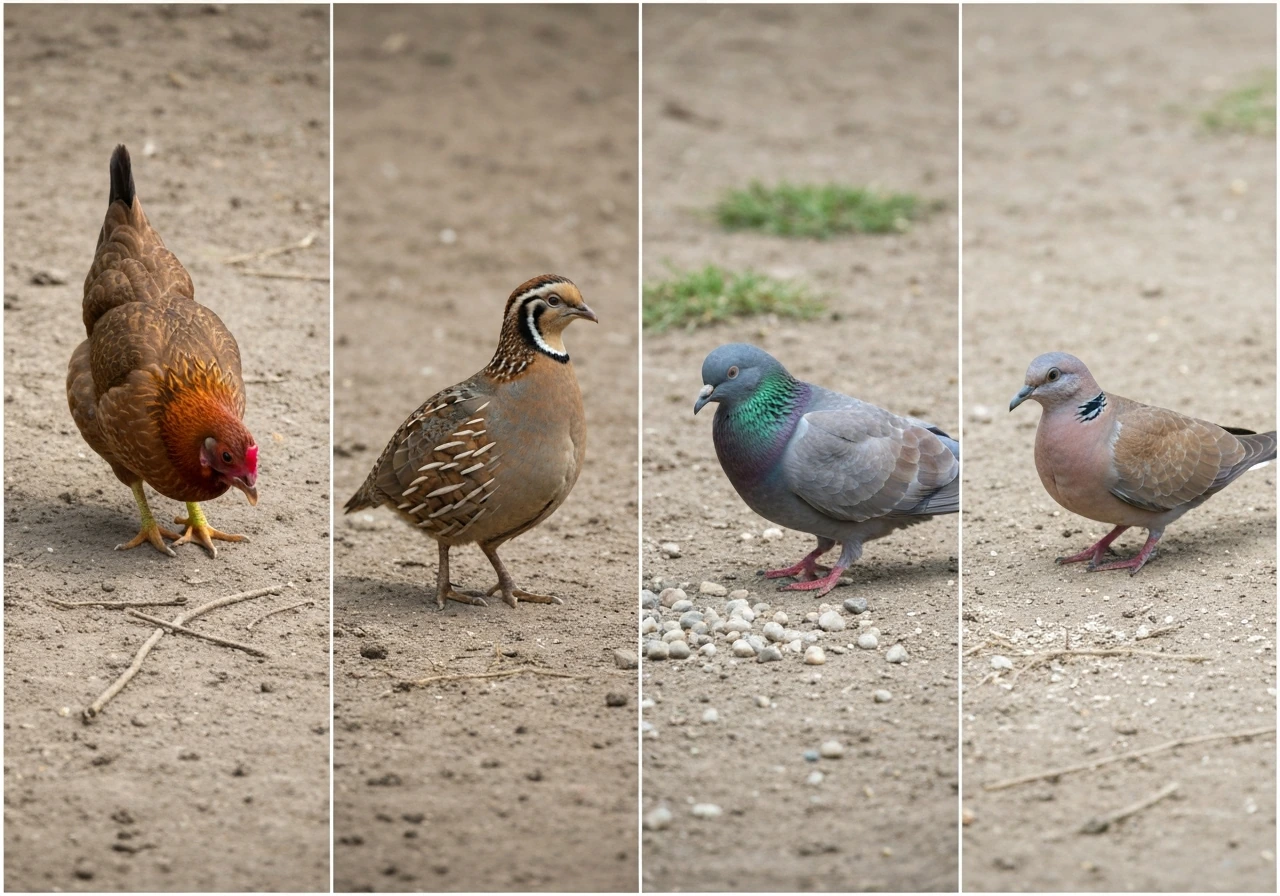
When someone says "ground-dwelling bird" without naming a species, a handful of candidates come up most often. These are the birds that are so strongly associated with ground life that they've become cultural shorthand for it.
| Bird | Ground Behavior | Common Symbolic Association |
|---|---|---|
| Chicken (domestic fowl) | Scratches and pecks at soil constantly | Practicality, cowardice (depending on context), domesticity |
| Quail | Runs along ground, flushes low | Humility, abundance, vulnerability |
| Turkey | Forages heavily on the ground | Resourcefulness, Thanksgiving/harvest themes, being ungainly |
| Pheasant | Ground nester, walks and scratches | Earthiness, working-class dignity in some literary traditions |
| Song Sparrow (historical 'Ground Bird') | Scratches at ground while foraging, stays low | Commonness, ordinary beauty, quiet persistence |
| Dove / Ground Dove | Feeds on the ground, walks rather than hops | Peace, devotion, gentleness (biblical and cultural) |
| Grouse | Ground nester and forager | Hardiness, wilderness, stoicism |
The Song Sparrow deserves a special mention here. Historically it was literally called the "Ground Bird" or "Ground Sparrow" in older American natural history writing. A 1918 Audubon publication used the line "Ground Bird of old, we call you Song Sparrow now," which shows just how embedded that ground identity was. If you're reading older American writing and encounter "ground bird" as a specific label rather than a general description, the Song Sparrow is the most likely referent.
How to tell if the phrase is literal or figurative
Context does almost all the work here. The phrase "ground-dwelling bird" is so concrete and behaviorally specific that writers lean on it intentionally when they want that earthy resonance, but it also appears in completely literal descriptions in field guides, ecology articles, and wildlife writing. Here's how to read the surrounding text to figure out which one you're dealing with. Pragmatics studies how context contributes to meaning, including implicature and nonliteral language such as metaphor, which matches the idea of using surrounding text to infer intent.
- Check whether an actual species is named nearby. If the text says "the robin, a ground-dwelling bird, searched the lawn" that's literal bird behavior. No species name and an abstract subject (a person, a community, an idea)? Almost certainly figurative.
- Look at the verbs around it. Words like "forages," "nests," "pecks," and "roosts" point to literal use. Words like "is," "represents," "like," or "as humble as" signal metaphor.
- Notice whether the text is comparing something to a bird. Simile markers ("like," "as") or metaphor markers (calling a person or thing a ground-dwelling bird directly) = figurative.
- Consider the genre. Scientific writing, wildlife guides, and nature journalism use it literally. Poetry, fiction, personal essays, and opinion pieces are more likely to reach for its symbolic weight.
- Ask what trait is being communicated. If the point being made is about habitat or feeding behavior, it's literal. If the point is about character, personality, or values, it's figurative.
Ground-dwelling birds in slang, literature, and everyday phrases
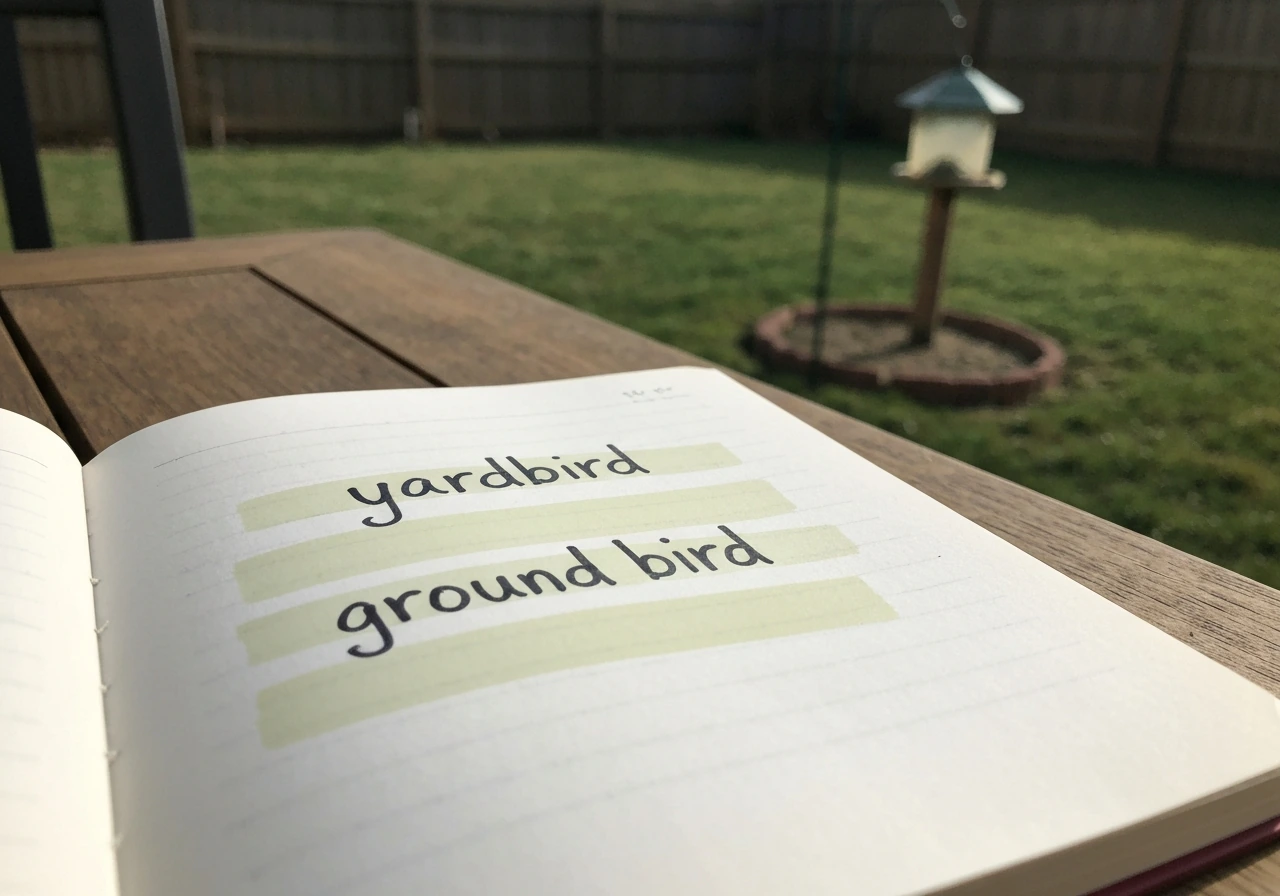
In everyday slang
"Yardbird" is the most direct slang cousin to "ground-dwelling bird. If you’re specifically wondering what “yard bird” means in casual talk, the “yard bird meaning slang” usage is the most direct related comparison. " It can mean a chicken (literally a bird that wanders a yard scratching at the ground), a prisoner confined to a yard, or an army recruit restricted to base. All three uses share the same core image: a creature that can't fly free, stuck at ground level, working within a limited space. When diner lingo says "yard bird" to mean chicken on the menu, it's playing on that same literal ground-scratching image in a fond, plain-spoken way.
Calling someone a "ground bird" in casual speech typically implies they're unpretentious, grounded, or maybe a little too practical for their own ambitions. It can be affectionate ("She's a real ground bird, just gets things done") or slightly dismissive ("He's a ground bird, never going to aim higher"), depending on tone.
In literature and poetry
Writers have long used ground birds to anchor characters or themes in earthy reality. Thoreau's use of "ground-bird" in his nature journals wasn't purely scientific: the grounded, scratching bird represented a kind of honest engagement with the physical world that contrasted with loftier, more ethereal creatures. In poetry, a ground-dwelling bird often stands in for the unsung, the ordinary, or the quietly enduring person who doesn't get celebrated the way an eagle or a nightingale does.
Doves are an interesting case. The Common Ground Dove is a literal species name, but doves more broadly carry centuries of symbolic freight: peace, love, devotion, and in biblical tradition, the presence of the divine. The European turtle dove became a symbol of devoted love through scripture and literature. So a dove described as "ground-dwelling" might be pulling double duty, pointing both to its earthly, humble nature and to its larger cultural symbolism.
In idioms and adjacent phrases
You won't find "ground-dwelling bird" as a set idiom in most dictionaries, but the imagery bleeds into several established phrases. "Scratch out a living" borrows directly from ground-bird foraging behavior. "Down to earth" echoes the same trait. "Feet on the ground" and "grounded" are first cousins. If someone uses "ground-dwelling bird" in a phrase or essay, they're almost certainly invoking this family of meanings, even if they don't name the exact idiom they're channeling.
It's worth keeping the related idea of a "land bird" in mind too, since that term overlaps but isn't identical. A “land bird” can be a helpful related term when you are trying to pin down what the writer meant by habitat and symbolism. Land bird is a broader ecological category (any bird associated with land rather than water), while ground-dwelling is more specific about where on land the bird spends its time. Endemic bird meaning refers to what it signifies when a bird species is native to a specific area and does not naturally occur elsewhere. A land bird might perch in a canopy; a ground-dwelling bird is specifically at soil level.
Quick interpretation checklist and next steps
If you've encountered "ground-dwelling bird" in something you're reading and you're trying to nail down what the writer meant, run through this checklist.
- Is a real bird species mentioned or described nearby? If yes, treat it as literal unless the surrounding language is clearly metaphorical.
- Is the subject of the sentence a person, idea, community, or abstract concept? If yes, the phrase is almost certainly figurative.
- Is the genre fiction, poetry, or personal writing? Lean figurative. Is it a field guide, science article, or nature journal? Lean literal.
- Do simile or comparison words appear (like, as, reminds me of)? Figurative.
- Is the trait being communicated one of humility, practicality, resourcefulness, or being overlooked? The symbolic meaning is in play.
- Does the text reference scratching, foraging, or surviving on ordinary things? The writer is likely leaning on ground-bird imagery whether or not they name it explicitly.
As a next step, if you still can't tell, look up any species name mentioned alongside the phrase. Species like quail, turkey, pheasant, dove, sparrow, or chicken will confirm you're in literal territory and point you toward the specific cultural or literary symbolism attached to that particular bird. If no species appears and the context is symbolic, the most useful question to ask is which of the ground-bird traits (humility, practicality, survival, being overlooked) makes the most sense given what the writer is trying to say. People sometimes use “lame bird” to describe someone perceived as weak, ineffective, or past their prime, so its meaning depends on the context lame bird meaning. That single question usually resolves the ambiguity.
FAQ
How can I tell if “ground-dwelling bird” is literal or figurative in a passage?
Yes. If the surrounding text mentions behaviors like scratching, foraging, walking, nest sites, leaf litter, or low vegetation, the phrase is almost certainly literal. If it instead describes character qualities, work ethic, staying unnoticed, or an earthy tone, it is being used metaphorically.
Does “ground-dwelling” mean the bird cannot fly?
Not always. Some species that are called “ground birds” still fly, but they depend on the ground most for feeding and daily movement, then take short flights to escape or relocate. So “ground-dwelling” does not mean “never flies,” it means ground activity dominates.
Is a ground-dwelling bird only on bare ground?
It usually means low foraging and walking, not living strictly on bare soil all the time. Many ground-dwellers nest in grass, shrubs, or among rocks, and they may use low perches or run between spots, so the key cue is where they spend most of their time.
If an older book says “ground bird,” does it always mean the same thing as “ground-dwelling bird”?
If the text uses synonyms like “ground bird,” “ground bird” or “ground sparrow,” it can point to the Song Sparrow in older American natural history writing. In modern writing it is more likely a general habitat description, so check whether a specific species name is present nearby.
Can “ground-dwelling bird” be an insult, or is it always positive?
Yes, and it can shift the nuance. If the tone is affectionate or admiring, it leans toward practical competence and humility. If the tone mocks or limits someone, “ground bird” can imply staying small-minded or refusing bigger ambitions, even though the imagery is the same.
What does “yard bird” mean, and how do I avoid mixing it up with “ground-dwelling bird”?
When “yard bird” is used for a person, it can mean someone confined to a yard, for example a prisoner or a recruit. When used for food slang, it commonly means chicken, especially in menu contexts. The difference is whether the context is confinement-related or restaurant-related.
How is “ground-dwelling bird” different from “land bird”?
Yes. “Ground-dwelling” is narrower than “land bird.” A land bird can still spend much of its time in trees or on elevated branches, while “ground-dwelling” highlights soil-level life such as scratching, low nesting, and walking as the main travel mode.
What specific traits should I connect to the symbolism if no species name is mentioned?
Consider whether the writer is highlighting “what you can make from what’s available.” If the passage emphasizes making do, survival, or honest effort without glamour, the phrase is likely pointing to resourcefulness and persistence rather than, say, speed or beauty.
Does “ground-dwelling bird” carry symbolism in ecology or field guide writing?
In scientific or field-guide contexts, the phrase usually functions as a straightforward habitat and behavior label, similar to how “water-dwelling” works. In those contexts, avoid treating it as emotional symbolism unless the author explicitly switches into metaphorical language elsewhere.
What should I do if the text includes other bird-related words that seem conflicting?
Yes. If multiple bird descriptors appear, prioritize the most behavior-specific cue. For example, if the text says “ground” and also “scratching” or “leaf litter,” it strengthens the literal ground-foraging reading. If the text says “unseen,” “unsung,” or “down-to-earth” without behavior cues, it signals metaphor.
Next Article
Lame Bird Meaning: Literal Definition, Slang Uses, Examples
Meaning of lame bird: literal injured bird plus slang for an ineffective, unreliable person, with examples and tone note