There is no single fixed meaning for 'ungender bird' because the phrase is not a standard idiom or a named bird species. What it most likely means depends entirely on where you saw it: in a poem, it probably describes a bird (or bird-like figure) that exists outside of gender entirely; on Tumblr or social media, it is almost certainly queer humor or identity-adjacent wordplay; in a music review, it may describe gender-neutral language used in song lyrics. Your job is to figure out which of those contexts you are dealing with, and this guide will help you do exactly that.
Ungender Bird Meaning: What It Can Refer To and How to Check

Marcus Reeves
24 May 2026
What 'ungender bird' could actually be referring to
The phrase is ambiguous because it sits at the intersection of two separate concepts: the word 'ungender' (or 'ungendered') and the word 'bird,' each of which carries its own range of meanings. When you put them together without a clear sentence around them, you get at least three plausible readings.
- A literal description: a bird (the animal) being described as ungendered or gender-neutral, often in poetry or literary prose where the writer deliberately avoids assigning a gendered pronoun to the creature.
- A metaphor or character description: a person, figure, or character described as both bird-like and ungendered, where 'bird' is symbolic (freedom, wildness, fragility) and 'ungender' is an identity marker.
- Internet/queer culture wordplay: phrases like 'ungendered bird rights' appear on Tumblr-style platforms as a form of humorous, identity-adjacent tagging, not a serious symbolic claim.
- A possible misspelling or typo: the reader may have encountered 'ungendered bird' (with the full '-ed') rather than 'ungender bird,' or the phrase may be a fragment of a longer sentence.
Before you try to pin down a meaning, it really helps to check the full sentence or caption where you saw the phrase. Even a few surrounding words will usually tell you which of these interpretations is the right one.
What 'ungender' actually means in modern language
The word 'ungendered' is in the Cambridge and Merriam-Webster dictionaries, defined simply as 'not having a gender' or 'not gendered.' That is its mainstream, standard-English meaning. You might see it used in a fragrance review ('an ungendered debut fragrance'), in a novel description ('an ungendered hand reached through the curtain'), or in literary criticism where a writer deliberately avoids marking a character's gender.
In gender-identity contexts, 'ungendered' is listed as a synonym for agender, a term describing a person who feels they have no gender or whose gender is absent rather than simply unknown. The Nonbinary Wiki and similar resources explicitly include 'ungendered' in that list of synonyms. The Gender Wiki defines 'ungender' (as a standalone term) as feeling genderless, framing it not as the opposite of any specific gender but as the opposite of gender itself. So when you see 'ungender' used as a noun or verb in queer spaces, that is almost always what it refers to.
There is also a grammatical use: in linguistics and language-construction discussions, 'ungendered' describes pronouns or nouns that carry no gender marking. This is a more technical sense, but it occasionally bleeds into everyday writing when someone is discussing pronoun choices for characters, animals, or fictional beings.
What 'bird' usually means (symbolism and figurative uses)
Birds carry a huge range of symbolic meanings depending on the species and the cultural context. In general English, a bird most often represents freedom or independence, which is why 'free as a bird' is such a durable expression. The historical roots of that metaphor go back centuries, tied to ideas of someone being outside of social constraints entirely.
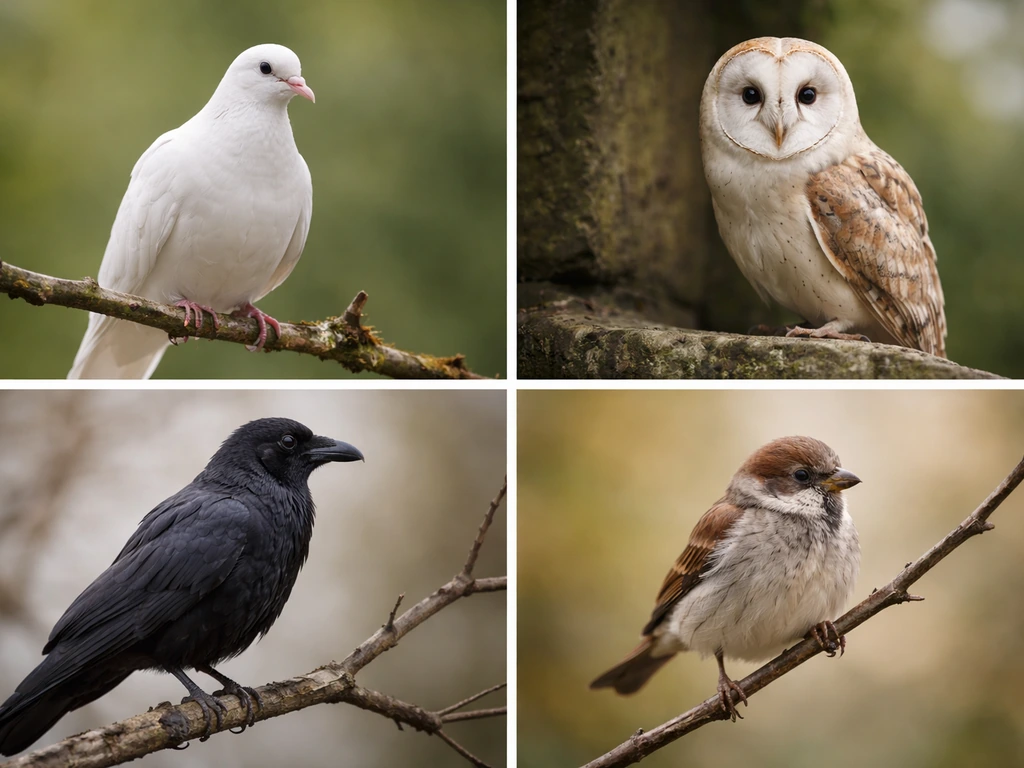
Beyond freedom, specific species carry their own meanings: owls represent wisdom, doves represent peace, ravens represent mystery or death in Western tradition, and so on. But 'bird' without a species attached usually points to the freedom/liberty meaning first, and after that to the many idioms it anchors in everyday English.
Those idioms are worth knowing because they sometimes explain why 'bird' shows up in unexpected phrases. BBC Learning English lists a whole sheet of bird idioms: 'a bird-brain' (someone foolish), 'a bird's-eye view' (a high overview), 'as the crow flies' (a straight-line distance). If 'ungender bird' appears in a context that feels more slangy than symbolic, it is worth checking whether 'bird' is functioning as an idiom piece rather than a symbol.
In literary writing, especially poetry, birds are also used as stand-ins for the self, for souls, for spirits, or for characters whose identity is deliberately kept fluid. That last use is directly relevant here: a poet who describes 'an ungendered bird' is almost certainly using the bird as a figure for a person or entity whose gender is absent or undefined, not talking about a literal species.
How to read it in context: lyrics, poems, books, and social posts
Context is everything with this phrase. Here is how to read it depending on where you found it.
In a poem or literary prose
This is the most likely place for 'ungendered bird' to appear as a deliberate, meaningful phrase. A Harvard Review piece discussing Kim Sono's poetry uses 'ungendered' to describe an angel while also featuring a bird in the same passage, with the explicit question 'what pronouns would a nonbinary bird use?' raised as part of the literary discussion. Another poet, Ina Brix, uses the line 'Ungendered, inside neither male nor female' in a bird-poem context. When you see this in a literary setting, the meaning is almost always: this bird (or bird-figure) exists outside of gender, and the author is using that as a way to talk about identity, ambiguity, or freedom from categories.
In song lyrics or music reviews
Music critics and reviewers sometimes use 'ungendered' to describe lyrical choices in songs. An NPR-affiliated review of Fever Ray's album 'Radical Romantics' describes the artist using 'ungendered' pet names (including 'bird seed') in a track called 'Looking For A Ghost.' In that context, 'ungendered bird' or a similar phrase means the lyric deliberately avoids gendering the subject, which is a stylistic and political choice common in queer pop and experimental music. If you saw the phrase in a music context, check whether the article or post is describing lyrical language choices.
On social media, Tumblr, or meme-style posts
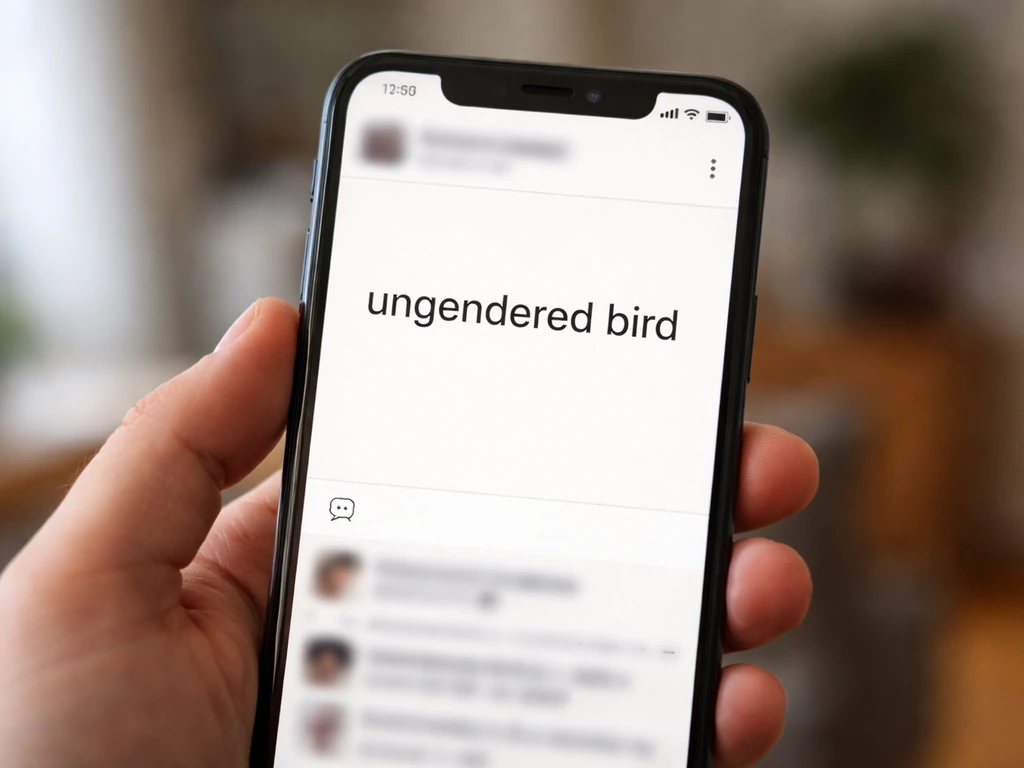
On Tumblr and similar platforms, 'ungendered bird rights' appears as a tag and a humorous phrase, part of the long-running tradition of queer internet humor that attaches identity language to animals in a jokey, affectionate way. If you saw 'ungender bird' in a meme, a reblog caption, or a hashtag pile, it is almost certainly this: lighthearted queer wordplay, not a claim about bird symbolism. It does not need to be decoded as a serious statement.
Troubleshooting: spelling variants and what you might actually be looking for
If you typed 'ungender bird meaning' into a search bar, there are a few things you might have actually been trying to find. If you are really asking about how people interpret the query "sick bird meaning," that is a different kind of phrase than "ungendered bird," but it can help to compare how each is used in context. If you are asking specifically about 'ornery bird meaning,' note that this kind of search usually indicates a different phrase or tone than the playful 'ungendered bird' usage covered in this guide ungender bird meaning. Here is a quick checklist to narrow it down.
| What you saw or searched | What you probably meant | How to verify |
|---|---|---|
| ungender bird | ungendered bird (adjective form) | Check if the original text uses 'ungendered' rather than 'ungender' |
| ungendered bird | A bird or bird-figure described as having no gender | Look at the surrounding sentence for pronoun choices or identity language |
| ungendered bird rights | Queer internet humor / Tumblr wordplay | Check if the source is a social media post, meme, or tag page |
| free as a bird / bird symbolism | General bird symbolism (freedom, liberation) | Look for 'free,' 'freedom,' or species names nearby |
| birdbrain / bird idiom | A standard English bird idiom | Check the BBC Learning English bird idioms list or a standard dictionary |
| angry bird / ornery bird / hateful bird | A related bird expression about mood or attitude | These are covered as separate expressions; check the specific feeling being described |
The most common mistake is searching for 'ungender bird' when the actual phrase in the original text was 'ungendered bird' or even just 'ungendered' used near the word bird in a poem. Copy the exact words from the original source and search those instead. That will get you much closer to the intended meaning.
It is also worth checking whether the source text uses any pronouns near the word bird. If the author switches from 'she/he' to 'it' or 'they' when referring to the bird, that is a strong signal that the 'ungendered' modifier is being used in its grammatical or identity sense, not as a symbol of freedom or a species label.
Example interpretations you can map onto your situation
Here are four realistic scenarios with a direct interpretation for each. Find the one closest to yours.
- You saw it in a poem or short story: The bird is almost certainly a symbolic stand-in for a person or entity whose gender is deliberately absent. The author is using the bird figure to explore identity outside of binary categories. The bird represents freedom, wildness, or spiritual ambiguity, and the 'ungendered' label intensifies that by removing even gender as a fixed point. Look for pronouns like 'it' or 'they' used for the bird to confirm this reading.
- You saw it in a music review or album article: The reviewer is describing lyrical or thematic content where gender-neutral language is used, often as a political or stylistic choice by the artist. 'Bird' in this context may be a pet name or term of endearment in the lyrics, and 'ungendered' describes the deliberate removal of a gendered framing from that name. This is a common observation in reviews of queer or experimental pop music.
- You saw it on Tumblr, Twitter/X, or a meme page: This is almost certainly lighthearted queer internet humor. 'Ungendered bird rights' and similar phrases are a genre of Tumblr joke where identity language is applied to animals in an affectionate, absurdist way. There is no deeper symbolic meaning to decode here. It is a joke and a community in-reference.
- You saw it in an academic or critical text: The writer is using 'ungendered' as a descriptor for a character, pronoun, or narrative entity, and 'bird' may appear as a metaphor or a literal animal in the same passage. Check whether the text is discussing pronoun choices or nonbinary identity in literature. The English Stack Exchange discussion on whether 'it' is a gender-neutral pronoun is a useful reference if you are trying to understand the grammatical argument being made.
If none of these scenarios match what you saw, the most practical next step is to paste the exact sentence into a search engine with quotation marks around it. If the phrase is from a known song, poem, or book, a direct quote search will usually surface the source within a few results. From there you can read the surrounding context and apply the framework above to land on the right interpretation. This phrase is not a fixed idiom with one correct definition, but once you know the context, the meaning becomes straightforward quickly.
It is also worth knowing that 'bird' on its own carries very different energy depending on the mood around it. An angry bird expression, an ornery bird reference, or a hateful bird phrase all point toward a character or attitude, not identity or symbolism. If you meant the angry bird meaning as in the charged phrase “angry bird,” it helps to focus on the tone and what kind of character or attitude it is pointing to. If the phrase you encountered had that kind of charged tone, the ungendered angle is less likely and the figurative character meaning is more relevant.
FAQ
Does “ungender bird” always mean something about agender or pronouns?
Not necessarily. If the phrase appears in poetry, queer criticism, or lyric analysis it often points to genderless identity or gender-avoiding language. If it shows up as a standalone caption, username, or meme tag, it is usually playful wordplay about queerness and not a direct statement about pronouns.
How can I tell whether “bird” is symbolic or just an animal reference?
Look for nearby clues like metaphors, references to the self or spirits, or explicit discussion of identity and pronouns. If the surrounding text talks about physical traits, locations, or literal behavior, then “bird” is more likely literal and “ungendered” may be used in a grammatical or character-language way rather than as symbolism.
What if I only saw the phrase in search results, not in the original sentence?
In that case, the meaning is likely lost because the phrase is ambiguous out of context. Use an exact-quote search with the closest wording you have, or open the top result and confirm whether the word is “ungender” or “ungendered,” and whether the caption includes pronouns near the bird.
Is the phrase sometimes a grammar term rather than an identity term?
Yes. If the text is discussing language design, pronouns, fictional writing rules, or “gender marking,” “ungendered” may be describing a grammatical lack of gender. In that usage, “bird” may be an example noun, not a figure for a gendered person.
What’s the difference between “ungender bird” and “ungendered bird”?
“Ungendered” is the more standard dictionary form meaning “not having a gender,” and it is commonly used in identity, literary, and grammatical contexts. “Ungender bird” (without the -ed) is more likely to be stylized internet phrasing, so it may be less literal and more likely to be playful or author-specific.
If the author uses “they” or “it” for the bird, what does that imply?
Switching pronouns around the bird is a strong indicator that “ungendered” is functioning as an identity or grammatical cue. If the text consistently uses gender-neutral pronouns for the bird, interpret it as “genderless” or “not gender-marked,” not as a general freedom symbol.
Could “ungendered bird” be part of an idiom like “free as a bird”?
It could overlap with that general symbolic vibe, but “ungendered” is too specific to treat as a standard idiom component. If the passage is mostly about freedom, then it may lean symbolic, but if it mentions pronouns, identity, or gendering, it is probably more literal to that theme.
How should I interpret “ungendered bird rights” specifically?
That phrase is commonly used as queer internet humor, attaching identity language to an animal in a jokey, affectionate way. Treat it as comedic wordplay unless the surrounding post clearly shifts into a serious discussion of gender identity or rights.
What’s a quick method to confirm the intended meaning in under a minute?
Copy the exact sentence (including spelling, ungender vs ungendered) and search it with quotation marks. Then check two things: whether the author discusses pronouns or gendering, and whether “bird” is framed metaphorically (self, soul, spirit) versus literally (species traits and actions).
Is it safe to assume the phrase is never about a real species?
It is usually not about a specific bird species, because “ungendered” is about gender marking, not biology. However, an author might still use a literal animal in a fictional or lyrical way, so rely on the surrounding lines rather than assuming it must always be purely symbolic.
Next Article
Sick Bird Meaning: Literal vs Slang and How to Tell
Sick bird meaning: literal bird vs slang for feeling down, weakness, bad luck, or insults, with context examples.