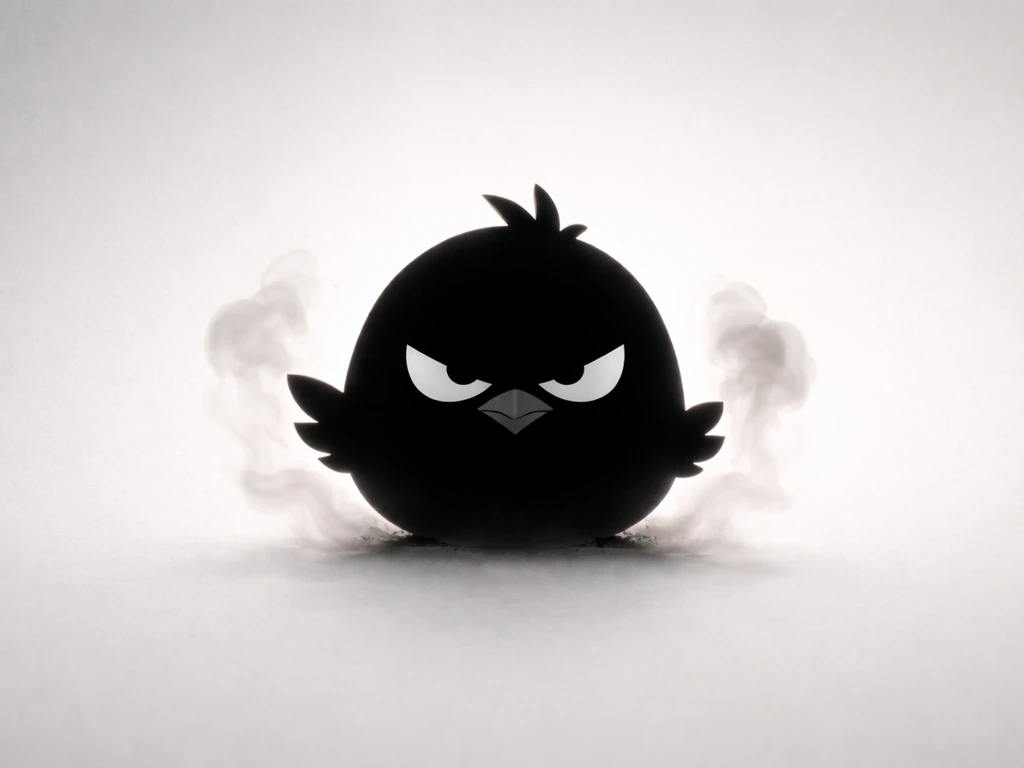
An 'angry bird' most commonly describes a person who looks or acts visibly angry, irritated, or short-tempered. It's used as a casual nickname, a teasing label, or a descriptive phrase in everyday English. The term pulls meaning from two places at once: plain English (an angry bird, literally a bird acting aggressively) and the massive cultural footprint of the Angry Birds game franchise, which has turned the phrase into a recognizable shorthand for a grumpy, explosive personality. Depending on tone and context, calling someone your 'angry bird' can be playful affection, gentle teasing, or a pointed comment on their temper.
Angry Bird Meaning: Definition, Nickname Use, and Examples

Marcus Reeves
23 Apr 2026
What 'angry bird' actually means in plain English
Grammatically, 'angry bird' is a simple adjective-noun phrase. 'Angry' means feeling or showing anger, ranging from mild irritation to full-on fury. When you put it in front of 'bird,' you get a vivid mental image: a bird ruffling its feathers, puffing up, ready to strike. In everyday use, calling someone an angry bird implies they're visibly worked up, quick to snap, or carrying that tense, wound-up energy that makes people give them a little extra space. It's descriptive but informal, and it almost always has a slightly humorous edge to it, even when the underlying frustration is real.
You'll hear it used as a noun phrase ('she's such an angry bird today'), as a nickname ('hey, my little angry bird'), or even as a loose adjective-style modifier in conversation. In English sentences, the phrase is flexible and intuitive. A few realistic examples of how it appears in everyday text messages or speech:
- "Why are you so quiet? You look like an angry bird right now."
- "Good morning, my angry bird — coffee before we talk, yes?"
- "He walked in looking like a total angry bird, eyebrows and everything."
In all three examples, the phrase softens the observation with humor. It signals that someone is annoyed or stormy without saying 'you're being hostile' or 'you're scaring people.' That's part of why it caught on as a nickname in the first place.
The Angry Birds game connection, and why it matters for meaning
blank" rel="noopener noreferrer">Rovio Entertainment released Angry Birds in 2009), and it became one of the most downloaded games of its era. The premise: birds with bad tempers get launched at pigs. The central character, Red, is a temperamental cardinal with a permanently furrowed brow and a short fuse. He's literally described in franchise materials as 'a bird with a short temper,' and one official Angry Birds comic even states plainly, 'Red is the Angry Bird.' When the movie adaptation came out, the studio leaned further into this framing, positioning Red as an outcast specifically because his anger sets him apart.
That decade-plus of cultural saturation means that when someone calls you an 'angry bird' today, they almost certainly have Red's silhouette somewhere in the back of their mind, even if they're not consciously referencing the game. The furrowed brows, the puffed-up stance, the sense that this creature is about to launch itself at something, that visual shorthand is baked into the phrase now. So even a comment like 'why are you being such an angry bird?' carries that cartoon image of barely contained fury, which makes it feel lighter than saying 'why are you so angry?' It puts a funny frame around the emotion.
It's also worth noting that some people reinterpret the game's title more literally: the game can genuinely be frustrating to play, and Reddit threads have speculated that 'Angry Birds' works as a name because the game makes you angry. That meta-reading feeds back into how people use 'angry bird' as general frustration shorthand online.
Angry bird as a slang term and nickname
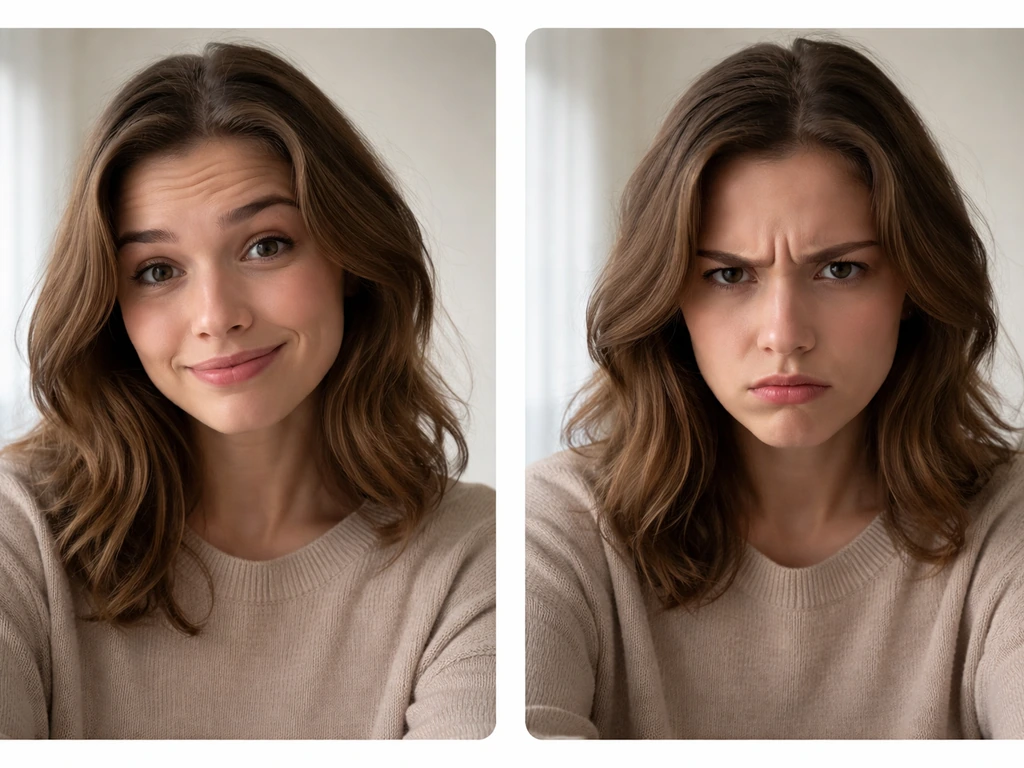
As slang, 'angry bird' functions as a nickname that sticks to someone who has a recognizable angry look or a reputation for being quick-tempered. There's a well-known example from Reddit where a teenager describes being nicknamed 'Angry Bird' because their eyebrows look just like Red's, that intense, downward-slanting expression. This is exactly how the nickname works in real life: it's often visual first, personality second. Someone spots the resemblance (physical or behavioral) and the label follows.
The nickname can be used three ways, and the tone shifts dramatically depending on the relationship:
| Usage type | What it usually signals | Example |
|---|---|---|
| Playful/affectionate nickname | Warmth, gentle teasing, established trust | "Good morning, angry bird" from a partner or close friend |
| Teasing among peers | Light mockery, humor at someone's expense, low stakes | "Calm down, angry bird" from a friend during an argument |
| Pointed/critical label | Genuine annoyance or warning about someone's temper | "Don't mess with her, she's a total angry bird" |
Related to this, you might also see 'angry bird' used online as a shortcode label in emoji packs. Slack's emoji library, for example, includes an ':angrybird:' entry, using the phrase as a reaction shortcode. Slack’s help center explains that in Slack you can use emoji codes like this in the message field or as reactions to respond quickly blank" rel="noopener noreferrer">Slack's emoji library includes an :angry_bird: entry. This crossover between nickname culture and emoji shorthand is part of why the phrase feels so natural in digital communication.
What the angry bird emoji actually means
When people search for 'angry bird emoji meaning,' they're usually asking about one of two things: either an actual Angry Birds-branded emoji, or the 😤 emoji (Face with Steam from Nose), which gets called an 'angry bird emoji' because of how it looks. If you specifically meant the phrase “sick bird meaning,” you may be looking at a similar nickname-style interpretation, but in a different context angry bird emoji meaning. The 😤 emoji shows a scrunched, furrowed face with steam puffing from the nostrils, and it's the most common emoji people associate with the 'angry bird' visual. Officially, it conveys intense anger, frustration, or annoyance, though it can also read as determination or fierce focus depending on context.
Alongside 😤, kaomoji and text-based emoticons like o(`Θ´)○ are sometimes labeled 'angry bird' in emoticon libraries, specifically to capture that round, ruffled, ready-to-explode quality. These are used in online chats to signal frustration or mock-outrage, often in a more playful register than a direct 'I'm angry' statement.
In practice, if someone sends you 😤 after a message, they're usually expressing exasperation or blowing off steam rather than deep anger. The 'bird' association makes it softer. If they pair it with words like 'ugh' or 'seriously?!', it's frustration. If it follows something competitive or challenging, it might actually mean determination, as in 'I'm fired up and ready.' Context makes all the difference.
What 'angry bird' means in relationships

Inside a relationship, 'angry bird' as a nickname is almost always a term of endearment with a knowing edge to it. When one partner calls the other their 'angry bird,' it usually means: 'I see you when you're in a mood, I'm not scared of it, and I find it a little adorable.' There's intimacy in that. It takes something that might feel embarrassing (having a short fuse, looking grumpy) and makes it charming. Example sentences where this shows up:
- "Come here, my angry bird, tell me what happened."
- "Hello, Miss Angry Bird — rough day?"
- "He called me his angry bird every time I made that face. It stuck."
Outside romantic relationships, between friends or family, 'angry bird' as a recurring nickname usually means the person has a known reputation for getting fired up quickly, but the people around them use the label without fear because they know the anger isn't dangerous. It normalizes the trait rather than stigmatizing it.
The nickname gets thornier when it's used by someone who isn't close to you, or when it's delivered without warmth. If a coworker or acquaintance labels you an 'angry bird,' it can tip into dismissive territory, reducing your emotions to a caricature rather than taking them seriously. That's the key distinction: affectionate use comes from people who know you well and say it with a soft tone; critical use tends to come from distance and carries a slight eye-roll energy. This overlaps with related phrases and labels that focus on temperament, like being called ornery or hateful, which carry their own distinct slang histories. If you’re curious about that harsher wording, hateful bird meaning is a related way people describe anger that feels cruel or threatening. If you’re curious about similarly themed labels, ungender bird meaning is another search phrase people use when they want to unpack how context changes what the term is “saying.” hateful bird meaning. Knowing how people use terms like ornery also helps you judge whether 'angry bird' is affectionate teasing or a sharper jab.
How to figure out what 'angry bird' means in your specific message
If you've encountered 'angry bird' in a text or conversation and you're not sure what was meant, here's a practical way to work through it. Run through these questions in order:
- Who said it? A close partner or best friend saying it usually means affection or playful teasing. An acquaintance or someone in the middle of a conflict saying it is more likely a critique.
- What was the tone? Soft, joking, or accompanied by a laughing emoji? Almost certainly lighthearted. Flat, cold, or sent after a tense exchange? More pointed.
- Was it a one-time comment or a nickname? If it's been used before as a regular label, it's a nickname that's been accepted into the relationship vocabulary. First time hearing it in a tense moment signals something different.
- Was an emoji involved? 😤 next to 'angry bird' reinforces frustration or mock-outrage but keeps the register relatively light. No emoji in a terse message? Lean toward taking it more seriously.
- What came before and after it in the conversation? 'Hey angry bird, calm down' surrounded by laughing messages is teasing. 'You're such an angry bird honestly' at the end of an argument is a complaint.
- Is it about appearance or behavior? Comments linking the nickname to someone's eyebrows or resting expression are usually visual and gentle. Comments after someone reacted badly to something are behavioral and may carry real critique.
If you've gone through all of that and still feel uncertain, the cleanest move is to ask directly and lightly: 'Was that a nickname or are you actually calling me out right now?' Most people using it affectionately will immediately clarify, and most people who meant it critically will either double down or back off, which tells you everything you need to know.
FAQ
Is “angry bird meaning” ever used literally, like an actual bird that is angry?
In everyday English it is rarely meant literally. If someone says “angry bird” out of context, they almost always mean a grumpy or short-tempered person, or they are referencing the Angry Birds character look, not a real animal. Literal meaning is more likely only in a wildlife, pet, or game-chat context where actual birds are being discussed.
What is the difference between calling someone an “angry bird” and saying “you’re being angry”?
“Angry bird” usually frames the emotion as familiar, visually recognizable, and a little jokey, often softening the message. “You’re being angry” is direct and can sound like a judgment or confrontation. If you want to be neutral, use the person’s action instead (for example, “You’re sounding frustrated”), rather than labeling their temperament as a whole.
Can “angry bird” be offensive, even if it sounds playful?
Yes. It becomes more likely to sting when it is used by someone who does not know you well, when it is said publicly, or when it is followed by dismissive comments like “calm down” or “don’t make a big deal.” Affectionate teasing typically comes from consistent close relationships and a warm tone.
How do I tell from a text message whether it’s teasing or a jab?
Look for markers of warmth or play: emojis like 😄 or hearts, friendly nicknames, prior inside jokes, or “love you” style wording. A jab often appears with clipped phrasing, no softening punctuation, or repeated use during arguments. The fastest check is whether the sender offers any support afterward, like “I get it” or “want to talk?”
What should I reply if someone calls me an “angry bird” during an argument?
Ask for clarification without escalating: “Do you mean that as a joke, or are you upset with me?” If they confirm it is teasing, you can set a boundary: “I don’t mind nicknames, but not during arguments.” If they confirm it is critical, switch to issue-focused language: “What specifically upset you, and how can we fix it?”
Does the phrase always point to Angry Birds (the game/Red), or can it be independent slang?
Most people will subconsciously connect it to the game’s visual shorthand, especially in casual English or online chats. But the core meaning also stands on its own as “someone who looks or acts angry.” In practice, if the speaker uses the nickname often or references “Red,” it’s more clearly game-linked.
Is 😤 always the same as “angry bird meaning” (the emoji)?
No. The 😤 face with steam is commonly labeled “angry bird” because of the furrowed, steaming look, but it can also mean determination, “I’m not giving up,” or competitive hype. If the surrounding message includes goals or effort language (“I’m going for it”), it’s often drive rather than anger.
Can “angry bird” mean something different in professional or workplace settings?
Yes, and it can be risky. In workplace contexts, labeling someone’s temperament can come across as unprofessional or dismissive, even if you intend humor. If you need to address behavior, describe what happened and its impact, for example “Your tone came off sharp in the meeting,” instead of using a nickname.
What if I’m the one nicknamed “Angry Bird,” and I don’t like it?
You can reframe the nickname contract. Tell them what you prefer: “I’m okay with jokes when we’re calm, but please don’t say it when I’m frustrated or in front of others.” Offer an alternative nickname or a code phrase that signals play without implying you are “the angry one.”
Is “angry bird emoji meaning” ever confused with “sick bird meaning”?
It can be confused because people search similar phrases and emoji libraries label things inconsistently. If your context is illness, check the exact emoji used, the tone of the message, and whether the sender is talking about being unwell versus being annoyed or worked up. Asking “what did you mean by that emoji?” is usually clearer than assuming.
Next Article
Thirst Reckoned Bird North Meaning Explained and Decoded
Decode the riddle phrase thirst reckoned bird north meaning: idioms, symbolism, and direction clues to find likely inten