When someone says 'hateful bird,' they're almost always referring to one of three things: the specific phrase in Revelation 18:2 of the King James Bible, a poetic or literary metaphor for a bird associated with darkness or bad omens (ravens and crows top that list), or a casual insult describing a person who is unpleasant or hostile. Context does most of the heavy lifting here, and once you know where the phrase is coming from, the meaning locks in fast.
Hateful Bird Meaning: Origins, Context, and Bird Species

Marcus Reeves
4 May 2026
What people usually mean by 'hateful bird'
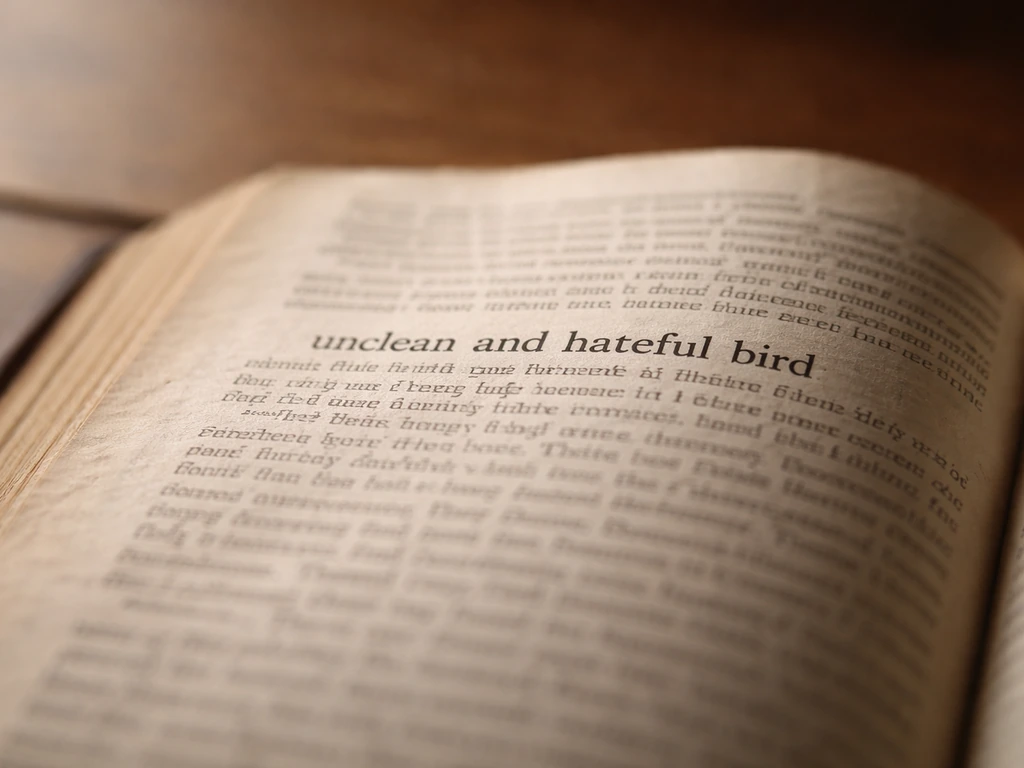
The most traceable origin of the exact phrase 'hateful bird' is the King James Version of the Bible. Revelation 18:2 reads: '...and a cage of every unclean and hateful bird.' Some translations render it as '...a haunt of every foul and hateful bird,' but the KJV version is the one that burned the phrase into English literary history. In that passage, Babylon is described as a ruined, desolate place overrun by unclean creatures, and the 'hateful bird' is symbolic of spiritual corruption and evil, not a specific species you'd find in a field guide.
Outside of scripture, 'hateful bird' shows up in poetry and casual speech as a vivid way to describe something perceived as ugly, ominous, or unwelcome. A poem beginning 'Oh hateful bird of morn, whose harsh alarms...' uses the phrase to curse the bird that ends the night, which tells you the phrase has also been used as a straightforward exclamation of irritation. So depending on whether you encountered it in a religious text, a poem, or someone's offhand comment, the meaning shifts quite a bit.
Birds most tied to 'hateful' symbolism
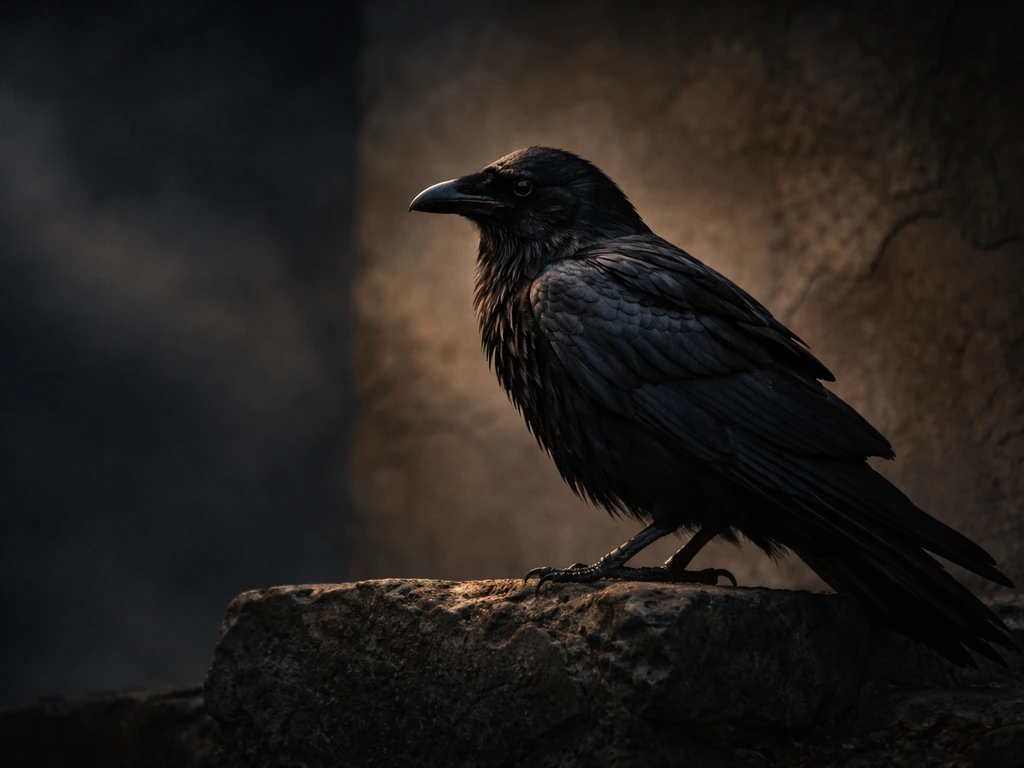
When people reach for the idea of a 'hateful' or ominous bird, a handful of species come up repeatedly across cultures and time periods. Ravens and crows dominate the list, followed by vultures and owls in certain traditions.
| Bird | Why it gets 'hateful' associations | Common contexts |
|---|---|---|
| Raven | Black plumage, scavenging behavior, linked to death and war in Norse, Celtic, and Western tradition; famously ominous in Poe's poem | Literature, poetry, gothic fiction, folklore |
| Crow | Similar to the raven in color and diet; associated with ill omens and trickery in many European and some Native American traditions | Everyday speech, superstition, slang |
| Vulture | Feeds on carrion; symbolizes death, greed, and waiting for someone's downfall | Metaphor, insult, political commentary |
| Owl | Seen as a death omen in certain cultures (ancient Rome, some Indigenous traditions), though celebrated elsewhere for wisdom | Cultural symbolism, literature, religion |
| Magpie | Associated with bad luck and ill fortune in some British and European traditions ('one for sorrow') | Folk rhymes, superstition |
Adrienne Rich's poem titled 'RAVEN' opens with the line 'IF, ANTIQUE HATEFUL BIRD,' which directly connects the raven to the 'hateful bird' phrase in a poetic register. That single example shows how the raven became the go-to species when English writers needed a bird that felt dark, ancient, and threatening. If someone says 'hateful bird' without any other context, a raven or crow is the safest assumption for what they're picturing.
Slang, insults, and coded uses in conversation

In everyday speech, 'hateful bird' is occasionally used as a colorful way to describe a person, usually someone mean-spirited, sharp-tongued, or generally unpleasant. Think of it as a more poetic version of calling someone a 'vulture' or a 'snake.' It's not mainstream slang with a fixed definition the way 'flip the bird' is, but you'll hear it in certain regional dialects, older literary circles, or from people who lean on biblical or poetic language for their insults.
It can also appear in coded or ironic language online, where someone might call a particularly aggressive or hostile person a 'hateful bird' with a half-joking, half-serious tone. In those cases it's functioning more as a creative insult than a reference to any specific symbolism. The key tell is tone: if it's said with affection or humor, it's probably just a quirky put-down; if it's said in a religious or literary context, there's deeper meaning to unpack.
How 'hateful birds' show up in literature, film, and religion
The Revelation 18:2 usage is the most culturally impactful. Biblical commentators are consistent on this: the 'unclean and hateful birds' in that verse aren't meant to be taken literally as specific species. BibleHub’s Revelation 18:2 page also discusses the verse’s imagery of unclean and hateful birds, helping explain why the phrase is typically read symbolically rather than as a literal species unclean and hateful birds in Revelation 18:2. They represent evil spirits, demons, and the spiritually corrupt forces that occupy a fallen, desolate Babylon. The connection to 'unclean' also runs back to Old Testament dietary law, where certain birds (predatory and scavenging ones) were forbidden food for Israelites. So the phrase carries a double meaning: ritually unclean and morally repugnant.
In literature beyond the Bible, Edgar Allan Poe's raven is the most famous example of a bird coded as hateful or malevolent in English writing, even though Poe never uses the phrase 'hateful bird' directly. The tradition he drew from, though, is exactly the one that made that phrase available to poets like Adrienne Rich. In film, sinister birds tend to cluster around horror and gothic genres: Hitchcock's 'The Birds' (1963) is the obvious landmark, turning ordinary seagulls and crows into instruments of terror. The birds in that film aren't labeled 'hateful,' but they embody every quality the phrase implies.
Similar phrases that are easy to mix up

A few related expressions get tangled up with 'hateful bird,' and it's worth sorting them out so you know exactly what you're dealing with.
- "Foul bird" vs. "hateful bird": 'Foul' in Revelation 18:2 (RSV translation) replaces 'hateful' and means both literally unclean and morally offensive. These are translation variants of the same verse, not separate concepts.
- "Flip the bird": An entirely different idiom meaning to give someone the middle finger. No symbolic bird species involved, no connection to Revelation.
- "Angry bird": Can describe someone in a rage, or refer to the well-known game franchise. It does not carry the religious or literary weight of 'hateful bird.'
- "Ill omen bird" or "bird of ill omen": A phrase used in folklore and older literature to describe any bird believed to foretell disaster. Ravens, owls, and crows qualify, but the phrasing is distinct from 'hateful bird.'
- "Ornery bird": A milder term, usually meaning a stubborn or cantankerous person or animal rather than something spiritually corrupt or truly malicious.
- "Bird of prey" used metaphorically: Sometimes used to describe a predatory or exploitative person, but it lacks the specific hateful or unclean connotation.
The sibling concepts of 'angry bird' and 'ornery bird' are worth keeping distinct from 'hateful bird' specifically because the emotional weight is different. Angry implies a temporary state; ornery implies stubbornness; hateful implies something more fundamental and morally loaded, especially when it comes from a biblical or classical literary source.
How to read meaning from context
The fastest way to nail down what 'hateful bird' means in a specific instance is to ask four questions: Who is speaking? What's the tone? What's the source? And what time period or culture does it come from?
- Religious text or sermon: Almost certainly referencing Revelation 18:2 or the tradition it inspired. The bird is symbolic of evil or spiritual corruption, not a literal species.
- Classical poetry (pre-20th century): Likely drawing on the raven or crow tradition, possibly cursing the bird that signals dawn or death. The 'hateful bird of morn' phrasing points to this use specifically.
- Modern poetry or literary fiction: Could be an allusion to Revelation, a nod to Poe's raven tradition, or a deliberate subversion of both. Look at the rest of the poem or passage for clues.
- Casual conversation or social media: Probably a creative insult for a person, or a joking reference. Tone will tell you whether it's affectionate mockery or genuine hostility.
- Older English texts (16th to 19th century): The KJV phrasing would have been culturally ubiquitous, so 'hateful bird' in that era almost always carries the Revelation resonance, even if used metaphorically.
Culture matters too. In Western traditions shaped by Christianity, ravens and crows carry the weight of that biblical uncleanness. In some other traditions, those same birds are tricksters or even heroes. If you're reading a text from a non-Western cultural context, the 'hateful bird' label might attach to a completely different species with its own local history.
Practical steps to confirm exactly what's meant
If you came across 'hateful bird' in a specific quote and you're still not sure what it's pointing to, here's a straightforward process to get to a confident interpretation.
- Pull the full quote: Don't work from a fragment. Get the complete sentence or passage. 'A cage of every unclean and hateful bird' lands very differently than 'oh hateful bird of morn.'
- Identify the source: Is it scripture, a poem, a novel, a film, or someone's offhand remark? The source is usually the fastest shortcut to meaning.
- Name the bird if one is specified: If the text names a raven, crow, or any other species, that's your anchor. If no species is named, assume the phrase is metaphorical rather than literal.
- Check the surrounding lines: What's happening in the scene or verse? Desolation and ruin point to the Revelation tradition. Grief or loss points to the gothic/Poe tradition. Annoyance at being woken up points to the 'hateful bird of morn' type.
- Consider the translation if it's scripture: 'Hateful bird' is KJV phrasing. RSV and NRSV use 'foul and hateful bird.' Modern translations may differ further. If you're verifying a biblical reference, look at multiple translations side by side.
- Trust the symbolic reading over the literal one: Almost every well-known use of 'hateful bird' in English is metaphorical. Even when a raven is named, it's rarely just a raven.
Once you've confirmed the source and the surrounding context, the meaning usually becomes obvious. The phrase has a relatively short list of homes in the literary and cultural record, so once you've narrowed down which one you're dealing with, you're done. If it's Revelation 18:2, you're looking at a symbol of spiritual desolation. If it's a poem with a raven, you're in the gothic tradition. Relatedly, you may also see people ask about the ungender bird meaning; it is another way readers try to decode what a bird label is pointing to in context. If it's someone calling their coworker a hateful bird, they're just venting about a difficult person.
FAQ
If someone says “hateful bird” in a conversation, how can I tell whether they mean a Bible reference, a poem, or just an insult?
Look for framing cues. Bible meaning usually comes with religious language (sin, Babylon, unclean spirits, judgment) or a serious, interpretive tone. Poetic or literary usage often pairs with imagery like night, dawn, prophecy, or “harsh alarms,” and may come from a quoted line. Pure insult usage tends to target a person directly, using the phrase as a substitute for “mean” or “hostile,” without any moral or spiritual discussion.
Does “hateful bird meaning” always point to ravens and crows, or could another species be intended?
Ravens and crows are the most common default in Western literary context, but it is not guaranteed. If the quote is from a specific poem, local folklore, or a regional saying, the intended bird can differ based on what species carries ominous or trickster associations in that culture. When possible, identify the source text or speaker’s background rather than assuming the generic “raven or crow” meaning.
What does the “unclean” part imply if someone brings up Revelation 18:2?
In that context, “unclean” is tied to ritual and moral repulsion, not just unpleasantness. It connects to the broader biblical idea that certain creatures are associated with impurity, and that association is then used symbolically for spiritual corruption. So the “hateful bird” label is about evil and desolation, not about animal behavior in nature.
Can “hateful bird” be ironic online, and how do I avoid misreading it?
Yes, it can be used half-jokingly as a creative put-down. The key differentiator is tone and intent. If the speaker sounds affectionate, playful, or exaggerates for effect, it is likely an ironic insult. If they discuss it as symbolism, morality, or scripture, treat it as a reference with deeper meaning.
Is “hateful bird” ever used as a literal threat toward people or animals?
It can be weaponized, but the phrase itself is usually figurative. Still, if it appears in harassment, dehumanization, or threats, do not assume it is “just poetic” or “just a Bible phrase.” In that case, focus on the surrounding statements and whether the speaker is targeting a group or encouraging harm, since the rhetoric matters more than the bird label.
What’s the difference between “hateful bird,” “angry bird,” “ornery bird,” and similar phrases?
“Angry” usually signals a temporary mood, “ornery” often describes stubbornness, and “hateful” implies a heavier, more moral or enduring kind of repugnance, especially when tied to biblical or classical literature. If you see “hateful” alongside themes of evil, corruption, or spiritual decay, it is far more likely to be the loaded sense rather than a casual description.
If I only remember part of a quote, what quick checks can I use to decode “hateful bird meaning”?
Run a short triangulation: (1) source, where did the speaker get it (Bible, poem, movie, local saying), (2) tone, is it serious or playful, (3) surrounding keywords, does it mention moral or spiritual ideas or just describe a person’s behavior, and (4) time period, since older English and gothic writing often uses darker bird imagery more literally as symbolism.
Can “hateful bird meaning” be related to gender or identity discussions, like the “ungendered bird meaning” type of phrase?
Sometimes people use “bird” labels in online wordplay to talk around identity topics, but that does not mean every “hateful bird” mention is connected. The safest approach is to interpret the phrase based on the immediate context and how the speaker is using it, whether to reference scripture or to do ironic, identity-adjacent labeling.
Next Article
Angry Bird Meaning: Definition, Nickname Use, and Examples
Find the angry bird meaning: phrase definition, nickname use, emoji context, and real examples for interpreting tone.