"Silly bird" is a playful, affectionate expression used to call someone goofy or foolish in a light-hearted way. It works almost exactly like "silly goose", it's not a serious insult, it's a warm tease. If someone called you a silly bird in a text or said it to your face, they almost certainly weren't attacking you. If you meant a different phrase, you might be looking for ghetto bird meaning, which is a separate slang usage and not the same as “silly bird.”. They were probably laughing at something you did or said, and they like you.
Silly Bird Meaning: Slang, Nicknames, and Context Clues

Marcus Reeves
4 Jun 2026
Quick definition and what the tone actually sounds like
At its core, "silly bird" means: this person is being goofy, foolish, or charmingly ridiculous. The word "silly" here isn't harsh, it's closer to playful. And "bird" isn't literal. Nobody is calling you a pigeon. The phrase has been around for a long time: a WordReference forum discussion on the phrase notes it was historically (particularly in British English before around 1930) considered a "mild and affectionate term" used in "loving disapproval or chiding." That history tracks perfectly with how people still use it today in casual conversation, texts, and social media.
The tone is almost always warm. Think of phrases like "oh, you goofball" or "you knucklehead" said with a smile. "Silly bird" sits in that same category. It's the kind of thing someone says when they're rolling their eyes at you affectionately, not when they're genuinely annoyed.
Who actually says this, and to whom
You'll hear "silly bird" most often between people who are already comfortable with each other. It shows up in a few specific relationship dynamics:
- Parents to kids: It's a classic gentle-correction phrase for children who are being dramatic or making a silly mistake. Children's books and songs use it constantly in this mode.
- Couples and close friends: Forum discussions about the phrase specifically mention it appearing between romantic partners during light bickering or teasing, not as a cutting insult but as affectionate banter.
- Pet owners to their pets: Reddit is full of people calling their birds, cats, or dogs "silly bird" as a nickname. One comment reads, "Just a silly bird 😂" directed at a pet cockatiel. Another uses "Silly Bird" as one of several playful substitute names for a pet alongside "Silly Boy."
- Online between strangers: In GIF culture and meme spaces, "silly bird" gets tagged alongside #silly-goose and used as a joking reaction to something absurd, even between people who don't know each other well.
The common thread is familiarity or lightness. You wouldn't expect a stranger to call you a silly bird in a tense situation. The phrase requires a certain social warmth to land right.
Where you'll see it: texting, kids' content, and online teasing
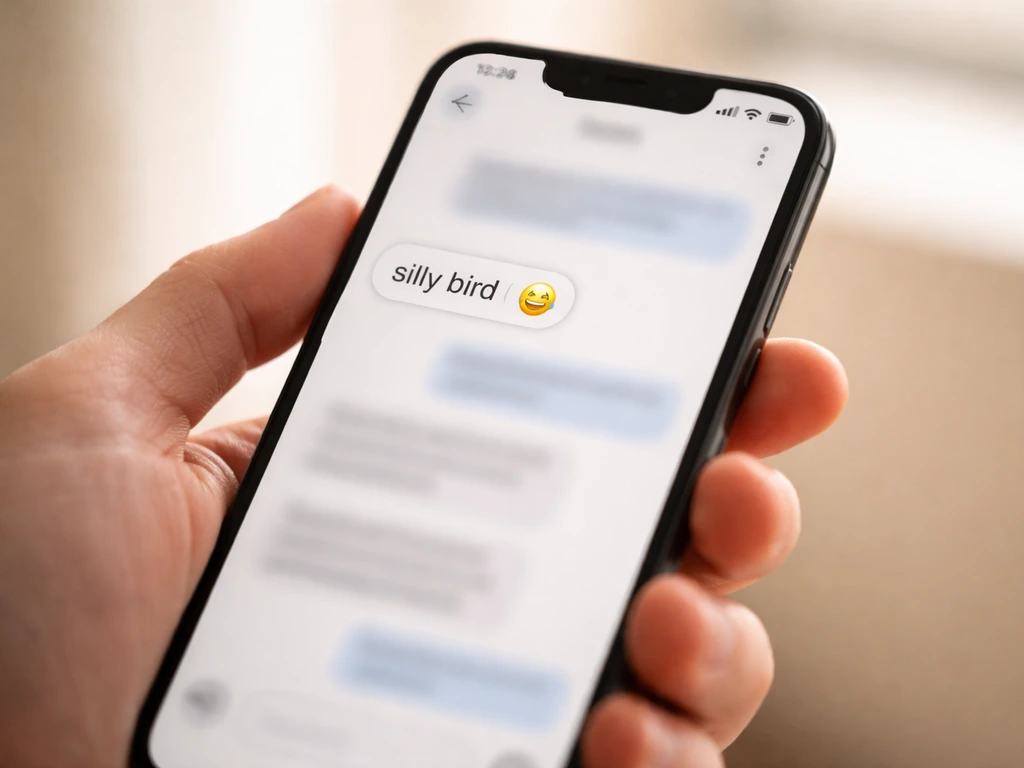
In texts and DMs
When someone texts you "silly bird" or "oh silly bird!" (often with an emoji like 😂 or 🙄), it's almost always a playful jab. They're reacting to something you said or did that came across as goofy, clumsy, or overly dramatic. Pair that with a laughing emoji and it's unambiguously affectionate teasing. If you see a laughing emoji right next to the phrase, it can also shape the laughing bird meaning people infer from the tone. The Imgflip GIF community even uses "Oh silly bird!" as a short interjection label, which confirms that in digital spaces, it functions like a one-liner reaction rather than a considered insult.
In children's books and songs
"Silly bird" is a staple of children's media. A children's song lyric goes: "The goose is such a silly bird" and follows with "you would never be a silly goose such as he", the bird is depicted as comically waddling and hissing, goofy rather than dangerous. Educational reading resource PDFs use the exact phrase "silly bird" to describe a turkey character named Wagun in a teacher's guide, again framing it as a comic, loveable descriptor rather than anything mean. In these contexts, "silly bird" is purely gentle and playful.
As teasing between adults
For adults, the phrase can carry a tiny edge of chiding, like telling someone to stop being dramatic and get on with things. But it's still soft. Think of a partner saying "don't be such a silly bird" when you're catastrophizing something small. It's correction, but it's gentle. The same WordReference thread that calls it affectionate also flags it as something that might appear during a lovers' disagreement, which tells you it's not a phrase that escalates conflict, it diffuses it.
Silly bird, silly goose, and other close cousins
"Silly goose" is the most direct parallel. Etymonline notes that “loon” developed meanings like “crazy; silly and eccentric,” showing how English animal terms can be used in a non-literal way for odd or foolish behavior. Merriam-Webster actually includes the example "don't be such a silly goose" to illustrate a lighthearted reprimand for foolish behavior. UsingEnglish.com describes calling someone a "silly goose" as telling them to stop being nervous or childish and just do the thing, mild chastisement, basically. "Silly bird" functions the same way, just with the more generic "bird" swapped in for "goose."
Crossword puzzle databases actually list the answer to the clue "silly bird" as GOOSE, which is a useful shorthand for understanding the phrase. In everyday English, silly bird = silly goose. They're in the same semantic family. Tenor's GIF platform even tags "Silly Bird" GIFs with #silly-goose, showing that online culture treats them as interchangeable.
Other close relatives in this family of playful bird-based insults include "birdbrain" (slightly more pointed, implying stupidity), "goofbird" (very informal and rare), and non-bird equivalents like "goofball," "knucklehead," or "you goof." If you're interested in how other bird-labeled insults work, the phrase "cheeky bird" covers similar affectionate teasing territory, while expressions like "laughing bird" veer more into describing behavior than calling someone out. If you are curious about what a similar bird phrase might mean, the exact wording matters, so check up on the specific "bloodcheep bird meaning" you are looking at. There's also the concept of a "bird with a silly sounding laugh" as a literal animal reference that sometimes crosses into figurative territory.
How to figure out exactly what someone meant
Because "silly bird" isn't a locked-down dictionary idiom with one fixed meaning, the context around it does a lot of the work. If you're wondering about the cunning bird meaning, it's usually a separate phrase with a very different vibe from this playful insult silly bird. If you’re wondering about the poor bird meaning, it usually points to the same idea: a playful, non-literal jab that depends on tone and context. Here's what to look at when you're trying to pin down what someone meant:
| Context clue | What it suggests |
|---|---|
| Laughing emoji or exclamation mark | Affectionate teasing — they're not upset |
| Said by a parent or partner | Almost certainly warm, not hostile |
| Said to a pet or animal in a post | Purely playful, no insult intended |
| Children's book, song, or classroom setting | Gentle comic descriptor, nothing negative |
| No emoji, flat tone, after a real argument | Could be mildly cutting — lean toward 'stop being foolish' |
| Online reaction GIF context | Casual joke, interchangeable with 'silly goose' |
The WordReference forum thread about this exact phrase includes a commenter asking where the person "saw or heard" it, which is smart advice to internalize: the situation matters more than the words alone. A quick mental check of who said it, what relationship you have, and what happened right before will almost always resolve any ambiguity.
Using it in your own writing, wording, alternatives, and getting the nuance right
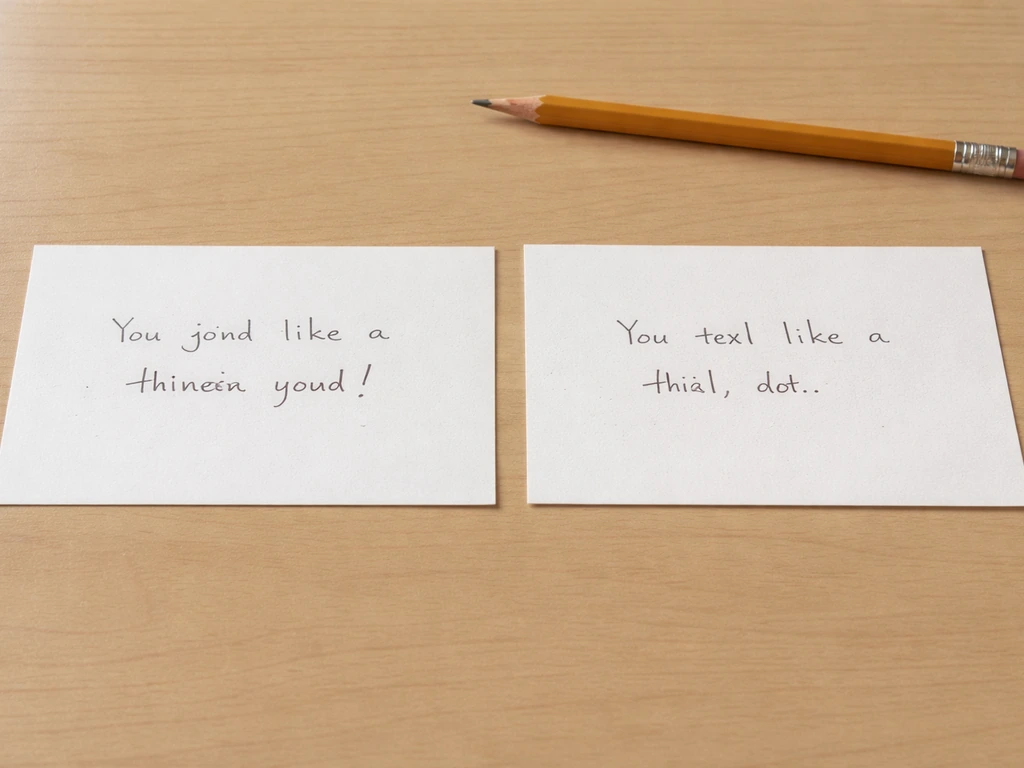
If you want to use "silly bird" in dialogue, narration, or a text, here are a few things worth knowing about how it lands:
- It reads warmest with an exclamation mark or alongside a smile cue: "Oh, you silly bird!" feels affectionate. "You're a silly bird." with a period feels flatter and could come across as slightly dismissive.
- The address form ("Silly bird, you're not a monkey!") — where "silly bird" leads the sentence followed by a comma — is a classic playful correction structure. It's gentle and casual.
- In children's writing, you can use it freely as a character descriptor or a line of dialogue from a parent or teacher figure. It will land as charming, not mean.
- For adult fiction, pair it with body language or tone cues so the reader knows the intent. "She laughed. 'Oh, you silly bird.'" reads very differently from '"Silly bird," he muttered, turning away.'
- If you want something with more punch than "silly bird" but the same playful energy, try: silly goose, goofball, you goof, birdbrain (slightly stronger), or knucklehead.
- Avoid using it sarcastically in writing without a clear signal — on its own, sarcasm doesn't read easily, and the phrase is so traditionally warm that a sarcastic use will confuse readers unless you signal it explicitly.
One last note: because "bird" is a general term, "silly bird" is slightly softer and more ambiguous than "silly goose," which has a more recognized idiom status. If you're writing for an audience that might not know the phrase, "silly goose" will land more reliably as a recognized expression. But if you want something that sounds a little more original or personal, especially in dialogue between close characters, "silly bird" works beautifully and has a long, documented history of doing exactly that job.
FAQ
Is “silly bird” ever meant as a real insult?
It’s very unlikely if it’s spoken or texted to someone you know, but it can turn pointed if there’s no warmth (no smile in voice, no emoji, no prior banter). If the person seems irritated or the topic is serious, treat it as a mild jab rather than affection and consider asking for clarification.
How can I tell whether it’s affectionate teasing or correcting behavior?
Look for a behavior change request right after it, for example “don’t be such a silly bird, just do it” or “stop overthinking, silly bird.” That pattern signals gentle correction, not hostility, especially if the rest of the message is calm.
What does it mean if someone says “silly bird” with an eye-roll emoji (🙄) or only a sentence fragment?
That combination usually means playful impatience, like reacting to something repetitive or overly dramatic. It’s still typically light, but the sarcasm level can be higher than with a laughing emoji, so rely on the person’s usual texting style.
Can “silly bird” be used with strangers or coworkers?
It can work if your relationship already feels friendly, but it’s risky in formal settings. With coworkers, it may read as condescending unless it’s clearly part of established joking, team culture, or a clearly supportive context.
Does “silly bird” have any literal meaning related to animals?
Usually no. The phrase is non-literal, “bird” is just part of the playful insult template. If the conversation is about actual animals, then it could be describing a bird’s behavior in a literal way, but that is uncommon.
What’s the difference between “silly bird” and “birdbrain”?
“Silly bird” is generally softer and more charmingly ridiculous, while “birdbrain” more directly implies a lack of intelligence. If the goal is affectionate teasing, “silly bird” is safer; if you want a sharper criticism, “birdbrain” fits better.
Is “silly bird” the same as “silly goose” in meaning?
In everyday use, yes, they’re functionally interchangeable. “Silly goose” has slightly more idiom familiarity in many regions, so it lands more consistently with audiences who may not recognize “silly bird.”
How should I respond if someone calls me “silly bird” in text?
A good default is a friendly bounce-back that keeps the tone light, like “I know, I’m being dramatic, sorry,” or “Okay, okay, silly bird deserved.” If you feel confused or annoyed, you can ask neutrally, “What did I do?” to reset the context.
Could it be confused with another phrase like “ghetto bird”?
Yes, especially in text where multiple slang phrases circulate. “Ghetto bird” refers to a specific slang usage and is not the same playful chiding. If the message includes other slang terms or lacks any teasing tone, don’t assume it’s “silly bird,” and check the full sentence.
Does “silly bird” show up in kids’ media differently than with adults?
Kids’ media usually frames it as harmless, comedic characterization. With adults, it can remain playful but may carry mild “get a grip” energy when paired with correction, like telling someone to stop catastrophizing or overreacting.
Next Article
Poor Bird Meaning: Literal, Idiomatic, and How to Use It
Understand poor bird meaning: literal distress or idiomatic pity, tone, context, replies, and how it differs from poor t