A 'cunning bird' almost always means a bird (real or metaphorical) associated with cleverness, trickery, or strategic thinking. When someone calls a bird cunning, or uses 'cunning bird' as a metaphor for a person, they're pointing at sly intelligence, not just raw smarts. The word carries a deceptive edge by default, so the phrase lands somewhere between a compliment and a warning depending on who's saying it and why. If you’re also curious about the bloodcheep bird meaning, it follows the same idea of how tone and context change what the phrase signals.
Cunning Bird Meaning: Metaphor, Species, and How to Tell

Marcus Reeves
21 May 2026
What 'cunning' actually means in plain English

Every major dictionary lands in the same place on this one. blank" rel="noopener noreferrer">Merriam-Webster defines cunning as 'characterized by wiliness and trickery.' Cambridge calls it 'skillful in planning and ready to deceive people in order to get what you want.' Oxford ties it to cleverness used for a specific purpose, with a deceptive undertone. Collins is the most blunt, describing it as involving 'deceit, slyness, and trickery' and noting a 'low kind of cunning' as the baseline register. Collins English Dictionary similarly describes blank" rel="noopener noreferrer">cunning as involving deceit, slyness, and trickery, noting it as a “low kind of cunning.”.
The key thing to hold onto: cunning is not the same as being simply smart or wise. Wisdom implies good judgment. Intelligence implies processing power. Cunning implies strategy with a hidden agenda. Someone who is cunning is working an angle, and you might not see it coming. That flavor is baked into the word before it even gets attached to a bird.
Literal meaning vs. what it usually actually means
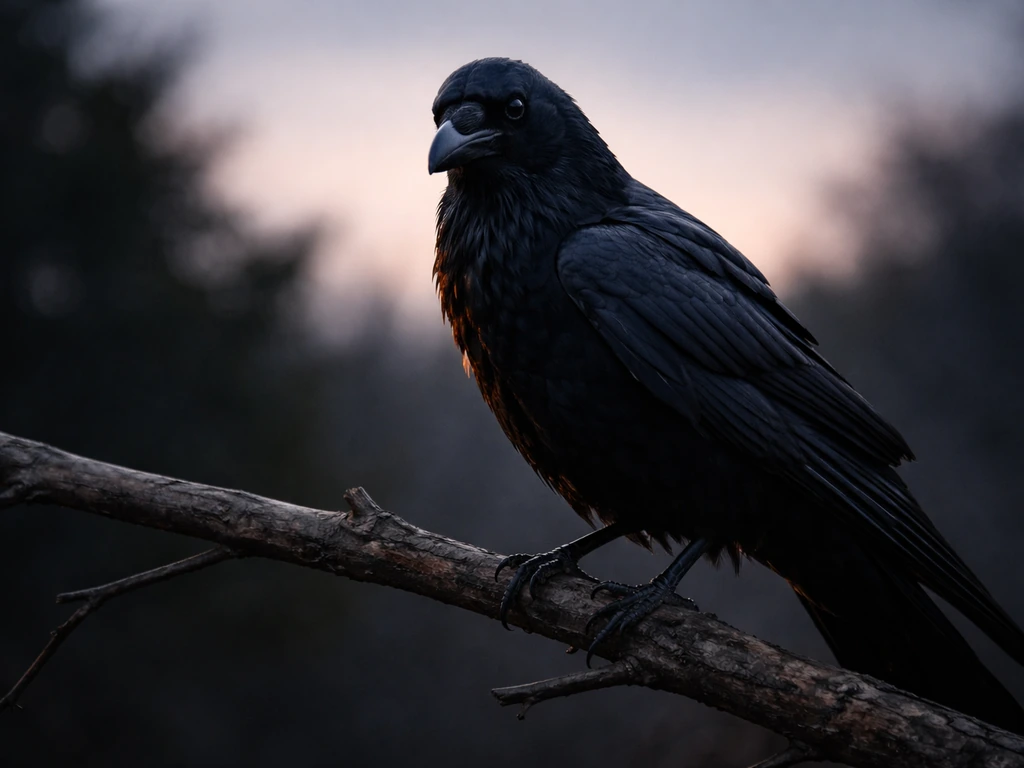
On the literal level, a cunning bird is just a bird that exhibits clever or deceptive behavior in nature. Corvids like crows and ravens are genuinely cunning in the biological sense, using tools, solving puzzles, and caching food in spots they've watched other birds ignore. Mockingbirds mimic other species to confuse predators. Cuckoos trick other birds into raising their chicks. These are real, observable examples of bird cunning.
Metaphorically, though, 'cunning bird' is almost always pointing at a person. If you also came across a laughing bird phrase, the meaning depends on the same wordplay and tone that shape what people think “cunning bird” implies laughing bird meaning. It's a way of calling someone clever in a slightly suspicious way, the way you'd describe a politician who always seems to come out ahead, or a coworker who never quite gets caught when things go sideways. The bird framing softens it slightly (it sounds almost charming), but the implication is still that this person is playing a game most people don't see.
Which birds people actually connect to cunning
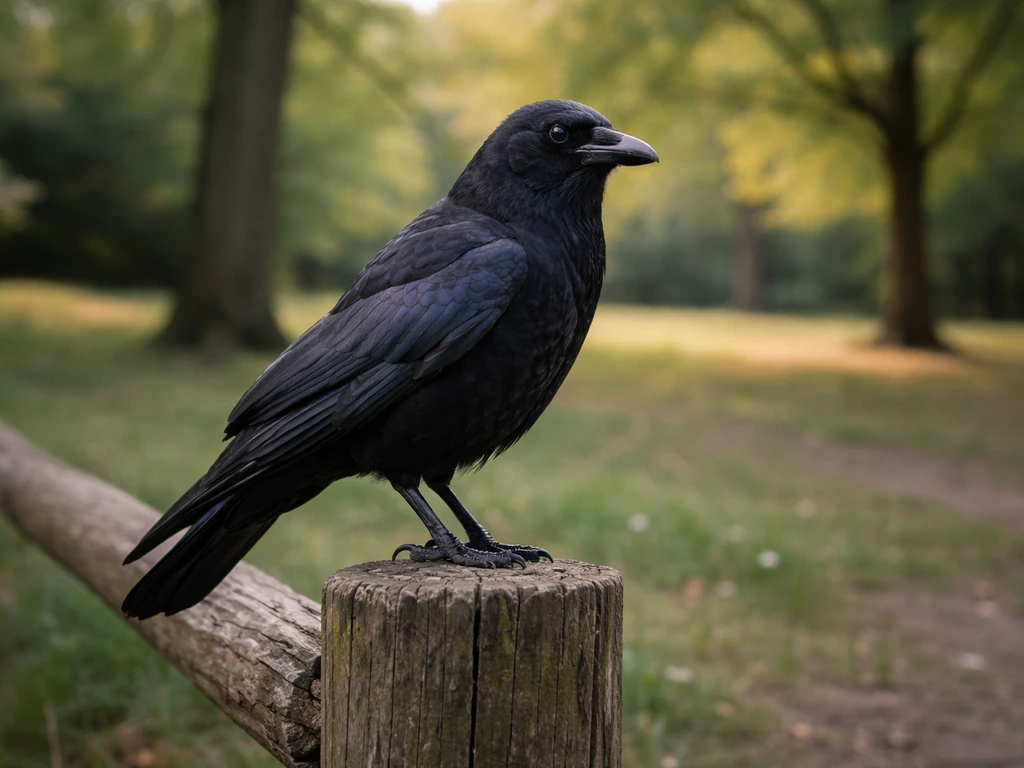
Some birds have carried the 'cunning' label for centuries, and they earned it both from real behavior and from cultural storytelling. Here's a breakdown of the most common ones and what specific traits made them stick.
| Bird | Cunning Trait | Why It Stuck |
|---|---|---|
| Crow / Raven | Problem-solving, tool use, memory for faces | Crows remember and hold grudges against specific humans; ravens steal food using decoy behavior |
| Fox (borrowed comparison) | Stealth, misdirection | Often used alongside 'cunning as a fox' in similar idioms, framing the bird comparison |
| Mockingbird | Vocal mimicry of other species | Mimicking predator calls to clear an area is a form of tactical deception |
| Cuckoo | Brood parasitism (tricking other birds into raising its young) | The ultimate avian con artist — it literally outsources parenting through deception |
| Magpie | Opportunism, cache-raiding, adaptability | Culturally associated with theft and cleverness across European folklore |
| Owl | Stealth hunting, silent flight | Symbolizes strategic patience and a 'sees everything' quality — cunning through observation |
The crow and raven dominate this category in most Western contexts. Studies have shown crows can recognize individual human faces, remember who has wronged them, and even pass that information to other crows. That's not just smart, that's strategically social in a way that maps directly onto what we call cunning in people. If someone calls you a cunning bird and you're a raven fan, you might not mind the comparison at all.
When it's a compliment and when it's an insult
The same two words can land completely differently depending on tone, relationship, and context. 'Cunning bird' said with affection, maybe with a laugh, is usually genuine admiration for someone who outmaneuvered a situation cleverly. It's the same energy as 'you sly devil' or 'I should've seen that coming.' In literary and folklore contexts, cunning characters are often the heroes, think trickster figures, clever foxes, or the youngest sibling who wins by wit rather than strength.
On the other hand, if someone says 'cunning bird' flatly, or in the context of a warning, it shifts to criticism. Silly bird meaning usually comes down to whether the phrase is used playfully or as a mild jab, and that depends heavily on tone. 'Watch out for him, he's a cunning bird' means: don't trust this person, they're working angles you can't see. In professional settings especially, cunning is rarely a neutral descriptor. It implies someone is getting ahead through maneuver rather than merit. The closer the usage gets to 'deceptive,' the more it functions as a quiet insult.
Compare this to a phrase like 'cheeky bird,' which usually reads as playful and affectionate, or 'silly bird,' which is almost always gentle teasing with no real edge. Cheeky bird meaning is usually lighter and more playful, and it tends to suggest mischief rather than deception. Silly bird meaning is similar in tone, but it usually stays in the realm of warm, lighthearted teasing rather than deception. 'Cunning bird' has more weight. It implies awareness of what the person is doing, and a degree of wariness, even when it's said fondly.
How to decode it from the exact context
If you're reading a passage, post, or message and you're not sure whether 'cunning bird' is praise or shade, run through this quick checklist: If you are seeing a similar phrase like “ghetto bird,” the meaning can be different, so it helps to check the exact wording and context ghetto bird meaning.
- Who is saying it and to whom? Close friends or admirers tend toward praise; rivals or critics tend toward warning or insult.
- What's the tone of the surrounding sentence? Words like 'crafty,' 'sly,' or 'scheming' nearby pull it negative. Words like 'clever,' 'resourceful,' or 'impressive' pull it positive.
- Is a specific bird named? If so, look up that bird's symbolic reputation — a cunning crow carries different connotations than a cunning dove.
- Is it in a historical, literary, or folklore context? Trickster-positive traditions (Aesop's fables, Native American folklore, Celtic mythology) often use cunning approvingly.
- Is there a warning attached? 'He's a cunning bird, be careful' is unambiguously cautionary. 'What a cunning bird!' in reaction to a success is usually admiration.
- What's the outcome in the story? If the cunning bird wins and the reader is meant to cheer, it's praise. If the cunning bird causes harm and others suffer, it's a character indictment.
Phrases you can swap in or compare
If you're writing something and want to use 'cunning bird' but want a slightly different shade of meaning, here are the closest alternatives and what each one shifts:
- Sly bird: same deceptive quality, slightly more playful and less threatening
- Crafty bird: emphasizes skill and resourcefulness more than deception, often used positively
- Clever bird: neutral to positive, drops most of the deceptive undertone entirely
- Wily bird: close synonym to cunning, but feels more old-fashioned and literary
- Shrewd bird: focuses on sharp judgment and business-sense rather than trickery
- Cagey bird: implies someone who gives nothing away, cautious rather than actively deceptive
- Slippery bird: emphasizes evasiveness, harder to pin down than to deceive actively
If you want the full negative weight, 'scheming bird' or 'devious bird' will get you there. If you want the charming, almost-affectionate version, 'crafty bird' or 'clever bird' are safer and more universally positive. 'Cunning bird' itself sits right in the middle, which is exactly why the context matters so much.
How to track down the origin if you found it in a quote or text
If you encountered 'cunning bird' in a specific book, song, poem, or social post and you're trying to understand exactly what the author meant, here's a practical way to work it out.
- Copy the exact phrase plus a few surrounding words and search it in quotes on Google. If it's from a published source, someone has likely discussed it.
- Check if a specific bird species is named. Search '[bird name] symbolism cunning' to get cultural and literary context specific to that species.
- If it's from a book or poem, search the title plus 'cunning bird' to find literary analysis or forums discussing that passage.
- If it came from a social media post or casual conversation, look for follow-up context: who liked it, who replied, and whether the person posting seemed to mean it admiringly or critically.
- Check folklore databases or mythology wikis for the bird in question. Sites focused on bird symbolism will tell you whether a specific species is traditionally coded as a trickster, a wise figure, or a negative omen.
- If the source is a song lyric, check a lyric annotation site like Genius for community explanations of the line.
- If you're still stuck, post the full passage in a literature or language forum with context. Specific quotes often have documented interpretations.
Most of the time, the origin will tell you everything. 'Cunning bird' in a 19th-century novel is doing something very different from 'cunning bird' in a 2025 rap lyric or a text message from your grandmother. The phrase is old enough and flexible enough that it shows up across wildly different registers, and tracing it back to its source is almost always the fastest path to a confident interpretation.
Bottom line: if someone calls something or someone a cunning bird, the default read is smart-but-not-entirely-trustworthy. It's closer to a raised eyebrow than a full accusation, and whether it tips into admiration or suspicion depends entirely on who's in the room and what just happened. The phrase “poor bird meaning” can also vary by context, but it is typically used to show sympathy or describe something unfortunate. When in doubt, look at the birds, crows and magpies earned the label honestly.
FAQ
Is “cunning bird” ever meant as a pure compliment, or is it always a warning?
It can be complimentary, but only when the speaker signals warmth (affectionate tone, praise of quick thinking, or celebrating a clever outcome). If the speaker uses it as a caution or describes someone as “getting away with things,” it usually reads as distrust, not admiration.
What’s the difference between “cunning bird” and “clever bird” in everyday language?
“Clever bird” is typically straightforward competence. “Cunning bird” adds a hidden agenda or manipulation angle, even if the manipulation is mild or playful. If the context involves tricking, steering, or “playing the game,” “cunning” fits better.
How can I tell whether the phrase refers to a person or a literal bird?
Literal use usually includes natural behavior details (tool use, mimicry, caching food, nesting tricks). Metaphorical use often points to a character’s behavior in human situations (work politics, negotiations, outmaneuvering others) without describing biology.
Does “cunning bird” have the same meaning in older literature as it does in modern social media?
Not always. Older texts may use it as a general label for trickster-like intelligence, sometimes without modern moral framing. Modern posts often emphasize social strategy and “gotcha” energy, so the same phrase can feel more suspicious today.
If someone says “Watch out, he’s a cunning bird,” what does that imply they want you to do?
It implies risk management. You should treat the person’s claims and plans as unverified, assume there may be leverage or incentives you are not seeing, and avoid giving them extra information or authority without checks.
Can “cunning bird” be used neutrally, like “effective problem-solving”?
Rarely. Even when the intent is neutral, the word “cunning” carries an implication that the effectiveness comes from strategy with an edge. If you want a neutral, businesslike tone, “clever” or “resourceful” usually won’t trigger the same suspicion.
What common mistake do people make when interpreting “cunning bird meaning”?
They treat it as the same as being smart. “Cunning” is about tactics and selective information, not just intelligence or wisdom. If there’s no deception or agenda implied, the phrase is likely being used loosely or ironically.
How does tone change “cunning bird” when texting versus in person?
In person, facial expressions and laughter can soften the insult. In text, you lose that signal, so readers lean more negative unless the message includes supportive cues like “good for you” or clearly celebratory wording.
If I’m writing a character, which related phrases shift the meaning in predictable ways?
“Devious bird” usually signals stronger moral suspicion. “Scheming bird” emphasizes plotting. “Crafty bird” can be charmingly sly. “Clever bird” is closer to admiration without the deceptive edge.
Next Article
Cheeky Bird Meaning: How It’s Used in Real English
Cheeky bird meaning in real English: playful teasing or flirtation, and when it becomes a rude put-down.