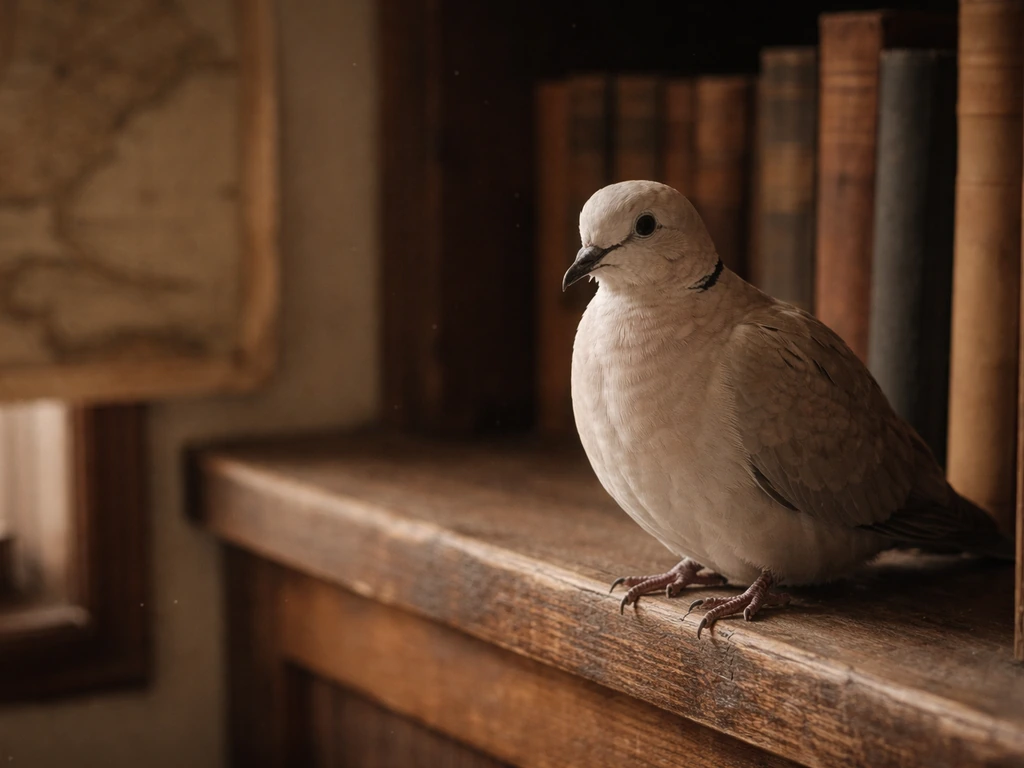
"Stout bird" is not a fixed idiom or widely recognized phrase in English slang, literature, or folklore. When you encounter it, it almost always means one of two things: either someone is literally describing a bird that is thick-bodied and strong, or they are using "stout" figuratively to praise a bird's character, toughness, or bravery. In rarer cases it could be a nickname, a quote from a specific text, or even a mishearing of a different expression entirely. The fastest way to figure out which applies to your situation is to look at the words around it and the source it came from.
Stout Bird Meaning: What It Refers to and How to Tell

Marcus Reeves
28 May 2026

What "stout" actually means (both physically and figuratively)
The word "stout" has two main lanes of meaning, and knowing both is essential for interpreting "stout bird" correctly. The first is physical: blank" rel="noopener noreferrer">strong, thick, and solidly built. You'll hear it applied to tree branches, walking shoes, ropes, or any object that can bear weight and resist strain. Cambridge, Oxford, and Collins all list this as the primary definition. A stout branch doesn't snap easily. A stout wall doesn't crumble.
The second lane is figurative, and this one carries more emotional weight. "Stout" can mean brave, resolute, and unyielding in character. Britannica notes the literary usage directly: "He has a stout heart" is a classic example. This figurative sense is where the real texture is. It's the same quality you see in the compound adjective "stout-hearted," which means firmly courageous and unafraid. In the WordReference (Random House Learner’s Dictionary) entry, “stout-hearted” is defined as “firm and resolute” or “brave; unafraid,” with examples like “stout-hearted warriors.”. Stout-hearted warriors. Stout-hearted adventurers. The word carries admiration, not just description. When "stout" is applied to a person or a creature, it usually means you're calling them tough in the best possible way.
What "bird" means beyond the literal animal
On this site, you'll know that "bird" does a lot of heavy lifting in English beyond naming a feathered creature. In British slang, "bird" refers to a woman, and it's been used that way since at least the mid-20th century. In American slang, calling someone "a bird" can mean they're odd, eccentric, or a little unusual. In older, more literary English, a bird is frequently a symbol of the soul, freedom, or divine message. The raven warns, the dove blesses, the owl knows things. Birds in figurative language almost always carry a character trait along with them.
There's also the tradition of calling experienced or resilient people "birds" in compound phrases. "Tough old bird" describes someone weathered and hard to knock down. "Wise old bird" is about accumulated knowledge and sharp instincts. These phrases use "bird" almost affectionately, as a way of acknowledging someone's durability or cleverness without getting too sentimental about it. "Stout bird" could be working in this same tradition, even if it's not as standardized as those other phrases.
Is "stout bird" a real idiom, a nickname, or something else?
Honestly, "stout bird" is not a fixed idiom that appears in dictionaries or established slang guides. It doesn't have the kind of consistent, recognized meaning that phrases like "tough old bird" or "wise old bird" have built up over generations of use. That doesn't mean it's meaningless, but it does mean you need context to interpret it correctly.
In practice, "stout bird" tends to appear in a few specific scenarios. In nature writing and birdwatching contexts, it's a straightforward physical description: a stocky, thick-set species like a robin, a puffin, or a wren might be called a stout bird because of its compact body shape. In literary or poetic writing, it can be a character compliment applied to a bird (or a person compared to one), meaning they're brave and solid. It also shows up as a nickname or a title in local folklore, tavern names, brand names, and small publication titles, so you might bump into "The Stout Bird" as a proper noun rather than a phrase with symbolic meaning.
How to figure out what it means from the sentence around it

Context clues will tell you almost everything you need to know. Here are the most useful things to check when you see "stout bird" in a specific passage or conversation.
- Is it describing a real, named species? If the sentence mentions a robin, a thrush, a puffin, or another identifiable bird right before or after, "stout" is almost certainly a physical description of the bird's body type, not a figurative compliment.
- Is a person being compared to a bird? If the sentence uses "stout bird" as a metaphor for a human character (e.g., "old so-and-so was a stout bird, never backed down from a fight"), it's working in the tradition of tough-bird compliments, calling someone resilient and brave.
- Is it capitalized? "The Stout Bird" with capital letters is almost certainly a proper noun, like a pub name, a boat name, a book title, or a nickname for a specific person or team.
- What era is the writing from? Older texts (pre-20th century especially) lean heavily on the figurative "brave and resolute" meaning of stout. Modern informal writing is more likely using it literally or as a casual physical description.
- Is there an emotional tone? If the surrounding sentences feel admiring or celebratory, the figurative sense is probably in play. If the tone is neutral or observational, it's likely a physical descriptor.
Common confusions and lookalike phrases worth checking
Because "stout bird" isn't a standard phrase, it's worth considering whether you might have misheard, misread, or slightly misremembered something else. A few candidates come up often.
| Phrase you might be thinking of | What it actually means | Why the confusion happens |
|---|---|---|
| Tough old bird | A resilient, hard-to-faze person, usually older | "Tough" and "stout" are near-synonyms in the brave/resilient sense |
| Tough bird | A person or creature that is difficult to deal with or hard to defeat | Same root idea as stout bird, more common phrasing |
| Stout-hearted (bird/person) | Brave and unyielding in character | "Stout" in "stout bird" often implies this meaning, especially in older texts |
| Wise old bird | Someone with sharp instincts and deep experience | Another "[adjective] + old + bird" construction that follows the same pattern |
| Old bird | A familiar or slightly eccentric older person | One step shorter than "stout bird," same general family of expressions |
| Strut bird | A bird (or person) that walks with exaggerated confidence | Physical bearing description, similar framing to stout bird |
| Geezer bird | British slang for a woman with notably masculine traits or attitude | Also a compound bird phrase used as a character label |
If any of those look closer to what you actually saw or heard, it's worth pulling up those phrases specifically. The "tough old bird" and "tough bird" expressions in particular are well-established and may be what someone was reaching for when they wrote or said "stout bird. If your phrase was actually meant as a similar slang-style comparison, you may also want to check strut bird meaning to see how adjacent terms can shift in tone and intent.
If you meant the phrase in the older slang sense, it may also help to compare with old bird meaning. If you meant the related phrase “tough bird,” that usually points to the same idea of a resilient, tough person or creature. "
How to track down where the phrase came from
If you saw "stout bird" in a specific book, article, poem, or online post and you want to know exactly what the author meant, here's a practical approach to verifying the source and meaning.
- Find the exact sentence and the two or three sentences around it. Context is almost always enough to resolve the ambiguity between the physical and figurative meanings.
- Check the author and the publication date. If it's pre-1900 writing, the figurative "brave/resolute" meaning of stout is much more likely. If it's modern nature writing or journalism, physical description is the safer assumption.
- Search the exact phrase in quotes ("stout bird") on Google Books and Google Scholar. If it's a quote from a known text, these searches will usually surface the original passage and show you how the author used it.
- Check whether the phrase appears as a proper noun. Search "The Stout Bird" to see if you're actually dealing with a named place, product, team, or character rather than a descriptive expression.
- If you heard it in conversation, consider the speaker's background and region. British English speakers are more likely to use "bird" as a character label for a person. American English speakers more often use it literally or in set phrases like "early bird" or "rare bird."
What to take away and what to do next
"Stout bird" is a descriptive phrase, not a fixed idiom. If you’re asking for the geezer bird meaning, start by checking whether “stout” and “bird” are being used literally or as a metaphor in the surrounding text. Its meaning depends entirely on context. If it's applied to an actual bird species, it almost certainly means thick-bodied and solidly built. If it's used as a metaphor for a person or a character, it draws on the long English tradition of calling resilient, brave people "birds," and "stout" adds the layer of toughness and resolve that stout-hearted implies. If it's capitalized, you're probably looking at a proper noun with no symbolic meaning at all.
If you're still not sure, the fastest practical next steps are: pull the surrounding sentences, note the source and era, run a quoted search on Google Books, and compare what you found against the established phrases in the same family, particularly "tough old bird," "wise old bird," and "tough bird." One of those will usually turn out to be the actual phrase you were looking for. And if "stout bird" really is what was written, the physical-versus-figurative question will almost always be answered by the tone of the passage itself.
FAQ
How can I tell if “stout bird” is about a real bird species versus a compliment?
Check whether the sentence treats the subject like an animal you can observe (size, body shape, species, habitat). If it talks about character traits (bravery, resilience, moral quality, temperament) or uses it as a descriptor for a person, it is almost certainly figurative.
Does capitalization change the meaning of “stout bird”?
Yes. If it appears as “The Stout Bird,” “Stout Bird,” or otherwise capitalized like a title, it is likely a proper noun (name of a place, publication, brand, or character). If it is lowercase in a sentence, it reads like a descriptive phrase.
What if “stout bird” appears in older or dialect writing, should I assume it is slang?
Not automatically. Older writing often uses straightforward descriptive language, even when it feels unusual today. If the surrounding text describes physical traits or natural behavior, treat it as literal first, then consider figurative meaning only if the passage shifts to personality or moral qualities.
Could “stout bird” be a misheard or misread phrase?
Very possible. Look for nearby words that could indicate a common alternative like “tough old bird” or “tough bird.” If you saw it in audio, try searching with multiple word orders (for example, “tough bird” or “stout-hearted bird”) and compare which version matches the tone.
Is “stout” always positive in this phrase?
Usually, yes, when it is figurative. “Stout” in character terms typically signals admiration (courage, steadiness). If the passage is critical or mocking, the phrase may be sarcastic or describing someone as stubborn rather than brave.
In nature writing, what kind of bird descriptions would fit “stout bird”?
It usually points to a stocky, compact, thick-bodied bird. Context cues include references to a short posture, dense plumage, strong build, or a bird that looks “built for” resisting cold or rough conditions.
How do I interpret “stout bird” in poetry or dialogue where meaning is intentionally layered?
In poetry, treat it as a blend of the two lanes: “stout” can supply toughness, and “bird” can supply the symbolic role (soul, freedom, messenger, insight). If the poem also uses bird imagery for emotion or fate, expect figurative weight beyond physical description.
What are the fastest checks I can do before I search online?
Write down the full sentence, the paragraph, and where it came from (book, blog, region, approximate year). Note whether “bird” is used to refer to a person in that work’s setting, since slang meanings can vary by country and era.
If I find “stout bird” in a specific text, what should I search for to confirm the exact meaning?
Use a quoted search for the exact phrase, then read at least one paragraph before and after the match. Compare the tone and whether the subject is described physically (literal) or praised for resolve (figurative).
Could “stout bird” relate to “tough old bird” or “wise old bird” usage?
Yes. Those companion phrases are established comparisons for durable, experienced people, often with a friendly or affectionate tone. If the passage sounds conversational and about someone’s toughness or wisdom, “stout bird” may be an unstandard variant drawing on the same tradition.
Next Article
Wise Old Bird Meaning: Literal and Idiomatic Uses
Explains wise old bird meaning, literal and idiomatic uses, tone cues, examples, and how it differs from wise old owl