When someone calls a person a "tough bird," they almost always mean that person is resilient, hard to intimidate, and not easily knocked down by life. If you're wondering about tough old bird meaning, this same “tough and resilient person” interpretation is usually what readers are reaching for. It's a compliment more often than not, though context can shift it toward grudging respect, neutral description, or even mild intimidation depending on tone. The phrase follows a simple pattern: "bird" stands in as a casual word for "person" (especially common in British English but understood everywhere), and "tough" does exactly what it always does, describing someone with grit, durability, and a refusal to be pushed around easily.
Tough Bird Meaning: Slang, Symbolism, and Context Clues

Marcus Reeves
29 Apr 2026
The most common meaning: a tough bird is a resilient person

The clearest, most widely used meaning of "tough bird" is a figurative label for a person who is difficult to break, beat, or influence. A WordReference forum example from 2009 puts it well: "She was one tough bird, no matter how wounded by life she was." That sentence captures the core idea perfectly. The toughness isn't about physical size or aggression. It's about emotional and psychological endurance, the kind of person who keeps going after setbacks that would stop others cold.
A 1983 Sports Illustrated headline called someone "a tough bird" in a sports context, meaning "hard to beat." A New York Jets media piece used "One tough bird to cage" as outright praise for a player's elusiveness. A newspaper editorial ran the headline "A tough bird commands respect," explicitly framing the phrase in terms of admiration. All of these point in the same direction: in everyday writing and conversation, "tough bird" is usually positive or at minimum respectful.
It's worth knowing the phrase can also appear completely literally. Cooking articles discuss "tough birds" when talking about older chickens or game birds whose meat is chewy. Hunting forums use it to describe particularly elusive animals. A wildlife article once used "One tough bird" to describe a vulture's survival abilities. So if you're reading something in a food, hunting, or wildlife context, the phrase may not be about a person at all. Context is everything here.
How "tough" + "bird" actually works as an idiom
The phrase works because "bird" has a long history as a casual stand-in for "person" in idiomatic English. British English especially has used it this way for a long time, and related idioms like "old bird" (a reference to an older person, often a woman) show the same structure at work. You're essentially saying "tough person," but the word "bird" softens or colors it with a slightly folksy, informal feel. It can also carry a hint of affection, the way you might say someone is "a tough old thing" without meaning any harm.
The adjective-plus-"bird" construction appears across several similar expressions. Phrases like "wise old bird" or "tough old bird" (a close cousin of this one) follow the same grammar and the same logic. In each case, "bird" is doing the work of personifying someone informally, while the adjective does the real descriptive heavy lifting. "Tough" here lines up closely with phrases like "tough nut to crack" or "blank" rel="noopener noreferrer">tough customer," both of which Merriam-Webster and Cambridge define as someone difficult to deal with, influence, or overcome.
Why birds get coded as tough in the first place
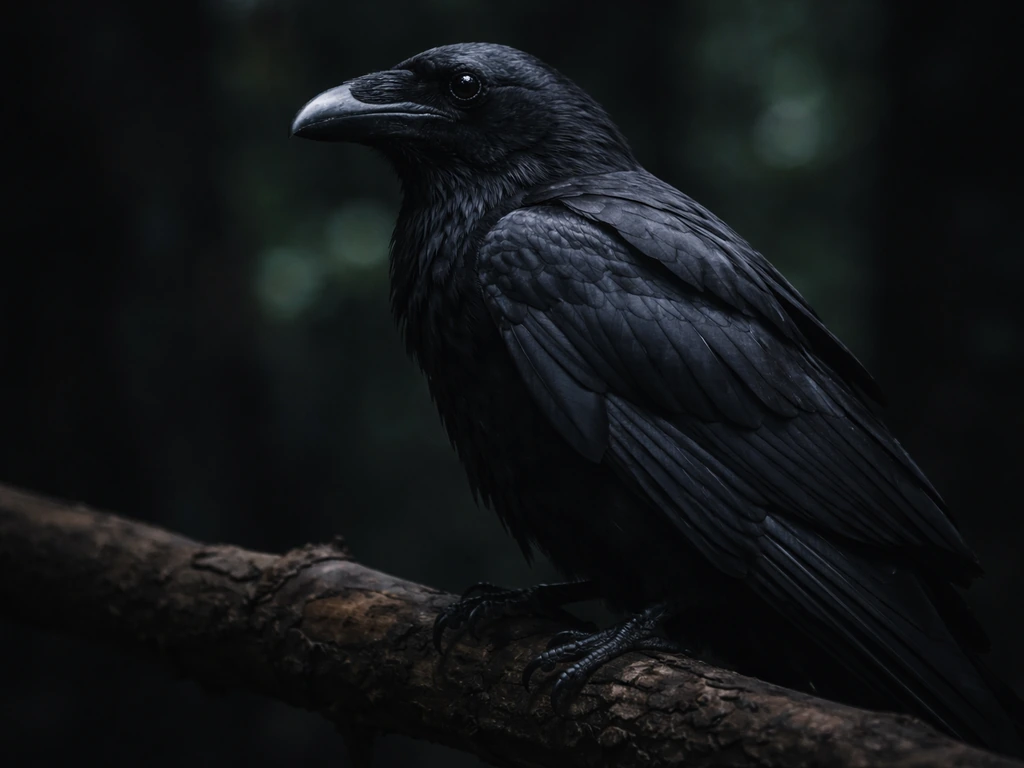
Birds carry a wide range of symbolic weight in culture and literature, and some of that weight is distinctly tough or ominous. Ravens and crows are probably the strongest example. Edgar Allan Poe chose a raven in his famous poem specifically because it was a creature that felt relentless, capable of something beyond ordinary animal behavior. LitCharts' analysis of the poem notes the raven shifts from being a possible supernatural messenger to an embodiment of unstoppable grief and doubt. That's a very specific kind of toughness: immovable, psychologically grinding, impossible to shake off. When someone calls a person a tough bird and they want to hint at something ominous or unyielding, raven imagery is often sitting in the background.
Owls carry a different flavor of toughness. In Greek culture they're linked to Athena and wisdom, but in medieval Europe they were tied to darkness and mourning. Ohio wildlife resources note that owls have been read as omens of both good luck and impending doom across different traditions. That dual nature makes them feel hardened and knowing, like someone who has seen things and isn't rattled by much. Eagles and hawks lean toward relentless, predatory toughness, the kind that signals drive and dominance. None of these archetypes are always in play when someone says "tough bird," but they're why the phrase lands with weight rather than feeling random.
What it sounds like in a sentence: admiration, insult, or intimidation
The same two words can do very different emotional work depending on who's speaking and why. Here are the three main tones you'll encounter:
| Tone | Example sentence | What it signals |
|---|---|---|
| Admiration | "She survived three surgeries and never complained. One tough bird." | Genuine respect for resilience and endurance |
| Neutral/grudging respect | "He's a tough bird to get a straight answer out of." | Acknowledgment without warmth, close to 'tough nut to crack' |
| Intimidation or warning | "I wouldn't mess with her. She's a tough bird and she holds grudges." | A heads-up that this person is formidable and possibly dangerous to cross |
In admiration contexts, the phrase functions almost like a small tribute. It's the kind of thing said at a retirement party or in an obituary. In neutral or grudging contexts, it's more transactional, acknowledging that someone is difficult without necessarily celebrating them. In intimidation contexts, the toughness becomes a warning. The bird framing actually helps here because it keeps the statement from sounding overly aggressive while still conveying that this person is not someone to underestimate.
Decoding it in lyrics, literature, and quotes
If you've hit the phrase in a song, a story, or a quote and you're not sure what the writer meant, there are a few things to look for. First, ask whether "bird" is being used for a person or an actual animal. A wildlife documentary, a cooking context, or a hunting story might use it literally. If the surrounding text is about a person's character, behavior, or reputation, you're in figurative territory.
Second, look at the emotional register around the phrase. Is there warmth, frustration, or warning in the tone? Words like "commands respect," "survived," or "never gave up" nearby point toward admiration. Words like "difficult," "stubborn," or "won't budge" point toward neutral-to-grudging. Phrases like "watch out" or "don't cross" push it into intimidation territory.
In literary or lyrical contexts, the bird imagery itself might be doing extra work. If a writer describes someone as a tough bird and the surrounding imagery is dark, wintry, or ominous, they may be deliberately evoking raven or crow symbolism to make the toughness feel relentless or even threatening. If the imagery is sharp, clean, and high-flying, think hawk or eagle energy: driven, competitive, dominant. An MFA student project in 2025 even used "Tough Bird" as an attitude or persona concept, treating it as a whole identity type rather than just a description. That tells you the phrase has enough cultural currency to function as a brand or archetype on its own.
Quick equivalents and how to rewrite or respond to the phrase
If you need to replace "tough bird" with something clearer or more standard, these are your closest options depending on the meaning:
- Tough nut to crack (Cambridge and Merriam-Webster both list this as the closest formal equivalent when the meaning is 'difficult to influence or deal with')
- Tough customer (Collins and Cambridge both define this as a difficult or formidable person, neutral to slightly wary in tone)
- Tough guy or tough cookie (more casual, slightly more American in flavor, usually admiring)
- Resilient, unbreakable, or hard to beat (straightforward rewrites when you just need clarity)
- One tough old bird (a more specific variant that leans into age and experience as the source of toughness, closely related to the 'tough old bird' idiom)
If someone calls you a tough bird and you're not sure how to take it, the safest read is that it's meant respectfully. If you came here wondering about the geezer bird meaning, this is the figurative sense of the phrase: a resilient, hard-to-break person tough bird. If you've also seen the similar phrasing "stout bird," it can carry a related idea about resilience, so looking up the stout bird meaning can help clarify what the speaker intends.
Most real-world uses of the phrase carry a note of admiration, even when they're also acknowledging that you're difficult to handle. You can accept it the way you'd accept being called resilient or formidable. If the context felt more like a warning than a compliment, responding with a simple acknowledgment works fine. The phrase is informal enough that you don't need to over-analyze it, but understanding where it comes from helps you land on the right interpretation the first time.
FAQ
Is “tough bird” always a compliment, or can it be an insult?
Usually it means emotional resilience (hard to rattle, slow to break), but in conflict talk it can also mean refusal to be controlled. If the speaker also mentions leverage, rules, or “not going to let you” do something, interpret it as stubborn toughness rather than purely admirable grit.
What tone should I listen for to tell “tough bird” apart from shade?
Yes, especially when “bird” is paired with age or status words like “old” or used in a scoffing tone. If you hear it as dismissive, it may be aimed at someone being difficult to deal with, not necessarily admirable. Checking whether the surrounding words suggest respect (“commands respect,” “never gave up”) versus annoyance (“too stubborn,” “won’t budge”) is the deciding clue.
How can I tell if “tough bird” is about a person or an actual bird?
In writing, the quickest test is to see whether the subject has human traits, like character, reputation, or decision-making (“she survived,” “he earned respect”). If the sentence focuses on meat, animals, or survival of a species, it is likely literal, referring to an older chicken or game bird.
Does “tough bird” mean the same thing in sports, work, and arguments?
It can be, but context matters. If someone says “tough bird” about a player’s performance, it points to being hard to beat. If they say it about leadership, it points to persistence under pressure. If they say it about a conflict participant, it can imply intimidation or noncompliance, even when no threat words appear.
What are good alternatives to say “tough bird” more clearly?
If you need a replacement, “tough cookie” or “hard nut to crack” fit the figurative meaning (hard to break or influence). For neutral, workplace-safe phrasing, “resilient” or “formidable” keep the respect without the slang “bird.” If the vibe felt like a warning, “hard to control” or “not someone to underestimate” is closer to the intimidation sense.
If someone calls me a “tough bird,” what’s a good way to reply?
A smart way to respond is to match the tone back. If it sounded like admiration, a light reply like “Thanks, I appreciate that” works. If it sounded like a warning, try “Fair enough, I’ll take that seriously” rather than arguing, because the phrase is meant to set expectations about difficulty.
How is “tough bird” different from “tough nut to crack”?
People sometimes confuse it with “tough nut to crack” in meaning and emotional weight. The difference is that “tough bird” often feels more informal or folksy, and it can carry a slightly playful or affectionate edge in some dialects. “Tough nut to crack” tends to feel more bluntly challenging, less character-warm.
In poems or stories, does bird symbolism change what “tough bird” suggests?
Yes. In literature, bird choice can color the toughness, even if the phrase itself is generic. If the scene is dark, wintry, or full of relentless grief cues, crow or raven symbolism may be implied. If the scene emphasizes speed, dominance, or competitive drive, eagle or hawk energy is more likely.
What if I see “Tough Bird” capitalized like a title?
Watch for inconsistent punctuation and capitalization. If it appears as a title, persona, or named attitude (“Tough Bird” as a concept), it may be identity-based rather than a one-time description. In that case, treat it like branding or a character label, not just slang for resilience.
Next Article
Tough Old Bird Meaning: Slang and Context Explained
Meaning of tough old bird slang: a resilient, grizzled person, with tone that can be respect, teasing, or skepticism.