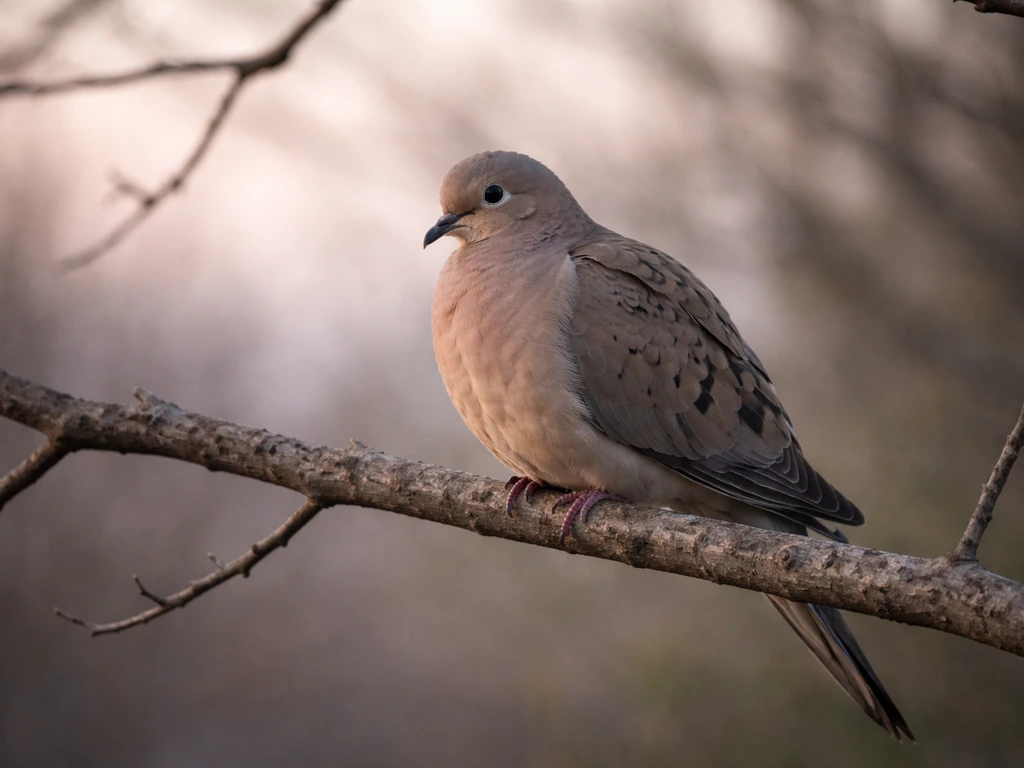
Most of the time, 'killing a bird' or 'kill the bird' means exactly what it sounds like: causing the death of a bird, literally. It is not a fixed idiom the way 'kill two birds with one stone' is. So if you saw the phrase in a sentence and wondered whether it was slang or a hidden metaphor, the safe default is to read it as straightforward, direct language unless the surrounding context tells you otherwise.
Killing a Bird Meaning: Literal vs Idiomatic Use

Marcus Reeves
2 May 2026
What 'killing a bird' actually means in plain language
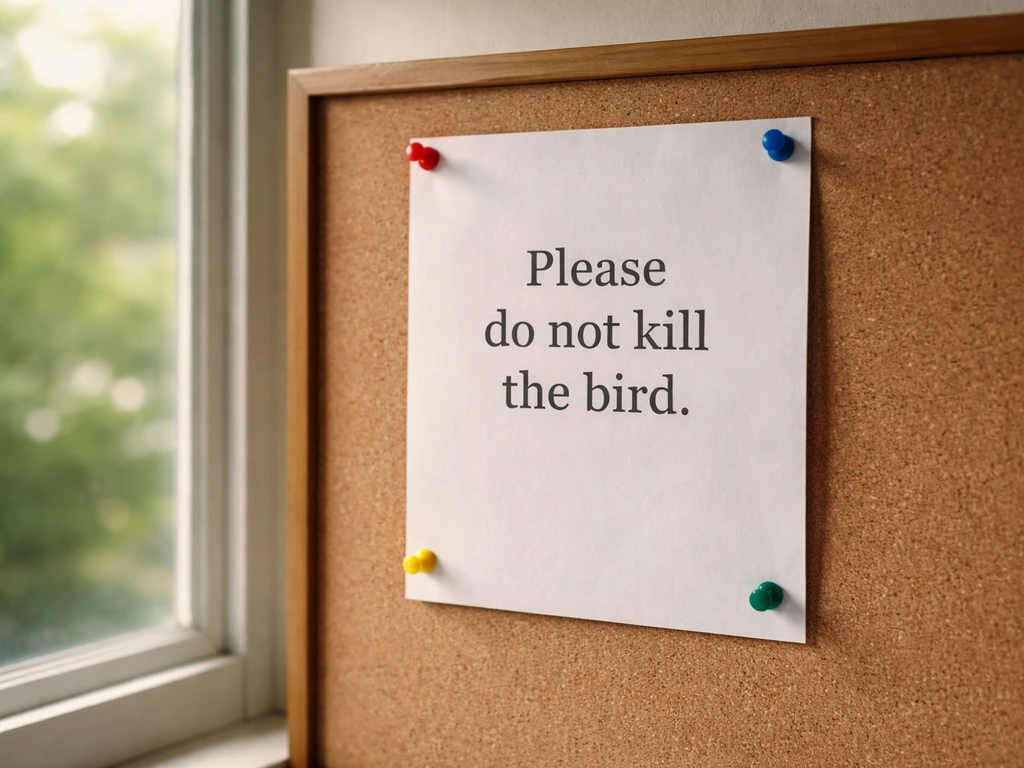
The phrase 'kill the bird' or 'killing a bird' is used in everyday English as a literal verb phrase. It describes the act of ending a bird's life, whether that is in a wildlife management context ('in order to kill the birds for the study'), a practical situation ('You want us to kill the bird?'), or a straightforward command ('Don't kill the bird.'). Dictionaries treat 'kill the bird' as a compositional phrase, meaning each word holds its plain dictionary meaning rather than combining into something figurative.
That said, 'kill' itself can be used figuratively in English. You can 'kill' a program, an idea, a conversation, or a mood. So in some sentences, 'kill the bird' could in theory carry a metaphorical sense, such as 'eliminate the project,' if the word 'bird' is itself being used as a metaphor for something else. The trick is always to look at what 'the bird' refers to in that specific sentence before assuming any figurative meaning.
When it's literal vs. when it might be figurative
In the vast majority of cases you will encounter, 'killing a bird' is literal. Grammar textbooks use 'Please do not kill the bird.' as a model imperative sentence, treating it as a plain verb phrase with no hidden meaning. Scientific and government records use 'kill the birds' in wildlife study contexts. Technical writing uses it in food safety language ('kill the bird flu that may be present in raw fowl'). None of these are metaphors.
Figurative use is possible but it depends on both words pulling metaphorical weight at the same time. If someone says 'we need to kill the bird before it spreads,' and the 'bird' is code for a rumor, a plan, or a project, then you are in figurative territory. But that reading only works when 'bird' has already been established as a stand-in for something else earlier in the conversation. Without that setup, stick with the literal interpretation.
How to figure out which meaning applies: context clues

The fastest way to decode 'killing a bird' is to ask four quick questions about where you found it.
- Who is saying it? A nature documentary narrator, a veterinarian, or a wildlife officer is almost certainly being literal. A poet, a novelist, or a social media user using heavy metaphor might not be.
- What setting is the sentence in? Biology reports, grammar exercises, and news articles about animal control all use the phrase literally. Song lyrics, slang conversations, and fiction often bend language.
- What does 'the bird' refer to? If the bird was mentioned earlier as an actual animal, the phrase is literal. If 'bird' is being used as slang for a person, an idea, or an object, the phrase is figurative.
- What is the tone? Casual, everyday prose almost always means literal. Dense literary or poetic writing might layer in symbolism, but the author usually signals that with other figurative language nearby.
Bird phrases you might be mixing this up with
A big reason people search for 'killing a bird meaning' is that they are half-remembering another, more famous phrase and wondering if this is a variation of it. If you came across the phrase in a riddle or puzzle, you may also be looking for a broader “knife blood bird bird up mountain” meaning beyond the literal “kill the bird” sense killing a bird meaning. Here are the main ones worth untangling.
Kill two birds with one stone

This is the idiom you are probably thinking of, and it is a completely separate expression. 'Kill two birds with one stone' means to accomplish two tasks with a single action, and both Merriam-Webster and Cambridge Dictionary list it as a fixed idiom. The key detail is that the full phrase must be present for the idiom to work. If someone says only 'kill the bird,' they are not using a shortened version of this idiom. The two phrases are not interchangeable.
Shoot the bird
'Shoot the bird' is a separate expression entirely. Depending on context, it can mean literally shooting a bird with a weapon (hunting), or it can refer to making a rude gesture with a finger. It is worth knowing both meanings exist because the phrase shares the same 'verb + the bird' structure as 'kill the bird,' which can cause confusion. Shoot the bird meaning is often confused with kill the bird because they share a similar verb + the bird pattern. The site covers shoot the bird meaning in more depth separately.
Kill the bird, hide the bow

If you encountered 'kill the bird' in translation, especially from Chinese literature, it may be a fragment of the proverb 'kill the bird, hide the bow.' That expression describes discarding something useful once its purpose is served, like getting rid of an ally after they have helped you win. It is a completely different meaning from either literal bird-killing or the 'two birds' idiom, and it typically only appears in translated texts or literary discussions referencing Chinese historical writing.
To Kill a Mockingbird
Harper Lee's novel title is probably the most culturally loaded version of 'kill + bird' in English. In the novel, the mockingbird is a symbol of innocence, and 'killing a mockingbird' means destroying something pure and harmless. If you see 'kill the mockingbird' or 'kill a bird' in a literary or moral discussion, there is a decent chance the writer is invoking this symbolism, even without naming the book directly. Modern writing sometimes plays on the title deliberately, like 'Please kill the mockingbird,' as a way to reference that moral weight.
Symbolism and cultural angles worth knowing
Birds carry enormous symbolic weight across cultures, so 'killing a bird' in a poem, a story, or a song lyric often means more than it looks. If you are curious about how birds relate to grief and symbolism, see also mourning bird meaning. In literature, birds frequently represent freedom, the soul, innocence, or an omen, so killing one can signal the loss of those qualities within a narrative. The mockingbird example above is the most famous in English literature, but it is not the only one. Killing a dove, for instance, typically reads as destroying peace. Killing a raven might be interpreted very differently depending on whether the work treats ravens as dark omens or as wise messengers.
In a more general cultural sense, birds have long been associated with transitions, death, and the spirit world in folklore across many traditions. In general, when people ask what bird means death, they are usually picking up on symbolism rather than a literal meaning. If you want a deeper dive into which specific birds carry death symbolism, that is a separate topic, but it is worth knowing the association exists so that when 'killing a bird' appears in a poem or myth, you read it as potentially thematic rather than purely narrative.
There is also a slang and music angle worth mentioning. Some modern song lyrics play with collective nouns for birds, like 'a murder of birds,' blending the violence of the word 'murder' with the imagery of a flock. That said, a “murder bird” can also come up in questions about bird-related slang and meaning murder of birds. This kind of wordplay can make 'bird + death' language feel more figurative and poetic than it actually is, and it sometimes confuses readers into thinking 'kill the bird' carries similar weight. Usually it does not, unless the writer is clearly working in that same lyrical style.
How to use the phrase correctly, with examples
If you are writing or speaking and want to use this phrase without sounding off, the rules are pretty simple. Use 'killing a bird' or 'kill the bird' when you mean it literally, and make sure the context makes that clear. If you want to express the idiom about efficiency, use the full phrase 'kill two birds with one stone. Reddit users also commonly interpret the idiom figuratively as doing two things at the same time with one action blank" rel="noopener noreferrer">kill two birds with one stone , but i can do it two ways if adding extra meaning to "To"). Cambridge Dictionary defines “blank" rel="noopener noreferrer">kill two birds with one stone” as doing two things with one action, achieving two things at once. ' Those two things are not the same, and swapping one for the other will confuse your reader.
| Phrase | Meaning | Example sentence |
|---|---|---|
| Kill the bird | Literal: cause a bird's death | 'Don't kill the bird — it's a protected species.' |
| Kill two birds with one stone | Idiom: accomplish two things at once | 'Stopping at the post office on the way to work kills two birds with one stone.' |
| Kill the bird, hide the bow | Proverb: discard something after using it | 'Once the deal closed, he cut ties with his lawyer — kill the bird, hide the bow.' |
| Kill a mockingbird (literary) | Symbol: destroy innocence or something harmless | 'The scene where the dog is shot reads as killing a mockingbird — pointless moral destruction.' |
If you found 'killing a bird' in a text you are reading and you are trying to respond to it or paraphrase it, here is a practical approach: read the full sentence it appears in, identify what 'the bird' refers to, and then ask whether the writer signals any figurative intent through tone or surrounding language. If none of those signals are present, treat it as literal. That covers the majority of real-world cases you will encounter.
For writers using the phrase in their own work: if you want the literal meaning, use it plainly and make sure your context is clear. If you want the symbolic or literary weight, give your reader enough cues (the bird's significance, the moral stakes) to understand that you are doing something more than describing a physical action. And if what you actually mean is 'getting two things done at once,' write out 'kill two birds with one stone' in full rather than shortening it, because the short version loses the meaning entirely.
FAQ
If I see “kill the bird” by itself, is it ever a shorthand for “kill two birds with one stone” ?
No. “Kill two birds with one stone” needs the full “two birds” setup. “Kill the bird” by itself reads as a literal command or a context-specific reference to one specific “bird.”
How can I tell whether “the bird” is literal or code when the sentence is vague?
Look for an explicit referent. If the surrounding text never defines what “the bird” stands for (rumor, project, idea), the safest reading is literal. Figurative readings typically rely on prior setup or an obvious thematic label in the same paragraph.
Does “killing a bird” have the same meaning in formal writing as in casual conversation?
In general, yes. In scientific, wildlife, or food-safety contexts it is treated as a literal verb phrase. Formality does not turn it idiomatic, context does, so you should check whether the document is describing actions rather than metaphors.
Can “kill” always be taken literally in this phrase?
Not necessarily. Even if “the bird” is literal, “kill” can be figurative in other “kill X” patterns (for example, kill a program or kill a project). But for “kill the bird” to be figurative, the text usually makes “bird” metaphorical too, not only “kill.”
What does “kill the bird, hide the bow” mean, and will it be mistaken for “kill two birds with one stone”?
It means discarding something after it has served its purpose, commonly in translations of a Chinese proverb. It is often confused with efficiency idioms, but its logic is different, it is about getting rid of the tool or ally afterward rather than doing two tasks at once.
In a novel title context, does “kill the mockingbird” automatically imply moral symbolism?
Yes, it is heavily associated with the mockingbird’s symbolic role, innocence and harmlessness. If you encounter “kill a mockingbird” or a similar line in moral or literary discussion, readers will usually treat it as an allusion, not a literal hunting reference.
If a poem says “killing a dove,” is that always about peace?
Often, but not guaranteed. Doves commonly symbolize peace or love, so “killing a dove” typically signals the loss of peace. However, the poem’s broader themes (war, sacrifice, justice) can shift the implication, so you should check the poem’s specific stance.
Is “a murder of birds” related to “kill the bird meaning”?
Only indirectly. “Murder of birds” is wordplay involving a collective noun and the violence of “murder.” It can make bird-related phrasing feel metaphorical, but it does not make “kill the bird” itself an established idiom.
When paraphrasing a sentence that uses “killing a bird,” should I keep the phrase exactly?
Usually yes, unless the bird clearly refers to something metaphorical. If it is literal, changing it to something like “harming wildlife” may soften the meaning. If it is symbolic, your paraphrase should preserve the referent of “the bird,” not just the action verb.
If I am writing and want the literal meaning, what wording helps prevent confusion?
Add a concrete context marker. For example, mention wildlife management, pests, or a study (“to kill the bird population for observation”). Without such anchors, readers may briefly consider metaphor or literature allusions, especially if “bird” appears in an abstract passage.
Next Article
Mourning Bird Meaning: What It Means in Life and Literature
Learn mourning bird meaning, from mourning dove symbolism and grief themes to spotting the right species and avoiding my