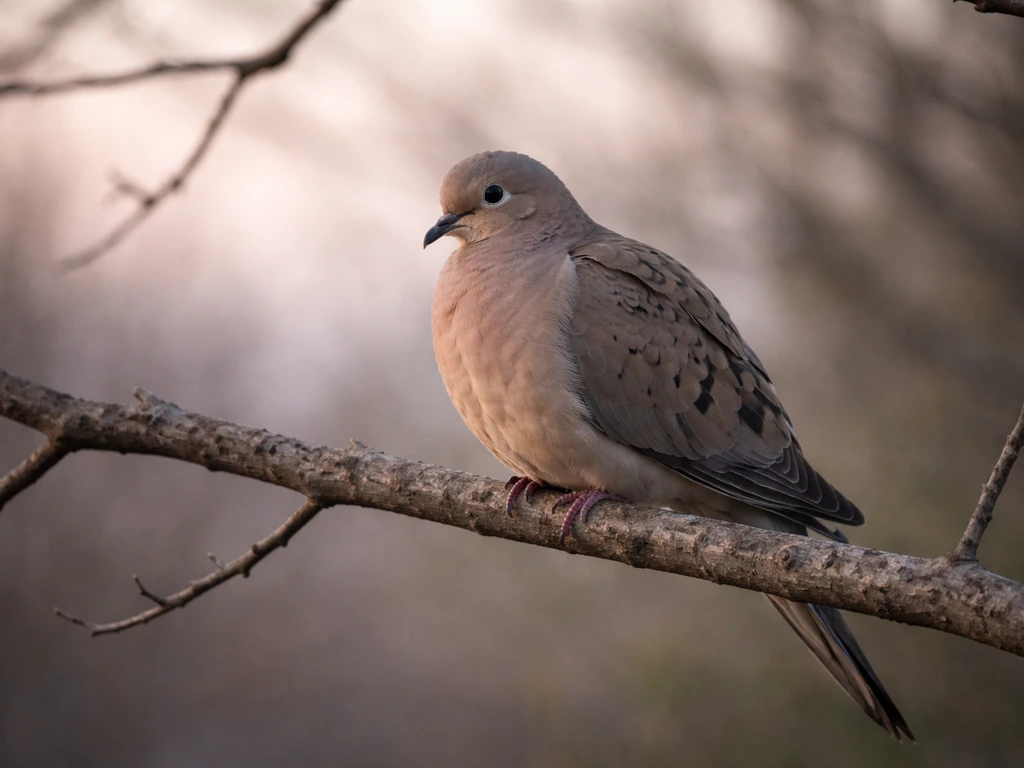
When people search for 'mourning bird meaning,' they almost always mean the mourning dove, a soft gray-brown bird whose low, haunting call sounds like it's grieving something. blank" rel="noopener noreferrer">Cornell Lab’s All About Birds describes mourning doves as common across the continent and notes that their soft, drawn-out calls “sound like laments.”. The symbolism people attach to it is consistent across cultures: grief, remembrance, love lost, and sometimes a gentle spiritual message that someone who has passed is still present. It's one of the most widely recognized 'grief birds' in North American and Western European tradition, and its name alone carries a lot of emotional weight even before you get into the folklore.
Mourning Bird Meaning: What It Means in Life and Literature

Marcus Reeves
30 Apr 2026
What 'mourning bird' usually means
In most conversations, writing, and searches, 'mourning bird' is shorthand for the mourning dove (Zenaida macroura). The phrase itself isn't a formal term in ornithology or linguistics, but people use it naturally because the word 'mourning' in the bird's name immediately connects to grief and loss. If someone says 'a mourning bird was calling outside my window after my grandmother passed,' they're almost certainly talking about a mourning dove, and they're using the full emotional weight of that name intentionally.
Occasionally, 'mourning bird' shows up in poetry or song lyrics as a more generic image, meaning any bird associated with grief or death, not specifically the dove. Context usually makes it clear which meaning is in play. If you're reading a Victorian poem and see 'mourning bird,' the author might mean a nightingale or even a raven. But in everyday modern usage, the mourning dove is the default assumption.
Which bird it actually refers to (and what makes it confusing)
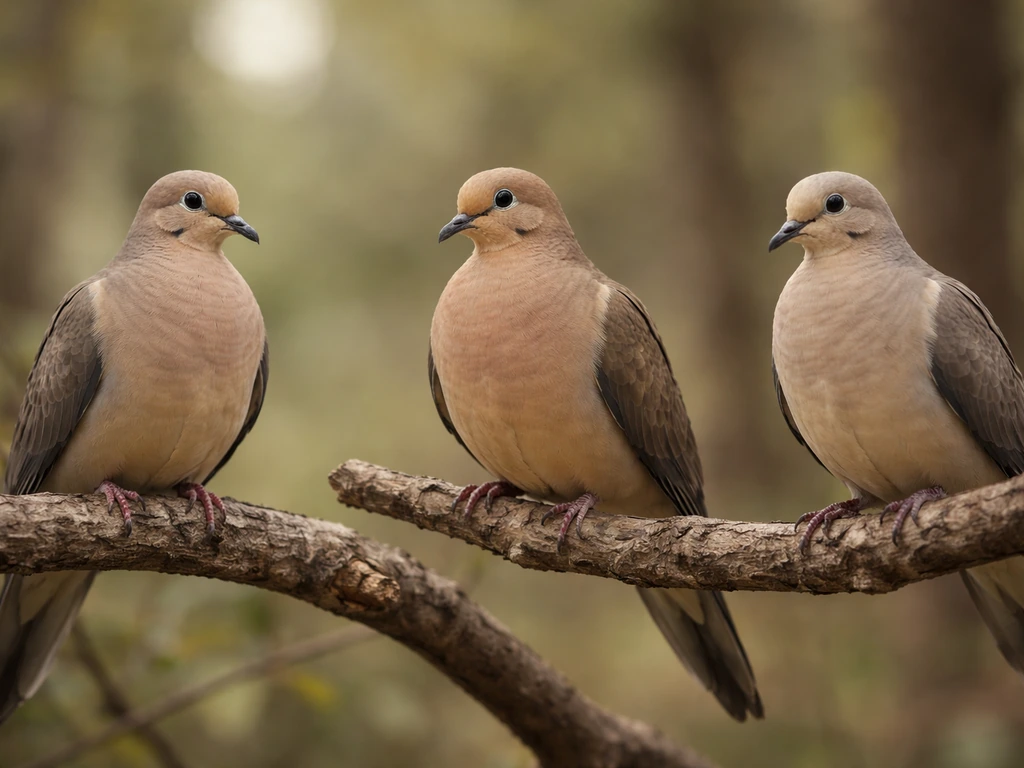
The mourning dove is the most likely candidate in almost every context, but a few other birds carry the 'mourning' label or get grouped into similar symbolic territory. Knowing the difference matters, especially if you're trying to identify what you actually saw or heard.
| Bird | Scientific Name | Where it lives | Why 'mourning' applies |
|---|---|---|---|
| Mourning Dove | Zenaida macroura | All of North America | Its coo sounds mournful; carries grief symbolism |
| Mourning Warbler | Geothlypis philadelphia | Eastern North America (forests) | Named for its dark hood, resembling mourning dress |
| Eurasian Collared-Dove | Streptopelia decaocto | Widespread, common in suburbs | Lookalike to mourning dove; sometimes confused |
| Nightingale | Luscinia megarhynchos | Europe and Asia | Used as 'mourning bird' in literature, not by common name |
The mourning warbler gets its name from the visual resemblance to a person dressed in black for mourning, not from its song or grief symbolism. It's a completely different creature with a different role. The Eurasian collared-dove causes confusion because it looks similar to a mourning dove and has spread across North America, but it doesn't carry the same cultural weight or name. When someone means 'mourning bird' symbolically, they virtually never mean the warbler or the collared-dove.
The symbolism: grief, peace, and spiritual presence
The mourning dove sits at an interesting intersection of two seemingly opposite meanings: grief and peace. On one hand, it's a bird of sorrow, commonly appearing in stories about loss, funerals, and remembrance. On the other, doves in general are universal peace symbols, which gives the mourning dove a dual role as both a grief witness and a comfort bringer. That combination is actually why so many people find the symbolism moving rather than just bleak.
Spiritually, mourning doves are frequently interpreted as messengers from the deceased. If you hear one after losing someone, many people across different faith traditions take it as a gentle sign that the person's spirit is nearby and at peace. This isn't just a New Age idea; it appears in Christian symbolism (the dove as the Holy Spirit), Native American traditions where doves connect the living to ancestors, and general folk beliefs across the American South and Midwest. The Biblical Archaeology Society also discusses how, in Christian tradition, the dove is associated with the Holy Spirit Christian symbolism (the dove as the Holy Spirit). The idea of 'a mourning dove visited me after my father died' is something people say and mean sincerely, and it holds real emotional resonance regardless of whether you take it literally.
- Grief and loss: the call is literally described as mournful, reinforcing emotional associations
- Remembrance: often appears in memorial contexts, funeral imagery, and tribute writing
- Peace and transition: as a dove, it signals comfort even within grief
- Spiritual messenger: widely interpreted as a sign from a deceased loved one
- Love and devotion: mourning doves mate for life, making them symbols of enduring love
That last point, the lifelong mating bond, is something a lot of people overlook. Mourning doves pair closely and are rarely seen alone, which adds a layer of 'love surviving loss' to the symbolism. Some people interpret a solitary mourning dove as particularly poignant for exactly this reason.
How writers and poets use mourning bird imagery

In literature, the mourning bird (whether explicitly named or gestured at) functions as a reliable grief marker, a way to signal emotional weight without stating it directly. Emily Dickinson used bird imagery around death extensively, and the dove's call appears in elegy traditions going back centuries. When a poet writes about a bird calling at dawn after a death, the reader is expected to feel the grief before it's named.
American folk songs and spirituals use the mourning dove's call as a stand-in for longing and absence. The phrase 'hear that mourning dove cry' appears in blues and gospel traditions as an image of someone crying out in grief. Tennessee Williams, Truman Capote, and other Southern Gothic writers used dove and bird-of-grief imagery to underscore loss without melodrama. The bird does the emotional work quietly, which is exactly why writers reach for it.
It's also worth noting that the nightingale served a similar 'mourning bird' function in British and European literature, particularly in Romantic poetry. Keats's 'Ode to a Nightingale' treats the bird as a vehicle for both grief and transcendence. If you're encountering the phrase in a literary context set in Europe or from before the 20th century, the 'mourning bird' might well be a nightingale rather than a dove. On this site, related topics like what bird means death and murder bird meaning explore how different species fill different grief-adjacent roles depending on tradition. If you're also looking up murder bird meaning, it's worth checking which species and tradition the phrase is referring to so the symbolism fits the context.
How to identify a mourning dove in the real world
If you think you heard or saw a mourning dove, you can nail the ID quickly with a few easy markers. They're common across North America year-round and show up in backyards, power lines, open fields, and forest edges almost everywhere.
- Listen for the call first: it's a slow, low, rhythmic 'coo-OO-oo-oo' that genuinely sounds mournful or melancholic, almost like a gentle moan
- Look for the body shape: slim, small-headed, with a long pointed tail that fans out in flight to show white edges
- Check the coloring: soft pinkish-brown to gray-brown overall, with a few black spots on the wings and an iridescent patch on the neck
- Watch how it moves: mourning doves walk on the ground pecking for seeds and tend to move in pairs or small groups
- Notice the wing sound: they make a distinctive whistling flutter when they take off, which is helpful if you missed the visual
The most common mix-up is with the Eurasian collared-dove, which has spread widely across North America. The easiest tell is the collar: a black half-ring on the back of the neck. Mourning doves don't have that collar. Collared-doves also have a blunter, square tail rather than the mourning dove's sharp, elongated one.
Myths vs. what the symbolism actually means
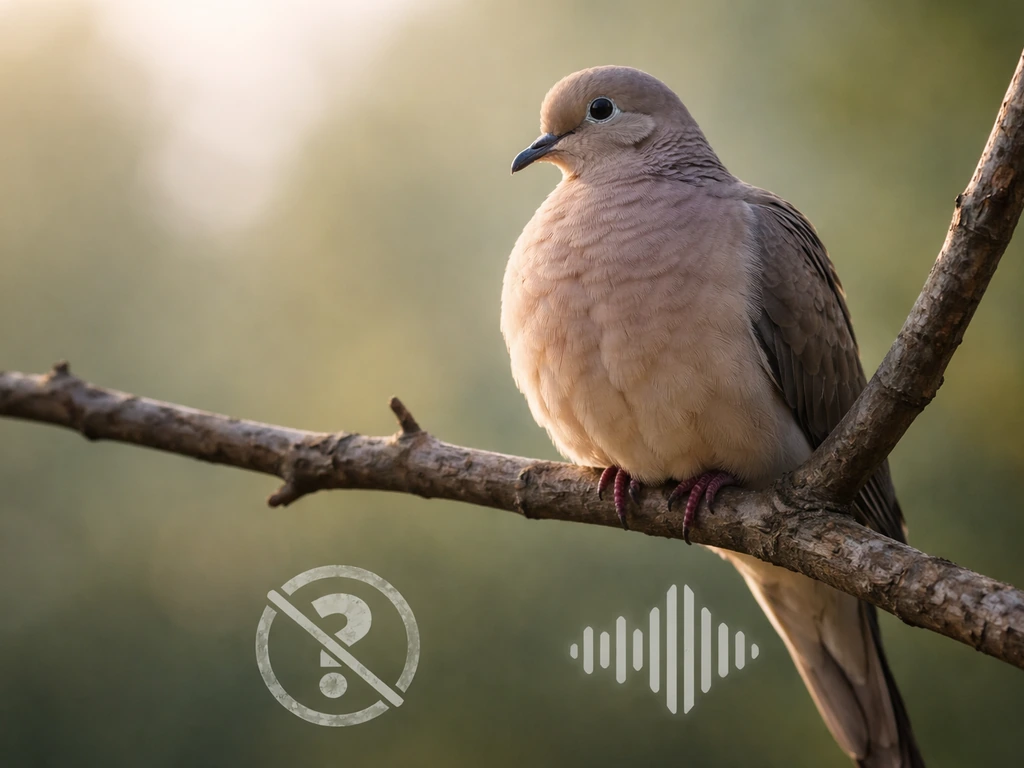
A few popular ideas about mourning doves deserve a reality check. The bird's name comes from how its call sounds to human ears, not from any documented grieving behavior. Mourning doves don't actually mourn in the way people do. Cornell Lab's ornithologists are clear that 'mourning' here is a descriptive common name reflecting the call's tone, not a behavioral claim. The bird is not sitting outside your window processing grief. That distinction matters because it keeps the symbolism honest.
Another myth worth pushing back on: mourning doves are not omens of death in the way ravens or owls sometimes get framed (see what bird means death for more on that). Seeing or hearing a mourning dove is not a warning that someone is about to die. The traditional association is with grief already experienced or love that endures, not with death as a forthcoming event. Treating a dove sighting as a bad omen misreads the symbolism almost entirely.
| Common Myth | What's Actually Accurate |
|---|---|
| Mourning doves actually grieve like humans | The name describes their call's sound, not a behavior |
| Seeing one means someone will die soon | The association is with remembrance, not prediction of death |
| It's always a spiritual sign from the deceased | Many people interpret it this way, but it's a personal belief, not universal fact |
| It's the same as a regular dove symbolically | The 'mourning' name adds specific grief and loss symbolism beyond generic dove/peace imagery |
| Only appears after a death | Mourning doves are extremely common birds present year-round in everyday settings |
Using mourning bird meaning in your writing or personal reflection
If you're writing something and want to use mourning dove imagery effectively, the key is specificity and restraint. Don't announce the symbolism; let the bird do the work. A line like 'a mourning dove called twice from the oak tree before anyone spoke' carries the grief without labeling it. Readers feel the weight of that sound. Authors who lean on this imagery too heavily, explaining what the dove means in the text itself, tend to lose the effect.
For personal reflection, whether you're processing a loss or trying to make sense of an encounter that felt meaningful, a useful approach is to ground the meaning before expanding it. Ask what the experience actually was: did you hear a mourning dove's call at a specific moment that felt connected to someone you lost? That emotional reality is valid on its own, regardless of whether you believe in literal spiritual messengers. You don't have to over-explain or over-read it to honor it. The symbolism works because it's emotionally true, not because it needs to be literally true.
Here are some practical ways to engage with mourning bird symbolism, whether in writing or personal meaning-making:
- In a poem or eulogy: use the call as a sound detail rather than a symbol you name directly, for example 'the morning held only that familiar low coo'
- In a journal entry: write down what you heard or saw first, then what you felt, and let the two sit together without forcing a conclusion
- In fiction: pair the mourning dove with a moment of quiet rather than dramatic emotion; grief in fiction is most powerful when understated
- In personal ritual: some people leave birdseed on the anniversary of a loss, treating the dove's appearance as a moment of connection
- In research or school writing: use the mourning dove as a concrete example when discussing nature symbolism in literature, since it bridges common name, real behavior, and cultural meaning clearly
The mourning bird meaning, at its core, is about holding grief and peace in the same moment. That's not a myth or an overreach. People sometimes ask about the phrase “killing a bird meaning,” but in most cases it’s about the idiom’s idea and origin rather than actual birds. It's actually what the mourning dove's presence delivers when you let it, a quiet acknowledgment that loss is real, that love persists, and that stillness after pain is its own kind of message.
FAQ
If I heard a bird that sounded like grief, does that always mean it was a mourning dove?
Not always. People often describe the call as mournful, but other birds can produce similar low, cooing notes. If you did not also see the bird perched on an open branch or wire, treat the “mourning” meaning as symbolic at most, then confirm with features like the sharp, elongated tail and lack of a neck collar.
What’s the fastest way to tell a mourning dove from an Eurasian collared-dove when they’re both around?
Check for the collar. Eurasian collared-doves show a dark black half-ring on the back of the neck, and their tail shape tends to look blunter and more squared. Mourning doves lack the collar and usually have a slimmer, more pointed tail outline.
Does the phrase “mourning bird meaning” ever refer to the nightingale in modern conversations?
Less often, but it can, especially in older literature or British and European contexts. If the passage is Romantic-era, or the bird is described in a way that emphasizes poetry and transcendence, the text may be pointing to a nightingale rather than a mourning dove.
Are there any myths I should avoid, like thinking mourning doves are an omen of death?
Yes. A mourning dove sighting is not a reliable “someone will die soon” omen. The traditional symbolism centers on grief already experienced, remembrance, and enduring love, not prediction. If you use it in writing, avoid framing it as a warning sign.
If I see a single mourning dove alone, does that change what people think it means?
It can. Because mourning doves often pair closely, a solitary bird can feel more poignant to some people, interpreted as amplified “love after loss.” Still, solitary sightings can also happen naturally, so consider whether the moment feels personally meaningful before treating it as symbolically definitive.
What should I do if I want to use mourning dove symbolism in a story without overexplaining it?
Let the scene carry the emotion through timing and specificity. Instead of stating “the dove means grief,” focus on details like when it called (dawn, after a funeral, in silence), where it was perched, and how characters react. This keeps the symbolism implicit and more powerful.
Is it appropriate to interpret a mourning dove spiritually as a messenger, even if I’m not religious?
Many people do, and you can keep it non-literal while still meaningful. A practical approach is to separate “felt comfort” from “factual claim”: treat the encounter as a way your mind and heart processed loss, whether you believe in spirits or not.
How do I tell whether “mourning bird” in a poem is metaphorical or meant literally?
Look for anchors in the text. If the author uses behavioral claims about grieving, it is likely metaphorical, since the name is tied to human perception of the call rather than the bird grieving like a person. If the poem emphasizes setting, season, and sound, the bird is often doing symbolic work.
What if I’m looking up mourning bird meaning for the idiom “killing a bird meaning,” how do those ideas connect?
Usually they connect indirectly through symbolism, not through actual folklore that applies to specific species. In most contexts, “killing a bird” prompts a separate discussion about loss, harm, or moral weight, while mourning dove meaning is about grief and peace together. If you’re comparing both, clarify whether you’re analyzing literary themes or a specific phrase’s origin.
Next Article
Shoot the Bird Meaning: Slang vs Literal Use Explained
Meaning of shoot the bird in slang vs literal hunting, with usage tips, context cues, and contrasts like flip the bird.