If you saw a bird and felt an unsettling chill, or you read a poem and wondered what the raven really means, the short answer is this: ravens, crows, owls, and vultures are the four birds most consistently linked to death across cultures, literature, and folklore. But 'linked to death' doesn't mean 'predicts death.' There's a big difference between a symbol that cultures have historically tied to mortality and an actual omen that should worry you today. This guide will walk you through which birds carry that association, why, what it means in different contexts, and what to do if your question is actually practical: you found a dead bird, you're hearing a specific call at night, or you just want to understand what you read or watched without overthinking it.
What Bird Means Death: Symbolic Meanings and Real Causes

Why people connect certain birds with death
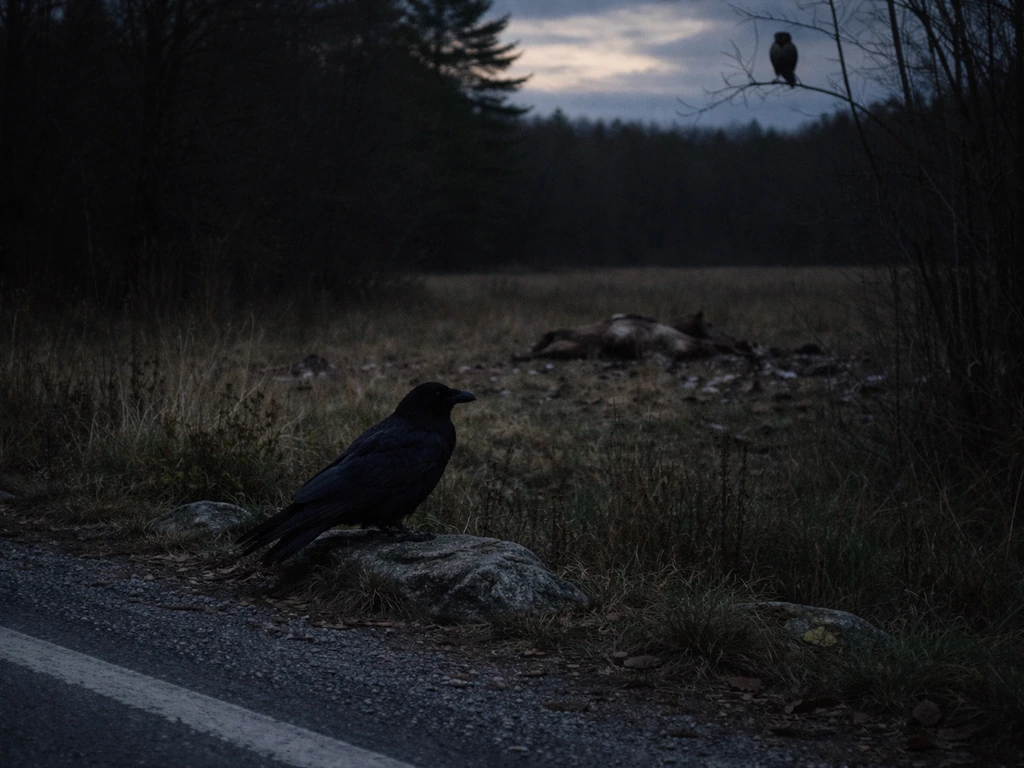
The connection isn't random. It follows a pretty clear pattern: birds that appear near death (scavengers), birds that are active at night (when fear and the unknown live), birds with dark coloring, and birds with calls that are harsh, strange, or mournful. Every culture needs a way to represent mortality in symbolic language, and birds are ideal carriers for that meaning because they move between earth and sky, appear unpredictably, and in some cases literally show up where animals or people have died.
Vultures actually circle above dead or dying animals. Owls call in the dark when people are at their most vulnerable and fearful. Ravens and crows have all-black plumage and a loud, abrasive caw that doesn't feel celebratory. These aren't arbitrary superstitions, they're observations that got layered with meaning over thousands of years. Once a culture attaches a death-symbol to a bird, that meaning travels through storytelling, poetry, religious texts, and eventually pop culture, which is why these associations feel universal even when the specific details differ.
The most common 'death birds' and what they actually symbolize
Ravens and crows
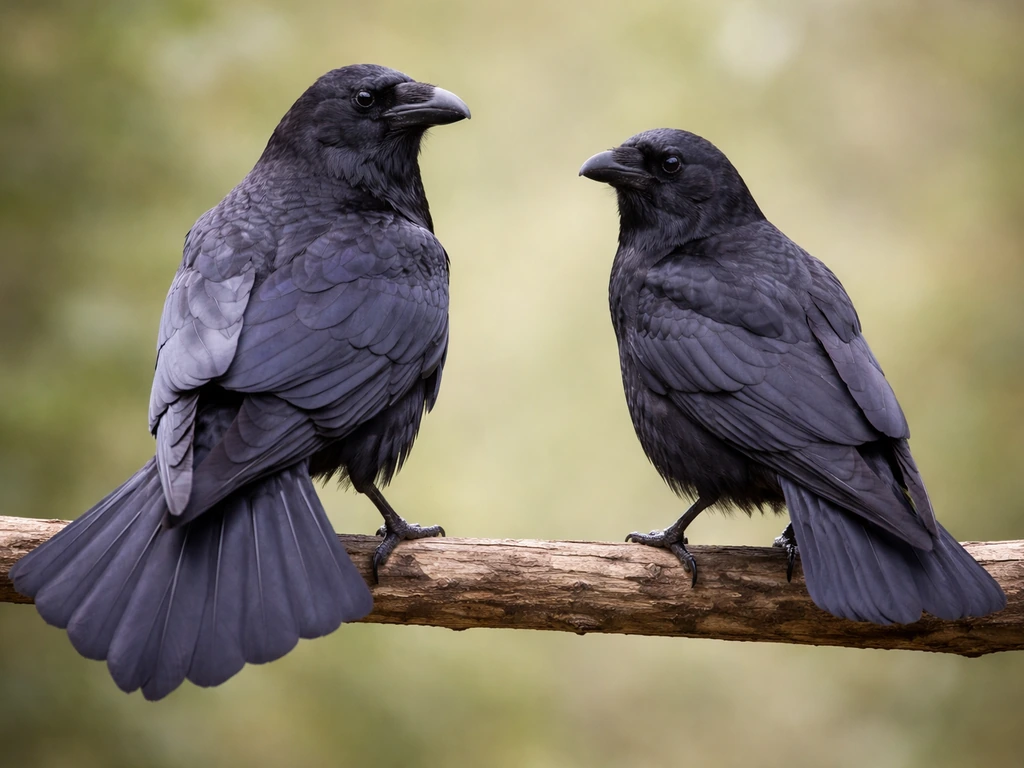
These two are the ones most people picture first, and they're closely related but distinct. Ravens are larger, with a diamond-shaped tail and a deeper, more resonant call. Crows are smaller, with a fan-shaped tail and the classic full-throated cawing most people recognize. Both have been used as death symbols for millennia.
In Welsh tradition, the name Brân literally means 'crow' or 'raven,' and the figure is tied to death and resurrection themes involving corvids. Norse mythology gave us the Valravn, a raven associated with battlefields and transformed warriors, a creature steeped in blood and afterlife symbolism. The Tower of London tradition holds that if its resident ravens ever leave, the kingdom will fall, a protective death-omen in reverse, originating from beliefs connected to King Charles II's reign in the 1660s.
Edgar Allan Poe's 'The Raven' (1845) is probably the single biggest reason modern English-speaking audiences associate ravens with grief and death. The raven in that poem functions as a symbol of the afterlife and irreversible loss, with its relentless 'nevermore' refrain turning the bird into a stand-in for the finality of death. That poem didn't create the symbol, but it crystallized it for Western culture in a way that still resonates. When you see a raven in a movie or book and something bad is about to happen, Poe's influence is almost certainly in the mix.
Owls
Owls carry some of the oldest and most consistent death associations of any bird. A 2023 academic review covering 5,000 years of Greek civilization documented owls as fearsome night symbols and bad omens that preannounce death in literature. The Roman writer Pliny the Elder described the owl as a dire omen. The Aztecs connected owls to death imagery, and the Tang dynasty in China associated them with bad luck.
In Cherokee tradition, hearing an owl was interpreted as a warning that a family member or loved one's death was near. These associations cross continents and centuries because owls are genuinely eerie: they hunt at night, they call in the dark, they turn their heads in ways that feel unnatural, and their silent flight makes them appear almost supernatural.
Vultures
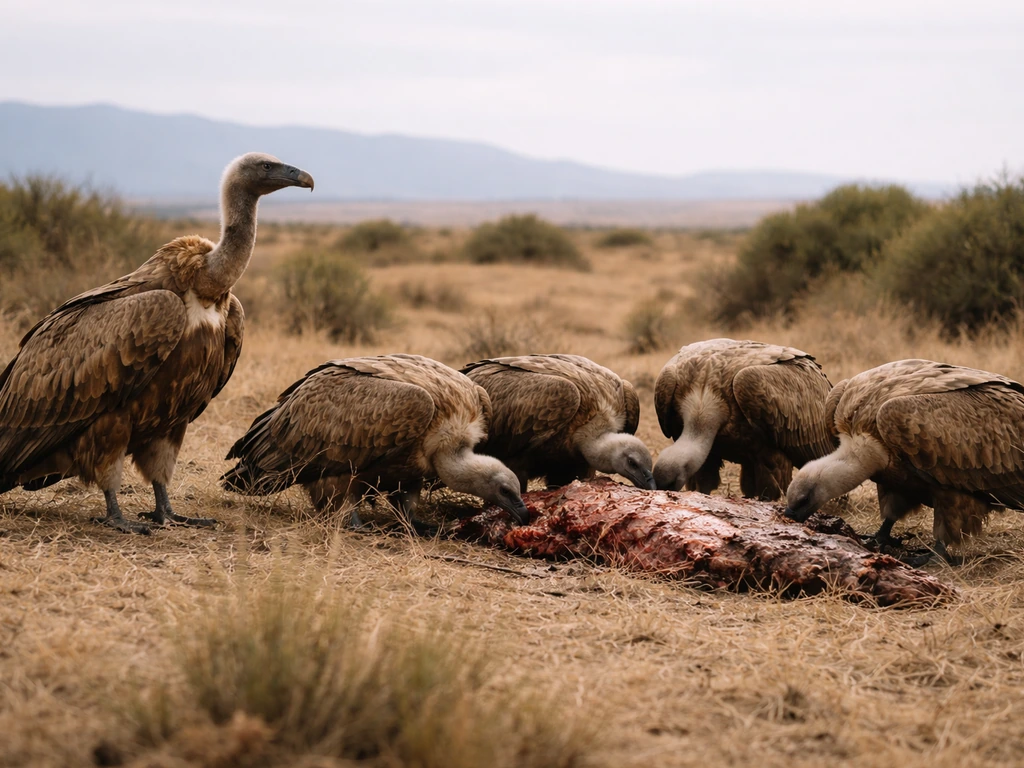
Vultures are the most literally death-connected bird on this list because they actually eat the dead. Medieval bestiaries from around 1230 described vultures as desiring someone else's death for food, framing them as symbols of greed and uncleanliness. In modern symbolism they represent decay, patience over death, and sometimes the inevitability of endings. That said, ecologically speaking, vultures are extraordinarily beneficial: the National Park Service notes they prevent disease spread by consuming carcasses, and turkey vultures can detect carrion as fresh as 12 hours old from more than a mile away. Their cultural reputation as death-birds is almost the opposite of their ecological role as disease prevention specialists.
Other birds worth knowing
Blackbirds more broadly (not just corvids) appear in mourning and death imagery across European folklore, partly due to their dark color. The whippoorwill has a strong association with death in Appalachian and Native American traditions. Barn owls, with their ghost-white face and silent gliding, have terrified people for centuries and generated their own death-omen traditions. If you're researching a mourning bird, a murder bird, or the symbolism around killing a bird, those subjects have their own distinct cultural and symbolic histories worth exploring separately. If you are trying to interpret wordplay around omens, also check what the phrase "killing a bird meaning" refers to as a related expression.
Context changes everything
Funerals and mourning rituals
In many cultures, birds appear at funerals as comforters or messengers rather than threats. A bird landing on a casket, appearing at a graveside, or showing up at a window shortly after a loved one's death is frequently interpreted as the soul or spirit of the deceased making contact. This is a different symbolic register than 'death omen. If you are looking at mourning and grief-focused signs instead, the mourning bird meaning can be a helpful adjacent angle death omen. ' Here the bird isn't predicting death, it's part of processing grief. Cardinals are particularly common in American bereavement culture for this reason, even though they're not historically 'death birds' in the omen sense.
Literature and folklore
In literary contexts, a death-associated bird is almost always doing symbolic work. Poe's raven signals unresolvable grief. Coleridge's albatross in 'The Rime of the Ancient Mariner' brings a curse and doom after being killed. Shakespeare used owls to foreshadow tragedy. In these contexts, the bird is a device that tells the reader to pay attention: something significant, usually something dark, is coming or has already arrived. Reading the bird in context of the story usually makes its function clear.
Modern media
Film and television lean heavily on the established vocabulary of death-birds. A crow landing on a character's windowsill, an owl hooting before a murder, vultures circling in a Western, these are visual shorthand inherited from centuries of cultural association. Game of Thrones used ravens as message-carriers and ominous presences. Horror films use owls and crows constantly. When you're seeing these birds in media, they're almost always pulling from the same well of symbolism described above, not inventing anything new.
Idioms and expressions that use death-bird imagery
English has absorbed a lot of bird-death symbolism into everyday language, even if people don't recognize the origin. 'A murder of crows' is the collective noun for crows, and the word 'murder' there is old English grouping terminology, but it reinforces the death association so thoroughly that most people assume it was always intentional. Calling someone a 'vulture' means they're circling waiting for someone else's misfortune. 'Carrion crow' as a term of insult implies someone who benefits from others' suffering.
'Bird of ill omen' is a direct idiom for a person who always brings bad news, drawn from the omen tradition. In literature you'll also encounter 'the owl of Minerva flies at dusk,' a philosophical phrase about wisdom only appearing after the fact, which Hegel used but which draws on the death/night-transition symbolism of owls.
If you're encountering phrases like 'shoot the bird,' 'killing a bird,' or expressions about a 'murder bird,' those have their own distinct meanings in slang and cultural usage that go beyond the death-symbolism tradition discussed here. Worth investigating those separately if that's what you're actually trying to decode. In particular, it helps to understand the slang and symbolism behind the phrase "killing a bird" so you can interpret it correctly in context killing a bird meaning. The phrase "killing a bird meaning" can help you understand what the expression implies beyond the literal act.
How to figure out which bird you actually saw or heard
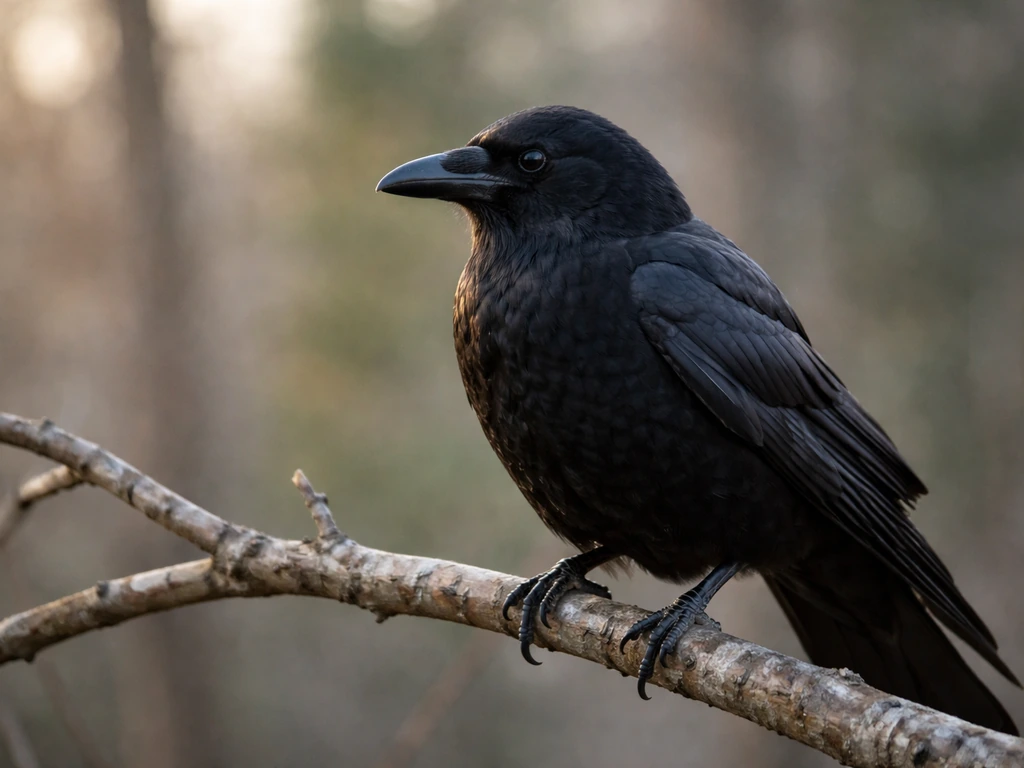
Most people searching 'what bird means death' have a specific bird in mind, either one they saw or heard. Here are the practical cues that will help you narrow it down fast.
| Bird | Key visual cues | Key sound cues | When/where you'll see it |
|---|---|---|---|
| American Crow | All-black, compact, fan-shaped tail, stocky build | Classic full-throated 'caw caw' | Daytime, open areas, rooftops, parking lots, fields |
| Common Raven | Larger than crow, diamond/wedge-shaped tail, heavy bill | Deep, hollow croak or 'kronk' | Daytime, forests, mountains, open wilderness; less common in suburbs |
| Great Horned Owl | Large, ear tufts, round face, mottled brown/grey | Deep hooting, often in pairs: 'hoo-hoo-hoooo' | Dusk to dawn, forest edges, open fields |
| Barn Owl | Ghost-white heart-shaped face, pale underparts | Bloodcurdling screech, no hooting | Nighttime, open farmland, barns, low gliding flight |
| Turkey Vulture | Brownish-black, red bare head, tilts side to side in flight | Mostly silent, low hisses | Daytime, soaring in thermals, roadside, rural areas |
| Black Vulture | All black including head, silver wingtips visible from below, flat wing posture | Mostly silent, occasional grunts | Daytime, soaring in groups, southeastern/central US more common |
A few fast rules: if the large black bird you saw was doing aerial somersaults or rolls, it was almost certainly a raven. If it was smaller and cawing loudly, it's probably a crow. If you heard something hooting at 2am, it's an owl, and the Great Horned is the most common culprit in North America. If something was circling silently in the sky over a field with tilting, rocking flight, that's a turkey vulture.
The Cornell Lab's Bird Academy points out that sound is often the easiest identification tool, so if you can describe what you heard, apps like Merlin (Cornell Lab's free bird ID app) can match calls in real time. Merlin Sound ID discussions on Reddit also mention expectations about getting matches from very short audio segments, like around three seconds Merlin (Cornell Lab's free bird ID app).
Cornell Lab also describes Merlin's Sound ID as providing on-the-spot identification help “in real time” while birds are singing Merlin (Cornell Lab's free bird ID app).
If you're still unsure after looking at photos and listening to recordings, local birding groups and wildlife extension services are genuinely helpful and happy to assist. You can also post a photo or description to community platforms like iNaturalist or eBird, where experienced birders will typically give you an ID within hours.
If you found a dead bird: what to actually do
Finding a dead bird is more common than people think, and it rarely signals anything mysterious. Birds die from window collisions, vehicle strikes, cat predation, disease, and natural causes constantly. Here's how to handle it safely and responsibly.
- Don't touch it with bare hands. Use disposable waterproof gloves or invert a plastic bag over your hand to pick it up, avoiding direct skin contact with the bird or any fluids.
- Double-bag it. Place the bird in one plastic bag, then seal that inside a second bag, and put it in a sealed container that can't be disturbed by pets or other animals.
- Wash your hands thoroughly. CDC guidance is explicit: wash with soap and water after any contact with a dead bird, or use an alcohol-based hand sanitizer if soap and water aren't immediately available. Don't touch your face before washing.
- Record basic details first. Before disposing of the bird, note the location, date, approximate species if you know it, and any unusual circumstances (multiple dead birds, signs of distress in nearby live birds, proximity to water).
- Consider reporting it. If you found more than one dead bird in the same area in a short period, or if the bird is a species of conservation concern (raptors, endangered species, migratory birds), report it. In the US you can contact your state wildlife agency, the USGS National Wildlife Health Center, or a local park ranger if you're on public land. Oregon's ODFW, New York's DEC, and similar agencies have specific dead bird reporting protocols.
- Leave it if it's a raptor. Audubon specifically recommends leaving dead raptors (hawks, eagles, owls) where they are and contacting a licensed rehabilitator or wildlife authority, as handling them requires special care and in some cases legal authorization.
- Dispose of it in the trash if it's a common species and an isolated incident. Most public health departments, including Illinois DPH, instruct that a single dead common bird can simply be bagged and placed in household trash after proper precautions.
If the bird is sick rather than dead, the same 'don't touch' rule applies. If handling is absolutely necessary, wear gloves and place the carcass in a double-bagged container, while avoiding contact with the bird’s eyes and mouth. CDC guidelines for bird flu and other zoonotic diseases are clear: avoid contact with sick birds, their droppings, and any surfaces they've contaminated without proper PPE including gloves and ideally eye protection and a mask. Call your state wildlife agency or animal control for guidance on sick birds, especially if you're seeing multiple affected animals.
How to interpret what you saw without spiraling
Here's something worth saying directly: no bird predicts your death or anyone else's. The cultural associations described in this article are real, meaning these symbols genuinely exist and have meaning in their contexts, but a symbol is not a prophecy. A raven landing in your yard is a raven living its life. An owl calling at night is hunting. Vultures circling means there's something dead or dying nearby that they can smell, and their job is to clean it up.
The reason these associations feel so powerful is that humans are pattern-seeking by nature, and we have thousands of years of storytelling that has trained us to read birds as signs. When you're already anxious, a crow landing on your fence can feel loaded with meaning. That psychological experience is real and worth acknowledging, but it's a product of your emotional state and your cultural inheritance, not a message from the bird.
If you encountered a death-bird in a book, film, or poem and it shook you, that's the symbol doing its job. Literature uses these birds because they work: they create dread, they mark transitions, they signal that something irreversible is happening. Understanding the tradition behind the symbol actually takes some of its power away, in a good sense. Once you know why a raven in Poe feels so final, you're engaging with the craft rather than being unsettled by the superstition.
If you're going through a difficult time personally and a bird encounter is amplifying that anxiety, it's worth recognizing what's actually driving the feeling. The bird is a focal point, not the source. The cultural weight of these symbols is real, and if you're finding comfort in interpreting an encounter as meaningful, that's a valid human response to grief or uncertainty. Just don't let the symbolism override practical judgment, especially when it comes to the real-world steps above.
FAQ
If I hear an owl at night, does it mean someone is about to die?
Most of the time it means an owl is hunting or calling during its active hours. Overt “predeath” interpretations are cultural, so use practical checks first, like whether the sound matches a local species’ call and whether there’s nesting activity nearby. If you are worried about a specific person’s health, rely on real risk factors and medical advice, not bird symbolism.
What should I do if a raven or crow lands near me and won’t leave?
This behavior usually relates to food, territory, or curiosity, especially near dumpsters, fields, or picnic areas. Keep a safe distance, avoid feeding or cornering the bird, and look for non-mysterious triggers like visible garbage or a dead animal nearby that could be attracting them.
How can I tell whether a “death-bird” sighting is actually a turkey vulture versus a different black bird?
Watch for the flight style first. Turkey vultures often glide with wings held in a shallow V and show a “rocking” motion in thermals, and they usually circle high over open fields. If you have sound, vultures are typically quieter than crows and ravens, and their calls are often less harsh.
Is it dangerous to touch or move a dead bird I found?
Yes, treat it as potentially disease-contaminated. Don’t handle it barehanded, and avoid contact with droppings, feathers, or fluids. Use gloves if you must move it, then wash hands thoroughly. If the bird looks diseased or you see multiple dead birds, contact local wildlife or animal control for guidance.
If I see vultures circling, does that mean there’s a carcass nearby right now?
Often yes, but “right now” depends on local conditions and carcass availability. Vultures can locate remains quickly by scent, so circling usually indicates something dead or dying within their range. In practice, it helps to avoid the area and check for hazards (like road kill) before attempting to investigate.
Do birds at funerals always mean the soul of the deceased is visiting?
Not necessarily. In many communities, birds are interpreted as comforters or messengers, but birds also commonly appear naturally due to seasonality, habitat near the venue, or casual timing. Consider context like time of day, weather, and whether the site attracts those species year-round before treating it as a definite spiritual sign.
Can a bird’s behavior change my interpretation, like pecking versus soaring or silent circling?
Yes, behavior matters. For example, scavenging near the ground can suggest carcasses, while silent hovering or repeated circling is consistent with birds searching from above. If the bird is simply perched and active, it may be normal foraging rather than “ominous” behavior.
Why do “death-bird” meanings feel so real when I’m already anxious?
Because pattern recognition and threat sensitivity increase when you’re stressed, so your brain flags ambiguous stimuli as meaningful. That experience is real, but it does not convert a symbol into evidence. A helpful next step is to ground yourself with concrete questions, like species ID, whether there’s local nesting activity, and what triggered your fear.
Does a specific poem or movie mean the bird symbol is always the same in real life?
No. The same bird can carry different symbolic “jobs” depending on the work, like grief, doom, or moral warning. Use context, such as tone and plot, to interpret what the author is doing, and remember that real-world birds respond to food, territory, and weather, not storylines.
I want to identify the bird accurately, what’s the fastest method?
Start with sound if you can. Calls usually narrow species faster than appearance alone, then confirm with body shape and behavior (tail shape, flight pattern, size in relation to nearby objects). If you can, record a short clip or note the time, location, and movement, then match it using a bird ID app or community birding group.
Thirst Reckoned Bird North Meaning Explained and Decoded
Decode the riddle phrase thirst reckoned bird north meaning: idioms, symbolism, and direction clues to find likely inten