
"Flipped him the bird" means someone extended their middle finger at another person as an offensive gesture. It's the past-tense way of saying someone performed the "flip the bird" insult, which is identical to "giving someone the finger" or "flipping someone off." No actual bird is involved. The gesture communicates contempt, ranging from mild annoyance to something closer to "fuck you," depending entirely on context and delivery.
Flipped Him the Bird Meaning: What It Really Says

Marcus Reeves
30 May 2026

What "flipped him the bird" actually means and how it connects to "flip the bird"
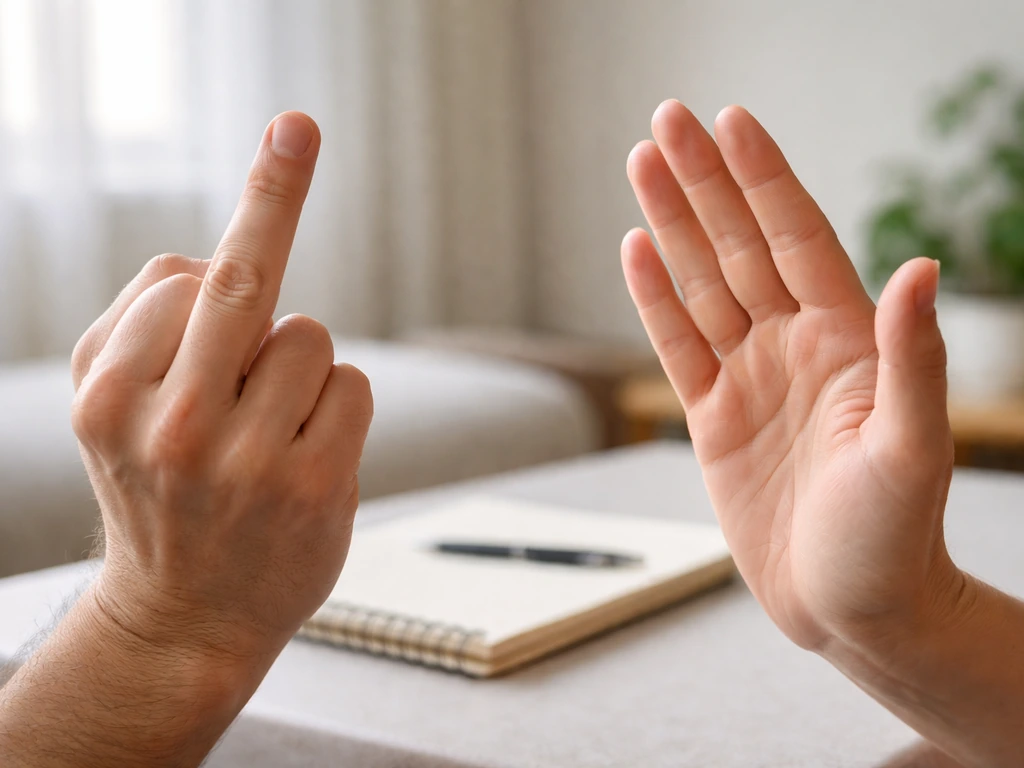
The phrase follows a simple grammatical pattern. "Flip the bird" is the base idiom. Add a tense and an indirect object and you get "flipped him the bird" (past tense, directed at a specific person). Merriam-Webster defines "flip (someone) the bird" as making an offensive gesture by pointing the middle finger upward while keeping the other fingers folded down. Cambridge Dictionary phrases it slightly differently, describing the back of the hand turned toward the other person with the middle finger raised. Both definitions land in the same place: it is the middle-finger salute, directed at someone on purpose.
In everyday speech, you'll hear all of these used interchangeably: "flipped him the bird," "gave him the bird," "flipped him off," and "gave him the finger." They all describe the same physical gesture and carry the same implied message. The slight variation in phrasing is regional and generational, not a meaningful distinction in intensity or meaning. If someone tells you "he flipped him the bird as he drove past," there's no ambiguity about what happened.
What "the bird" actually refers to (and what it doesn't)
This trips people up, especially if they're already on a site about bird symbolism and idioms. "The bird" here is not a reference to any actual bird, any bird species, or any other slang meaning of the word "bird." It's a fixed component of the idiom, and it refers specifically to the middle-finger gesture itself. When Cambridge explicitly defines it, they don't point to any avian connection. The word "bird" in this idiom is just the idiomatic label that English attached to the gesture over time.
One common misunderstanding is thinking this phrase belongs in the same category as idioms like "a bird in the hand" or "the early bird gets the worm," where bird imagery carries symbolic meaning. It doesn't. Another misunderstanding is treating "flip the bird," "give the bird," and "flip someone off" as three separate things with different meanings. They're not. Wikipedia describes all of them together as synonyms for the same obscene hand gesture conveying contempt. Wikipedia describes all of them together as synonyms for the same obscene hand gesture conveying contempt what it means to give someone the bird. The phrases describing "giving the bird" and "what it means to give someone the bird" are worth understanding alongside this one, since they cover the same gesture from slightly different angles. If what you really want is the overall meaning of giving the bird, this is essentially the same insult as flipping someone off.
How intense is it? Context changes everything
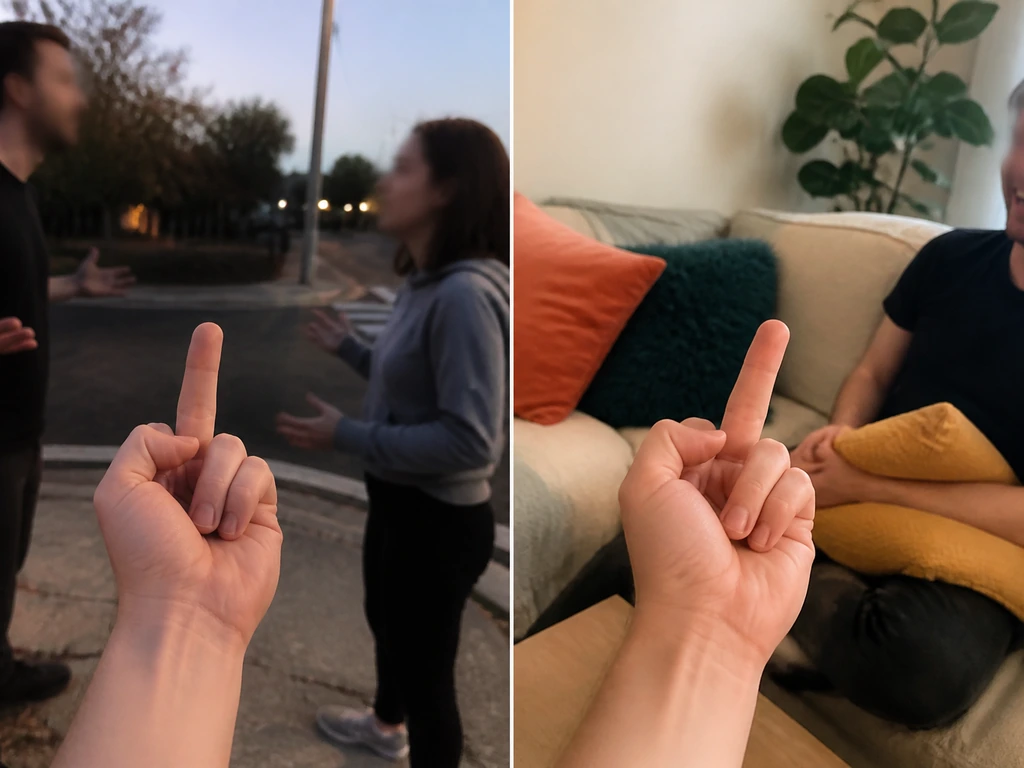
Wikipedia characterizes the middle finger gesture as communicating "moderate to extreme contempt," which is a useful range to hold onto. The exact level of offense depends heavily on tone, setting, and relationship between the people involved. Two friends joking around might flip each other off during a card game without any real hostility. A stranger doing the same thing during a road rage incident carries a completely different charge.
Verbally, the gesture is roughly equivalent to saying "fuck you," "fuck off," or "up yours." That's strong language in most settings, but it isn't always meant at maximum intensity. In casual, low-stakes situations between people who know each other well, it often registers more like an exaggerated eye-roll than a genuine threat. In professional, public, or charged situations, it lands much harder and can escalate things quickly.
| Context | Likely Tone | Intensity Level |
|---|---|---|
| Friends joking around | Playful, non-hostile | Low |
| Road rage or traffic dispute | Aggressive, hostile | High |
| Workplace or professional setting | Serious misconduct | Very High |
| Public confrontation with strangers | Contemptuous, potentially threatening | High to Very High |
| Online or social media use | Variable, often performative | Low to Medium |
Variations and related expressions that mean the same thing
English has a lot of ways to describe this gesture, and all of them get used in everyday conversation, texting, and writing. Knowing the variations helps you recognize them in context and use the right one when you're writing or explaining what happened.
- Flip the bird / flipped the bird: the core idiom, base form and past tense
- Give (someone) the bird / gave him the bird: a direct synonym, same gesture, same meaning
- Flip (someone) off / flipped him off: the most common casual American phrasing
- Give (someone) the finger / gave her the finger: straightforward, widely understood
- The middle finger salute: a slightly formal or ironic way to describe it
- Bird emoji (🖕): in digital communication, the raised middle finger emoji functions as the text equivalent
In slang, you might also hear "shot him a bird" or "threw him the bird," though these are less standard. The question of why this gesture is called "the bird" and why people frame it as "giving the bird" has its own interesting history worth exploring separately. There is also a related question of why this gesture is called "the bird" and why people describe it as "giving the bird.". The phrase “giving the bird” is just another way of describing the same obscene middle-finger salute. What matters here is that all the phrases above point to the same gesture and the same basic message.
Legal, workplace, and social media considerations
Is it actually illegal?
In the United States, the middle finger gesture is generally considered constitutionally protected expression. The Georgia Supreme Court ruled in 2017 (Freeman v. State) that raising the middle finger alone does not constitute criminal disorderly conduct. For legal consequences, Freeman v. Georgia (2017) explains that raising the middle finger, by itself, was not enough for criminal disorderly conduct. The ACLU of Pennsylvania has litigated similar cases, including Hackbart v. City of Pittsburgh, where a disorderly conduct citation following the gesture led to a civil-rights lawsuit. That said, courts in some jurisdictions have upheld citations when the gesture was part of a broader pattern of threatening or disruptive behavior, as illustrated in Ohio's State v. Gilreath (2007). The bottom line: flipping someone off in public is usually protected speech, but the surrounding context, especially if there's harassment, threats, or a minor involved, can change that calculus depending on where you are.
At work, it's a different story
Constitutional protections apply to government action, not employer conduct. In a workplace, flipping a coworker or customer the bird is almost certainly a fireable offense, or at least grounds for formal discipline. Most HR frameworks, including guidance from Carnegie Mellon's HR department and resources from Larimer County, treat this kind of gesture as workplace incivility that warrants documentation, formal reporting, and potentially a structured intervention. If you witness or receive this gesture at work, document it, report it to HR or a supervisor, and don't respond in kind.
Online and social media use
The raised middle finger emoji (🖕) and photos or videos of the gesture show up constantly on social media. Platforms vary in how they moderate it. In many cases it's treated as low-level crude content rather than a policy violation, but using it to harass a specific person can cross into reportable behavior. In a professional online context, such as LinkedIn or a company's social channels, it carries the same workplace-level consequences it would in person.
How to respond if someone flips you the bird

The most important thing to know is that matching the gesture almost never helps. It signals to the other person that the exchange is still going, and in charged situations like road rage, that can escalate quickly into something genuinely dangerous. Here's a practical approach depending on the setting:
- In traffic: let it go. The other driver will be out of your life in seconds. Responding with your own gesture or honking keeps the interaction alive and raises risk.
- In public with a stranger: keep the interaction brief. Avoid eye contact, create physical distance, and don't mirror the hostility. If the person seems threatening, move toward other people or a public space.
- At work: do not respond in kind. Note the time, date, circumstances, and any witnesses, then report it to HR or your supervisor using factual, behavioral language, for example: "At 2:15 PM, [person] made an obscene gesture toward me in the break room."
- From someone you know: address it directly when emotions have cooled. "That gesture felt disrespectful. Can we talk about what's going on?" keeps the focus on the behavior rather than the person.
- Online: screenshot it for documentation, then block or report. Don't engage publicly.
U.S. Department of Labor workplace violence prevention guidance recommends a tiered escalation approach: start with keeping interactions brief and de-escalating, and involve supervisors or security when there's any sense that safety is at risk. That's good advice beyond the workplace too. If someone's gesture is accompanied by threatening behavior, get help rather than trying to handle it alone.
Writing "flipped him the bird" in dialogue and narration
If you're a writer trying to use this phrase accurately, the grammar is straightforward. "Flipped him the bird" is past tense with an indirect object, which is exactly how Wiktionary and Merriam-Webster frame it. You can also write "flipped her the bird," "flipped them the bird," or drop the indirect object entirely and write "flipped him off." All of these are correct and natural-sounding.
A few things to consider when deciding how to use it in writing:
- "Flipped him the bird" reads as slightly more colorful and idiomatic than "gave him the finger," which is a bit more clinical.
- "Flipped him off" is the most casual and punchy option, good for contemporary dialogue.
- If you want to convey the action without profanity, "made an obscene gesture" or "raised his middle finger" are clean, unambiguous alternatives that work in formal or mixed-audience writing.
- In dialogue attribution, the gesture is usually shown in action beats rather than dialogue tags: He slammed the door and flipped him the bird as he walked out.
- Tone in the surrounding sentences shapes how the reader interprets the intensity. The same gesture can read as funny in a comedy scene and threatening in a tense confrontation.
If you're writing for a young-adult audience, a workplace setting, or anywhere that calls for cleaner language, "made an obscene gesture" carries the meaning without the edge. If you want the full weight of the contempt to land on the page, "flipped him the bird" or "flipped him off" does the job directly and with the right cultural register.
FAQ
Is “flipped him the bird” the same as “flipped him off,” or is there a difference?
In most contexts it is the same insult, but “flipped him the bird” specifies a past moment directed at one person. The exact force still depends on what happened right before and after (for example, whether it followed arguing, joking, or a threat).
Can I drop “him” and still sound natural in writing, like “he flipped the bird” or “he flipped off”?
Yes. The phrase can work without the indirect object if you say “flipped off” (or “flipped her off”). In that case the sentence implies the target, but you may sound slightly less explicit about who received the gesture.
Does “bird” here mean anything related to bird symbolism or slang?
“Bird” does not refer to an actual animal, a bird species, or a symbolic “bird” idiom. It is the fixed name English attached to the middle-finger salute over time, so you should treat it as one unit of meaning.
If I’m reporting what happened, what’s the most accurate way to phrase it without sounding overly dramatic?
If you are describing events for clarity, yes, you can treat the phrasing as one of several common labels for the same gesture. If you want to avoid sounding judgmental, consider neutral wording like “made a middle-finger gesture” and then add the context (road rage, workplace conflict, joking).
How can the meaning change if the gesture happens in different situations, like a bar versus a road rage incident?
Tone and setting are the multiplier. The same gesture between friends during a harmless game can be read as joking, while the same gesture in a confrontation, especially with yelling or blocking a vehicle, can be treated as harassment or threats.
How do I tell the difference between this gesture and an accidental hand movement someone might misread?
To recognize it correctly, look for the hand position, the target, and the intention. The classic form is the middle finger held up while other fingers are folded, shown toward the other person, not accidentally flashed in a crowd.
If it can be “protected speech” in some places, why can it still get someone fired at work?
Courts and workplace policies treat it differently from person to person and place to place. In public, it is often protected as expression, but in workplaces it commonly triggers discipline because employers can enforce conduct rules. Also, if it is paired with threats, stalking, or harassment, the legal and disciplinary risk rises.
What does “flipped him the bird” look like in social media terms, and can it cross into harassment?
Online it can still count as targeted harassment if it is directed at a specific person, repeated, or accompanied by messages. Even when the content is treated as crude rather than fully prohibited, a direct harassment pattern can lead to reporting, account action, or workplace consequences for employees.
Is it ever a good idea to respond with the same gesture when someone does it to you?
Matching the gesture usually escalates the conflict, because it signals “I am still in the fight.” If safety is even somewhat uncertain, disengage, increase distance, and involve appropriate help (a supervisor, security, or authorities if threats or danger are present).
What are safer alternatives to the exact phrase for professional or youth-focused writing?
For younger or more professional writing, you can use a softer but accurate paraphrase such as “made an obscene gesture” or “raised the middle finger.” If you need the punch of the original idiom, include it, but otherwise paraphrasing helps keep the scene readable while preserving meaning.
Next Article
Give Me the Bird Meaning: Symbolism, Species, Idioms
Quick guide to bird meaning: symbolism, common species (dove, raven, owl, eagle), idioms, and how to interpret sightings