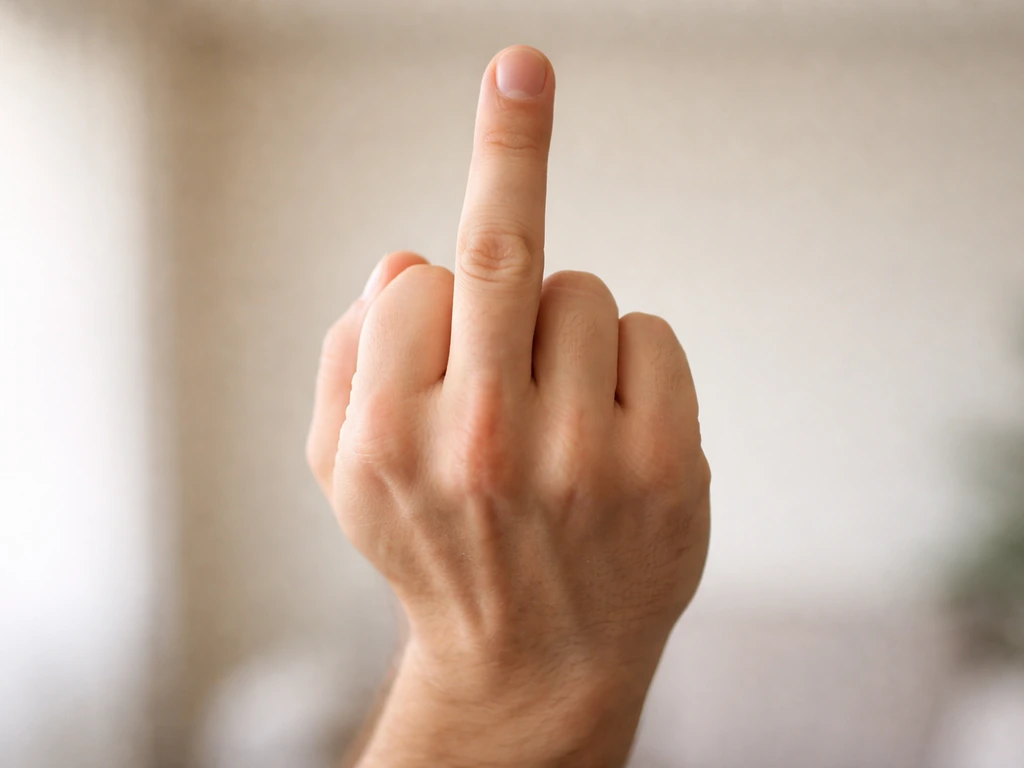
"Giving someone the bird" means making the middle-finger gesture at them as an insult. It's the same thing as "flipping the bird" or "giving someone the finger." The word "bird" here is slang for that gesture, and it got there through a surprisingly winding road that starts with geese hissing at bad performers on a Victorian stage.
Why Is It Called Giving the Bird? Meaning and Origin

Marcus Reeves
26 Apr 2026
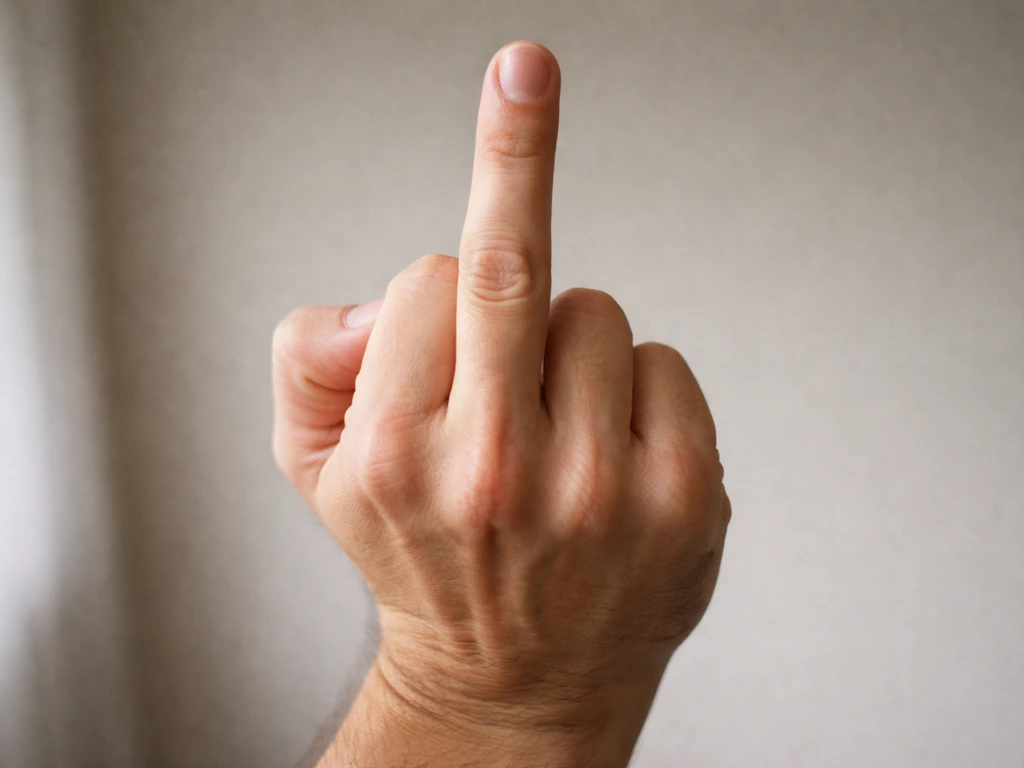
What "giving someone the bird" actually means
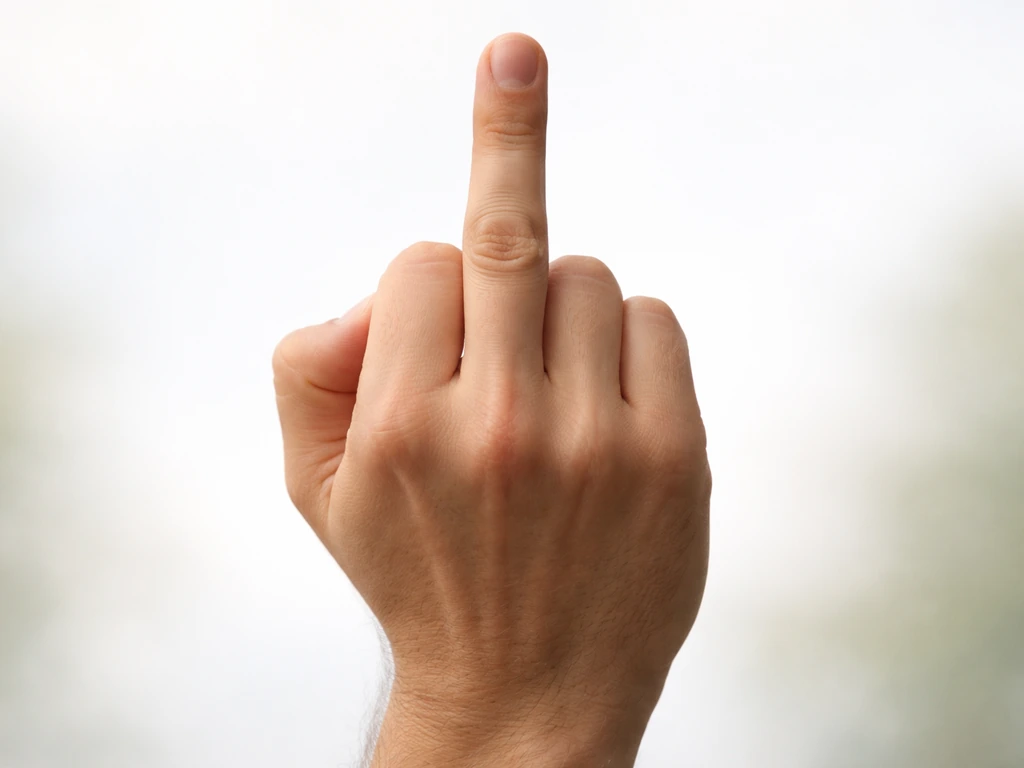
In plain modern English, giving someone the bird means extending your middle finger toward them while keeping the other fingers folded down, usually with the back of the hand facing outward. Cambridge describes it as "turning the back of your hand toward someone and putting your middle finger up." Merriam-Webster calls it US slang and labels it an offensive gesture, full stop. There's nothing ambiguous about the intent: it's a deliberate insult that says, roughly, "I hold you in contempt" or "get lost" without a single word spoken.
It's worth separating this from the UK meaning, which comes up occasionally. In British English, "give someone the bird" has historically meant to boo and jeer at a performer, like an audience dismissing a bad act. That sense still exists, but when most people today search for this phrase, especially in an American context, they're asking about the middle-finger gesture. This article covers both, because the two meanings are actually connected by history.
How "bird" became the nickname for that gesture
The word "bird" didn't land on the middle-finger gesture randomly. The most widely accepted story traces it through theatrical slang. In the 1800s, a disappointed audience would hiss at a performer the same way a goose hisses when it's agitated. That collective hissing was called "giving the big bird," and the big bird in question was the goose. An 1890 slang reference spells it out directly: "The big bird is the goose." Getting "the bird" from an audience was not a compliment.
That theatrical "bird" meaning carried the idea of public dismissal and contempt. Over time, the phrase shifted from describing an audience's hissing to describing any sharp, bodily expression of disdain. By the 1940s, according to language historians, "give the bird" was being used more generally for raising the middle finger to show extreme displeasure. The exact handoff between the two senses isn't perfectly documented, but the through-line is clear: both uses are about telling someone they're unwanted or worthless.
Where the phrase came from: the origin story
The gesture itself is far older than the phrase. The middle finger raised as an insult goes back to ancient Greece and Rome, where it was recognized as obscene in essentially the same way it is now. What's relatively newer is the specific English idiom calling it "the bird."
The most solid origin story runs like this: in the 1860s, the phrase "give the big bird" was in active use in theatrical slang to mean hissing or booing a performer off stage. By the early 20th century, that phrase had condensed into "give the bird," and it started picking up a more generalized meaning of contemptuous dismissal. By the 1940s, the middle-finger meaning was documented, and by the 1960s, the phrase "flip the bird" was appearing in print to describe the hand gesture specifically. Wikipedia summarizes the chain as a combination of the 1860s goose-hissing expression and the "up yours" hand gesture that was already circulating independently. The phrase and the gesture fused, and the name stuck.
It's a useful timeline to keep in mind: the insult gesture is ancient, the "bird" nickname is 19th-century theatrical slang, the middle-finger specific meaning solidified in the mid-20th century, and "flip the bird" as a documented phrase is largely a post-1960s phenomenon.
Related expressions you'll run into
"Giving the bird," "flipping the bird," and "giving someone the finger" all refer to the same gesture. They're interchangeable in most modern usage, though "flip the bird" tends to feel a little more casual and American, while "give the bird" can sometimes still carry the older UK booing sense depending on context. Dictionary.com explicitly pairs "flip someone the bird" with "give someone the finger" as linked meanings.
A few related expressions are worth knowing. "Flip someone off" means the same thing as flipping the bird. "Give someone the finger" is probably the most direct and widely understood version. Dictionary.com describes “give someone the middle finger” (and “flip”) as an offensive gesture used to show contempt or defiance by raising the middle finger with the other fingers down "give someone the finger". In UK English, "give the bird" in an entertainment or sports context might still mean booing rather than the middle finger, so if you're reading older British text or hearing it from a British speaker, context matters. You might also encounter "getting the bird," which means being on the receiving end of the dismissal, whether that's the gesture or the theatrical booing.
Where you'll actually see it used
In person
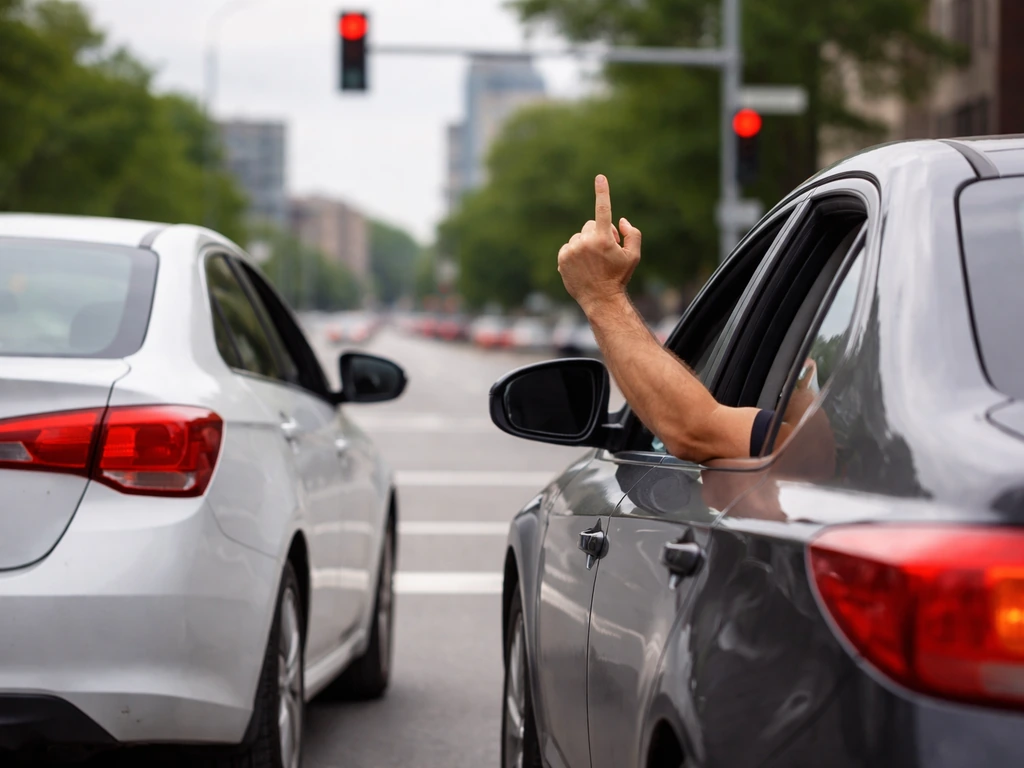
The most classic setting is road rage. Merriam-Webster's own usage examples describe "angry drivers flipping each other the bird," and that's not an accident. The gesture is fast, wordless, and delivers maximum irritation with minimal effort, which makes it the go-to for traffic disputes. It also shows up at sporting events, arguments, and any situation where someone wants to express contempt without escalating to a verbal exchange.
In writing and online
When someone writes "he flipped me the bird" or "she gave him the bird," they're describing the gesture in text form. You'll see this in news articles, casual social media posts, and comment sections. Merriam-Webster's page on the phrase pulls recent examples from Forbes, Vulture, and outdoor sports media, which tells you how broadly it shows up in mainstream writing. Online, people also use emoji shortcuts or typed gestures to convey the same thing, but the phrase itself is common in written descriptions of real-world incidents.
In movies and pop culture
The phrase has been mainstream enough to appear in big-budget film dialogue for decades. Wiktionary documents a line from Top Gun (1986) that uses "giving him the bird" in exactly this sense, which gives you a sense of when it was fully embedded in popular American speech. It appears regularly in comedy, sports movies, and political commentary. NPR has covered real-world incidents involving public figures and the gesture, noting that audiences are becoming somewhat desensitized to it due to repeated exposure in media and public life.
Tone, intent, and how to handle it
There's no soft interpretation of giving someone the bird. Both Cambridge and Merriam-Webster label it explicitly as offensive, and the gesture's long history is rooted in communicating contempt. That said, tone and context shift how intense it feels. Research cited by Psychology Today even groups "flipping the bird" alongside profanity as a taboo-symbolic act, suggesting the gesture functions like a swear word: the same action can range from a sharp reaction to a serious confrontation depending on who's involved and what's going on around it.
Facial expression and force matter too. A quick, almost joking flip between close friends who are laughing reads very differently from a slow, deliberate gesture in the middle of an argument. NPR commentary has noted that severity and accompanying expression change how people perceive it in the moment. So if someone gives you the bird and you're not sure how to read it, look at the rest of what's happening.
How to respond without escalating
The First Amendment Encyclopedia points out that the gesture is considered symbolic expression rather than a physical threat, which means it typically sits in the same category as a crude verbal insult. In the First Amendment framework, whether speech or symbolic expression can be restricted depends on factors like time, place, and manner, not just on the content itself. That's useful framing: it's offensive, but responding to it by escalating the situation almost always makes things worse. In a driving context especially, ignoring it and moving on is the right call. The gesture is designed to provoke a reaction, and not giving one is the most effective response available.
If it comes up in a workplace or professional setting, context and documentation matter more than an in-the-moment response. If someone uses the phrase in text or conversation and you're not sure whether they mean the gesture literally or are using it figuratively ("the crowd gave the band the bird" could mean booing, not the finger), ask yourself whether the setting is American or British, and whether a performer or public figure is involved. That regional split between the theatrical UK meaning and the middle-finger US meaning is the main source of confusion, and it almost always resolves with a little context.
If you're a writer or student trying to understand what a character or speaker means when they "give someone the bird," you now have the full picture: it's the middle-finger insult in most modern American usage, it shares a name with an older theatrical form of booing, and both trace back to the same goose-hissing roots in 19th-century slang. If you keep that in mind, you'll understand why people talk about giving the bird meaning when they run into the phrase in context giving someone the bird. If you want the quick answer, see give me the bird meaning, which sums up the middle-finger sense in modern American usage. For more on related expressions, the meanings behind "flipping him the bird" and exactly what it means to "give someone the bird" in different situations are worth digging into separately. If you're wondering about the flipped him the bird meaning, it's essentially the same middle-finger insult discussed here.
FAQ
How can I tell whether “give the bird” means booing or the middle finger?
In most modern American contexts it means the middle-finger gesture, but the safest way to be sure is to look for surrounding clues (crowd/booing versus drivers/insult). If the text mentions a “performer,” “audience,” or “hissing,” it may be the older UK-style booing meaning, not the finger.
Is “giving someone the bird” ever used figuratively?
No, not usually. The phrase is typically understood literally (as the gesture), while “the crowd gave the band the bird” is one of the few times it can be figurative, meaning audience dismissal, often booing. Still, in ambiguous workplace or professional writing, assume a literal insult unless the context clearly points to performers.
If someone writes “flip him off” or “give him the finger,” is that the same thing?
In writing, people often sanitize it as “flip the bird,” “give him the finger,” or they avoid the words entirely and describe “the gesture.” If you are trying to interpret a sentence, treat “give the finger” and “flip someone off” as direct equivalents to the middle-finger meaning, unless it is clearly about an audience at a show.
What should you do if someone gives you the bird while driving?
For safety, treat it like an intentional provocation. In a driving or public confrontation, do not escalate by gesturing back, arguing, or trying to “win” the moment. Instead, create distance (change lanes, keep driving to a safe area, lower engagement) and if needed document from a safe place.
In posts or headlines, how accurate is “giving the bird” as a description?
Social-media captions and news articles can be misleading because they sometimes describe the gesture without showing it. If the post includes a location or a conflict description (road rage, argument, sports dispute), it usually refers to the middle finger. If it’s about a concert or theater, it may refer to booing.
Do “give the bird” and “flip the bird” imply different tone or context?
Despite the similar meaning, the phrases can carry different “feels.” “Flip the bird” often sounds more casual and American, while “give the bird” can echo the older UK audience-booing sense in some contexts. Neither is gentle, but choosing between them can affect how readers interpret the scenario.
Does the way someone does the gesture change how serious it is?
People often describe it as “obscene” or “offensive,” but what changes the impact is how it’s done. A quick glance versus a slow, deliberate hold, plus facial expression (smirk, anger, sarcasm), can make it read as playful contempt or as a more hostile escalation.
Why does the meaning sometimes differ between American and British English?
Yes, especially in older British entertainment coverage. If the context involves a performer and the “crowd” or “audience” dismissing them, “give the bird” can mean booing. In American usage, the same phrase usually lands on the middle-finger gesture, so the country and setting matter a lot.
What’s a safer way to write it in an article or report?
If you are writing, avoid using it in workplace or formal settings unless the intent is clearly to quote an event or reproduce dialogue. For more neutral narration, you can say “the middle-finger gesture” or “they used an obscene hand gesture” to keep the meaning without relying on slang that might confuse readers.
If I’m talking about booing, what wording should I use instead of the idiom?
If you meant to refer to boos, use phrasing like “the audience booed” or “the crowd jeered,” because “give the bird” can be misread as the middle-finger gesture by many readers. In other words, pick wording that matches the intended action, not just the idiom you know.
Next Article
What Does It Mean to Give Someone the Bird
Meaning of give someone the bird: rude insult linked to flipping someone off, used to show anger or contempt.