
To give someone the bird means to extend your middle finger at them as a deliberate insult, communicating contempt, anger, or dismissal. It's the same gesture as "flipping someone off" or "giving them the finger," and it carries roughly the same weight as telling someone to go to hell. In American English, this is the dominant meaning. If someone says "she gave him the bird" or "he got the bird," that's almost certainly what they're describing.
What Does It Mean to Give Someone the Bird

Marcus Reeves
23 Apr 2026

What the phrase actually means
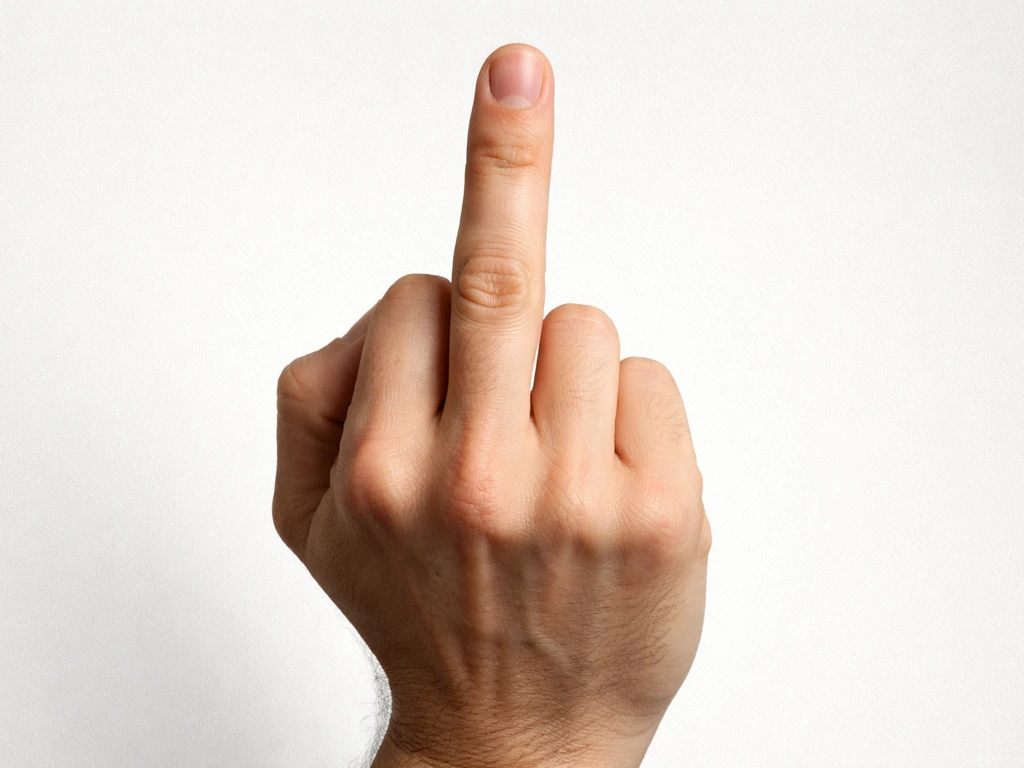
In US informal usage, "give someone the bird" means to make an offensive gesture by pointing the middle finger upward while keeping the other fingers folded down. Merriam-Webster defines it exactly that way, marking it as informal. Cambridge English Dictionary frames it similarly: showing someone in an offensive way that you are annoyed with them, by turning the back of your hand toward them and putting your middle finger up. Both dictionaries treat the phrase as a standard idiom, not just slang, which tells you it's been around long enough to earn a dictionary entry.
There's also a British sense worth knowing. In British English, "give someone the bird" can mean to loudly boo, jeer, or laugh at someone, typically a performer on stage. You might read that usage in older British texts or theater reviews. It's the same phrase, different meaning depending on where you are. In modern American conversation, though, you can safely assume the middle-finger gesture is what's being referenced.
The connection to "flip the bird" and the gesture itself
"Give someone the bird," "flip the bird," "flip someone off," and "give someone the finger" all point to the same act. Wikipedia notes that "flipping the bird" and "flipping someone off" are recognized alternate names for the middle-finger gesture. Collins English Dictionary has a dedicated entry for "flip someone the bird," treating it as a conventional phrase meaning the same as giving someone the finger. Wiktionary lists "flip the bird" as a direct synonym of "flip off." In short, the phrasing varies but the meaning does not.
The gesture itself communicates contempt ranging from moderate to extreme. Wikipedia puts it on par, in meaning, with expressions like "fuck you" or "fuck off." Merriam-Webster's example sentences include things like "angry drivers flipping each other the bird," which gives you a good picture of the register. This is not a playful or ambiguous gesture. When someone gives you the bird, the message is deliberate and hostile.
When people use it and what it communicates
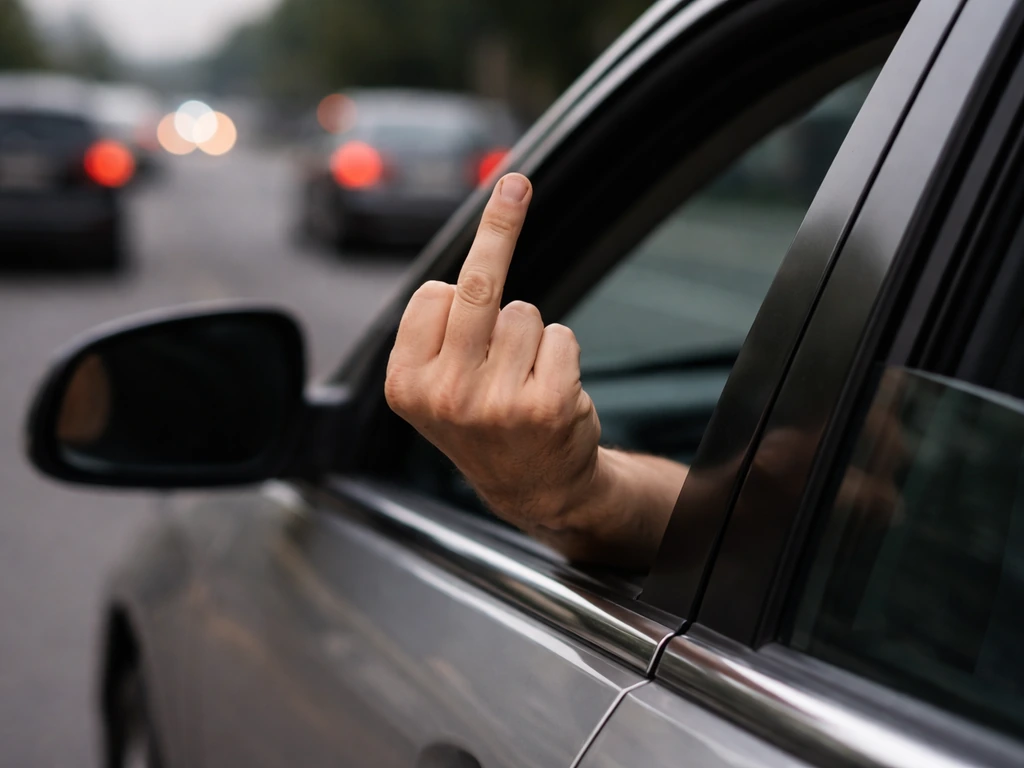
The phrase almost always shows up in confrontational or emotionally charged situations. Road rage is a classic context, with drivers giving each other the bird after a near-miss or aggressive cut-off. It also comes up in arguments, public disputes, and moments of defiant protest. In 2019, a Washington Post report covered a court case where a motorist who "gave him the middle finger" saw the incident described in legal documents as "flips him the bird," illustrating that the phrase is used in formal contexts too, not just casual conversation.
A CNN report described a middle-finger gesture made toward a court as a "defiant response," which captures the tone well. Defiance, contempt, anger, and dismissal are the core emotions. Sometimes it's directed at a person, sometimes at an institution or situation. Occasionally people use it humorously between close friends, but that's the exception. Without a clear joking context between people who know each other well, assume it's genuinely offensive.
Spotting it in speech versus written text
In writing, the phrase appears as a description of an action rather than the action itself. You'll see it in news stories, legal documents, social media posts, and fiction. Context clues to look for: the presence of conflict or confrontation, descriptions of a physical gesture, or language indicating one person is expressing contempt toward another. Phrases like "she gave him the bird as she drove past" or "he got the bird from the crowd" are describing the gesture, not a literal animal.
In spoken conversation, people often use the phrase to recount something that happened. "He gave the cop the bird" or "I almost gave that driver the bird" are both narrating a moment of frustration. You might also hear it used as a verb construction: "giving someone the bird" or "got the bird." The phrase is registered as an idiom in compiled idiom lists, meaning it functions as a fixed expression with a meaning beyond its individual words. If someone says "he totally gave her the bird," they're not talking about handing over a pet canary.
What to do if someone gives you the bird
If someone gives you the bird in a real-world situation, the most practical advice is also the least satisfying: don't escalate. Responding with the same gesture or with verbal aggression typically makes things worse, especially in traffic situations where tempers are already running hot. De-escalation guidance consistently points toward staying calm and disengaging when someone is being openly rude. The gesture is designed to provoke a reaction. Not giving one is the most effective response.
If it happens in a workplace or formal setting, that changes things. A middle-finger gesture in a professional environment is generally considered a form of harassment or misconduct, and documenting the incident and reporting it through appropriate channels is the right move. The ACLU has been involved in cases where someone faced legal consequences for flipping off a law enforcement officer, which illustrates that the gesture carries real weight in formal contexts, even if it's ultimately protected as free speech in many US jurisdictions.
If you see or read the phrase and you're just trying to understand what happened, the simple translation is: one person made an extremely rude, contemptuous gesture at another. That's the full meaning. No deeper interpretation is needed.
Why "bird"? The slang history behind the word
The word "bird" in this phrase doesn't come from ornithology. It comes from a much older piece of theatrical slang. Back in the 1860s, audiences who disliked a performer would hiss loudly, mimicking the sound of a goose. This was called "giving the big bird." An 1890 British slang dictionary captured that meaning directly: hissing and hollering at a performer was "the big bird." Green's Dictionary of Slang and the Oxford Dictionary of Idioms both record this theatrical sense, where "get the bird" meant being booed or jeered off the stage.
Somewhere between roughly 1940 and 1970, that older theatrical meaning blurred and merged with the middle-finger gesture as both became shorthand for public contempt and dismissal. Atlas Obscura describes how the two uses "dovetailed," with the modern hand-gesture meaning gradually overtaking the older hissing sense in everyday American usage. The word "bird" stuck as a stand-in for the gesture, even though the connection to actual birds had become entirely figurative.
This history is what makes "give someone the bird" distinct from other bird idioms on this site. An expression like "a bird in the hand" comes from a completely different tradition, tied to falconry and proverb-making. "Give someone the bird" traces its roots to audience behavior and public shaming, not to bird symbolism or nature observation. This history also explains why you may see people ask why it’s called giving the bird rather than assuming it relates to actual animals give someone the bird. The word "bird" is doing slang work here, not symbolic work. That's a meaningful distinction if you're trying to understand why English keeps reaching for birds to describe human behavior.
| Phrase | Meaning | Register | Origin |
|---|---|---|---|
| Give someone the bird (US) | Make the middle-finger gesture at someone | Informal, offensive | Theatrical slang + gesture merger |
| Give someone the bird (British) | Boo or jeer at someone | Informal, disapproving | Theatrical audience hissing (goose-like) |
| Flip the bird | Same as give someone the bird (US) | Informal, offensive | Variant of the same phrase |
| Give someone the finger | Same middle-finger gesture | Informal, offensive | Direct reference to the gesture |
| A bird in the hand | Having something certain is better than chasing something uncertain | Neutral, proverbial | Falconry and proverb tradition |
If you're exploring related expressions, the phrases "giving the bird meaning," "why is it called giving the bird," and "flipped him the bird meaning" all circle the same gesture from slightly different angles. Each one unpacks a different piece of the phrase's history or usage, and together they fill in the full picture of how this idiom works in modern English. Give me the bird meaning is a slang idiom that refers to a specific offensive hand gesture, not an actual animal or literal act.
FAQ
Does “give someone the bird” always mean the middle-finger gesture in the US?
Yes. In US English, if someone says “he gave her the bird” in a traffic clip, a workplace story, or a courtroom summary, it almost always means the middle-finger gesture, not booing or any literal animal reference.
Could “give someone the bird” mean booing in modern conversation?
If “bird” is used in a UK theater review or you see “from the crowd” paired with loud booing or jeering, it can refer to heckling. That meaning is much less likely in everyday US conversation, where the hand sign dominates.
How can I tell from context whether “bird” means heckling or the hand gesture?
One big cue is the wording about a performer or stage. “Got the bird,” “the crowd gave the bird,” or descriptions of jeers usually point to the heckling sense. If the text mentions a specific hand position or “middle finger,” it points to the gesture.
Is it ever meant playfully, or is it always offensive?
Because it is hostile, “give someone the bird” is rarely appropriate to joke around with strangers. Between close friends who have an established banter style, it may be used lightly, but in most real-world settings it can escalate quickly.
Will employers or news reports treat the idiom differently from the actual gesture?
In legal or media contexts, people often translate what happened into the plain-language description “middle-finger gesture” even if the headline uses the idiom. If you’re reading for compliance or risk, treat it as the same act.
What should you do if someone gives you the bird?
If you’re responding in the moment, the safest move is to ignore it, create distance, and disengage, especially in road rage situations. Matching the gesture or retaliating verbally often prolongs the confrontation and increases risk.
What’s the best way to handle “give someone the bird” at work?
In a workplace, even a single incident can be treated as harassment or misconduct depending on the setting and whether it targets a specific person. Keep a written record (date, location, witnesses, what was said or done) before you report.
Is “flipped him the bird” different from “give him the bird”?
Yes, sometimes people use related phrasing like “flipped him the bird” or “gave the finger.” If the sentence centers on contempt or dismissal and includes a gesture description, it means the same middle-finger act.
Does the phrase imply more than just rudeness, like a serious threat?
Don’t interpret it as a literal threat of harm, but do treat it as a sign the person is angry and wants a reaction. If you feel unsafe, prioritize physical safety and distance rather than trying to “understand” the intent.
Next Article
Giving the Bird Meaning: How to Interpret Bird Phrases
Practical guide to interpreting bird phrases and symbols, with examples and steps to verify the right meaning.