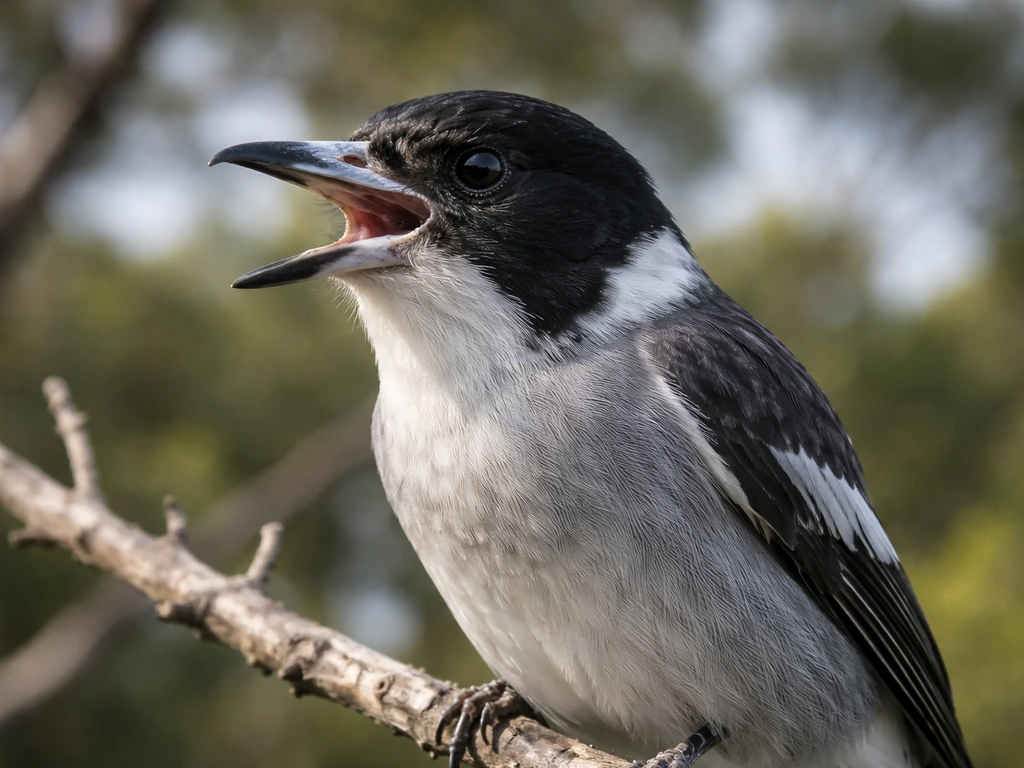
If you found dead bird wings and you're wondering what they mean, here's the honest answer: it depends entirely on what lens you're using. People often search for butcher bird call meaning alongside dead bird signs, since both are commonly discussed as omens dead bird wings. Literally, wings without a body usually mean a predator got there first. Symbolically, wings on a dead bird shift the usual meaning of freedom and ascension into something closer to transition, endings, or a message from across the threshold. Neither reading is wrong, but they call for very different responses, and this guide covers both.
Dead Bird Wings Meaning: Superstition, Symbolism, and What to Do

Marcus Reeves
11 May 2026

What people usually mean when they search "dead bird wings"
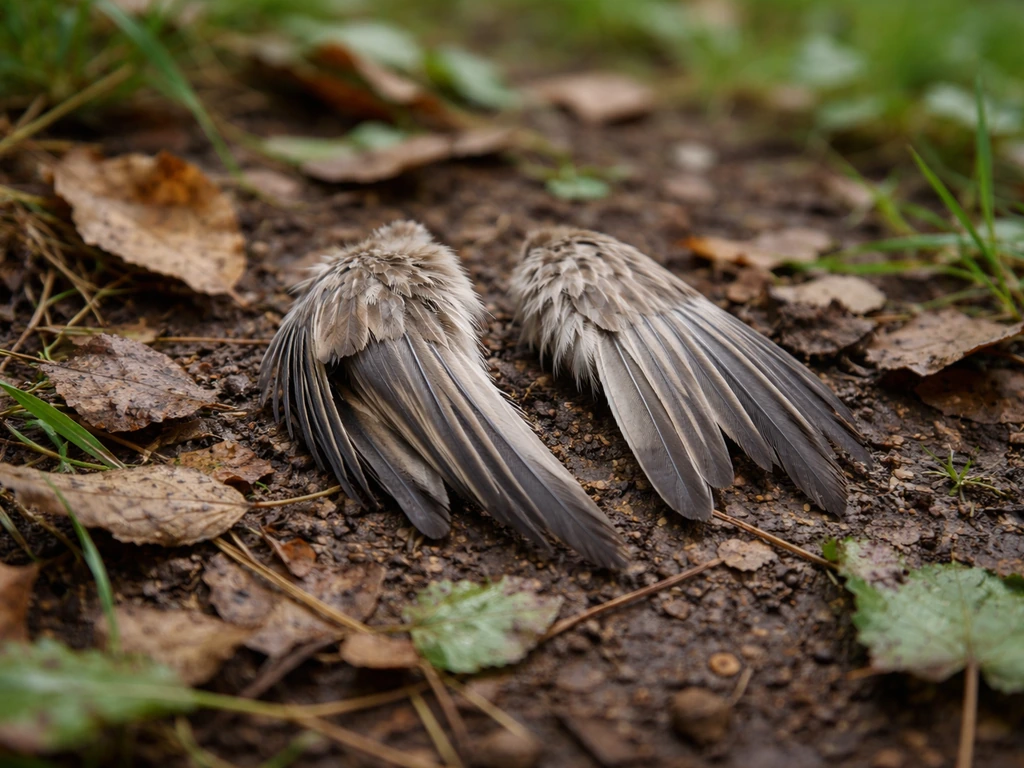
Most people typing this phrase fall into one of two camps. The first group found actual physical wings, probably in a yard, on a path, or near a window, and they want to know what caused it and whether they need to worry. The second group encountered the image in a dream, a piece of writing, or a symbolic context and they're trying to decode what the image is supposed to convey. Both are completely valid reasons to search, but they lead to different answers.
A third, smaller group is looking for omen-style spiritual meaning, something like "is this a sign?" That reading is also covered here, but it's worth being upfront that omen interpretations vary enormously depending on culture, species, location, and the individual doing the interpreting. There's no single universal answer, and anyone who tells you otherwise is oversimplifying.
What wings mean on their own, and how death changes that
Wings, in almost every symbolic tradition, stand for freedom, protection, and spiritual ascent. The image of a bird in flight is practically shorthand for liberty, which is exactly why phrases like "free as a bird" exist and why angels and divine messengers are given wings in art across dozens of cultures. Wings suggest movement between worlds, the ability to rise above the ordinary.
But when those wings belong to a dead bird, the symbolic weight shifts. Instead of representing active freedom, they start to represent transition, the crossing of a threshold between one state and another. In ancient Egyptian belief, the "ba" was the part of a person that survived death, and it was depicted as a human-headed bird, specifically because birds could move between realms. Welsh folklore has the "Aderyn y Corff," a corpse bird said to portend death by its very presence. Across many traditions, birds are cast as mediators between the living and the dead, which means a dead bird stops being a symbol of living freedom and becomes a symbol of passage.
The condition of the wings matters too. Intact, spread wings read differently than torn or damaged ones. Spread wings can suggest a completed journey, a soul that made it through. Broken or severed wings tend to carry darker tones: interrupted flight, something cut short, grief. This distinction shows up in literature and folklore regularly, and it's genuinely useful when you're trying to interpret an image in a story or figure out what tone a writer was going for.
Superstitions and omens people connect to dead birds
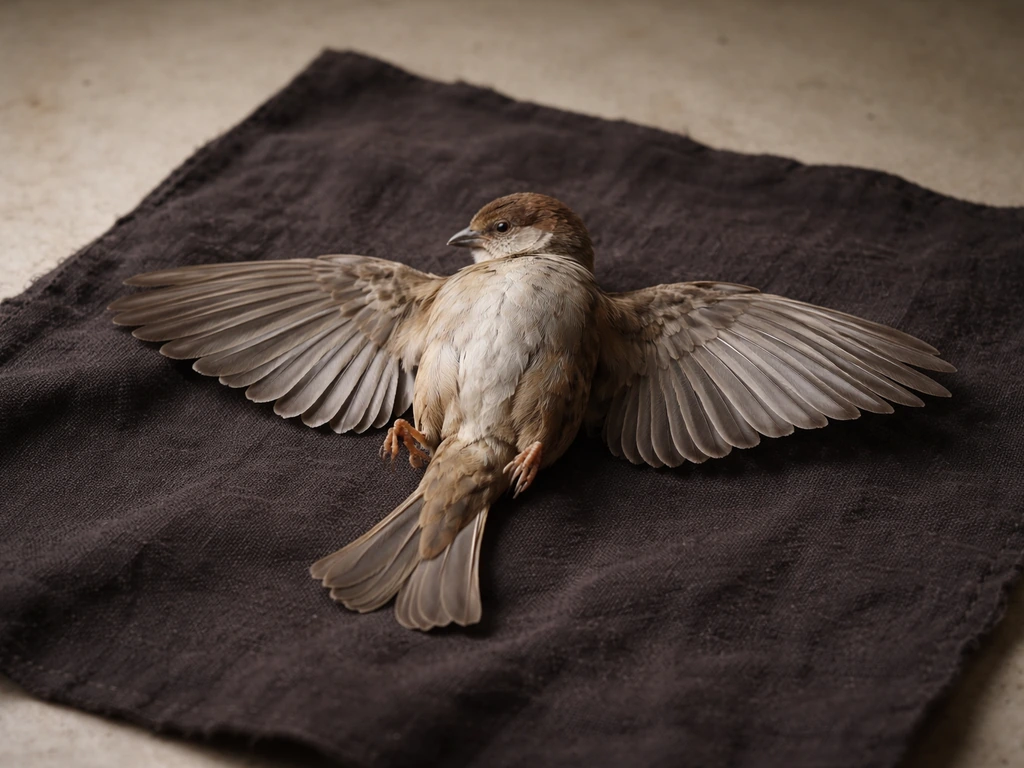
The omen tradition around dead birds is widespread enough that it's worth taking seriously as a cultural phenomenon, even if you personally don't put stock in it. The most common framing online is that a dead bird near your home, especially on a doorstep, is a warning. Some interpretations tie it specifically to coming misfortune or even death in the household. Others read it as karmic retribution or the end of a cycle.
A bird with its wings spread out is sometimes described in folk-style accounts as a particularly charged image, amplifying whatever omen is being read into the situation. The visual impact is undeniable: spread wings have a dramatic quality that invites interpretation, especially if you're already feeling uneasy about something in your life.
What's worth knowing is that these readings are not consistent across cultures or even across individuals within the same tradition. If you’re curious about carnival bird meaning, it can help to compare how different cultures treat birds as symbols versus omens. Some interpretations say dead birds signal transformation or the closing of one chapter, not necessarily something bad. Context variables that people cite as changing the meaning include: where you found it (doorstep vs. open field), the species (owl vs. sparrow vs. crow reads very differently), the season, whether the bird appears to have died peacefully or violently, and simply how you feel about it. There's no standardized omen rulebook here.
Bird and wing idioms: when you're seeing a figure of speech, not a literal dead bird
It's worth pausing to check whether what you've encountered is meant literally at all. English has a rich tradition of bird and wing metaphors, and writers use them constantly. "Free as a bird" means having no obligations or constraints, not an actual bird. "Broken wings" is a well-established figurative phrase for emotional damage, grief, or lost potential, used in song lyrics, literary criticism, and writing communities. If someone says a character has "broken wings," they're describing limitation or suffering, not an ornithology incident.
In literature and storytelling, dead birds almost always function symbolically rather than literally. A dead bird in a story signals the end of innocence, loss of hope, or a pivot point where the world gets darker. Wings in that context add a layer of what was lost: the capacity for freedom, flight, or escape. If you're reading a poem or story and you hit an image of dead bird wings, the author almost certainly intends a tone of mourning, foreclosure, or transition, not a factual report about wildlife.
Contrast this with a sibling topic like "upside down bird meaning," which can also be either literal (a bird in an unusual posture that might signal illness) or figurative (inversion, wrongness, things being out of order). The key question is always: what is the context demanding? Fiction and poetry want symbolic readings. Your actual backyard wants practical ones.
You actually found dead bird wings: here's what to do today
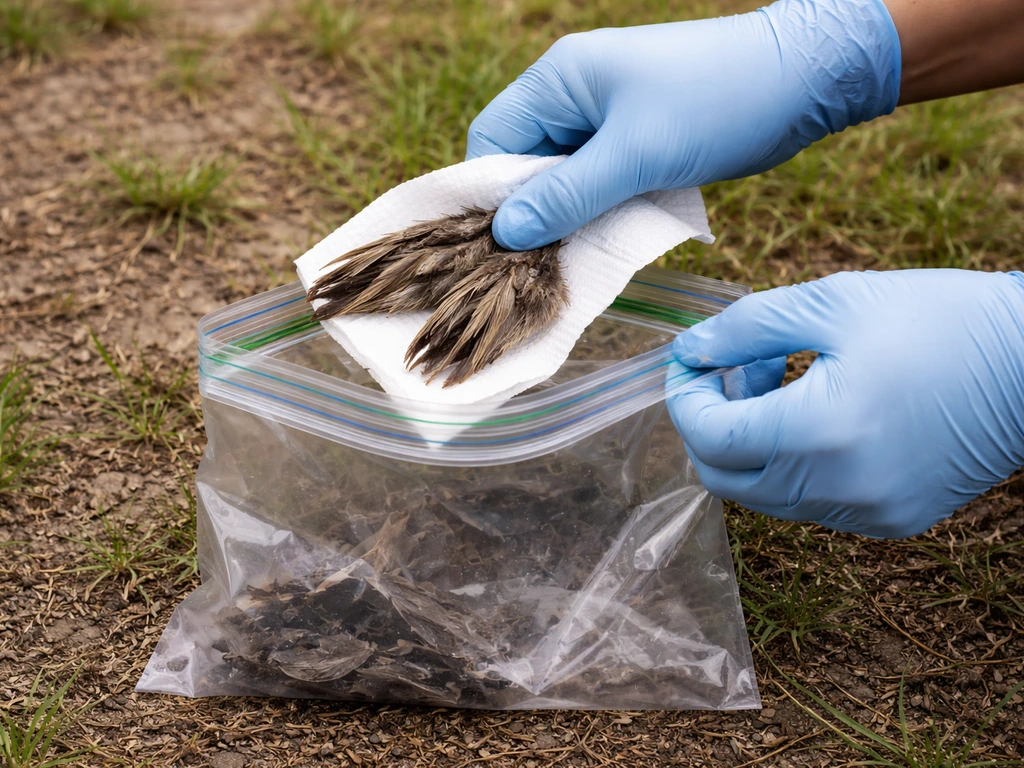
If you physically found wings or a dead bird, the first move is not to Google omens, it's to figure out what actually happened and handle it safely. Most dead birds you'll come across have a completely mundane explanation: a cat or hawk made a kill, a bird struck a window at speed, or an older bird reached the end of its natural life. Scavengers like turkey vultures often remove the body and leave the wings behind, which is exactly why you might find feathers and wing bones without the rest of the bird.
The safety side matters more than most people realize. Wild birds can carry diseases including avian influenza, psittacosis, and West Nile Virus. The CDC is explicit: do not touch sick or dead birds without proper personal protective equipment. Don't stir up dust or feathers, as that can disperse potential contaminants into the air. If you need to handle or move the remains, gloves are the absolute minimum, and a fitted N95 respirator is recommended if you have any reason to suspect illness.
If cleanup is needed, the process is straightforward. Remove visible debris using tools rather than bare hands, wash any contaminated surfaces with soap and water to remove visible dirt, then disinfect with an EPA-approved disinfectant that has label claims against influenza A viruses, following the manufacturer's instructions. Bag the remains securely before disposal.
When to report it instead of just cleaning it up
A single dead bird is usually not a reportable event, but multiple birds change the picture fast. Kansas guidance sets a practical threshold: if you find five or more dead birds, contact your regional wildlife officials. Michigan's guidance for avian influenza testing kicks in at six or more sick or dead birds found in a short time period. Oregon's Department of Fish and Wildlife has a hotline checked daily by wildlife biologists and veterinarians specifically for this purpose. Los Angeles County Public Health has a dedicated dead bird reporting line for West Nile Virus monitoring.
The general rule: one dead bird, clean it up safely. Multiple dead birds in the same area, or any bird showing unusual neurological signs before death (circling, falling over), report it to your state fish and wildlife agency or local public health department. USDA APHIS handles nationally reportable disease concerns. Your state has its own reporting structure alongside that.
| Situation | Recommended action | Who to contact |
|---|---|---|
| Single dead bird, no unusual signs | Safe cleanup with gloves, bag and dispose | No report needed in most states |
| 5 or more dead birds in same area | Do not disturb; report promptly | State wildlife agency (e.g., KDWP, ODFW) |
| Bird showed neurological signs before death | Do not touch; report immediately | State animal health official or USDA APHIS |
| Waterfowl, gulls, or shorebirds (die-off) | Report for possible AI testing | State wildlife/agriculture agency |
| Suspected disease risk (flocks nearby) | Use full PPE; report | USDA APHIS Area Veterinarian in Charge |
Using dead bird wings in writing and symbolism
If you're a writer or you're analyzing a text, dead bird wings are a rich image with a lot of tonal range depending on how you deploy them. The core symbolic payload is this: wings usually mean freedom and transcendence, but dead wings mean that capacity is gone, interrupted, or transformed into something else. That's a powerful combination for conveying grief, loss, or the moment a character crosses a point of no return.
Context inside the story matters as much as the symbol itself. Wings found intact and spread tend to read as peaceful transition or completed journey, something sad but resolved. Wings that are torn, severed, or scattered read as violent interruption, something taken rather than given. If a character finds wings in tall grass (a scenario that connects to related symbolic territory around concealment and hidden endings), the effect is different from wings found on a doorstep, which carries all that omen weight about home, threshold, and domestic warning.
Species sharpens the tone further. Owl wings carry connotations of wisdom and prophecy being extinguished. Dove wings shift toward lost innocence or peace undone. Crow or raven wings lean into the existing death-symbolism of those birds and intensify it. If you don't know the species and you're writing from imagination, choose based on the emotional register you want: delicate and mournful, or dark and foreboding.
One practical tip for writers: the "broken wings" motif works best when it's specific. A character who finds dead bird wings and holds them for a moment, who notices whether they're still soft or already stiff, who has a reaction, is more affecting than a generic "there were wings on the ground." The physical detail is what makes the symbolic weight land.
When this is more than symbolism: real disease concerns

Most of the time, a dead bird is just a dead bird, and the symbolic reading you give it is entirely personal. But there are situations where the practical concern outweighs the symbolic one, and it's worth knowing where that line is.
Avian influenza is the big one right now. It spreads through contact with infected birds, their feces, feathers, or contaminated surfaces. You don't need to be a poultry farmer to be at risk: backyard flock owners, wildlife rehabilitators, and people who handle dead wild birds can all be exposed. The CDC recommends PPE that includes gloves, eye protection, and a fitted N95 or better respirator, especially if you're handling waterfowl or birds that showed signs of illness. Surgical masks are specifically noted as potentially not effective enough.
Psittacosis (parrot fever) is another concern, particularly with parrots, pigeons, and some other species. Washington State Department of Health guidance calls for protective clothing, gloves, eye protection, and an N95 or higher respirator for anyone handling potentially infected birds. West Nile Virus is monitored through dead bird reporting programs in many counties, which is exactly why places like Oregon and Los Angeles County have dedicated reporting lines.
The bottom line: if you found one dead bird and it shows no unusual signs, handle it carefully and move on. If you found multiple dead birds, birds with strange behavior before death, or you have backyard poultry nearby that could be exposed, contact your state wildlife or agriculture agency. Don't wait for an omen interpretation to tell you whether to act. The practical response and the symbolic one can coexist, but the practical one comes first.
FAQ
What does “dead bird wings meaning” refer to if I only found pieces, not the whole bird?
If you only have wing fragments, not the whole bird, stick to cautious, literal observations first. Fragment size and condition can help you distinguish scavenger aftermath (feathers separated, bones clean) from a predator kill (more intact tissue, signs of tearing). Symbolic readings should be treated as tone-building, not as a definitive “message,” because fragments remove the context that most omen stories rely on (species, posture, complete wing spread).
How should I interpret dead bird wings found near my house, like a doorstep versus under a window?
Doorstep sightings are only one common omen frame. Practical factors often matter more: window strikes tend to happen near glass and reflectors, outdoor predators often work along edges like fences and hedgerows, and scavengers can relocate remains after a kill. If the wings were found right under a window or patio door, window strike and local predator activity are more likely than an omen about your household.
Could dead bird wings meaning come from scavengers rather than a “sign”?
Yes, because “wings only” is common and often explains the superstition. Turkey vultures and other scavengers may remove the body and leave feathers and wing bones behind, creating a “wing without bird” scenario that looks uncanny but is usually ecology. The key clue is whether anything else is present (beak parts, intact body, or only clean wing bones and feathers).
Does “wings spread” automatically mean something more ominous, or can it be explained naturally?
Interpreting spread wings differently is common in folklore, but you should also consider physical causes. Wind, decomposition stage, and how the bird landed can make wings appear spread, folded, or tangled. If you found the wings naturally arranged (not scattered) and close to the body residue, that posture might be more meaningful for symbolic tone, otherwise treat it as likely placement noise.
What’s the safest way to handle dead bird wings if I’m worried about disease?
If you suspect the bird died from an illness, avoid handling it and minimize contact with surrounding dust and feathers. When you must move remains, wear gloves, eye protection, and a fitted respirator (N95 or better is commonly recommended for this kind of cleanup). Afterward, wash hands thoroughly, launder clothes worn during cleanup separately, and disinfect any surfaces that could be contaminated.
If the dead bird wings might be from a backyard flock or pet bird, who should I contact and what should I do first?
If the wings are from a pet bird (or a bird you handled earlier), the reporting trigger changes. For wild birds, the article’s “multiple dead birds” thresholds are a useful baseline, but for any event involving your own animals, contact a vet or local animal health authority promptly. Also isolate other birds and avoid moving bedding or feed that might be contaminated until you get guidance.
Do I have to wait for a certain number of dead birds to report it?
Multiple dead birds in the same area can indicate an outbreak risk, but you should also report unusual patterns even if you do not reach a specific number. If birds show abnormal neurological signs (like circling, falling, or disorientation) before death, that’s a stronger signal to contact officials quickly. Take note of dates, locations, and species if possible, and do not attempt DIY diagnosis.
What are the most common mistakes people make when interpreting dead bird wings meaning?
Common mistakes are treating a metaphor as literal biology, or forcing an omen story without checking the real-life scenario. Another frequent error is ignoring species, because different birds carry different cultural associations. If you are writing, decide whether you want grief and transition (dead wings tone) or interruption and loss (torn or severed wing tone), and keep physical details consistent with the mood.
How can I use dead bird wings symbolism effectively in a story without making it feel cliché?
For writers, do a quick “tone audit” before you finalize symbolism: intact versus torn, intact posture versus scattered remains, and whether the character is observing from a place of safety or proximity. If you want a less ominous feel, emphasize gentle transition language (completed journey, crossing) and include a concrete sensory detail that softens it (stillness, quiet air). If you want dread, use disruption cues (severed pieces, messiness, urgency).
Can I treat it as both a practical situation and a spiritual reflection without turning it into panic?
Yes, sometimes you can incorporate both layers by prioritizing safety and then choosing a personal meaning. A practical approach is, first clean up safely and note whether anything suggests illness or a local hazard. After that, if you want spiritual framing, treat it as reflection (endings, transition, what you are letting go of) rather than a guaranteed prediction about future events.
Next Article
Butcher Bird Call Meaning: What It Sounds Like and Why
Learn butcher bird call meaning, its symbolism, and how to confirm the sound by behavior and bird ID.