When someone says 'butcher bird,' they're almost always talking about a shrike, specifically the Loggerhead Shrike in North America, a small but ferocious songbird nicknamed for its habit of blank" rel="noopener noreferrer">impaling prey on thorns or barbed wire like a butcher hanging meat on hooks. The call of a butcher bird, depending on what you're hearing and where you are, signals anything from a territorial warning to a mating overture to a sharp alarm that a predator is nearby. Understanding what the call means is really about knowing which butcher bird you're listening to and what the bird is doing at that moment.
Butcher Bird Call Meaning: What It Sounds Like and Why

Marcus Reeves
4 May 2026
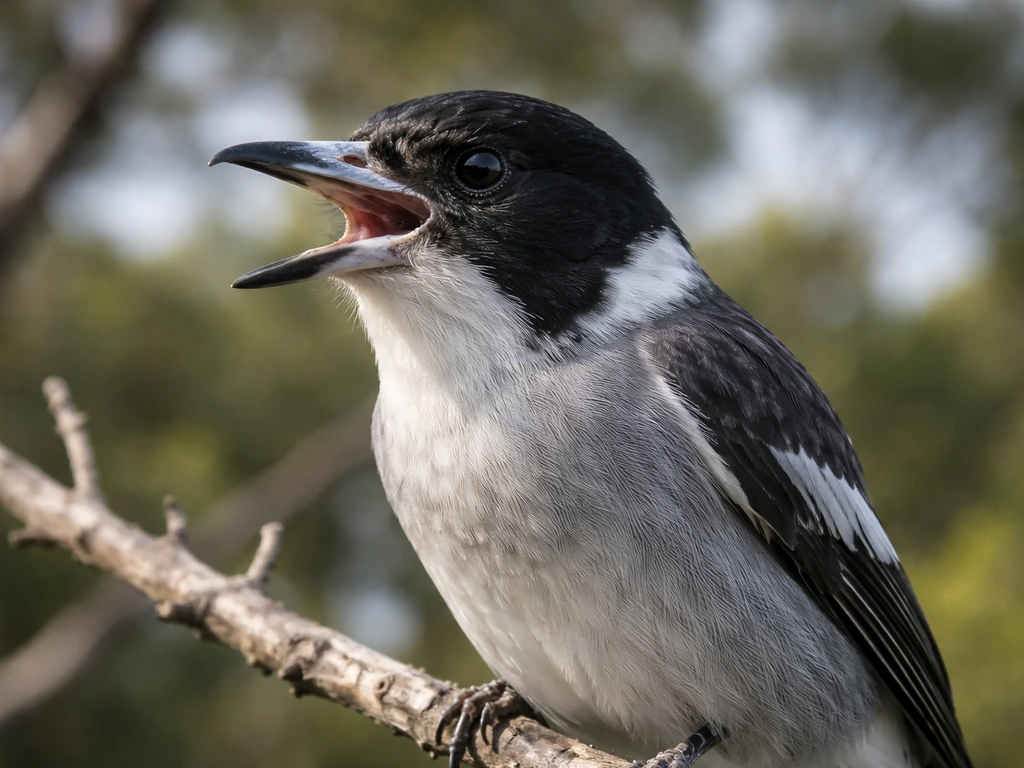
What 'butcher bird' actually means as a phrase
The term 'butcherbird' goes back to at least 1668, when Merriam-Webster first recorded it in print. It started as a folk name for shrikes (genus Lanius), and the reasoning is pretty literal: these birds kill prey with a sharply hooked beak and then skewer insects, lizards, or small rodents on thorns or fence wire to store for later. That 'larder' behavior is so striking that it inspired a nickname that stuck across centuries and continents. Audubon himself used 'Butcher Bird' as a common name in his Birds of America plates, referring to the Great Cinereous Shrike.
Today, 'butcher bird' applies to two distinct bird groups. In North America, it almost always means one of the shrikes: the Loggerhead Shrike or the Northern Shrike. In Australia, it refers to an entirely separate family of birds, the Cracticus genus (family Cracticidae), which share the impaling habit but aren't related to shrikes at all. So when you're looking up 'butcher bird call meaning,' the answer depends heavily on where you live and which bird you actually heard.
Butcher bird in everyday slang and cultural use
In everyday speech, calling something or someone a 'butcher bird' carries a pretty dark edge. It implies something small that punches well above its weight in terms of ruthlessness, something that looks unremarkable on the surface but operates with a kind of cold, methodical efficiency. The Loggerhead Shrike is literally songbird-sized but hunts like a raptor, which makes the nickname feel apt and slightly unsettling.
The U.S. Fish and Wildlife Service has described the Loggerhead Shrike as a 'notably macabre passerine,' which tells you a lot about the cultural weight the name carries. In parts of the American South, the same bird picked up additional folk names like 'French mockingbird,' which shows how regional naming can shift your whole interpretation of what bird someone is talking about. The Dictionary of American Regional English (DARE) records 'butcher bird' as an American regional noun, noting it likely arose from the bird's 'notorious fondness for meat' and its resemblance to the Northern Shrike.
In literature and writing, the butcher bird has been used to represent dark efficiency, duality (it sings beautifully but kills methodically), and the idea that nature has no clean moral lines. That tension between beautiful song and brutal behavior is part of what makes 'butcher bird' such a loaded term in cultural and symbolic usage.
What the butcher bird's song and call actually mean
Here's where it gets genuinely interesting. The butcher bird's call isn't one thing. These birds have a whole vocabulary, and each sound maps to a different situation. Knowing the difference is what separates someone who heard 'a butcher bird' from someone who understands what the bird was communicating.
The Loggerhead Shrike (North America)
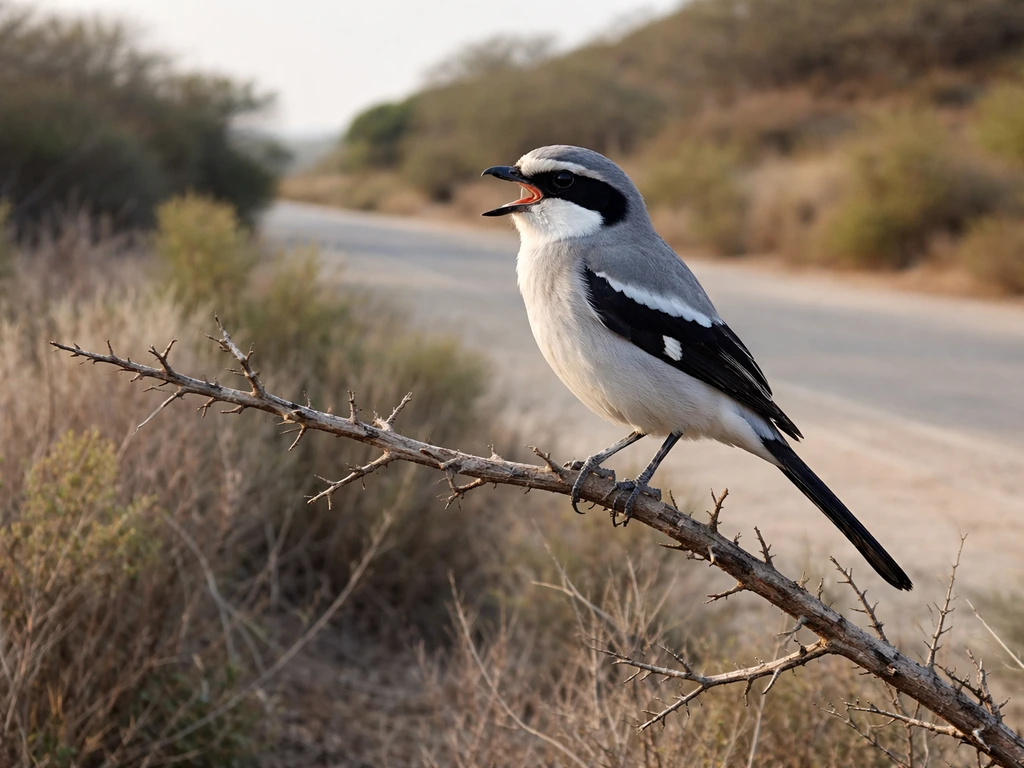
Cornell Lab's All About Birds describes the Loggerhead Shrike's song as a quiet series of short trills, rasps, and buzzes mixed with clear, often descending notes. It's not the kind of dramatic call that stops you in your tracks. But the Loggerhead Shrike also produces sharp clicks, weak peeps, and harsh rattles, and context is everything. When an intruder or predator shows up near the nest, the call shifts to something harsh and urgent.
If you are comparing that kind of symbolism, you might also be looking up dead bird wings meaning, since both involve strong cultural and interpretive associations. Wikipedia notes that a distinctive alarm call is given specifically when threats come from above, which makes sense for a ground-level hunter keeping an eye on hawks.
During courtship and breeding season, the vocabulary gets more nuanced. Females may use 'mak' begging notes when asking for food from a mate, while males may emit 'wuut' or 'shack' sounds when offering food. Males also vary the rhythm and pitch of their trills during breeding season. So a butcher bird call in spring has a very different meaning than the same bird's call in winter.
The pied butcherbird (Australia)
If you're in Australia, the call you're hearing is probably from a pied butcherbird (Cracticus nigrogularis) or a grey butcherbird (Cracticus torquatus). The pied butcherbird is famous for a flute-like song that researchers and birdwatchers describe as 'readily recognised' and remarkably musical. Australian birders often use the mnemonic '8-2-2' to describe the species call pattern. The alarm call is a strident 'reek,' a short, loud, descending note that signals a threat.
Pied butcherbirds also produce a 'whisper song' or subsong, often in wet or windy weather, that can include mimicry of other bird species and even non-bird sounds like dogs barking, lambs bleating, and people whistling. This mimicry aspect makes the pied butcherbird's call meaning especially layered: what you think you're hearing might actually be an impression of something else entirely. Soft calls from a bird sitting on a nest are another documented context, separate from the louder territorial or alarm calls.
How to interpret a butcher bird call in the moment
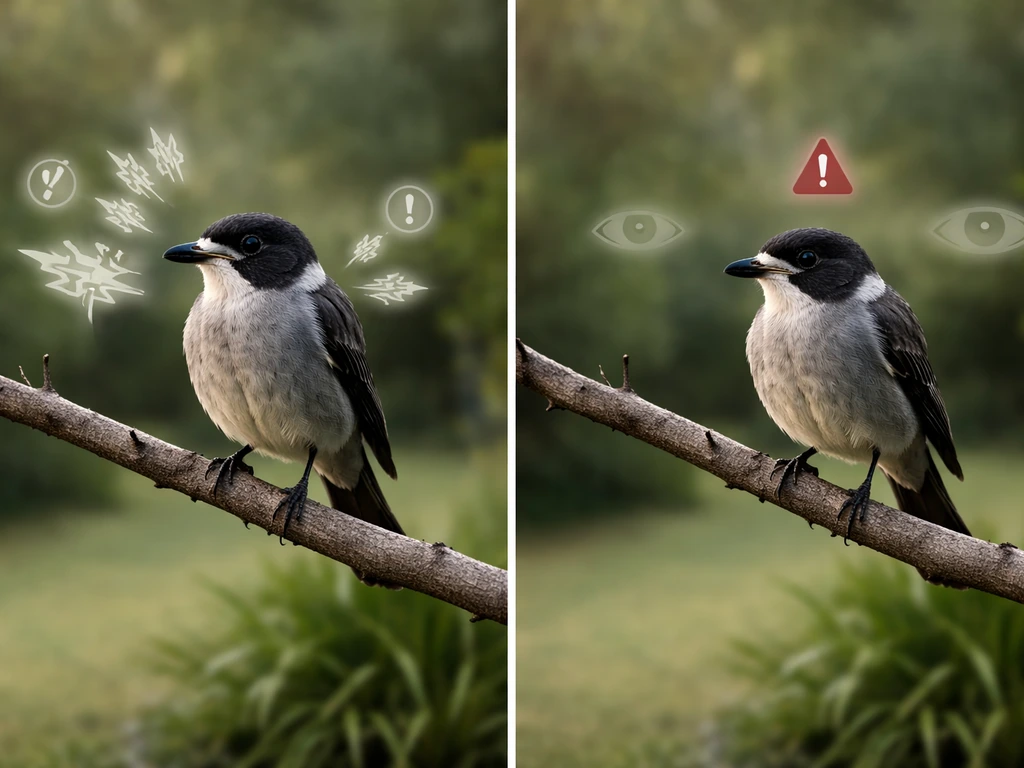
The call alone doesn't tell you everything. You need to factor in the setting, the bird's behavior, and the time of year. Here's a practical breakdown of what to look for:
- Harsh, repeated rattling or clicking sounds usually mean the bird feels threatened. Look for a predator nearby, including humans getting too close to a nest.
- A rising alarm call, especially if the bird is looking skyward, typically signals an aerial threat like a hawk overhead.
- Soft, musical trills or flute-like phrases during spring or early summer are almost certainly breeding-season communication, either a male advertising territory or courtship singing.
- A quiet subsong or whisper call, especially in wet or overcast conditions (more relevant for Australian butcherbirds), is a relaxed, low-stakes vocalization and not a warning.
- Food-begging calls (softer, repetitive) may come from juveniles or a female requesting food from a male partner during courtship feeding.
- If you're near a thorny shrub or fence line where prey has been impaled, you're likely in that bird's territory and any call you hear is territorial in nature.
Regional variation matters too. In North America, the Loggerhead Shrike is the common butcher bird across the south and open farmland, while the Northern Shrike appears in the north and along the Canadian border in winter. In Australia, the species varies by region: pied butcherbirds are widespread in the east, while grey butcherbirds occupy a broader range. The calls between these species are distinct, so knowing your location narrows down what you're actually hearing.
Why people mishear or misidentify the butcher bird's call
Misidentification is genuinely common with butcher birds, and it can lead people to assign the wrong meaning to what they heard. A few specific issues come up repeatedly.
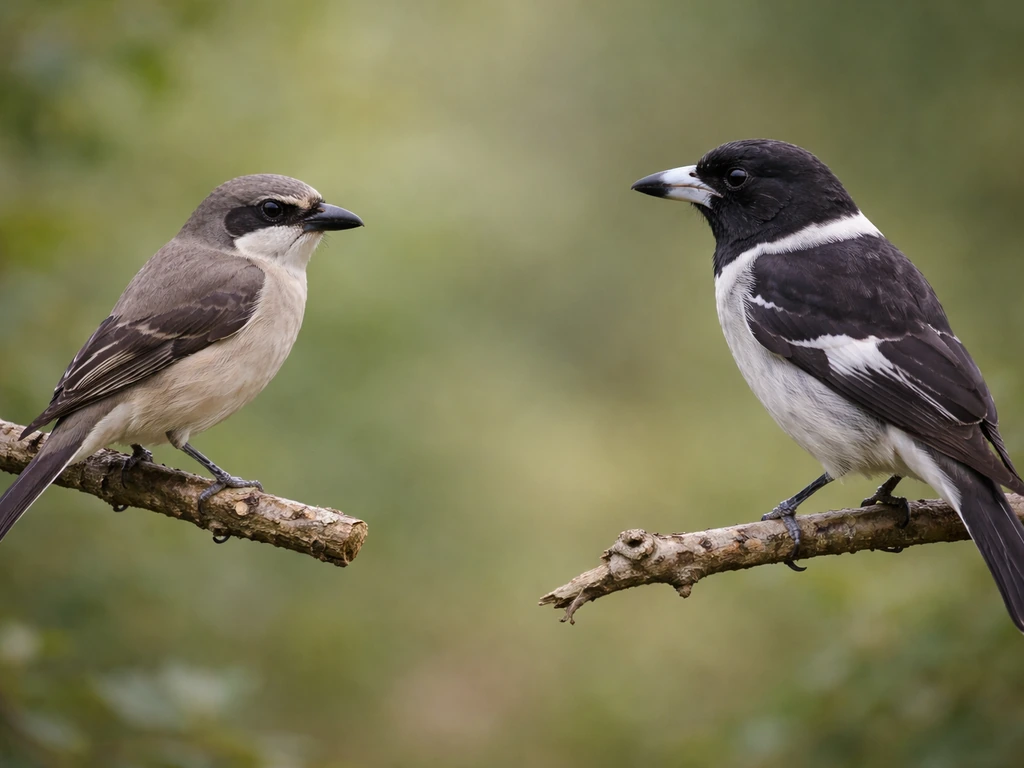
In North America, the Loggerhead Shrike and Northern Shrike are frequently confused. The key visual differences: the Loggerhead has a wider, bolder black mask that connects across the bill, while the Northern Shrike's mask is thinner and doesn't connect. The Northern Shrike also has fine barring on its underparts and is slightly larger. Their calls overlap in tone but differ in context since the Northern Shrike is a winter visitor to much of the US while the Loggerhead is a year-round resident in the south. If you're hearing a harsh shrike-type call in Minnesota in January, it's probably a Northern Shrike. In June in Georgia, it's almost certainly a Loggerhead.
In Australia, the pied butcherbird's mimicry is the biggest source of confusion. Because it can imitate other birds and even non-bird sounds, listeners sometimes can't identify what species they're actually hearing. If you hear what sounds like a melodic phrase that doesn't quite match any familiar bird, and you're in eastern Australia, a pied butcherbird doing its whisper song is a real possibility. The alarm 'reek' call is distinct enough to recognize once you've heard it, but the musical repertoire is wide enough to fool experienced birders.
| Feature | Loggerhead Shrike (N. America) | Northern Shrike (N. America) | Pied Butcherbird (Australia) |
|---|---|---|---|
| Mask | Wide, connects across bill | Narrow, doesn't connect over bill | Black hood, not a mask |
| Underparts | Plain white/gray | Finely barred | White belly, black back |
| Typical season | Year-round resident (south) | Winter visitor (north) | Year-round |
| Song character | Quiet trills, rasps, buzzes | Similar but slower, more musical | Flute-like, highly musical |
| Alarm call | Harsh rattle, sharp click | Harsh notes | Strident 'reek' |
| Mimicry | Rare | Rare | Common, extensive |
Using butcher bird call meaning in your writing
The butcher bird is one of the richest bird symbols available to writers precisely because it holds two contradictory qualities at once: beautiful song and gruesome behavior. That duality is the core of its symbolic value. Unlike the raven (pure darkness) or the dove (pure peace), the butcher bird sits in morally complicated territory, which makes it useful for characters or settings that resist easy categorization.
In fiction, you can use the butcher bird's call to foreshadow violence or danger without resorting to clichéd symbols. A character who hears a butcher bird singing beautifully before something terrible happens has encountered genuine dramatic irony because the bird really does sing while its larder hangs on nearby thorns. That's not invented metaphor; it's documented behavior you can lean into.
For symbolism, the butcher bird works well in themes about: predators disguised as ordinary things, the coexistence of beauty and brutality, methodical planning (the larder habit implies forethought), and small things with outsized impact. The Latin genus name Lanius literally means 'butcher,' so even the scientific name carries that weight if you want to reference it in literary or academic writing.
In everyday idiomatic use, you can call someone a 'butcher bird' to imply they're efficient and ruthless in a way that catches people off guard, someone who doesn't look dangerous until they've already made their move. It's a more specific and evocative alternative to calling someone a predator or a hawk. The image of the impaled prey on thorns adds a layer of premeditation that pure predator metaphors don't always carry.
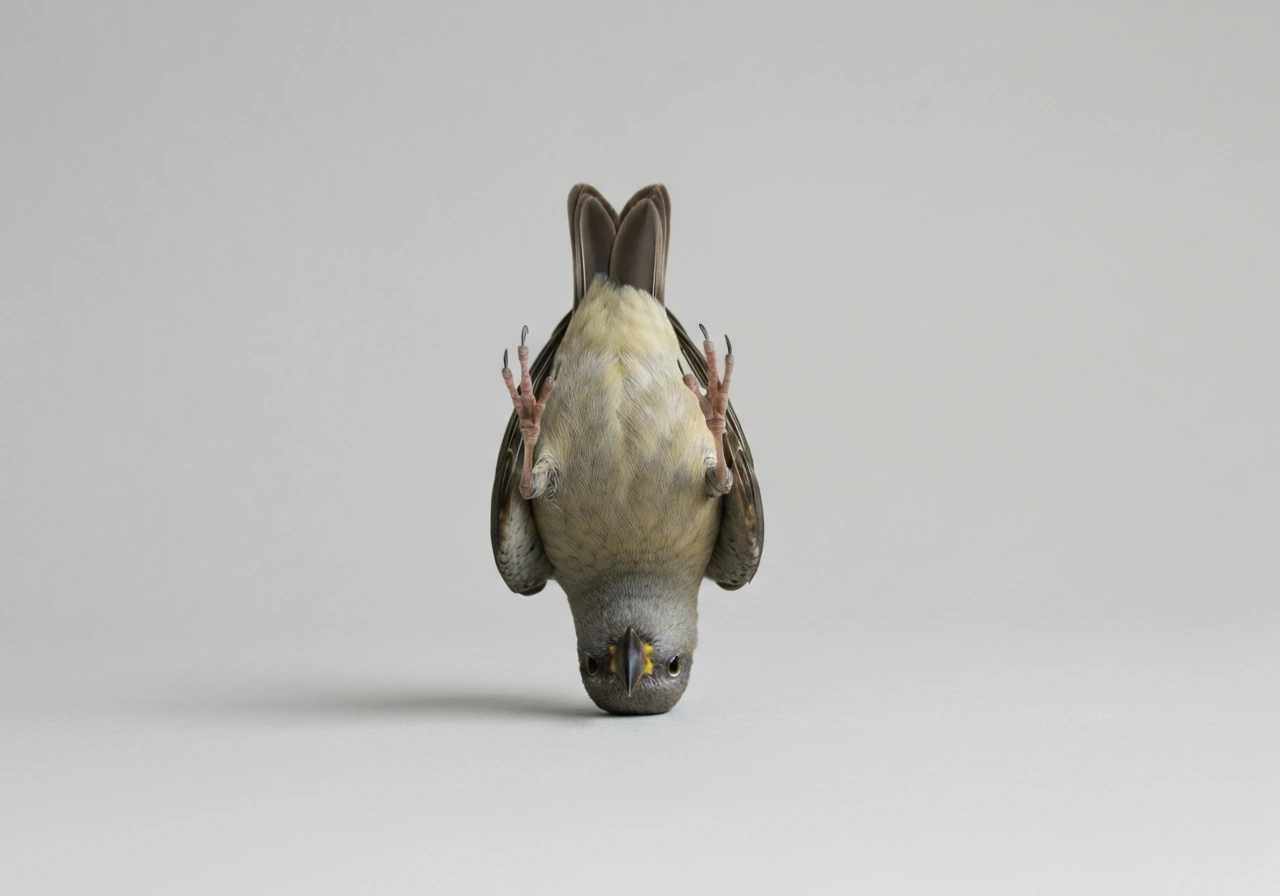
If you're writing about bird omens or interpreting what hearing a particular call might mean symbolically (similar to how people look up the meaning of unusual bird sightings or behaviors), the butcher bird's alarm call specifically can be read as a warning signal: the bird itself is alerting its environment to a threat. That's a symbolically loaded moment, and it connects naturally to the kind of bird-meaning questions readers explore across topics like unusual bird behavior or birds appearing in unexpected places. If you’re wondering about carnival bird meaning, the best interpretation depends on where the phrase comes from and what species or motif it’s connected to bird-meaning questions. If you're looking for the upside down bird meaning, it can also help to think about the specific posture and what the bird is doing in that moment bird-meaning questions.
FAQ
How can I tell if I’m hearing a butcher bird call or just a similar-sounding bird?
Focus on the pattern plus context. Loggerhead and Northern shrikes often mix quiet trills with harsher rattles or clicks, and the meaning usually changes when an intruder appears near a nest. If the sound is just one continuous melody without harsh interruptions, you may be hearing a different species rather than a shrike or butcherbird.
What should I do if I hear a harsh “alarm-like” call but I can’t find a predator?
Assume the bird is reacting to something you cannot see. Shrikes and butcherbirds may be responding to birds overhead, a cat or dog beyond view, or an unseen nest threat. Watch from a distance for 2 to 5 minutes, and note whether the bird moves toward cover or changes perch height.
Do butcher birds only call during breeding season?
No. Many people associate the more “vocal” courtship sounds with spring, but shrikes and butcherbirds still produce clicks, peeps, and alarm calls year-round. In winter, North America’s Northern Shrike is more likely to show up, so seasonal timing helps, but it does not explain every sound you hear.
If the call meaning depends on the bird, how do I identify the species quickly?
Use location first, then behavior. In North America, a shrike-like voice plus the presence of a bold impaling habit near fence lines or thorny vegetation strongly points to shrikes. In Australia, a melodious flute-type song or a “reek” alarm that matches a butcherbird alert is a better shortcut than trying to identify only by one note.
Why does the pied butcherbird sound like it is copying other animals or songs?
Pied butcherbirds can produce a whisper song or subsong that may include mimicry of other birds and even non-bird sounds. If what you hear sounds “too familiar,” treat it as performance rather than proof of another species, especially in eastern Australia.
Can “butcher bird” mean different things in everyday conversation, not just bird calls?
Yes. People use “butcher bird” figuratively to describe someone efficient and ruthless, even when no literal bird is involved. If you’re trying to interpret symbolism, distinguish whether the context is wildlife observation or a character description, since the meaning is unrelated to the animal’s actual call.
What’s the most common mistake people make when interpreting butcher bird call meaning?
Overgeneralizing a single sound. A butcher bird has multiple call types, and the same bird can sound different depending on nest defense, threat level, or breeding activity. The practical fix is to pair the sound with what the bird is doing, for example, scanning, low-perch alert, or feeding at a nest.
How do I avoid confusing Loggerhead and Northern Shrikes by ear alone?
Use time and geography alongside the sound. Northern Shrikes are more likely in the north and around winter months, while Loggerheads are more likely year-round in the southern U.S. If you can observe briefly, visual mask differences matter too, but “just the call” can overlap enough to mislead.
If I hear a “descending note” or rasp, does that automatically mean courtship or danger?
Not automatically. Descending notes can appear within the broader song repertoire, but courtship vs alarm usually comes down to the bird’s immediate behavior, such as whether the bird is responding to an intruder near the nest. Alarm contexts tend to be sharper, more urgent, and paired with alert movements.
Is it possible the “butcher bird call meaning” I read online doesn’t match what I hear?
Yes, because many sources describe specific call types or species, while listeners encounter a different butcher bird or a different moment (subsongs, begging notes, or nest defense). If your audio seems inconsistent with the description, re-check which species is likely in your region and whether the bird appears to be courting, feeding, or defending.
Next Article
Upside Down Bird Meaning: What It Signifies and How to Tell
Learn the upside down bird meaning, how inversion changes symbolism, and how to verify context in captions, art, or tatt