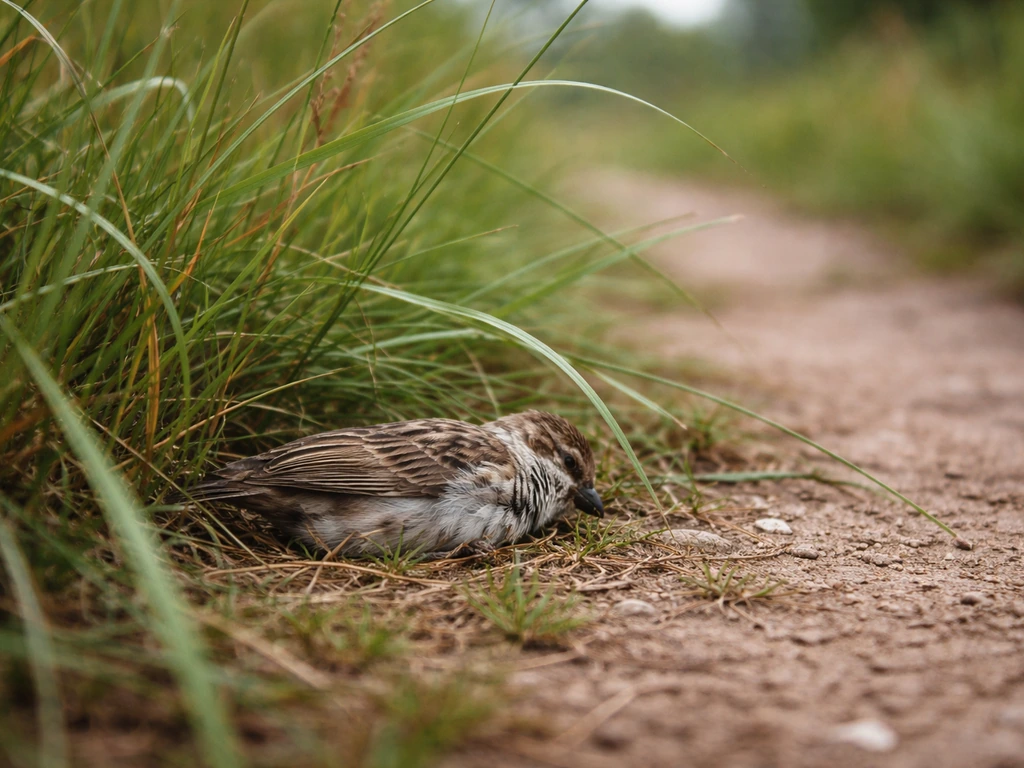
Finding a dead bird in tall grass almost always has a perfectly ordinary explanation: the bird died from a window strike, predator attack, illness, or old age, and the grass is simply where it ended up (or where it crawled to hide before dying). That is the plain answer. The symbolic layer, the one that makes people search for "meaning," comes from thousands of years of folk belief that treats dead birds as omens of change or death.
Dead Bird Tall Grass Meaning: Plain Explanation and Origins

Marcus Reeves
27 Apr 2026
A common question people have is the butcher bird call meaning, but like other omens, it is usually tied to folklore and context rather than a guaranteed prediction. Both readings are real, depending on what you are actually asking, and this guide walks through both so you leave with a clear picture.
What finding a dead bird in tall grass usually means
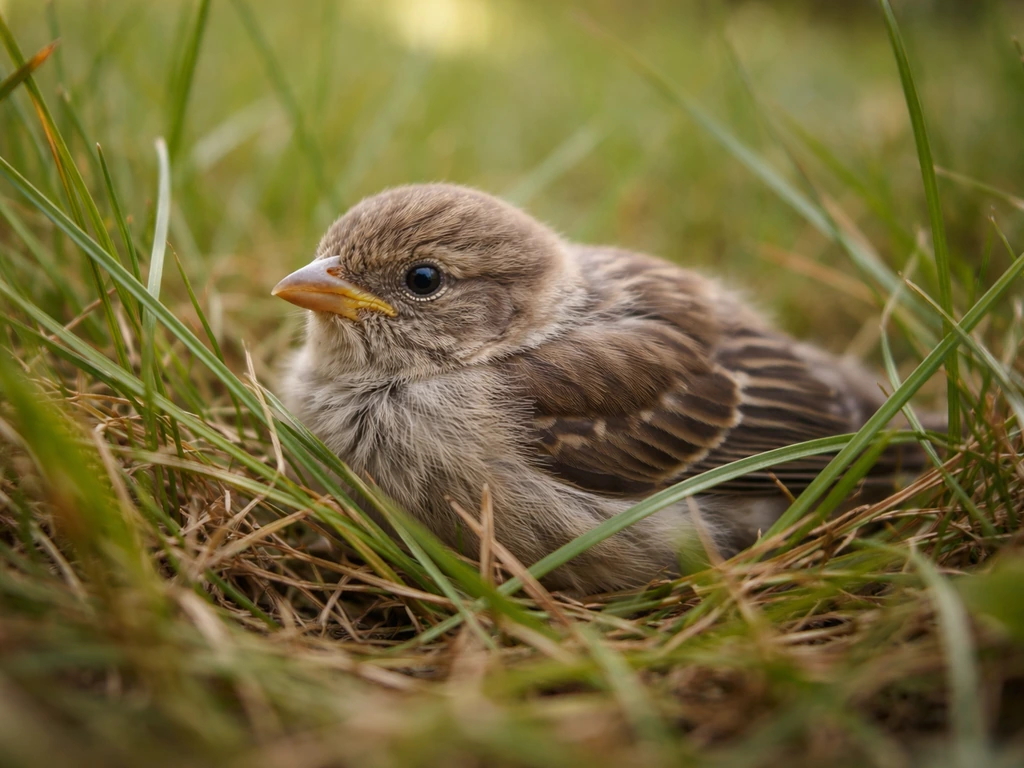
In plain, practical terms, a dead bird in tall grass is a wildlife observation, not a message. Birds die constantly from causes that have nothing to do with you: collisions with windows or vehicles, predation by cats or hawks, disease, parasites, and simple old age. Tall grass is a common spot to find them because it is concealed, which means you are less likely to notice a bird that dies there, and because injured or sick birds instinctively seek cover rather than open ground. The grass did not cause the death and does not change the meaning. It is just where the bird ended up.
The second plain-language reading people attach to the phrase is a public health or wildlife concern, especially if the bird shows signs of neurological illness (circling, tremors, paralysis) or if you find more than one dead bird in the same area. In those cases, the "meaning" shifts from sad find to possible disease signal. Agencies like the CDC specifically note that dead bird clusters can be early indicators of West Nile virus or avian influenza, so context like species, numbers, and apparent condition matters a lot.
Symbolism, folk belief, and what the omen tradition actually says
The symbolic reading of a dead bird is old, widespread, and genuinely varied. In most folk traditions across Europe and North America, a dead bird signals change or transition, and is often (though not always) read as a bad omen. The key thing most omen systems agree on is that the meaning is not fixed: it depends on the bird species, the location, the direction it was facing, and the local tradition. A dead crow in one culture might signal death; in another, it might mean old patterns ending and new ones beginning. Treating any single dead bird as a definite warning of something specific is not how the tradition actually works.
The role of tall grass in folk symbolism is more of a modern metaphorical layer than an ancient one. Tall grass appears in storytelling and superstition as a place of concealment, of things hidden from plain sight, of secrets or dangers not yet visible. So when the image of a dead bird in tall grass shows up in contemporary spiritual or omen content, the grass amplifies the reading: something is hidden, something is being revealed, or a warning was almost missed. That framing is evocative but it is a modern interpretive addition rather than something rooted in classical omen tradition.
Welsh folklore gives one of the more specific "bird of death" examples: the Aderyn y Corff, a supernatural creature associated with portending death, is a genuine piece of recorded folk belief. British magpie lore, captured in the "One for Sorrow" nursery rhyme, traces bird-omen thinking back to the early 1500s. These are the real roots of the instinct many people feel when they see a dead bird and think it means something. The instinct is ancient; the tall grass detail is modern texture added on top.
Where the idea comes from historically
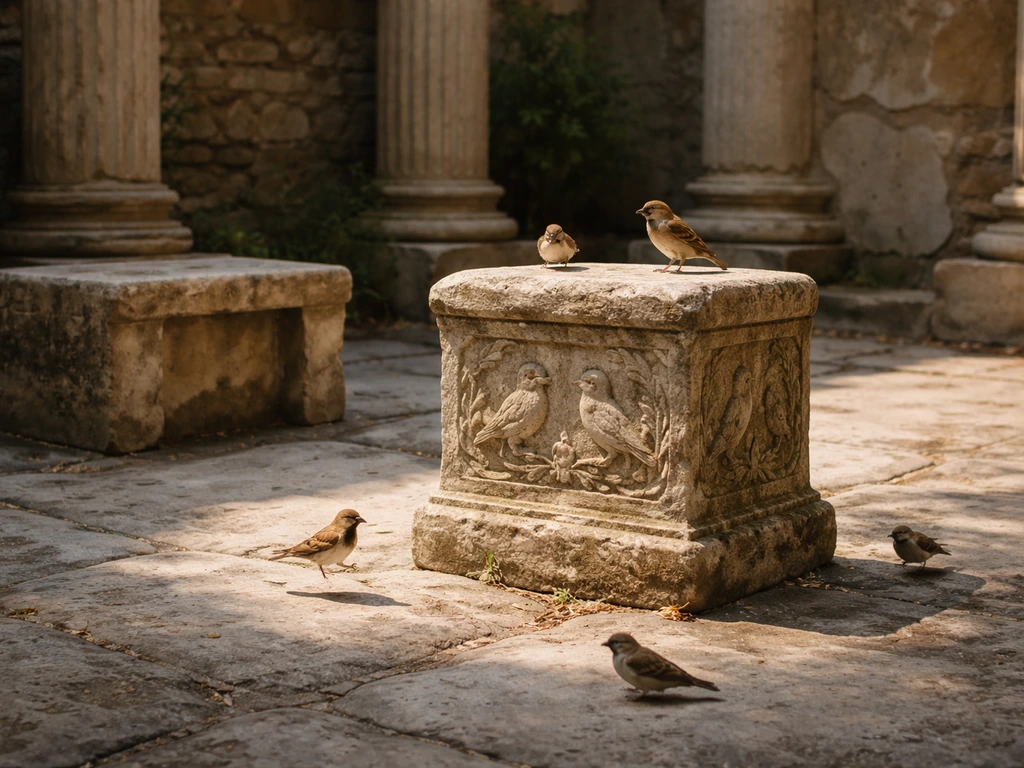
The practice of reading omens from birds is called ornithomancy, and it is genuinely ancient. Greek and Roman augurs made it an official institution: the behavior, flight path, and even the appearance of dead birds could all be interpreted as messages from the gods. Homer's Odyssey includes an early recorded version of the motif, where a dead dove in an eagle's talons is read as an omen. From ancient augury, bird-sign reading filtered into medieval European folk belief, then into the nursery rhymes, superstitions, and rural traditions that most English-speaking people grew up hearing fragments of.
The specific phrase "dead bird in tall grass" as a search term is contemporary internet vernacular, not a centuries-old expression. People type it because they found something, felt unsettled, and wanted an explanation. The underlying anxiety, that a dead bird carries a message, has very deep roots in ornithomancy and cross-cultural omen belief. But the phrase itself is not a fixed idiom the way "one for sorrow" is. It is a modern way of describing an encounter and asking what it means.
How birds as signs fit into literature, culture, and everyday language
In literature and cultural shorthand, dead birds almost universally signal endings, transitions, lost innocence, or hidden danger. Harper Lee's "To Kill a Mockingbird" treats the dead mockingbird as a symbol of destroyed innocence. Poe's raven, though living, carries a death-adjacent weight that has influenced how readers interpret birds in general. In everyday speech, people use "dead bird" imagery informally to mean something that felt like a warning in hindsight, a bad omen they ignored, or a sign they should have noticed earlier. "I found a dead bird right before everything fell apart" is the kind of sentence that shows up in personal essays, memoirs, and casual conversation all the time.
This connects to the broader site context of how birds function in language and symbolism. The same instinct that drives people to wonder about a dead bird in tall grass also drives curiosity about what specific species or encounters mean symbolically. If you are looking for a carnival bird meaning in particular, the safest approach is to treat it as folklore context rather than a fixed prediction wonder about a dead bird in tall grass.
People sometimes also look up upside down bird meaning to understand how posture and symbolism vary by tradition. Similar interpretive questions come up around a dead bird showing spread or positioned wings, or around unusual bird appearances in specific settings. The common thread is the human impulse to find pattern and meaning in natural encounters with birds, which has a documented history stretching back to ancient augury.
What to actually do when you find one today
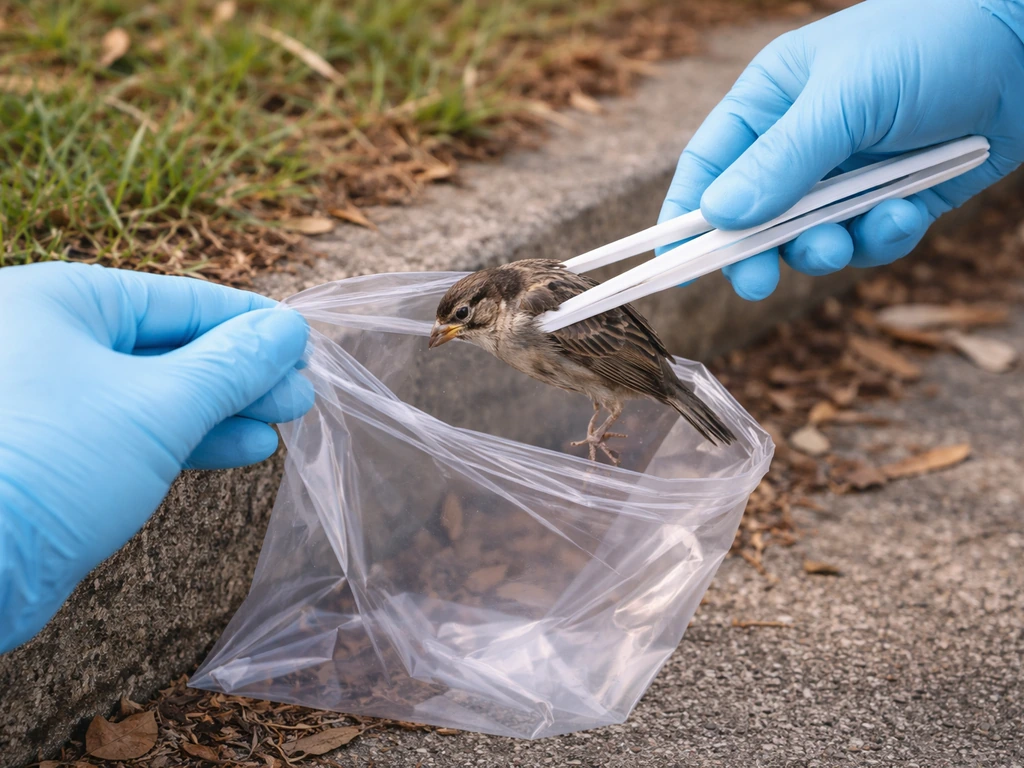
Whatever symbolic meaning you attach to the find, the practical steps matter for your health and for wildlife monitoring. CDC advises avoiding direct contact with a dead bird, and if you need to pick it up, using gloves or an inverted plastic bag to place it into a garbage bag blank" rel="noopener noreferrer">avoid direct contact with a dead bird. Here is the straightforward process: If you are wondering about dead bird wings meaning specifically, focus on the situation and the bird's condition rather than assuming a single message.
- Do not touch the bird with bare hands. The CDC is clear on this: dead wild birds can carry pathogens including West Nile virus and avian influenza, and bare-handed contact is the main risk to avoid.
- Use disposable waterproof gloves if you have them. If you do not, use an inverted plastic bag over your hand like a glove, or scoop the bird with a shovel into a bag without touching it directly.
- Double-bag the bird in plastic bags and seal them. Dispose of the package in a trash receptacle that children and pets cannot access.
- Wash your hands thoroughly with soap and water after handling, even if you wore gloves.
- Keep pets away from the carcass. Dogs and cats can pick up pathogens from dead wild birds.
- Note the species if you can identify it, and note whether there are other dead birds nearby. This context matters for whether you should report it.
- If you find more than five dead birds in the same area, contact your local health department or wildlife agency. In the US, local health departments in states like Illinois are authorized to collect dead birds for West Nile or avian influenza testing. In the UK, report to Defra and APHA by phone at 03459 33 55 77.
- If the bird is a waterfowl species (duck, goose, heron) or a shorebird, agencies like Rhode Island DEM and similar state/regional bodies specifically ask for reports of sick, dying, or recently dead individuals given H5N1 surveillance priorities.
A single small songbird with no obvious signs of illness and no others nearby does not typically require a report, just safe disposal. The threshold where it becomes a public health matter is clusters, unusual species, or birds showing neurological symptoms before death.
Quick reference: when to report vs. when to just dispose safely
| Situation | Recommended action |
|---|---|
| Single small bird, no symptoms visible, no others nearby | Safe disposal using gloves and double bagging; no report needed in most regions |
| Bird showed neurological signs (circling, tremors) before death | Contact local health department or wildlife agency for guidance on testing |
| 5 or more dead birds in the same area | Report to local health department (US) or Defra/APHA (UK) immediately |
| Waterfowl (duck, goose, swan, heron) | Report to state/regional wildlife or public health authority given H5N1 surveillance |
| Dead bird near a body of water in summer | Consider West Nile virus context; report to local health department if in doubt |
| UK, any dead wild bird found | Can report to Defra/APHA at 03459 33 55 77 for possible collection and testing |
How to talk or write about this meaning without sounding confused
If you are a writer or just trying to describe the experience accurately, the most useful thing to know is the distinction between the omen reading and the practical reality. You can hold both without conflating them. Some example phrasings that work well in different contexts:
- For a personal essay or memoir: "I found a dead sparrow in the tall grass that morning. I know it was just a bird. But I have never been able to shake the feeling that something was ending." (This acknowledges the omen instinct without claiming it as fact.)
- For fiction: "She read it as a sign, the way people always do with dead birds, hunting for meaning in something that probably just flew into a window." (This lets a character interpret the omen while the narration stays grounded.)
- For casual conversation: "Some people take it as a bad omen, which goes back to really old bird-reading traditions. Practically speaking, you just want to make sure you handle it safely and report it if there are a bunch of them."
- For a research or cultural context: "The association between dead birds and ill omens is rooted in ornithomancy, the ancient Greek and Roman practice of reading signs from birds, which later filtered into European folk belief and persists in modern superstition."
- For a public health or community context: "If you find a dead bird, especially near water in summer or in a cluster of more than five, it is worth contacting your local health department. West Nile and avian influenza surveillance both rely on those reports."
The mistake most people make when writing about bird omens is presenting the symbolic reading as a definitive meaning rather than as a cultural interpretation with a long history. The omen tradition is real and worth taking seriously as folklore. It just is not a diagnosis. Keeping that line clear makes your writing (or your conversation) more credible and more interesting, because you are showing you understand both layers rather than flattening one into the other.
FAQ
Does the “dead bird tall grass meaning” change if the grass is near my home or inside a yard?
Location matters mainly for practical response, not for fate. If it is near doors, driveways, or windows, the likely causes shift toward collisions or pets, and you should look for patterns (same species repeatedly, fresh window strikes). If it is truly inside a property boundary, increase your chance of reporting only if you see clusters or abnormal condition.
What if the bird is not fully dead, it is moving or can be revived?
Treat it as an animal welfare situation first. Keep people and pets away, avoid handling unless you know how, and contact a local wildlife rehabilitator. If you do touch it, use gloves and wash hands afterward, because disease risk is higher when an animal looks sick or neurologically off.
How can I tell whether it is a health warning versus a normal accidental death?
Use condition and pattern. Neurological signs (tremors, circling, paralysis), unusual lethargy, open-mouth breathing, or more than one dead bird in the same short time window point toward a public-health check. A single small bird with no odd behavior signs, especially after a storm or near a window, often fits collision or predator-related death.
Does species change the meaning people assign to “dead bird tall grass”?
Yes for folklore interpretations, but not for the biological causes. Crows, ravens, magpies, and raptors have richer omen histories in many regions, while small songbirds often get interpreted more loosely. Practically, report based on the animal’s apparent condition and whether multiple species show up, not on the symbolism you associate with the species.
Why do some people say direction matters, like where the bird was facing?
Direction is a common omen detail in folk retellings, but it is unreliable for diagnosis because scavenging, wind, and the way a bird collapses can leave it oriented almost randomly. If you want to use direction for storytelling, treat it as part of the narrative, not as evidence of what caused the death.
What if there are multiple dead birds, but they are spread out across different areas?
Clusters close in time and geography are the red flag. If birds are far apart, consider broader factors such as weather events, seasonal migration, or staggered window strikes rather than a single localized outbreak. For reporting, tell officials the dates, exact locations, and species, because that helps them judge whether it is a true cluster.
Should I clean the area where I found the bird, and what precautions matter?
Yes, but do it safely. Wear gloves, avoid sweeping dry material (use paper towels or damp method), and disinfect the surface if it was on hard ground. If the bird was fresh or showed illness signs, wash hands thoroughly and keep kids and pets away until cleanup is complete.
Is tall grass itself dangerous, like it caused the death?
Usually no. Tall grass is mostly concealment, it can trap an injured bird or delay observation, but it does not typically kill birds directly. If the bird seems entangled or there is obvious injury from a mechanism like mowing, that is a more actionable clue than the grass height itself.
When should I report to a wildlife or public health agency?
Report when you have any of the following: multiple dead birds in the same area within a short time, birds with neurological symptoms, unusual die-offs of the same species, or birds found repeatedly near a shared risk source (like one specific building). If it is one isolated find with no symptoms, many jurisdictions recommend just safe disposal and monitoring.
How should I write about this without making it sound like a guaranteed omen?
Use conditional language and separate layers. You can say the encounter felt omen-like or that folklore reads birds this way, then immediately pivot to practical realities (window strikes, predation, illness). Avoid presenting one bird as proof of a specific future event, unless you clearly frame it as a personal interpretation.
Next Article
Thirst Reckoned Bird North Meaning Explained and Decoded
Decode the riddle phrase thirst reckoned bird north meaning: idioms, symbolism, and direction clues to find likely inten