Here's the honest answer: "bird on the head" is not a fixed, standardized idiom in English the way "a bird in the hand" or "flip the bird" are. You won't find it in Cambridge, Dictionary. com, or [major idiom indexes](https://www. dictionary.
Bird on the Head Idiom Meaning, Origin, and How to Use It

Marcus Reeves
17 May 2026
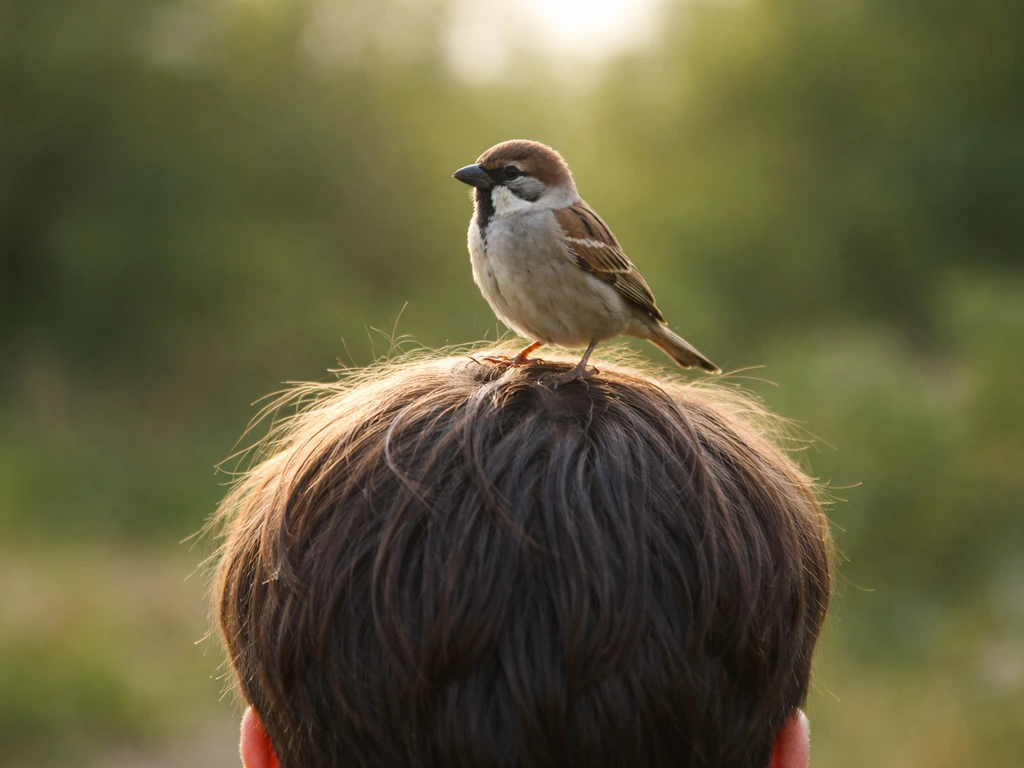
com/e/idioms/) with a single agreed-upon figurative meaning. In most everyday contexts, the phrase is used literally or humorously, and its most recognizable modern appearance is actually the title of a beloved children's book. That said, when people do use it in a figurative or teasing way, the implied meaning is usually one of blissful unawareness: someone going about their business while something odd, embarrassing, or absurd is happening to them that everyone else can see.
If you are looking for the a goal bird idiom meaning, the same oblivious-but-not-malicious vibe usually explains how people are using it blissful unawareness. If you want to give the bird idiom meaning, start by deciding whether you're talking literally, about the Mo Willems book, or about playful obliviousness. Think of it as a cousin to "you've got something on your shirt" but cranked up for comic effect.
Where the phrase comes from (and why it's fuzzy)
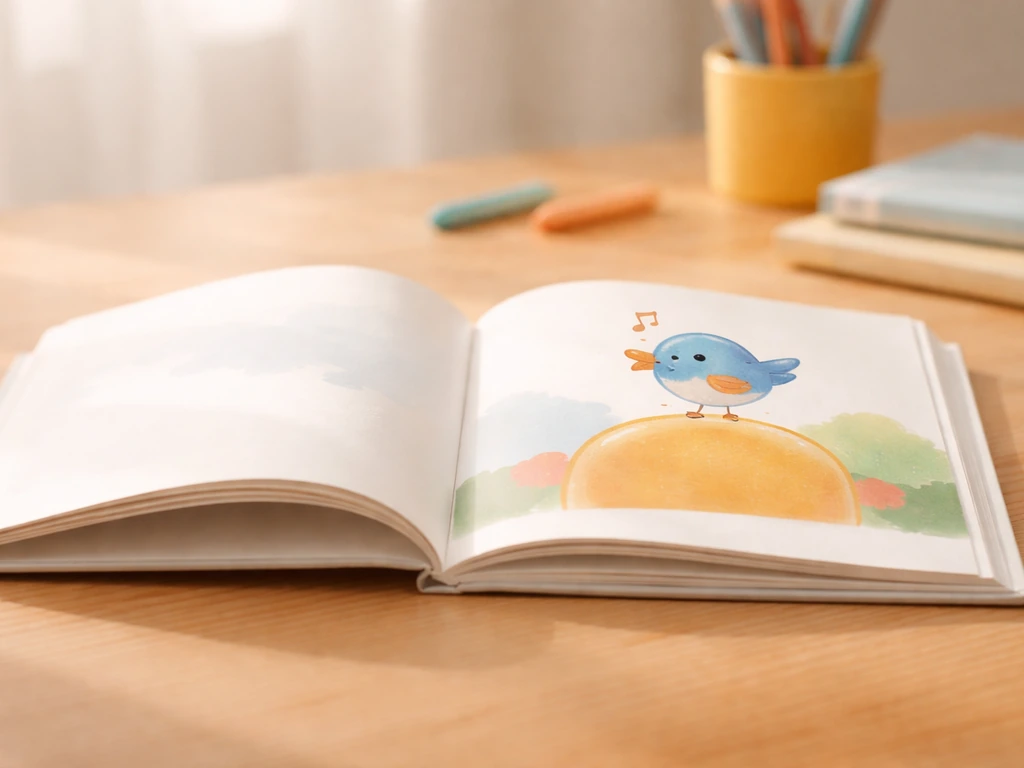
The phrase doesn't have a clean, traceable origin story the way older proverbs do. What it does have is a very clear cultural anchor: Mo Willems' 2007 children's book "There Is a Bird on Your Head!", part of the wildly popular Elephant and Piggie series. In that story, Gerald the elephant is completely unaware that birds have nested on his head, while his friend Piggie has to keep breaking the news to him. The book's whole comedic engine runs on that gap between what the character knows and what everyone else can see. That setup is actually a perfect visual metaphor for the phrase's figurative use in adult conversation, even if the book itself is written for young readers.
Beyond that book, Google Books searches for the phrase turn up mostly literal references: birds physically landing on people, pet parrots or conures perching on their owners' heads, and humorous accounts of wild birds swooping down in public. There's no documented chain of usage in literature or slang that gives "bird on the head" a fixed figurative definition. That's actually important context for using the phrase correctly, because it means the meaning depends almost entirely on tone and delivery.
What it means when used figuratively
When someone uses "bird on the head" (or "there's a bird on your head") in a non-literal, figurative way, the implied attitude is almost always one of two things: gentle teasing about someone's obliviousness, or a kind of bemused sympathy for someone in an absurd situation they haven't noticed yet. People sometimes also search for kingpin meaning bird, but it is a different phrase and not the same as “bird on the head. ”.
The phrase is often treated as the proverbial bird in the punch bowl meaning, pointing to a glaring problem someone hasn't noticed yet implied attitude. The tone is rarely mean-spirited. It's more like pointing out someone has spinach in their teeth, except with the added layer of the image being inherently funny. The humor comes from the visual absurdity of a bird sitting on a person's head while they carry on normally.
In casual adult usage, you might hear something like "he's giving a whole presentation and has no idea, total bird on the head situation" to describe someone confidently unaware of a glaring problem. The phrase frames the speaker as the knowing observer and the subject as the cheerfully clueless party. That asymmetry is the core of the joke.
How to use it naturally in conversation

Because this isn't a rock-solid idiom with a dictionary entry behind it, you need to lean on context when you use it. English Stack Exchange discussions similarly treat “bird on your head” as usually literal or humorous rather than a fixed idiom with a single dictionary meaning. The safest approach is to use it either literally (which is always clear) or in a way that makes the figurative meaning obvious. Saying "classic bird on the head moment" works in a group that gets the reference or the visual joke. Dropping it cold into a formal or unfamiliar conversation risks confusion because the listener may not know whether you mean an actual bird.
It works best as a descriptor or a shorthand punchline rather than as the main point of a sentence. Think of it as a gesture toward a shared understanding: "it's one of those bird-on-the-head things," meaning the person at the center of the story is the last to know about something obvious. In written fiction or casual storytelling, it can also work as a quick way to signal dramatic irony, since dramatic irony is exactly what the Mo Willems book dramatizes so well.
Where you're most likely to run into this phrase
The contexts where "bird on the head" shows up most often are worth knowing, because they shape how you read the phrase when you encounter it.
- Children's literacy and education: The Mo Willems book is widely taught in early elementary classrooms, so teachers, parents, and education bloggers use the phrase constantly as a literal reference to the story.
- Social media and casual storytelling: People share literal stories of birds landing on their heads in public, often played for laughs or attached to superstition (getting pooped on by a bird is supposed to be lucky in some traditions).
- Figurative teasing among friends: When used to describe someone's unawareness, it tends to appear in group chats or casual conversation, usually with a laughing tone.
- Fiction writing: Writers sometimes borrow the image to signal dramatic irony or a character's blissful ignorance, especially in light comedy or children's writing.
- Cultural commentary: Occasionally used online to describe public figures or coworkers who are confidently oblivious to something obvious going on around them.
Common misconceptions and phrases people mix it up with
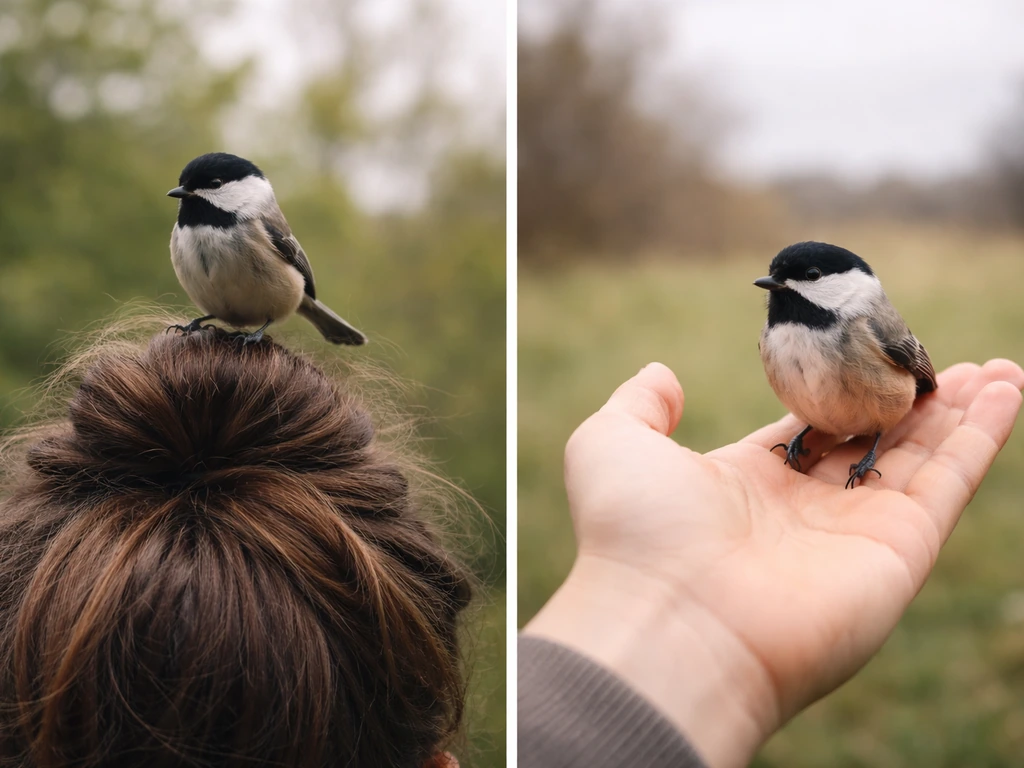
The biggest misconception is assuming "bird on the head" is a well-established idiom with a fixed meaning you're supposed to already know. It isn't. If someone uses it and you're not sure what they mean, asking for clarification is completely reasonable. Unlike "a bird in the hand is worth two in the bush," which has centuries of documented usage and a clear meaning (something you already have is more valuable than something you're chasing), "bird on the head" has no equivalent pedigree.
People also sometimes conflate it with the gesture-based expression "flip the bird" (extending the middle finger as an insult), which has nothing to do with unawareness or absurdity and carries a much sharper, ruder tone. The two expressions don't overlap in meaning or usage at all.
Another phrase that occasionally gets confused in the mix is "bolt the bird," which carries its own specific meaning in certain contexts. If you’re specifically wondering about bolt the bird meaning, that phrase is its own separate meaning in certain contexts, not a synonym for bird on the head.
And if you've come across "put a bird on it" from the Portlandia sketch, that's a separate cultural reference entirely, poking fun at a particular aesthetic trend rather than describing anyone's unawareness. In contrast, "Portlandia" using "put a bird on it" has a different, local-elite joke meaning tied to branding and aesthetic trends. If you're seeing the “put a bird on it” version from Portlandia, that's referring to the “decorative add-on” catchphrase rather than the oblivious bird-on-the-head meaning.
| Phrase | Actual meaning | Tone |
|---|---|---|
| Bird on the head | Oblivious to something obvious happening around you (informal, non-standard) | Playful, gently teasing |
| A bird in the hand | What you have now is more valuable than what you might get later | Practical, cautionary |
| Flip the bird | Extending the middle finger as an insult or expression of contempt | Rude, confrontational |
| Put a bird on it | Slapping a bird design on something to make it seem artsy (Portlandia reference) | Satirical, ironic |
| Bird-brained | Describing someone as scatterbrained or not very smart | Mildly insulting, informal |
Examples in sentences and common variations
Here's how the phrase can show up across different registers, from literal to figurative, so you have a feel for the range.
- Literal: "I was walking through the park and a pigeon landed on my head. A stranger yelled, 'There's a bird on your head!' and I panicked."
- Figurative (teasing): "She's been walking around all day thinking the meeting went great. Total bird on the head situation."
- Figurative (dramatic irony in writing): "He smiled confidently at the crowd, unaware of the chaos unfolding behind him. It was a bird-on-the-head moment if there ever was one."
- Variation with more context: "Nobody told him his mic was on during the break. Classic bird on your head energy."
- Humorous/superstition: "A bird pooped on my head this morning. Apparently that means good luck is coming. I'm choosing to believe it."
- Children's book reference: "We read 'There Is a Bird on Your Head!' in class today. The kids lost it every time Gerald didn't notice."
The variations tend to cluster around the same core idea: the contrast between what someone knows and what's plainly visible to everyone else. Whether you say "bird on the head," "bird on your head moment," or just "bird on the head energy," the implied meaning stays consistent in context.
Related bird idioms you might be mixing up
If you landed here while trying to sort out a tangle of bird-related expressions, you're in good company. English has a surprising number of them, and they don't always play nicely together.
A few that often come up in the same conversations as "bird on the head" include the idea of someone being bird-brained (scatterbrained rather than oblivious), the phrase "to give the bird" (which, like "flip the bird," is about contempt rather than unawareness), and the proverbial "bird in the punch bowl" image, which describes something that ruins the mood for everyone in the room.
None of these overlap meaningfully with the "bird on the head" image of cheerful, innocent unawareness. Keeping them distinct makes your usage cleaner and clearer.
The bottom line: when you hear or read "bird on the head," ask yourself first whether it's literal (very common), a reference to the Mo Willems book (also common, especially in education contexts), or a figurative nod to someone's obliviousness (less common, but the most interesting use). Once you know which register you're in, the meaning clicks into place immediately.
FAQ
Is “bird on the head” the same as “bird in the punch bowl”?
No. “Bird in the punch bowl” is about ruining a good situation for everyone, while “bird on the head” points to one person being oblivious to something obvious (usually with a playful, teasing tone).
What should I say if I want to be understood but I am not sure the phrase will land?
Use a hybrid version that keeps the idea clear, for example, “It’s one of those ‘there’s a bird on your head’ moments,” then quickly explain the situation (something embarrassing or absurd that others notice first).
How can I tell whether the speaker means literal or figurative?
If the sentence includes real context like pets, weather, or someone physically getting something on their head, it is likely literal. If it is describing a social moment where others can see the problem but the person cannot, it is figurative and usually implies gentle teasing or amused sympathy.
Is it ever rude or insulting to call someone “bird on the head”?
Usually no, but it depends on delivery. If you say it like mockery during a serious moment, it can come off as belittling. Safer approach, add softening language like “poor guy” or “unaware” instead of sounding like you are laughing at them.
Can I use it in professional settings, like meetings or presentations?
Better sparingly. In formal settings, listeners may not recognize the expression, so it can confuse people. If you do use it, pair it with a neutral explanation, such as “There was an obvious issue everyone noticed, but you didn’t.”
Does the phrase work with people who are not aware because of disability or safety issues?
Be careful. If “unawareness” relates to accessibility needs, vision, hearing, or safety risks, the humor can be inappropriate. In those cases, describe the issue directly and respectfully rather than using a jokey shorthand.
What is the correct wording, “bird on the head” versus “there’s a bird on your head”?
Both are used, but “there’s a bird on your head” is more clearly warning-like, like telling someone they have something obvious on them. “Bird on the head” is more like a label for a situation or personality vibe, for example, “that’s pure bird-on-the-head energy.”
What common mistake should I avoid when quoting or writing it?
Do not treat it like a fixed idiom with a universally agreed definition. Since it is not consistently indexed as a single idiom, clarity comes from tone and the surrounding details, especially if your audience might not know the Mo Willems book reference.
Is it ever confused with “flip the bird” or “to give the bird”?
Yes, and they are different. “Flip the bird” and “to give the bird” are about contempt or profanity, not blissful unawareness. If there is any risk of misunderstanding, avoid the shorthand and state what you mean (unnoticed issue, not insult).
Next Article
Proverbial Bird in the Punch Bowl Meaning and Origin
Proverbial bird in the punch bowl meaning: origin, usage, variations, examples, and synonyms for subtle disruptions