
"Bird-brained" means silly or stupid. That's the short answer. Collins, Dictionary.com, and Merriam-Webster all land in the same place: it's an informal adjective used to describe someone (or something) that seems foolish, scatterbrained, or not very sharp. If someone calls your idea "bird-brained," they think it's dumb. If they call you bird-brained, they think you're acting foolish. It's rarely a compliment, though context matters more than you might expect.
What Does Bird-Brained Mean? Idiom, Tone, and Examples

Marcus Reeves
18 Apr 2026
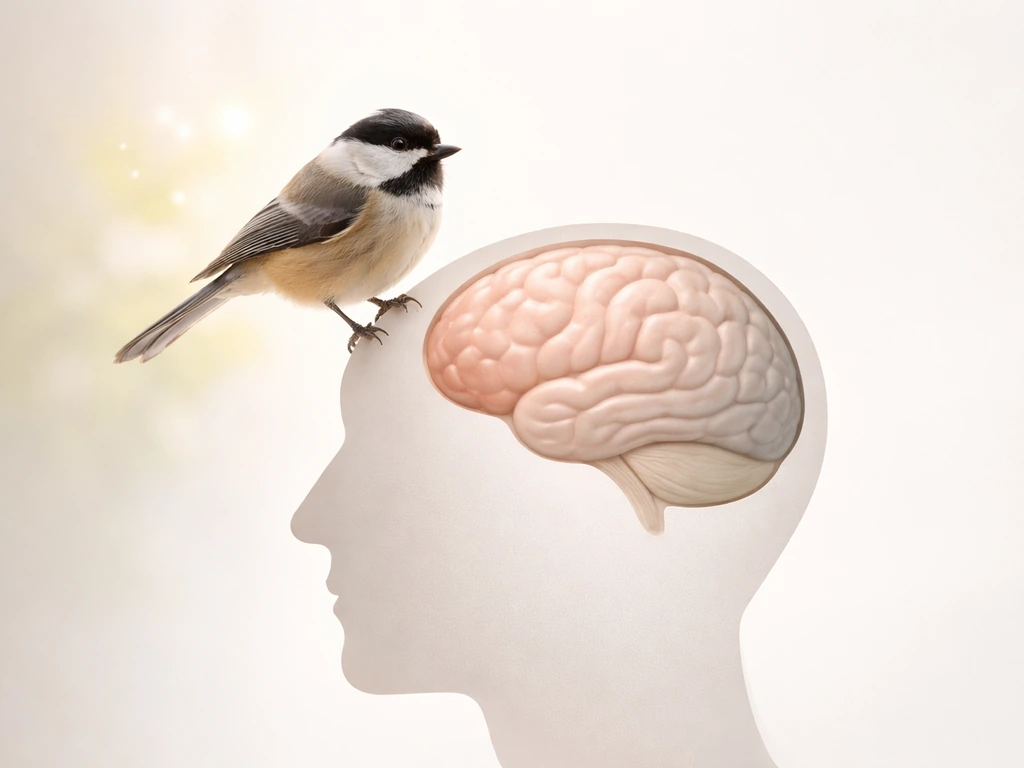
What "bird-brained" actually means
The core meaning is pretty consistent across major dictionaries. Collins tags it as informal and defines it as "silly; stupid." Merriam-Webster's related noun entry for "birdbrain" calls it simply "a stupid person." Cambridge goes the same route. Wiktionary adds a slightly softer framing: "silly and frivolous; empty-headed," which gets at something important. Bird-brained isn't really a clinical judgment about IQ. It's more of a social and behavioral label. You're not calling someone clinically unintelligent so much as you're saying they're flighty, unfocused, or making poor decisions. The stereotype is about a lack of mental substance, not a measured cognitive shortfall.
You'll also see it spelled "bird brained" (two words, no hyphen) and "birdbrained" (fused, no hyphen). All three versions mean the same thing. Collins prefers the hyphenated "bird-brained" as the adjective form. Merriam-Webster uses the fused "birdbrained." Cambridge has a dedicated entry for "birdbrained" too. In practice, any of these spellings will be understood immediately, and you shouldn't read anything meaningful into which version someone uses.
Intelligence vs. personality: what the word is really judging

Here's a nuance worth understanding. When someone calls a person bird-brained, they're usually commenting on behavior and attitude more than raw intelligence. The semantic core, as Wiktionary frames it, is about being "empty-headed" and "frivolous." IdiomOrigins characterizes it around a lack of focus and attention, tying it closely to the concept of being a scatterbrain. So if you forget important things constantly, jump between ideas without finishing them, or make impulsive decisions that don't hold up under two seconds of scrutiny, bird-brained fits the stereotype being invoked.
It can also apply to ideas and plans, not just people. Calling a proposal "bird-brained" suggests the thinking behind it is thin or poorly considered, not necessarily that the person who proposed it has a low IQ. That distinction matters when you're trying to figure out how offended to be.
Real sentences showing how it's used
Looking at how major publications actually use the word gives you the clearest picture. Dictionary.com's curated examples pull from outlets like the Washington Post, Science, and Salon. Here are some illustrative cases drawn from those sources and from Collins:
- "It may sound like a bird-brained idea..." (from a science publication, used to preemptively dismiss skepticism about an unconventional concept)
- "Even the most doltish, bird-brained legislator..." (Washington Post, clearly used as a sharp political insult)
- "Which these days would be dismissed as a bird-brained idea." (Collins example, critique-register writing)
- "But to grant it an effective veto over economically vital infrastructure projects is bird-brained." (Collins example, opinion writing)
- "They are certainly not 'bird-brained'." (Collins example, defensive use, arguing against the label)
Notice the pattern: bird-brained shows up most often in opinion writing, criticism, and argument. It's the kind of word you reach for when you want to dismiss something as obviously foolish without writing a full rebuttal. It signals contempt efficiently. Even the science example uses it as a rhetorical move, anticipating and deflating criticism. That's a lot of work for one adjective.
How it compares to similar expressions

"Bird-brained" sits in a family of related terms that overlap but aren't identical. Here's how they stack up:
| Term | Core meaning | Tone | Applied to people or ideas? |
|---|---|---|---|
| Bird-brained | Silly, foolish, scatterbrained | Dismissive, informal, often contemptuous | Both |
| Birdbrain (noun) | A stupid person | Insult, direct, slightly blunter | People only |
| Scatterbrained | Disorganized, unfocused | Milder, often sympathetic | People mainly |
| Airheaded | Empty-headed, frivolous | Often gendered in practice, dismissive | People mainly |
| Dumb | Stupid (informal) | Versatile, can be casual or harsh | Both |
| Foolish | Lacking good judgment | More formal, less slang-y | Both |
"Scatterbrained" is probably the closest cousin to bird-brained in terms of what behavior it describes, but it carries less contempt. You might call a friend scatterbrained affectionately. Calling them bird-brained has a sharper edge. "Airheaded" overlaps heavily with bird-brained but has picked up gendered connotations in a way that bird-brained largely hasn't. "Birdbrain" (the noun form) is just a direct insult for a person; the adjective bird-brained can also attach to ideas and plans, which gives it slightly more flexibility.
Why birds got tangled up in this stereotype
The phrase has been around since at least 1910, according to Etymonline, with a related expression "bird-witted" dating back to around the 1720s. The logic behind it is straightforward: birds have small brains relative to body size compared to mammals, and for a long time that was interpreted (incorrectly, as it turns out) as evidence of limited intelligence. The popular imagination latched onto the image of a tiny bird brain as a symbol of minimal mental capacity, and the insult followed.
IdiomOrigins dates "bird brain" as US informal slang from the 1920s and frames it around the idea of scatterbrained behavior and lack of focus, which maps onto the way birds flit, scatter, and change direction quickly. That behavioral image probably reinforced the stereotype as much as the anatomy did. National Geographic, Oxford University researchers, and Smithsonian have all pointed out that the stereotype is scientifically unfair: birds like crows, ravens, and parrots demonstrate remarkable problem-solving and even tool use. Scientific American has even noted that "birdbrain" is shifting toward a compliment in some scientific contexts. But that hasn't changed how the word is used in everyday conversation, where the old stereotype still does all the work.
Is "bird-brained" always an insult?

Mostly yes, but not always. The dominant use is dismissive and at least mildly derogatory. When a Washington Post columnist calls a legislator bird-brained, there's no warmth in it. When someone describes a policy as bird-brained, they're not being playful.
That said, it can function as a light, affectionate tease between people who know each other well. If you lock yourself out of your car and your partner rolls their eyes and calls you bird-brained, that's a very different register than a political critic using the same word. The word itself doesn't change, but the relationship and tone around it do. The key signals are: Is the speaker smiling? Is this said in private between people with a close relationship? Is the topic trivial rather than consequential? If yes to all three, it probably lands as teasing rather than a genuine put-down. If someone says it publicly, in writing, or about something serious, it's functioning as an insult.
One thing worth noting is that bird-brained applied to non-human subjects (like actual birds, or inanimate plans) tends to feel less personal than when it's aimed directly at a person. Calling a bureaucratic process bird-brained is blunt but not exactly cruel. Calling a colleague bird-brained in a meeting is a different matter entirely.
What to do when you hear or read it
If you're reading it
Look at what it's attached to. Is it describing a person directly ("a bird-brained executive") or an idea ("a bird-brained plan")? Person-directed uses are harsher. Check the surrounding tone: is the author using other dismissive or contemptuous language? If yes, bird-brained is functioning as a genuine insult and the author wants you to share their low opinion. If the tone is lighter and self-deprecating, it might be the author joking about their own thinking.
If you're in a conversation
If someone calls you bird-brained and you're not sure whether they mean it harshly or playfully, the easiest move is to respond to the substance rather than the label. If you are trying to pin down the bolt the bird meaning, this is the context clue to use: it is usually a dismissive label aimed at someone's thinking, focus, or decisions bird-brained. If you're wondering about the separate phrase “portlandia put a bird on it meaning,” that refers to a different idiom than bird-brained bird meaning. The phrase "put a bird on it" meaning is different, so be careful not to mix it up with bird-brained put a bird on it meaning. If you meant a different “bird” expression, you may need to give the bird idiom meaning before you compare it to bird-brained. If you're curious about the idiom meaning of this kind of bird expression, you can compare it to how bird-brained is used bird meaning. If you're also wondering about the bird-on-the-head phrase, its idiom meaning can be quite different from bird-brained bird on the head idiom meaning. Ask what specifically seemed foolish or unfocused about what you said or did. That sidesteps any argument about the word itself and redirects toward something constructive. If it was clearly meant as a put-down and you want to push back, you can simply say you'd prefer they didn't use that kind of language, without escalating.
If you're writing and want an alternative
If you want to convey the same idea without the sting, here are cleaner options depending on what you actually mean:
- Scatterbrained: better if you mean unfocused or disorganized
- Poorly thought out: better if you're criticizing a plan or idea rather than a person
- Impulsive: if the issue is acting without thinking
- Shortsighted: if the problem is failing to consider consequences
- Unfocused: neutral and descriptive without being an insult
Bird-brained packs a punch precisely because it's vivid and slightly ridiculous-sounding. If you enjoy wordplay with idioms, you might also look up the proverbial bird in the punch bowl meaning as a related cautionary way people describe mishaps. If you want to land a criticism without alienating your audience or sounding cruel, the alternatives above give you more control over the tone. This is especially worth thinking about in professional writing or any context where the person being described might read your words.
The bigger picture on bird idioms
Bird-brained is one of dozens of bird-related expressions woven into everyday English, and it's interesting that birds pull in such contradictory directions depending on the phrase. You might also run into the kingpin meaning bird phrase, which has its own separate definition and usage. Some bird idioms carry positive or neutral connotations, while bird-brained sits firmly on the negative end. If you've come across other bird expressions and found yourself unsure whether they're insults, compliments, or something else entirely, the pattern is usually the same: check the context, check the tone, and look at whether the phrase is describing a person or a thing. The bird language in English is rich enough that the same animal can symbolize wisdom in one phrase and foolishness in another, which says more about how humans use language than it does about birds.
FAQ
Is “bird-brained” ever a compliment, or is it always an insult?
In everyday conversation it is usually dismissive, meaning foolish or scatterbrained. It can land as a teasing remark between close people about a small mistake, but that is still usually not praise for competence, especially in public or professional settings.
What’s the difference between “bird-brained,” “scatterbrained,” and “airheaded” in practice?
“Scatterbrained” targets forgetfulness and switching attention, and it can be gentler. “Bird-brained” tends to carry more contempt or rhetorical dismissal. “Airheaded” overlaps with foolishness but often sounds less gender-neutral because of how it is commonly used.
If someone calls an idea “bird-brained,” does that also mean they think the person is unintelligent?
Not necessarily. When the target is a plan, argument, or proposal, the phrase is usually criticizing the thinking or reasoning behind it. If they also use insults aimed at the person, then it becomes a personal jab rather than a critique of the idea.
Is “bird-brained” the same as saying someone has a low IQ?
Usually no. It is a social judgment about behavior, focus, or decision-making, not a clinical claim about intelligence. People use it more like “not thinking carefully” than “incapable.”
How can I tell from a message whether it’s meant playfully or harshly?
Check register and setting cues: smiling or familiar private context often signals teasing, while public remarks, written comments, or situations involving serious stakes tend to be genuinely derogatory. Tone markers like sarcasm, additional contemptuous language, or calling out consequences are strong indicators it is harsher.
Can I use “bird-brained” in professional writing, like an email or report?
It is risky. Because it is informal and often contemptuous, it can come off as unprofessional or disrespectful. If you want the same meaning, prefer alternatives that describe the problem more concretely, such as “poorly thought out” or “lacking focus,” especially when the critique could be read as personal.
Is it ever appropriate to respond to “you’re bird-brained,” and what should I say?
A good move is to address the substance: ask what specific decision or behavior was foolish or unfocused. If you want a boundary, you can say you prefer they not use that kind of language. This prevents the conversation from turning into a fight about the insult itself.
What about spelling, does it matter whether I write “birdbrained,” “bird brained,” or “bird-brained”?
Most readers will understand all variants, and the spelling difference does not change the meaning. Still, in formal writing it is safer to avoid the phrase entirely; if you use it, pick the version consistent with your style guide and the rest of your document.
Does the phrase change meaning when used about non-human things like policies or systems?
It usually feels less personal when applied to processes, documents, or machines. Even then, it remains a dismissive label about the quality of the plan or reasoning, so it can still sound rude depending on who the audience is.
What are common mistakes people make when using “bird-brained”?
The most common mistake is assuming it is a neutral description of incompetence. It is typically loaded, so it can offend unnecessarily. Another mistake is using it when a more specific critique would work better, like “unclear,” “unsupported,” or “not feasible,” which are clearer and less insulting.
Next Article
Thirst Reckoned Bird North Meaning Explained and Decoded
Decode the riddle phrase thirst reckoned bird north meaning: idioms, symbolism, and direction clues to find likely inten