If you searched 'a goal bird idiom meaning,' the most likely match is 'gaol-bird' (also spelled 'goal-bird' or 'jailbird'), an old English slang term for a person who is frequently in prison or has a reputation as a hardened criminal. It comes from 'gaol,' the British spelling of 'jail,' and the image of a caged bird. That said, 'goal bird' also turns up in modern birding communities with a completely different, literal meaning: a specific bird species you're aiming to spot. Which one applies to you depends entirely on where you saw or heard the phrase. You can tell which meaning applies by linking the phrase to what people are trying to accomplish when they use it to give the bird idiom meaning.
A Goal Bird Idiom Meaning: Definition, Examples, Confusions

Marcus Reeves
22 May 2026
What 'a goal bird' most likely refers to
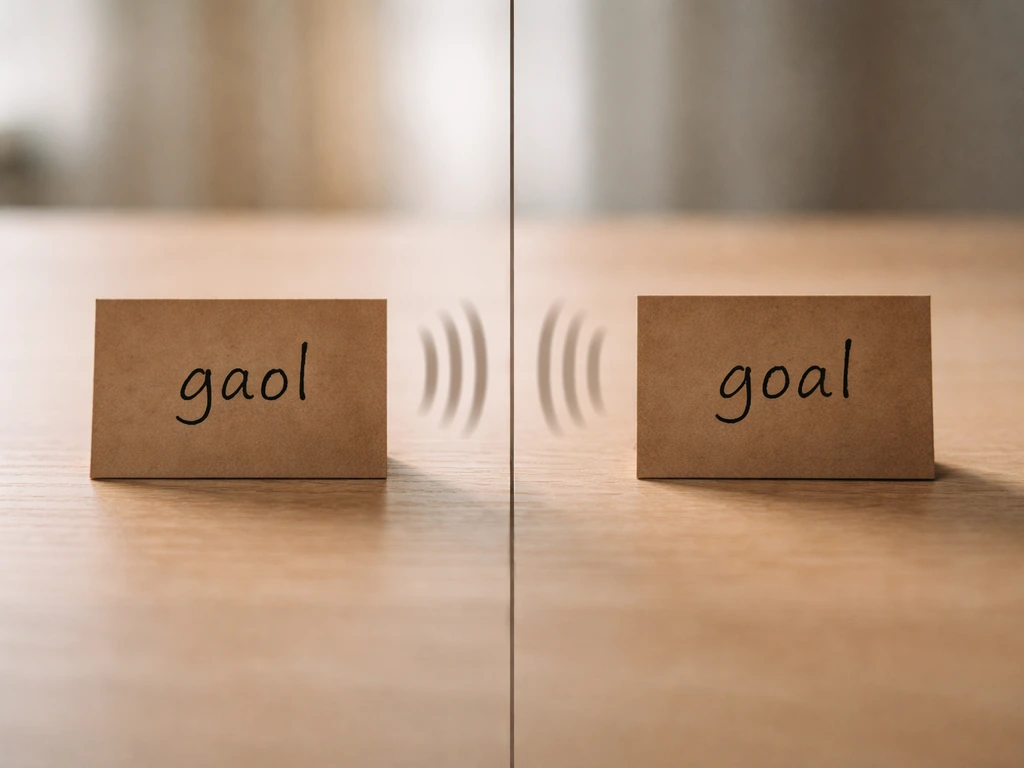
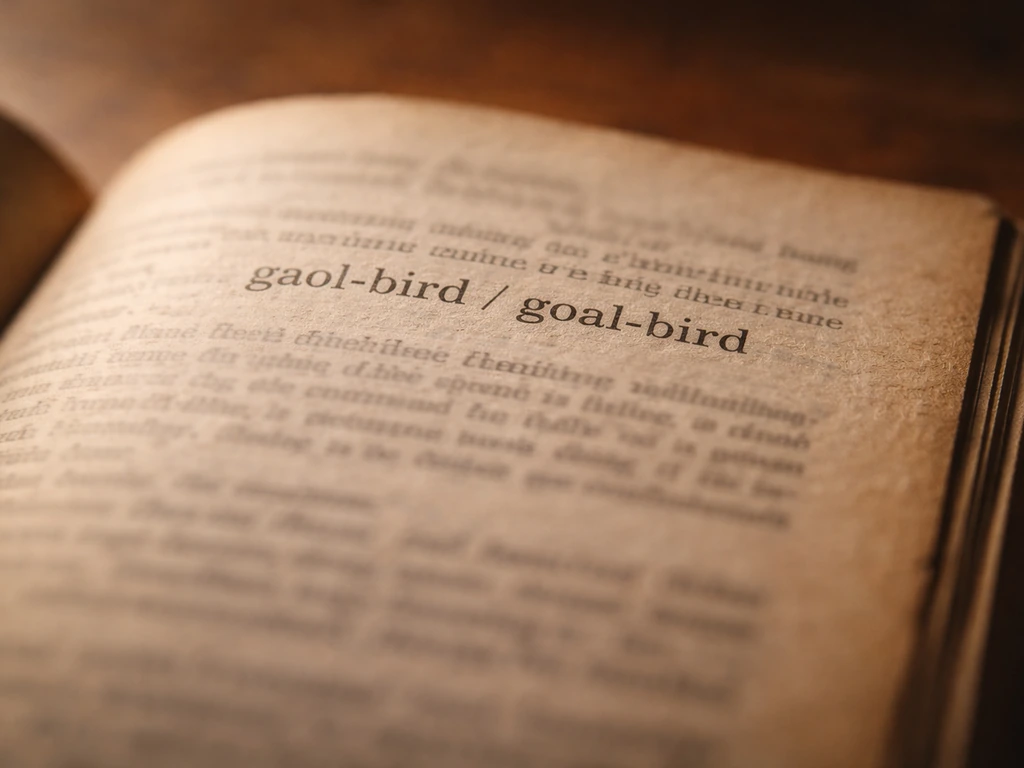
The idiom version comes down to a spelling issue. 'Gaol' is the traditional British spelling of 'jail,' and it's pronounced exactly the same way: like the word 'goal.' So 'gaol-bird' (or 'gaolbird') gets written as 'goal-bird' or 'goal bird' fairly often, especially when people hear it spoken and try to write it out, or when older printed texts are misread. A 1949 dictionary of sentences and idioms lists 'a goal-bird' directly, defining it as 'a person who is often in prison.' That's the core meaning.
Green's Dictionary of Slang confirms the same definition under 'gaolbird,' grouping it with 'jailbird,' 'jail rat,' and 'prison-bird' as terms for a prisoner or former inmate. The World English Historical Dictionary connects 'Goal-bird' variants directly to the jailbird family of words. Historically, the metaphor compares a prisoner to a caged bird, which is why 'bird' is the anchor word rather than something more obviously prison-related.
The second meaning is more recent and totally literal. In birding communities, 'goal bird' is a noun phrase meaning the specific bird species you're planning to see next, especially a species you haven't spotted before (called a 'lifer'). On subreddits like r/birding, you'll see threads titled 'What's your goal bird this year?' where people name target species for upcoming trips. This isn't an idiom at all: it's hobbyist jargon where 'goal' works exactly as it does in sports or personal planning.
Idioms people commonly confuse it with
Because the phrase is uncommon and the spelling is tricky, people sometimes land on 'goal bird' when they're actually thinking of a different bird idiom. Here are the most frequent mix-ups worth knowing: If you’re also wondering about the proverbial bird in the punch bowl meaning, it’s the kind of adjacent idiom that can get mixed up when “bird” shows up in slang.
- Jailbird / gaolbird: This is the direct match for 'goal bird' as an idiom. Same word, different spelling. Means a habitual prisoner or incorrigible rogue.
- A bird in the hand: A completely different idiom meaning it's better to keep what you already have than to risk losing it by chasing something better. From the full proverb 'a bird in the hand is worth two in the bush.'
- The early bird gets the worm: A proverb about the advantage of acting early or arriving first. Sometimes people mix up 'early bird' and 'goal bird' when they're half-remembering a phrase.
- Bird-brained: An adjective meaning foolish or scatterbrained, not related to goals or prison at all.
- Put a bird on it: A pop-culture phrase about adding a bird motif to something, popularized through media and fashion humor. Totally unrelated to the idiom meaning here.
If you came across 'goal bird' in an older British text or in dialogue imitating old-fashioned speech, 'gaolbird' is almost certainly the right read. If you saw it in a nature forum, travel blog, or social media thread about birdwatching, the literal birding sense applies. And if neither fits, check the list above before assuming it's a rare idiom you haven't heard of.
Figurative meaning and how it's used
As a figurative expression, 'gaol-bird' or 'goal-bird' works like most slang insults: it reduces a person to their worst trait or habit. Calling someone a gaol-bird doesn't just mean they went to prison once; it implies they keep going back, or that they're the sort of person you'd expect to end up there. The World English Historical Dictionary describes it as 'a term of reproach' for 'an incorrigible rogue,' which captures the contemptuous tone. It belongs to the same register as calling someone a 'villain' or a 'scoundrel' in older English speech.
The bird metaphor underneath it is worth understanding because it shows up in similar expressions. A caged bird has no freedom, and 'gaol-bird' leans on that image to suggest someone who belongs in a cage, either because they keep getting caught or because their character is fundamentally criminal. That same 'caged bird equals prisoner' logic appears in related slang terms like 'prison-bird,' which is just a more transparent version of the same idea.
In the birding community sense, the figurative weight is positive. A 'goal bird' is an aspiration, something you're working toward. In many search results, this is what people are getting at when they ask for the kingpin meaning bird. Birders often organize whole trips around spotting a single target species, and calling it a 'goal bird' frames it as a personal achievement rather than just a lucky sighting. You may also see the phrase “Portlandia” “put a bird on it” as a pop-culture hint that people sometimes confuse the expression’s meaning Portlandia put a bird on it meaning.
Example sentences and context

Seeing the phrase in actual use makes the tone and register much clearer. Here are examples for both main meanings:
- Idiom (gaolbird sense): 'Don't trust him with the keys — he's a known goal-bird who's been in and out of prison since he was twenty.' (Tone: contemptuous, informal, older British slang)
- Idiom (gaolbird sense): 'The landlord refused to rent to him after learning he was a gaol-bird with three convictions.' (Tone: matter-of-fact, slightly formal, historical register)
- Birding (literal goal sense): 'My goal bird for this trip to Texas is the golden-cheeked warbler — I've been chasing it for two years.' (Tone: enthusiastic, casual, hobby-specific)
- Birding (literal goal sense): 'What's your goal bird for 2026? Mine is finally getting a lifer snowy owl.' (Tone: conversational, community-oriented)
Notice how the idiom version almost always appears alongside references to crime, reputation, or someone's character. The birding version always has species names, trip planning, or life-list talk around it. Context is the fastest disambiguation tool you have. Salon discusses “Put a bird on it” in pop-culture and media as a distinct phrase, not something that matches the “goal bird” idiom meaning Context is the fastest disambiguation tool you have..
How to verify the meaning from the source
The most reliable way to confirm which 'goal bird' you're dealing with is to look at what's surrounding it. HowToPronounce maintains a dedicated page for “goalbird,” treating it as a standalone term or entry rather than a well-known English idiom a dedicated page for “goalbird”. A few steps that almost always work:
- Check the spelling in the original. If it shows 'gaol-bird,' 'gaolbird,' or 'goal-bird' with a hyphen, you're almost certainly looking at the prison slang. If it's two plain words ('goal bird') in a nature or travel context, it's the birding term.
- Look at the decade or era. The prison-slang meaning was common in 19th and early 20th century British English. If the text is from that period, the gaolbird reading is right.
- Search the surrounding vocabulary. Words like 'prison,' 'rogue,' 'incorrigible,' 'convicted,' or 'gaol' nearby? That's the idiom. Words like 'lifer,' 'species,' 'tick,' 'life list,' or bird species names nearby? That's the hobby jargon.
- Run the exact spelling through a historical dictionary. Green's Dictionary of Slang and the World English Historical Dictionary both have entries for 'gaolbird' that confirm the prison meaning with dated examples. If you're looking at a printed book, check the surrounding glossary or footnotes.
- If you heard it spoken, remember that 'gaol' sounds exactly like 'goal.' The speaker may have said 'gaol-bird' and you parsed it as 'goal bird.' That's the most common source of confusion.
Quick reference: related bird idioms and their meanings
| Idiom / Phrase | Meaning | Register / Context |
|---|---|---|
| Gaol-bird / goal-bird / jailbird | A person who is frequently in prison; a habitual criminal | Informal, older British slang, contemptuous |
| A bird in the hand | It's better to keep something certain than risk losing it for something better | Proverb, general English, cautionary |
| The early bird gets the worm | Acting early gives you an advantage over others | Proverb, general English, motivational |
| Bird-brained | Foolish, scatterbrained, not very smart | Informal adjective, casual speech |
| Put a bird on it | Add a bird image/motif to something (pop-culture humor) | Pop-culture slang, ironic/humorous |
| Goal bird (birding) | A target bird species a birder wants to spot | Hobby jargon, birdwatching communities |
| Give the bird | To make a rude gesture; to dismiss or insult someone | Informal, often vulgar slang |
| Bird on the head | Used in various cultural/figurative expressions relating to luck or burden | Figurative, context-dependent |
If the phrase you're tracking doesn't fit any of these cleanly, your best move is to find the exact sentence it appeared in and compare it against the definitions above. Bird idioms overlap in confusing ways because 'bird' has been slang for so many different things across centuries and cultures. But 'goal bird' almost always resolves to one of two things: an old word for a habitual prisoner, or a birder's personal target species. If you meant the phrase “bolt the bird meaning,” use the surrounding context to see whether it’s the slang “gaol-bird” sense or the literal birding sense goal bird. If you meant the idiom form, the bird-on-the-head meaning is that someone is supposedly in trouble or deserving of blame bird-on-the-head idiom meaning. The same approach helps when you need to put a bird on it meaning in context too two things. Once you know the context, the meaning snaps into place immediately.
FAQ
Is “goalbird” one word, and does it change the meaning?
Yes, “goalbird” is usually just a spelling compression of “gaol-bird” (jailbird sense) when people omit the hyphen. However, in birding spaces you may see “goal bird” as two separate words, followed by a species name or “lifer,” which signals the literal target-species sense.
How can I tell which meaning applies if the phrase is used without extra context?
For the idiom (gaol-bird), you will typically see references to crime, character flaws, or repeated trouble. For the birding term (goal bird), you will see a named species, a trip plan, or life-list language like “this year” or “on my list.” If neither set of cues appears, assume it is being used informally and confirm by checking the full sentence.
Does UK spelling (“gaol”) make the prison meaning more likely?
In older British-style dialogue or historical writing, “gaolbird” or “gaol-bird” is the safer assumption because “gaol” was the conventional spelling. In modern posts on nature, birding, or tracking apps, “goal bird” usually means a target species, not prison slang.
Is “a goal bird” appropriate to use in formal writing, or will it confuse readers?
The term is not standard in mainstream English, so using it in writing without clarification can confuse readers. A practical fix is to add one disambiguator, for example “(gaol-bird, meaning a habitual prisoner)” or “(goal bird, meaning my next target species).”
What’s the most common mistake people make with “goal bird”?
A common mistake is treating “goal bird” as an idiom automatically. In birding communities, it functions like “next target” or “personal objective,” so it behaves like a normal noun phrase. If the sentence includes species details, treat it as jargon rather than slang.
When I quote the phrase, should I keep the exact spelling I found?
If you want to cite or quote the phrase, match the exact spelling and formatting you found. “Gaol-bird” strongly points to the prison-reproach sense, while “goal bird” in a birding context points to the target-species sense. Changing one version into the other can flip the meaning.
Does the idiom sense always imply someone is currently in prison?
If the context involves someone “always getting in trouble,” “incorrigible,” or “deserves blame,” the idiom sense (gaol-bird) is likely. If the context is about searching, spotting, or planning a sighting, the literal birding sense is likely.
What if I see “goal bird” mentioned alongside “put a bird on it”?
If “goal bird” shows up near pop-culture phrases like “put a bird on it,” don’t assume it is the same thing. “Put a bird on it” is a different expression, and “goal bird” usually becomes clear once you look for either prison cues (idiom) or species and trip cues (birding).
Next Article
Bird on the Head Idiom Meaning, Origin, and How to Use It
Meaning, origin, tone, and examples of the idiom bird on the head, plus common mixups and how to use it.