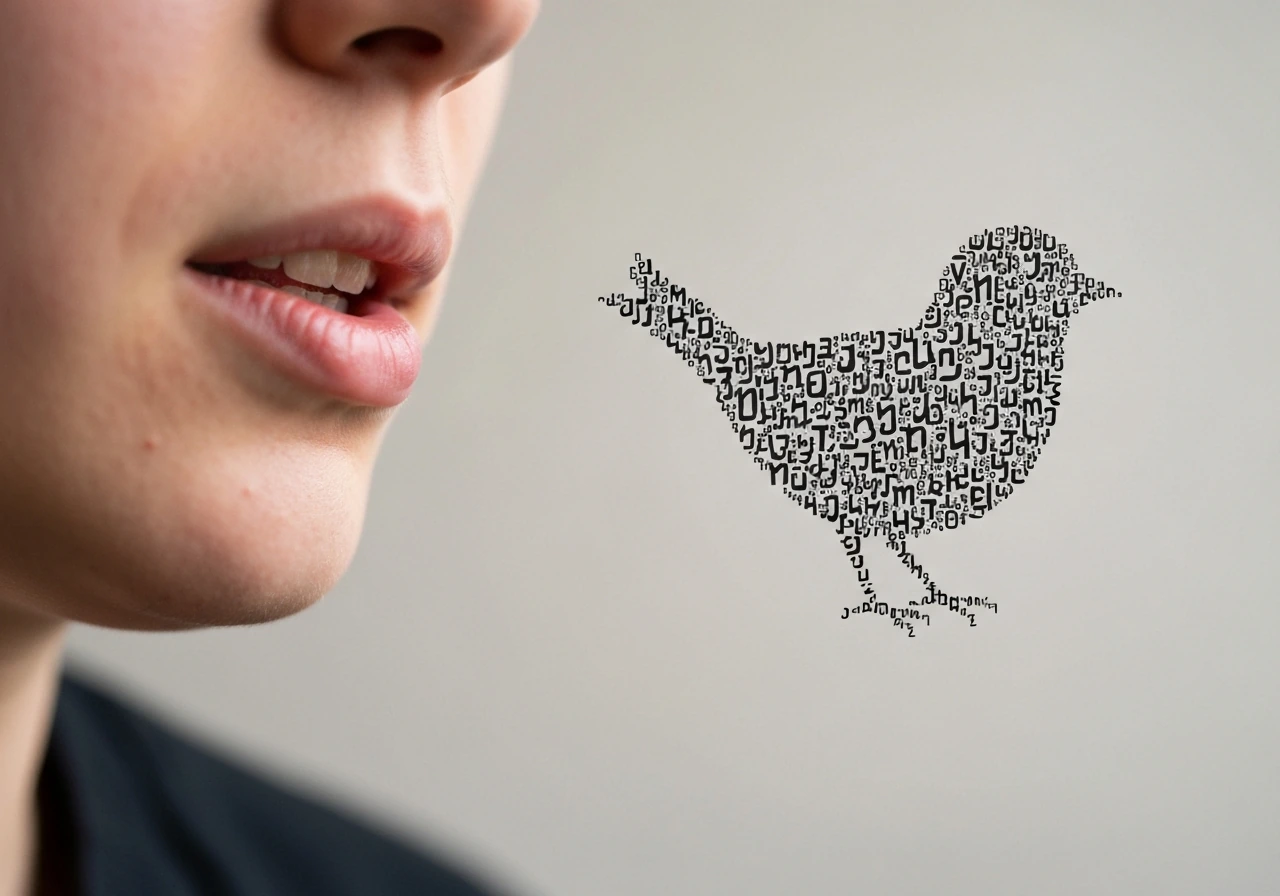
"Not a dickie bird" means absolutely nothing, not a single word. It's used when someone has received no information, no response, no communication at all. If you say "I called three times and got not a dickie bird back," you mean total silence, zero reply. The phrase is a piece of Cockney rhyming slang where "dickie bird" rhymes with "word," so "not a dickie bird" literally translates to "not a word" and in practice means "nothing whatsoever."
Not a Dickie Bird Meaning: Origin, Spelling, Examples

Marcus Reeves
2 Jun 2026
What "not a dickie bird" actually means
The phrase almost always shows up in negative constructions to describe a complete absence of communication or information. Think of it as a more colourful way of saying "not a word," "nothing at all," or "total silence." It typically covers situations where you expected to hear something and didn't: a phone call that never came, an email with no reply, a question that got ignored, or an organisation that went quiet when it really shouldn't have.
The most common pattern is "haven't heard a dickie bird from [someone]" or "not a dickie bird from [person or organisation]." That "from" construction is the key one to recognise. It signals that the silence is coming from a specific source, and the expectation of contact makes the nothing feel even more pointed. Real legislative records in both Scotland and Western Australia have used the exact phrase in official debate, which tells you it's well-understood beyond just casual pub chat.
"Dickie" vs "dicky" spelling: why the variants exist
There's no single correct spelling here, and that's entirely normal for slang expressions that started in spoken street language rather than formal writing. You'll see it written as dicky bird, dickie bird, dickey bird, dickybird, dicky-bird, and dickie-bird depending on the source. Dictionaries themselves disagree: Cambridge and Oxford use "dicky bird" as the headword, while Green's Dictionary of Slang lists the variants dicky-bird, dickey-bird, and dickie-bird all within the same entry.
The variation exists partly because Cockney rhyming slang was never written down in any standardised way. It spread mouth to ear, so when people finally started putting it on paper, everyone spelled it slightly differently. There's also a real person named Dickie Bird, the famous cricket umpire, which has probably reinforced the "dickie" spelling in British cultural memory. Either way, if someone is confused about whether to write "dickie" or "dicky," the honest answer is: both are fine, and readers will understand either version.
Where the phrase comes from
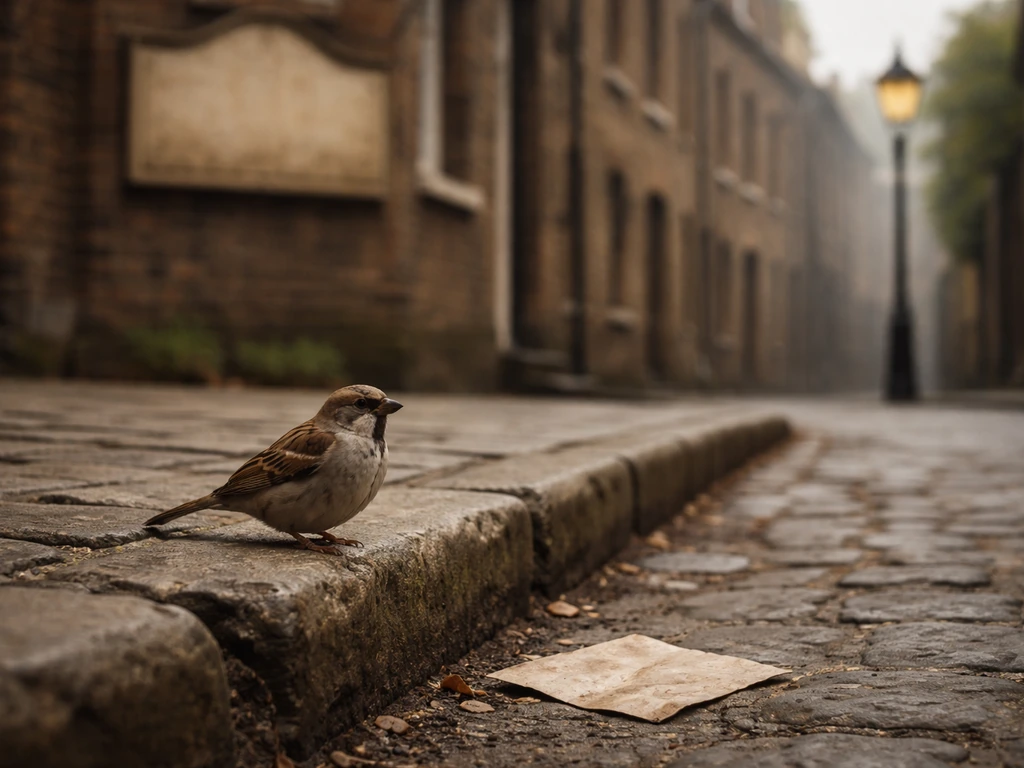
"Dicky bird" as a term for a small bird is an old nursery word, the kind of gentle, childlike language you'd use with a toddler pointing at a sparrow. Etymonline lists “dicky-bird” as a nursery word meaning “a small bird,” supporting the literal “bird” sense behind the phrase. Dictionary.com notes it as "a child's word for a bird, especially a small one," and this literal sense is well attested in both Etymonline and Oxford's records. That innocent, small-bird meaning is the raw material the rhyming slang later worked with.
Cockney rhyming slang, which developed in the East End of London, works by taking a two-word phrase that rhymes with a target word and then using that phrase (or just its first word) as a substitute. "Dicky bird" rhymes with "word. " So "not a dicky bird" became Cockney shorthand for "not a word," meaning silence or nothing said. Phrases.
org. uk places the establishment of "dicky-birds" as a rhyming-slang term for "words" in the mid 20th century, though the broader rhyming-slang tradition and some associated uses stretch back to the late 19th century. The phrase can also be shortened further: "not a dicky" on its own is sometimes used, dropping the "bird" entirely, which is typical of how Cockney rhyming slang evolves over time.
Green's Dictionary of Slang also records that "dicky-bird" had other historical meanings at various points (including some quite different Victorian usages), which is a reminder that slang words accumulate layers. The version that matters for this phrase is the rhyming-slang "word" sense, and that's the one that stuck and spread.
How to use it: contexts and example sentences
The phrase works in any situation where communication was expected but nothing arrived. Here are several realistic examples across different contexts:
- "I emailed them two weeks ago about the refund and got not a dickie bird back." (no response from a company)
- "She promised she'd write every week, but we haven't heard a dickie bird from her since she left." (absence of contact from a person over time)
- "I asked him directly whether he was leaving the job and got not a dickie bird." (a question that was ignored or dodged)
- "The committee submitted the report in January. Not a dickie bird from the minister since." (institutional or official silence)
- "We lent them the money in March and there's been not a dickie bird about paying it back." (silence on a financial matter)
- "I knocked twice, rang the bell, not a dickie bird." (no sign of life, no answer)
Notice that the phrase almost always follows "not a" or "haven't heard a" or "there was not a." It rarely appears in a positive form. You wouldn't really say "I heard a dickie bird from them" to mean "I heard something." It lives almost entirely in the negative, which is exactly what Wiktionary flags when it notes the phrase is "used especially in negative constructions."
Tone, regional feel, and when to avoid it
This is a casual, informal expression with a distinctly British feel. It will sound immediately natural to most British English speakers, and it's also well understood in Australia and other parts of the English-speaking world where Cockney slang has travelled. In the US or Canada, it's less commonly used and might land as slightly foreign or deliberately quaint, though it's usually understood from context.
The tone carries a mild edge of complaint or exasperation. When someone says "not a dickie bird from them," there's usually an unspoken expectation that had been let down. It's not a neutral way of saying silence occurred. It implies the silence was notable, perhaps rude or frustrating. That makes it perfectly suited to venting about poor customer service, absent friends, or unresponsive officials, but it would feel oddly flippant in genuinely serious or formal writing.
Interestingly, the Hansard records from Scottish and Western Australian parliaments show that it does appear in official spoken debate without seeming out of place, but this works because politicians often use colloquial colour deliberately, to make a rhetorical point with feeling. If you're writing a formal report, a legal letter, or professional correspondence, stick to "no response" or "no communication" instead.
Related bird idioms that sound similar
Because "dickie bird" sounds a lot like some other bird-related terms, it's worth knowing what it isn't. A "dicky bird" in its literal sense is just a small bird, a childish or affectionate term. That's separate from the slang idiom. There's also a closely related topic around the "dicky bird meaning" and "dickey bird define" territory, which explores the standalone noun sense (the bird itself) versus the idiomatic slang use.
There's also a closely related topic around the "dicky bird meaning" and "dickey bird define" territory, which explores the standalone noun sense (the bird itself) versus the idiomatic slang use the dinky bird meaning. If you also want the standalone bird sense, look up the dicky bird meaning, since it differs from the idiom used for silence Related topic around the "dicky bird meaning".
If you are also looking at the broader "dicky bird meaning" as a standalone term, that helps separate the literal bird sense from the idiom for silence. If you’re also curious about the standalone bird noun sense, that’s where the dickey bird define question comes in. If you’re also looking into the standalone phrase “dicky bird meaning” (as distinct from the full “not a dickie bird” idiom), the noun sense is helpful context.
Both feed into the same phrase, but the idiom meaning is specific.
If you've come across the phrase while exploring similar-sounding expressions, it's also worth knowing about "dolly bird," a very different British idiom referring to an attractive young woman, and "the dinky bird," which is a literary reference from a 19th-century poem rather than a slang term. If you are looking for the dolly bird meaning, that idiom refers to an attractive young woman rather than silence. These share the rhyming, playful sound of British bird-related slang but carry completely different meanings. None of them should be confused with "not a dickie bird," which is firmly about silence and the absence of communication.
The bottom line is simple: if someone says "not a dickie bird," they mean nothing, no word, total silence. Cambridge English Dictionary also notes a broader rhyming-slang history, describing the expression as being in use since the late 19th century, as in “We have not heard a dicky-bird since then.” the rhyming-slang expression is described as being in use since the late 19th century. It's Cockney rhyming slang (dicky bird = word) that has made it far beyond London into everyday British English and beyond. Use it when you want to describe a frustrating or notable absence of communication, and don't stress too much about the spelling: dicky, dickie, and dickey are all accepted.
FAQ
Is “not a dickie bird” appropriate for formal emails or legal/professional writing?
In modern writing, the idiom is usually treated as informal, so you would normally choose plain options like “no response,” “nothing at all,” or “total silence.” Use “not a dickie bird” only in emails or messages where an informal, conversational tone is acceptable (for example, between friends or in a casual complaint).
Can you use “not a dickie bird” in a positive sentence, like “I heard a…”?
If you heard the phrase used positively, that likely means the speaker is being playful or is being ironic, not using the idiom in its standard way. In the usual literal idiomatic pattern, it appears in negatives such as “haven’t heard a dickie bird from…” to mean no communication whatsoever.
Does “not a dickie bird meaning” still apply if no one was expecting a reply?
Yes, it can sound odd if the situation did not involve an expectation of communication. The phrase works best when someone was supposed to reply, arrive, or confirm something, like “I messaged them yesterday, and I’ve heard not a dickie bird.”
If someone says “dickie bird” by itself, does it still mean “word” (or silence)?
Avoid treating “dickie bird” as a standalone synonym for “word” in every context. The “word” sense specifically belongs to the rhyming-slang construction (“dickie bird” standing in for “word”), while the earlier nursery sense is just a small bird used affectionately.
Why does the phrase often include “from,” as in “haven’t heard a dickie bird from him”?
The most common “from” pattern tells you the silence is attributed to a specific person or organization. If you omit “from,” you still can mean silence, but the sentence may feel less precise, and the listener may ask who the silence is coming from.
Which spelling is best: dicky bird, dickie bird, dickey bird, or something else?
In writing, any spelling variant you mentioned (dickie, dicky, dickey, plus the hyphen/no-hyphen forms) will generally be understood. If you need consistency within one document, pick one form and stick to it, since there is no single universally enforced spelling for slang.
Is “not a dickie bird” usually about recent silence, or can it describe something older?
It is typically used to describe a current or recent absence of communication, especially after an attempt to contact. For long-past situations, speakers more often use different wording like “for weeks I heard nothing” rather than relying solely on the fixed idiom.
Does “not a dickie bird” sound rude compared with simpler options like “no response”?
The idiom is often complaint-tinged, so it can feel sharper than “no response.” If you want a more neutral message, rewrite it as “I haven’t received a reply” or “I haven’t heard back yet,” especially when the relationship is sensitive.
What are good alternatives to “not a dickie bird” that keep the same meaning?
Common close substitutes are “not a word,” “nothing at all,” “no reply,” and “no communication.” If you want the same emphasis on frustration, “no word at all” is usually the closest match in tone while staying widely understandable.
How can I tell whether the speaker means the idiom (silence) or the literal “small bird” sense?
If you are unsure whether the speaker means the idiom or the literal bird/nursery word, look for the surrounding grammar. Idiomatic usage usually comes with “not a” or verbs like “heard,” “received,” or “got,” and it typically references a person or organization as the source.
Next Article
Dairy Bird Meaning: Slang, Mishearing, and What It Implies
Unpack dairy bird meaning: slang mishearing, likely bird idioms, context clues, example sentences, and how to verify.