If you searched for 'maids a milking bird meaning,' you're almost certainly looking at a mashup of two separate things: the folk song 'Three Maidens a-Milking Did Go' (also called 'The Milk Maids' Request'), which contains a line about catching 'a small bird or two,' and the Christmas carol line 'eight maids a-milking' from 'The Twelve Days of Christmas.' Neither phrase is a standalone bird idiom, but together they explain why this search query exists and what you're actually trying to find.
Maids a Milking Bird Meaning: What It Really Is

Marcus Reeves
7 May 2026
Why the phrase looks so confusing
The query 'maids a milking bird' doesn't match any fixed idiom or nursery rhyme line word for word, which is exactly why it feels slippery to pin down. It looks like someone half-remembered a phrase, typed it phonetically, or combined two different sources into one search. This happens constantly with folk songs and old ballads because the lyrics shift across centuries, regions, and printed collections, and no single 'official' version exists.
There's also a common pattern where people searching for bird phrases blend bits of well-known songs together. The 'maids a-milking' part almost certainly comes from 'The Twelve Days of Christmas' (the eighth day: 'eight maids a-milking'), while the 'bird' part likely comes from the folk ballad tradition where milkmaids and birds appear together in the same lyrical breath. When you're trying to track down a half-remembered lyric or an expression you heard once, this kind of phonetic blending is completely normal, not a mistake you should feel embarrassed about.
The most likely phrases you're actually looking for
There are two strong candidates, and they may both be in play depending on what you encountered.
Three Maidens a-Milking Did Go
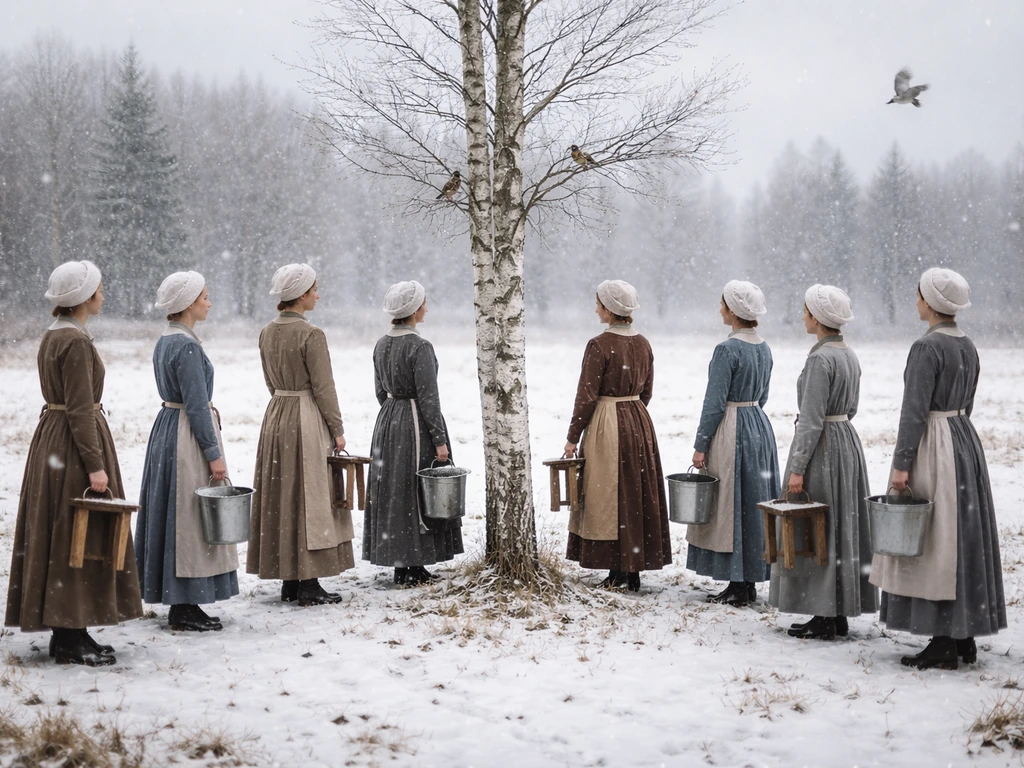
This is the folk song most likely sitting behind your search. It's listed in the Ballad Index (related to Roud 290) and appears in multiple historical collections including Thomas Lyle's 'Ancient Ballads and Songs' and Sabine Baring-Gould's 'Songs and Ballads of the West. ' The central lyric goes: 'Three maidens a-milking did go / And to catch them a small bird or two.
' Some versions open with 'Two maidens went milking one day' or 'Three pretty maidens a-milking did go. ' The song is also catalogued under alternate titles including 'A Small Bird or Two,' 'The Milk Maids' Request,' and 'Two Maids Went A-Milking,' which tells you just how much variation exists across printed versions.
The bird in this context is a real small bird the maidens want to catch, but the song uses it as a playful, lightly euphemistic device with rural romantic undertones.
Eight Maids A-Milking (The Twelve Days of Christmas)
If your 'maids a milking' association comes from the Christmas carol, the full line is simply 'blank" rel="noopener noreferrer">eight maids a-milking)' as the gift for the eighth day. There's no bird directly attached to this line in the carol, but the song as a whole is full of birds: a partridge in a pear tree, two turtle doves, three French hens, four calling birds, six geese a-laying, and seven swans a-swimming. It's very plausible that someone conflated 'maids a-milking' from day eight with the bird gifts from other days, producing the hybrid query 'maids a milking bird.'
Interpreting 'milking bird' literally vs. figuratively
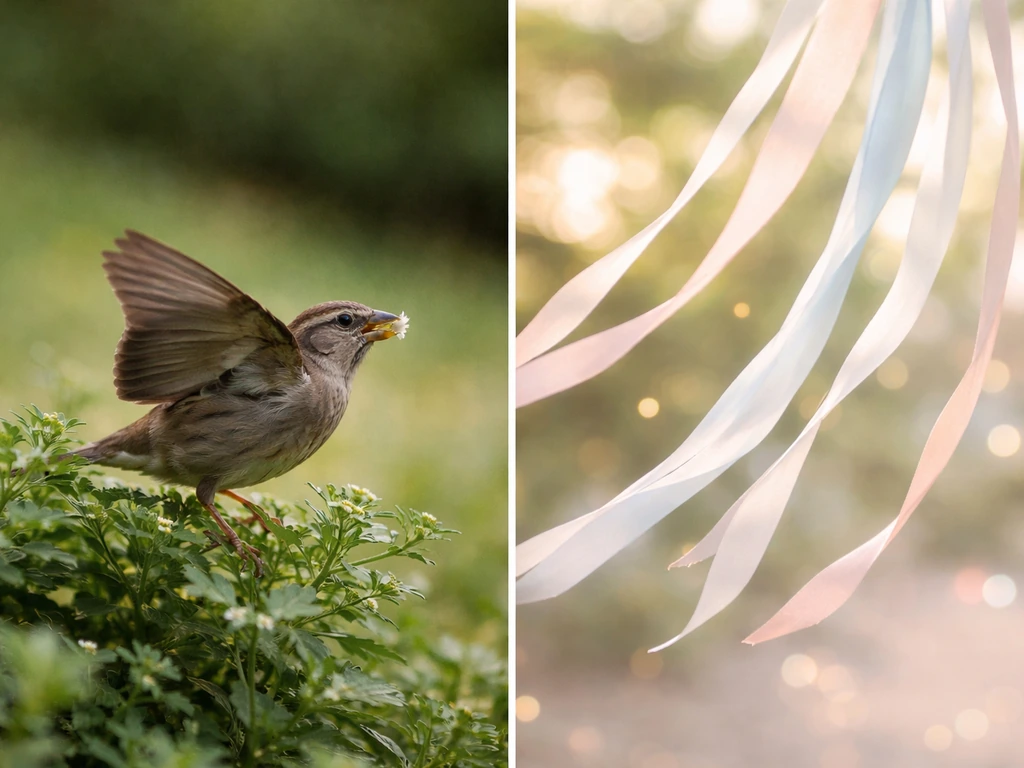
In the folk song context, the 'small bird or two' is literally a small bird, but it's not really about ornithology. In practice, that hybrid search string can be read as shorthand for the dairy bird meaning in this folk tradition. In some English slang contexts, people also ask for the dolly bird meaning, which is a different use of the words entirely.
Folk songs from the 17th and 18th centuries frequently used birds as gentle romantic stand-ins, with 'catching a bird' often implying catching a young man's attention or affection. The Merry Milk-maids ballad tradition (documented in the English Broadside Ballad Archive, which references birds like blackbirds and thrushes alongside milkmaid imagery) shows how consistently birds and milkmaids appeared together in this genre as a culturally understood pairing, not just a coincidence.
Figuratively, 'catching a small bird' in this tradition works a lot like other bird idioms in English folk culture: the bird represents something elusive, lively, and a little wild. Catching it is the goal. So 'the maidens went milking and hoped to catch a small bird or two' is a folk-song way of saying the girls were out and about and hoping for a romantic encounter. It's playful, not graphic, which is exactly the register these old ballads operated in.
If you're approaching this from a pure idiom angle (not a lyric), it's worth noting that 'small bird' in English folk and nursery language often connects to the 'dicky bird' tradition, where a generic small bird is used as a gentle, child-friendly term. That tradition dates to at least the late 18th century and shows up in expressions like 'not a dicky bird' (meaning not a word, not a sound). The milkmaids' ballad and the dicky bird family of expressions share the same cultural soil, even if they're not the same phrase.
What the bird actually symbolizes here
Small birds in English folk tradition almost universally carry the same symbolic weight: freedom, fleeting beauty, romance, and something you have to chase rather than simply possess. In the milkmaids ballad specifically, the bird is the prize, the thing the young women are hoping to catch while they're out doing their daily work. It's a symbol of opportunity and of desire dressed up in pastoral imagery.
In the broadside ballad world (like 'The Merry Milk-maids,' which specifically names blackbirds and thrushes), particular species add extra color. Blackbirds and thrushes were associated with song and with lively, cheerful spirits. Catching one wasn't about the bird itself but about that energy, that aliveness. When folk songs use a generic 'small bird,' they're drawing on the same symbolism without locking it to a species, keeping the image open and universal.
This is quite different from the heavier symbolism carried by ravens (omen, death, wisdom) or doves (peace, love, the divine). The small bird of the milkmaid songs is light, everyday, and warm rather than portentous. It's the bird equivalent of a wildflower rather than a crown.
How to confirm the exact original wording
The best approach is to go directly to the folk song databases and historical archives rather than relying on general web searches, which tend to surface modern paraphrases rather than the original text. A Mudcat discussion page contains a lyrics add/thread for “Three Maidens A-Milking Did Go,” reflecting the Roud 290 family context and preserving community-sourced variant wording Mudcat discussion page for “Three Maidens A-Milking Did Go”. Here's a practical path:
- Search the Ballad Index (BalladIndex.org) for 'Three Maidens to Milking Did Go.' The entry there will give you the Roud number and list related texts.
- Check Mainly Norfolk's song database (mainlynorfolk.info) for 'Three Maids A-Milking' or Roud 290. This page lists the key versions and alternate texts side by side, which is the fastest way to see how much the wording shifts.
- For the historical scanned text, Thomas Lyle's 'Ancient Ballads and Songs' (available through Google Books or archive.org) contains 'The Milk Maids' Request' with the 'Three maidens a-milking did go' opening.
- For the Sabine Baring-Gould version ('Three pretty maidens a-milking did go'), search archive.org for 'Songs and Ballads of the West' by Baring-Gould and Fleetwood Sheppard.
- For the Christmas carol line, any lyrics site for 'The Twelve Days of Christmas' will confirm 'eight maids a-milking' as the eighth day's gift, with no bird directly attached to that verse.
If your source is a recording rather than a text, the fastest route is to search YouTube or a music streaming platform for 'Three Maidens a-Milking' plus the folk artist or album name if you have it. Folk revival artists like Steeleye Span, Anne Briggs, or various Cecil Sharp House recordings have covered songs in this family, and the track listing will usually confirm the canonical title.
Practical next steps for decoding bird phrases like this one
When you're staring at a phrase that looks like a bird idiom but doesn't quite resolve into anything clean, a structured search approach saves a lot of time. Here's what works:
- Put the most distinctive fragment in quotes in your search engine. For this query, try "small bird or two" + milkmaids. The unusual or specific word cluster will surface the actual source faster than the generic phrase.
- Try Google Books with the unusual phrasing plus a date filter (pre-1900 for historical ballads). Scanned archives surface original text that modern lyrics sites miss.
- If you suspect a mishearing, say the phrase out loud slowly and consider what other words it could sound like. 'Maids a milking bird' could be a blend of 'maids a-milking' and 'catch a small bird,' which is exactly what happened here.
- For nursery rhymes and folk songs specifically, the Roud Folk Song Index (accessible through the Full Text Archive or Mainly Norfolk) is the single best reference because it clusters variants of the same song regardless of title.
- Check whether the phrase might be rhyming slang or children's language. Terms like 'dicky bird,' 'dickey bird,' and related small-bird expressions have their own idiom track separate from folk songs, and sometimes a search lands in that territory instead.
- Once you've identified the bird in context, consider whether it's a real species (blackbird, thrush) or generic ('small bird'). Real species carry specific symbolism; generic birds usually carry general folk imagery like freedom, romance, or opportunity.
A quick comparison: folk song bird vs. carol bird vs. idiom bird
| Source | Bird Reference | Literal or Figurative | What the Bird Means |
|---|---|---|---|
| Three Maidens a-Milking Did Go (folk ballad) | A small bird or two | Figurative (romantic) | An elusive romantic opportunity |
| The Twelve Days of Christmas (carol) | Multiple birds across verses; no bird on day eight | Literal gift listing | Abundance, festive generosity |
| The Merry Milk-maids (broadside ballad) | Blackbird and Thrush named | Both literal and figurative | Lively spirit, cheerfulness, song |
| Dicky bird / small bird (nursery/idiom tradition) | Generic small bird | Figurative | Innocence, small thing, or (in rhyming slang) a word |
The folk ballad entry is almost certainly what generated your original search query. The carol and the idiom tradition are the likely sources of the confusion that turned it into 'maids a milking bird' rather than the actual lyric. Once you separate those three tracks, the phrase resolves quickly, and the bird at the center of it makes complete sense within its original context.
FAQ
Is “maids a milking bird” a known English idiom with a single meaning?
No. The exact string “maids a milking bird” is not a fixed idiom, so you should treat it as a search mashup of (1) the folk lyric “Three maidens a-milking … a small bird or two” and (2) the carol “eight maids a-milking.”
Where does the “bird” usually come from in the phrase “maids a milking bird meaning”?
Most often, the “bird” part is coming from the folk ballad line about “a small bird or two,” while “maids a-milking” is coming from the Christmas carol. The hybrid phrasing happens when people remember fragments and combine them.
Does the “bird” here mean a real bird, or is it symbolic?
It depends on your goal. For the folk song meaning, read it as playful pastoral romance, where “catching a bird” signals chasing something lively and elusive, not bird-watching. For the carol, there is no direct bird attachment to the “eight maids a-milking” line itself.
Why do the numbers and wording change (two maidens, three maidens, etc.)?
The folk tradition version is often “Three maidens a-milking did go” (or similar variants like “Two maidens went milking one day”), followed by “to catch them a small bird or two.” If you see different numbers or wording, it usually reflects regional printing or later editing, not a different meaning.
Is “to catch a small bird” describing something sexual or dangerous?
Not usually. In this tradition, “catching” is more like “hoping to meet or win” in a gentle, euphemistic way. It is typically non-graphic and romantic in tone, even though the language can sound literal at first glance.
How do I tell whether I’m dealing with the milkmaids song bird or the “dicky bird” slang tradition?
If you are searching for a “bird meaning” in the slang sense, be careful: “dicky bird” is a separate phrase-family used in child-friendly or nursery-style language. That is different from the milkmaids ballad bird imagery, which is about symbolism and romance.
What’s the fastest way to verify the correct source if my search results look inconsistent?
Use title identification rather than word matching. Search for “Three Maidens a-Milking” (also listed under alternate titles like “The Milk Maids’ Request” or “A Small Bird or Two”), then compare the lyrics to confirm whether your “bird” line appears.
Can recordings change the lyric enough to affect the meaning of “a small bird or two”?
Yes. If you watched a performance, the artist might use a slightly edited lyric, or they might swap “small bird or two” for a cleaner paraphrase. Cross-check with the printed lyrics or a track listing that names the traditional song title.
Why do some people claim the Christmas carol directly links the eighth day to a specific bird?
Common mistake: assuming the carol’s “eight maids a-milking” includes a bird on that same day. The carol’s bird gifts show up across multiple days, so people may accidentally attach the “bird” concept to the eighth day line.
Next Article
Dickey Bird Define: Meaning, Origin, and Example Use
Meaning of dickey bird slang: origin, tone, real-life usage, common confusions, and example sentences.