When people search for the crow bird meaning, they're usually asking one of two things: what does it symbolize in a general cultural sense, or what does it mean that they keep seeing (or hearing) one right now. If you’re also wondering about scarecrow bird meaning, that’s a separate interpretation you can compare against real crow symbolism. The short version is this: crows most commonly represent transformation, intelligence, mystery, and the boundary between the familiar and the unknown. They show up in folklore as tricksters and messengers, and in everyday symbolism as a sign to pay attention, not necessarily to brace for disaster. Whether you find that meaningful depends on you, but understanding the full picture helps you interpret your own experience more clearly.
The Crow Bird Meaning: Signs, Messages, and Real-Life Interpretations

What crows actually symbolize (the core meaning)
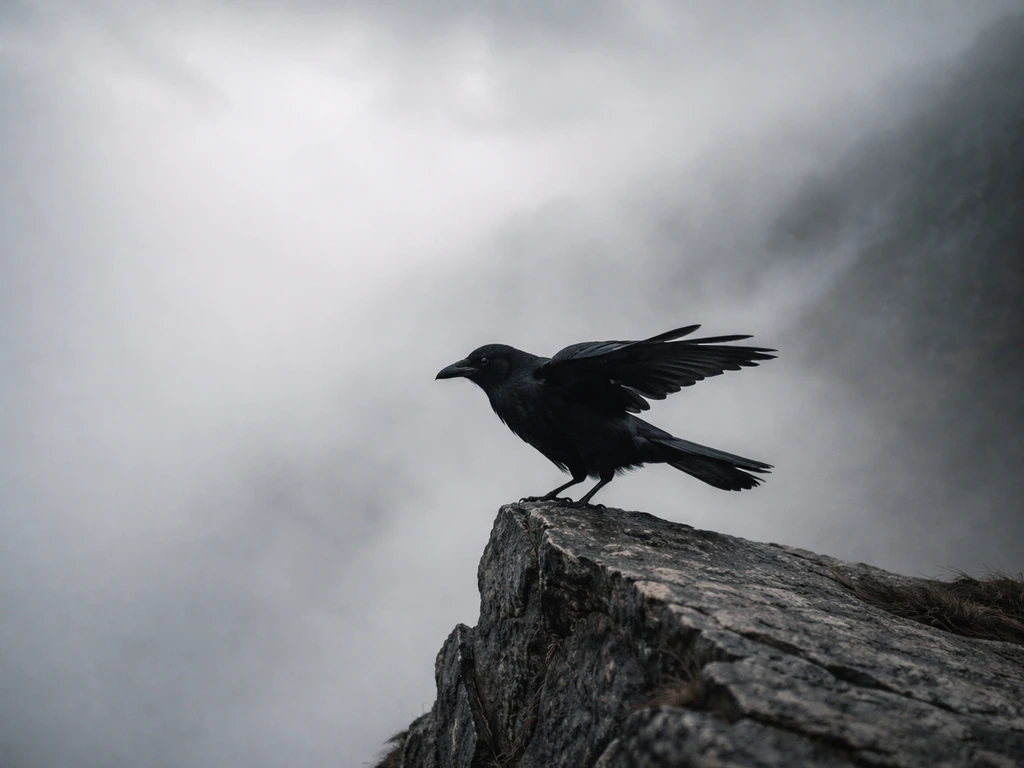
Across most traditions and modern spiritual frameworks, crows carry a cluster of related themes: change and transition, intelligence and cunning, mystery, protection, and the death-and-rebirth cycle. That last one gets the most attention, but it's worth being specific. Crow's connection to death in symbolism is less about literal dying and more about endings that lead somewhere new. Think of it as the crow sitting at the threshold between one chapter and the next.
The intelligence angle is grounded in reality. Crows are genuinely among the smartest birds on the planet, capable of tool use, problem solving, and even recognizing individual human faces. That real-world sharpness fed directly into their symbolic identity across cultures: they became stand-ins for insight, curiosity, and the kind of playful cleverness that doesn't always follow the rules. World Birds describes crow symbolism as tied to intellect, curiosity, and playfulness, which sits alongside, not in spite of, the death association.
- Transformation and change: crows often appear (symbolically) at turning points
- Intelligence and insight: linked to sharp perception and seeing what others miss
- Mystery and the unknown: associated with liminal spaces and hidden knowledge
- Trickster energy: cunning, adaptable, not always playing by the expected rules
- Protection: in some traditions, crows warn or guard rather than threaten
- Death and rebirth: endings that open into something new, not simple doom
The sinister reputation crows carry in Western culture comes largely from practical history. Cambridge traces the collective noun 'a murder of crows' to crows scavenging on battlefields, which attached a grim association to the bird for centuries. That image stuck, particularly in European folklore and Gothic aesthetics. But it's not the whole story, and it's not the dominant interpretation across all cultures.
Crow phrases and everyday language
Crows show up in everyday English in ways that reflect their dual reputation. 'A murder of crows' is the most dramatic, and it's real (it's the correct collective noun). 'Crow about something' means to boast loudly, borrowed from the bird's insistent cawing. 'Eat crow' means to admit you were wrong and swallow your pride, a phrase built on the idea of being forced to do something unpleasant. 'As the crow flies' describes the most direct route between two points, a tribute to how crows travel in straight lines when they're not distracted.
The word 'caw' itself, defined by Merriam-Webster as the harsh, raucous natural call of a crow, has become an onomatopoeic shorthand for any loud, grating sound. Collins extends the definition to include ravens, which reflects how the two birds blur together in common usage even though they're distinct species with different calls.
Crows in myths, folklore, and world religion
Crow symbolism has roots on every inhabited continent, and the meanings don't always agree. That's worth knowing before you land on one interpretation and treat it as universal.
Indigenous Australian traditions
In Australian Aboriginal mythology, Crow is a trickster and culture hero: cunning, resourceful, and associated with intelligence and fire. This is a genuinely heroic framing, not a frightening one. Crow outwits others, brings gifts to humans, and plays a central role in creation stories.
Native American traditions
This is where a lot of misunderstanding creeps in. Native-languages.org explicitly states there are no known Native American tribes that viewed crows as omens of death, directly contradicting a common claim online. Crow is more typically a messenger, a transformer, or a sacred guardian in Indigenous North American traditions. The death-omen association gets incorrectly projected onto Native symbolism from European frameworks. Raven, not crow, is the dominant trickster-and-creator figure in many Pacific Northwest and other North American traditions.
Norse and European mythology
In Norse mythology, Odin's ravens (Huginn and Muninn, meaning thought and memory) are the famous corvid pair, though crows and ravens are often conflated in general European folk traditions. Crows in Western European folklore became associated with witches, omens, and the supernatural, partly because of their scavenging habits and their tendency to gather in large, noisy groups near death.
Celtic and other traditions
Celtic mythology associated crows with the Morrigan, a goddess of war, fate, and transformation. Again, this is about thresholds and change rather than simple death. In Hindu tradition, crows are associated with ancestors and are sometimes offered food during certain rituals as a gesture toward the deceased.
What people are looking for today: spiritual and psychological takes
A large percentage of people searching for crow meaning right now are processing something personal: a loss, a transition, a period of uncertainty. Seeing a crow repeatedly feels significant to them, and they want to know why. That's completely valid, and there are two honest frameworks for understanding it.
The spiritual framing treats crows as potential messengers or signs from something larger, whether that's the universe, an ancestor, or your own intuition made visible. Mindbodygreen and similar sources suggest crows signal change and encourage you to reflect: what's shifting in your life right now? What needs to end so something else can start? That framing is useful because it turns the crow sighting into a prompt for self-reflection rather than a verdict.
The psychological framing is equally worth considering. Psychology Today and similar sources note that when people are already in a state of change or anxiety, confirmation bias kicks in: you notice crows (or anything else you've primed yourself to look for) more frequently, and your brain marks those sightings as meaningful because they confirm what you're already feeling. This isn't a dismissal of the experience. Noticing a crow repeatedly might genuinely be telling you something, just something about your own inner landscape rather than an external prophecy.
Jung Houston describes paying attention to synchronicities (meaningful coincidences, including animal sightings) as a mindfulness practice: noticing without immediately reaching for a definitive meaning. That's probably the most grounded approach, and it's what separates useful interpretation from spiraling into over-reading every bird you see.
What specific crow behaviors and sightings are said to mean

People frequently look up specific scenarios rather than just general symbolism. Here's what different crow encounters are commonly interpreted to mean, with some context on where those interpretations come from.
A crow crossing your path
This is one of the most searched crow scenarios. Well+Good presents it as a symbolic nudge toward paying attention to your direction and choices. The common interpretation is that a crow crossing your path signals a crossroads: something in your life is shifting and you'd benefit from being conscious about which way you go. It's worth noting this is a Western folk interpretation, not a universal one.
Crows cawing near your home
This one has a perfectly practical explanation that's easy to miss. Berry Patch Farms, citing Cornell Lab research, explains that crows band together to drive away threats. If crows are making noise near your house, they're likely doing exactly what they do in the wild: mobbing a predator (a hawk, owl, or even a neighborhood cat) or communicating within their group. Weather.com notes that whether this is seen as a good or bad omen depends entirely on which cultural tradition you're drawing from. Some see it as protection, others as a warning.
A group of crows (and the 'murder of crows' idea)
Mysticsense and similar sources attach specific meanings to the number of crows: one crow for a message, two for good luck, three for transformation, and so on. Wikipedia acknowledges these patterns exist in popular folk belief but notes they're not consistently documented across traditions. If you see a large group of crows roosting near you repeatedly, Penn State Extension has a more grounded explanation: crow roosts can involve hundreds to hundreds of thousands of birds and return to the same locations year after year. The repetition is habitat, not necessarily a sign.
A crow at night
Crows are diurnal, meaning they're active during the day and sleep at night. If you genuinely see or hear a crow after dark, that's unusual behavior for the species. The Environmental Literacy Council notes this is sometimes interpreted symbolically as a heightened message or a liminal moment, but it's also worth checking whether you're actually hearing a crow versus a different bird. An actual nighttime crow sighting is rare enough that it could reasonably prompt reflection.
A crow leaving a 'gift'
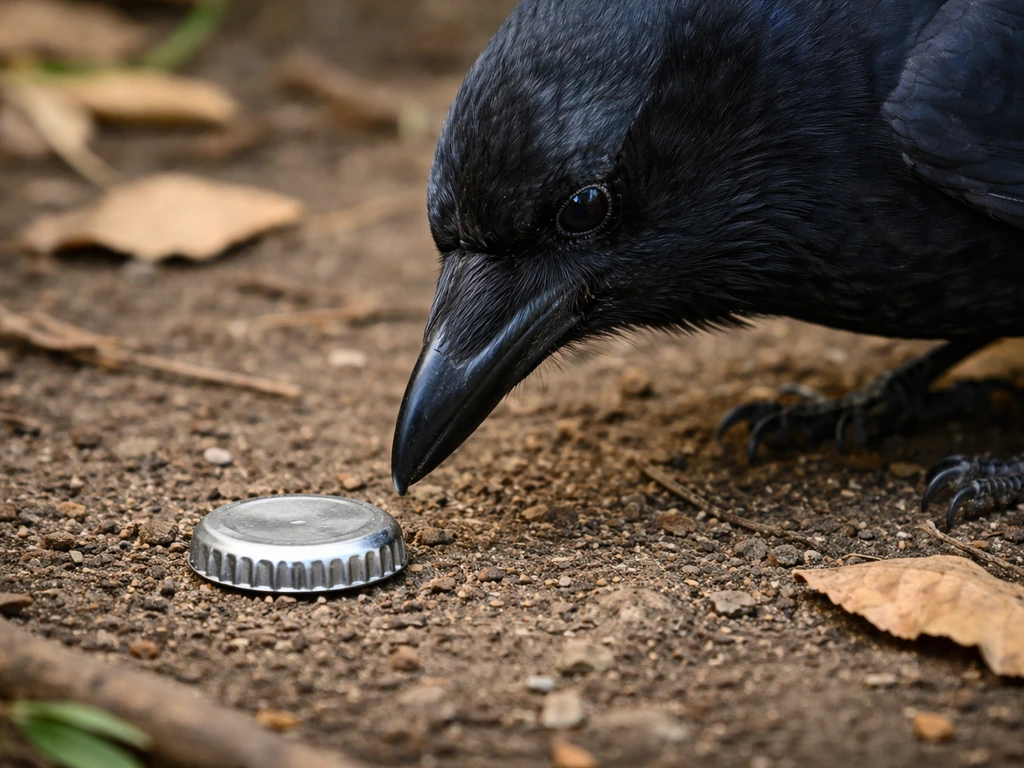
There are well-documented cases of crows leaving small objects for humans who regularly feed them: bottle caps, shiny stones, bits of wire. The Environmental Literacy Council frames this as reciprocity from the crow's perspective, not a mystical message. It's a relationship behavior. If a crow is leaving you objects, it probably just knows you.
Crow vs. raven vs. blackbird: which bird are you actually seeing?
This matters because crows and ravens carry genuinely different symbolism in most traditions, and a lot of people use the names interchangeably when they mean different things. Blackbirds add a third layer of confusion, especially in the UK where 'blackbird' refers to a specific thrush species with its own symbolism.
| Feature | Crow | Raven | Blackbird (UK/EU) |
|---|---|---|---|
| Size | About the size of a pigeon | Much larger, roughly the size of a hawk | Smaller than a crow, thrush-sized |
| Tail shape | Squared or fan-shaped when spread | Wedge or diamond-shaped in flight | Rounded |
| Call | Sharp, repeated 'caw' | Deeper, throatier croak | Rich, melodic song (very different) |
| Beak | Straight beak | Curved, heavier beak with throat feathers | Yellow-orange beak (male) |
| Common symbolism | Transformation, trickster, intelligence, change | Wisdom, prophecy, creation, war | Transition, magic, the underworld (Celtic) |
| Confusion level | Often mistaken for raven | Often mistaken for large crow | Rarely confused in North America |
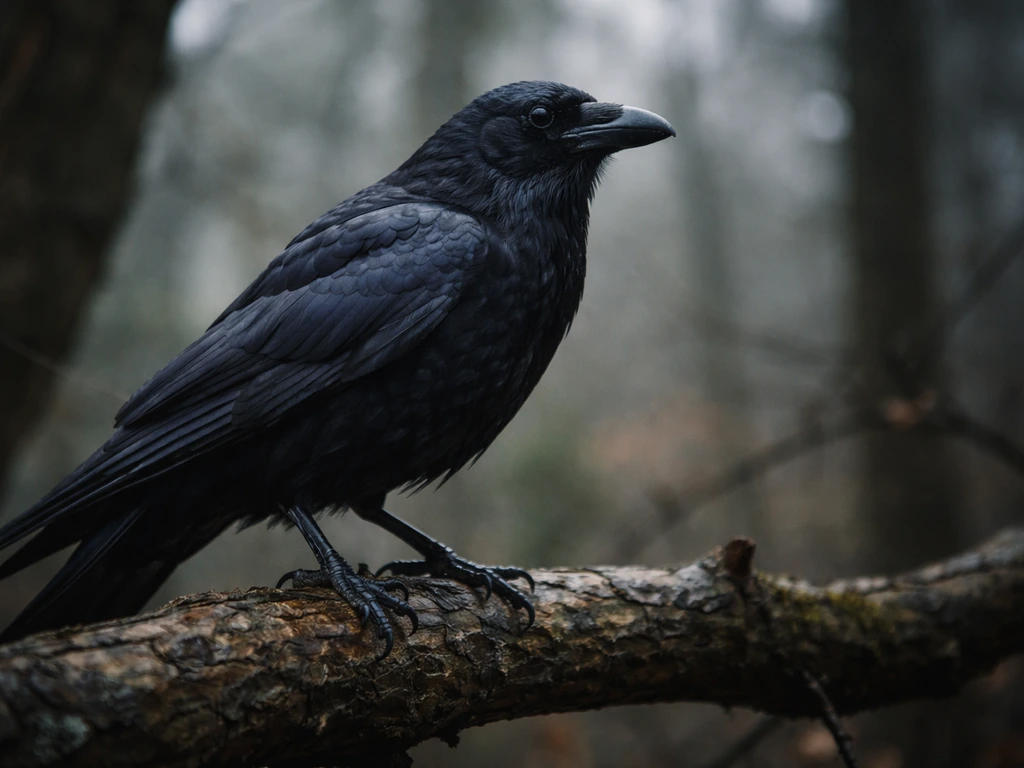
The fastest visual check: when a crow spreads its tail, it opens like a fan. A raven's tail stays wedge-shaped. In flight, ravens have a tapering, diamond-like tail shape, while crows show a more squared silhouette. Ravens are also noticeably larger, closer to hawk-sized than pigeon-sized. Cornell Lab notes that the raven's call is deeper than a crow's 'caw,' more of a hollow croak than a sharp bark.
Why does this matter for meaning? Raven symbolism in mythology skews more heavily toward creation, prophecy, and cosmic intelligence, particularly in Norse and Pacific Northwest Indigenous traditions. Crow symbolism tends toward the more personal: change in your immediate life, a nudge to pay attention, trickster lessons that play out close to home. If you're working with a specific cultural or spiritual tradition, knowing which bird you're actually dealing with helps you pull the right thread.
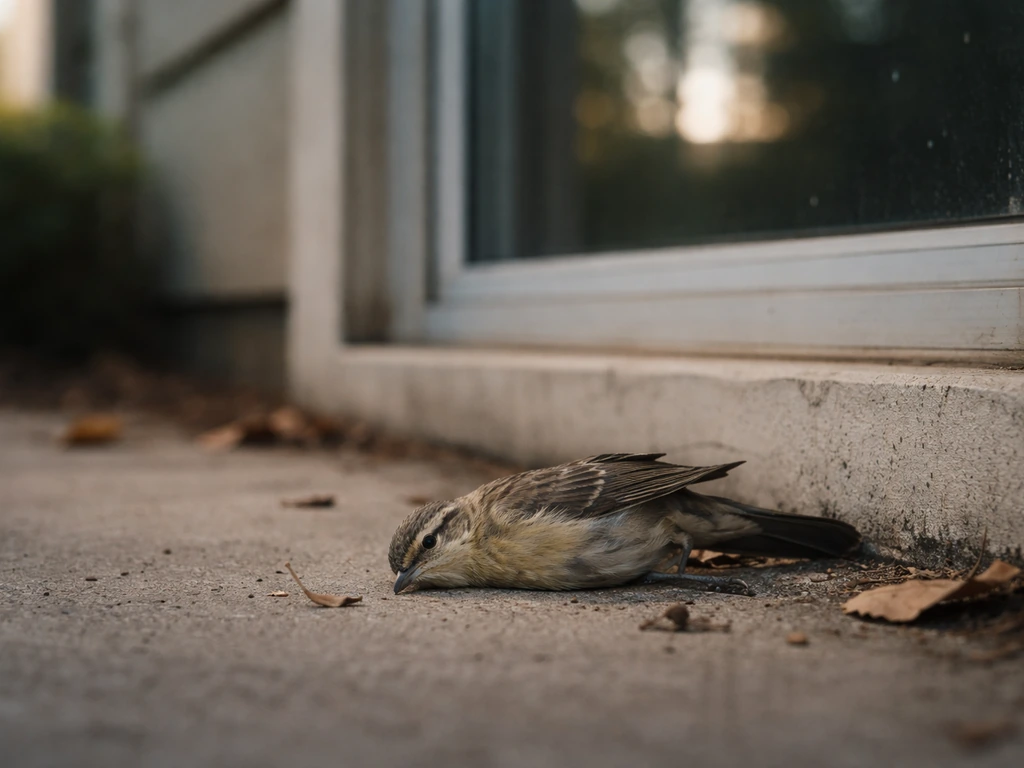
The same mix-up issue applies to other dark birds. If you're exploring the meaning of a dead bird you've found, or working with songbird symbolism, you'll want to make sure you're looking at the right species. A dead robin, for example, carries its own distinct set of interpretations that have nothing to do with crow symbolism. The details matter more than they seem.
How to actually interpret what you're experiencing
If you've landed here because you keep seeing crows and it feels significant, here's a practical process that doesn't require you to either accept a predetermined meaning or dismiss your experience entirely. A dead bird song meaning is often interpreted as a sign tied to endings, but it can also come from anxiety, attention, and pattern-finding in your current situation.
- First, identify the bird correctly. Before you interpret anything, confirm you're actually seeing a crow and not a raven, blackbird, or other dark bird. Use the tail shape and size checks above. This sounds basic but it changes the symbolism significantly.
- Notice the context, not just the bird. Are the crows loud and mobbing something? That's probably behavioral, not mystical. Are you seeing a lone crow at an unusual time or place, like genuinely at night or in a location where crows don't typically appear? That's more worth reflecting on.
- Write down what's happening in your life right now. Mindbodygreen recommends journaling your crow encounters alongside what's going on internally: what's changing, what you're anxious about, what feels unresolved. The crow sighting becomes a prompt rather than a prophecy.
- Look for patterns over time, not single moments. One crow is just a crow. A recurring experience over days or weeks, particularly when you're in a period of transition, is more worth sitting with.
- Watch for confirmation bias. Psychology Today flags this directly: if you've decided crows are following you, you'll start noticing every crow you see and ignoring the days when you don't. Ask yourself honestly whether the pattern is real or whether you've been primed to see it.
- Use the felt sense. Lisa Wetsel's practical guidance on synchronicity suggests checking your body's response rather than immediately decoding a message. Does this encounter make you feel called to pay attention, or does it make you anxious? The feeling often tells you more than the symbol.
- Don't over-attribute. A sign isn't always a message to decode, and a crow landing near you is sometimes just a crow landing near you. The most grounded interpreters hold meaning lightly, treating it as an invitation to reflect rather than a directive to act.
The crow's core symbolic value is exactly this: it asks you to look at what's in transition. If you're noticing crows right now, the most useful question isn't 'what is this bird trying to tell me? If you're also wondering about the meat bird meaning, it's worth looking at how that phrase is used and what cultural context might be behind it. ' but 'what am I already sensing that I haven't yet named?' That reframe turns a potentially anxious search for omens into something genuinely useful: a moment of honest self-inventory at a time when something is clearly changing.
FAQ
If I saw a crow and then immediately had a bad day, does that prove the crow meaning was a warning?
Not necessarily. A common pitfall is linking timing to causation (the crow might have been noticed because you were already stressed). A helpful check is to write down what you were thinking or feeling before the sighting, then ask whether the crow’s message fits a “transition and choice” theme rather than a literal prediction.
What should I do if I see crows repeatedly for weeks, not just once?
Repeat sightings are often about a real-world trigger (food sources, nesting nearby, regular routes) plus your attention being focused. Try a two-week observation log: date, time, location, crow behavior (mobbing, feeding, roosting), and your current life changes. If the pattern tracks the same place and behavior, the “meaning” may be environmental rather than mystical.
Does the meaning change if the crow is alone versus in a group?
Yes, in practice. Alone crows may be foraging or passing through, while groups are frequently involved in mobbing predators or coordinating roosting. Symbolically, people read groups as “heightened emphasis,” but behaviorally it can be simpler: the group context usually indicates social communication rather than a single ominous message.
Is a crow on my car, porch, or windowsill different from a crow crossing my path?
The location often changes the likely explanation. A crow repeatedly choosing your yard can mean it’s finding food, water, or nesting safety. Crossing your path is more likely to be interpreted as a “crossroads” prompt, but if it’s the same spot over and over, the practical meaning (resource or habitat) should come first.
How do I tell whether I saw a crow or a raven, and why does it matter for meaning?
Use silhouette and size cues. Crows are usually smaller with a more squared tail when fanned, while ravens appear larger with a different tail shape and a deeper call. Since many traditions assign ravens heavier themes like prophecy or creation, misidentifying the bird can lead you to pull the wrong symbolic thread.
What if I only heard a crow, but I never saw one?
Hearing-only sightings are easier to misattribute (other birds can sound similar). Treat it as a “probability” signal: pause, note what’s happening in your environment, and confirm later with a visual check. If you cannot confirm the species, avoid building a precise omen meaning around it.
Do “a certain number of crows” meanings like one message or two luck have a reliable basis?
Those number-based interpretations are popular but not consistently documented across cultures. If you want to use numbers, consider them as personal prompts (for example, “what am I learning from this transition?”) rather than fixed rules. Otherwise, it can turn into over-reading that ignores more grounded explanations like roost size.
Is it ever a bad idea to treat crow sightings as spiritual messages?
It can become unhelpful if it drives fear, compulsive checking, or decisions based on a single sign. A safer approach is to use sightings as a reflective question (“what is shifting?”) and pair it with practical next steps, like evaluating relationships, plans, or safety concerns using real information.
What does a nighttime crow sound or sighting mean?
A crow after dark is unusual, so it can feel significant. Before leaning on symbolism, confirm it’s actually a crow (record the sound if possible, check local species activity). If confirmed, you can treat it as a “liminal pause” prompt, but still look for environmental reasons such as artificial lighting, an injured bird, or misidentification.
If a crow drops objects for me, does that mean it’s trying to send a message?
In most cases, it likely reflects learned behavior and reciprocity, especially if you regularly feed or interact with crows. A “message” interpretation can be optional, but the grounded takeaway is that crows recognize you and respond to your routines. Avoid assuming it predicts events, and instead adjust your interaction for safety and local wildlife guidance.
How can I interpret the crow meaning if I am grieving or coping with loss?
Grief often increases pattern-finding, so the crow may become a symbol you attach to your ending and transition. Make the interpretation serve you: ask what needs closure, what support you need, and what kind of change you are ready for, rather than trying to decode a literal prediction.
What’s the single best question to ask yourself instead of searching for an exact omen?
Ask: “What part of my life is in transition right now, and what is the next small decision I can make with clarity?” This keeps you in the reflective, grounded frame the article emphasizes, while reducing the temptation to over-interpret every sighting.
Dead Bird Meaning on Reddit: Superstition vs Safety
Dead bird meaning on Reddit: omens vs cultural symbolism and practical health or environmental causes, plus safe next st