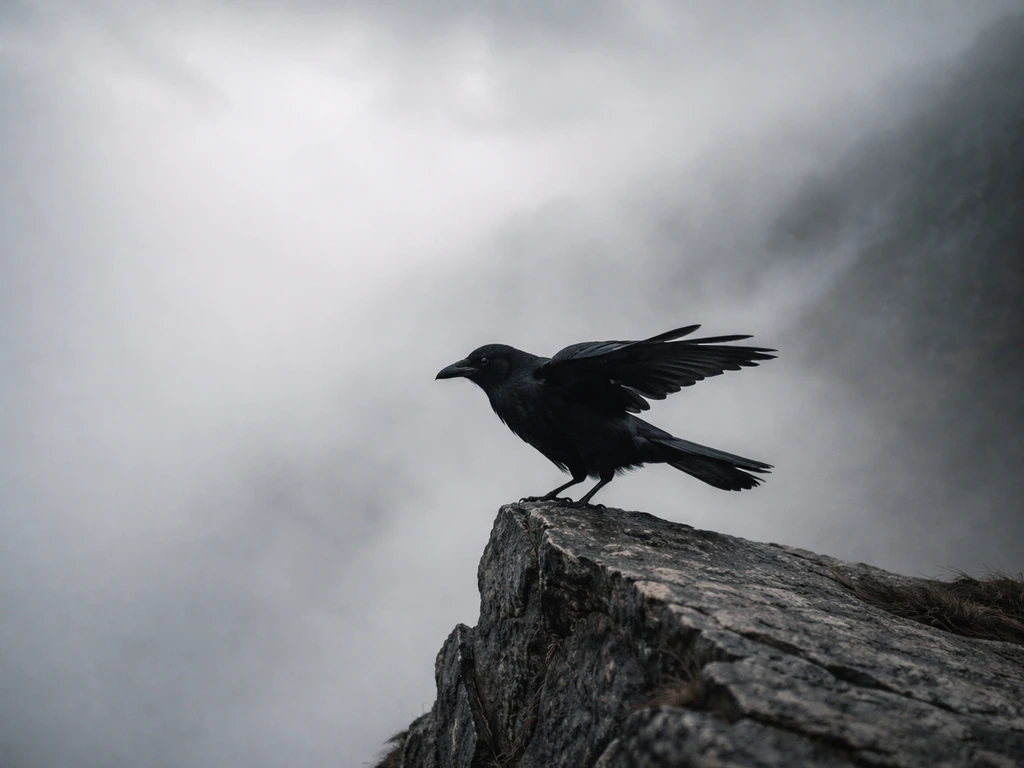
A 'scarecrow bird' is not a single defined species or a fixed idiom with one universal meaning. When someone searches for it, they're usually asking one of two things: what does a scarecrow (the farm figure) mean in relation to birds, or what does the phrase mean when it shows up in a story, song, or conversation in a figurative way.
Scarecrow Bird Meaning: Literal and Figurative Interpretations

Marcus Reeves
5 Jun 2026
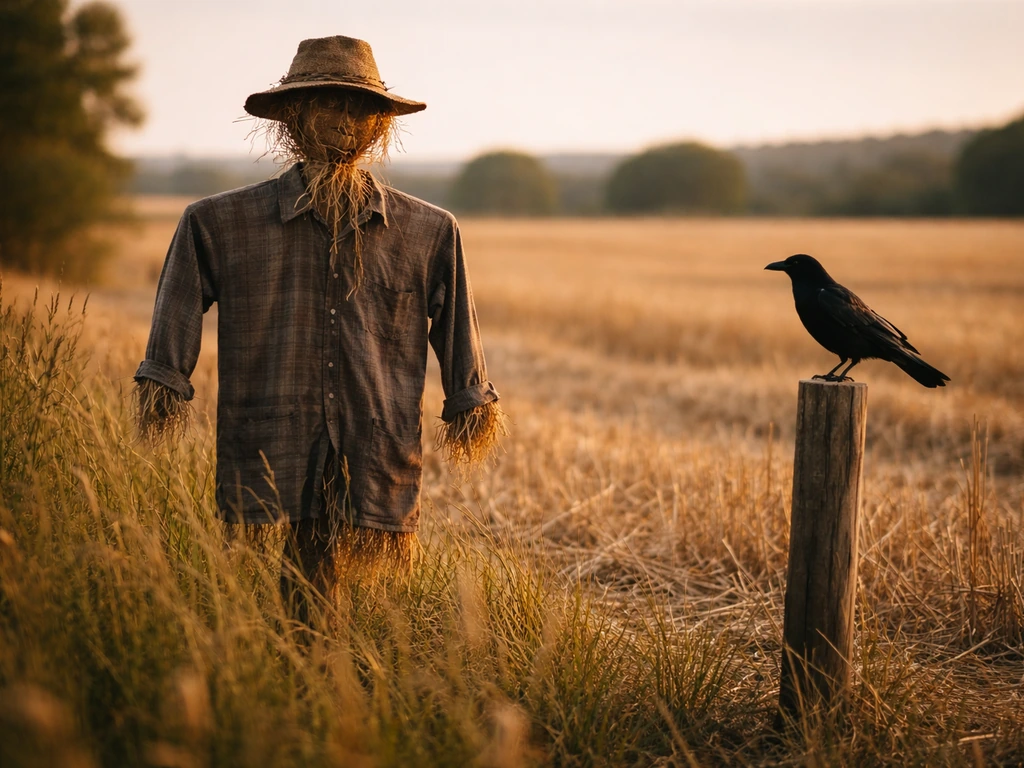
The literal answer is simple: a scarecrow is a human-shaped dummy placed in fields to frighten birds away from crops, a practice recorded in English since at least 1573. The figurative answer depends entirely on context, but scarecrow imagery almost always carries themes of deception, hollow power, standing guard without real authority, or being something that looks threatening but isn't.
Literal vs. figurative: what 'scarecrow' actually means
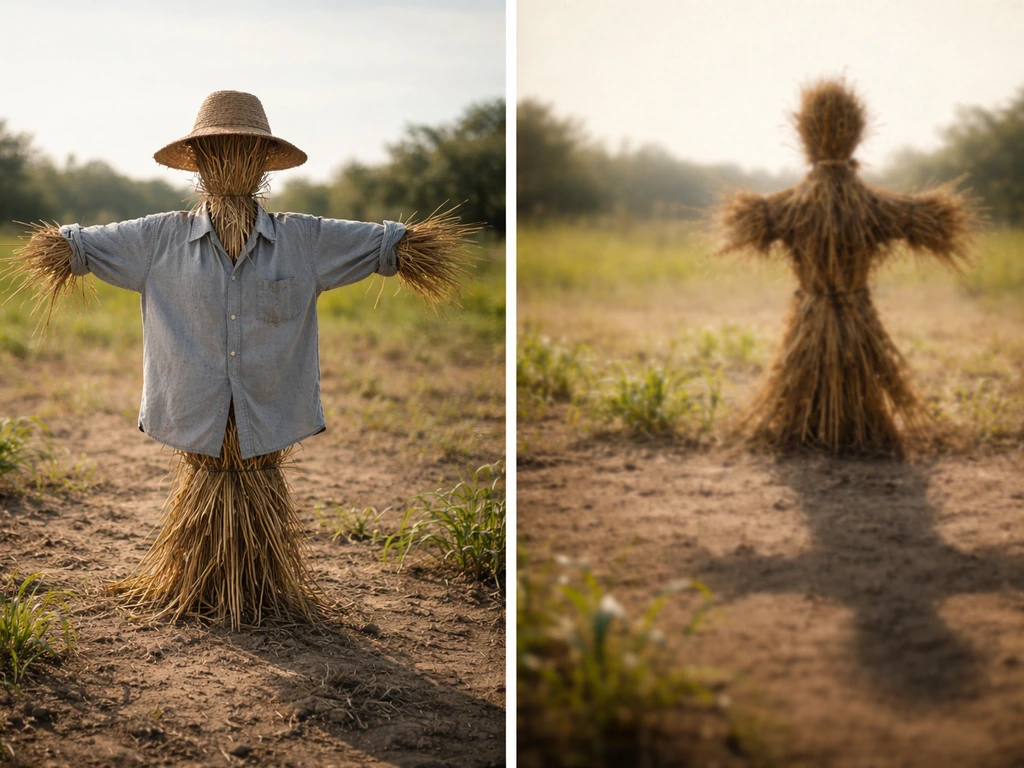
Every major dictionary agrees on the literal definition. Merriam-Webster calls a scarecrow 'an object usually suggesting a human figure that is set up to frighten birds away from crops.' Cambridge, Oxford, and Collins all echo the same thing: a model of a person, dressed in old clothes, placed in a field. Oxford Learner’s Dictionaries similarly defines a scarecrow as “a figure made to look like a person, dressed in old clothes, and put in a field to frighten birds away.” a model of a person, dressed in old clothes, placed in a field. The job is pure deception. The scarecrow pretends to be something it isn't (a human) to make birds believe there's a threat present.
But Merriam-Webster also records a second definition that's just as important: something 'frightening but harmless.' That's the figurative scarecrow, and it's been part of English for centuries. Etymology sources trace the word back to 1573, and by the time it settled into common use, it had already picked up a secondary meaning of a 'gaunt, ridiculous person,' someone who looks alarming but poses no real danger. Dictionary.com notes both senses: the agricultural decoy and the pejorative label for someone or something that only appears threatening.
This double meaning is why 'scarecrow bird' can feel slippery. It's sitting at the intersection of the literal (a device designed specifically around birds) and the figurative (a hollow symbol of protection or threat). When you're trying to decode what someone means by the phrase, you need both of these senses in your back pocket.
Where you'll actually encounter the phrase 'scarecrow bird'
The phrase pops up in a few distinct places, and knowing which one you're dealing with cuts through most of the confusion fast.
Folk sayings and rural tradition
In farming communities and folk speech, a 'scarecrow bird' sometimes refers to a bird that has learned to ignore or even mock the scarecrow. Birds, especially crows, are sharp enough to figure out that a stuffed dummy isn't actually dangerous. Wikipedia notes that the effectiveness of scarecrows tends to lessen as birds become familiar with them. So in folk humor and rural sayings, a 'scarecrow bird' can describe an animal (usually a crow) that has outsmarted the trick, which carries its own symbolic weight: the clever creature that sees through pretense.
Children's stories and picture books
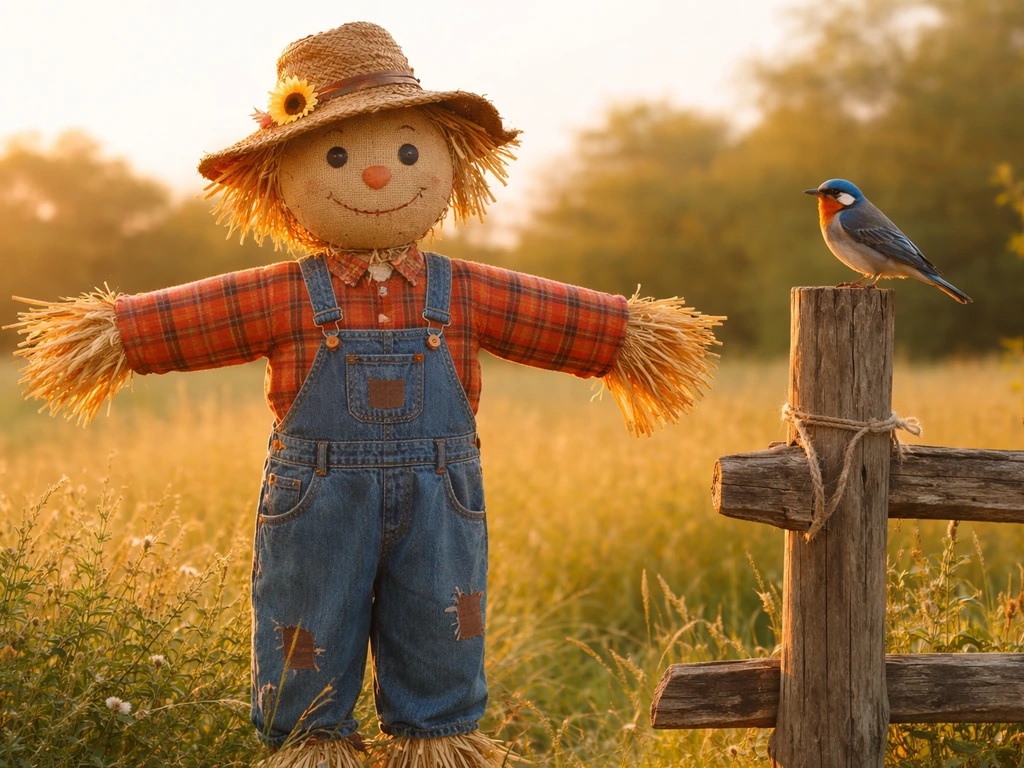
In kids' literature, scarecrows and birds are almost always paired together as the central relationship of a story. The scarecrow tries to do its job; the bird either flees, befriends the scarecrow, or exposes it as harmless. In these contexts, 'scarecrow bird' can be shorthand for the bird character in that dynamic, usually the one who breaks through the illusion and finds connection or community where fear was supposed to live. It's a warmhearted trope used to teach kids about appearances being deceiving.
Figurative and metaphorical speech
When adults use 'scarecrow bird' in conversation or writing, they're usually reaching for one of two metaphors: either the scarecrow as a symbol of false protection (something standing guard that can't actually protect anything), or the bird as a symbol of something wild and free that refuses to be scared off. Together, the phrase can describe a relationship between empty authority and a spirit that won't be contained. You'll see this kind of imagery in poetry, song lyrics, and literary fiction where the tone leans toward themes of freedom, deception, or hollow institutions.
What the scarecrow symbolizes in bird-related contexts
Scarecrow imagery carries a consistent cluster of symbolic meanings across cultures and genres. When it appears alongside birds specifically, those meanings get sharper and more specific.
- Deception and illusion: The scarecrow's entire purpose is to fake out real creatures. In symbolic terms, it represents something that looks real but is hollow inside, a false front, a performance of power.
- Hollow authority: Because the scarecrow can't move, can't act, and eventually loses its effectiveness (as birds wise up), it's become a symbol for authority that has no real teeth. Think: rules no one enforces, warnings no one takes seriously.
- Protection without presence: A scarecrow does stand watch over something valuable (crops, a field, a community). Even if it's not truly powerful, there's something in the intention of protection, which is why scarecrows sometimes carry warmer symbolic meaning in folk and children's stories.
- Being out of place: A human-shaped figure standing alone in a field looks unnatural. That unsettling quality, something that belongs to one world but exists in another, lends scarecrows a haunted or liminal feeling in darker stories.
- Pretending or standing guard: Related to hollow authority, but gentler. The scarecrow is doing its best. It's trying. That reads as both tragicomic and sympathetic depending on the tone of the work.
When birds enter the frame, the symbolism usually pivots around the question of whether the bird is fooled or not. A bird that flees the scarecrow represents fear, instinct, or being controlled by appearances. A bird that stays, perches on the scarecrow, or befriends it represents wisdom, freedom, or the ability to see through deception. That tension is what makes 'scarecrow bird' such a rich phrase in literary and folk contexts.
Bird species people commonly mix with 'scarecrow bird'
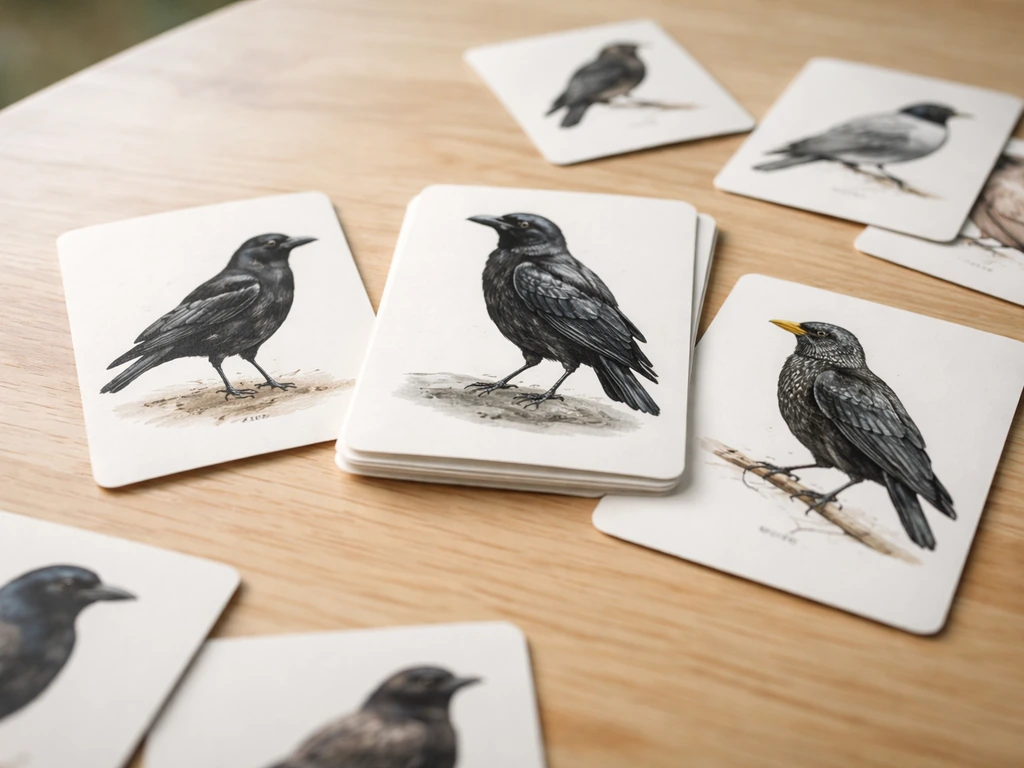
Because 'scarecrow bird' isn't an official species name, people sometimes end up searching for it when they're actually thinking of a specific bird that has a strong cultural or symbolic association with scarecrows. Here are the ones that come up most often.
| Bird | Connection to Scarecrow Imagery | What It Usually Symbolizes |
|---|---|---|
| Crow | The bird scarecrows were originally designed to repel; the name 'scare-crow' literally names the crow as the target | Intelligence, trickery, death, transformation; crows that ignore scarecrows symbolize outsmarting authority |
| Raven | Often confused with crows; appears in dark or gothic contexts alongside scarecrow imagery | Mystery, prophecy, the supernatural; ravens perching on scarecrows carry an ominous tone |
| Sparrow or small songbirds | Common in children's stories where a small bird befriends the lonely scarecrow | Innocence, friendship, seeing past appearances |
| Hawk or falcon | Sometimes used in anti-bird protection alongside scarecrows; also symbolically paired in rural imagery | Power, keen sight, seeing through deception |
| Blackbird | Associated with fields and crops; appears in folklore alongside scarecrow figures | Mystery, the unknown, transitions between seasons or states |
If you're trying to identify a real bird you spotted near a scarecrow, the most common culprits are crows, starlings, and sparrows, since those are the species most likely to be found in agricultural fields and least deterred by stationary decoys. But 'scarecrow bird' as a label doesn't map to any single species in ornithology or birdwatching guides.
Similar phrases that get mixed up with 'scarecrow bird'
Part of why this phrase causes confusion is that it rhymes conceptually with a bunch of other bird-related idioms and expressions. Here are the ones worth knowing so you don't conflate them.
- 'Straw man' (not a bird phrase, but closely related to scarecrow symbolism): In rhetoric, a straw man is a misrepresented version of an argument that's easy to attack. Wiktionary traces this directly to the scarecrow/effigy concept. If someone uses 'scarecrow' in a debate or argument context, they may be gesturing at straw man logic.
- 'Crow bait' (a rural folk expression): refers to something so worn out or useless it's only good for attracting scavengers. Not the same as scarecrow bird, but comes from the same agricultural vocabulary.
- 'Dead bird' (symbolic phrase): In poetry and folk speech, a dead bird carries meanings around lost freedom, bad omens, or grief. This overlaps with scarecrow imagery in darker literary contexts but is its own distinct symbol.
- 'A bird in a gilded cage': about captivity and the illusion of freedom. Shares the scarecrow's theme of deception and appearance vs. reality, but points toward the bird being trapped rather than frightened.
- 'Flip the bird': slang for an obscene gesture; completely unrelated to scarecrow imagery despite the word 'bird.'
- 'Early bird gets the worm': about initiative and timing; the 'bird' here is the motivated agent, the opposite of being scared off by a scarecrow.
The key distinction: scarecrow-based phrases almost always circle around themes of deception, appearances, and hollow power. If the phrase you're looking at is about opportunity, captivity, or gesture, it's probably from a different idiom family entirely.
How to figure out what it means in the moment

When you encounter 'scarecrow bird' and aren't sure what it means, run through these questions in order. They'll narrow down the interpretation quickly.
- Where did you see or hear it? A farming article or gardening forum? Almost certainly literal: a scarecrow used to repel birds from crops. A poem, song, or novel? Almost certainly figurative: look for themes of deception, false protection, or outsmarting authority. A children's book? Probably the 'lonely scarecrow befriends a bird' trope, symbolic of seeing past appearances.
- Is a specific bird species named? If the phrase is 'scarecrow crow' or 'scarecrow raven,' the species name is doing heavy symbolic lifting. Crows and ravens bring their own layered meaning (intelligence, death, mystery) that shapes the interpretation.
- What's the emotional tone? Dark and unsettling? The scarecrow's liminal, out-of-place quality is likely in play. Warm and whimsical? The theme is probably friendship or innocence triumphing over fear. Cynical or political? The 'frightening but harmless' definition of scarecrow is almost certainly the point.
- Is it describing a person? If someone calls another person a 'scarecrow bird,' they're likely using it pejoratively, drawing on the older figurative sense of a gaunt, ridiculous figure, someone who looks threatening or important but has no real power or substance.
- Is there an exact quote you can search? If 'scarecrow bird' appears in a specific song lyric, book title, or folk saying, search the exact phrase in quotes. It may be a reference to a specific work (like a children's book character or a song) rather than a general idiom.
Quick example readings
Scenario 1: You read 'the old man stood like a scarecrow bird in the empty field. On Reddit, the phrase is often discussed as a figurative oddity, with people debating whether it points to a harmless scarecrow-like meaning or a dead-bird association dead bird meaning reddit. ' This is figurative. The person is being described as gaunt, out of place, and possibly ineffectual, someone performing a role (standing guard, waiting) without real power behind it. The 'bird' element suggests fragility or skittishness layered onto the scarecrow image.
Scenario 2: A children's book features a character called 'Scarecrow Bird. ' This is almost certainly a whimsical creature that blends both elements, maybe a bird dressed like a scarecrow, or a scarecrow that acts like a bird. The theme is likely about belonging, misidentity, or finding your flock. Similar in spirit to how stories about dead robins or injured birds are often used to explore grief or change in children's storytelling.
Similar in spirit to how stories and songs about dead birds are often interpreted for dead bird song meaning and grief or change in children's storytelling. In particular, some people use the phrase dead robin bird meaning to talk about how stories treat loss, fragility, and change dead robins.
Scenario 3: Someone in a political forum says a policy is 'just a scarecrow bird, all straw and no substance.' This is the Merriam-Webster figurative sense in action: something that looks like it has force or authority but is actually harmless and ineffective. The 'bird' tag here is reinforcing the agricultural, field-dummy imagery rather than adding a separate bird symbol.
Scenario 4: You're in a garden and someone tells you to 'put up something for the scarecrow birds.' Back to literal: they mean whichever bird species is raiding the garden (probably crows, starlings, or pigeons) and want a deterrent. No symbolism needed here.
The bottom line on 'scarecrow bird meaning'
There's no single, fixed meaning for 'scarecrow bird,' and that's actually what makes it interesting. At its core, it's a phrase built from two powerful symbols: the scarecrow (deception, hollow authority, protection through pretense) and the bird (freedom, instinct, the wild thing that either flees or refuses to). In many cases, people are really asking how the scarecrow meaning shifts once a bird, especially a crow, is part of the image scarecrow (deception, hollow authority.
How those two elements interact depends entirely on where you found the phrase and what tone surrounds it. Use the checklist above, identify the genre and context first, then match the tone to the symbolic meaning. Nine times out of ten, you'll land on the right interpretation within a minute or two of reading the surrounding material carefully.
FAQ
Is “scarecrow bird” a specific bird species or a standard idiom?
In most cases, no. “Scarecrow bird” is rarely a fixed expression with one shared definition. You usually have to read the sentence or the surrounding scene to decide whether it is describing birds that ignore a scarecrow, a character in a children’s story, or a metaphor for false protection.
How can I tell if “scarecrow bird meaning” is about actual birds versus symbolism?
The “real bird” route is usually wrong unless the wording clearly points to deterrence or farming. Clues include mentions of gardens, fields, crops, or protecting seed. If the phrase appears in politics, poetry, or character description, it is almost certainly metaphorical rather than ornithological.
What if the phrase sounds metaphorical, but I cannot see how the bird part fits?
If you see “scarecrow” used as a warning but “bird” seems out of place, interpret it as a layered image. A common pattern is that the scarecrow represents a facade, while the bird adds the idea of what remains instinctive or free (for example, the bird that refuses to be scared).
If someone says “put up something for the scarecrow birds,” what should I actually do in the garden?
In literal gardening advice, the most useful next step is to treat it like a decoy problem, not a meaning problem. Rotate scarecrow placement, add movement (wind spinners or tied fabric), and combine methods, since stationary decoys often become familiar to the birds over time.
If “scarecrow bird” refers to birds ignoring a scarecrow, does it always mean crows?
When it’s used to describe a “bird that outsmarts the scarecrow,” the intended meaning is often about recognition of deception. The likely bird is a crow, but langers like starlings can also play the role depending on region, so don’t assume one species without local context.
Could “scarecrow bird” ever be about dead birds, and how do I avoid that misread?
People sometimes misread figurative uses as about literal harm or dead birds. If the writing does not clearly mention injury, remains, or funerary imagery, treat it as a facade or false-authority metaphor, not a reference to a dead bird trope.
How should I interpret “scarecrow bird” in kids’ books or stories?
In children’s literature, “scarecrow bird” can mean a character relationship more than a real species. Look for cues like friendliness, misidentification, or learning where belonging comes from, and expect the theme to be about perceptions and safety rather than threat.
How can I confirm the figurative meaning when “scarecrow bird” appears in commentary or politics?
To decode a political or social use, check for words tied to substance and effectiveness, like “all show,” “no substance,” “performative,” or “ineffective.” That’s the figurative scarecrow sense, with “bird” reinforcing the idea of appearances being resisted or exposed.
Does capitalization or quotation marks change the meaning of “Scarecrow Bird”?
If the phrase is written as a character title (for example, “Scarecrow Bird” in a book or game), default to a fictional blend. The “meaning” is determined by the character’s actions (does it deter, befriend, fool, or reveal), not by dictionary definitions of the individual words.
Next Article
The Crow Bird Meaning: Signs, Messages, and Real-Life Interpretations
Understand the crow bird meaning: signs of change, mystery and protection, plus cawing or crossing paths in real life.