
A meat bird is simply a bird raised primarily for its meat rather than for egg production. In most everyday conversations, especially in farming, homesteading, and backyard chicken communities, "meat bird" almost always means a broiler-type chicken bred specifically to grow fast and put on muscle quickly. If someone posts a listing for meat bird chicks or asks whether you have experience with meat birds, they are almost certainly talking about broiler chickens, and most likely the Cornish Cross, which is the dominant commercial and backyard meat breed in the US.
Meat Bird Meaning: Broilers, Usage, and How to Verify

Marcus Reeves
16 May 2026
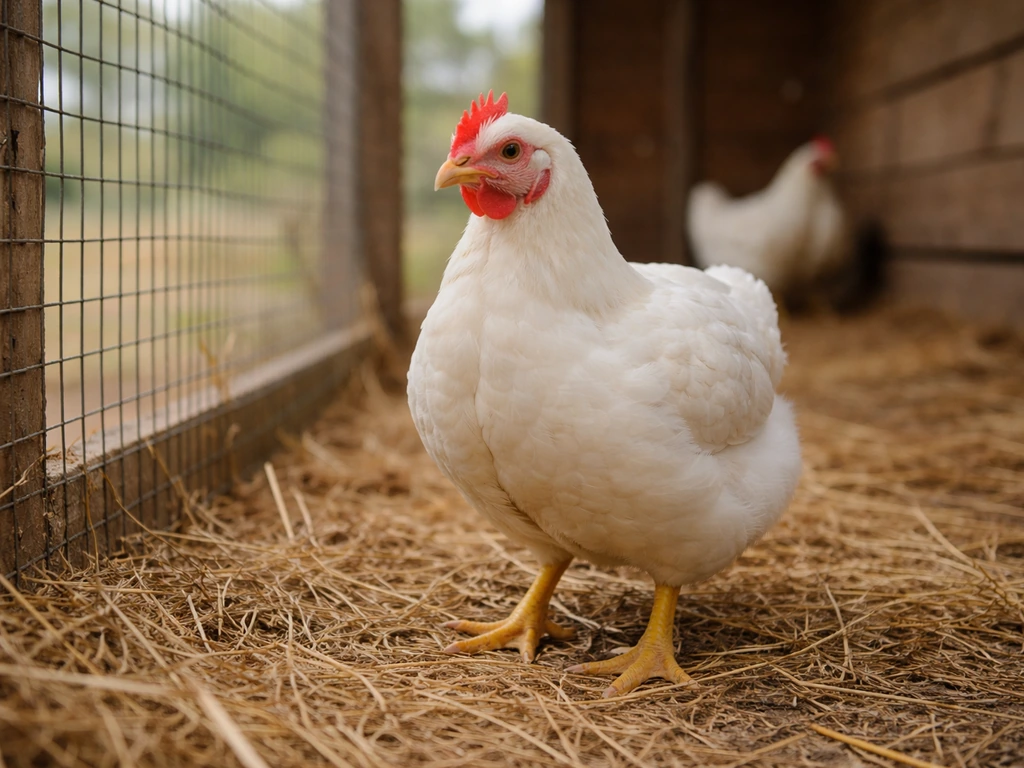
What "meat bird" actually means
The Oxford University Press poultry glossary defines "meat bird" directly as a term that commonly refers to broilers or the type of birds used for broiler production. The EPA's agricultural guidelines group broilers, turkeys, and ducks together under "meat-bird production" as a single segment, specifically contrasting it with the laying or egg-production segment. So the phrase has a clear, formal meaning in agriculture: it identifies the end-use purpose of the bird. You are not raising it for eggs. You are raising it to eat.
US federal regulations even use the parallel phrase "meat-type chicken" as an official category for birds going through meat-chicken slaughter plants. This is not casual slang from a forum thread. It is legitimate industry and regulatory language, which is worth knowing if you ever see it in a contract, a hatchery catalog, or a farm listing and wonder whether it is a technical term or just informal speech. It is both.
How meat birds fit into the broader poultry world
Poultry production divides cleanly into two main purposes: meat and eggs. Birds bred for each purpose are genetically specialized, and the difference is dramatic. Meat birds are bred for rapid muscle growth and feed conversion. Layers are bred to produce as many eggs as possible over a long life. Dual-purpose breeds exist in the middle but, as University of Minnesota Extension puts it plainly, they are "not best for either purpose." If you want real meat production, you want a true meat breed, and if you want serious egg production, you want a layer.
Within the meat-bird category, there are several size and age subcategories that come up in conversations and grocery store labels. These are not different birds, just the same meat-type bird harvested at different ages and weights.
| Category | Typical Age at Processing | Approximate Weight | Notes |
|---|---|---|---|
| Broiler/Fryer | 4 to 8 weeks | 2.5 to 4.5 lbs (eviscerated) | Most common commercial label; fast-growing Cornish Cross dominates this slot |
| Roaster | 8 to 12 weeks | 5 lbs or more (ready-to-cook) | Same meat breed, left to grow longer; yields more meat per pound than a fryer |
| Cornish Game Hen | Under 5 weeks | Under 2 lbs | A very young broiler harvested early, often a Cornish Cross or Cornish hybrid |
| Capon | Typically 4 to 8 months | 6 to 8+ lbs | Castrated male chicken; not a broiler breed specifically, but a meat-use category |
| Cockerel (as meat) | Varies | Varies | Young male chicken; sometimes sold as a meat bird but not a fast-growing breed |
Broilers are also sometimes called fryers in commercial settings, and the USDA uses "broiler-fryer" as a single classification for young meat chickens under 10 weeks old. Some farms describe broiler/fryer/roaster as different names for the same bird at different weight ranges, which is accurate. The bird itself is the same genetics; the label just reflects how long it was allowed to grow.
Who uses the term and where you'll run into it

You will hear "meat bird" from homesteaders, small-farm operators, backyard chicken keepers, feed store staff, hatchery websites, and 4H extension materials. Hatcheries like Woodbury and Polaris use it as a product category right on their websites, grouping chicks, starter feed, transport crates, and processing tools under a single "meat birds" label. University extension programs from Minnesota, Kentucky, Iowa State, and others use it in educational guides for small-flock owners. It is the go-to informal phrase when someone wants to distinguish a chicken they are raising for the freezer from one they are keeping for eggs.
Online chicken-keeping communities like BackyardChickens.com use it constantly in forum threads, and it shows up on Reddit in purchasing and recipe discussions. If you are browsing a farm listing on Craigslist or a local Facebook group and see "meat bird chicks for sale," that seller is almost certainly offering Cornish Cross chicks at or just after hatch.
Is it offensive or figurative? Clearing up misinterpretations
In a farming or poultry context, "meat bird" is completely neutral and descriptive. There is nothing judgmental, figurative, or emotionally loaded about it when a farmer or hatchery uses it. It is standard agricultural jargon, full stop.
That said, Urban Dictionary does record slang uses of "meatbird" (sometimes written as one word) that have nothing to do with farming, including derogatory or sexualized meanings. Those uses exist in a totally different context from agricultural speech. If you saw "meat bird" on a farm listing, an extension website, or in a chicken-keeping forum, you are dealing with poultry jargon, not internet slang. The audience and setting make all the difference. A backyard chicken keeper talking about their meat birds is not using the term in any loaded or insulting way, and it would be a mistake to read it that way.
"Meat bird" is also not symbolic or figurative the way some bird-related language can be. It is not being used as a metaphor, a sign, or an omen in the way that, say, encountering a dead bird or a crow might carry symbolic weight in other contexts. If you have heard the phrase “scarecrow bird” in another context, its meaning can be totally different from “meat bird,” so it helps to check the exact wording and setting metaphor. If you mean the phrase in a different, Reddit-style sense, searching dead bird song meaning can help you interpret what people are claiming it symbolizes. If you are wondering about the “dead bird” phrasing and what it means on Reddit, that is a different, internet-specific usage than poultry jargon like “meat bird.” dead bird meaning reddit. Some people also wonder about the crow bird meaning in spiritual or symbolic contexts, but that is unrelated to poultry jargon. People often search for the dead robin bird meaning, but those meanings vary by folklore, region, and context dead bird. This term is purely practical and literal.
What "meat bird" implies about how the animal is raised
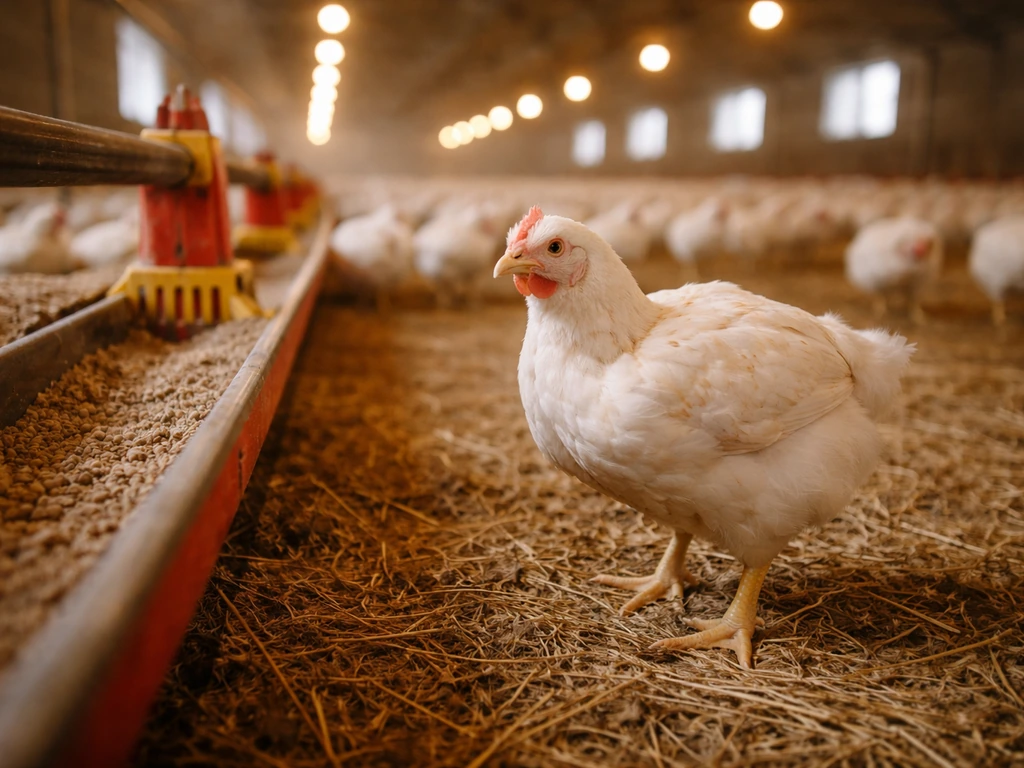
When someone calls a bird a meat bird, they are signaling a whole set of production expectations that are different from raising layers or dual-purpose birds. Here is what that typically looks like in practice:
- Fast growth: A Cornish Cross (the most common meat bird) can reach a 4-pound fryer weight in as little as 6 weeks and a 6-pound roaster weight in about 8 weeks.
- High-protein feed: Meat birds need a starter feed with 22 to 24 percent protein for the first four weeks, which is higher than standard chick starter. Using a lower-protein layer developer feed slows their growth significantly.
- Short lifespan by design: Most meat birds are processed at 6 to 9 weeks. They are not meant to be long-term flock members.
- Processing expectations: Raising a meat bird means planning for harvest. Common practice before slaughter includes withholding feed for 6 to 8 hours, then killing, dressing, chilling, and packing the carcass.
- Limited mobility as they grow: Fast-growing broiler breeds put on weight so quickly that they can have leg and heart problems if kept past their target weight window. This is a known trade-off with the Cornish Cross.
- Different infrastructure needs: Some hatcheries and farm supply stores sell specific "meat bird supplies" including housing, feeders, and processing equipment designed for the short, intensive growth cycle.
If someone is raising a dual-purpose breed and calling it a "meat bird," the timeline and feed program still apply, but the results will be leaner and slower. Extension sources are consistent that dual-purpose birds are a compromise and that people who want serious meat production should use actual broiler genetics.
Close synonyms and related terms worth knowing
These terms all orbit the same space and come up in listings, conversations, and extension materials. Knowing how they connect helps you decode what a seller or farmer is actually offering.
- Broiler: The most common synonym for meat bird in both commercial and backyard contexts. Often used interchangeably with fryer. The EPA defines it as "chicken, sometimes called fryers, reared primarily for meat production."
- Fryer: A broiler harvested young and light, typically under 4.5 pounds. Sometimes used as a size label rather than a breed label.
- Roaster: A larger meat bird (5 pounds or more) processed later than a fryer, usually 8 to 12 weeks old. The same Cornish Cross breed can be a fryer or a roaster depending on when it is harvested.
- Dual-purpose breed: A chicken capable of both egg production and reasonable meat yield, but optimized for neither. Examples include Rhode Island Reds and Barred Rocks. Extension sources consistently recommend against using these if your actual goal is efficient meat production.
- Cockerel: A young male chicken under one year old. Sometimes sold as a "meat bird" in backyard and farm contexts when a flock produces unwanted males, but a cockerel from a layer breed is not a true meat bird in the production sense.
- Capon: A castrated male chicken raised for meat, typically butchered at several months old and weighing 6 pounds or more. A niche category not commonly sold as a "meat bird" in small-flock contexts.
- Cornish Cross: The dominant commercial and backyard meat breed, a cross of Cornish and White Rock chickens. When someone says "meat bird," this is the breed they are almost always referring to unless they specify otherwise.
How to confirm what someone means in a real listing or conversation

The term is usually clear in professional and extension contexts, but in casual farm listings and community forums there is occasional ambiguity. A BackyardChickens forum thread pointed out that "meat bird" sometimes gets applied loosely to unwanted roosters or "soup chickens" that are not actually fast-growing broiler breeds. If the distinction matters to you (and it usually does for processing timelines and feed costs), here is how to confirm what you are actually getting.
- Ask for the breed name. If someone says Cornish Cross or Jumbo Cornish X, you are looking at a true fast-growing meat breed. If they say Rhode Island Red, Barred Rock, or just "mixed," you are likely looking at a dual-purpose or layer breed being sold off as a meat bird.
- Ask the age and current weight. A true broiler at 6 weeks should be approaching 4 pounds. If the bird is older and lighter than that, it is not a standard broiler.
- Ask about the expected processing timeline. A seller who knows their meat birds should be able to tell you something like "ready to butcher in 6 to 9 weeks" or reference a target weight like 4 to 7 pounds for fryer range.
- Check whether the listing mentions feed type. If a hatchery or seller references high-protein broiler starter (22 to 24 percent protein), they are operating with proper meat-bird protocols.
- For online listings, look for the words "Cornish Cross," "broiler," or "fryer" used alongside "meat bird." Those confirm you are dealing with the standard meaning.
- If the listing says something like "extra roos" or "soup chickens" alongside "meat birds," that is a signal the seller may be using the term loosely for any chicken they plan to eat rather than a dedicated meat breed.
Getting this right matters practically. If you are planning a processing timeline, ordering the right feed, or setting up the right housing, you need to know whether you have a true broiler that will be ready in 6 to 8 weeks or a slower-growing bird that will take several months and still produce a leaner carcass. Asking two or three quick questions upfront saves a lot of confusion later.
FAQ
If someone says “meat bird” in a listing, does that always mean Cornish Cross broilers?
Yes, sometimes, but the key is the breed or strain and expected harvest age. “Meat bird” can be used loosely for any bird sold for eating, yet true broiler-type birds are usually marketed with an explicit target window (often around 6 to 8 weeks) and may list a specific genetics line like Cornish Cross.
What questions should I ask a seller to confirm I’m getting fast-growing meat birds?
Ask for the expected grow-out duration and whether they feed a broiler starter, plus the current weight or age of the chicks. If they cannot provide a harvest timeline or feed type, you may be dealing with a slower dual-purpose or mixed-breed bird even if they label it “meat bird.”
Why does it matter whether my “meat bird” is a true broiler versus a dual-purpose chicken?
It usually affects both processing timing and feed costs. Broiler genetics typically reach a heavier, meatier carcass sooner, while slower breeds often take significantly longer and can yield a leaner carcass if harvested at the same age. Build your plan around age-to-weight expectations, not just the phrase “meat bird.”
Are “fryer,” “broiler,” and “roaster” different birds, or just different harvest labels?
In many discussions, they mean broiler-fryer (young meat chicken under about 10 weeks). However, “roaster” and “stewing chicken” can refer to older harvest ages with different weights, even when the genetics are the same. Confirm the seller’s intended harvest category rather than relying only on the label.
How can “meat bird” listings mislead me if I’m trying to raise broilers for early processing?
Not necessarily, and this is a common mix-up. Some sellers use “meat bird” for “soup chickens,” culls, or unwanted roosters, which may not have broiler growth rates. If you care about predictable processing timing, request a statement that the birds are specifically broiler genetics (not just “raised for meat”).
What wording on hatchery catalogs or feed products is the most reliable indicator of true broiler genetics?
Check for official or semi-official wording on packaging or product sheets, such as “meat-type chicken” or “broiler” alongside the genetics name. In contrast, purely descriptive labels like “raised for eating” suggest end-use but not growth performance. The safest verification is the strain plus the expected harvest age.
Does “meat bird” always mean chickens, or can it include other poultry?
You may still hear “meat birds” applied to non-chicken species in broader agricultural contexts, but in everyday chicken-keeping circles it almost always refers to broiler chickens. If the source is a feed or processing category, look for the species listed (for example, broiler turkeys versus broiler chickens) to avoid confusion.
If I buy “meat bird” chicks, should I use broiler feed, and what goes wrong if I don’t?
Watch for nutrition mismatches. If you accidentally raise a slow breed on a broiler program, you may see poorer results for carcass quality, and if you raise a true broiler on a layer-oriented feed, growth can lag. Match the feed plan to the genetics and target harvest age you actually have.
Citations
EPA’s Ag 101 “Poultry Production Phases” explicitly groups “Broilers, Turkeys, Ducks (meat-bird production)” as the meat-production segment, contrasting with laying/egg production (layers).
https://p2infohouse.org/ref/02/01244/www.epa.gov/agriculture/ag101/poultryphases.html
The OUP “Poultry Glossary” defines “Meat bird” as a term that “commonly refers to broilers or the type of birds used for broilers.”
https://academic.oup.com/DocumentLibrary/PS/Poultry_Glossary.pdf
A US hatchery marketing page uses “meat birds” to mean fast-growing meat chickens; for example, it states Cornish Cross are “ready to butcher in 6-9 weeks.”
https://woodburyhatchery.com/meat-birds.html
UMN Extension teaches that meat chickens are commonly referred to as “broilers,” and it discusses producing different “chicken sizes” (Cornish game, fryer, roaster) by slaughtering at different times.
https://extension.umn.edu/small-scale-poultry/raising-chickens-meat
EPA’s Ag 101 glossary defines “Broiler” as “Chicken, sometimes called fryers, reared primarily for meat production.”
https://p2infohouse.org/ref/02/01244/www.epa.gov/agriculture/ag101/poultryglossary.html
EPA’s glossary distinguishes “Breeder” as a bird used to produce offspring; this matters because meat birds come from meat-type broiler production systems (broiler vs layer breeder context).
https://p2infohouse.org/ref/02/01244/www.epa.gov/agriculture/ag101/poultryglossary.html
eXtension explicitly states “Meat chickens are often referred to as broilers,” linking “meat bird” usage to broiler/chicken raised for meat purpose.
https://ohio4h.org/sites/ohio4h/files/imce/animal_science/Poultry/Raising%20Meat%20Chickens%20in%20Small%20or%20Backyard%20Flocks%20-%20eXtension.pdf
An EPA appendix describing poultry sector segments says “Broiler refers to a meat-type chicken typically slaughtered at about 7 weeks of age.”
https://www3.epa.gov/npdes/pubs/cafo_permit_guidance_appendixb.pdf
UMN Extension contrasts goals: it advises raising “egg-type pullets and some broiler crosses for meat,” rather than using “dual-purpose” breeds that are “not best for either purpose.”
https://extension.umn.edu/node/21321
University of Kentucky Extension’s poultry “Chicken” page describes specialization for meat vs eggs through genetic selection: breeds developed for “meat (broilers)” and “eggs (layer),” with dual-purpose breeds as less specialized.
https://afs.ca.uky.edu/extension/poultry/chicken
USDA FSIS defines “Broiler-fryer” as a young chicken <10 weeks old with 2.5 to 4.5 lb carcass weight (eviscerated), and “Roaster” as 8–12 weeks old with ready-to-cook carcass weight of 5 lb or more.
https://www.fsis.usda.gov/food-safety/safe-food-handling-and-preparation/poultry/chicken-farm-table
Britannica states that seven-week-old chickens are classified as broilers/fryers, while 14-week-old chickens are classified as roasters (age-based category example).
https://www.britannica.com/animal/broiler
The Indiana State Poultry Association glossary defines “Broiler or Fryer” as a young meat bird chicken of either sex butchered around 4–8 weeks of age, and defines “Roaster” as usually butchered after ~8 weeks.
https://www.inpoultry.com/poultry-glossary-terms
Iowa State Extension materials for broilers describe meat-type chickens and note they are “usually six to eight weeks old when ready for processing,” and discuss processing weight ranges (e.g., 4–7 pounds) for market broilers.
https://www.extension.iastate.edu/4hfiles/agriculture/MarketBroilerCare_Management.pdf
UMN Extension explicitly frames dual-purpose birds as compromise: “good egg-type pullets” plus “broiler crosses” are recommended for the two separate goals (eggs vs meat).
https://extension.umn.edu/node/21321
Britannica Dictionary defines “roaster” as “chiefly US: a young chicken that is suitable for roasting,” and it compares/contrasts it with “broiler” and “fryer.”
https://www.britannica.com/dictionary/roaster
A hatchery product description uses “meat bird” language and gives concrete end-use weight/age ranges: Cornish Cross can reach a “four-pound fryer in as little as six weeks” and “a six-pound roaster in eight weeks.”
https://www.polarishatchery.com/products/cornish-cross-chick-straight-run
Polaris Hatchery states Cornish Cross are “a meat-only broiler,” reinforcing that “meat bird” typically points to meat-type/broiler production lines rather than egg-only layers.
https://www.polarishatchery.com/products/cornish-cross-chick-straight-run
A hatchery e-commerce category uses “Meat Bird Supplies,” indicating common retail/husbandry usage: chicks, feed, transport crates, and processing tools sold as “meat birds” category.
https://meyerhatchery.com/products/meat-bird-supplies
A long-running US poultry forum thread discusses “meat birds” in the practical husbandry sense (e.g., whether a “meat bird” might be an unwanted roo sold as soup chickens), showing everyday community ambiguity and context dependence.
https://www.backyardchickens.com/threads/question-about-meat-birds.1923/
Reddit threads about “meat bird” show the phrase appears in consumer purchasing contexts (e.g., buying “meat bird” chicks) and can relate to misunderstandings about “fat Cornish x’s” vs desired outcomes.
https://www.reddit.com/r/BBQ/comments/ydt9va
OUP’s poultry glossary frames “meat bird” as common poultry terminology tied to broiler types used for meat production, not a slang insult—useful as evidence for “jargon meaning” in farming contexts.
https://academic.oup.com/DocumentLibrary/PS/Poultry_Glossary.pdf
Urban Dictionary records alternative non-farming meanings for “meatbird/meatbird,” including sexualized/insult uses like “fat chick,” demonstrating that outside poultry jargon the term can be interpreted differently (and should be handled carefully in mixed audiences).
https://www.urbandictionary.com/define.php?term=meatbird
The same “Poultry Glossary” defines “Meat bird” in an explicitly poultry/broiler sense, providing credible evidence that in agricultural contexts it is standard jargon rather than inherently derogatory.
https://academic.oup.com/DocumentLibrary/PS/Poultry_Glossary.pdf
UMN Extension’s processing guidance includes practical slaughter/processing steps for home poultry (e.g., don’t feed for 6–8 hours before slaughter; then kill/dress/chill/pack), relevant to what “meat bird” implies about end processing.
https://extension.umn.edu/small-scale-poultry/home-processing-poultry
UMN Extension explains practical feed-program implications: using “chick starter and developer feed with lower protein and energy” results in slower weight gain than a “broiler feeding program.”
https://extension.umn.edu/small-scale-poultry/raising-chickens-meat
eXtension notes meat birds are often grown to different “sizes” by slaughtering at intervals (e.g., 5, 7, 9 weeks), and gives a starter feed protein guideline (“22% to 24% protein starter mash” for the first four weeks) for meat birds.
https://ohio4h.org/sites/ohio4h/files/imce/animal_science/Poultry/Raising%20Meat%20Chickens%20in%20Small%20or%20Backyard%20Flocks%20-%20eXtension.pdf
EPA’s glossary provides foundational definitions used in meat-bird raising (e.g., “Brooding” as supplemental heat early in growth), which is part of the typical broiler/meat-type production practice set.
https://p2infohouse.org/ref/02/01244/www.epa.gov/agriculture/ag101/poultryglossary.html
A terminology key table lists “Broiler/fryer” as “chicken raised for meat” and “Cockerel” as a young male chicken—useful for mapping end-use categories to timelines and sexing terms in conversation.
https://pressbooks.umn.edu/vetprevmed/chapter/chapter-1/
The Indiana State Poultry Association poultry glossary defines multiple sex/end-use terms (e.g., broiler/fryer, cockerel, capon), supporting mapping of close terms beyond “meat bird.”
https://www.inpoultry.com/poultry-glossary-terms
Ohio State University Extension’s 4H branded poultry handbook includes glossary-style definitions such as “Capon – A castrated male bird” and “Cockerel – A male fowl less than one year old,” showing common educational usage.
https://wood.osu.edu/sites/wood/files/imce/Program_Pages/4H/livestock/Branded%20Poultry%20Handbook%20FINAL.pdf
Britannica Dictionary explicitly uses “compare broiler, fryer” in defining “roaster,” reinforcing that roaster/fryer/broiler are closely related meat-end-use age/size categories.
https://www.britannica.com/dictionary/roaster
USDA FSIS notes roasters yield “more meat per pound than a broiler-fryer,” giving a practical implication of why roaster vs fryer may be used for different end results.
https://www.fsis.usda.gov/food-safety/safe-food-handling-and-preparation/poultry/chicken-farm-table
A poultry farm shop page states broiler/fryer/roaster are “different names for the same bird at different weight ranges,” which matches the age/weight-category idea used in extension and food-safety references.
https://gofflepoultry.com/shop/young-chicken-broilerfryerroaster/
USDA NAL Agricultural Thesaurus includes “Broiler-type” definition language implying meat-type strains for meat uses, aligning “meat bird” with specialized meat strains used for broiler production.
https://lod.nal.usda.gov/nalt/en/page/19923
US e-CFR definitions use the phrase “meat-type chicken,” providing regulatory support that “meat-type” is an industry category distinct from layer/egg production; this is a parallel term to “meat bird.”
https://www.law.cornell.edu/cfr/text/9/146.31
In community discussions, “meat bird” can sometimes mean “an unwanted roo” or “soup chicken” (not necessarily a true meat-breed broiler), which is a key real-world red flag to confirm genetics/age/end-use with the seller.
https://www.backyardchickens.com/threads/question-about-meat-birds.1923/
Meyer Hatchery provides a “Meat Bird Record & Expense Log” that includes age in weeks and body weights by sex, showing that commercial/production contexts track meat-bird timelines and targets.
https://meyerhatchery.zendesk.com/hc/en-us/article_attachments/360063069412
Polaris gives both “fryer” (about 6 weeks, 4-lb) and “roaster” (about 8 weeks, 6-lb) labels for the same meat-breed line, providing concrete listing details to ask for/verify (age + target weight).
https://www.polarishatchery.com/products/cornish-cross-chick-straight-run
Next Article
Dead Robin Bird Meaning: Omens, Symbolism, and What to Do
Dead robin meaning: symbolism, omens vs real causes, idioms, and safe steps to handle a found dead bird.