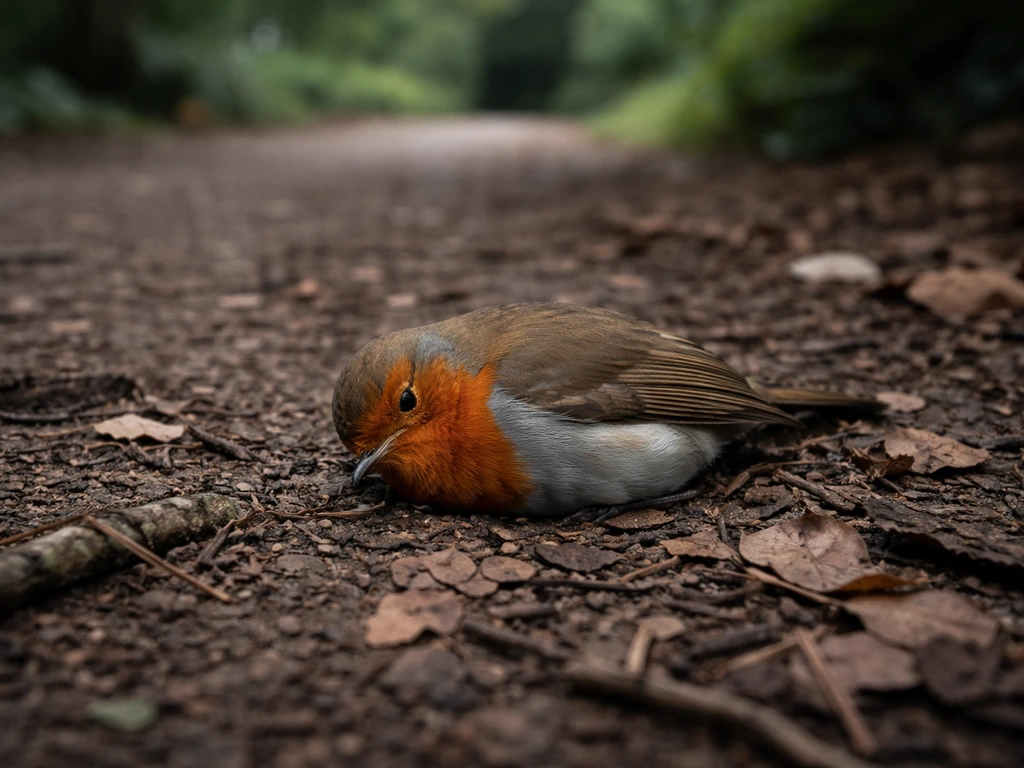
Finding a dead robin usually means one of two things: you're looking for a symbolic explanation because it felt significant, or you need to know what to actually do with it. On the symbolic side, a dead robin is widely interpreted as an ending of some kind, a transition, or the closing of a hopeful chapter, because robins carry such strong associations with spring, renewal, and fresh starts that their death flips those meanings hard. On the practical side, you should not pick it up with bare hands, bag it properly, and check whether you need to report it to your local wildlife agency. Both angles matter, and this guide covers them in full.
Dead Robin Bird Meaning: Omens, Symbolism, and What to Do

Marcus Reeves
13 May 2026
What people usually mean by "dead robin"
When someone searches for "dead robin bird meaning," they're almost always coming from one of three places. They physically found a dead robin in their yard, on a sidewalk, or near a window and want to know if it means something. They encountered the phrase or image in a dream, a story, a song, or a piece of art and want the cultural shorthand decoded. Or they're feeling spooked and want either validation that it's meaningful or reassurance that it isn't.
All three are completely valid reasons to ask. The robin is one of the most symbolically loaded small birds in the English-speaking world, so its death carries weight in a way that, say, a dead sparrow typically doesn't. Understanding that weight requires a quick look at what robins represent when they're alive.
Robin symbolism in culture, religion, and folklore
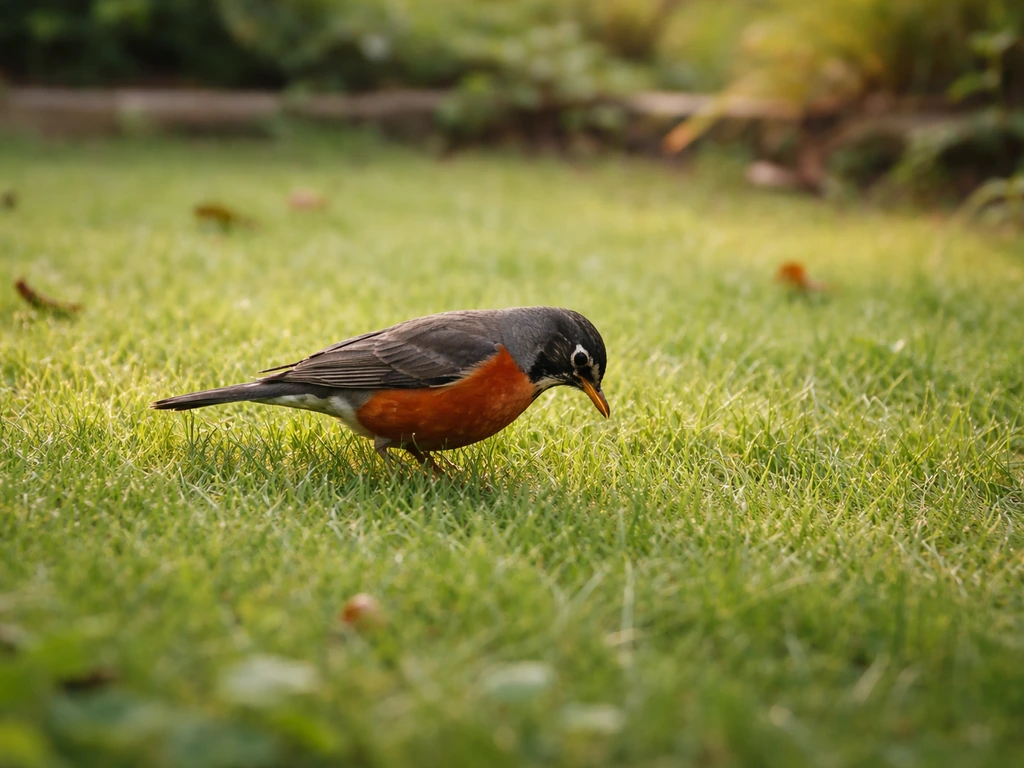
The robin's symbolic reputation runs deep, particularly in European and North American traditions. In most of these contexts, a living robin means something unambiguously good: arrival of spring, hope after a hard season, renewal, innocence, and new beginnings. That reputation comes from the bird's real habits, robins are among the first birds heard singing after winter, which made them a natural stand-in for hope and seasonal turning points across centuries of folk culture.
The religious dimension is significant too. One of the most enduring pieces of European folklore about the robin says its red breast was stained by the blood of Christ as the bird tried to remove thorns from Jesus's crown during the crucifixion. That story, common across Britain and parts of continental Europe, gives the robin a sacred, almost martyred quality. It positions the bird as a comforter in moments of suffering, which deepens the emotional impact when one turns up dead.
There's a darker side to robin folklore as well. In some older British beliefs, a robin entering a house uninvited was considered a bad omen, sometimes signaling approaching death or illness for someone inside. So even alive, the robin carried a dual symbolism: hope and warning, renewal and mortality. That duality is what makes the dead robin such a charged image.
Common interpretations of seeing a dead robin: omens vs. coincidence
Most symbolic or spiritual meaning sites frame a dead robin as the end of a phase, lost hope, or a warning that something in your life is closing before something new can begin. Dream interpretation sources tend to follow the same logic: a living robin in a dream points to new beginnings and joy, while a dead robin shifts to loss, finality, or a period of transition that requires letting go of something. These interpretations are consistent across modern spiritual reading communities, even if they vary slightly in tone.
Whether you find those interpretations meaningful is genuinely personal, and there's nothing wrong with sitting with the symbolic weight of it. But it's also worth being clear-eyed: the far more likely explanation for a dead robin in your yard is a window strike, a cat, harsh weather, or exposure to pesticides. Some people also compare notes online, like in dead bird meaning Reddit threads, to see whether their situation sounds like coincidence or something else a dead robin in your yard is a window strike. Humans kill roughly a billion birds per year in the US through cats and window collisions alone. Finding a dead robin is statistically common, especially in spring when robins are most active near homes.
That said, people seek meaning in these moments for a reason. Pattern recognition is a core human function, and connecting a death (even a bird's) to something happening in your own life is a very normal psychological response. The omen framing isn't delusion, it's a very old coping mechanism for managing uncertainty. The important thing is not letting it spiral into anxiety, which is covered more below.
Language and idiom context: "robin" in slang, nursery rhymes, and literature
If you encountered "dead robin" in a text, song, or piece of media rather than in your yard, the cultural references are worth knowing. The most significant one is "Who Killed Cock Robin?" a centuries-old English ballad that frames the death of a robin as a formal, communal mourning event complete with a coroner, a mourner, and a gravedigger. That ballad established a lasting association in English-speaking culture between robins and poetic death, a theme that writers and lyricists still tap into today. When a song, poem, or story uses a dead robin as an image, it's almost always drawing on that elegiac tradition. The dead bird song meaning can vary by genre and the specific lyrics, but it often uses imagery of endings and transition in the same way people read omens.
"Little Robin Redbreast" is the other major nursery rhyme that cements the robin in the English-speaking imagination as a small, innocent, and somewhat vulnerable creature. That innocence framing is why a dead robin lands harder symbolically than a dead crow or hawk would. The crow, for instance, carries its own heavy symbolic weight in literature and folklore (something explored more fully in the context of the crow bird meaning). If you’re curious about darker bird symbols, the crow bird meaning often comes up alongside interpretations of death and transition. The robin's symbolic register is softer and more hopeful by default, which makes its death feel more jarring.
In everyday slang and casual speech, "robin" doesn't carry a lot of independent idiomatic weight the way some other birds do. You don't "flip a robin" or use it in insults. Its power is almost entirely in the symbolic and literary register, which is why the dead version gets so much attention compared to the dead sparrow, say, which nobody's writing search queries about.
What to do when you find a dead robin

Before you do anything else: don't touch it with bare hands. Dead birds can carry pathogens including West Nile virus and, in some regions, avian influenza. The CDC is clear on this. If you need to move it, use disposable gloves or turn a plastic bag inside out over your hand as a makeshift glove, pick up the bird, then invert the bag to seal it inside. Drop that into a second garbage bag, tie it off, and dispose of it in your regular trash.
After handling, wash your hands thoroughly with soap and water even if you used gloves. Avoid touching your face before washing. Massachusetts public health guidance also recommends a surgical mask if you're handling or transporting a carcass, especially if it's in an enclosed space. That's a low bar to meet and worth doing.
- Do not pick up the bird with bare hands under any circumstances.
- Use disposable gloves or an inverted plastic bag as a barrier.
- Place the bird in a sealed plastic bag, then a second garbage bag.
- Dispose of it in your regular household trash.
- Wash your hands with soap and water immediately afterward.
- Check your state or local wildlife agency's website to see if reporting is required or recommended in your area.
On reporting: CDC notes that policies vary by location, so your best move is to check your state health department or state wildlife agency's site. Some states have online dead bird reporting tools specifically for disease surveillance purposes. You're not obligated to report a single dead robin in most places, but it takes about two minutes and contributes to public health monitoring.
When a dead robin might signal something bigger
A single dead robin is usually an isolated incident with a mundane explanation. But there are situations where it's worth paying closer attention.
Window strikes
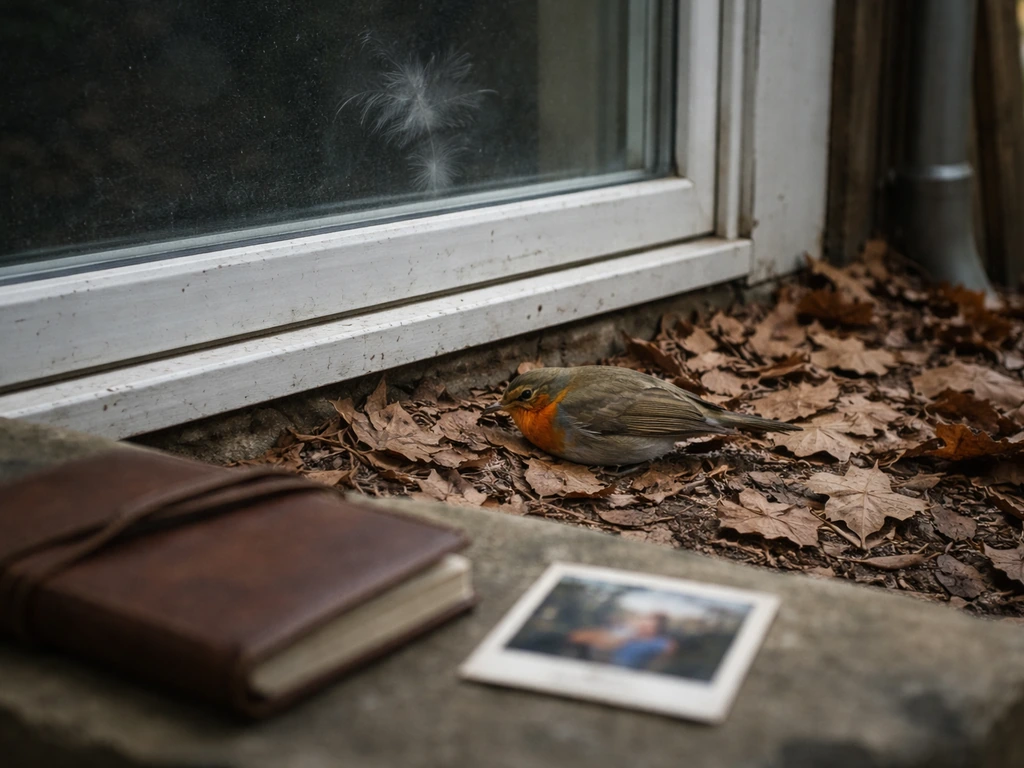
If the bird is near a window, that's almost certainly your answer. Window collisions are one of the leading human-related causes of bird death, and the internal injuries from a collision are typically fatal even when the bird looks undamaged on the outside. If you're finding dead or stunned birds near the same window repeatedly, it's worth adding bird-safe window film or external screens. Organizations like Bird Alliance of Oregon and the Wildlife Center of Virginia have specific guidance on retrofitting windows to reduce strikes.
Multiple dead birds
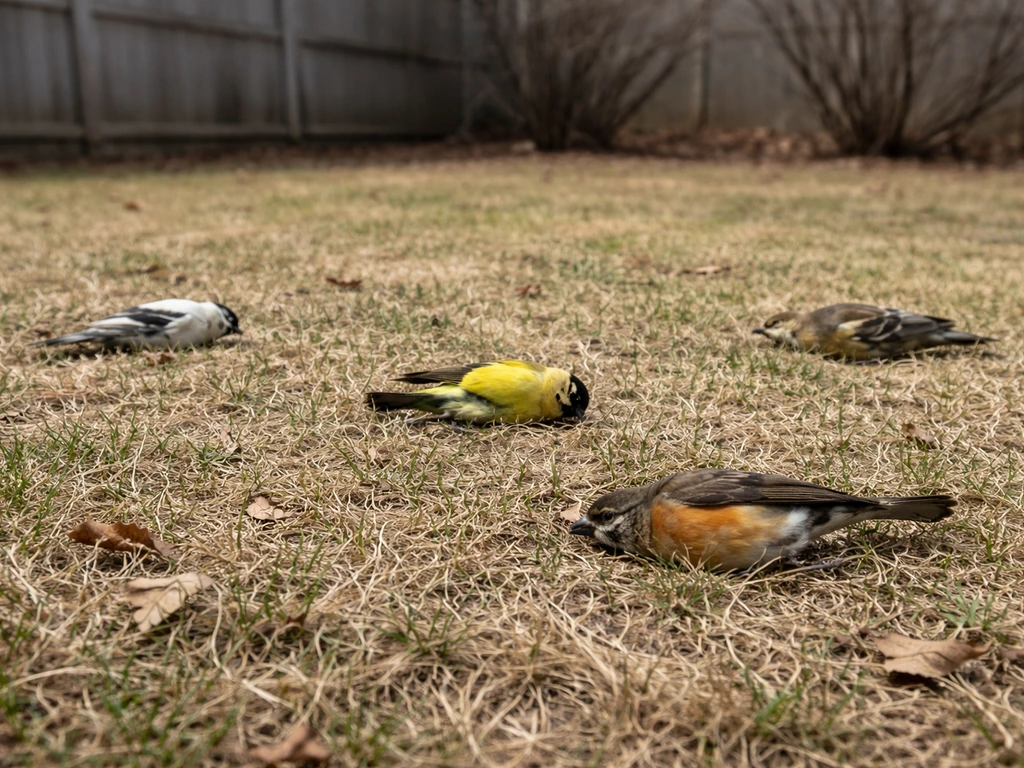
If you find five or more dead birds in the same area over a short period, that's a different situation. California's wildlife health lab specifically flags groups of five or more dead birds as worth reporting. Michigan's agriculture department defines a die-off event as six or more birds in a short time. Multiple dead birds in a cluster can indicate a disease outbreak, a pesticide event, or a localized environmental hazard. In that case, contact your state wildlife agency or local animal control. Don't try to collect the birds yourself beyond basic removal if necessary.
Pesticides and toxins
If you or a neighbor recently applied lawn pesticides or rodenticides, that's a realistic explanation for a dead songbird. Robins feed heavily on earthworms, which concentrate pesticide residues from treated soil. If you suspect pesticide exposure, that's another reason to report it to your state wildlife or agriculture agency rather than just disposing of the bird.
Disease surveillance
Dead birds play a real role in early detection of West Nile virus and avian influenza outbreaks. Reporting a dead robin contributes to that monitoring, which is why multiple states maintain dedicated reporting systems. It's not dramatic or urgent for a single bird, but it's a genuinely useful public health act if you have five minutes.
If the meaning feels personal or unsettling
Some people find a dead robin and feel genuinely shaken, not because they necessarily believe in omens, but because it arrived at a hard moment and the symbolism landed. That's a real experience and it doesn't make you irrational. The human brain is wired to find patterns and assign meaning, especially when we're already anxious or grieving. A dead robin showing up when you're going through a loss, a transition, or a difficult period can feel like the universe confirming your worst fears.
Grounding techniques are genuinely useful here. The Cleveland Clinic recommends redirecting attention to the immediate physical present when intrusive or anxious thoughts loop: name five things you can see, focus on physical sensations, reorient to what's concretely in front of you. This isn't dismissing the feeling, it's preventing it from escalating into a spiral that the original event doesn't actually warrant.
If the dead robin was a pet or a bird you had a relationship with, grief is completely appropriate. Ohio State health guidance notes that grief over an animal loss is real and valid, and it's worth reaching out for support if the feelings stay intense or feel stuck. Don't let anyone minimize that.
If you're processing the symbolic meaning in the context of writing, creative work, or general curiosity, the full picture here is actually rich: the robin is a bird that carries hope, sacred history, innocence, and the cultural memory of a centuries-old funeral ballad. If you’re searching for the scarecrow bird meaning, it helps to compare how different birds are used as symbols in folklore and everyday superstition dead robin. Its death in any context, real or imagined, sits at the intersection of all of those things. That's a lot of meaning for one small bird. Whether you use that symbolically or just handle the practical situation and move on, you now have what you need for both.
FAQ
What should I check to figure out whether this is an omen or a real-world cause?
If you have a backyard camera, check for the minutes before you found the robin. A window strike often shows a rapid, straight approach and impact, while a cat incident may show a struggle nearby and the bird not fully recovered. This helps you decide whether to focus on window retrofits or on pet containment.
What if the robin is not clearly dead, it’s just stunned or lying still?
If the bird is intact but appears stunned (not fully dead), keep people and pets away, move any children indoors, and contact a local wildlife rehabilitator. Do not try to feed it or give water, and avoid prolonged handling because even healthy-looking birds can still carry pathogens.
Do I need extra precautions if the bird is in an enclosed space like a garage or under a porch?
Yes, handling changes based on the situation. If it is in a doorway, driveway, or other high-traffic area, you can remove it for safety, but limit time spent near it, wear disposable gloves, and consider a mask especially in enclosed garages or if you need to bend close to the carcass.
Can I bury or compost a dead robin?
Don’t bury it in your yard or compost it. Most guidance favors sealed disposal in regular trash (after proper glove handling) because burying can attract scavengers and can spread contamination if the carcass carried disease.
I keep finding small birds. What should I change first if I have both windows and cats?
If you have cats, keep them indoors at dawn and dusk (when birds are most active) and consider a cat collar with a bell or, better, a supervised outdoor enclosure. For windows, add external screens or bird-safe film to reduce collisions, since interior placement can still leave the bird confused by reflections.
How can I tell if the bird died from a window collision versus something else?
If you find it near a window, assume a strike unless there is clear evidence of another cause (for example, rodenticide pellets nearby). Window strikes can be fatal even when the exterior looks only mildly damaged, and the bird may fall away from the point of impact.
What information should I document if I keep seeing dead birds?
If you notice multiple carcasses on different days, start a simple log: date, exact location (use a map pin or description), number of birds, and whether they are clustered or scattered. This makes it much easier for wildlife agencies to interpret whether it looks like a die-off event.
What should I do if I can’t safely pick it up, like it’s in a storm drain or hard-to-reach spot?
If the dead robin is in a place you cannot safely reach, call local animal control or a wildlife removal service and do not attempt DIY collection. Also keep kids and pets away, because stepping into the area can spread contaminants on shoes and paws.
How do I keep the symbolic meaning from turning into anxiety or unsafe behavior?
You can be spiritual about the symbolism, but avoid using it to justify risky behavior. The practical priority is reducing exposure and reporting when thresholds are met, then decide how much meaning to assign without letting it increase avoidance or compulsive checking.
Is it normal to grieve a dead robin like it’s a real loss?
If the robin belonged to someone you knew (or it was a familiar bird in your neighborhood), grief can last longer than you expect and may show up as sleep trouble, intrusive thoughts, or guilt. If it remains intense or interferes with daily life, consider reaching out to a mental health professional or a grief support resource, even though it feels like a small loss.
Next Article
Ravenous Bird From the East Meaning Explained
Decode the idiom ravenous bird from the east, including slang, literary symbolism, and how to infer context meaning.