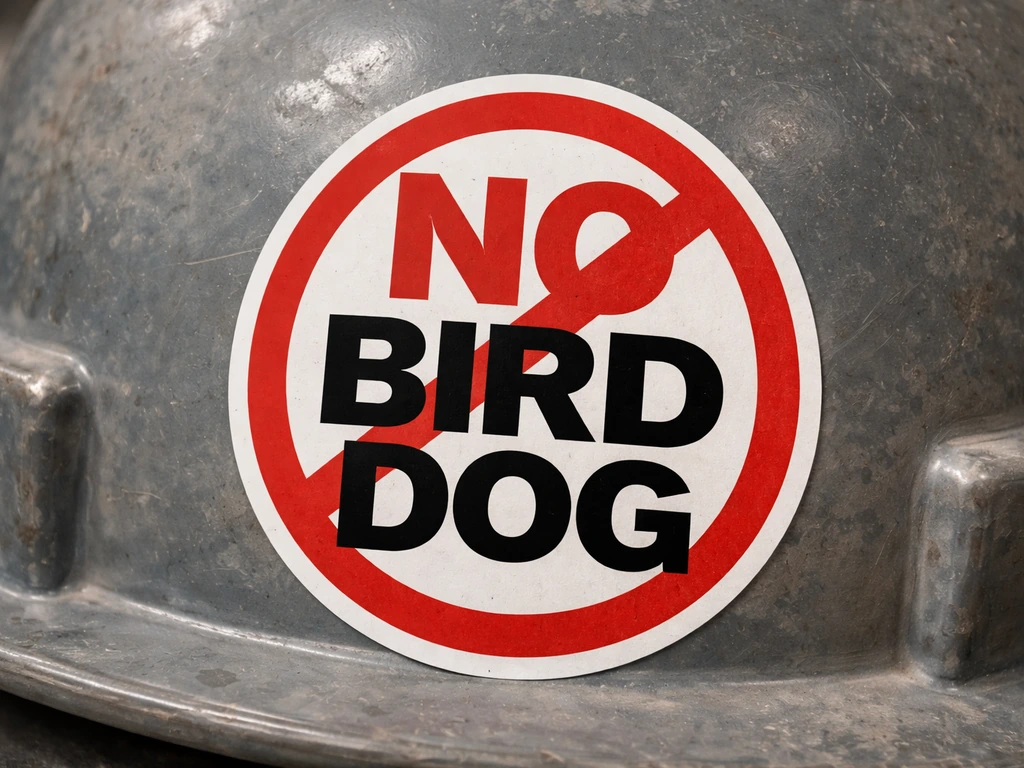
If you searched 'dog bird meaning in Korean,' you almost certainly stumbled across the Korean word '개새끼' (gae-sae-kki) and noticed it contains '개' (dog) and '새' (which looks like 'bird'). The phrase is not a poetic 'dog-bird' idiom. It is one of the most common and blunt Korean profanity terms, roughly equivalent to a serious insult in English, and it functions as a single unit rather than a literal description of two animals. That said, the confusion is completely understandable, because the component parts do map to 'dog' and something that looks like 'bird' at first glance. Let's untangle exactly what you're looking at.
Dog Bird Meaning in Korean: Exact Phrase and Usage Guide

Marcus Reeves
27 May 2026
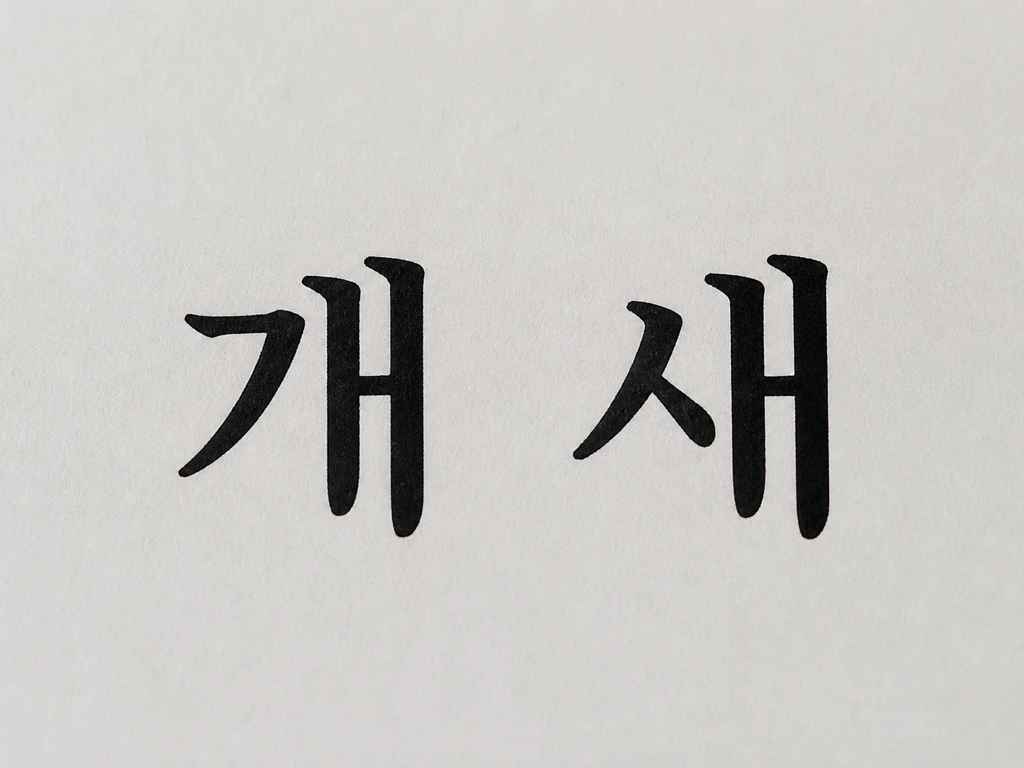
First: figure out the exact Korean text you're seeing
Before you can interpret any Korean phrase, you need the original Hangul in front of you, not a romanization and not a rough description. Romanizations like 'gae-sae-kki,' 'gae-sae,' or even 'geseki' are all approximations that can point to different things depending on how they were transcribed. So step one: go back to your original source (a text message, a video comment, a drama subtitle, a social media post) and copy the exact Korean characters.
The most likely candidates when someone searches 'dog bird meaning in Korean' are these two scenarios. First, you saw the word '개새끼' and noticed it contains '개' and '새' side by side. Second, you actually saw '개' and '새' written separately in a sentence, meaning someone literally wrote about a dog and a bird in the same context. These are very different situations, and the surrounding words will tell you which one you're dealing with.
개 and 새: what 'dog' and 'bird' actually look like in Korean
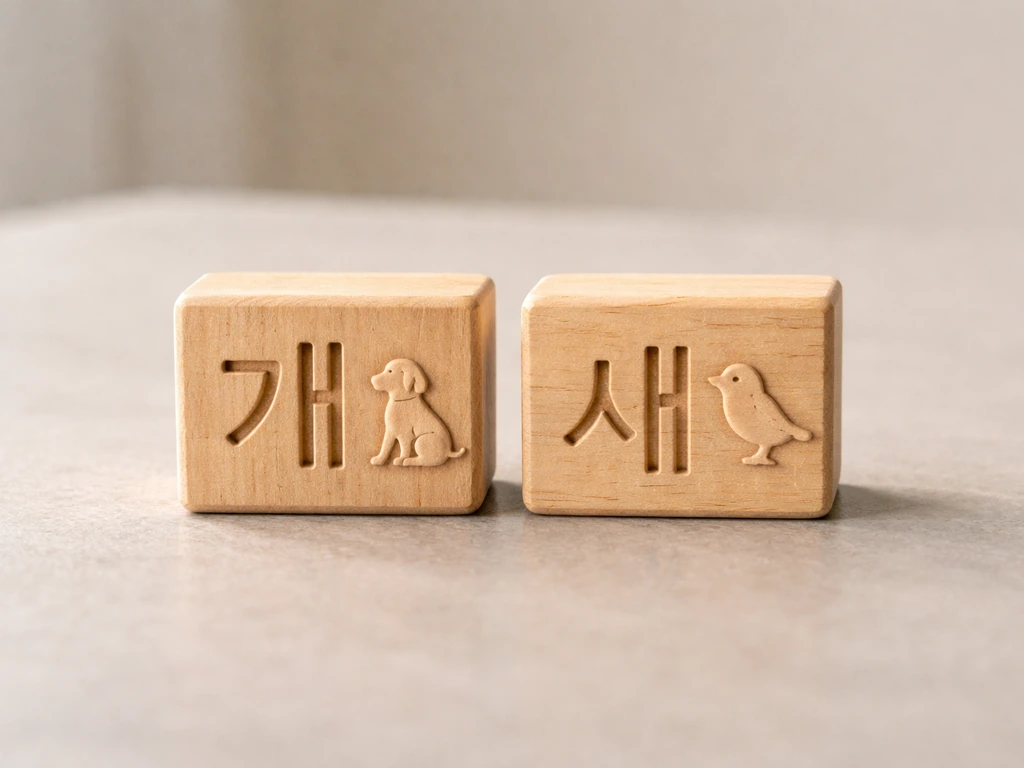
In standard Korean, '개' (gae) means dog, and '새' (sae) means bird. Both are everyday, beginner-level vocabulary words you'd see in any Korean animal list or children's book. '새' also appears in compound words like '새집' (birdhouse) and '새장' (birdcage), which helps confirm the bird meaning when context is unclear. It is worth noting that '새' can also mean 'new' in Korean (as in '새로운,' meaning 'new/fresh'), so the word alone, without context, requires a quick check of the surrounding sentence.
| Korean | Romanization | Primary Meaning | Notes |
|---|---|---|---|
| 개 | gae | Dog | Standard, everyday word; also used as an intensifying prefix in slang |
| 새 | sae | Bird | Also means 'new' depending on context; look for particles like -가 to confirm 'bird' reading |
| 조류 | joryu | Birds / Avian | More formal/technical term used in wildlife or academic contexts |
In a normal sentence like '이 공원에는 새가 많아요' (There are many birds in this park), the particle '-가' after '새' signals it is the subject of the sentence and means 'bird.' Similarly, '개가 멍멍 짖어요' (The dog is barking) uses '-가' to mark '개' as the subject. These grammatical particles are your quickest clue that you're looking at two separate, literal animal words rather than a compound slang term.
The real reason you're probably here: 개새끼 explained
The most common reason someone searches 'dog bird meaning in Korean' is that they saw '개새끼' and parsed it visually as '개' (dog) + '새' (bird) + '끼' and got confused. Here is what is actually happening: '개새끼' breaks down as '개' (dog) + '새끼' (offspring, young one, or a crude word for 'bastard' depending on tone and context). The '새' in '새끼' is not the bird word at all. It is part of a separate morpheme, '새끼,' which originally means 'young animal' or 'offspring' but is widely used as a strong insult in modern Korean slang.
'개새끼' is treated as a single insult, not a compound of two animal images. Think of it the way English speakers use compound insults where the individual words lose their literal meaning. It is listed among the most representative Korean profanity terms (욕설) and is something you'd hear in heated arguments, aggressive online comments, or blunt Korean dramas. It is not a proverb, not a folk idiom (속담), and definitely not a 'dog-bird' metaphor. A culture reference defines “속담” as concise folk expressions that convey lessons or satire, which is useful for classifying whether “dog” or “bird” usage is likely an idiom/proverb versus a literal description It is not a proverb, not a folk idiom (속담).
Korean idioms and slang that use animal imagery
Korean does have a rich tradition of animal-based idioms and proverbs (속담), but a true 'dog + bird' paired idiom is not a standard entry in mainstream Korean. What Korean does use is '개' as an intensifying prefix in informal speech, similar to how some English slang uses intensifiers before nouns. For example, '개웃겨' roughly means 'absolutely hilarious,' where '개' amplifies the adjective rather than referring to an actual dog.
- 개 (gae) as intensifier: Used colloquially to mean 'extremely' or 'totally,' as in '개좋아' (love it so much) or '개맛있어' (incredibly delicious). This is casual, informal speech common among younger Koreans.
- 새 (sae) in idioms: '새 발의 피' literally means 'blood from a bird's foot' and is a Korean idiom for something trivially small or insignificant. This is one of the more well-known bird-specific Korean expressions.
- 개새끼 (gae-sae-kki): A strong insult, not a literal dog-bird expression. Used in anger or aggressive contexts.
- Animal proverbs (속담): Korean folk sayings like '까마귀 날자 배 떨어진다' (A crow flies up, a pear falls) use bird imagery to describe coincidental timing, not unlike the English 'correlation is not causation.'
How bird symbolism shapes the meaning (metaphor vs. literal)
In Korean culture, birds carry a range of symbolic meanings that depend entirely on which bird you're talking about. Cranes (학, hak) symbolize longevity and nobility. Magpies (까치, kkachi) are signs of good luck and happiness arriving. Crows (까마귀, kkamagwi) carry associations with bad omens or death, similar to Western folklore. The generic word '새' (bird) in an idiom or poetic context often implies freedom, lightness, or transience, like a bird that cannot be caught or held.
When you see '새' in a Korean phrase, it matters whether it is literal (a physical bird), figurative (freedom, fleeting things), or part of a compound where the bird meaning is entirely lost (as in '새끼'). The metaphorical reading only applies when the phrase is clearly poetic or idiomatic. In slang and insults, the bird imagery is essentially gone, and you're dealing with a frozen expression where the etymology doesn't affect the meaning.
Reading the surrounding sentence to nail down the meaning
Context is everything in Korean. A few things to look for in the sentence around your phrase will tell you whether you're reading a literal animal description, a slang intensifier, or an insult:
- Check for subject particles: If you see '새가' or '새는,' the '-가' or '-는' particle marks '새' as the grammatical subject, strongly suggesting 'bird' is the literal meaning.
- Check spacing: In Korean, spacing between words matters. '개 새' (with a space) usually means 'dog [and] bird' in a literal sense. '개새끼' (no space) is the slang insult written as one unit.
- Look at the verb: A sentence ending with '날다' (to fly) or '노래하다' (to sing) next to '새' points to a literal bird. A sentence dripping with conflict or anger points to slang usage.
- Look at the register: Is this a children's book, a nature article, a K-drama argument scene, or a Twitter/YouTube comment? The social context tells you almost everything.
- Check for the '개' prefix pattern: If '개' comes directly before an adjective or another noun without any particle between them, it is likely the intensifier, not 'dog.'
How to confirm the meaning fast
Once you have the exact Hangul, here is the most reliable workflow to confirm what it means:
- Copy the exact Hangul characters from your source. Do not rely on romanization alone.
- Paste it into Naver Dictionary (dict.naver.com), which is the most comprehensive Korean-English dictionary available and handles slang, idioms, and formal vocabulary alike.
- If Naver returns multiple meanings, check the usage examples (예문) listed under each entry. These show you real sentences, which quickly reveal whether you're in a formal, casual, or vulgar register.
- For slang and profanity specifically, Namu.wiki (in Korean) is the most accurate community-maintained reference. Search the exact term there to see how native speakers define and contextualize it.
- If you're unsure whether something is an idiom (관용구) or a proverb (속담), the National Institute of Korean Language website (korean.go.kr) has a searchable idiom database that classifies expressions clearly.
- Paste the full surrounding sentence into Papago or DeepL for a rough translation of the entire clause, which often resolves ambiguity faster than looking up individual words.
A quick Hangul check for the most common confusion
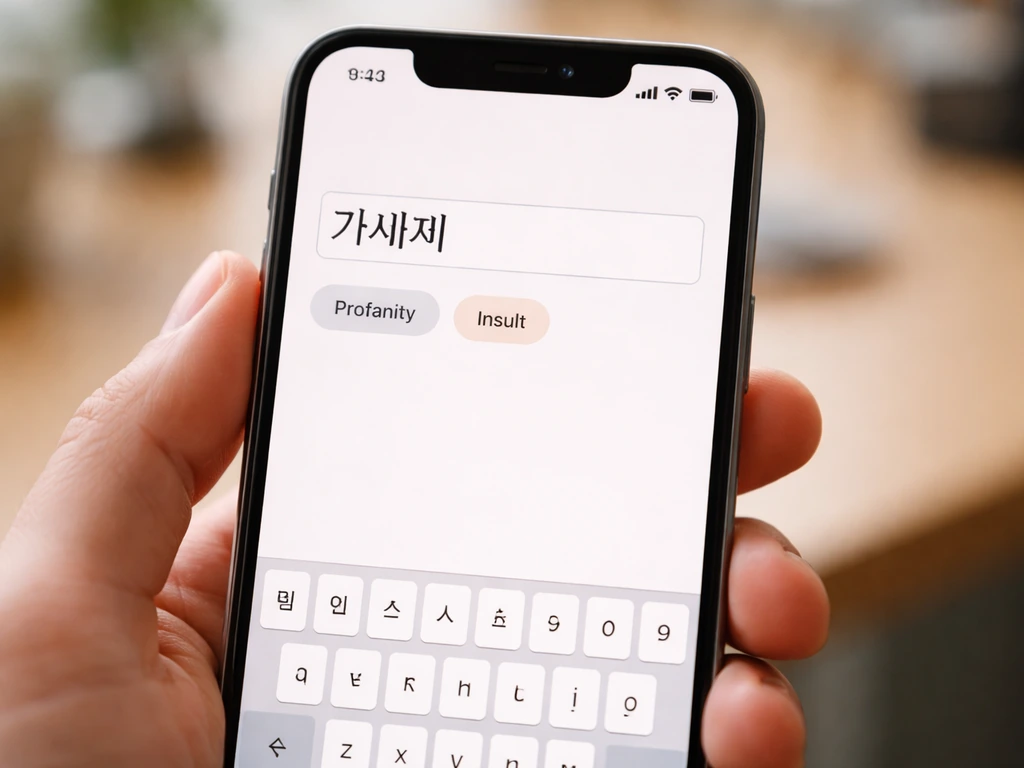
If what you saw was '개새끼,' paste it exactly as written into Naver Dictionary. You'll see immediately that it is classified as profanity (비속어) and given its insult meaning in English. If what you saw was '개' and '새' in separate words with particles attached, the dictionary will return 'dog' and 'bird' as clean, literal translations. That space, or lack of it, between '개' and '새' is doing a lot of work.
A note on related 'dog' expressions in English slang
If you came to this topic from an English-language angle, it is worth knowing that 'dog' and 'bird' show up in English idioms too, sometimes with surprisingly specific meanings. English has expressions like 'bird-dog' (to closely follow or scout something), which is a different cultural frame entirely from Korean animal idioms. The Korean '개' prefix meaning 'extremely' has no real English equivalent in dog-based slang, which is part of why direct translation causes so much confusion. Korean animal slang tends to compress into compound words, while English animal idioms tend to stay as two-word phrases.
The bottom line on dog-bird in Korean
If you searched 'dog bird meaning in Korean' because you saw a Korean phrase and wanted to understand it, here is the fast summary: '개' means dog, '새' means bird, but together in '개새끼' they form a serious profanity where the bird meaning has dissolved entirely. Bird-dogging is a totally different English term, so its meaning does not depend on the Korean '개' and '새' spelling confusion. If you saw them separately in a sentence, they are just describing a dog and a bird in the most ordinary way possible. The key is the exact Hangul spelling, the spacing, and the particles attached. No-bird-dog sticker meaning is usually tied to what the phrase is, how it is used, and whether it is literal or slang in the context where you saw it no bird dog sticker meaning. Copy the exact text, run it through Naver Dictionary, and the meaning will be unambiguous in under a minute. On Urban Dictionary, 'bird dog' is usually defined as a slang term related to following or finding something, rather than any literal meaning about birds.
FAQ
If I see '개새끼', is it really 'dog bird' or a metaphor?
No. The profanity term in question is written as a single word in Hangul, and its meaning comes from the whole insult, not from literally combining dog and bird. If you see '개새끼' as one continuous block with no space, treat it as one unit and expect an offensive insult, not a metaphor about animals.
How can I tell whether '새' in the text is a bird, 'new', or part of slang?
Look at whether '새' is part of '새끼.' If '새' appears inside the same word as '끼' (as in '새끼'), the bird meaning is gone and it functions as part of a fixed slang insult meaning young animal or offspring, with a strong rude sense in modern use. If '새' is separate, then it is much more likely to be a literal bird or the adjective meaning 'new' depending on the sentence.
Do grammar particles help me confirm whether the words are literal animals?
If you see particles right after '개' or '새' (like -이, -가, -을, -를, -에, -에서), that usually signals they are separate literal nouns, for example '개가…' (dog as subject) or '새가…' (bird as subject). A fixed insult like '개새끼' typically does not behave like two independent nouns with clear particles attached to '개' and '새.'
Does the spacing between '개' and '새' change the meaning?
Yes, spacing changes everything. '개 새끼' can be parsed as 'dog' + 'offspring/young one' (still rude depending on context), while '개새끼' is the common one-piece profanity insult. If you only have romanization or screenshots, the safest move is to recover the exact Hangul characters.
If '개' appears in other phrases, does it always mean dog?
In Korean, '개' is also used as an intensifier in casual speech, for example '개웃겨' (extremely funny) where '개' does not refer to a real dog. This is different from '개새끼,' where the insult is the whole expression. So do not assume every '개' in front of a word means a literal dog.
What should I do if I only have the romanized spelling and I'm not sure about the Hangul?
Be careful with partial matches. If you search or hear something that sounds like it contains '새' but the Hangul is different, you might be dealing with a different word entirely (or with '새' meaning new). Always verify the exact characters you see, and do not rely on how the term looks in romanization.
How do I confirm using a dictionary without accidentally misreading the components?
In dictionaries, the same characters can show different entries, for example '새' as a noun (bird) and also as 'new' in compounds. For '개새끼,' dictionary classification as profanity is the key indicator that it is a fixed insult. If your tool shows a slang or profanity label, treat it as offensive even if you try to interpret the components.
Does the surrounding sentence matter for whether it is literal or insulting?
If the phrase is in a drama, social post, or comment, the tone in Korean matters. Even when '개' or '새' are literal words in one sentence, the surrounding insult words or informal endings can change the intent. So check at least the full clause around the term, not just the two or three characters you noticed.
Next Article
No Bird Dog Sticker Meaning: What It Really Refers To
Understand no bird dog sticker meaning across hunting, relationship slang, and online shorthand, plus how to confirm the