When people search 'bird on money meaning,' they're usually asking about one of three things: the famous Basquiat painting called Bird on Money (which is actually a tribute to jazz legend Charlie Parker), the symbolic meaning of a bird image appearing on a banknote or coin, or slang where 'bird' connects to money in street or drug culture. Which one applies to you depends entirely on what you're looking at, so the fastest way to get your answer is to figure out your context first, then match it to the right meaning.
Bird on Money Meaning: Symbolism, Slang, and How to Identify It

Marcus Reeves
30 Apr 2026
What people usually mean by 'bird money'
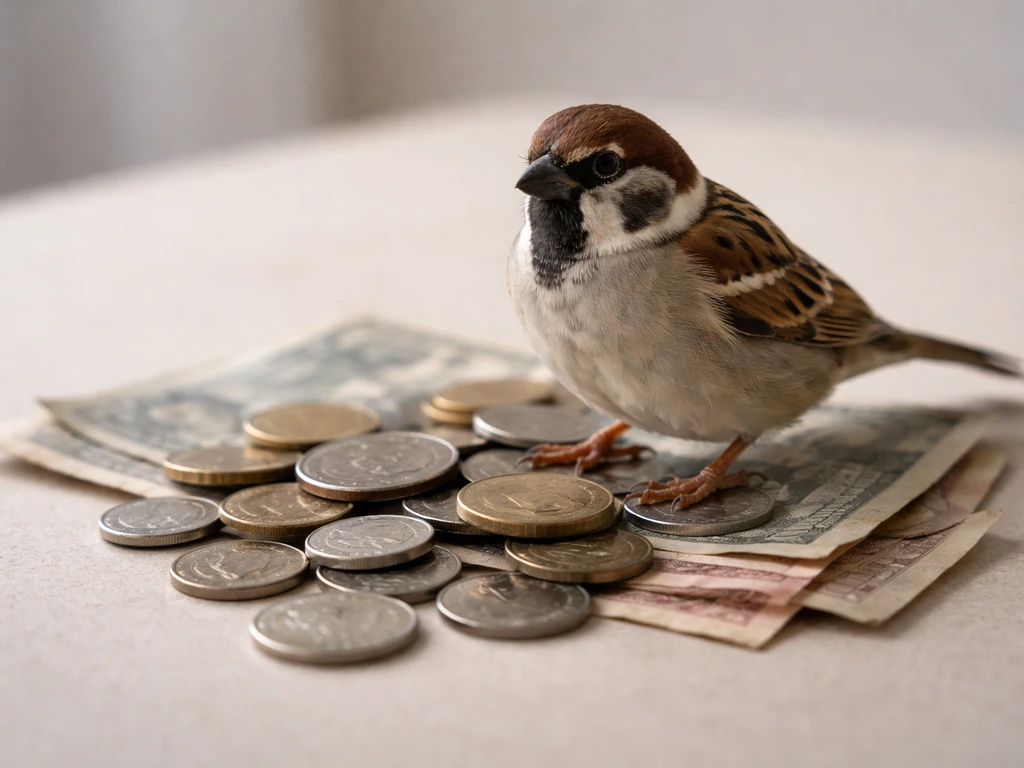
The phrase 'bird money' (or 'bird on money') gets used in a few very different ways in everyday conversation and online. Most commonly, people encounter it as a visual: either a literal bird image on currency (like an eagle on a US dollar, or a kingfisher on a foreign banknote), or they've seen the Basquiat painting and want to know what it represents. Less often, someone hears 'bird money' as a slang phrase and wonders if it's code for something. All of these are legitimate interpretations, and none of them are wrong to be curious about.
The most culturally significant use of the exact phrase 'Bird on Money' is Jean-Michel Basquiat's 1981 painting of the same name. Basquiat painted it as a tribute to Charlie Parker, the groundbreaking jazz saxophonist universally known by his nickname 'Bird.' The painting depicts a yardbird (a scrappy, street-level bird) sitting amid imagery associated with money and value. If you've seen this image on a music album cover, that's because The Strokes used Basquiat's Bird on Money as the cover art for their 2020 album The New Abnormal, which brought the painting to a whole new generation of viewers who had never heard of Basquiat or Parker.
Disambiguation: is it currency, slang, or symbolism?
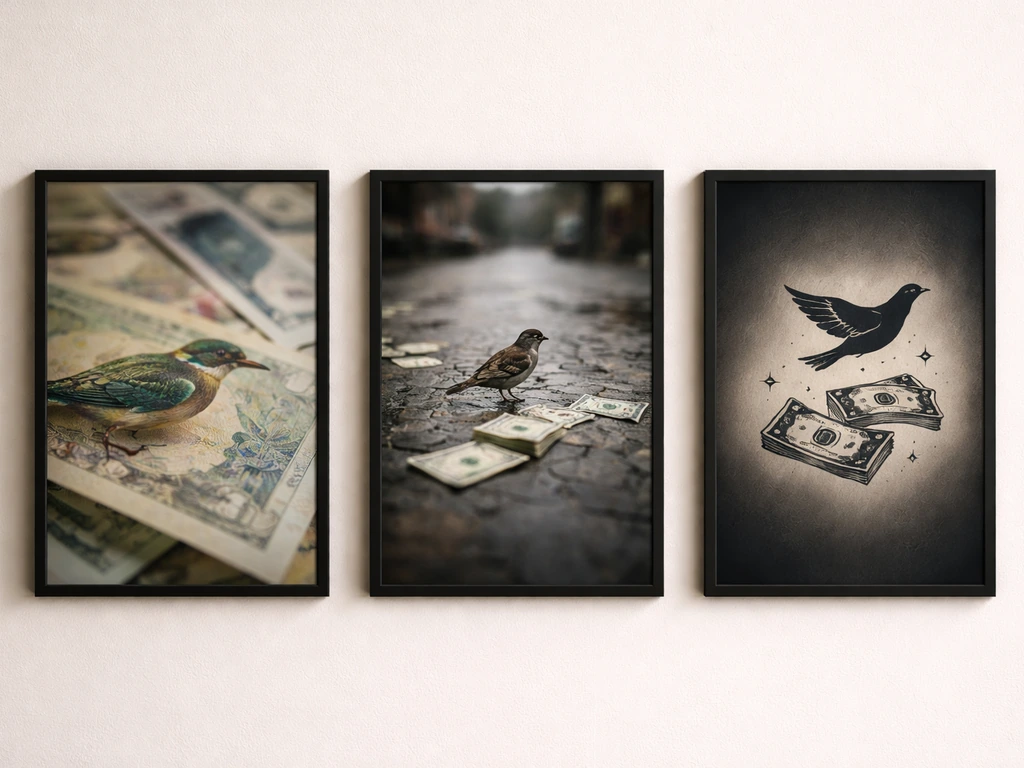
Before you can pin down the meaning, you need to know which version of 'bird on money' you're actually dealing with. Here's how to split them apart quickly.
| Context | What 'bird on money' means here | Quick way to identify it |
|---|---|---|
| Fine art / music | Basquiat's 1981 painting; tribute to Charlie 'Bird' Parker | You've seen a colorful, graffiti-style painting or an album cover (The Strokes, The New Abnormal) |
| Currency / numismatics | A bird species depicted on a real banknote or coin | You're holding or looking at actual money from any country |
| Symbolism / tattoos / logos | A bird image representing luck, freedom, wealth, or opportunity | You're analyzing a design, tattoo, or brand image that pairs a bird with money imagery |
| Slang / street language | 'Bird' = a kilogram (usually of drugs) with a dollar value attached | Heard in conversation, rap lyrics, or street slang context |
If you're coming from the slang angle, related terms like 'price of a bird' or 'how much is a bird' are more specific to that usage and worth exploring separately. In slang contexts, the price of a bird meaning is tied to the cash value involved in the transaction. And 'payday bird' is its own expression with a distinct meaning in certain communities. This article focuses mainly on the symbolic and cultural interpretations of a bird appearing alongside money, which is what most people are actually searching for.
Bird-on-money meaning by common interpretation
When a bird appears with money in symbolic art, tattoos, or everyday imagery, the meaning usually falls into one of these categories, and sometimes several at once.
Luck and prosperity
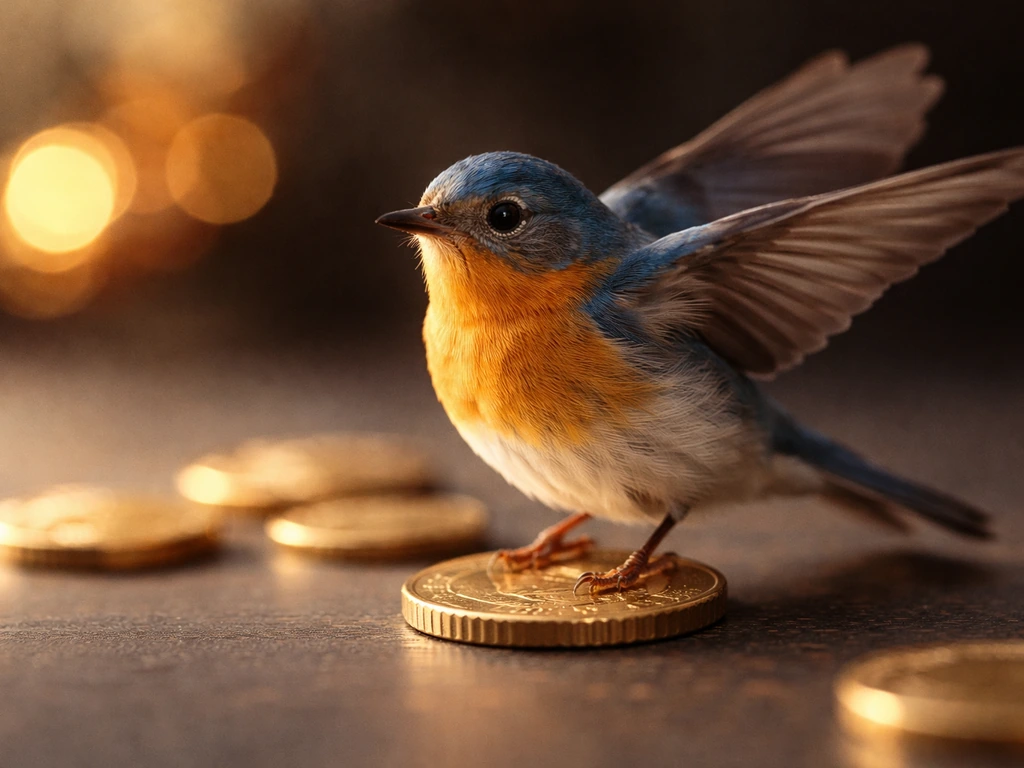
Across many cultures, birds landing on coins or currency imagery is read as a sign of good fortune. This is especially true of certain species: swallows, robins, and bluebirds are classic luck symbols in Western tradition, so a tattoo of one perched on a coin or bill usually signals the wearer's desire for financial luck or gratitude for prosperity they've experienced.
Freedom from financial worry
A bird in flight above money, or a bird breaking free from a pile of cash, often represents the idea of not being enslaved to wealth. This is a popular tattoo concept and a common motif in street art. The tension between the bird (freedom, nature, spirit) and money (materialism, constraint) is deliberate. Basquiat's own work plays with this kind of tension: 'Bird on Money' isn't a celebration of wealth, it's a complicated commentary on value, race, and art, filtered through his love of Charlie Parker's music.
Opportunity and quick gain
Birds are fast. They appear, grab what they need, and disappear. In slang and everyday speech, 'bird money' can carry the sense of quick, opportunistic earnings: money that comes and goes fast, or income tied to fast-moving situations. This connects loosely to the broader slang world where 'bird' refers to something high-value that moves quickly through transactions.
Tribute and remembrance
Thanks largely to Basquiat, a bird paired with money imagery can also function as a tribute to someone whose value wasn't fully recognized in their time. Charlie Parker died broke and overlooked by mainstream America, despite being one of the most innovative musicians of the 20th century. Basquiat's painting asks you to sit with that contradiction: genius, poverty, and cultural currency all in the same frame.
How the specific bird species changes the symbolism
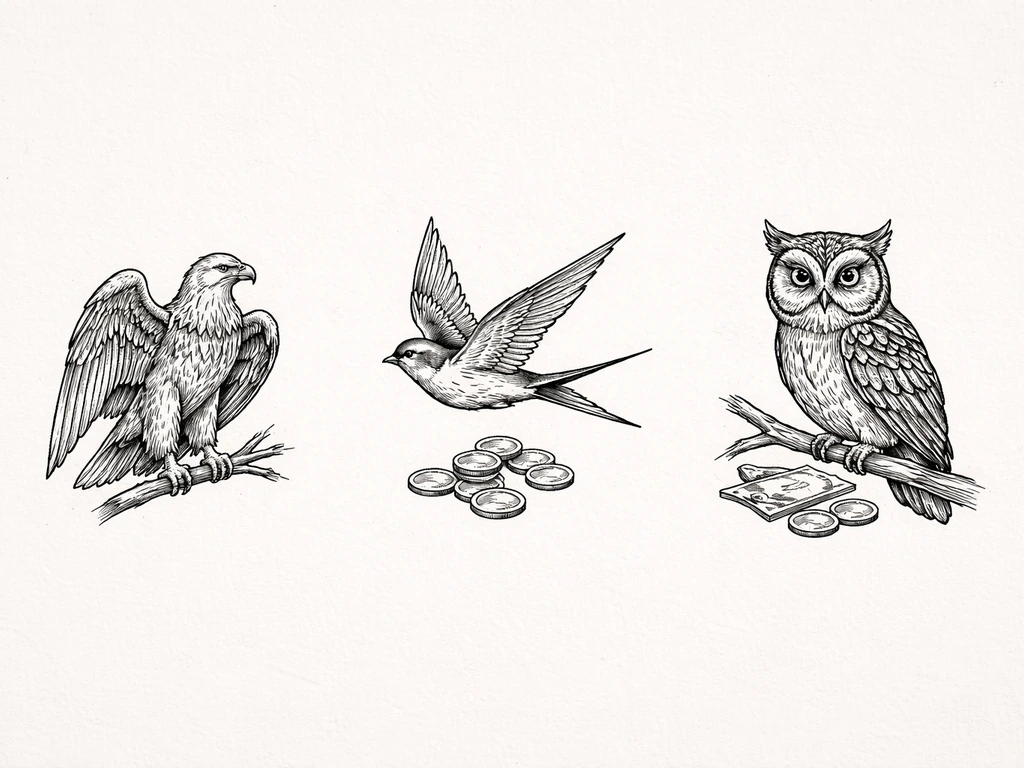
Not all birds carry the same meaning when paired with money imagery. The species matters a lot, both in symbolic art and on actual currency.
| Bird Species | General Symbolism | What it means near money imagery |
|---|---|---|
| Eagle | Power, sovereignty, national pride | Authority and national wealth (common on coins worldwide, especially US dollar) |
| Swallow | Luck, safe return, loyalty | Financial good luck, hope for a windfall |
| Owl | Wisdom, knowledge | Smart money, financial intelligence, long-term wealth |
| Raven / Crow | Mystery, cunning, intelligence | Trickster wealth, unexpected fortune, can carry darker connotations |
| Dove | Peace, purity | Ethical wealth, clean money, spiritual abundance |
| Phoenix | Rebirth, resilience | Comeback story, recovering from financial loss |
| Yardbird / Sparrow | Everyman, street-level | Working-class wealth, scrappy survival (Basquiat's usage with Parker's nickname) |
If you're trying to interpret a tattoo or piece of art, the species is your single biggest clue. A raven on a dollar bill reads very differently from a dove on a dollar bill, even if the surface composition looks similar.
Money context matters: country, currency, logos, tattoos, and memes
Where the bird-on-money image appears changes its meaning just as much as the bird species does. Here's how to read the context.
On real currency
Dozens of countries use birds on their banknotes and coins, and in almost every case, the bird was chosen for nationalistic reasons: the bald eagle on US currency, the kiwi on New Zealand coins, the quetzal on Guatemalan notes. If you're looking at a real piece of money, the bird is almost always a national symbol, not a metaphor. To find out exactly what it means, you need the country of origin and the denomination first.
In fine art and album covers
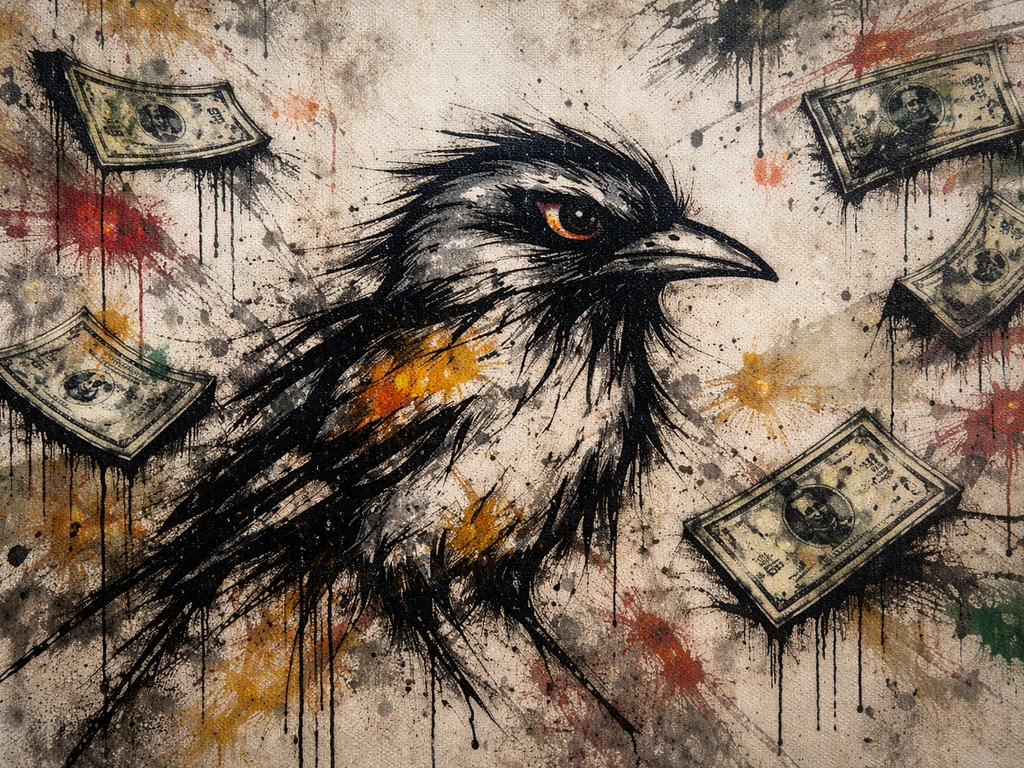
If the image looks painterly, raw, or expressive, you're probably looking at Basquiat's Bird on Money or something influenced by it. The Strokes put it on The New Abnormal in 2020, so if you came across it through music, that's almost certainly the connection. The painting is acrylic and oil on canvas, created in 1981, and it's considered one of Basquiat's defining early works.
In tattoos
A bird-and-money tattoo is almost always personal symbolism chosen by the wearer. Common combinations include a swallow holding a dollar bill, an eagle perched on a money bag, or a bird in flight with coins raining down. These usually represent financial goals, luck, or freedom from debt, and the meaning is rarely universal. If you're trying to understand someone else's tattoo, asking them directly is your best bet.
In logos and brand design
Financial companies, investment firms, and insurance brands have used bird imagery for decades because birds carry associations with foresight (owls), strength (eagles), and freedom (doves). When you see a bird in a financial brand's logo, the company is almost always leaning into one of those associations deliberately.
In memes and internet culture
Online, 'bird on money' sometimes circulates as a meme format where the absurdity of pairing wildlife with currency is the joke, or where someone is referencing the slang meaning of 'bird' in a playful way. Context here is almost always ironic or humorous. If you found this through a meme, the slang interpretation (bird = a large drug quantity with a high dollar value) is probably what's being referenced.
How to figure out the exact meaning from what you're seeing
Run through these questions in order and you'll land on the right interpretation almost every time.
- Is it a real piece of currency? If yes, look up the country and denomination. The bird is almost certainly a national symbol.
- Is it a painting or piece of art? Check if it's by Basquiat or styled like his work. If so, it's most likely referencing Charlie 'Bird' Parker and the complexity of Black artistic genius vs. material wealth.
- Is it an album cover? If it looks like the Basquiat painting, it's almost certainly the cover of The Strokes' The New Abnormal (2020).
- Is it a tattoo or logo? Identify the bird species using the table above, then consider the emotional tone (hopeful, powerful, free, dark) to match it to the symbolism that fits.
- Did you hear it in conversation, a song, or see it in a meme? If money and bird came up together in slang, you're likely in street or drug slang territory, where 'bird' refers to quantity and dollar value.
- Is the bird in motion (flying) or stationary (perched on money)? Flying usually signals freedom from money or aspiration; perched usually signals ownership, luck, or dominance over wealth.
Practical examples: how to use the meaning in writing or conversation
Knowing the meaning is only half the job. Here's how to actually use it, depending on what you're doing.
In creative writing
If you're writing a character who's a musician or artist, referencing Basquiat's Bird on Money or the Charlie Parker connection gives you a rich layer of meaning without being heavy-handed. A character who hangs a print of the painting in their apartment is signaling something about how they see the relationship between art, genius, and being undervalued financially. That's a lot of character work done in one visual detail.
In conversation or analysis
If someone shows you a tattoo of a bird on a dollar bill and asks what you think, you can now give a grounded response: 'Depends on the bird. An eagle reads as power and patriotism. A swallow is more about luck and safe return. A raven gives it a darker, more unpredictable vibe.' That kind of specific answer is much more useful than a vague 'it's about money and freedom.'
When describing the Basquiat painting
If you're writing about art, music, or The Strokes album, you can accurately say: Basquiat's Bird on Money (1981) is a tribute to Charlie Parker, using the yardbird image to reflect on how Black genius is historically undercompensated and undervalued by mainstream culture. The painting became widely recognizable again when The Strokes chose it for The New Abnormal in 2020, introducing it to a much younger audience. If you want the bird-on-money basquiat meaning in one place, this tribute context is usually the key.
When explaining slang to someone
If the context was clearly slang, you can explain it straightforwardly: in street slang, 'bird' refers to a kilogram (most often of cocaine), so 'bird money' just means the cash involved in that kind of transaction. It's not poetic, it's practical shorthand. The 'price of a bird' and 'how much is a bird' are the specific phrases people use when they want to know the dollar figure attached to that quantity, and those vary by region and market. In that context, the exact amount depends on local slang, quantity, and current street pricing how much is a bird.
FAQ
How can I tell if “bird on money” refers to Basquiat’s painting versus a bird on real currency?
Check whether the bird-and-cash image looks like a modern art composition (thick brushwork, symbolic scribbles, fragmented figures, or a 1980s museum-art look). If it’s a photo of actual notes or coins, use the country and denomination first, because on real money the bird is usually a national symbol rather than a personal metaphor.
What if the image is a tattoo, but I do not know the bird species or the country of origin of the reference?
Treat it as a likely personal meaning rather than a fixed one. The fastest path is to identify the species (even roughly, like “raptor” vs “songbird”) and ask the wearer what it represents, because two tattoos that both say “bird on money” can mean entirely different things depending on the bird choice and placement.
Does “bird on money meaning” always have a positive interpretation like luck or prosperity?
Not always. A bird paired with money can also suggest conflict with wealth, being trapped by debt, or criticism of undervalued talent. Look for mood cues (free-flying bird versus bird perched and rigid, cash spilling versus cash held tightly) to judge whether it’s framing luck or resentment.
Can “bird money” slang mean something different across regions or communities?
Yes. In slang usage, “bird” is often tied to a specific drug quantity, but the exact product, quantity, and price can vary by location and era. If you’re trying to interpret it from context, pay attention to surrounding words (like “weight,” “bag,” or “rate”) rather than the phrase alone.
Is “bird on money” ever used as a meme or joke, and how should I interpret it then?
Often. When the imagery is intentionally absurd (wildlife next to currency in a surreal way), the joke is usually the mismatch, sometimes referencing slang. If it’s posted with comedic captions or ironic hashtags, assume the meaning is playful first, literal second.
If a bird is on coins or banknotes, how do I interpret the meaning correctly?
Use the issuing country and the denomination, then compare the bird to known national symbolism for that nation. The meaning is generally not about personal luck in that context, it is about state identity, heritage, or official symbolism that designers choose for the currency.
Does the species matter more than the position of the bird (perched, flying, landing) for meaning?
Both matter, but species is the strongest anchor. Position adds nuance, perched can imply protection or aspiration for safety, flight can imply freedom from constraint, landing can lean toward good fortune. If you can only observe one thing accurately, prioritize species identification first.
How should I respond if someone asks me what “bird on money” means, but I’m not sure which version they mean?
Ask a quick clarifying question instead of guessing. For example, “Is this the Basquiat artwork or a bird on actual currency, or are you talking about slang?” That prevents giving the wrong interpretation and also signals that you understand the phrase has multiple meanings.
Next Article
How Much Is Bird Drug Slang? Meaning and Typical Amounts
Explains slang meaning of bird in drug context and typical street amounts and prices, with examples and safety tips