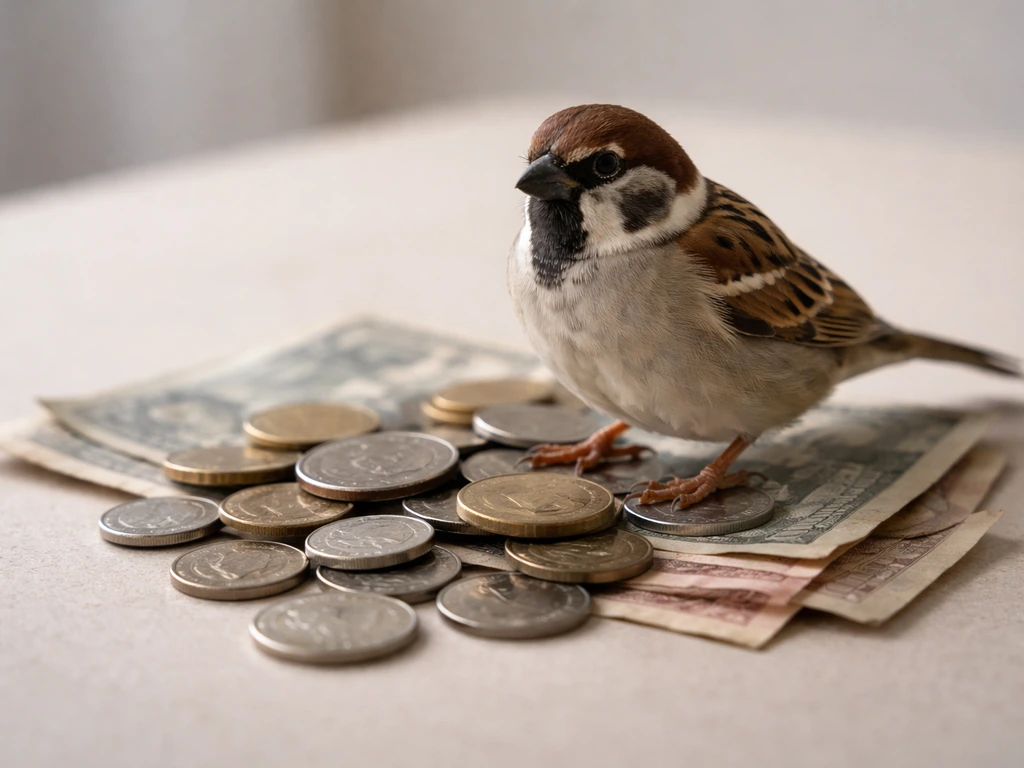
The painting you're looking for is real and it has a specific title: 'Bird on Money,' a 1981 acrylic and oil on canvas by Jean-Michel Basquiat. The 'bird' in the title is not a generic bird symbol, it refers directly to jazz legend Charlie Parker, who went by the nickname 'Bird' (short for 'Yardbird'). The 'money' connects to Basquiat's recurring preoccupation with wealth, exploitation, commodification, and what gets assigned value in American culture. Put those two together and you get a painting that uses Parker as a lens to ask hard questions about Black genius, commercial worth, and survival.
Bird on Money Basquiat Meaning: Identify the Artwork and Symbolism

Marcus Reeves
2 May 2026
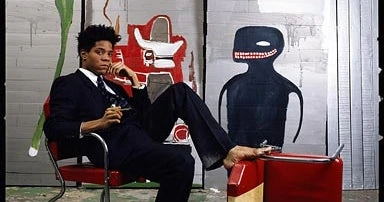
Who or what 'bird on money Basquiat' actually refers to
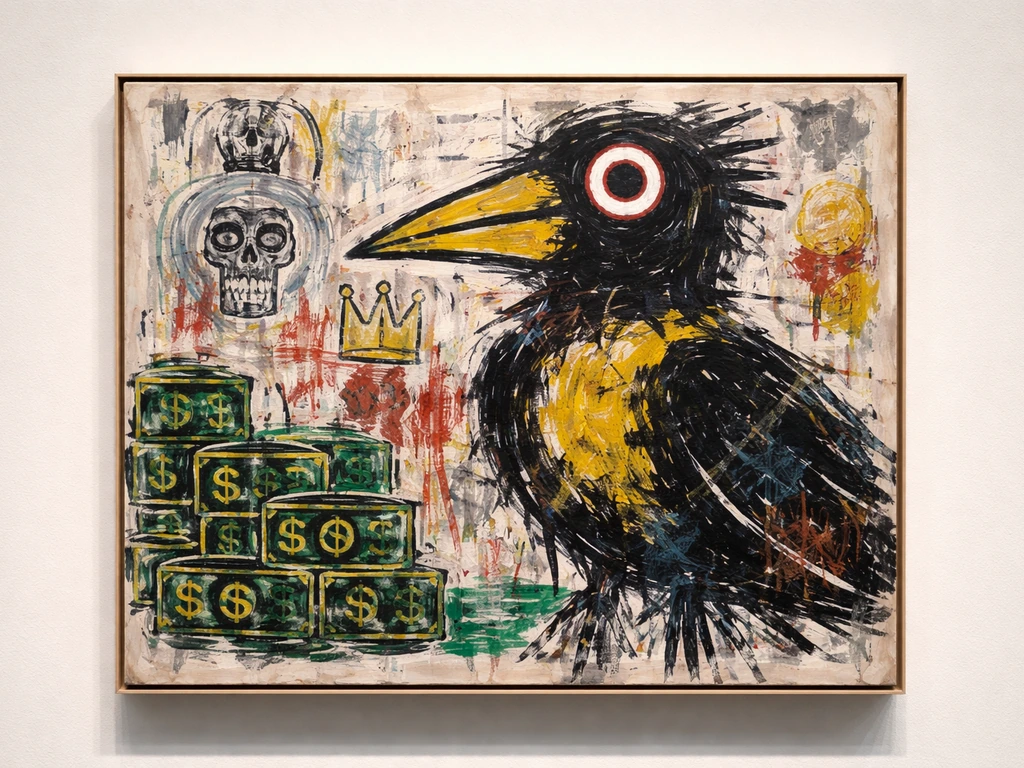
This phrase almost always points to the 1981 Basquiat painting titled 'Bird on Money.' It is an early Basquiat work and one of several pieces he made that explicitly honor Charlie Parker. Parker was one of the defining figures of bebop jazz, and 'Bird' was his widely known nickname, reportedly rooted in 'Yardbird,' a term Parker used himself. Basquiat was deeply influenced by jazz and frequently wove musician tributes into his visual work. So when you see 'bird on money Basquiat' circulating online, it's almost certainly a reference to this specific painting, not a loose metaphor or a misidentified piece.
That said, the phrase can get murky on social media and image sites. People sometimes apply it to Basquiat-adjacent prints, unauthorized derivatives, or general 'Basquiat-style' art that mimics his aesthetic but wasn't made by him. If you're looking at an image online and can't confirm the title, the section below on verification will help you check whether what you have is the real 1981 painting or something else.
Basquiat artwork basics: what you need to know about this piece
Basquiat made 'Bird on Money' in 1981, the same year his career broke wide open following the now-famous Times Square Show and his relationship with gallerist Annina Nosei. The work sits squarely in his early period, raw, text-heavy, densely layered, and reflects his broader habits of that era: combining painted imagery with handwritten words, crossing out phrases, annotating meaning directly onto the canvas.
The painting includes visual and textual cues that pin down its identity. Look for the phrase 'PARA MORIR' (Spanish for 'in order to die') and the text 'GREEN WOOD,' which Basquiat linked to Green-Wood Cemetery in Brooklyn. Those inscriptions aren't decorative, they're part of the argument the painting is making about mortality and legacy. The bird figure itself is rendered in Basquiat's characteristic style: rough, almost childlike in outline, but charged with intent. Museum and institutional materials, including the Smithsonian Shop's description of a puzzle reproduction of this work, confirm that the piece is a tribute to Parker and that 'Bird' refers to his nickname.
What the bird means in Basquiat's visual language
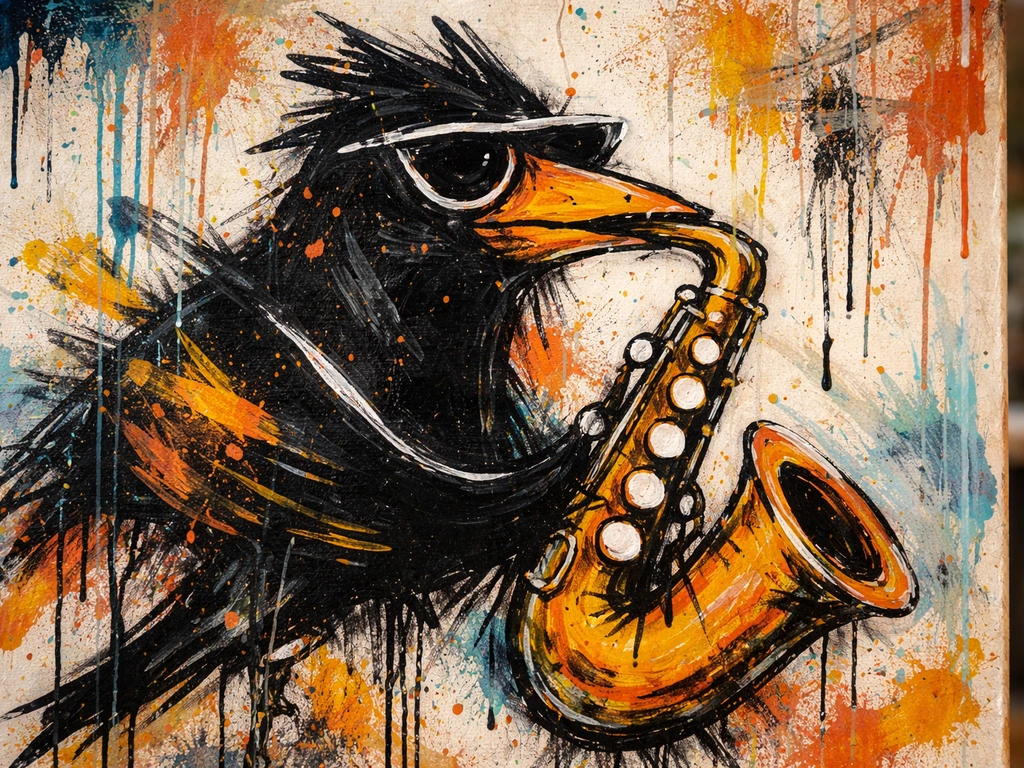
In this painting, the bird is Charlie Parker. That's the most direct reading and the one Basquiat himself encoded into the work. But it's worth understanding why Parker mattered so much to Basquiat, because that gives the bird symbol more weight than just a name reference.
Parker was a Black musical genius who was commercially exploited, personally destroyed by addiction and poverty, and died at 34. Despite revolutionizing American music, he had almost nothing materially at the end of his life. Basquiat, who was himself a young Black artist rapidly being absorbed into a very white and very wealthy art market, saw obvious parallels. The bird in Basquiat's work carries that history: it represents transcendence and artistry, yes, but also vulnerability and what happens when exceptional talent gets caught in systems that consume it.
Basquiat returned to Parker repeatedly across his career, other works like 'CPRKR' (1982) make the tribute even more explicit. In each case, the bird functions as a symbol of free creative flight that gets grounded by commercial and social forces. The 'PARA MORIR' inscription in 'Bird on Money' reinforces this: it's not a celebration, it's a meditation on what brilliance costs.
What the money imagery means and how it connects to the bird
Money was everywhere in Basquiat's work, literally and symbolically. He painted dollar signs, commodity prices, product names, and references to ownership and exchange throughout his career. This wasn't accidental: Basquiat was acutely aware that he was a Black artist selling to wealthy white collectors, and he used money imagery to make that dynamic visible and uncomfortable.
In 'Bird on Money,' placing the bird, Parker, Black genius, jazz, directly in relation to money asks a specific question: what is this worth, and who decides? Parker's music was worth an enormous amount culturally and historically, but Parker himself died in poverty. The money in the painting isn't celebratory. It's critical. It draws a line between the value assigned to art or culture and the material reality of the person who created it.
This connects to a theme Basquiat circled repeatedly: the commodification of Black identity and creativity. The painting forces you to sit with the gap between cultural richness and economic exploitation. It's the same gap that sits beneath concepts like 'a bird on money' in slang contexts, where 'bird' can reference value, quantity, or exchange, though Basquiat is working in a very different register. In slang, the phrase "a bird on money" can also shift to mean a specific price or value, depending on the context and what "bird" refers to. In slang, the bird on money meaning can refer to value, quantity, or exchange, but it is distinct from Basquiat's Parker tribute a bird on money. If you've come across the phrase in a slang or street context, that's a separate meaning entirely from what this painting is doing.
How to interpret the painting: the main themes and what they mean
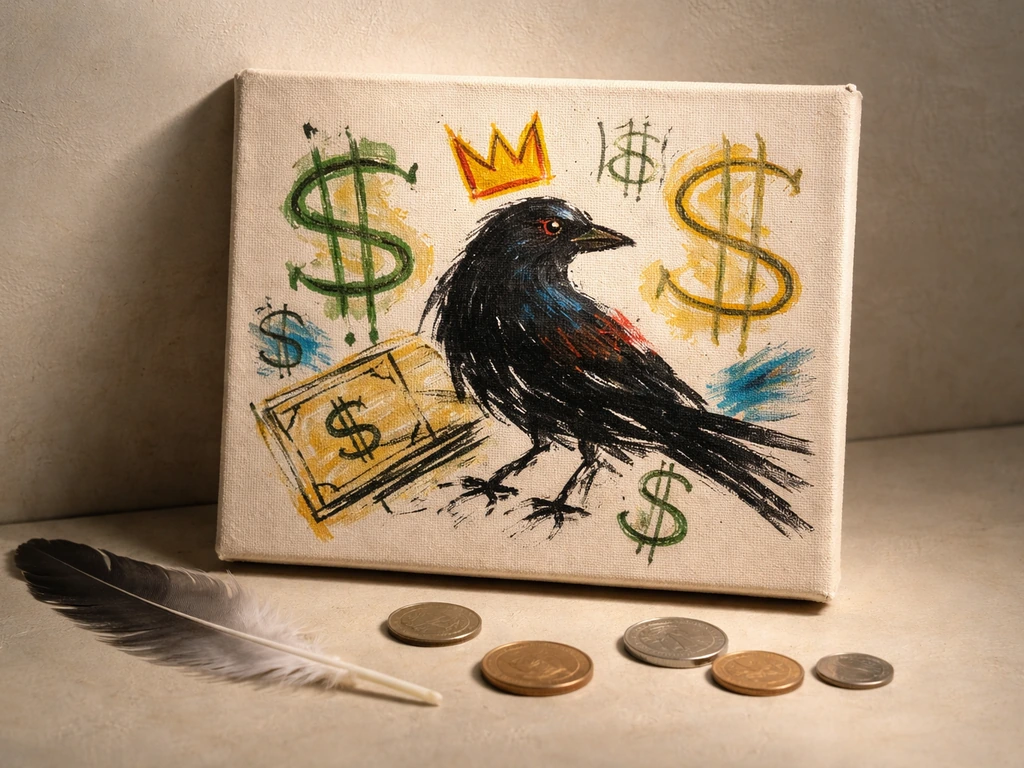
There's no single 'correct' reading of a Basquiat, but 'Bird on Money' clusters around a few consistent interpretive angles that show up in critical writing and museum commentary. Here are the most credible ones:
- Tribute and elegy: The painting honors Charlie Parker while mourning what his life cost him. The 'PARA MORIR' inscription makes this explicit — this is about dying, not just living.
- Freedom vs. exploitation: The bird as symbol of flight and improvisation is placed against money, the mechanism of control and extraction. The tension between those two things is the painting's emotional engine.
- Value and identity: Basquiat questions what it means to be valued in a commercial culture — whether true worth gets recognized, and by whom, and on whose terms.
- Fame and commerce: Parker was famous but not rich. Basquiat was becoming famous and rich but was suspicious of it. The painting holds both of those realities at once.
- Survival and mortality: Green-Wood Cemetery and 'PARA MORIR' pull the painting toward death. The bird doesn't escape. It lands on money and dies there.
The most grounded interpretation treats all of these as layered rather than competing. Basquiat wasn't making simple political slogans, he was making dense, ambiguous images that accumulate meaning. You can hold 'tribute to Parker' and 'critique of commodification' in the same reading without contradiction, because both are clearly present in the visual and textual evidence.
Where you'll see this phrase online and how to verify the artwork
The phrase 'bird on money Basquiat' shows up most often on image aggregator sites, Pinterest boards, art print marketplaces, and social media posts, many of which reproduce the painting without full context. Some of what you'll find is the genuine painting; some is a licensed reproduction; some is an unauthorized derivative or Basquiat-style imitation. Here's how to tell the difference:
- Search the exact title: Search 'Bird on Money 1981 Basquiat' and cross-reference results against auction records, museum databases, or the official Basquiat estate website (basquiat.com). The estate maintains an authenticated record of his works.
- Look for the textual markers: The real 'Bird on Money' contains 'PARA MORIR' and 'GREEN WOOD' as inscribed text. If those aren't present in the image you're looking at, it may be a different work or a derivative.
- Check provenance details: Legitimate reproductions or museum pieces will cite a collection location or auction history. If the image has no provenance attached, treat it with skepticism.
- Use reverse image search: Drop the image into Google Images or TinEye. This often traces a widely circulated image back to its original catalogued source.
- Check the Smithsonian and major auction databases: The Smithsonian has published materials directly tied to this painting (including merchandise), which confirms institutional recognition. Christie's, Sotheby's, and Phillips all archive Basquiat auction lots with detailed provenance.
If the image you found doesn't match any of those verification points, you may be looking at something described loosely as 'Basquiat-style' or misattributed by the person who posted it. That's common, especially with heavily shared social content. A derivative or imitation can still be interesting, but its meaning is different, you can't apply Basquiat's specific Parker tribute narrative to a work that isn't his. AP reports that a 2022 FBI raid at the Orlando Museum of Art involved dozens of forged Basquiat paintings that were falsely attributed as authentic works.
How to use this meaning in writing, discussion, or citation
If you're writing about this painting for an essay, article, or social post, a few practical pointers will help you get it right:
| Context | How to reference it | What to avoid |
|---|---|---|
| Academic essay | Cite the full title, year, medium, and note that 'Bird' refers to Charlie Parker's nickname. Reference institutional sources like the Basquiat estate or major museum catalogues. | Don't write 'the bird symbolizes freedom' without anchoring it to Parker — that reading misses the specific tribute. |
| Casual discussion or social media | Say 'Basquiat's 1981 painting Bird on Money — the bird is Charlie Parker, not a literal bird' to head off confusion quickly. | Don't describe it only as a painting about money. The Parker tribute is the core of the piece. |
| Art criticism or analysis | Engage the 'PARA MORIR' and cemetery references alongside the commodity critique. The mortality theme is underused in casual readings. | Don't flatten it to a simple anti-capitalism message — the elegy dimension matters as much as the political one. |
| Citation in a paper | Use the format: Basquiat, Jean-Michel. Bird on Money. 1981. Acrylic and oil on canvas. Then cite the collection or catalogue you're working from. | Don't cite a Pinterest board or image site as your source — trace it back to an institutional catalogue or the estate. |
In conversation, the simplest accurate summary is this: 'Bird on Money is Basquiat's tribute to Charlie Parker, 'Bird' was Parker's nickname, and it uses money imagery to ask hard questions about what Black genius is worth in a commercial world.' That framing is accurate, concise, and gives your listener or reader the essential meaning without overcomplicating it.
One thing worth noting if you've come to this topic through slang: the phrase 'bird on money' or 'bird' meaning a quantity of drugs or cash is a separate slang tradition with no direct connection to this painting. If you're wondering how much a bird slang term refers to in those money contexts, it helps to look at the specific scene and country where it's used bird on money. If you're trying to untangle those meanings, they live in entirely different contexts, the Basquiat painting is fine art with a specific jazz history behind it, while the slang usage of 'bird' in money or drug contexts has its own distinct lineage. If you're looking for how much is a bird drug slang in slang usage, that is a separate context from the Basquiat painting. Both are worth understanding on their own terms.
FAQ
Is the “bird” in “bird on money Basquiat meaning” always just a general bird symbol?
No. In this context, “bird” is specifically Charlie Parker, often nicknamed “Bird” (and linked to “Yardbird”). If a post or seller uses the title “Bird on Money” but names a different jazz figure, or treats “bird” as a general symbol, it’s likely an oversimplification or misattribution.
How can I verify that the image I found is actually the 1981 “Bird on Money” painting?
Start by checking whether the work matches Basquiat’s 1981 title and medium and whether the photo shows the distinguishing text elements (including “PARA MORIR” and “GREEN WOOD”). If those inscriptions are missing, heavily altered, or the style looks like a later reinterpretation, it may be a different work or a derivative print rather than the original painting.
What should I do if a marketplace listing shows “Basquiat-style” or “inspired by” “Bird on Money”?
Licensed prints can still be accurate even when they aren’t the original canvas. The key difference is provenance and wording: look for clear identification of the specific Basquiat artwork, not just “Basquiat bird money” as a vague tag. If the listing shows “Basquiat-style” or “inspired by” instead of the exact title, you should not treat the Parker-and-commodification reading as guaranteed.
Does the “money” in “Bird on Money” mean success and wealth, or something darker?
Yes, and the original reading depends on what “money” imagery is doing in the composition. In Basquiat’s work, the money element is typically tied to value, exploitation, and who gets paid for cultural labor, not just wealth as a neutral theme. So if an interpretation reduces it to “Parker is valuable,” it misses the critical edge the painting pushes.
Can “Bird on Money” be both a tribute to Parker and a critique of commodification?
The painting is generally discussed as a layered combination: it honors Parker while also critiquing how Black genius is commodified. That means you can interpret it as both tribute and indictment at the same time, but you should avoid forcing a single “one true” slogan-like message that ignores the dense, annotated form.
Is “bird on money meaning” in slang connected to Basquiat’s “Bird on Money”?
Don’t automatically connect it to street-slang uses of “bird on money,” “bird meaning,” or “bird” as a quantity term. The article’s core theme comes from a named artwork and a specific jazz history reference. If your context is slang (drug/cash quantity), the meaning is unrelated to Basquiat even if the words sound similar.
What’s a safe one-sentence caption I can use in a post or school paper?
If you are writing an essay or caption, use the specific, low-risk framing: “Basquiat’s 1981 painting ‘Bird on Money’ links Charlie Parker (nicknamed ‘Bird’) to money imagery to question how Black artistry is valued in a commercial system.” This keeps the essential claims (Parker, 1981 work, money critique) without overreaching into speculation about exact biographical details beyond what the inscriptions and title support.
How should the “PARA MORIR” inscription affect my interpretation?
Consider the inscriptions and the placement of the bird figure together. “PARA MORIR” (in order to die) and the other embedded text cue mortality and legacy, so readings that treat the bird as purely triumphant “creative freedom” are incomplete. A fuller interpretation accounts for both flight and vulnerability.
Next Article
Bird on Money Meaning: Symbolism, Slang, and How to Identify It
Learn bird on money meaning: symbolism, slang interpretations, and how to identify the exact bird and currency context.