
In drug slang, a "bird" almost always means one kilogram of cocaine. That's roughly 2.2 pounds of powder, and it's a wholesale-level quantity, not something a casual user is buying. So when someone asks "how much is a bird," they're typically asking about the street or wholesale price of a kilo of cocaine, which varies wildly depending on where you are, who's selling, and current market conditions. In the U.S., that range runs roughly $15,000 to $35,000 per kilogram. In parts of Western Europe, prices are generally higher, sometimes reaching €40,000 or more per kilo at street level.
How Much Is Bird Drug Slang? Meaning and Typical Amounts

Marcus Reeves
30 Apr 2026

What "bird" actually means in drug slang (and what it doesn't)

The dominant drug-slang meaning of "bird" is a kilogram of cocaine. This is backed up by multiple sources: Green's Dictionary of Slang defines it flatly as "one kilo" of cocaine. Law enforcement training materials from Florida describe "a 'bird' refers to a kilo of cocaine." A North Carolina court case used testimony that "bird" meant a kilogram of cocaine. UK safeguarding documents aimed at school staff and social workers flag "bird" as a term for a kilo of cocaine or crack cocaine.
One older media-circulated "DEA cheat sheet" listed "bird" as 36 ounces of powder cocaine rather than a full kilogram (which is about 35.27 oz), so the two figures are close enough to be talking about the same thing. The minor discrepancy comes from rounding and how different sources approximate the measurement, not a fundamentally different usage.
It's worth being clear that "bird" in this context is not a standardized unit. It doesn't appear in any official pharmacology or harm-reduction dosing guide. It's street vocabulary, and like all street vocabulary, it can drift. In some regional dialects or conversational contexts, people use "bird" more loosely to mean any significant brick or block of cocaine, not necessarily hitting exactly one kilo. The kilogram meaning is the dominant and most widely documented one, but context always matters.
What "how much" is really asking: price or quantity?
When someone asks "how much is a bird," they're almost always asking about price, not quantity. The quantity is already embedded in the word "bird" itself (a kilo). So the question translates to: "what does a kilogram of cocaine cost on the street? If you are instead asking for the price implied by the phrase, see the breakdown of the price of a bird meaning in different markets. " That's a very different question from asking how big or how heavy a bird is.
Occasionally, though, someone uses the phrase to ask about the weight more specifically, especially if they're a writer or student trying to decode a lyric or line of dialogue and they're not sure whether "bird" means a gram, an ounce, or something bigger. If that's your situation: it's a kilo. That's bulk-buy territory, the kind of quantity associated with dealing networks rather than personal use.
What a bird actually costs, and why the number shifts so much

There's no fixed price. Drug markets aren't regulated, and the cost of a kilogram of cocaine moves based on geography, supply chain disruptions, law enforcement pressure, purity, and who's doing the transaction. With that said, here are realistic ranges based on documented data from UNODC, EUDA, and DEA reporting.
| Region | Approximate price per kilo (USD equivalent) | Notes |
|---|---|---|
| United States (general) | $15,000 – $35,000 | Wide range; higher in inland/remote areas vs. port cities |
| Western Europe | $45,000 – $70,000+ | EUDA data; significantly higher than U.S. due to import costs |
| UK specifically | £30,000 – £50,000+ | Consistent with European premium; purity varies considerably |
| Latin America (source regions) | $1,500 – $5,000 | Wholesale near production; rarely what street slang references |
These numbers come from retail and wholesale price data compiled by UNODC and the European Union Drugs Agency. They reflect general documented ranges, not current live market prices, and they shift year to year. The DEA's CY 2024 Annual Cocaine Report notes that purity and availability both affect pricing, meaning a "bird" of lower purity cocaine won't command the same price as a high-purity one even in the same city.
The bottom line is that if you see "bird" used in a song, a conversation, or a piece of writing and someone's talking about buying or selling one, they're operating in wholesale or mid-level dealing territory. This is not small-quantity slang.
Common phrases that use "bird" and how to read them
Understanding the word alone isn't always enough. Here are some typical constructions you'll run into and what they actually mean in context.
- "He moved a bird last week" means he sold a kilogram of cocaine.
- "How much for a bird?" is asking the wholesale or bulk price for a kilo.
- "He's pushing birds" means he's dealing cocaine at the kilogram level.
- "Half a bird" refers to 500 grams (half a kilogram).
- "Two birds" means two kilograms.
- "The plug has birds" means the supplier has kilos of cocaine available.
In rap lyrics and street dialogue, "bird" often appears alongside other quantity terms like "bricks" (also kilo-scale), "zips" (ounces), or "dubs" (smaller amounts). Hearing "bird" in the same line as "brick" is a strong signal you're in kilo-cocaine territory. Hearing it alongside "dime" or "nick" (which refer to $10 or $5 bags) would be unusual and probably signals either mixed slang or a different regional usage worth double-checking.
Don't mix this up with other "bird" idioms
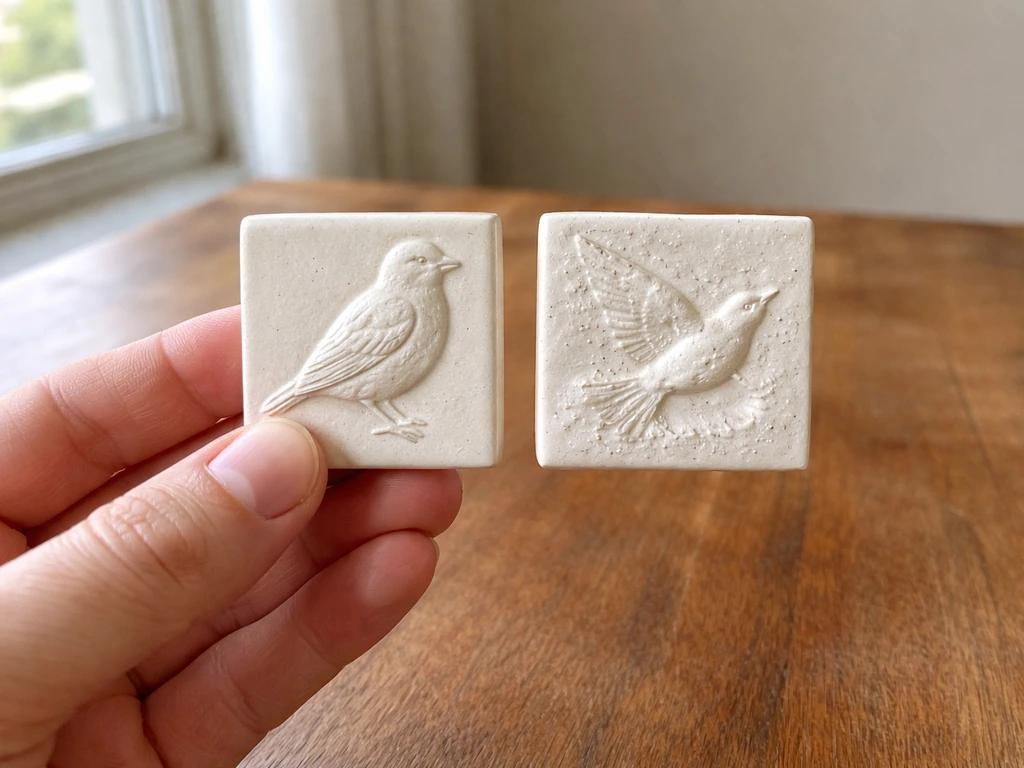
"Bird" carries a lot of baggage outside the drug context, and it's easy to misread. Here are the main non-drug meanings that commonly create confusion, especially for students and writers. If the phrase comes up in art or culture discussions, the “bird on money” Basquiat meaning can be a helpful parallel to understand how “bird” imagery shifts outside drug slang bird on money basquiat meaning.
- Prison time (UK slang): "Doing a bird" or "doing bird" means serving a prison sentence. This comes from Cockney rhyming slang, where "birdlime" rhymes with "time." It's documented as far back as 1924. This has nothing to do with cocaine quantities.
- Flip the bird: A common English idiom meaning to raise the middle finger as an insult. Totally unrelated to drug slang.
- Bird as a term for a woman: Older British slang, largely considered dated now, used to refer to a girl or girlfriend.
- Bird symbolism in literature: Ravens, doves, owls, and other specific birds carry rich symbolic meanings in poetry and fiction. None of these map onto drug slang.
- Bird on money: In some contexts, particularly in art and culture, a bird appearing on currency or in imagery like Basquiat's work carries cultural and symbolic meaning, not a drug reference.
The prison-time meaning is probably the most likely to cause a genuine misread. If someone in a UK context says "he got a five-year bird," they mean a five-year prison sentence, not five kilos of cocaine. Context, region, and surrounding words are everything when you're decoding slang.
How to figure out what someone actually means, fast
If you've encountered "bird" in a lyric, a piece of dialogue, a conversation, or a news article and you're trying to nail down the meaning, here's a practical approach.
- Check the surrounding words. Cocaine-related context words include: brick, powder, white, yayo, blow, kilo, plug, flip, move, and connect. Prison-related context words include: stretch, sentence, time, locked up, and inside.
- Check the region. UK slang leans more toward the prison-time meaning. U.S. slang, especially in hip-hop or street contexts, almost always points to the cocaine-kilo meaning.
- Check the quantity logic. If someone says "I need a bird and a half," they're talking about 1.5 kilograms of something, not a year and a half in jail. The numeric qualifier is a strong signal.
- Ask a clarifying question in conversation. If you're not sure what someone means, just ask directly: "Are you talking about quantity or price?" or "What substance are you referring to?" Guessing and acting on a wrong assumption is worse than asking.
- Use a harm-reduction resource if real-world safety is involved. If you're trying to understand a conversation because you're worried about someone's drug use, organizations like the National Harm Reduction Coalition or FRANK (UK) provide real, non-judgmental information and guidance.
For writers and students decoding slang in fiction, lyrics, or journalism: the cocaine-kilo reading is almost certainly correct in a U.S. or hip-hop context. The prison-time reading is almost certainly correct in a UK social context. If the source is ambiguous, acknowledge both possibilities rather than committing to one without evidence.
"Bird" in drug slang sits in the same space as related expressions around price and quantity, like discussions about the "price of a bird" or what a "bird on money" represents culturally. If you're exploring how bird-related slang connects to value, currency, and street economics more broadly, those threads run through the language in interesting ways that go well beyond a single definition. If you are actually asking about the phrase payday bird meaning, it can point to a non-drug usage, so check the surrounding context before assuming the kilo-cocaine definition.
FAQ
If “bird” is usually a kilo, why do some sources say 36 ounces instead of 1 kilogram?
Most discrepancies come from rounding and different reporting standards. 36 ounces is close to 1 kilo (about 35.27 oz), so some cheat sheets used an “about a kilo” figure rather than the exact conversion. Treat both as referring to kilo-scale cocaine, unless the text gives an exact weight elsewhere.
Is “bird” always cocaine, or can it mean another drug?
In mainstream documented slang, “bird” most often means cocaine at kilo scale. Still, slang can drift by region and peer group, so if the passage names the substance (for example, “bird” alongside heroin, meth, or “crack”), that adjacent wording usually determines the intended drug.
Does “how much is a bird” mean weight or price in real conversations?
In most contexts where people ask “how much is a bird,” they are asking price, because the quantity is embedded in the word. If you see it paired with money language (cost, price, payment), that points strongly to price, not weight. If it is paired with measurement talk (grams, ounces, scales), the writer might be asking weight.
If I’m decoding a lyric, what clues help me confirm the correct meaning fast?
Look for neighboring terms that anchor the scale. “Brick,” “zip,” or “kilo” strongly indicates cocaine kilo territory. If you see UK legal or sentencing framing (like years, jail, time), that supports the prison-time reading. Also check whether the setting is US hip-hop versus UK prison slang.
Can “bird” ever be a small quantity like a gram or ounce?
It would be unusual for “bird” to mean grams or ounces in the widely documented drug-slang usage. In some informal settings, people may use it loosely for “a chunk” of product, but when you need precision (writing, translation, analysis), default to kilo-scale unless the text explicitly says ounces or grams.
How do purity and “street deals” affect the price range you’d expect?
Even if two people both say “a bird,” the effective price can differ because purity and cut level change the value. A kilo described as lower purity will often cost less than a higher purity kilo in the same area. Also, risk and enforcement pressure can shift prices quickly, even within the same city.
Is there a single fixed price for a kilo that I can use?
No. Prices vary by geography, timing, seller risk, and how the buyer is evaluating purity. If you are using the number for writing or analysis, it is safer to use a range and mention that it depends on market conditions, rather than asserting one exact figure.
What’s the safest way to handle ambiguity if a text uses “bird” without enough context?
Avoid presenting a single definitive meaning. If the passage does not indicate money versus measurement, or US versus UK context, you can state that “bird” is commonly kilo-scale cocaine slang in US/hip-hop settings, but it can mean prison time in UK contexts. That framing reduces the chance of a false decode.
Does the phrase “bird” have non-drug meanings I should watch for?
Yes. “Bird” can refer to imagery or symbolism in culture discussions, and in UK slang it can refer to prison sentences. If the surrounding text is about art, money symbolism, or sentencing, those cues should override the cocaine-kilo interpretation.
If I need to translate “bird” for subtitles or academic writing, should I convert it to kilos?
Only if the surrounding context confirms the drug-slang reading. When context supports it, converting to “one kilogram” (or “kilo-scale”) is clearer for readers. If the setting is UK prison slang or the text is ambiguous, keep it as “bird” and explain the alternative meanings rather than hard-converting to a kilo.
Next Article
How Much Is a Bird Slang? Meaning and Real Value
What bird slang means, whether it has real money value, and how to decode it from context in speech or lyrics.