The phrase 'thirst reckoned bird north' is almost certainly a puzzle sequence or scrambled clue, not a fixed proverb or idiom. The most likely scenario, based on how these words appear together online, is that they are part of a word-association or next-in-sequence puzzle where each term maps to another word or concept. That said, every word in the phrase carries real figurative weight on its own, so once you know what each piece means individually, you can figure out exactly what the original source intended.
Thirst Reckoned Bird North Meaning Explained and Decoded

Marcus Reeves
23 May 2026

Break the phrase into its four parts
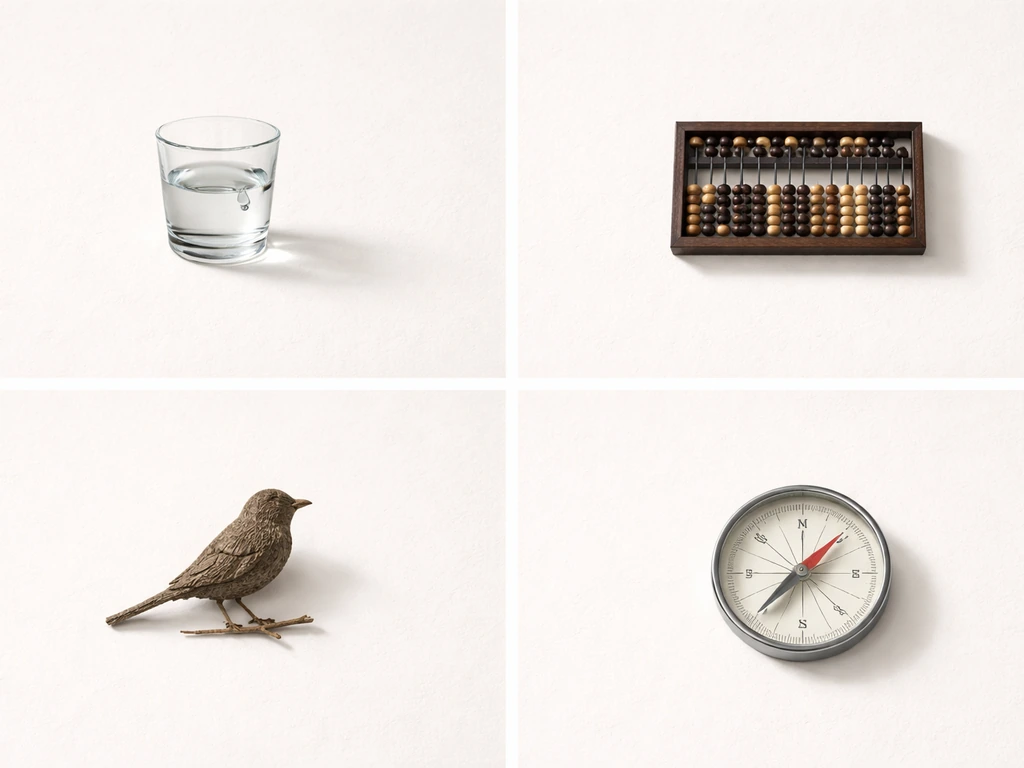
Before you can interpret 'thirst reckoned bird north' as a whole, it helps to know what each word brings to the table. These are not random words. Each one has a well-established figurative life in English, which is probably why they ended up together in a puzzle, riddle, or coded sequence.
| Word | Literal Meaning | Figurative / Symbolic Layer |
|---|---|---|
| Thirst | Physical need for water | Craving, longing, obsessive desire |
| Reckoned | Counted or calculated | Judged, considered, believed to be |
| Bird | Any winged animal | Omen, freedom, messenger, symbolic creature |
| North | Cardinal direction above the equator | Cold, harshness, higher status, distant or unknown |
When you see all four in a row without connecting grammar, that absence of verbs or articles is itself a signal. Real proverbs have structure ('a bird in the hand,' 'early bird gets the worm'). A bare list of content words like this usually means you're looking at clues, not a sentence.
What 'thirst' actually means in idioms
Literally, thirst is just the physical sensation of needing water: 'He drank to quench his thirst.' But figuratively, 'thirst' has been used in English for centuries to mean a powerful craving for anything, not just liquid. You hear it in phrases like 'a thirst for knowledge,' 'a thirst for power,' or 'a thirst for revenge.' The emotion behind it is always the same: an urgent, almost physical need for something.
In modern slang, the meaning gets more specific. Urban Dictionary defines 'thirst' as an obsessive desire or over-eagerness, most often directed at a person you're attracted to. The 'thirst trap' meme, which emerged around 2011, uses the same metaphor: someone posts something deliberately to provoke that craving in others. So depending on the context where you saw 'thirst reckoned bird north,' the word 'thirst' could be pointing at longing in the classical sense, or it could be nodding at contemporary slang about desire and attention-seeking.
In riddle and puzzle books, 'quench a mighty thirst' is a stock phrase used to signal the concept of satisfying a need. In The Twentieth Century Standard Puzzle Book transcription, “quench a mighty thirst” appears as a stock riddle phrase, illustrating that “quench thirst” is used in puzzle-context language. If the phrase you're trying to decode is part of a riddle, 'thirst' is likely functioning as a clue word that points to 'quench,' 'drink,' 'water,' or a synonym for deep longing.
How 'reckoned' changes the whole tone

'Reckoned' is doing a lot of quiet work in this phrase. The verb 'reckon' has three main senses that get activated depending on context. First, it can mean to count or compute, as in 'I reckoned up the cost.' Second, and most commonly in modern English, it means to consider or judge something to be a certain way, as in 'It was generally reckoned a success.' Third, in casual speech especially in British and Southern American English, it means to think or believe something: 'I reckon that's the one.'
The grammatical frame around 'reckoned' tells you which sense is active. If you see 'reckoned that...' it's the belief/opinion sense. If you see '(something) was reckoned (a/the)...' it's the evaluative sense, meaning judged or considered. If numbers or measurements are nearby, it's the counting sense. In riddle contexts like 'And when my whole is reckoned...,' it leans toward evaluation and judgment, which gives the phrase a tone of something being assessed or measured rather than simply thought about.
That evaluative weight matters for the overall phrase. 'Thirst reckoned' together could suggest 'desire that is judged' or 'longing that is counted,' which starts to sound like a poetic way of describing a craving that has been measured, acknowledged, or declared. It shifts 'thirst' from a raw feeling into something that has been formally recognized.
Bird imagery: what it brings into any phrase
The word 'bird' without a species attached is doing symbolic work, not biological work. In most riddle and poetic contexts, birds represent freedom, omens, messages, or transitions. But the specific symbolic meaning depends heavily on which bird is actually meant, and on cultural context.
The raven is arguably the most commonly cited bird associated with death and ill omen in Western culture, a connection cemented by Edgar Allan Poe's poem and reinforced by folklore long before it. The owl carries a split reputation: wisdom in some traditions, death and destruction in others. Doves mean peace. Eagles mean power or national identity. A generic 'bird' in a riddle often functions as a placeholder for whichever symbolic bird fits the theme of the surrounding text.
If you're trying to figure out what 'bird' means in the specific phrase you encountered, look at the tone of the surrounding text. Dark, gothic, or elegiac language points toward ravens or owls and their omen associations. Hopeful or spiritual language points toward doves or sparrows. Travel and migration imagery points toward swallows or geese. And if the text feels like slang rather than poetry, 'bird' in British English is also informal for a woman, or it can refer to 'flipping the bird' as a rude gesture. Context is everything. Related topics like ravenous bird symbolism and the figurative meaning of birds from the east can also help narrow down the symbolic family you're working with. Because birds can carry regional and symbolic associations, checking the ravenous bird from the east meaning can help you pin down which specific bird the phrase is pointing to. The ravenous bird meaning will depend on which bird the author intended, since different birds carry different symbolic associations.
What 'north' means beyond the compass

In its literal sense, 'north' is simply the direction toward the top of the map, the part of the earth above the equator. But in poetry, folklore, and idiom, 'north' carries a cluster of figurative meanings that show up consistently across cultures. In the figurative sense, a north wind (or northerly wind) is associated with bringing wintery, cold weather blank" rel="noopener noreferrer">north wind bringing wintery, cold weather.
- Cold and harshness: the north wind famously brings wintery weather, so 'north' in figurative language often signals austerity, difficulty, or emotional coldness
- Distance and remoteness: going north can mean moving away from warmth, civilization, or comfort
- Higher status or elevation: in some modern slang and business language, 'north' means upward, as in 'the numbers are heading north,' meaning increasing
- Migration and seasonal change: in bird symbolism specifically, flying north signals spring, renewal, and return
- The unknown or the beyond: in some mythological traditions, the far north is where spirits or the dead reside, connecting 'north' to liminal or otherworldly themes
In the context of 'thirst reckoned bird north,' the word 'north' is likely functioning as either a directional clue (the bird goes north, or comes from the north) or as a symbolic quality modifier (cold longing, distant desire). If the phrase is a puzzle sequence, 'north' may simply be the next term in a coded list rather than a modifier at all.
The most likely interpretations, and how to confirm which one fits
Based on the research, the single most likely interpretation is that 'thirst reckoned bird north' is a fragment from a word-sequence puzzle. The words appear together in exactly this kind of context online: a list of clue-terms where each word points to the next word in a hidden sequence, with additional tokens like 'A B C STORE NORTH BRIDGE' following in the same chain. In that reading, the phrase is not trying to say anything as a sentence. Each word is a clue-unit pointing at a concept, and the reader's job is to find what connects them.
The second most likely interpretation is a garbled or reconstructed riddle line. Puzzle books use both 'quench a mighty thirst' and 'And when my whole is reckoned...' as stock riddle phrases. If someone misremembered, mistyped, or reassembled a line from that tradition, you could end up with a scrambled version of a riddle whose answer involves a bird associated with a northern direction or cold symbolism.
The third possibility is poetic or metaphorical language, where 'thirst reckoned bird north' is a compressed image: a longing (thirst) that has been judged or acknowledged (reckoned), embodied as a bird, moving toward something cold, distant, or elevated (north). This reading makes the most sense if the phrase comes from a poem, song lyric, or piece of literary fiction.
To confirm which interpretation fits, work through these steps. First, identify where you saw the phrase: a website, a book, a game, a social media post? That source narrows the field immediately. Second, look at the surrounding text for grammatical clues: if there are other bare nouns listed in a sequence, it's a puzzle. If there is connecting grammar like 'a bird reckoned to thirst northward,' it's poetic or idiomatic. Third, check whether 'reckoned' appears in the frame 'reckoned (that)' (opinion) or '(was) reckoned (a)' (judgment). Fourth, check whether 'thirst' is paired with any slang markers like 'trap,' 'lust,' or 'attention,' which would confirm the modern figurative sense.
Common misreadings and word-order variants to watch for
This kind of phrase gets misread or mutated in a few predictable ways, especially when people search for it or repeat it from memory.
- Word order scrambling: the same clue-set might appear as 'bird north thirst reckoned' or 'reckoned bird thirst north' without any change in underlying meaning, since the words are a set rather than a sequence with fixed grammar
- Spelling variants of 'reckoned': people sometimes write 'reckond,' 'reckined,' or even 'reckoned' as 'reckon'd' in older typeset text, which can throw off a search
- Confusing 'reckoned' with 'beckoned': these look similar and both appear in literary contexts; 'beckoned' means summoned or called, which changes the phrase entirely
- Treating 'bird' as a specific species: readers sometimes assume the puzzle or riddle specifies a raven, crow, or owl when the source text just says 'bird' generically
- Reading 'north' as a proper noun: in some puzzles, 'North' is a surname or a place name (like North Bridge), so the capital letter matters
- Assuming the phrase is a proverb: because it sounds vaguely like wisdom literature, readers sometimes search for it as a saying, but no fixed English proverb with all four of these words exists
If your search keeps coming up empty, try searching just two of the four words together with 'meaning' or 'riddle' added. Eurasian bird meaning can also matter if the bird implied in the phrase is tied to a regional symbol or myth. 'Thirst bird meaning' and 'reckoned north puzzle' are more likely to surface the original source than all four words at once. And if the phrase came from a specific game or book, searching within that source directly will always be faster than searching the phrase cold.
FAQ
Is “thirst reckoned bird north” a real proverb or idiom people quote the same way?
Most likely, no. In this exact “word list” form, the phrase behaves more like a clue bundle (each word points to the next idea) than a self-contained proverb. The fastest check is whether it appears with other capitalized tokens or adjacent clue words that look like steps in a sequence, not a grammatical line.
How can I tell which meaning of “reckoned” the phrase is using?
Use surrounding grammar. If you see patterns like “reckoned that …” it signals a belief or opinion sense. If you see “was reckoned a/the …” it leans toward judgment or evaluation. If numbers, totals, or counting language appears nearby, “reckoned” likely activates the count or compute sense instead.
What does “bird” mean in this phrase, and how do I know which bird is implied?
“Bird” here is usually symbolic, not literal, unless the surrounding text clearly mentions a specific species or a physical scene with a real bird. If the context is dark or gothic, think omen birds like raven or owl. If it is hopeful or spiritual, birds like doves or sparrows fit better. If the context is travel or migration, swallows or geese are more likely.
Does “north” modify the bird symbolically, or is it probably part of a coded sequence?
Treat “north” as either (1) a directional pointer, meaning the bird or concept goes north or comes from the north, or (2) a qualitative modifier tied to cold, distance, or something elevated. If you are dealing with a puzzle chain, “north” may simply be the next coded token, not an adjective to “bird.”
How do I decide whether “thirst” is literal craving, poetic longing, or modern slang attraction?
Look for context words that lock in which “thirst” sense is active. Longing in a literary sense often pairs with language about yearning, desire, craving for knowledge, or obsession with a goal. Slang “thirst” pairs with attraction, attention-seeking, or “trap” style terms. If modern internet markers appear, the slang reading becomes more plausible.
What clues tell me whether this is a riddle, a puzzle sequence, or just poetic metaphor?
Check whether the text uses extra framing around the phrase. If you see a line that resembles riddle setup or stock-phrasing (for example, “when my whole is reckoned” type lines), you may be seeing a garbled or reconstructed riddle. If instead it is embedded in a list of clue words that don’t form a sentence, it likely belongs to a word-association or next-in-sequence puzzle.
Why do my search results come up empty, and what search strategy works better?
Common mistake: searching the full phrase exactly when the source may have been copied imperfectly. Try searches using only two words (for example, “thirst bird meaning” or “reckoned north puzzle”), and also try swapping “north” for related directional tokens (N, northern, from the north) to catch variations.
Could the phrase be a misremembered line, and how can I verify that?
If you suspect a transcription error, test likely swaps by re-reading the phrase as a broken line from a known template. Since the article notes recognizable riddle stock like “quench a mighty thirst” and “when my whole is reckoned,” look for nearby hints in the source that match those themes (thirst satisfaction, measuring, evaluating, or a bird linked to cold or a northern direction).
How can I tell if it’s meant to be read like normal English versus a list of clue tokens?
Check for the presence of other “bare nouns” in the same post or page. When multiple content words appear in a row without articles or connecting verbs, it points toward clue tokens rather than natural language. If there is consistent punctuation that separates clue items (commas, line breaks, all caps blocks), that supports a puzzle-chain reading.
What’s the best next step if I found the phrase online but don’t know the original source?
To confirm which interpretation fits, do a source-first check. Identify where it came from (game, book, social post, forum, puzzle hunt). Then compare the surrounding text to that medium’s typical structure, for example, game hints often list tokens, while poems and lyrics usually preserve grammatical flow.
Next Article
Ravenous Bird From the East Meaning Explained
Decode the idiom ravenous bird from the east, including slang, literary symbolism, and how to infer context meaning.