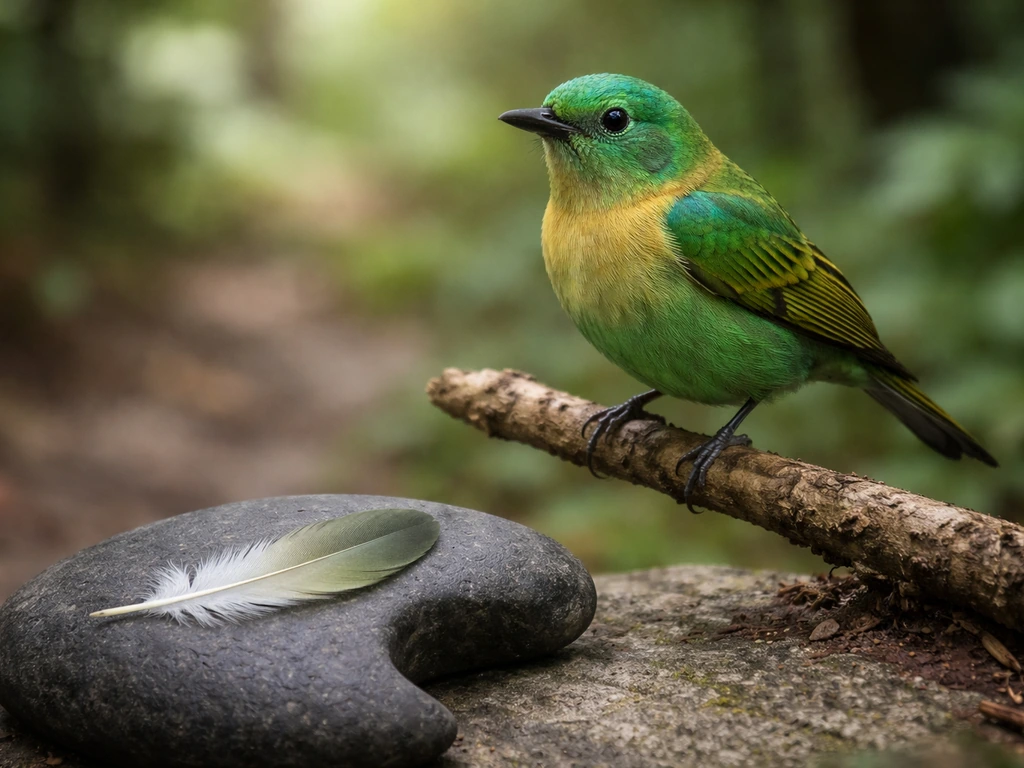
When someone searches 'strange bird meaning' or 'weird bird meaning,' they're usually in one of three situations: they had a vivid dream featuring an unusual bird, they spotted a bird that looked unfamiliar and wondered if it means something, or they heard someone call another person a 'strange bird' and wanted to understand the expression. Each of those situations has a different answer, and mixing them up is where the confusion starts. This guide breaks down all three, helps you figure out which one applies to you, and gives you concrete interpretations you can use right now.
Strange Bird Meaning: Dreams, Omens, Symbols, and More

Marcus Reeves
21 Apr 2026
What people actually mean by 'strange bird' or 'weird bird'
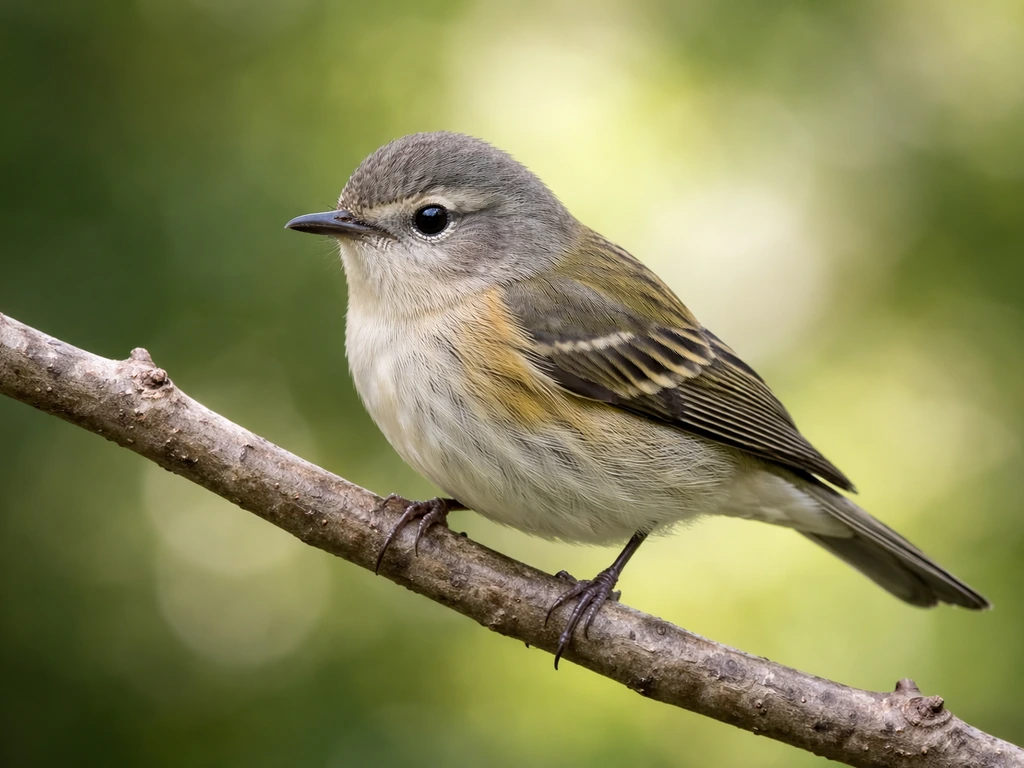
The phrase 'strange bird' has two completely separate lives. One is literal: you saw a bird you couldn't identify, or that looked unusual in some way, and you're wondering what it is or what it signals. The other is figurative: someone used 'bird' as a stand-in for 'person' and described them as strange or weird. Both usages are common, and neither one is wrong. The trick is knowing which lane you're in before you go looking for meaning.
In everyday English, calling someone a 'strange bird' or an 'odd bird' is a mild, often affectionate way of saying they're eccentric or unusual. It's in the same family as 'blank" rel="noopener noreferrer">rare bird,' which dictionaries including Cambridge and Collins define as someone exceptional or uncommon in some way. The Latin phrase 'blank" rel="noopener noreferrer">rara avis' (literally 'rare bird') has been used as a figure of speech for centuries for exactly this kind of person or thing. So if someone called you or another person a 'strange bird,' they almost certainly meant quirky or one-of-a-kind, not a literal critique.
The literal side of 'strange bird' is just as common though. You saw something at your feeder or on a walk that didn't match anything you recognized, and the word that came to mind was 'strange.' That's a totally reasonable reaction, and there's often a simple explanation: juvenile birds frequently look nothing like their parents, plumage varies by season and region, and birds like the Dark-eyed Junco have enough subspecies variation that even experienced birders occasionally do a double-take.
Dreams, omens, and folk superstition around strange birds
This is the context most people are actually in when they type 'strange bird meaning' into a search bar at 2am. If you meant the phrase in the more specific sense of crazy bird meaning, the interpretation depends on whether it came from a dream, an omen, or a figure of speech strange bird meaning. A bird showed up in a dream, it felt significant, and now you want to know what it meant.
If you meant an exotic bird specifically, the same dream or omen approach applies, but the species details can change the exotic bird meaning you draw from it. The tradition of reading meaning from birds is genuinely ancient: the Greeks practiced ornithomancy, which was the formal interpretation of bird behavior (flight patterns, cries, species) as omens, and the Romans had their augurs doing equivalent work. So the impulse to find meaning in birds isn't new or irrational.
It has a very long human history.
That said, bird dream interpretation isn't one-size-fits-all. Even historical dream dictionaries acknowledged that the same bird could signal different things depending on the circumstances. Modern dream resources approach it the same way: species matter, but so do the details surrounding the bird. A raven appearing calmly in a dream reads differently than one that's aggressive or circling. Context is doing most of the interpretive work.
If the bird in your dream felt 'strange' because it was an unfamiliar species, was an unusual color, or behaved in a way that felt off, those details are the actual content worth paying attention to. Dream interpretation sources consistently flag non-species modifiers, like color, confinement (a caged bird vs. a free one), or behavior, as significant factors that shift the meaning. A black bird and a white bird of the same species can carry opposite associations in the same tradition.
Common species and their dream/omen associations
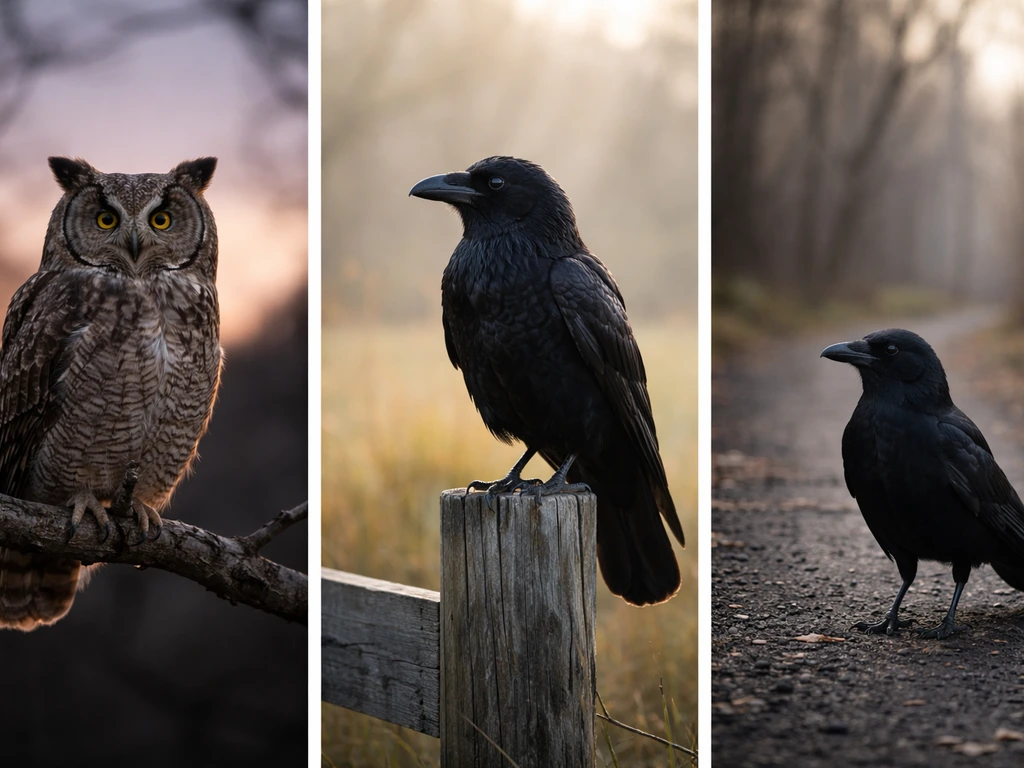
| Bird | Common Dream/Omen Association | Important Context |
|---|---|---|
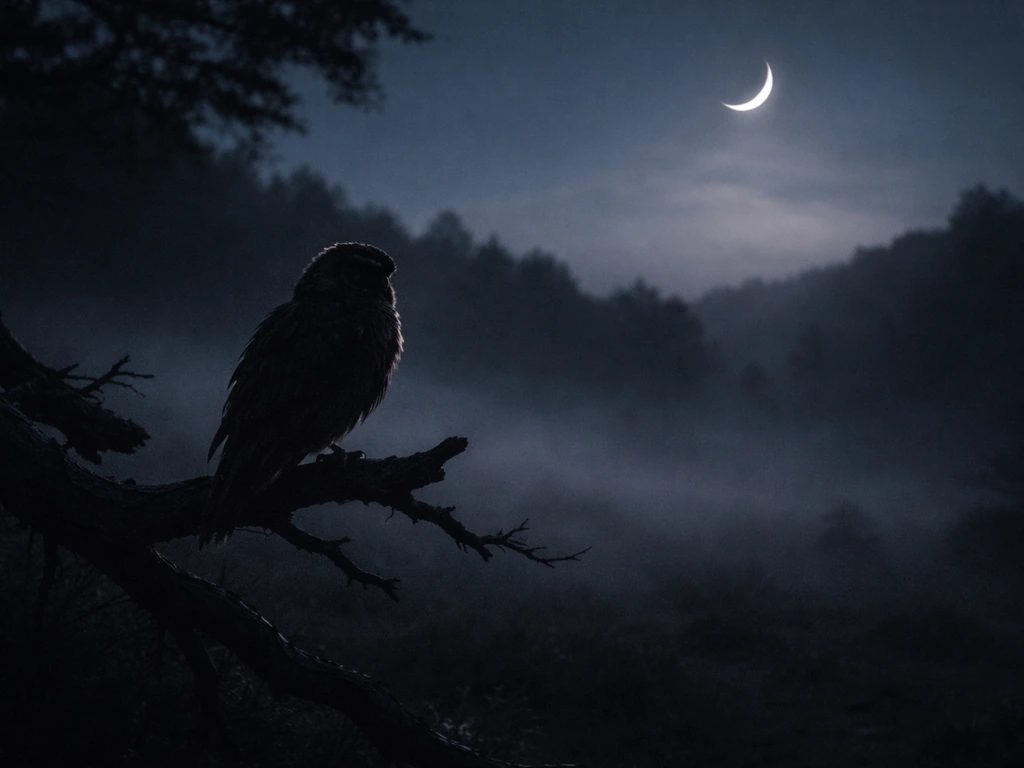
| Owl | Night wisdom, intuition, hidden knowledge; also death/destruction in some traditions (Aztec, Mayan, ancient Roman poetry) | Association flips between wisdom (Athena/Athens) and bad omen depending on culture |
| Raven or Crow | Liminal change, transformation, shadow work, intelligence; also warnings and ill omens historically | Crows specifically lean more 'warning' in modern interpretations; ravens carry prophecy/insight too |
| Dove | Peace, reconciliation, spiritual comfort; the white dove especially skews positive across traditions | Strongly positive in Abrahamic traditions (Noah's olive branch); context rarely makes this negative |
| Strange/Unidentified Bird | No single fixed meaning; the strangeness itself may signal something unfamiliar entering your life | Focus on how the bird made you feel and what it was doing, not just what it looked like |
The slang and idiom side: 'strange bird' as a figure of speech
'Strange bird,' 'odd bird,' 'weird bird,' and 'rare bird' all function as idioms for an unusual person. They're generally mild and often carry a note of fondness rather than criticism. Saying 'she's a strange bird' about someone usually means you find them genuinely interesting, just hard to categorize. The phrase 'You're an odd bird' is a documented idiom used in everyday conversation to describe someone who doesn't quite fit the usual mold, and it's rarely intended as an insult.
The bird-as-person metaphor shows up across languages and generations. In British slang, 'bird' on its own can simply mean a person (often a woman, though the usage is dated). In American English, 'old bird' means an elderly woman, while 'odd bird' or 'strange bird' cuts across genders and ages. These expressions are worth knowing because if you encountered 'strange bird' in a novel, a conversation, or a text, the speaker probably wasn't talking about ornithology at all.
The sibling expression 'rare bird' (and the related phrase 'you are a rare bird') carries a more complimentary tone: it suggests someone exceptional, not just unusual. The difference between 'strange bird' and 'rare bird' in everyday use is roughly the difference between 'quirky' and 'extraordinary. If you are wondering about the rare bird idiom meaning, it generally points to someone exceptional or uncommon. ' Both are figurative. Neither involves an actual bird.
Literary and cultural bird symbolism: how to decode it
When a bird is described as strange or unusual in a story, poem, or film, it's almost always a signal to pay attention to what that specific bird represents in the cultural tradition the work is drawing from. The symbolism isn't universal: the same species can mean opposite things in different traditions. Ravens are strongly tied to death and ill omen in Welsh and Germanic mythology, for example, but in Norse mythology Odin's ravens (Huginn and Muninn) represent thought and memory. Owls signal wisdom in Greek tradition (Athena's owl) but destruction and death in Aztec and Mayan cosmologies. Even corvids as a group carry different symbolic weight depending on the story's cultural roots.
The practical takeaway: when you encounter a 'strange bird' in literature, don't just look up 'bird symbolism' generically. Ask what culture or tradition the author is drawing from, what the bird is doing in the scene, and what the surrounding context suggests. A dove appearing after a conflict scene is doing different symbolic work than a dove appearing at a death. The species gives you a starting point; the context gives you the actual meaning.
One useful rule of thumb from historical bird lore is that the manner of appearance matters as much as the species. Ernest Ingersoll's documentation of bird folklore shows that even fortunate birds were read as unfortunate depending on how and where they appeared. So 'strange' in a literary context might specifically mean the bird is appearing in an unusual way, outside its expected season, in an unexpected place, or behaving in an odd fashion, and that strangeness is precisely the symbolic signal the author is using.
How to figure out what it means in your specific situation
The fastest way to land on the right interpretation is to answer four quick questions before you go any further:
- Where did you encounter it? (Dream, real sighting, book or film, conversation, social media meme, text from someone)
- If it was a real or dream bird, what did it look like? (Species if you know it, color, size, behavior, whether it was alone or in a group)
- If it was a phrase or expression, what was the tone? (Was someone called a 'strange bird' warmly, critically, or neutrally?)
- What details felt most significant? (What the bird did, how it made you feel, what happened right before or after it appeared)
Once you have those answers, you can match your situation to the right framework: dream symbolism, folk omen, slang/idiom, or literary symbolism. Trying to interpret a 'strange bird' without knowing which of these contexts you're in is like trying to find a word's definition without knowing what language it's from. The context determines the meaning more than the word itself.
Quick checklist for identifying the right interpretation

- Dream context: focus on species (if identifiable), color, behavior, and your emotional response during the dream
- Real bird sighting: try to ID the species first using a field guide or app like Merlin before assigning omen meaning; take notes and photos if you can
- Slang/conversation: 'strange bird' almost always means 'unusual person' and is rarely negative in tone
- Literary/film context: identify the cultural tradition the work draws from before interpreting species symbolism
- Meme or social media: treat it as humor or slang unless the source clearly signals symbolic intent
Examples and interpretations you can use right now
Here are a few common scenarios and what they most likely mean, based on everything above:
You dreamed about a large black bird you didn't recognize, and it felt ominous. The most likely interpretive frame here is transformation or warning, especially if the bird was watching you or circling. Black coloring in dream birds consistently signals shadow themes across most traditions: things hidden, changes coming, or a prompt to pay attention to something you've been avoiding. If it felt threatening, that emotional signal is meaningful data. If it felt curious or neutral, the interpretation leans more toward intelligence and observation (as with crow symbolism).
You spotted a bird at your window or yard that looked unfamiliar, and someone told you it was a bad omen. Before you assign meaning, try to identify the species. Juvenile birds, birds in non-breeding plumage, and regional subspecies often look genuinely 'strange' even to people who know birds well. A juvenile Dark-eyed Junco, for instance, looks so different from adults that it regularly gets misidentified. What seems like a mysterious visitor may simply be a bird you've seen before at a different life stage.
Someone called you a 'strange bird' after you described an unusual hobby or opinion. This is almost certainly a compliment or at worst a gentle tease. It's in the same territory as being called a 'rare bird' or an 'odd bird,' and it means you stood out as different in a way that caught their attention. Whether that's positive or neutral depends entirely on tone, and in most cases, it's positive.
You're reading a novel and a strange bird appears at a key moment in the story. Look at what the author has set up: what tradition is this story drawing from, what is the bird doing, and what emotional register does the scene have? If the book is set in a culture where ravens mean prophecy, and a raven appears right before a character makes a major decision, that's a literary signal about fate or foreshadowing. If it's a contemporary realistic novel, the bird might simply be atmospheric detail rather than symbolic content.
When you're probably reading too much into it
Not every strange bird sighting, dream, or passing comment carries a secret message. This is worth saying plainly, because the human brain is extremely good at finding patterns and confirming the ones it's already looking for. Confirmation bias means that if you're already anxious about something and a bird appears, you'll be primed to read it as a warning, and you'll remember the birds that seemed to confirm your fears more than the ones that didn't.
Dream interpretation experts consistently caution against treating any single dream as a definitive prediction or fixed message. The most useful frame for dreams is exploratory, not predictive: what might this reflect about how I'm feeling, not what is this telling me will happen. Spending bounded, reasonable time sitting with a dream's imagery is healthy. Spending hours or days in anxiety trying to decode a 'sign' is not.
If you find that bird-related dreams or superstitions are generating significant anxiety, avoidance behavior, or disrupting daily life, that's worth paying attention to separately from the bird symbolism. Persistent vivid or disturbing dreams can sometimes be connected to anxiety, depression, or other mental health factors worth discussing with a professional. A therapist who uses dream content therapeutically will treat it as a window into your emotional state, not as a prophecy to decode.
For real-life bird sightings: if you see something genuinely unusual, the best first step is documentation, not interpretation. Take notes, snap photos if you can, and check with a birding resource or app. Rare sightings happen, but they usually have naturalistic explanations (vagrant species, unusual plumage, hybrid birds) that are more interesting than omen-reading anyway. The ornithomancy tradition is real and historically rich, but even ancient practitioners understood that the bird had to be properly identified and its behavior correctly observed before any meaning could be assigned.
FAQ
How can I tell whether my “strange bird meaning” is more about a dream, an omen, or just my reaction?
Start by writing down what exactly felt “strange” (shape, color, size, behavior) and what you were doing right before sleep or the sighting. If you cannot remember those details, lean toward the less predictive frame (mood or symbolism) rather than claiming a specific omen or prophecy.
If someone texted “you’re a strange bird,” should I read it as symbolism or as an idiom?
Use the “tone check” rule: in slang, “strange/odd bird” is usually affectionate or admiring, while literal omen language tends to include fear, warnings, or fate-like phrasing. If the speaker sounds teasing, praising, or admiring, treat it as an idiom, not bird symbolism.
Are black or white birds always interpreted the same way in strange bird dreams?
Don’t just trust a single color association. Color meanings can flip across traditions, and in real-life birds, the “color” might be lighting, season, molting, or even juvenile plumage. If you are interpreting a dream, note the bird’s emotional vibe and actions first, color second.
What should I do if my strange bird dream makes me anxious?
If the bird appears in a dream and you wake up panicked, consider the dream as a marker of stress rather than a fixed message. A practical step is to track triggers for a week (work pressure, conflict, sleep loss), since many “ominous bird” dreams cluster around anxiety or disrupted routines.
I can’t identify the bird in my dream or sighting. Can I still interpret strange bird meaning?
When you cannot identify a species, interpret at the “behavior level” instead: hovering, circling, entering a house, calling, or watching usually carries more meaning than the unknown label. For example, confinement (inside your space) often reads differently than a bird simply passing outside.
What’s the best first step if I see an unusual bird and I’m tempted to treat it like an omen?
For real-world sightings, document before interpreting. Take photos, record time, location, weather, and direction of movement, then compare with a bird ID guide or local checklist. If the bird is actually a common species in uncommon plumage (juvenile, winter, molt), the “meaning” usually fades.
How do I interpret a strange bird in a novel without falling into generic bird symbolism?
In literature, symbolism often depends on the story’s cultural frame (mythology source, setting period, genre). A clue is whether other characters react as if it “means something,” or whether the narration treats it as atmosphere. If no one treats it as significant, symbolism may be minimal or stylistic.
How can I avoid over-reading a strange bird as a secret message when I’m already worried?
Be cautious with confirmation bias by doing a “two interpretations” exercise: write one warning-focused meaning and one growth-focused meaning that fits the same details. If both feel plausible, you likely have a pattern-finding error, and the more balanced reading is usually safer.
When is it worth treating strange bird dreams as a mental health signal instead of symbolism?
If you keep dreaming the same bird type or you have persistent nightmares, consider discussing your sleep quality and emotional state with a professional. Therapy can treat dream content as material about stress, grief, or anxiety patterns, which is more actionable than treating it as prediction.
Next Article
Rare Bird Meaning: Definition, Examples, and How to Reply
Learn rare bird meaning: an idiom for an unusual standout, plus examples, tone cues, and how to reply.