
When someone calls you a "rare bird," they almost always mean it as a compliment. It signals that you're unusual in a good way: someone who combines qualities that don't often show up together, or who simply stands out from the crowd in a way that's hard to find. That said, tone and context can shift the meaning from warm admiration to gentle teasing, and occasionally to a subtle heads-up that you're unpredictable. Here's how to read it every time.
Rare Bird Meaning: Definition, Examples, and How to Reply

Marcus Reeves
20 Apr 2026
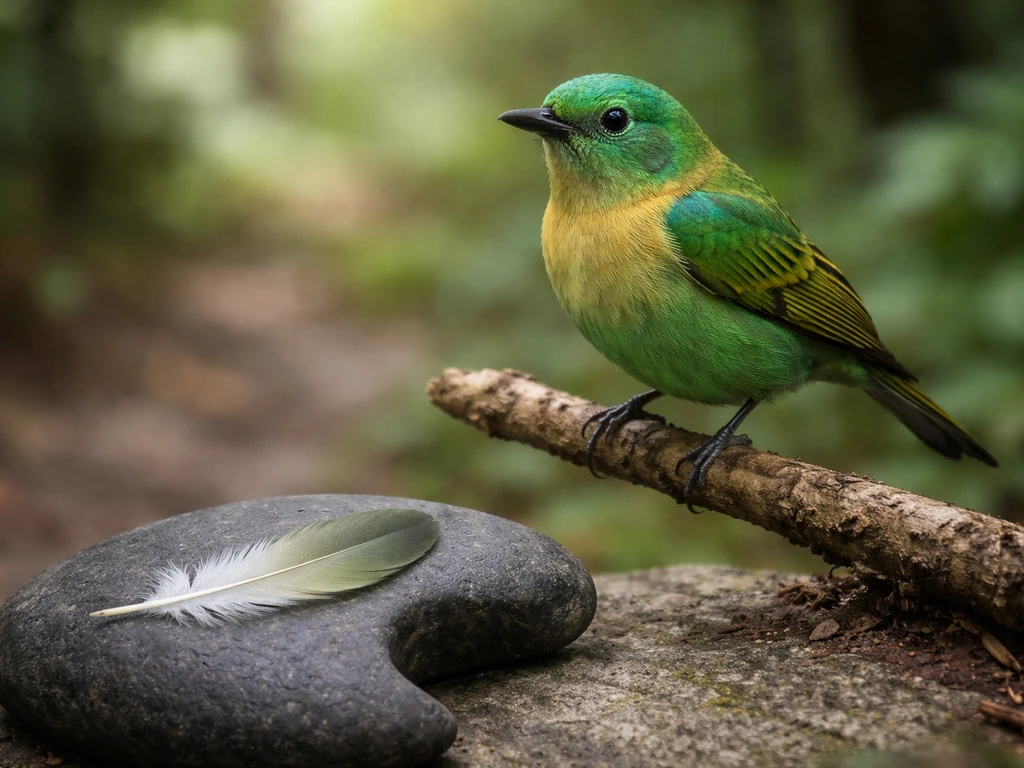
What "rare bird" means in everyday English
"Rare bird" is an idiom meaning a person (or sometimes a thing) that is genuinely uncommon, distinctive, or hard to find. Cambridge Dictionary defines it as "someone who is unusual in some way," and Collins puts it simply as "an unusual, uncommon, or exceptional person or thing." The Free Dictionary goes a step further, describing it as "an exceptional individual" or "a very unusual person or thing, especially due to a combination of typically incompatible features." That last part is key: the phrase often comes out when someone has two or more qualities that you wouldn't normally expect in the same person.
The phrase traces back to the Latin "rara avis," which literally means "rare bird." Roman poet Juvenal used it to describe something impossibly rare, and the image stuck for centuries. By the time it crossed into everyday English, it had shed its Latin coat but kept its core meaning: this person is not easy to come by.
"Rare bird" as a compliment, a tease, or something else
The phrase is context-dependent in a way that Collins specifically acknowledges: the definition is neutral on tone, and the surrounding sentence does the emotional work. Most of the time, "rare bird" lands as a compliment. But it can also be a warm tease, an affectionate label, or in rare cases a gentle warning. Here's how each version tends to sound:
- Compliment: The speaker is genuinely impressed. The word "exceptional" is the best synonym here. Example: Cambridge gives "He is that rare bird, a virtuoso who is also a wit" — pure admiration for someone with two hard-to-combine gifts.
- Affectionate teasing: The person is being called unusual in a fond, slightly playful way. Think of it as saying "you're one of a kind" with a smirk. The Free Dictionary example, "That wife of yours is a rare bird; you're lucky to have her," sits right in this space.
- Subtle warning: Occasionally, calling someone a rare bird signals unpredictability. If someone says "she's a rare bird, that one" with a raised eyebrow, they might mean "don't expect to predict her" rather than "she's wonderful." This reading is less common but worth knowing.
- Neutral observation: Sometimes it's just descriptive. A writer calling a 19th-century female engineer "a rare bird in her field" isn't praising or warning — they're noting statistical reality.
Literal vs. figurative: actual birds and actual people

The literal meaning is straightforward: a bird species that is scarce, hard to spot, or seldom seen in a given region. Birdwatchers use this sense all the time, and Collins even includes an example where a rare bird sighting draws crowds to a location. In that context, "rare bird" is purely ornithological and carries no comment about personality.
The figurative meaning is what most people mean when they use the phrase in conversation. Here, no actual bird is involved. The phrase is being applied to a person, a character type, or even an idea or product. Cambridge is explicit about this: the dictionary entry for "rare bird" (figurative) focuses entirely on human traits, not species. If someone says "honest politicians are a rare bird," they're using the figurative sense to comment on scarcity and value in a human context.
The easiest way to tell them apart: if there's a literal bird and binoculars, it's ornithology. If there's a person being described, it's the idiom.
Example sentences across different tones
Seeing the phrase in action is the fastest way to lock in the meaning. Here are examples covering friendly, joking, admiring, and slightly critical registers:
- Admiring: "She is that rare bird: a politician with a social conscience." (Oxford Learner's Dictionaries) — No irony, straight compliment.
- Admiring, dual-trait format: "He is that rare bird, a virtuoso who is also a wit." (Cambridge) — The phrase flags the unusual combination.
- Affectionate: "That wife of yours is a rare bird; you're lucky to have her." — Warm, slightly teasing, clearly fond.
- Neutral/descriptive: "A self-taught surgeon in the 1800s was a rare bird indeed." — Historical observation, no strong emotional charge.
- Joking: "Tom actually reads the instruction manual before assembling things — a rare bird among us." — Light mockery of everyone else, mild praise for Tom.
- Subtle skepticism: "She's a rare bird, that consultant — you never quite know what direction she'll go." — Unusual framed as unpredictable rather than admirable.
Related bird expressions you might be mixing up
"Rare bird" sits in a cluster of bird-based idioms that sound similar but mean slightly different things. If you are wondering what the phrase "you are a rare bird meaning" is really pointing to, it essentially comes down to rarity plus positive value in most everyday uses. It's worth knowing where the lines are.
| Expression | Core Meaning | Tone vs. "Rare Bird" |
|---|---|---|
| Rare bird | Unusual or exceptional person, hard to find | Usually admiring or neutral |
| Odd bird / odd duck | Eccentric or strange person with peculiar habits | More about weirdness than excellence |
| Strange bird | Someone who seems odd or difficult to read | Slightly more wary or puzzled in tone |
| Bird of a different feather | Someone who doesn't fit the group norm | Can be distancing; not necessarily a compliment |
| Black sheep | The outlier who doesn't fit in, especially in a family | Often negative or at least bittersweet |
| Rara avis | Latin origin phrase; same figurative meaning as "rare bird" | More formal or literary register |
The clearest distinction: "rare bird" leans toward scarcity plus value, while "odd bird" and "strange bird" lean toward eccentricity without necessarily implying admiration. Some people use the phrase "strange bird" in a similar way, but it typically points more toward eccentricity than straightforward admiration. If someone calls you a rare bird, they're saying you're hard to find. If they call you an odd bird, they're saying you're a bit of a puzzle. Related expressions like "exotic bird" and "crazy bird" carry their own distinct shades of meaning worth exploring separately, and the specific phrase "you are a rare bird" has its own nuances that build on what's covered here. If you're also curious about the term crazy bird meaning, that phrase usually focuses more on eccentricity than on value. “Exotic bird meaning” is another phrase people bring up when they want to understand different bird-based labels and their connotations Related expressions like "exotic bird".
How to read the meaning from tone and situation
Use this quick checklist when you hear or read "rare bird" and aren't sure which way it's leaning:
- Is the speaker smiling or using warm body language? If yes, it's almost certainly a compliment or affectionate label.
- Does the sentence name two contrasting qualities (e.g., "tough but kind," "funny and disciplined")? That dual-trait framing is the classic admiring usage.
- Is the phrase followed by "you're lucky" or similar? That's the affectionate, praising register.
- Is the tone flat or skeptical, with words like "you never know" or "hard to predict"? That's the subtle-warning variant.
- Is the phrase in a historical or analytical sentence about a group or era? Probably neutral and descriptive.
- Is there a literal bird mentioned anywhere nearby? If so, it might be ornithological, not figurative.
How to respond if someone calls you a rare bird

If the tone is clearly admiring, a simple "thank you, I'll take that" works perfectly. You don't need to over-explain or deflect. If it's playful teasing, you can lean in: "Rare birds are hard to catch, so consider yourself lucky." If you genuinely can't read the intent, it's fair to ask: "Is that a good thing or a warning?" Most people will laugh and clarify.
Using "rare bird" naturally in your own writing
The phrase works best when you name the specific combination of traits that makes someone rare. "She's a rare bird" on its own is fine, but "she's a rare bird, the kind of manager who gives honest feedback without making you feel small" is far more interesting. Follow the Cambridge model: set up the unusual pairing, then let the phrase do the emotional work. Avoid using it ironically without signaling the irony clearly, since the default read is positive and your reader will assume you mean it as a compliment unless the surrounding context says otherwise.
FAQ
Is “rare bird” ever a negative insult?
Yes, but it’s usually mild and context-driven. If the speaker pairs it with phrases like “you never know what you’ll get” or “you’re unpredictable,” it can function like a warning rather than praise. If you’re unsure, ask one neutral question (for example, “Do you mean that as a compliment?”).
What’s the difference between “rare bird” and “odd bird”?
“Rare bird” typically blends scarcity with positive value (impressive, uncommon, worth appreciating), while “odd bird” more often highlights puzzling or eccentric behavior without guaranteeing admiration. If you hear “rare bird” after a compliment, it’s likely the first sense, not just “weird.”
How do I reply if I’m called “rare bird” in a work or professional setting?
Keep it short and anchor it to the trait. For example, “Thank you, that’s kind. I try to be someone who [specific strength].” This reduces the chance the label comes off as flattery without meaning, and it steers the conversation toward concrete behavior.
Can “rare bird” be used for things, not people?
Yes. People sometimes apply it to products, content, or ideas that are difficult to find or genuinely exceptional. If it’s about an item, mirror back the rarity angle (for example, “I thought it was hard to locate, but that makes sense”).
What if the person says it sarcastically or as irony?
Irony is risky because the idiom’s default reading is positive. Look for verbal signals (tone, eye-rolls, follow-up criticism). If you’re not confident, don’t assume, ask for clarification (for example, “Are you saying I’m awesome, or that I’m difficult?”).
How can I tell if it means “uncommon” versus “unpredictable”?
Uncommon usually links to scarcity or distinct traits (“hard to find,” “not many people do that”). Unpredictable usually links to inconsistency (“you’re all over the place,” “no pattern”). The surrounding sentence is the deciding factor, and you can probe politely if needed.
Is it okay to use “rare bird” back to someone?
Usually, yes, if their vibe actually matches the compliment. Aim to add a specific reason, not just the label, because that feels thoughtful rather than generic. Avoid using it for someone you don’t know well, since it can read as an affectionate tease.
Is “rare bird” the same as “strange bird” or “exotic bird”?
Not exactly. “Strange bird” tends to emphasize eccentricity, sometimes with less warmth. “Exotic bird” is more about being unusual or different from the norm, and can carry a “wow” effect without the “rare and valuable” emphasis. If you want the exact “hard to find and noteworthy” feel, “rare bird” is the safer match.
What should I do if I receive the comment via text or social media?
In writing, tone can be ambiguous, so a quick, friendly clarification helps. For example, “Thank you, that’s a high compliment. What part stood out?” It invites context and prevents misreading as sarcasm.
What’s a good response if you don’t want the compliment to feel flirty?
Redirect to personality-neutral specifics. For example, “Thanks. I appreciate that, I just try to be genuine and consistent.” If it’s from someone you’re not comfortable with, keep it polite and move the conversation to the topic at hand.
Next Article
Ghetto Bird Meaning: What It Says and How to Respond
Plain meaning of ghetto bird slang, how it’s used as an insult, and practical ways to respond and interpret it.